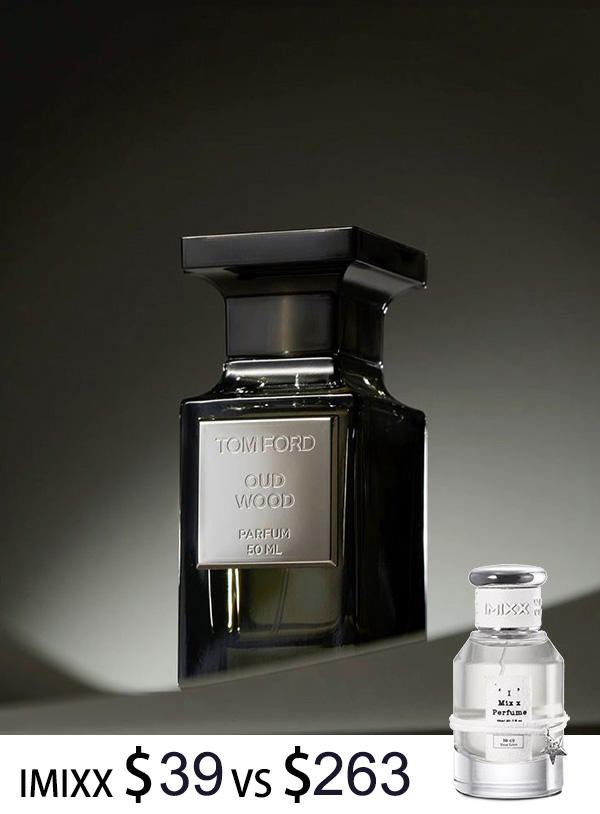

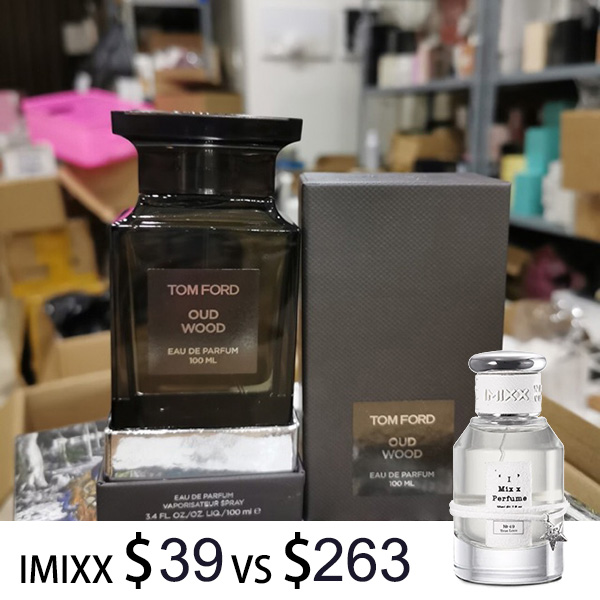
Top 5 Tips to Get the Best tom ford oud wood 100ml price
When I search for the best tom ford oud wood 100ml price, I do not simply choose the lowest number displayed on a shopping page. A 100 mL bottle is a substantial fragrance purchase, so I consider the seller, product condition, return policy, shipping charges, promotional timing, and risk of receiving an altered or questionable product.
My goal is to find a fair tom ford oud wood 100ml price without allowing an unusually deep discount to override basic purchasing safeguards. In this guide, I explain the five checks I personally use before buying, show how I calculate the real cost per milliliter, and compare several practical purchasing routes.
My buying principle
The best deal is not necessarily the lowest advertised price. It is the lowest credible total cost for a product whose seller, condition, size, return rights, and authenticity indicators I can reasonably verify.
Why the 100 mL Bottle Requires More Careful Price Research
Oud Wood sits in TOM FORD’s Private Blend fragrance collection and is built around oud notes, woods, cardamom, spices, and amber. The official brand description is useful because it gives me a baseline for identifying the exact fragrance I am researching. I also confirm that I am comparing the Eau de Parfum with the same concentration and size rather than accidentally comparing it with Oud Wood Parfum, a body spray, a travel format, or another product from the Oud Wood collection.
I verify those details on the
official TOM FORD Oud Wood Eau de Parfum page.
The page identifies the fragrance, describes its key aromatic direction, and displays the sizes currently offered by the brand. I treat the official listing as a product-identification reference, not as a guarantee that every third-party listing is equivalent.
A 100 mL bottle can appear economical because larger bottles commonly have a lower cost per milliliter than small bottles. However, the larger upfront payment also magnifies the consequences of a poor purchase. If I receive an old, mishandled, inaccurately described, or nonreturnable bottle, I have more money tied up in the transaction than I would with a sample or travel spray.
That is why I evaluate value in two stages. First, I ask whether the listing and seller are credible. Second, I calculate whether the total cost is genuinely attractive. I never reverse that order. A low price cannot compensate for a listing that omits the bottle size, product concentration, seller identity, return conditions, or product condition.
Knowledge point: Compare identical products
I compare 100 mL Oud Wood Eau de Parfum only with another 100 mL Oud Wood Eau de Parfum listing. A comparison becomes unreliable when one offer is a tester, partial bottle, refill, decant, body spray, parfum concentration, travel spray, or used product.
My Quick Price-Evaluation Framework
Before discussing the five tips in detail, I use a simple framework to organize every offer I find. It prevents me from focusing on the headline discount while overlooking fees or purchase risk.
| Factor | What I verify | Why it matters | Warning sign |
|---|---|---|---|
| Exact product | Name, concentration, 100 mL size, packaging and condition | Prevents false comparisons | The title says 100 mL but the description shows another size |
| Seller identity | Business name, contact information, marketplace history and reviews | Establishes accountability | No identifiable seller or inconsistent business details |
| Total delivered cost | Item price, shipping, tax, insurance, membership and currency conversion | Reveals the real purchase cost | Large fees appear only at checkout |
| Return protection | Return window, opened-fragrance rules, restocking fees and dispute process | Limits financial exposure | All fragrance sales are final with no exception for incorrect goods |
| Price context | Official benchmark, established retailers and recent promotions | Shows whether the discount is plausible | The price is dramatically below every credible comparison |
Tip 1: Establish a Trustworthy Price Baseline Before Shopping
My first step is to establish a reference range. I begin with the official brand page and then compare several established fragrance, beauty, or department-store retailers. I record the date because fragrance pricing, inventory, promotional events, and gift-with-purchase offers can change.
I do not assume that the manufacturer’s suggested or official selling price is automatically the best available deal. Instead, I use it as a benchmark. It tells me what a normal full-price purchase may look like and helps me recognize when a third-party seller is claiming an exaggerated discount from an inflated “regular” price.
How I build my benchmark
I usually collect at least four comparable listings. One is the official brand listing, two are from established retailers, and one may be from a reputable fragrance specialist or marketplace seller. Every listing must describe the same concentration, size, condition, and basic package configuration.
I then note the advertised price, delivery fee, estimated tax, promotional code, loyalty points, return window, and whether the product is sold directly by the retailer or by a third-party merchant. This process takes longer than sorting search results from low to high, but it creates a much more realistic picture of the market.
Why a single comparison is insufficient
A single retailer may temporarily be out of stock, may have recently changed its price, or may bundle the fragrance with benefits that are not available elsewhere. A broader comparison helps me separate a genuine promotion from an isolated or misleading listing.
I also pay attention to the seller attached to the listing. On a marketplace, the website’s name is not necessarily the actual seller’s identity. I open the seller profile and check its transaction history, customer-service information, recent reviews, and product specialization.
Knowledge point: A discount needs context
I consider a price meaningful only after comparing it with credible, recent listings for the identical product. A percentage-off badge alone does not prove that an offer is inexpensive.
Tip 2: Calculate the True Delivered Cost and Cost per Milliliter
The displayed product price is only one part of the transaction. To determine whether I have found a competitive tom ford oud wood 100ml price, I calculate the full delivered cost before placing the order.
My total includes the item price, shipping, sales tax, insurance, import charges when applicable, membership fees required to obtain the discount, and foreign-currency conversion charges. I subtract only benefits that I can realistically use, such as an immediate coupon or store credit I was already planning to redeem.
Total delivered cost = item price + shipping + tax + required fees − immediate usable discounts
After finding the delivered cost, I divide it by 100 to calculate the cost per milliliter. For example, if the total delivered cost is $360, the cost is $3.60 per milliliter. If another listing totals $344, the cost is $3.44 per milliliter.
This calculation is particularly useful when comparing a 100 mL bottle with a 50 mL bottle. A smaller bottle may require less cash today while having a higher cost per milliliter. However, that does not automatically make the larger bottle the correct purchase. I still consider how frequently I wear the fragrance, how many other fragrances I own, and whether I can use the bottle within a reasonable period.
Example of a total-cost comparison
| Offer | Advertised price | Shipping and fees | Usable discount | Pre-tax total | Cost per mL |
|---|---|---|---|---|---|
| Retailer A | $390 | $0 | $39 | $351 | $3.51 |
| Retailer B | $342 | $18 | $0 | $360 | $3.60 |
| Marketplace seller | $325 | $27 | $0 | $352 | $3.52 |
This hypothetical example shows why I do not automatically select the lowest advertised price. Retailer A becomes the least expensive pre-tax option after applying a usable promotion, even though its original displayed price is the highest.
I treat reward points cautiously. If a retailer offers points worth $30 toward a future purchase, I do not subtract the entire $30 unless I know I will use them before expiration. Future benefits are not equivalent to an immediate price reduction.
Tip 3: Verify the Seller Before Trusting a Major Discount
Seller verification is the most important risk-control step in my process. Luxury fragrances are valuable, portable, and frequently sold through third-party marketplaces. That makes it necessary to distinguish between the platform hosting a listing and the merchant actually fulfilling the order.
I begin by checking how long the seller has operated, how many transactions it has completed, whether its contact details are visible, and whether recent reviews discuss the same category of merchandise. I read negative reviews first because they often reveal recurring concerns involving incorrect products, damaged packaging, shipping delays, refund disputes, or listings that did not match the delivered goods.
The U.S. Federal Trade Commission advises online shoppers to research unfamiliar sellers and search for the seller’s name alongside terms such as “review,” “complaint,” or “scam.” I consider that a useful minimum check before sending payment to a business I have never used. The FTC’s
online shopping scam guidance
provides additional consumer-oriented precautions.
Seller details I examine
- The legal or trading name of the seller
- A working customer-service email address or telephone number
- A physical business address where appropriate
- The age and transaction history of the seller account
- Recent reviews rather than only the lifetime average
- The seller’s return, refund and dispute procedures
- Whether payment is processed through a system with buyer protection
I become cautious when a seller has many generic five-star reviews posted within a narrow period, when the wording appears repetitive, or when the reviews concern unrelated low-cost products. A high average rating does not tell me everything about how the seller handles an expensive fragrance order.
Price signals that require additional scrutiny
An unusually low tom ford oud wood 100ml price does not prove that a listing is illegitimate, but it increases the level of verification I require. Clearance activity, damaged packaging, discontinued inventory, loyalty promotions, retailer-specific campaigns, and gray-market distribution can all affect price. The seller should still describe the condition and source category clearly enough for me to make an informed decision.
I avoid listings that rely on urgency without providing basic product information. Messages such as “last chance,” “warehouse liquidation,” or “today only” do not substitute for an exact volume, concentration, seller identity, return policy, and original product photographs.
Warning signs I do not ignore
I reconsider the purchase when the seller requests payment through an irreversible method, refuses to provide written return terms, uses only stock photographs, hides its identity, or offers a price dramatically below every established source without a credible explanation.
Tip 4: Inspect the Listing, Packaging Information and Product Condition
Once I am comfortable with the seller, I inspect the listing itself. I want the title, description, photographs, product specifications, and checkout page to agree. A professionally designed page is not enough; the underlying information must be specific and internally consistent.
I look for the exact fragrance name, “Eau de Parfum,” the 100 mL or 3.4 fl oz volume, the condition, and whether the original retail box is included. I also check whether the listing describes the item as a tester, unboxed product, demonstration bottle, customer return, partial bottle, decant, or pre-owned product.
Those formats may have legitimate uses, but they should not be priced or evaluated as an unopened standard retail bottle. A tester can differ in packaging, presentation, cap inclusion, or resale value even when the fragrance itself is represented as the same formula.
What I look for in listing photographs
When a seller supplies original photographs, I examine the front, back, base, box, labeling, cellophane, cap, sprayer, and any visible production or batch markings. I do not rely on one visual feature as conclusive evidence. Packaging can change over time, legitimate regional variations may exist, and photographs can be copied from another listing.
I also check whether the photographs show the actual item or are manufacturer-supplied images. Stock images are normal for established retail stores, but an individual or small third-party seller should be able to clarify the condition of the specific bottle being sold.
Fragrance labeling and sensitivity considerations
Fragrance products are cosmetics under U.S. regulatory frameworks, and consumers with fragrance sensitivities may need to review available ingredient information carefully. The FDA explains that certain fragrance ingredients may be identified collectively as “fragrance” or “perfume” rather than individually listed. I consult the
FDA’s fragrance information
when I need general regulatory context.
I do not interpret packaging, batch-code websites, barcode scans, scent impressions, or bottle weight as stand-alone proof of authenticity. These elements can support a broader evaluation, but no single consumer check is infallible.
Knowledge point: Condition changes value
A sealed retail bottle, an unboxed tester, a used bottle and a decant are different purchasing categories. I compare their prices only after accounting for condition, presentation, remaining volume, return rights and intended use.
Tip 5: Time the Purchase Around Credible Promotions
Timing can make a meaningful difference, especially when an established retailer offers a sitewide beauty event, targeted coupon, loyalty reward, gift card promotion, or complimentary product. I prefer a transparent promotion from a seller I trust over a permanently discounted listing from a seller I cannot verify.
I maintain a short watchlist rather than repeatedly searching the entire internet. My list normally includes the official brand website, established department stores, recognized beauty retailers, and one or two fragrance specialists with clear policies.
I record the normal price and wait for a promotion that applies to the exact item. Luxury fragrance exclusions are common, so I read the coupon terms before assuming that a percentage-off event includes Private Blend products.
Promotional benefits I consider valuable
- Immediate percentage discount: the simplest benefit to value
- Fixed-dollar coupon: useful when the minimum purchase requirement is reasonable
- Gift card earned: valuable only when I will use it before expiration
- Loyalty points: worthwhile when redemption rules are clear
- Free shipping: important when competing sellers charge substantial delivery fees
- Useful samples or gifts: secondary benefits, not cash-equivalent discounts
I do not buy merely because a countdown timer is approaching zero. Some websites reset timers, extend promotions, or use perpetual urgency. Instead, I compare the checkout total against the price baseline I established in Tip 1.
I also consider inventory risk. Waiting indefinitely for an extreme discount can be counterproductive when I need the fragrance for a specific occasion. In that situation, I set a reasonable target price and purchase once a reputable seller meets it.
My timing rule
I define an acceptable total cost in advance. This prevents me from overpaying because of urgency and prevents me from missing a solid offer while waiting for an unrealistic discount.
Product Comparison: Three Practical Ways to Buy
The best purchasing route depends on whether I prioritize brand-direct service, the lowest credible full-size cost, or a lower-cost way to explore a similar woody fragrance direction. These are not identical products, so I evaluate them according to different expectations.
Official Brand Purchase
I use the official brand page when I prioritize direct sourcing, current brand presentation and brand-managed customer service.
Best for: Buyers who value a direct purchasing channel
Possible limitation: Full-price cost may be higher
My check: Confirm the selected size before checkout
Established Retailer
I check recognized department stores, beauty retailers and fragrance specialists for legitimate promotions, loyalty rewards or free shipping.
Best for: Combining purchase protection with promotional value
Possible limitation: Some coupons exclude luxury fragrance
My check: Verify whether the retailer or a third party is the seller
IMIXX Perfume Alternative
I consider an inspired fragrance when my priority is exploring a related woody and spicy scent direction at a lower financial commitment.
Best for: Budget-conscious scent exploration
Possible limitation: It is not the original TOM FORD product
My check: Review the seller’s notes, size and return policy
I keep the categories separate. An inspired fragrance can be evaluated on its own merits, price, presentation and wearing experience, but it should not be represented as an authentic bottle of the original fragrance.
How I Decide Whether the 100 mL Size Is Actually Worth It
A favorable tom ford oud wood 100ml price does not automatically mean that I need the largest bottle. I estimate how often I will wear it and how much fragrance I typically apply.
Spray output varies by atomizer, so any usage estimate is approximate. Still, a simple calculation helps. If I wear the fragrance twice per week and use four sprays each time, a 100 mL bottle may last for years. That can be excellent value for a signature scent but unnecessary for someone who rotates through dozens of bottles.
Storage also matters. I keep fragrance away from direct sunlight, high heat, repeated temperature swings and humid bathroom conditions. A large bottle provides little economic benefit when it is stored poorly or left unused for a very long period.
Questions I ask before choosing 100 mL
- Have I worn the fragrance on my skin more than once?
- Do I enjoy it in different temperatures and settings?
- Will I wear it regularly rather than only on rare occasions?
- Is the cost-per-milliliter advantage meaningful after fees?
- Can I store the bottle in a stable, dark and moderate environment?
- Would a 50 mL bottle leave more budget for other priorities?
When I am uncertain, I test before buying. A sample or smaller format may have a higher unit cost, but it can prevent a much larger purchasing mistake. I regard sampling as part of the research cost rather than wasted money.
My Authenticity and Purchase-Safety Checklist
No consumer checklist can authenticate every fragrance with certainty, especially from photographs alone. Nevertheless, a structured review helps me identify transactions that deserve caution.
Before ordering
I save the listing, seller information, photographs, product description and return terms.
At checkout
I verify the final price, selected size, shipping address and payment protection.
On delivery
I inspect the parcel condition and confirm that the delivered item matches the order.
If a problem appears
I document it immediately and contact the seller within the stated return period.
I pay through a method that offers an established dispute process. I do not move a marketplace transaction to an unprotected messaging or payment channel merely because the seller offers an additional discount.
When the order arrives, I retain the shipping container, invoice and packaging until I have inspected the product. If the bottle is damaged, leaking, incorrectly sized or inconsistent with the listing, I photograph the parcel and product before extensive handling.
Common Pricing Mistakes I Avoid
Mistake 1: Sorting by price and buying the first result
Search rankings and marketplace filters do not evaluate authenticity, condition, seller reliability or return protection for me. I treat sorting as a discovery tool, not a purchasing decision.
Mistake 2: Comparing the wrong concentration or format
Oud Wood Eau de Parfum, Oud Wood Parfum, body spray, travel spray, decant and partial bottle listings can appear in the same search results. I read the complete description before comparing prices.
Mistake 3: Treating loyalty points as immediate cash
Points may expire, have redemption thresholds or apply only to future purchases. I discount their value unless I have a clear plan to use them.
Mistake 4: Ignoring the return policy
Fragrance return rules vary. Some retailers accept returns under defined conditions, while others restrict opened cosmetics or final-sale merchandise. I read the policy before ordering rather than after a problem occurs.
Mistake 5: Assuming every old bottle is more valuable
Older fragrance batches sometimes attract collector interest, but age alone does not guarantee better quality or greater value. Storage history, condition, remaining volume and provenance all matter.
Mistake 6: Buying 100 mL without testing the fragrance
Scent perception is personal. Reviews can describe general themes, but they cannot tell me exactly how a fragrance will smell on my skin or whether I will enjoy wearing it for several hours.
My Five-Step Buying Process
- Confirm the exact product. I verify Oud Wood Eau de Parfum, 100 mL, product condition and package type.
- Build a recent benchmark. I compare the official listing with several established sellers on the same day.
- Calculate the delivered cost. I include shipping, fees, tax considerations and only immediately usable discounts.
- Review the seller and protections. I check seller identity, recent feedback, payment safeguards and return terms.
- Save the transaction records. I retain the listing, receipt, promotion terms and seller correspondence until the order is resolved.
Frequently Asked Questions
Final Takeaway
Finding the best tom ford oud wood 100ml price is a process of verification, not simply discount hunting. I establish a current price benchmark, compare total delivered costs, investigate the seller, confirm the product format and wait for credible promotions.
I also decide whether 100 mL fits my actual usage. A large bottle can provide strong long-term value for a fragrance I wear consistently, but a smaller bottle or sample may be financially smarter when I am still evaluating the scent.
Most importantly, I do not let a dramatic discount pressure me into ignoring unclear seller information, restrictive return terms or inconsistent listing details. A defensible purchase combines a competitive price with a product and transaction I can reasonably trust.
The five points I remember
Establish a baseline, calculate the delivered cost, verify the seller, inspect the listing and buy during a credible promotion.