

How to Compare Kilian Love Don’t Be Shy Dupes in the USA: Which Smells Closest, Lasts Longest & Costs Less?
By Linus Dacke Thall | IMIXX Perfumes
Updated November 7, 2026 for USA fragrance shoppers
My editorial disclosure: I write from the seller/manufacturer side. IMIXX sells No.74, so I have a direct commercial interest in the product discussed in this guide. I am not an independent comparison publisher, and I do not want to create that impression.
My evidence rule: I separate official-brand facts, regulator or standards-body information, IMIXX-published product specifications, seller-hosted customer feedback, and my technical interpretation. I do not give those evidence types equal weight.
My empirical limitation: I do not currently have a documented, blinded, first-hand side-by-side wear study of No.74 versus the original that I can publish with raw observations. I therefore do not claim a measured similarity percentage, a universal longevity result, or a controlled performance win.
When I evaluate a Kilian love don’t be shy dupe, I start with the scent architecture rather than a percentage score. I want to understand the opening brightness, the orange-blossom and floral body, the texture of the sweetness, the transition into the base, and the way the fragrance changes after its most volatile materials have evaporated.
For me, a credible Kilian love don’t be shy dupe should not be judged by marshmallow sweetness alone. A perfume can smell very sweet and still miss the structural contrast that makes Love, Don’t Be Shy recognizable. I pay particular attention to the relationship between neroli-like lift, rose and white-floral volume, soft gourmand sweetness, vanilla warmth, and musk.
If you want to inspect the current size, published concentration, ingredient declaration, customer feedback, and live selling price before reading my methodology, this is the Kilian love don’t be shy dupe I discuss below. I place this commercial link before any external reference so the relationship between the article and the product is obvious.
My bottom line: I can evaluate whether No.74 is designed around the same broad floral-gourmand architecture and whether its current price creates a meaningful value proposition. I cannot honestly convert those observations into “99% identical” or promise that every wearer will get the same number of hours.
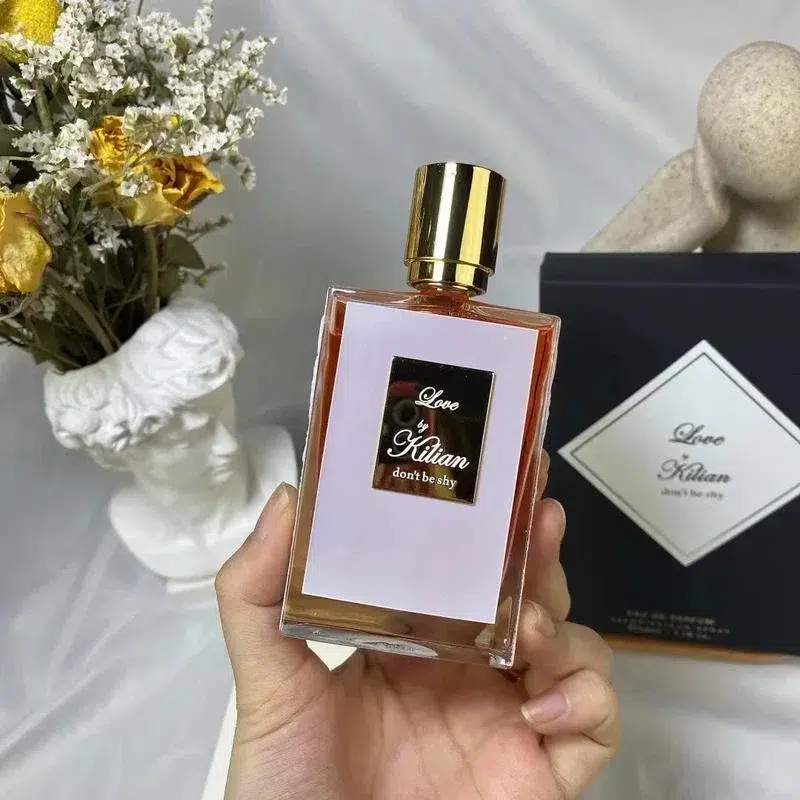
My Quick Answer: What Matters Most When I Compare Love Don’t Be Shy Alternatives
I use six filters. I look at scent progression, floral definition, gourmand texture, drydown balance, performance evidence, and price. I deliberately separate those variables because a fragrance can perform well on one and poorly on another. A long-lasting perfume is not automatically a close interpretation, and a close opening is not automatically a good all-day match.
| What I Compare | What I Look For | What I Do Not Assume |
|---|---|---|
| Opening | Neroli/citrus brightness, diffusion, and contrast with sweetness | That a similar first spray proves a similar drydown |
| Heart | Orange blossom, rose-like facets, white-floral volume | That sweetness alone creates fidelity |
| Gourmand texture | Airy, powdered, creamy, caramelized, syrupy, or dense sweetness | That the sweetest option is the closest |
| Drydown | Vanilla, musk, resinous warmth, and balance after top notes fade | That a note list predicts the exact later wear |
| Performance | Longevity, projection, sillage, skin versus fabric | That concentration guarantees an exact hour count |
| Value | Current price, size, how often I would wear it, and satisfaction with the whole wear | That cheapest means best |
At the time of this update, IMIXX lists No.74 at $39 for 50 ml / 1.7 fl. oz. and publishes an 18% concentration. I treat those two points as seller-published product specifications. For the original fragrance, I do not rely on a comparison-price badge on my own website; I use the current official KILIAN PARIS US page as the price source.
My Evidence Ladder: How I Prevent Seller Claims from Looking Like Independent Proof
The biggest trust problem in seller-authored comparison content is not necessarily that every statement is wrong. The problem is that a seller can make a manufacturer claim, a customer quote, an official-brand fact, and a technical interpretation sound equally authoritative. I do not think they are equal, so I label them differently.
Evidence Level 1
Official or regulatory source
I use the original brand for the original’s current official description and US price, and I use IFRA/FDA for standards and regulatory context.
Evidence Level 2
IMIXX-published specification
I can verify what my own product page publishes, but I do not call a seller-published concentration or note list an independent finding.
Evidence Level 3
Customer report
Reviews can reveal patterns and disagreement, but seller-hosted reviews are not blinded testing and do not establish universal performance.
Evidence Level 4
My technical interpretation
I explain what the disclosed architecture suggests, but I identify interpretation as interpretation rather than presenting it as laboratory evidence.
Important correction to my own evidence standard
My product page contains marketing and performance language in addition to the basic specifications. I do not automatically import those performance claims into this article. Unless I can show a test method and underlying observations, I treat performance numbers as unverified marketing rather than as evidence for this comparison.
What Love, Don’t Be Shy Smells Like According to the Original Brand
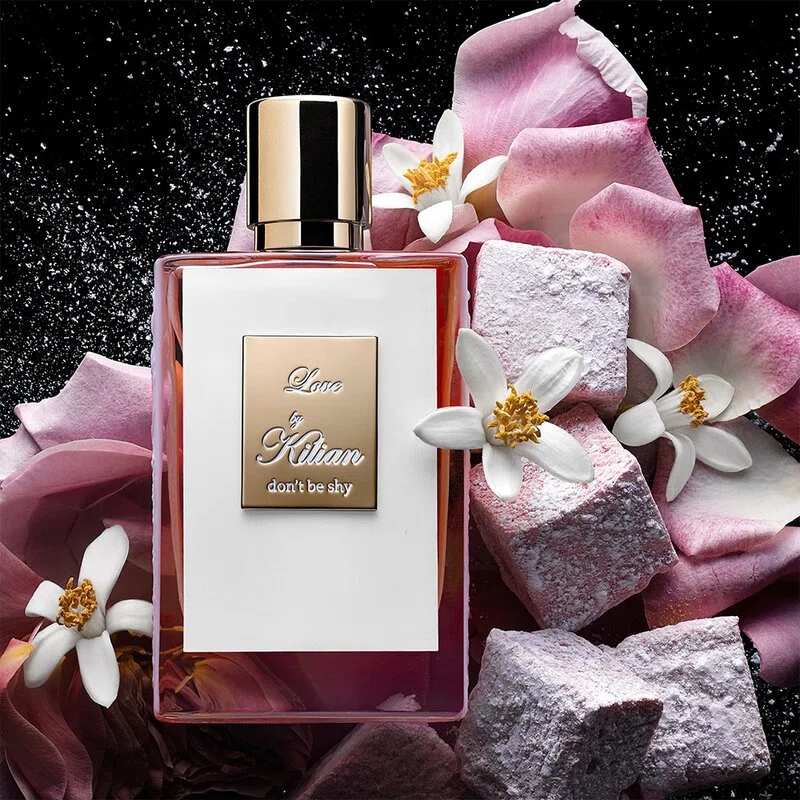
Before I compare any alternative, I return to the original brand’s own description. KILIAN PARIS currently presents Love, Don’t Be Shy with the signature neroli, rose, and marshmallow. The official page also includes Kilian Hennessy’s explanation that he wanted to create a gourmand fragrance without simply repeating the familiar ethyl-maltol-and-patchouli template. I use that official positioning as my factual starting point rather than treating a third-party note pyramid as definitive. The source is the official KILIAN PARIS Love, Don’t Be Shy page.
For my comparison framework, the important idea is movement. Neroli gives the opening a bright citrus-floral lift. Rose and related floral effects give the middle body. The marshmallow impression provides plush gourmand sweetness. As brighter materials evaporate, warmer and softer effects become more prominent. That progression is why I do not treat Love, Don’t Be Shy as “a marshmallow perfume with flowers added.” The floral-gourmand contrast is part of its identity.
| Stage | What I Focus On | Why It Matters for Similarity |
|---|---|---|
| Opening | Neroli-like brightness, citrus-floral lift, first impression of sweetness | It keeps the composition luminous rather than immediately heavy. |
| Floral heart | Rose, orange-blossom-like effects, white-floral volume | This provides the bridge between bright top notes and the gourmand base. |
| Gourmand transition | Marshmallow-like softness, powder, creaminess, caramelized warmth | The texture matters as much as the amount of sweetness. |
| Drydown | Vanillic warmth, musk, persistent sweet and resinous facets | This is where a perfume either retains its identity or becomes a generic sweet musk. |
Why Neroli and Orange Blossom Matter More Than “Marshmallow” Alone
If I only search for the sweetest vanilla-marshmallow perfume, I can find many scents in the same broad gourmand neighborhood. That does not mean they reproduce the same architecture. I use neroli and orange-blossom effects as important checkpoints because they create vertical lift and floral definition against the edible sweetness.
Neroli and orange blossom come from the same bitter-orange flower tradition, but they are not identical perfumery effects. Neroli oil, traditionally obtained by steam distillation of bitter-orange blossoms, often reads fresher, greener, more citrus-like, and more sparkling. Orange-blossom effects can feel fuller, sweeter, more floral, or more indolic. Modern perfume formulas can create either impression with combinations of natural extracts, isolated materials, aroma molecules, and composed bases.
I therefore look for balance rather than a literal checklist. If the fragrance becomes sugar and vanilla almost immediately, it may be enjoyable but structurally simplified. If the floral side stays too sharp and never softens into the gourmand body, it may miss the plush quality people associate with Love, Don’t Be Shy.
Perfumer’s knowledge point
“Marshmallow” is an olfactory accord or impression, not proof that literal marshmallow material exists in the formula. I can create a fluffy confectionary effect through sweet aromatic materials, vanillic facets, musks, florals, and texture modifiers. The creative challenge lies in proportion, diffusion, and transition.
The Fragrance Chemistry I Use to Interpret a Note Pyramid
I do not treat top, heart, and base notes as three sealed compartments. Perfumery materials overlap throughout the evaporation curve. A bright material can remain detectable longer than its “top note” label suggests, and a persistent musk can be present from the opening even if I notice it more clearly later.
What changes is the relative contribution of materials as evaporation, diffusion, odor threshold, substantivity, and interactions between ingredients alter the sensory balance. Vapor pressure is one useful concept: more volatile materials generally enter the headspace readily and often dominate early perception. Substantivity describes how strongly a material persists on a substrate such as skin or fabric. Odor threshold matters because a material does not need to be present at a high concentration to have a strong sensory effect.
This is why two fragrances with very similar public note lists can still smell different. A note pyramid does not reveal exact raw materials, dosage, purity specifications, supplier choices, captive materials, bases, trace components, solvent system, manufacturing conditions, or the relationship between those elements.
I also avoid the simplistic claim that natural materials are automatically superior and synthetics are automatically cheap. Modern perfumery uses both. Natural extracts can contribute complexity and nuance. Aroma molecules can provide diffusion, consistency, stability, ethical alternatives, and olfactory effects that are difficult or impossible to obtain from a natural source alone.
My 8-Point Comparison Framework for USA Shoppers
Because I do not have a publishable blinded side-by-side wear dataset for this article, I use a framework that makes every qualitative judgment explicit. This does not replace a controlled test. It does make the reasoning easier to audit.
| Criterion | What I Evaluate | Common Mistake | Better Evidence |
|---|---|---|---|
| Opening | Brightness and balance after the alcohol flash settles | Judging at the instant of spraying | Checks at 5 and 15 minutes |
| Floral definition | Neroli, orange-blossom and rose-like structure | Assuming sweetness equals similarity | 30- to 90-minute observations |
| Sweetness texture | Fluffy, creamy, powdered, caramelized, syrupy | Choosing whichever sample smells sweetest | Descriptive notes instead of one score |
| Transition | How naturally floral brightness becomes gourmand warmth | Comparing note names instead of development | Repeated checkpoints |
| Drydown | Vanilla, musk, warmth and retained floral identity | Ignoring the perfume after hour one | 2-, 4- and 6-hour checks |
| Longevity | How long it remains detectable | Confusing it with projection | Fixed dose, repeated wear |
| Projection / sillage | Radiation at defined times and the scent trail | Treating “stronger” as “closer” | Distance checks with another evaluator |
| Value | Price, size, frequency of use and full-wear satisfaction | Assuming lowest price wins | Live price plus personal use context |
First-Hand Wear-Test Status: What I Have and What I Still Do Not Have
This is the most important empirical statement in the article: I am not presenting a completed, documented, first-hand controlled side-by-side wear test of No.74 versus the original. I do not have a publishable table showing fixed spray mass, coded samples, environmental conditions, timed observations, multiple evaluators, and raw similarity ratings.
That limitation matters because this article can influence a purchase. I do not think a structured framework is a substitute for original data. The framework improves consistency in how I reason, but it does not create evidence that I did not collect.
What I can document today is more limited: the current public specifications of No.74, the official KILIAN scent description and price, the published ingredient declaration, the presence of mixed performance experiences in seller-hosted customer feedback, and the technical plausibility of the fragrance architecture. I use those facts to make a cautious product-positioning judgment, not a laboratory claim.
What this means for my conclusion
I can recommend No.74 as an affordable IMIXX interpretation built for this scent direction. I cannot honestly call it the objectively closest or longest-lasting option in the entire US market without a broader controlled comparison set.
The Controlled Test I Would Require Before Publishing a Numerical Result
If I later add a first-hand comparison, I would predefine the method before smelling the samples. I would code the bottles to reduce expectation bias, standardize application by spray mass rather than vague spray counts where possible, use both blotter and skin, record temperature and humidity, and evaluate at fixed checkpoints such as 5 minutes, 15 minutes, 1 hour, 3 hours, 6 hours, and late drydown.
I would score separate variables instead of producing one mysterious “similarity” number. Opening fidelity, floral-heart fidelity, gourmand texture, drydown fidelity, longevity, projection, and overall preference should remain distinct. A fragrance can be highly similar in the first hour and diverge later. It can also project more strongly than the original without smelling closer.
| Test Control | Why I Would Use It | What It Helps Prevent |
|---|---|---|
| Coded samples | Reduces brand and price expectation | Knowing which bottle is cheaper before scoring |
| Fixed application | Makes dose more comparable | One sample receiving more fragrance |
| Timed checkpoints | Separates opening from later wear | Memory-based “it lasted all day” judgments |
| Multiple evaluators | Shows interpersonal variation | Treating one nose as universal |
| Raw notes published | Lets readers audit the conclusion | A score with no visible method |
What I Can Verify About IMIXX No.74
The current IMIXX product page lists No.74 at $39 for 50 ml / 1.7 fl. oz. and publishes an 18% concentration. It lists neroli, bergamot, pink pepper, and coriander at the top; orange blossom, jasmine, honeysuckle, rose, and iris in the middle; and sugar, caramel, vanilla, musk, civet-style, and labdanum facets in the base.
I can verify that IMIXX publishes those specifications. I cannot call them independently verified measurements. The concentration figure has not been independently confirmed for this article by a third-party laboratory, and the note list is a scent-description tool rather than a chemical formula disclosure.
The page also contains customer reports that vary on performance. Some customers describe strong persistence, including on clothing, while at least one customer reports shorter wear. I think that disagreement is useful because it shows why I should not promise one longevity number. At the same time, the reviews are hosted on my own commercial site, so I treat them as seller-hosted user reports, not independent evidence.
Claims I intentionally do not make here
- I do not claim a third-party lab independently verified the 18% concentration.
- I do not claim a blinded panel established a precise similarity percentage.
- I do not claim No.74 lasts the same number of hours on every wearer.
- I do not claim matching public note names proves chemical identity.
- I do not claim No.74 has been proven to outperform the original.
- I do not claim my seller-hosted reviews are independent testing.
IMIXX No.74 vs. Love, Don’t Be Shy: The Comparison I Can Support
IMIXX seller-published product
IMIXX No.74
Current listed price: $39
Size: 50 ml / 1.7 fl. oz.
Published concentration: 18%
Published architecture: neroli/citrus-spice opening → orange-blossom/white-floral heart → sugar, caramel, vanilla, musk and warm resinous facets
Evidence status: seller-published specifications; no independent wear-test result claimed here
Original reference fragrance
KILIAN PARIS Love, Don’t Be Shy
Current official US price shown: $305 for the standard full-size listing used in this comparison
Official signature: neroli, rose, marshmallow
Format: Eau de Parfum
Evidence status: official-brand product information
| Factor | No.74 | Original | My Responsible Interpretation |
|---|---|---|---|
| Market role | Affordable inspired interpretation | Original luxury fragrance | They serve different ownership goals. |
| Current 50 ml price context | $39 seller price | $305 official-brand US price shown | The price gap is factual, but it does not prove scent equivalence. |
| Scent direction | Neroli/citrus-spice, orange blossom/white florals, sweet vanilla-caramel-musky base | Neroli, rose, marshmallow signature | The disclosed structures occupy the same broad floral-gourmand territory. |
| Concentration | 18% according to IMIXX | Eau de Parfum designation | Neither label alone tells me exact longevity. |
| Controlled performance evidence in this article | Not available | Not tested here under a controlled protocol | I do not name a longevity winner. |
| Best fit | Buyers prioritizing scent direction and lower everyday cost | Buyers prioritizing the original composition, bottle and luxury brand experience | The correct choice depends on the purchasing objective. |
How Close Does No.74 Smell? Why I Refuse to Invent a Percentage
A percentage feels objective, but it is only meaningful when the denominator and method are defined. If I said “96% similar,” I would need to explain whether that number means molecular overlap, chromatographic peak matching, trained-panel sensory similarity, consumer preference, note-list overlap, or a weighted combination of those measures.
GC-MS can be extremely useful in fragrance analysis, but it does not automatically produce a human similarity score. Complex naturals contain many components. Trace materials can matter far more to smell than their concentration suggests. Co-elution and identification uncertainty can complicate interpretation. Proprietary bases and captives may not be straightforward to infer from a public chromatogram. Most importantly, sensory perception is nonlinear and context-dependent.
So I use descriptive language that can be challenged. No.74 is designed with a bright neroli/citrus-spice opening, an orange-blossom-centered floral heart, and a sweet vanilla-caramel-musky base. That architecture is intentionally relevant to the Love, Don’t Be Shy scent family. Whether it is close enough for a particular buyer is still a sensory judgment, not a number I can honestly manufacture from a note list.
What an 18% Concentration Actually Tells Me
IMIXX currently publishes No.74 at 18% concentration. I consider that useful product information, but I do not treat it as a stopwatch.
Two perfumes with similar nominal concentrations can behave very differently because individual materials differ in volatility, diffusion, odor threshold, and substantivity. A formula with persistent musks, vanillic materials, woods, and resins can remain detectable after its brighter materials have faded. A different formula at a similar concentration can feel shorter-lived if much of its sensory impact depends on more volatile materials.
Skin hydration, skin temperature, ambient temperature, humidity, airflow, spray amount, application location, clothing, and olfactory adaptation also influence what a wearer reports. That is why “EDP” and “18%” are useful descriptors but not guaranteed hour counts.
Technical takeaway: Concentration is a formulation specification. Longevity and projection are performance outcomes. I treat them as related, not interchangeable.
How Long Does No.74 Last? The Most Accurate Answer I Can Give
I do not have an independent controlled wear study that justifies one universal longevity number. I therefore will not publish “7–9 hours” or “all day” as though it were a measured fact for every buyer.
The evidence I do have is mixed and lower in quality: a manufacturer-published 18% concentration and seller-hosted customer comments with different experiences. Some users describe strong persistence, particularly on clothing, while others report less persistence on skin. That variation is plausible because perfume performance genuinely changes across wearers and environments, but it still does not substitute for controlled testing.
My At-Home Performance Test for Buyers
- I use the same number of sprays on the same skin area on each test day.
- I avoid another perfume or heavily scented body product during the comparison.
- I record temperature or indoor conditions if they are unusual.
- I check at 15 minutes, 1 hour, 3 hours, 6 hours, and later if I can still detect the scent.
- I record projection separately from detectability.
- I repeat the test on at least two days before deciding what “normal” performance means for me.
- I test fabric separately, and only on fabric that is safe to spray.
This method is not a laboratory protocol, but it is more informative than changing spray count every day and relying on memory. It also gives the buyer personally relevant data, which matters because individual performance is part of the purchase decision.
Why Maceration and Maturation Are Not Magic Performance Switches
Online fragrance discussions often use “maceration” to describe leaving a finished bottle alone after spraying it. In manufacturing, I use more precise language. A concentrate may be allowed to mature, and an alcoholic fragrance may be given controlled time to integrate before finishing operations such as chilling, filtration, quality checks, or bottling depending on the process.
The correct process depends on the formula. There is no universal number of weeks that automatically improves every perfume. Time can help reveal solubility or stability behavior, but deliberate uncontrolled oxidation is not the same as a controlled manufacturing stage.
My consumer rule is simple: I expect a properly finished perfume to arrive ready to wear. I do not tell a buyer that weak performance is automatically their fault for failing to “macerate” a retail bottle at home.
How I Think About Raw-Material Quality
“Premium ingredients” is too vague for me unless I define what I mean. Raw-material quality can involve odor character, purity, batch consistency, specification limits, stability, supplier documentation, regulatory suitability, traceability, and performance in the final formula.
An expensive material is not automatically the best material for a formula. A material has to perform the intended olfactory and technical function. A beautiful natural extract can bring complexity, but it can also vary from batch to batch. A well-selected aroma molecule can improve diffusion, reproducibility, stability, or safety while creating an effect that a single natural material cannot provide.
For that reason, I do not use “natural” as a synonym for luxury or “synthetic” as a synonym for cheap. I care more about the finished composition, documentation, consistency, and technical suitability.
Knowledge point: A public note list is a communication layer. It helps me understand intended odor effects, but it does not disclose exact materials, supplier grades, dosage, or formula structure.
IFRA and FDA: What I Say—and What I Avoid Saying
I use IFRA and FDA references to explain standards and regulation, not to create a false impression that either organization has personally endorsed No.74. The International Fragrance Association’s IFRA Standards page explains that Standards can ban, restrict, or set specifications for fragrance materials when risk management is required. IFRA also notes that the Standards are voluntary and do not replace compliance with applicable national or local law.
For US readers, the U.S. Food and Drug Administration’s fragrance guidance explains that perfume and cologne intended to make a person more attractive are generally cosmetics. FDA also explains that cosmetic products and ingredients generally are not subject to premarket approval, except in limited areas such as color additives, while companies remain responsible for safety and proper labeling.
So I avoid phrases such as “FDA-approved perfume” or wording that implies IFRA is a consumer-product certification authority for a finished bottle. Technical acronyms should make a claim more precise, not more impressive.
How I Read the No.74 Ingredient Declaration
The current No.74 page publishes an ingredient declaration beginning with alcohol denat., fragrance/parfum, and water, followed by named fragrance-related substances including limonene, linalool, citronellol, farnesol, geraniol, citral, cinnamal, and eugenol, among others.
I do not treat a chemical-sounding ingredient name as evidence of poor quality. Many fragrance constituents occur naturally in botanical extracts and can also be produced or supplied as isolated materials. “Natural” does not automatically mean non-allergenic, and “chemical” does not mean unsafe.
If I have a known fragrance allergy or significant sensitivity, I treat that as a personal safety issue. I read the available ingredient information carefully and seek appropriate professional medical advice when necessary rather than relying on a marketing label.
Why Can No.74 Cost So Much Less Than the Original?
I do not think “luxury fragrance is only markup” is a defensible explanation. Retail price can include fragrance concentrate, alcohol, bottle, pump, cap, decoration, carton, inserts, testing, quality control, inventory, warehousing, distribution, wholesale and retail margins, samples, advertising, campaigns, returns, customer service, and the cost of maintaining a luxury brand network.
I do not know the confidential cost breakdown of KILIAN PARIS, so I will not pretend I know exactly what the liquid, bottle, or marketing costs per unit. A specific dollar claim without source documents would be false precision.
An inspired-fragrance business can operate differently. Direct-to-consumer distribution, simpler presentation, narrower marketing expenditure, and fewer luxury retail layers can reduce the final price. That explains why a lower retail price is possible. It does not prove that the fragrance is chemically equal, sensorially equal, stronger, or weaker.
My value rule: Price is a commercial fact, not a performance metric. I only call a fragrance good value if I enjoy the full wearing experience enough to use it frequently.
How I Compare Price Fairly
For this article, I use the current IMIXX selling price for No.74 and the current official KILIAN PARIS US price for the original. I deliberately do not treat a seller-side “luxury price” badge as the authoritative source for another brand’s live price because comparison badges can become outdated.
At this update, that gives me a straightforward factual comparison: No.74 is listed at $39 for 50 ml, while the official KILIAN page shows the original at $305 in the comparable full-size listing. The gap is commercially meaningful for shoppers searching for an affordable alternative under $50, but it does not establish scent closeness.
I separate “cheapest,” “closest,” and “best value” because they answer different questions. A cheap fragrance that I stop wearing after two uses can be poor value. A more expensive bottle that I love and finish can be better value for me. Personal use matters.
How US Climate, Skin, and Fabric Can Change a Sweet Floral Gourmand
The United States spans dramatically different wearing environments. A sweet orange-blossom fragrance can behave differently in dry desert heat, humid coastal weather, winter cold, or heavily air-conditioned indoor spaces.
Higher temperature generally increases volatility and can make the opening feel more expansive while accelerating the loss of some bright materials. Cooler temperatures can reduce diffusion and make dense base materials feel smoother and slower. Humidity, airflow, and clothing change the experience again.
Skin condition also influences perceived performance. On dry skin, some wearers find fragrance becomes less noticeable more quickly. An unscented moisturizer can sometimes help perceived persistence if it is suitable for the wearer. Fabric can hold aromatic materials differently from skin, although perfume can mark delicate fabrics.
My Practical Wear Habits
- I apply fragrance to clean skin when I am evaluating it.
- I avoid changing spray count between comparison days.
- If my skin is dry and tolerates it, I use an unscented moisturizer.
- I do not aggressively rub my wrists together after application.
- I test an inconspicuous area before spraying clothing.
- I store fragrance away from direct sunlight and repeated heat swings.
- I distinguish “still detectable on skin” from “still projecting to other people.”
How I Choose the Right Love Don’t Be Shy Alternative for Different Preferences
If I Want More Orange Blossom and Floral Lift
I prioritize a perfume where the floral heart remains identifiable beyond the opening. If sugar and vanilla bury the florals immediately, I may still enjoy the scent, but I would describe it as a sweeter reinterpretation rather than the closest structural match.
If I Want More Marshmallow
I look for softness rather than maximum sugar. Fluffy, creamy, and powdered sweetness feels different from sticky caramel or burnt sugar. The texture of the accord can matter more to perceived similarity than the absolute sweetness level.
If I Want the Closest Overall Scent Direction
I compare the whole sequence: bright opening, floral center, gourmand transition, and warm musky drydown. I do not make a decision from the first minute because late-stage divergence can be more important than opening similarity.
If I Want the Longest-Lasting Option
I look for repeatable wear evidence rather than a bold hour claim. I also decide whether I mean projection or detectability. A fragrance can remain on skin for many hours while becoming intimate much earlier.
If I Want an Option Under $50
No.74 currently fits that budget filter at $39 for 50 ml. I still treat the price as a secondary benefit. If I do not enjoy the floral-to-gourmand progression, saving money does not make the purchase successful.
What Makes a High-Quality Interpretation Different from a Generic Sweet Perfume?
For me, the difference is not a buzzword such as “premium” or a dramatic similarity percentage. I look for architectural fidelity: contrast, floral definition, textural sweetness, transition, and a controlled drydown.
1. Contrast
I want brightness to remain visible against the sweetness.
2. Floral definition
I want neroli/orange-blossom and rose-like effects to survive into the heart.
3. Gourmand texture
I want softness and dimension, not simply maximum sugar.
4. Drydown control
I want vanilla, musk and warmth to remain balanced after the bright materials fade.
I apply the same standard to my own product. If a buyer thinks No.74 is too floral, too sweet, too soft, too strong, or too different in the drydown, that is valid sensory information. I prefer a framework that helps a reader identify the exact difference rather than telling them they are “wrong” because a marketing percentage says the perfumes are almost identical.
Frequently Asked Questions About Love Don’t Be Shy Alternatives
My Final Recommendation
If my goal is to own the original Love, Don’t Be Shy composition, bottle, and KILIAN PARIS luxury experience, I would buy the original from the brand or an authorized retailer. An inspired interpretation does not replace the collecting value or emotional value of owning the original when that is the objective.
If my goal is a more affordable everyday fragrance in this scent direction, I would put IMIXX No.74 Inspired by Love Don’t Be Shy at the top of my own brand’s recommendation because it is built for this floral-gourmand direction and is currently listed at $39 for 50 ml.
I would still apply the same evidence standard to it that I apply to every other fragrance: I would smell the opening after the initial alcohol flash, wait for the floral heart, pay attention to the texture of the sweetness, revisit the drydown, separate projection from longevity, and judge value only after I know whether I actually enjoy wearing it.
The question I use is not “Can I attach a dramatic percentage to this perfume?” It is: does this fragrance preserve enough of the bright-floral-to-gourmand architecture I want, and does the real wearing experience justify the price for me?
If the answer is yes, the product can be a sensible purchase even without pretending it is chemically identical to the original. If the answer is no, a low price does not rescue the mismatch.
You can review the current No.74 size, ingredients, published concentration, customer feedback, and live price on the No.74 product page, or browse the broader collection at IMIXX Perfumes.
Editorial disclosure: IMIXX sells No.74. I have a commercial interest in this product. In this article I separate official-brand and regulatory information from IMIXX-published specifications, seller-hosted customer reports, and technical interpretation. I do not claim a completed independent blind wear study, a laboratory-confirmed similarity percentage, or a universal longevity result.
