

How to Find the Best Jo Malone Wood Sage and Sea Salt Dupe in the USA: A Perfumer’s Guide to Scent, Longevity, Ingredients and Value
Quick summary: When I evaluate a Jo Malone Wood Sage and Sea Salt dupe, I do not begin with a similarity percentage or a promise that one bottle automatically performs better than another. I begin with the fragrance structure: the soft ambrette-like musk, mineral sea-salt effect, aromatic sage, transparent woods, restrained diffusion, and—most importantly—the way those elements change between the opening and the dry-down.
I also want to be clear about the evidence behind this guide. I can verify public information such as listed prices, bottle sizes, manufacturer statements, official fragrance descriptions, and regulatory or analytical references. I am not presenting an independent blind wear test or independent laboratory analysis of IMIXX No.51 because I do not have such a dataset to publish here. Where I discuss product-specific similarity or performance, I distinguish manufacturer information from independently verifiable facts.
For a US shopper researching a jo malone wood sage and sea salt dupe, that distinction is important. A fragrance can appear highly convincing during the first five minutes and then move in a substantially different direction as volatile materials evaporate. My goal is therefore not to ask you to trust the phrase “best dupe.” My goal is to give you a framework you can use to judge scent fidelity, dry-down quality, projection, persistence, price, formulation claims, and overall value for yourself.
What I verified for this article
I verified the current public product information used in the comparison, including the listed US prices and sizes. I also reviewed the manufacturer’s published similarity and analytical-development statements. I did not independently verify the 99.98% similarity figure, run GC-MS on No.51, or conduct a controlled blinded sensory panel. I therefore do not present those manufacturer claims as independent findings.
I think this is a better way to discuss inspired fragrance. If I simply told you that a product is “almost identical,” “lasts all day,” or “beats the luxury original,” I would be asking you to accept conclusions without seeing the method behind them. A useful fragrance guide should reduce that information gap rather than enlarge it.
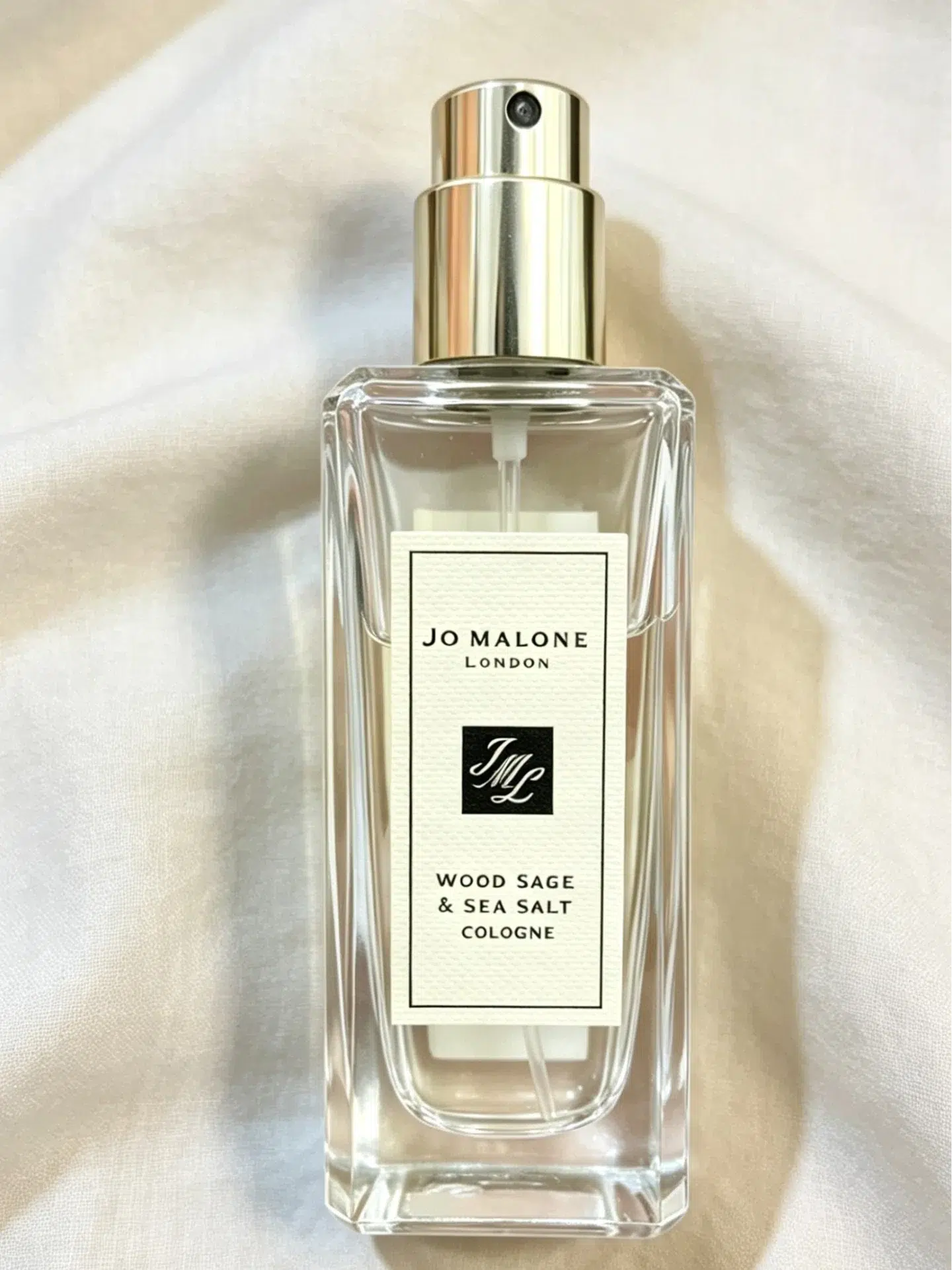
What Does Jo Malone Wood Sage & Sea Salt Actually Smell Like?
Before I can judge any Wood Sage and Sea Salt alternative, I first need to define the olfactory target. The fragrance is often placed in the aquatic category, but I find that description too broad. Many aquatic scents are bright blue, citrus-forward, aggressively ozonic, or obviously marine. Wood Sage & Sea Salt is more restrained and textural.
The official Jo Malone Wood Sage & Sea Salt Cologne page describes the idea through the British coast, sea salt, mineral cliffs, wild water, and a fresh woody character. I find that language useful because it describes an atmosphere rather than pretending “sea salt” is a single literal smell.
When I break down the scent architecture, I focus on four interacting impressions:
- Soft ambrette-like musk: clean, lightly warm, skin-like, and subtly rounded.
- Mineral salinity: the sensation of salty air, wet stone, sea spray, and dry mineral texture rather than literal sodium chloride.
- Aromatic sage: herbal dryness that gives the fragrance structure and keeps the marine effect from becoming generic.
- Transparent woods: a dry, restrained woody base that suggests weathered driftwood instead of dense cedar, smoke, resin, or amber.
This combination also explains why long-tail searches such as what does Jo Malone Wood Sage and Sea Salt smell like, Wood Sage and Sea Salt notes, sea salt sage perfume, mineral fragrance, coastal perfume, fresh woody unisex fragrance, and salty woody perfume for summer often overlap in intent.
The fragrance appears simple because it is transparent. In practice, transparent perfume construction can be unforgiving. In a dense gourmand or amber formula, sweetness, resins, heavy woods, and vanillic materials may hide small imbalances. In a sparse salt-and-sage structure, one marine material that is slightly too loud can change the entire impression.
How I Read Wood Sage and Sea Salt Notes Like a Perfumer
I never treat a marketing note pyramid as a chemical formula. Notes are communication tools. They tell me how a brand wants consumers to understand a fragrance, but they do not reveal every raw material, its concentration, its quality grade, its source, or how it interacts with the rest of the formula.
That distinction becomes especially important when someone searches for a perfume that smells like Jo Malone Wood Sage and Sea Salt. Two fragrances can both list sea salt, sage, musk, and woods while smelling surprisingly different in actual wear.
Ambrette: Why the Soft Musk Effect Matters
Ambrette is associated with musk mallow and is valued in perfumery for a soft, musky, subtly vegetal, almost skin-like effect. In this fragrance style, I think of the ambrette idea as a bridge. It connects the cool mineral opening to the warmer human-skin impression beneath it.
If that bridge is missing, the perfume may become too sharp, too aquatic, or too much like a functional shower fragrance. If the musk becomes too thick or powdery, the fragrance loses the airy transparency that makes the original concept distinctive.
When I assess this style, I therefore return to the fragrance after the opening has settled and ask: Is there still a soft musky halo beneath the salt and herbs?
If the answer is no, the fragrance may reproduce part of the opening without reproducing the complete architecture.
Sea Salt: Why “Salty” Is Usually an Accord
One of the most useful things I can explain to a perfume shopper is that a “sea salt note” is generally an olfactory construction. A perfumer creates the impression of coastal air, mineral water, salty skin, damp stone, or ocean breeze through combinations of aroma materials with different diffusion, volatility, and odor characteristics.
I therefore do not ask whether a fragrance contains “real sea salt.” I ask whether the complete accord produces the intended sensory illusion.
For a convincing Wood Sage and Sea Salt-inspired perfume, I look for salinity that feels:
- airy rather than dense;
- mineral rather than sugary;
- fresh without becoming harshly ozonic;
- salty without turning metallic or synthetic-smelling;
- clean without becoming a laundry accord;
- integrated with the woods and musk rather than floating separately above them.
Sage: The Dry Aromatic Counterweight
Sage adds dryness and aromatic definition. Without it, a marine-musky fragrance can feel smooth but vague. With too much of it, the fragrance can become medicinal, camphoraceous, culinary, or excessively green.
I therefore judge sage by function rather than volume. It should sharpen the outline of the fragrance without becoming the entire picture.
Transparent Woods: Where I Judge the Dry-Down
The late dry-down is one of the most revealing stages in an inspired fragrance. A perfume can begin with a persuasive salty opening and then collapse into a generic woody musk, sugary amber, or dense synthetic base after two hours.
For this scent family, I prefer the woody structure to remain dry, sheer, and tied to the mineral idea. I do not need the fragrance to remain loud. I need it to remain coherent.
| Element | What I Expect | Common Failure | My Evaluation Question |
|---|---|---|---|
| Ambrette / soft musk | Warm skin, softness, subtle musk | Heavy powder or laundry musk | Does it soften the salt without burying it? |
| Mineral salt accord | Coastal air, mineral breeze, salty skin | Generic “blue” aquatic effect | Does it feel mineral rather than merely watery? |
| Sage | Dry herbal lift | Medicinal or kitchen-herb smell | Does it provide structure without dominating? |
| Transparent woods | Dry driftwood and quiet warmth | Sweet amber or dense woody base | Does the late dry-down preserve the coastal mood? |
How I Evaluate a Jo Malone Wood Sage and Sea Salt Alternative
When somebody asks me which Wood Sage and Sea Salt alternative is “best,” I first separate the question into smaller decisions.
Does the person want the closest smell? Longer wear? Stronger projection? Lower cost? A cleaner dry-down? A more noticeable fragrance for evening? Or a subtle everyday scent for an office?
Those goals can point toward different products. I therefore use a staged evaluation rather than one overall impression.
Step 1: I Check the Opening, but I Do Not Let It Decide the Winner
The opening can be persuasive because highly volatile materials reach the nose quickly. It can also be misleading. A formula may recreate the initial fresh effect convincingly and then diverge after the most volatile materials have evaporated.
My basic timing framework is:
- 0–5 minutes: opening and first impact;
- 30–60 minutes: transition into the heart;
- 2–4 hours: developed dry-down;
- late wear: remaining skin scent and structural continuity.
If similarity exists only during the first five minutes, I describe it as opening similarity rather than full-wear fidelity.
Step 2: I Give More Weight to the Heart and Dry-Down
This is where simple note-list comparisons become much less useful. Under US cosmetic labeling rules, complex fragrance mixtures can be identified collectively as “Fragrance” rather than exposing a complete proprietary formula. The US Food and Drug Administration explains this framework for fragrance ingredients in cosmetics.
That means I cannot infer identical chemistry simply because two marketing pages use the same descriptive notes.
Knowledge point: a note list is not a formula
When I read “sea salt,” “sage,” “woods,” or “musk,” I interpret those words as sensory descriptions. I do not treat them as proof that two fragrances contain the same molecules or the same proportions.
Step 3: I Separate Scent Similarity, Projection, and Longevity
I consider this one of the most important improvements to ordinary perfume-dupe comparisons.
A fragrance can smell close to the reference and still wear softly. Another can project for much longer because its base has been made denser, but that change may reduce similarity.
I therefore score four questions separately:
- Scent fidelity: How closely does the opening, heart, texture, and dry-down follow the reference idea?
- Persistence: How long does recognizable fragrance remain detectable?
- Projection: How far does the scent radiate?
- Character retention: Does the perfume still smell like the same composition after several hours?
I would rather show a consumer four imperfect but understandable measures than compress everything into one impressive-looking “95% match” number.
Step 4: I Calculate Price per Milliliter
A $30 bottle is not automatically cheaper than an $80 bottle in equivalent volume. For a fair value comparison, I use unit pricing.
Price per ml = bottle price ÷ bottle volume
Equivalent price per 100ml = price per ml × 100
This is particularly useful for US consumers comparing a 50ml inspired fragrance with a 100ml luxury bottle.
Step 5: I Grade the Evidence Behind Every Strong Claim
I use an informal evidence ladder:
| Evidence Level | Example | How I Treat It |
|---|---|---|
| Directly verifiable | Current listed bottle size or price | I can report it with a date-sensitive qualifier. |
| Manufacturer-reported | A brand’s similarity percentage | I attribute it explicitly to the manufacturer. |
| Customer-reported | A review saying a scent lasted all day | I treat it as individual experience, not a universal performance fact. |
| Independently tested | Documented blind panel or third-party lab work | I would give it greater evidential weight if the method and data were available. |
What GC-MS Can Tell Me About Perfume—and What It Cannot
GC-MS, or gas chromatography-mass spectrometry, is legitimate analytical technology. In fragrance development, it can be extremely useful when handled by people who understand analytical chemistry, raw materials, and perfumery.
The US National Institute of Standards and Technology describes GC-MS as a combination of gas-chromatographic separation of volatile analytes and mass-spectrometric detection.
In practical fragrance work, I see GC-MS as one layer of evidence rather than an automatic verdict.
It can help an analytical team:
- separate many volatile and semi-volatile constituents;
- observe chromatographic patterns;
- compare different samples;
- support identification of candidate compounds;
- investigate batch differences;
- support raw-material analysis;
- assist quality-control investigations.
What it cannot do by itself is prove that two finished perfumes will smell identical to every human nose.
Why Chemical Similarity and Sensory Similarity Are Different
The nose does not perceive materials according to chromatographic peak size alone. Odor impact depends on factors such as concentration, detection threshold, molecular interactions, volatility, ingredient purity, stereochemistry, trace compounds, and the surrounding formula.
A compound present at a very low concentration can have strong sensory impact if its odor threshold is extremely low. A larger analytical signal may not dominate the smell if the material is comparatively weak in human perception.
The development framework I consider strongest:
instrumental analysis + raw-material knowledge + trained sensory evaluation + iterative formulation + controlled wear testing + batch consistency checks
I consider that combined approach more credible than presenting an instrument as a machine that can simply “copy” a perfume.
How I Interpret IMIXX’s 99.98% Similarity Claim
IMIXX currently publishes a 99.98% similarity figure on its No.51 product page and describes an analytical-development approach involving fragrance data and instrumentation.
I think the most trustworthy way to present that statement is to separate what is claimed from what has been independently demonstrated.
What IMIXX states: the company publishes a 99.98% similarity claim and describes analytical tools as part of its development process.
What I can reasonably conclude: analytical comparison can provide useful information when a fragrance developer is studying the structure of a reference perfume.
What I do not claim: I do not describe 99.98% as independently verified human sensory equivalence because I do not have a published independent blind-panel protocol, raw analytical dataset, external laboratory report, or statistical methodology establishing that interpretation.
I do not think this qualification weakens the product. I think it improves credibility. There is a meaningful difference between saying, “we use analytical tools in development” and saying, “science proves every consumer will experience 99.98% identical smell.”
The first statement describes a process. The second would require much stronger evidence.
What First-Hand Evidence Would Make the Product Case Stronger?
The main limitation of this article is straightforward: I am not publishing an independent wear-test dataset for No.51. Rather than pretending otherwise, I think the better solution is to explain exactly what future original evidence would strengthen the page.
A Documented Sensory Panel
I would prefer a modest, reproducible test to an oversized marketing claim. For example, a useful protocol could include:
- a defined number of evaluators;
- reference and test samples coded blindly;
- equal spray count;
- identical blotter material;
- separate skin testing where appropriate;
- evaluations at 5 minutes, 30 minutes, 2 hours, 4 hours, and late dry-down;
- separate similarity, projection, and persistence scores;
- recorded room temperature and humidity;
- an anonymized results table.
Real Production Documentation
Because a manufacturing background can create real information advantage, I would also want original production evidence where disclosure is commercially appropriate:
- raw-material lot tracking;
- formula version control;
- blending records;
- resting or maturation conditions;
- filtration procedure;
- batch-release checks;
- approved odor standards;
- finished-product consistency records.
That type of information would be difficult for a generic affiliate blog to reproduce. It would create genuine first-hand information gain rather than simply adding more words to an existing topic.
Why Raw-Material Quality Matters More Than “Natural vs. Synthetic”
I do not use “natural” as a synonym for good or “synthetic” as a synonym for cheap. Modern fine fragrance depends on both categories.
Natural materials can bring exceptional complexity and variation. Synthetic aroma molecules can provide diffusion, stability, cleanliness, transparency, persistence, or abstract effects that are difficult to obtain consistently from natural extraction alone.
I therefore judge a raw material by the job it performs.
I ask:
- Does it create the intended odor effect?
- Is it stable enough for the formula?
- Is quality consistent across supply lots?
- Does it integrate cleanly with surrounding materials?
- Does it improve or disrupt the evaporation curve?
- Does it create harshness at the required dosage?
- Is it appropriate for the intended finished product?
In a salty woody perfume, a powerful material is not automatically a useful material. If increasing persistence turns a transparent fragrance into a thick amber-woody scent, the formula may last longer while becoming less faithful to the desired character.
Why Maceration Matters—but Why I Do Not Treat It as a Competition
Maceration is frequently used as a marketing term, sometimes as if the longest resting period automatically creates the highest-quality perfume. I do not find that useful.
After blending, a fragrance may undergo controlled resting, finishing, filtration, and stability procedures before filling. The appropriate process depends on the formula, solvent system, raw materials, manufacturing environment, temperature, filtration requirements, and quality-control standards.
I care more about whether the production process is repeatable than whether a brand advertises a dramatic number of weeks.
Factory-level questions I would ask
- Is the formula version controlled?
- Are raw-material lots traceable?
- Are blending conditions defined?
- Are resting conditions documented where relevant?
- Are filtration criteria specified?
- Is the finished odor compared with an approved standard?
- Is each batch released against defined quality criteria?
If IMIXX publishes more factory information in the future, I would rather see actual procedures, photographs, responsible technical personnel, dates, and batch documentation than a generic claim such as “long maceration.”
Does Eau de Parfum Automatically Last Longer Than Cologne?
I do not treat a concentration label as a complete predictor of performance.
A higher aromatic concentration can influence wear, but longevity also depends on the nature of the materials being used. A formula dominated by volatile fresh materials may behave differently from a composition rich in persistent woods, musks, resins, or amber materials even if both products use the same concentration terminology.
This matters when a shopper searches for a long-lasting Wood Sage and Sea Salt alternative. If a perfumer makes a delicate coastal formula dramatically denser just to achieve more hours of projection, the resulting scent may be more powerful but less faithful.
I therefore keep four ideas separate:
- concentration;
- projection;
- persistence;
- scent fidelity.
A fragrance can score highly in one category and moderately in another.
Why Wood Sage and Sea Salt Can Seem to Fade Quickly
People often search Wood Sage and Sea Salt longevity, why Wood Sage and Sea Salt fades quickly, and how to make Wood Sage and Sea Salt last longer. I think several different experiences are being compressed into the word “longevity.”
Fresh Aromatic Effects Can Become Quieter Earlier
Airy marine, mineral, and aromatic effects often create an immediate impression but may not dominate late wear in the way heavy sweet, resinous, leathery, or dense woody structures can.
Projection Is Not Persistence
If I can no longer smell a fragrance around myself at normal distance but can still detect it directly on skin, I would describe it as lower projection with continued persistence.
That is different from a perfume disappearing completely.
Olfactory Adaptation Changes What the Wearer Notices
When I am continuously exposed to the same smell, my awareness can decrease. For that reason, I do not recommend repeatedly smelling the same wrist every few minutes during a wear test.
I prefer scheduled observations.
Skin and Climate Add Variables
The USA does not have a single fragrance-wearing climate. Humid Miami, hot Phoenix, dry Las Vegas, cool Seattle, and a cold Minnesota winter create different environmental conditions.
Skin hydration, temperature, clothing, indoor air conditioning, physical activity, and spray quantity can all influence perception.
How I Would Make a Wood Sage and Sea Salt-Style Fragrance Last Longer
Before deciding that I need a stronger perfume, I would first control application conditions.
- I would apply fragrance to clean skin.
- If my skin were dry, I would use an unscented moisturizer.
- I would avoid aggressively rubbing the sprayed area.
- I would compare skin wear with suitable fabric wear separately.
- I would keep the bottle away from excessive heat and direct sunlight.
- I would test on more than one day.
- I would distinguish low projection from complete disappearance.
I would not promise that these steps turn every perfume into an eight-hour fragrance. Their purpose is to remove obvious variables so that the evaluation becomes more meaningful.
How I Would Test a Wood Sage and Sea Salt Dupe at Home
You do not need a laboratory to make your own comparison more disciplined. I recommend a simple home protocol.
Test 1: Keep the Application Consistent
Use the same number of sprays from approximately the same distance. If you have access to both fragrances, apply them to different blotters or different areas of skin. Do not spray one over the other.
Test 2: Record the Opening Before Reading Reviews
At 0–5 minutes, I would write down:
- salty vs. watery;
- mineral vs. blue aquatic;
- dry vs. sweet;
- herbal intensity;
- musk character;
- sharpness;
- overall transparency.
I would record these impressions before reading other people’s descriptions so that I do not unconsciously copy their vocabulary.
Test 3: Revisit at 30–60 Minutes
At this point, I pay less attention to the first fresh burst and more attention to balance. Does the sage remain integrated? Does the musk become too strong? Does the mineral impression survive?
Test 4: Revisit at 2–4 Hours
This is where I place substantial weight when judging the closest perfume to Wood Sage and Sea Salt. The volatile opening is no longer dominating, so differences in base structure become easier to detect.
Test 5: Measure Projection and Persistence Separately
I ask:
- Can I smell it without bringing my wrist close?
- Can I detect it at arm’s length?
- Can another person detect it nearby?
- Can I still identify the scent directly on skin?
- Does the smell still resemble the original idea?
Test 6: Repeat the Test
One wear gives me an impression. Several wears give me a pattern.
If performance changes significantly between tests, I look at temperature, humidity, skin hydration, activity, clothing, and spray count before blaming the perfume.
My Consumer Scorecard for a Wood Sage & Sea Salt-Inspired Fragrance
| Category | What I Evaluate | Suggested Weight |
|---|---|---|
| Opening fidelity | Does it capture the mineral, aromatic first impression? | 15% |
| Heart fidelity | Does the salt-sage-musk balance remain convincing? | 20% |
| Dry-down fidelity | Does the perfume still resemble the intended profile after several hours? | 25% |
| Wear performance | Are projection and persistence appropriate for my use? | 15% |
| Blending quality | Are transitions smooth rather than harsh or disconnected? | 10% |
| Value | Does the price per ml make sense for how often I will wear it? | 10% |
| Evidence transparency | Does the seller distinguish claims, reviews, and independent facts? | 5% |
I would change those weights depending on the buyer. If scent accuracy matters most, I would raise heart and dry-down fidelity. If somebody specifically wants a Wood Sage and Sea Salt dupe that lasts longer, I would increase the performance weight while still checking whether the stronger base has altered the character.
Why an Affordable Fragrance Can Cost Less Than a Luxury Bottle
I think the cost question deserves a supply-chain answer rather than the simplistic claim that “luxury perfume is all markup.”
A retail fragrance price can include:
- fragrance concentrate;
- natural and synthetic raw materials;
- alcohol and formulation inputs;
- development work;
- stability work;
- quality control;
- bottle production;
- pump and cap;
- decorative finishing;
- secondary packaging;
- filling and assembly;
- warehousing;
- freight;
- wholesale margins;
- retail margins;
- physical store costs;
- sampling;
- advertising;
- brand campaigns;
- customer acquisition;
- returns and customer service.
I would not claim that the liquid in a specific $300 perfume costs exactly $5 unless I possessed audited cost data for that exact product. That type of claim sounds dramatic but is difficult to substantiate.
The more defensible conclusion is that different business models have different cost structures. A direct-to-consumer fragrance company can avoid some expenses associated with luxury retail distribution, elaborate merchandising, global advertising, and wholesale networks.
That does not prove that the lower-priced perfume smells identical. It explains how a lower retail price can be economically possible.
My supply-chain takeaway
When I compare value, I ask what I am actually paying for: the scent, the original formula, packaging, retail experience, brand prestige, gifting value, collector value, performance, or everyday wear. A consumer who values different parts of that bundle can rationally choose a different bottle.
Jo Malone Wood Sage & Sea Salt vs. IMIXX No.51: A Transparent USA Comparison
Prices can change, so I treat the figures below as a current snapshot rather than a permanent promise. At the time of this review, the original’s official US page listed the 100ml bottle at $175. The IMIXX No.51 product page listed 50ml / 1.7oz at $29.
Original reference
Jo Malone Wood Sage & Sea Salt
US price snapshot: $175
Size: 100ml
Approx. price per ml: $1.75
Positioning: Original luxury fragrance
Scent direction: Fresh, mineral, salty, aromatic, woody
I would choose this if owning the original formula, official presentation, and luxury-brand experience is important to me.
First product I would evaluate for value
IMIXX No.51 Inspired by Wood Sage And Sea Salt
US price snapshot: $29
Size: 50ml / 1.7oz
Approx. price per ml: $0.58
Equivalent 100ml cost: approximately $58
Positioning: Inspired-by fragrance
Product details: View IMIXX No.51
I would evaluate this first if my priority were the scent direction and lower entry price rather than owning the original luxury presentation.
| Comparison Point | Jo Malone Original | IMIXX No.51 |
|---|---|---|
| Role | Reference fragrance | Inspired interpretation |
| Price basis used here | $175 / 100ml | $29 / 50ml |
| Approx. cost per ml | $1.75 | $0.58 |
| Similarity evidence | Not applicable | IMIXX publishes a similarity claim; I treat it as manufacturer-reported, not independently verified |
| Independent longevity data in this article | None | None |
| Best fit | Buyer prioritizing the original product and luxury experience | Buyer prioritizing scent direction, lower price, and willingness to evaluate an inspired product |
Why I Would Consider IMIXX No.51—Without Calling It Independently Proven
Because this article appears on IMIXX, I think the commercial relationship should be obvious rather than hidden. IMIXX sells No.51. That means I do not present this page as an independent third-party review.
I can still explain why I think the product is relevant to a US shopper, but my recommendation has to match the strength of the available evidence.
I would consider No.51 because:
- it is specifically positioned around the Wood Sage & Sea Salt scent direction;
- its current 50ml list price creates a substantially lower entry cost;
- the product page provides wearer reviews, which can offer anecdotal context;
- IMIXX describes an analytical approach to fragrance development;
- the product is currently presented as a unisex fragrance.
Those facts make it reasonable for me to recommend No.51 as a product to evaluate. They do not allow me to claim that independent testing has established exact similarity or a universal longevity advantage.
What I am not claiming
- I am not claiming every wearer will experience the same longevity.
- I am not claiming every nose will find No.51 indistinguishable from the original.
- I am not claiming GC-MS proves human sensory identity.
- I am not claiming the original confidential formula has been duplicated molecule for molecule.
- I am not presenting customer reviews as laboratory evidence.
In my view, this makes the recommendation more useful. I would rather explain why the product may be worth trying than manufacture certainty that the available evidence does not support.
Who I Think Should Consider IMIXX No.51
I think No.51 is most relevant if you:
- like salty, mineral, aromatic fragrances;
- enjoy sage and clean musk;
- want a fresh woody unisex perfume;
- prefer understated scent profiles over heavy sweetness;
- want a lower-priced Wood Sage and Sea Salt-inspired fragrance;
- care more about the smell direction than owning the original bottle;
- want an everyday spring or summer fragrance in the USA;
- are comfortable judging the fragrance on your own skin rather than relying on one similarity score.
Who I Think Should Buy the Original Instead
I would choose the original if the brand experience itself is part of what I value.
That may include:
- the official Jo Malone bottle and packaging;
- owning the reference composition;
- collecting original luxury fragrances;
- the retail experience;
- gifting prestige;
- brand provenance;
- personal attachment to the original release.
I do not think a lower price automatically makes an inspired fragrance the better purchase. If ownership of the original matters to you, then that value is real even if it cannot be measured in dollars per milliliter.
Is Wood Sage and Sea Salt Good for Summer in the USA?
For many wearers, I think it is.
The marine-mineral, aromatic, and transparent woody profile feels naturally compatible with warm weather. It can work particularly well for:
- spring daytime wear;
- summer casual use;
- office environments;
- warm coastal conditions;
- people who dislike very sweet perfume;
- people looking for a clean unisex fragrance.
But I do not treat seasonality as a rule. A dry mineral perfume can also feel interesting in cold weather because cool air emphasizes its austere, windswept character.
How I Layer Wood Sage and Sea Salt-Style Fragrances
When I think about Wood Sage and Sea Salt layering, I prefer fragrance-family logic rather than telling a reader to purchase multiple additional bottles.
| Goal | Family I Would Add | Likely Result |
|---|---|---|
| More brightness | Bergamot, grapefruit, dry citrus | A brighter warm-weather opening |
| More warmth | Clean musk, restrained amber, soft woods | A rounder and warmer dry-down |
| More herbal character | Tea, aromatic greens, dry herbs | A drier botanical profile |
| More woody depth | Cedar, vetiver, dry earthy woods | More structure without excessive sweetness |
I recommend starting with small amounts. This fragrance family depends on transparency, and an aggressive layering partner can easily destroy the quality you were trying to preserve.
Frequently Asked Questions About Jo Malone Wood Sage and Sea Salt Dupes
What is the best Jo Malone Wood Sage and Sea Salt dupe?
I do not define “best” from one similarity number. I look at mineral freshness, sage, musk, woody dry-down, projection, persistence, unit price, and evidence transparency. On the IMIXX site, No.51 is the first product I would evaluate because it is specifically positioned around this scent direction and has a substantially lower entry price. I do not present its similarity or longevity as independently proven in this article.
What perfume smells like Jo Malone Wood Sage and Sea Salt?
I look for mineral sea-air freshness, dry aromatic sage, soft ambrette-like musk, and transparent woods. I would not choose a perfume merely because “sea salt” appears in the note list. The heart and dry-down are more important.
What is the closest perfume to Jo Malone Wood Sage and Sea Salt?
I cannot responsibly identify a universal closest fragrance without controlled comparative testing. I would compare the opening, 30–60 minute heart, 2–4 hour dry-down, projection, persistence, and late skin scent under the same conditions.
What does Wood Sage and Sea Salt smell like?
I describe the profile as fresh, mineral, salty, aromatic, softly musky, dry, and woody. It reminds me more of cool coastal air, mineral cliffs, salty skin, dry herbs, and driftwood than a sweet tropical aquatic fragrance.
What are the main Wood Sage and Sea Salt notes?
The fragrance concept is commonly communicated through ambrette, sea salt, sage, and fresh woody effects. I treat those words as sensory descriptors rather than a disclosure of the complete confidential formula.
Is Wood Sage and Sea Salt masculine or feminine?
I consider the profile naturally unisex. Mineral salt, dry herbs, musk, and transparent woods can work across many personal styles without depending heavily on traditional masculine or feminine fragrance codes.
Is Wood Sage and Sea Salt good for summer?
Yes, especially for people who prefer fresh fragrances without heavy sweetness. I think its airy mineral and aromatic structure fits spring and summer particularly well, although climate and personal taste still matter.
How long does Wood Sage and Sea Salt last?
I do not give one universal hour count. Perceived longevity varies with formula, skin hydration, temperature, humidity, spray quantity, clothing, and olfactory adaptation. Projection may also become quiet while scent remains detectable directly on skin.
Why does Wood Sage and Sea Salt fade quickly?
I think part of the answer is structural. Airy marine and aromatic effects may become quieter sooner than dense sweet, resinous, or heavy woody compositions. Dry skin and sensory adaptation can also change how long the wearer notices the perfume.
How can I make Wood Sage and Sea Salt last longer?
I would apply it to clean, moisturized skin, avoid aggressive rubbing, store the bottle away from excessive heat and direct light, and compare performance over several separate wears. I would also distinguish low projection from complete disappearance.
Does GC-MS prove that two perfumes smell identical?
No. I view GC-MS as a valuable analytical tool, not a substitute for human sensory evaluation. Human odor perception depends on concentration, odor thresholds, interactions, volatility, trace materials, and the complete formula.
Is IMIXX’s 99.98% similarity claim independently verified?
IMIXX publishes 99.98% as a manufacturer claim. I do not describe it as independently verified human sensory equivalence because I do not have a public independent test protocol, raw dataset, external laboratory report, and statistical methodology establishing that conclusion.
How can I tell if a perfume dupe is good quality?
I judge balance, smoothness, opening-to-dry-down continuity, harshness, diffusion, persistence, and whether the fragrance maintains its intended character over time. I would never judge quality from the first spray alone.
How should I compare a perfume dupe with the original?
I recommend equal spray counts, separate application areas, the same environment, and observations at 0–5 minutes, 30–60 minutes, 2–4 hours, and late dry-down. I score similarity separately from projection and persistence.
Is IMIXX No.51 a good Wood Sage and Sea Salt option for US buyers?
I think it is a relevant product to evaluate if you want the salty, aromatic, musky, woody scent direction at a lower entry price. The current 50ml list price produces a substantially lower normalized price per milliliter than the original 100ml bottle. My recommendation is based on positioning and value rather than an independent similarity or longevity test.
Is a cheaper Wood Sage and Sea Salt-inspired perfume automatically worse?
No. I do not believe retail price alone measures formulation quality. Retail price can also reflect distribution, packaging, physical retail, advertising, prestige, and other business costs. I judge the finished perfume on balance, structure, wear, and value rather than assuming price equals olfactory quality.
My Final Verdict: How I Would Choose the Right Wood Sage and Sea Salt Alternative
If I were shopping for this scent profile, I would not begin with the biggest similarity percentage.
I would begin with scent architecture.
Does the perfume create mineral salt rather than a generic aquatic effect?
Does sage provide dry aromatic tension?
Does the musk remain soft and skin-like?
Do the woods stay transparent?
Does the fragrance remain coherent after the opening disappears?
Then I would judge performance separately. I would decide whether I want discreet projection or a stronger trail. I would calculate unit price. I would read manufacturer claims carefully and look for the method behind precise numbers.
If the original luxury product, provenance, presentation, and brand experience matter most to me, I would choose the original.
If my priority is trying a similar salty, aromatic, musky, woody fragrance direction at a much lower entry price, I would place IMIXX No.51 Inspired by Wood Sage And Sea Salt Perfume first on the list of products to evaluate on this site.
I phrase that recommendation deliberately. I am recommending it as a product worth evaluating based on its positioning and current value proposition. I am not presenting an independent scientific finding that it is universally identical or universally longer-lasting.
My rule is simple: smell the opening, revisit the heart, judge the dry-down, separate projection from persistence, check the evidence behind strong claims, compare the real unit price, and then decide what the fragrance is worth to you.
Editorial Disclosure and Evidence Standard
This article is published on IMIXX, which sells No.51. I therefore do not present this page as an independent third-party review.
Product-specific statements attributed to IMIXX are manufacturer information unless I explicitly identify a separate source. Customer reviews are individual consumer experiences, not controlled performance data. I do not claim to have conducted an independent laboratory comparison, blinded sensory panel, or statistically validated longevity study for No.51 when no such dataset is published here.
I use external technical sources to explain general fragrance chemistry, labeling, and analytical methods. I use current manufacturer pages for current product details such as bottle size and price. I separate those factual categories because I believe readers should be able to tell the difference between a product claim, a consumer opinion, a technical principle, and an independently demonstrated result.
Prices, availability, formulas, and product details can change. Before purchasing, I recommend checking the current IMIXX No.51 product page and deciding whether the fragrance fits your own priorities for scent, value, and wear.
