
Santal 26 vs 33: 5 Key Differences You Need to Know
When people compare santal 26 vs 33, they often assume they are choosing between two versions of the same personal fragrance. That assumption is understandable because both scents share the Santal name and belong to the same recognizable woody, smoky aesthetic. However, they were designed for different environments, different methods of diffusion, and different sensory experiences.
I have found that the most important distinction is not simply which one smells stronger or which one contains more sandalwood. The real question is whether you want a scent that develops on your skin or one that shapes the atmosphere of a room. In this detailed santal 26 vs 33 comparison, I will explain the five differences that matter most, including their intended use, scent profiles, projection, longevity, versatility, and overall value.
I will also explain why Santal 33 can smell smooth and sophisticated to one person but sharp, dry, or even pickle-like to another. Fragrance perception is highly personal, so I do not believe a useful comparison should simply declare one product the winner. My goal is to help you understand how each scent behaves so you can make a decision based on your lifestyle, your home, and the type of sandalwood experience you actually enjoy.
Quick answer: Santal 33 is primarily a personal eau de parfum designed to evolve on skin, while Santal 26 is primarily a home scent available in formats such as candles, home fragrance sprays, and diffusers. Santal 33 feels more aromatic, spicy, papery, and skin-responsive. Santal 26 feels more atmospheric, smoky, leathery, warm, and room-filling.
What Are Santal 26 and Santal 33?
Before comparing the five major differences, I think it is important to clarify what these two products actually are. Their shared name can make them look more similar than they are.
What Is Santal 33?
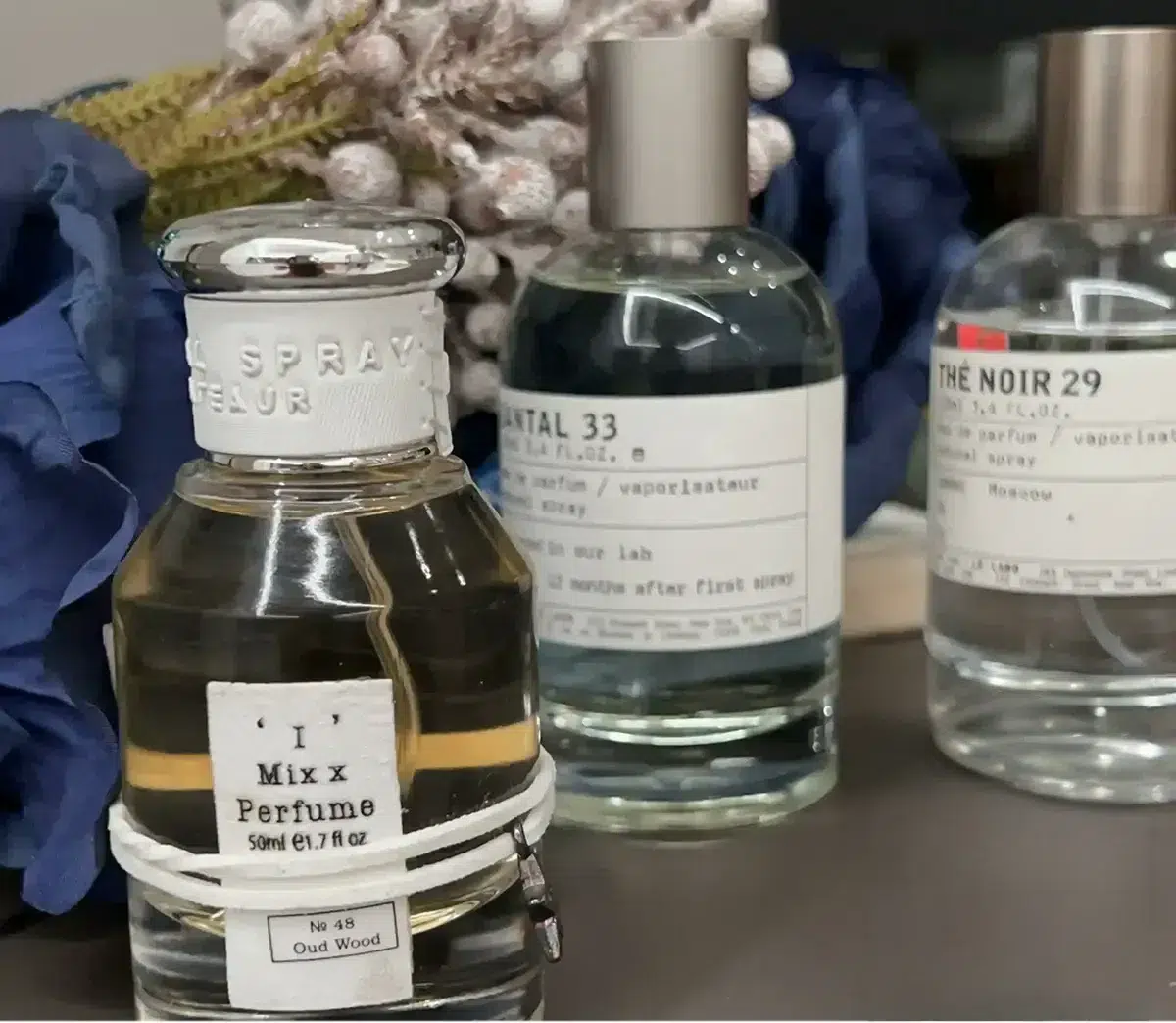
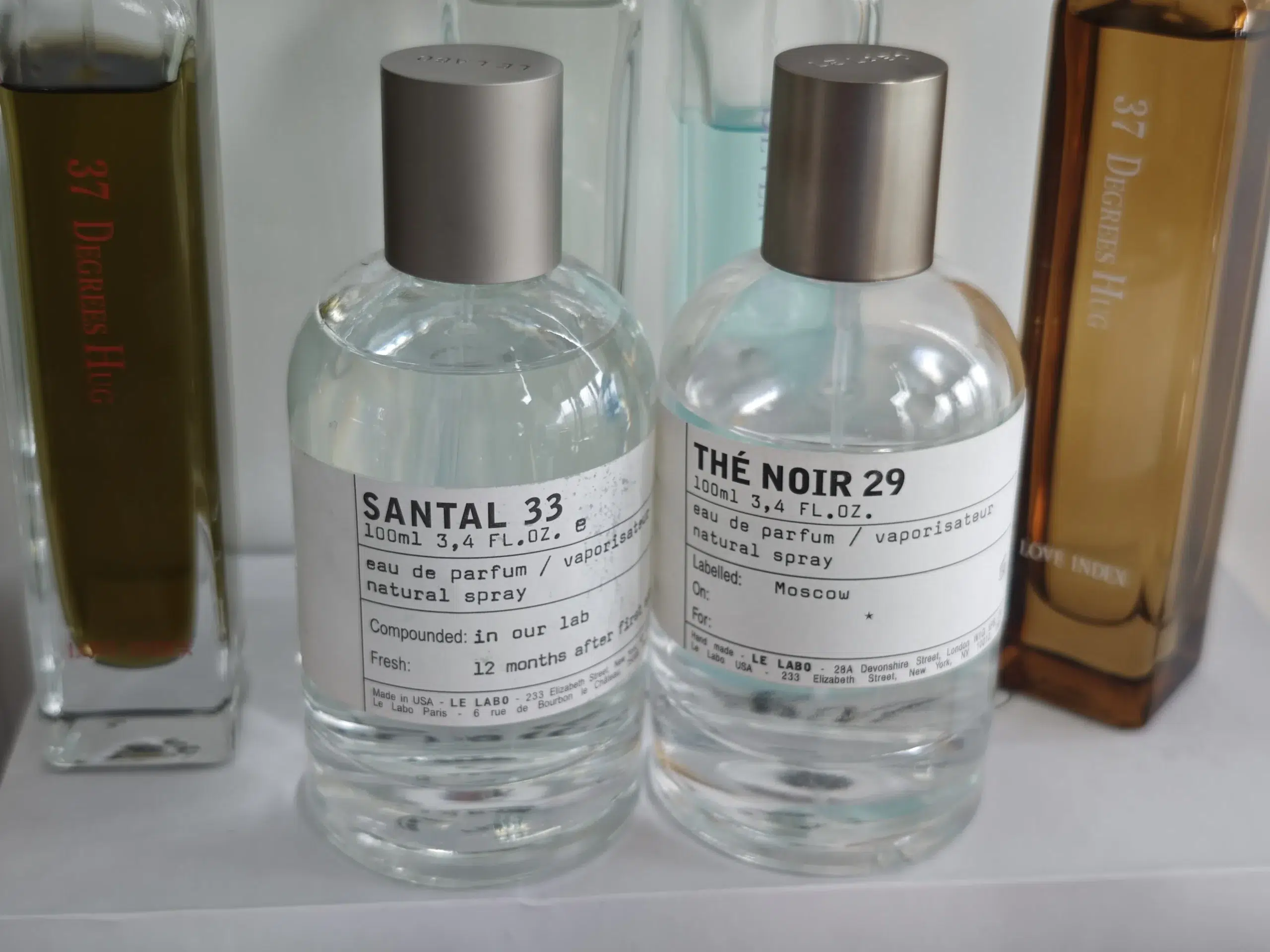
Santal 33 is a personal fragrance from Le Labo. According to the brand’s official description, its composition includes cardamom, iris, violet, Australian sandalwood, cedarwood, spicy facets, leather, and musk. These elements create a dry, woody fragrance with aromatic, smoky, slightly floral, and leathery dimensions.
The official creative imagery for the fragrance focuses on open fire, smoke, desert air, freedom, and the American West. That description is not a literal list of ingredients, but it accurately communicates the emotional style of the fragrance: open, rugged, dry, warm, and quietly sensual.
You can review the brand’s current description on the official Le Labo Santal 33 product page.
What makes Santal 33 especially recognizable is the tension between softness and dryness. The iris and violet can create a smooth, almost cosmetic texture, while the cedarwood, sandalwood, leather, and papyrus-like impression can feel dry and structured. Cardamom adds lift and spice, preventing the fragrance from becoming a heavy, sweet wood scent.
What Is Santal 26?
Santal 26 is primarily presented as a home fragrance rather than a conventional perfume for the body. It is available in home-oriented formats, including candles and room fragrance products. Le Labo describes it as gentle, smoky, leathery, aristocratic, warm, and capable of giving a space a distinct personality.
The brand’s description can be found on the official Le Labo Santal 26 collection page.
Although Santal 26 and Santal 33 share a recognizable woody-smoky relationship, Santal 26 is not simply Santal 33 poured into a candle. A room fragrance has to perform differently from a perfume. It must travel through air, interact with furnishings, remain noticeable without skin warmth, and create a consistent ambient impression across a larger physical area.
For that reason, Santal 26 generally feels more like an environment than a personal signature. I associate it with warm wood, soft smoke, worn leather, a quiet hotel lobby, a design studio, or a dimly lit living room. It does not need to reveal a complex sequence of top, middle, and base notes on skin. Its primary purpose is to make a room feel finished.
Santal 26 vs 33 Comparison Table
| Comparison Point | Santal 26 | Santal 33 |
|---|---|---|
| Primary purpose | Home fragrance and ambient scenting | Personal fragrance worn on skin or clothing |
| Overall character | Warm, smoky, leathery, gentle, atmospheric | Dry, spicy, woody, musky, papery, leathery |
| How it develops | Diffuses gradually through a room | Changes over time according to skin, temperature, and application |
| Projection style | Broad, environmental scent cloud | Personal scent trail surrounding the wearer |
| Best for | Living rooms, bedrooms, offices, entryways, entertaining | Daily wear, evenings, work, travel, social occasions |
| Main buying question | Do I want my space to smell warm and woody? | Do I want to personally wear a dry sandalwood fragrance? |
Difference 1: Santal 26 Is for Your Space, While Santal 33 Is for Your Skin
The biggest difference is also the easiest one to overlook. Santal 26 is fundamentally associated with home fragrance, while Santal 33 is an eau de parfum intended to be worn.
How Santal 26 Changes a Room
When I use a home fragrance, I evaluate it differently from a perfume. I am not asking whether it blends with my natural skin scent or creates an attractive trail when I walk. Instead, I am asking how evenly it fills the room, whether it becomes overwhelming, how it interacts with the size of the space, and what mood it creates.
Santal 26 is designed to work at that environmental level. Its smoky and leathery character can give a clean, minimally decorated room more depth. In a space with wood furniture, books, neutral textiles, or warm lighting, it can feel especially cohesive because the scent reinforces the visual atmosphere.
The product format also affects the experience. A candle releases fragrance gradually as the wax warms. A room spray can provide a faster, more concentrated impression. A diffuser offers a steadier background presence. The scent may remain recognizably Santal 26 across these products, but the intensity and rhythm of diffusion will not be identical.
How Santal 33 Interacts With the Wearer
Santal 33 is more personal because it develops according to your body chemistry, application method, clothing, climate, and surroundings. On one wearer, the iris and sandalwood may feel creamy and smooth. On another, the cedar, aromatic spice, or leathery facets may dominate.
This is why I strongly recommend testing a personal fragrance on skin rather than relying only on a paper strip. A blotter can show the general structure, but it cannot demonstrate exactly how the fragrance will react to your warmth, natural oils, and daily environment.
A perfume also moves with you. It may feel stronger when you enter a warm room, fade closer to the skin during the afternoon, and become noticeable again when your clothing warms. That changing, mobile quality is a key part of the Santal 33 experience.
Knowledge point:
A home fragrance and an eau de parfum cannot be compared fairly by asking only which one is stronger. One is designed to scent a physical space, while the other is designed to create a more personal aura around the body.
Difference 2: Their Scent Profiles Overlap, but They Do Not Smell Identical
Both fragrances belong to a woody, smoky, leathery universe, but they emphasize different details. Santal 26 feels warmer and more ambient to me, while Santal 33 feels more aromatic, textured, and distinctive on skin.
What Santal 26 Smells Like
I would describe Santal 26 as a warm interior scent built around smoke, polished wood, soft leather, and restrained sweetness. It can feel elegant without being overly decorative. The word “gentle” is useful here because the smoke does not necessarily resemble harsh ash or burned material. It is closer to the lingering warmth of a fire after the flames have settled.
The leather impression can also feel smoother than a bold leather perfume. In a room, a highly animalic leather note could quickly become too dense. Santal 26 instead creates the suggestion of leather furniture, a worn jacket, or a carefully designed lounge.
Depending on the room and product format, some people may notice more sweetness, while others may focus on the woods. The temperature of the space, air circulation, candle placement, and other household smells can all influence the final result.
What Santal 33 Smells Like
Santal 33 is more complex and more likely to produce dramatically different reactions. Its cardamom adds a cool, aromatic opening. Iris and violet introduce a soft, dry floral texture rather than an obviously sweet bouquet. Sandalwood and cedarwood form the central woody structure, while leather and musk add warmth, depth, and persistence.
To my nose, the fragrance is not a traditional creamy sandalwood perfume. It feels drier, airier, and more structured. The wood can resemble pencil shavings, dry paper, polished furniture, or sun-warmed timber. The leather gives it a rugged edge, while the floral notes keep it from becoming a straightforward smoky cologne.
An independent perfume review from Bois de Jasmin similarly discusses the fragrance as a woody idea developed through leather and amber-like dimensions. Readers interested in a professional critical perspective can consult the Bois de Jasmin Santal 33 review.
Why Some People Smell Pickles in Santal 33
The pickle comparison has become one of the most discussed aspects of Santal 33. I do not think this means the fragrance literally contains a pickle note. Instead, certain combinations of dry wood, aromatic spice, leather, violet-like materials, and sandalwood accords can create a briny, dill-like, or sharp green association for some noses.
Human scent perception is associative. When we encounter an unfamiliar combination of aroma molecules, the brain often connects it to the nearest familiar smell stored in memory. One person may interpret the fragrance as dry sandalwood and leather, while another immediately thinks of dill, cucumber brine, or pickled vegetables.
Neither interpretation is necessarily incorrect. They reflect different sensory thresholds and memories. This is exactly why online popularity should never replace personal testing.
Scent Profile Card: Santal 26
Main impression: Warm, smoky, leathery, woody, and atmospheric
Emotional mood: Quiet luxury, evening warmth, an elegant interior
Possible associations: A fireplace, leather seating, wood-paneled rooms, boutique hotels
Best suited to: People who want their home to feel polished, warm, and distinctive
Scent Profile Card: Santal 33
Main impression: Dry sandalwood, cedar, cardamom, iris, violet, leather, and musk
Emotional mood: Independent, modern, rugged, understated, and gender-inclusive
Possible associations: Dry paper, open landscapes, leather, clean skin, smoke, or dill-like greenery
Best suited to: People who enjoy distinctive personal fragrances with dry woods and aromatic tension
Difference 3: Projection and Longevity Work in Completely Different Ways
Performance is another area where comparisons can become misleading. A candle, diffuser, room spray, and eau de parfum do not project in the same manner, even when they share a similar scent style.
Santal 26 Creates an Environmental Scent Cloud
Santal 26 is meant to spread outward into a room. Its performance depends heavily on the product format and the physical space.
A candle in a small bedroom may become noticeable relatively quickly, while the same candle may seem much quieter in a large open-plan living area. High ceilings, open windows, air-conditioning, fans, and nearby cooking odors can all reduce or redirect the scent.
Candle performance also changes during the burn. The cold throw is the fragrance you notice before lighting the candle. The hot throw is the scent released after the wax pool forms. A candle may smell strong when unlit yet diffuse more gently when burning, or the reverse may occur.
I also consider safety part of performance. A candle should be placed on a stable, heat-resistant surface, away from drafts, children, pets, curtains, and flammable materials. It should never be left unattended. A beautiful room scent is not worth unsafe use.
Santal 33 Produces a Personal Scent Trail
Santal 33 creates projection around the wearer rather than filling a room in the same way as a home scent. The first phase may feel more aromatic and noticeable, while the dry-down becomes woodier, muskier, and closer to the skin.
Actual wear time varies. Skin hydration, temperature, spray count, clothing, and individual perception all matter. Someone with dry skin may experience a shorter wear time than someone who applies fragrance over moisturized skin. Fabric can retain woody and musky notes longer than bare skin, although delicate materials should be patch-tested before spraying.
Nose fatigue also affects perceived performance. When I wear the same fragrance for several hours, my brain may begin filtering it out even though other people can still detect it. This can lead to unnecessary overspraying.
Knowledge point:
Before deciding that a perfume has disappeared, step into fresh air or ask someone nearby whether they can still smell it. Olfactory adaptation can make a fragrance seem weaker to the wearer than it is to everyone else.
Which One Is Stronger?
I would not label either product universally stronger. Santal 26 can dominate a smaller room but remain subtle in a large space. Santal 33 can project clearly from a few sprays on one person but sit close to the skin on another.
The more useful question is where you want the fragrance to be experienced. Choose Santal 26 when you want people to notice the atmosphere upon entering a room. Choose Santal 33 when you want people to associate the scent directly with you.
Difference 4: Santal 33 Is More Versatile for Personal Expression
Santal 26 is versatile within the home, but Santal 33 offers more opportunities for personal expression because it travels with the wearer.
When I Would Wear Santal 33
I see Santal 33 as a flexible fragrance for people who enjoy dry woods. It can work in casual, professional, and evening settings, provided the application is adjusted appropriately.
For work, I would use a lighter application so the scent remains within my personal space. For an evening event, I might apply slightly more because the warmth of the environment and greater physical distance between people can soften the effect.
Although many people associate woody and leathery fragrances with fall and winter, Santal 33 can also work in spring or on cooler summer evenings. Its dry, airy construction keeps it from feeling as heavy as a sweet amber or dense vanilla fragrance. In extreme heat, however, its sharper aromatic facets may become more pronounced.
The fragrance is also widely treated as gender-neutral. I find that useful because its identity is built around texture and atmosphere rather than traditional “masculine” or “feminine” stereotypes. The balance of woods, spice, florals, leather, and musk allows different wearers to emphasize different sides of the composition.
When I Would Use Santal 26
Santal 26 is ideal when I want a room to communicate warmth without relying on sweet bakery notes or obvious florals. It can be especially effective during quiet evenings, dinner gatherings, reading sessions, or relaxed weekends at home.
In an entryway, it can establish a distinctive first impression. In a living room, it can support conversation and entertaining. In a bedroom, I would use it more carefully because smoky or leathery scents may feel too stimulating for people who prefer soft, clean, or powdery sleep environments.
I would also avoid using a strong home fragrance while cooking or serving highly aromatic food. Competing smells can make both the meal and the fragrance less enjoyable. It is usually better to scent the space before guests arrive, then reduce the intensity during dinner.
Can You Use Both at the Same Time?
Yes, but restraint matters. Wearing Santal 33 in a room heavily scented with Santal 26 may produce an immersive sandalwood environment, but it can also become repetitive or overwhelming.
I prefer using them at different intensity levels. For example, I might use a gently diffused Santal 26 home scent and apply only one or two sprays of Santal 33. Another approach is to use Santal 26 at home and reserve Santal 33 for outings, creating a consistent woody identity without saturating one environment.
Because the two products are related rather than identical, they can complement each other. However, more fragrance does not automatically create a more luxurious experience. Controlled diffusion usually feels more sophisticated than maximum strength.
Difference 5: Their Value Depends on What You Want to Scent
The value question cannot be answered by comparing bottle size or product price alone. A personal fragrance and a home fragrance provide different types of use.
How I Evaluate the Value of Santal 26
For a candle, I consider burn quality, scent throw, room size, vessel design, emotional effect, and how often I realistically light it. A candle may look beautiful on a shelf, but its true value depends on whether I enjoy the fragrance while it is burning and whether it performs in the intended space.
I also think about cost per experience. A candle used for two or three hours during meaningful evenings may feel valuable even if it is not an everyday product. By contrast, a candle that remains unlit because the scent feels too intense or the vessel seems too precious may provide limited practical value.
Room sprays and diffusers create different value calculations. A room spray offers immediate control but may require frequent reapplication. A diffuser provides continuous scent but gives the user less ability to turn the fragrance off quickly.
How I Evaluate the Value of Santal 33
For an eau de parfum, I consider wear frequency, number of sprays, emotional attachment, versatility, and whether I still enjoy the fragrance after the initial excitement fades.
A high-priced perfume can offer good personal value when it becomes a frequently worn signature. However, buying an expensive full bottle based only on popularity can result in disappointment, especially when the fragrance has a polarizing dry or briny quality.
I recommend sampling first and wearing the fragrance on multiple days. Test it indoors, outdoors, in warm weather, and in cooler conditions. Notice whether you enjoy the opening, the middle, and the final dry-down. A fragrance should not be judged only during the first five minutes.
A More Accessible Way to Explore the Santal 33 Style
For shoppers who enjoy the Santal 33 scent direction but prefer a more accessible option, imixx perfume offers an alternative inspired by the recognizable woody, spicy, leathery, and musky profile. This can be useful for people who want to explore the general style before committing to a more expensive purchase.
As with any fragrance, I still recommend testing according to your own skin chemistry. An inspired fragrance can capture the overall olfactory direction, but formulation, concentration, development, and personal perception may differ.
Choose Santal 26 If…
You want fragrance to shape the mood of your home.
You enjoy smoke, leather, warm wood, and quiet interior elegance.
You prefer an atmospheric scent rather than a perfume worn on your body.
You want guests to notice the room’s character when they enter.
Choose Santal 33 If…
You want a wearable sandalwood fragrance.
You enjoy dry woods, cardamom, iris, leather, and musk.
You want a scent that changes according to your skin and environment.
You are willing to sample a distinctive, potentially polarizing composition.
Is Santal 26 the Same Scent as Santal 33?
No. They are related through a similar woody, smoky, sandalwood-centered aesthetic, but they are not interchangeable versions of one formula.
Santal 33 has a more detailed personal-fragrance structure. The cardamom, iris, violet, cedarwood, sandalwood, leather, and musk create a changing experience that can move from aromatic and dry to warmer and more skin-like.
Santal 26 is designed to establish an ambient mood. Its identity is communicated more directly through smoke, leather, warmth, and wood. Because it is diffused through a room rather than developed on skin, its balance is adapted to environmental scenting.
I think of them as members of the same visual and emotional world. Santal 33 is the person wearing a leather jacket beside an open fire. Santal 26 is the room, furniture, smoke, and warm air surrounding that person.
Does Santal 26 Smell Better Than Santal 33?
“Better” depends on context and personal taste. Someone who dislikes the aromatic or briny quality they perceive in Santal 33 may prefer the smoother atmosphere of Santal 26. Someone who wants complexity, movement, and a recognizable personal signature may find Santal 26 too static for their needs.
I would choose Santal 26 for an interior that needs warmth and identity. I would choose Santal 33 when I want the scent to become part of my personal presentation.
It is also possible to love one and dislike the other. Enjoying sandalwood candles does not guarantee that you will enjoy a dry sandalwood perfume on your skin. Likewise, loving Santal 33 does not mean you will want a similar smoky-leathery effect surrounding you continuously at home.
How to Test Santal 26 and Santal 33 Properly
How to Test Santal 33 on Skin
Begin with one or two sprays on clean, unscented skin. Avoid applying strongly scented lotion immediately beforehand because it can alter the result. Smell the fragrance after application, then revisit it after approximately 30 minutes, two hours, and several hours.
Pay attention to the transition rather than searching for every listed note. Ask practical questions: Do I enjoy the opening? Does the fragrance become smoother or sharper? Does the dry-down feel comfortable? Can I imagine wearing it repeatedly?
Try not to test too many perfumes at once. After several strong samples, sensory fatigue can make it difficult to distinguish details. I generally prefer testing no more than a few fragrances during one session.
How to Test Santal 26 at Home
Use the product in the room where you expect to enjoy it most. A fragrance tested in a small store may behave very differently in your home.
For a candle, allow enough time for the wax surface to begin melting evenly, while following the manufacturer’s burn instructions. Observe the fragrance from different parts of the room. The area immediately beside the candle may not provide an accurate impression of overall diffusion.
For a room spray, start with a conservative number of sprays. It is easier to add fragrance than to remove an excessive amount. For a diffuser, begin with fewer reeds when possible, then increase them gradually to adjust intensity.
Knowledge point:
Test fragrance in the context where you will actually use it. Skin testing is essential for personal perfume, while room size and airflow are essential for home fragrance.
Who Should Choose Santal 26?
Santal 26 is a strong choice for people who view home fragrance as part of interior design. It suits spaces that benefit from warm, woody, smoky depth rather than sweet, fruity, or overtly floral aromas.
You may prefer it when:
- You enjoy leather, wood, smoke, and understated warmth.
- You want a room to feel more intimate and carefully designed.
- You prefer ambient fragrance to wearing perfume on your skin.
- You host guests and want a memorable entryway or living-room scent.
- You like fragrance products that also function as decorative objects.
It may be less suitable when you prefer fresh citrus, aquatic, laundry-clean, gourmand, or bright floral home scents. It may also feel too dense in very small rooms if used at high intensity.
Who Should Choose Santal 33?
Santal 33 is better suited to people seeking a personal scent with a dry, recognizable woody identity. It appeals to wearers who appreciate fragrances that resist simple classification.
You may prefer it when:
- You enjoy sandalwood, cedar, cardamom, leather, iris, and musk.
- You want a fragrance that can feel both rugged and refined.
- You prefer gender-neutral compositions.
- You enjoy perfumes that create conversation and strong opinions.
- You want a scent that works across casual and more polished settings.
It may not be ideal when you dislike dry woods, aromatic sharpness, leather, smoke, or the possibility of a dill-like association. It is also not the safest blind purchase for someone who generally prefers sweet, juicy, or soft floral perfumes.
My Final Verdict
After examining santal 26 vs 33 across use, scent profile, projection, versatility, and value, I do not see them as direct competitors. They serve different purposes.
Santal 26 is the better choice for creating a warm, smoky, leathery atmosphere in a home. It turns scent into part of the room’s design and can make an interior feel more distinctive, intimate, and polished.
Santal 33 is the better choice for personal wear. It offers more movement, more interaction with skin, and a more complex combination of cardamom, floral textures, dry woods, leather, and musk. It is also the more polarizing option, which makes sampling particularly important.
If I had to summarize the decision in one sentence, I would say this: choose Santal 26 when you want the room to carry the fragrance, and choose Santal 33 when you want the fragrance to represent you.
Frequently Asked Questions
What is the main difference between Santal 26 and Santal 33?
Santal 26 is primarily a home fragrance designed to scent a room, while Santal 33 is an eau de parfum designed to be worn on the body. Santal 26 feels more atmospheric, smoky, warm, and leathery. Santal 33 feels more aromatic, spicy, dry, woody, floral, and musky.
Do Santal 26 and Santal 33 smell exactly the same?
No. They share a related sandalwood, smoke, wood, and leather aesthetic, but they are different compositions designed for different forms of diffusion. Santal 33 develops on skin, while Santal 26 creates an ambient room scent.
Can I wear Santal 26 as a perfume?
Santal 26 products are primarily marketed for home fragrance use. I recommend using each product only as directed by the manufacturer. A room spray or candle fragrance should not automatically be treated as a skin-safe personal perfume.
Why does Santal 33 smell like pickles to some people?
Some people interpret the combination of dry sandalwood, cedar, aromatic spice, violet-like materials, and leather as briny, green, or dill-like. This is a perceptual association rather than proof that the fragrance contains a literal pickle note.
Is Santal 33 masculine or feminine?
Santal 33 is widely regarded as gender-neutral. Its combination of woods, spice, soft floral textures, leather, and musk does not depend on traditional gender categories. The final impression varies according to the wearer and skin chemistry.
Which fragrance is better for a gift?
Santal 26 may be easier to gift when you know the recipient enjoys luxury candles or woody home scents. Santal 33 is more personal and should ideally be sampled first because skin chemistry and individual scent perception can significantly affect the experience.
Can I use Santal 26 and wear Santal 33 together?
Yes, but I recommend keeping at least one of them at a low intensity. A lightly scented room combined with a modest application of Santal 33 can feel cohesive. Using both heavily may overwhelm the space and reduce the ability to appreciate their differences.
Should I buy Santal 33 without testing it?
I would not recommend a blind purchase. Santal 33 is distinctive and can produce dramatically different reactions. Test it on your skin for several hours and, when possible, wear it on more than one day before purchasing a full bottle.