

How to Find the Best Chanel No. 5 Dupe in the USA (2026): A Perfumer-Style Guide to Aldehydes, Longevity & Value
If you arrived here after typing chanel No. 5 dupe into Google, you are probably not looking for a chemistry lecture or another list of ten bottles with unexplained similarity scores. You want to know what actually makes a fragrance smell convincingly close to the classic No. 5 style, how long an inspired fragrance may last on real skin, what separates a balanced aldehydic floral from a harsh imitation, and whether a lower-priced option can make sense for everyday life in the USA.
I understand why chanel No. 5 dupe is such a common search. No. 5 is not built around one easy-to-copy note. Its identity comes from an entire architecture: a bright aldehydic opening, a floral heart with rose-and-jasmine character, a powdery transition, and a warm base that can suggest vanilla, woods, vetiver, musk, balsamic softness, and cosmetic-powder texture. If one layer is exaggerated or disconnected from the next, the fragrance may share a note list with the reference while still feeling wrong on skin.
For readers who want to examine the IMIXX option while following the evaluation method in this guide, the dupe chanel No. 5 product page is the first reference point. I am deliberately linking it before any external source because this article discusses IMIXX No.25 directly. I also want to be transparent about the commercial relationship: this is brand-owned content, so I do not ask you to treat our own product claims as independent evidence. Where I describe our product, I separate what the current product page publishes from my technical interpretation of what those materials and specifications can mean.
Quick answer for US shoppers
I judge a Chanel No. 5 dupe by structure, transition, drydown, wear behavior, and value—not by an unsupported “99% identical” headline. A strong candidate should open with controlled aldehydic brightness, develop into a coherent floral heart, and leave a smooth powdery-woody base rather than collapsing after the first impression. Price matters, but it should be evaluated beside bottle size, concentration, ingredient transparency, and the quality of the full wear.
My evidence rule for this article
I do not present a new blinded consumer panel, independent laboratory report, or third-party GC-MS study here. I therefore avoid exact similarity percentages and universal longevity promises. When I discuss IMIXX No.25, I identify product-page facts as brand-published information, customer reviews as anecdotal experience, and scent-structure discussion as perfumery interpretation. That distinction is intentional.
What I Mean by “Best Chanel No. 5 Dupe”
“Best” is not a single scientific category. One US shopper may care most about a perfume similar to Chanel No. 5 for office wear. Another may want the closest perfume to Chanel No. 5 for sentimental reasons. Someone else may be looking for a cheap Chanel No. 5 dupe because they enjoy the style but do not want to use an expensive bottle every day. A fourth person may prioritize vegan or cruelty-free positioning.
I therefore use five practical dimensions throughout this guide:
- Olfactory architecture: Does the fragrance move from bright aldehydic lift to floral body to a coherent warm drydown?
- Transition quality: Do the stages connect naturally, or does the perfume feel like three unrelated accords stacked together?
- Wear behavior: How do projection, sillage, and skin scent change over time?
- Transparency: Does the brand clearly distinguish ingredients, claims, testing, and customer opinions?
- Value: Does the size, concentration, experience, and price make sense for the buyer’s intended use?
This approach is slower than a one-number ranking, but it is more useful. Fragrance is time-based. The scent at minute five is not the scent at hour three. The best Chanel No. 5 dupe for you should still make sense after the top notes have faded.
Why Chanel No. 5 Is Technically Difficult to Recreate
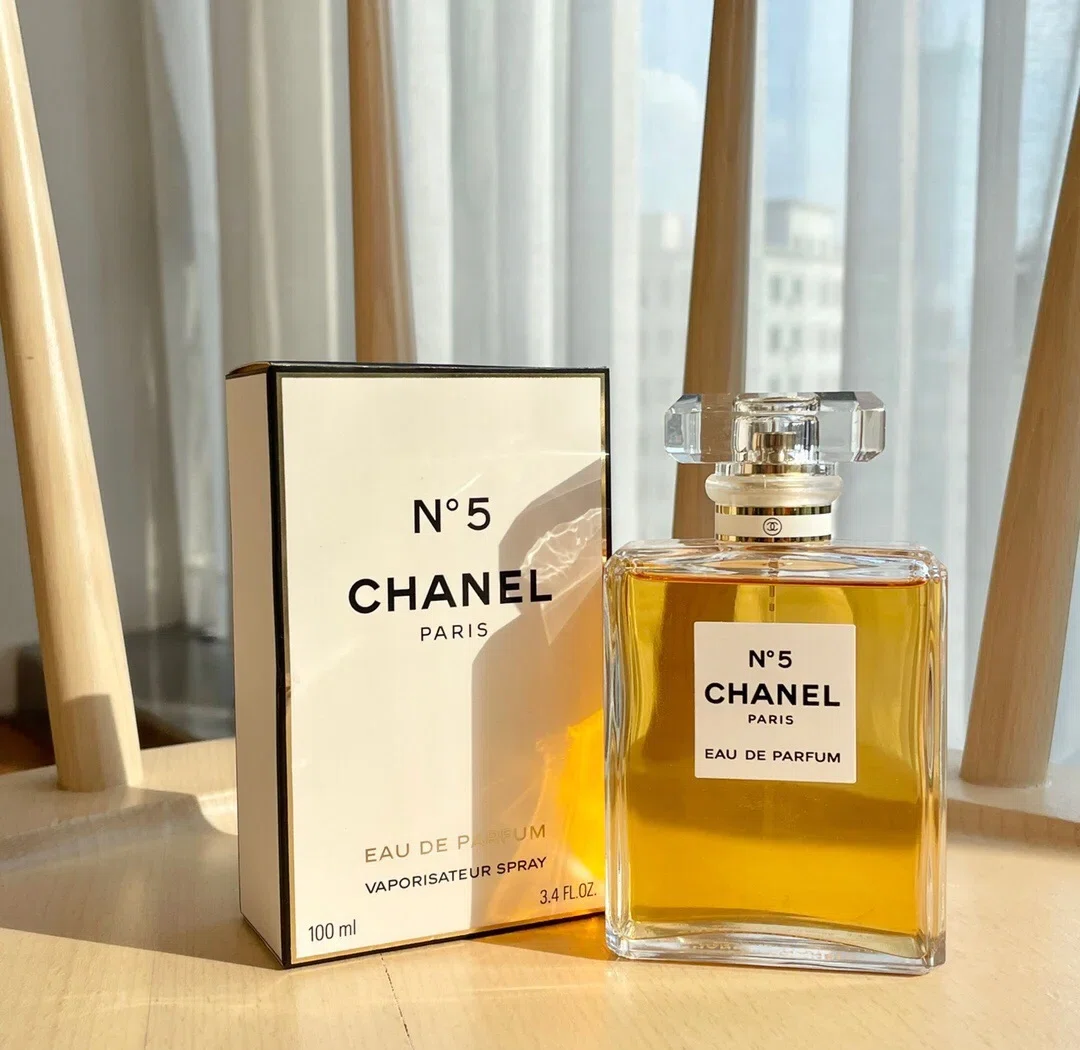
The official CHANEL description of N°5 Eau de Parfum emphasizes an abstract floral composition built around May rose and jasmine, with bright citrus, aldehydes, and bourbon vanilla. That description matters because it confirms a point perfumers have understood for generations: No. 5 is not simply “rose plus jasmine.” It is a deliberately abstract composition in which aldehydes alter the shape, lift, and diffusion of the floral core. You can read the house’s current US description on the official CHANEL N°5 Eau de Parfum page.
Aldehydes Create Lift, but “Aldehydic” Does Not Mean One Smell
When I evaluate an aldehydic floral perfume, I do not ask only whether aldehydes are present. I ask what kind of lift they create and what happens when that lift meets the floral body. Aldehydes are a family of materials rather than one standardized odor. Depending on the molecule and context, an aldehydic effect can read as citrusy, waxy, metallic, clean, fatty, green, fizzy, or floral.
The Perfume Society’s aldehydes reference explains this diversity in consumer-friendly terms, including the orange-rind impression associated with C10 and the broader sparkling effect aldehydes can create in perfumery.
That is why a Chanel No. 5 clone can fail even if its marketing page says “aldehydes” in large letters. If the top is too metallic, the perfume can feel sharp or detergent-like. If the aldehydic effect is too timid, the scent may become a conventional floral. If the floral body is too thin, the opening has nowhere to go.
The Floral Heart Has to Behave Like an Accord, Not a Shopping List
Jasmine, rose, and ylang-ylang are frequently discussed when people ask what perfume smells like Chanel No. 5. But a list of familiar floral names does not tell you how a perfume will actually smell. Proportion, supporting materials, volatility, diffusion, and the interaction between natural and synthetic materials are what turn a list into an accord.
I listen for continuity. Does the brightness at the top soften into the heart, or does the scent suddenly switch from “sparkly” to “floral”? Does jasmine feel integrated, or does it dominate? Does the rose give shape without making the composition obviously rosy? Does the floral body have enough volume to support the later powdery effect?
The Drydown Is Where Weak Formulas Become Obvious
The opening gets attention because it is immediate. The drydown earns trust because it is difficult to fake with a quick first impression.
Several hours into wear, the most volatile materials have diminished. What remains reveals whether the perfume has a supporting structure. In the No. 5 scent family, I look for a warm, polished base rather than raw sweetness: woody softness, vanilla-like warmth, vetiver-style dryness, musky diffusion, balsamic texture, and powdery facets that connect back to the floral heart.
This is especially important for anyone searching for a long lasting Chanel No. 5 dupe. Longevity should not mean that a random sweet base survives for eight hours after the recognizable opening disappears. I care more about whether the final skin scent still feels related to the earlier fragrance.
| Wear Stage | What I Listen For | Common Failure | Useful Search Intent |
|---|---|---|---|
| 0–15 minutes | Aldehydic sparkle, controlled citrus, lift, diffusion | Harsh alcohol impression, metallic sharpness, flat citrus | what does Chanel No. 5 smell like |
| 30–90 minutes | Rose/jasmine-style floral body, ylang warmth, soft powdery bridge | Disconnected florals, sweetness with no structure | perfume similar to Chanel No. 5 |
| 2–6+ hours | Woody, musky, vanilla, vetiver, balsamic and powdery continuity | Generic sweet residue or abrupt disappearance | long lasting Chanel No. 5 dupe |
| Full wear | Smooth evolution, appropriate projection, recognizable identity | A strong opening with no coherent middle or base | best Chanel No. 5 dupe for everyday wear |
How I Evaluate a Chanel No. 5 Dupe: A Reproducible Four-Wear Method
One of the weaknesses in fragrance content is that writers often say “I tested it” without explaining how. I want to make the evaluation process more reproducible. The method below is the framework I recommend to readers and the same kind of structured thinking I use when I assess a fragrance’s development.
Knowledge point: control the comparison before you trust the conclusion
If you compare two fragrances on different days, at different spray counts, in different temperatures, you are not measuring only the perfume. You are also measuring the environment. A perfect laboratory setup is unrealistic for most consumers, but simple controls—same number of sprays, similar skin locations, notes at fixed time intervals—make your judgment much more useful.
Wear 1: Learn the Fragrance Without Comparing It
On the first wear, I recommend using the inspired fragrance by itself. Two to four sprays are enough for most at-home evaluation, depending on atomizer output and personal sensitivity. Do not chase maximum projection. The goal is to understand the scent’s own structure.
Write down what you notice at approximately 5 minutes, 30 minutes, 90 minutes, 3 hours, and the final point at which you can still detect the fragrance. Do not force yourself to identify every note. Descriptors such as sparkling, waxy, soapy, creamy, powdery, dry, sweet, woody, clean, or musky are often more useful than guessing ingredients.
Wear 2: Compare the Opening and Heart
On the second wear, compare the reference fragrance and inspired fragrance on separate forearms under similar conditions. Keep the number of sprays equal. Avoid rubbing the wrists together. Smell at intervals rather than continuously, because repeated sniffing can accelerate olfactory fatigue.
At 5–15 minutes, focus on brightness and texture. At 30–90 minutes, focus on the floral transition. This is where a Chanel No. 5 dupe vs original comparison becomes more meaningful than a first-spray reaction.
Wear 3: Focus Only on Drydown and Longevity
On the third wear, stop trying to decide whether the perfumes are “the same.” Instead, ask whether the inspired fragrance still feels complete after several hours. Note when projection becomes intimate, when it becomes a skin scent, and whether the base remains pleasant.
This distinction matters because “projection” and “longevity” are not synonyms. A fragrance can project strongly for two hours and remain quietly on skin for several more. Another can stay detectable but lose the character that made it attractive.
Wear 4: Test in Your Real USA Use Case
Finally, wear the fragrance the way you would actually use it: to work, dinner, errands, or a social event. A perfume that performs perfectly in an air-conditioned bedroom may feel different in a Las Vegas afternoon, humid Florida weather, a New York winter, or a cool coastal climate.
This is the wear that answers the practical question: is this an affordable Chanel No. 5 alternative I would actually reach for?
| Test | Keep Constant | Record | What It Helps Answer |
|---|---|---|---|
| Solo wear | Normal application | Your unbiased first impressions | Do I like this perfume on its own? |
| Side-by-side | Spray count, body area, time | Opening and floral development | How close is the scent architecture? |
| Drydown test | Similar activity level | 3-hour, 6-hour, final skin scent | Is it a long lasting Chanel No. 5 dupe for me? |
| Real-life wear | Your usual routine | Comfort, projection, usefulness | Would I actually wear and repurchase it? |
Chanel No. 5 EDP Dupe vs Chanel No. 5 EDT Dupe: Start With the Right Reference
Many searchers use “Chanel No. 5” as though it refers to one fixed formula. In practice, N°5 exists in multiple concentrations and interpretations. That matters when people search for a Chanel No. 5 EDP dupe or Chanel No. 5 EDT dupe.
I do not assume that an Eau de Parfum label automatically means better quality or longer wear. Concentration influences behavior, but so do the materials themselves. Some highly substantive materials can persist at modest dosage, while some bright materials are intentionally fleeting. The complete architecture matters more than the category name alone.
Key point
Before you ask “What is the closest perfume to Chanel No. 5?” decide which N°5 you are remembering. A comparison can be technically careful and still feel wrong if the evaluator is using a different reference concentration from the one you know.
How Long Does a Chanel No. 5 Dupe Last?
“How long does Chanel No. 5 dupe last?” is one of the most useful long-tail questions because it reveals the difference between marketing and real-world wear.
I do not believe a single hour number should be presented as a universal result. Longevity changes with spray amount, atomizer output, skin condition, climate, clothing, activity level, formula composition, and individual perception. Olfactory adaptation also matters: you may stop noticing a fragrance before other people do.
Dry Skin, Moisturized Skin, and Why Results Differ
People often say fragrance “does not last” on dry skin. The reality is more nuanced, but surface condition can influence evaporation and perception. If your skin is very dry, a fragrance may feel quieter or move through certain stages differently. Applying an unscented moisturizer first can be a useful personal experiment.
Heat Changes the Shape of the Wear
Warm conditions can increase volatility. In hot parts of the USA, that can make the opening bloom quickly and create the impression of stronger initial projection. It can also make the perfume move through its development faster. Cold conditions can suppress diffusion and make a fragrance feel more reserved.
Clothing Can Hold Scent Differently From Skin
Fabric often retains fragrance longer than warm skin, but it also changes the development because the perfume is not interacting with skin in the same way. Some perfume materials can stain delicate fabrics, so I recommend testing cautiously on an inconspicuous area.
How to Make a Chanel No. 5 Dupe Last Longer Without Overspraying
- Start with moisturized skin: use an unscented moisturizer if dryness is a problem.
- Do not rub the fragrance aggressively: spray and allow it to dry naturally.
- Distribute sprays: several moderate application points can create a more even scent cloud than concentrating everything in one spot.
- Use fabric carefully: test for staining before spraying clothing.
- Store bottles away from repeated heat and strong light: a stable indoor environment is preferable to a sunny windowsill or hot car.
- Do not equate overspraying with better performance: too much perfume can create fatigue for the wearer and people nearby.
What I Can Learn From a Note List—and What I Cannot
A note pyramid is useful for communication, but it is not a formula. Two perfumes can both say “jasmine, rose, sandalwood, vanilla” and smell dramatically different. A fragrance formula includes proportions, supporting materials, solvents, stabilizing choices, and interactions that a consumer note list does not reveal.
This is one area where I think fragrance education creates real value. Instead of treating every ingredient name as a promise, I ask what role a material can plausibly play.
Aldehyde 10 and C14-Type Materials
The current IMIXX No.25 product page lists Aldehyde 10 and C14 Aldehyde among its materials. From a perfumery perspective, that is consistent with an attempt to build brightness and a classic aldehydic texture. It does not, by itself, prove that the fragrance matches any reference perfume at a particular percentage.
Hedione and Hydroxycitronellal
The product page also lists Hedione and hydroxycitronellal. These are familiar names in modern floral construction. Hedione is associated with an airy jasmine-like radiance and diffusion; hydroxycitronellal is historically associated with fresh muguet/lily-of-the-valley effects. In a composition, their value depends on context and dosage rather than presence alone.
Beta Ionone, Heliotropine, and Powdery Texture
Ionone-family materials can contribute violet, iris, woody, and powdery facets. Heliotropine can support soft almondy, vanilla-powder impressions. When consumers ask what makes Chanel No. 5 smell powdery, the answer is not one “powder ingredient.” Powderiness is an effect created by an accord and by the way floral, ionone-like, musky, woody, and vanilla facets overlap.
Habanolide, Woods, Vetiver, and Vanilla Materials
The same product page lists Habanolide, vetiver essence, vanilla-related materials, and sandalwood-style materials. These categories can support diffusion, dryness, warmth, and persistence in a base. Again, I treat this as a structural clue—not independent proof of exact olfactory equivalence.
Trust note: what I am not claiming
I am not claiming that a public ingredient list reveals exact percentages, sourcing, batch-specific composition, or the complete confidential fragrance formula. I am also not using the presence of named materials as proof that IMIXX No.25 is chemically identical to CHANEL N°5. The scientifically safer conclusion is narrower: the listed materials are consistent with building an aldehydic, floral, powdery, woody fragrance architecture.
What GC-MS Can Tell Me About Perfume—and What It Cannot
GC-MS, or gas chromatography-mass spectrometry, is a powerful analytical tool. In fragrance work, it can help separate and identify many volatile constituents in a sample. It can support raw-material analysis, troubleshooting, quality investigations, and comparative research.
But I would not treat a chromatogram as a magic recipe extractor.
There are several reasons. Natural materials can contain many constituents. Some compounds may be difficult to resolve cleanly. Odor thresholds vary enormously: a trace material can influence perception far beyond its concentration, while an abundant component may be less odor-dominant than its percentage suggests. Isomeric and co-eluting materials can complicate interpretation. And even a strong analytical picture still has to be translated back into a sensory composition.
That is why I avoid using “GC-MS” as a decorative authority word. If a brand publishes a precise laboratory-based similarity percentage, I believe readers deserve the actual method: sample identity, instrumentation, library matching criteria, integration rules, treatment of naturals, replicate count, sensory validation, and who performed the work.
Without that information, the more responsible approach is to describe GC-MS as a development tool rather than a consumer-facing proof of exact equivalence.
Does Maceration Make a Chanel No. 5 Alternative Better?
Maceration and maturation are popular perfume topics, but online explanations often blur industrial processing with consumer bottle aging.
In manufacturing, a fragrance mixture may be allowed to rest under controlled conditions before later production steps. Depending on the process, filtration, stabilization, and quality checks may follow. The purpose is not mystical. It is part of producing a consistent finished product.
I would not publish an exact statement such as “we macerate every bottle for X weeks” unless production records support that number and the process is genuinely consistent. For E-E-A-T, a modest verified statement is stronger than an impressive but uncheckable one.
For consumers, leaving a bottle in a drawer for an arbitrary number of weeks is not a guaranteed way to turn an average perfume into a better one. Oxidation, temperature, light, headspace, and formula composition all affect aging behavior.
Why an Affordable Chanel No. 5 Alternative Can Cost Less in the USA
People searching “why are Chanel No. 5 dupes cheaper?” often assume there are only two possibilities: either the luxury bottle is all markup, or the affordable bottle must use bad materials. Real pricing is more complicated.
A retail fragrance price can reflect formula and raw materials, packaging complexity, bottle tooling, cartons, logistics, warehousing, wholesale margins, store margins, advertising, sampling programs, staffing, brand positioning, and the long-term cost of maintaining a global luxury image.
A direct-to-consumer fragrance company can have a different cost structure. That can create room for a lower selling price without proving that the liquid is “the same.” Those are two different questions.
I prefer to frame value this way:
- What does the bottle cost?
- How many milliliters do I receive?
- What concentration does the brand publish?
- Do I enjoy the opening, heart, and drydown?
- Does it last long enough for my intended use?
- Is the brand clear about which claims are measured and which are marketing language?
| Buying Question | Weak Shortcut | What I Recommend Instead |
|---|---|---|
| Similarity | Trust one percentage | Compare opening, heart, drydown, and full-wear continuity |
| Longevity | Treat one reviewer’s hours as universal | Repeat the test on your own skin and in your local climate |
| Price | Cheapest automatically wins | Compare price per ml, wear quality, and how often you will use it |
| Concentration | EDP automatically beats EDT | Judge the complete formula and the reference version |
| Ingredients | Matching names mean matching perfume | Treat lists as clues; evaluate actual sensory balance |
IMIXX No.25: What the Current Product Page Actually Publishes
Because this article is hosted by IMIXX, this is the section where I want to be especially precise.
At the time I reviewed the current product page, IMIXX No.25 is listed at $29 for 50 ml / 1.7 oz. The page also publishes a 12% concentration, describes the product as vegan and cruelty-free, states that it is paraben & phthalate-free and colorant & UV filter free, and displays 13 verified-owner reviews.
Those are product-page facts. They are useful, but they should not be confused with independent certification or independent performance testing. If a customer review says the perfume lasts all day, I treat that as one customer’s experience, not a guaranteed wear time for every buyer.
Reference profile
CHANEL N°5 Eau de Parfum
Why it matters: the official reference establishes the aldehydic-floral-vanilla architecture consumers mean when they search for a perfume like Chanel No. 5.
Best for: buyers who specifically want the original house composition, bottle, heritage, and brand experience.
IMIXX option
IMIXX No.25 Inspired by No. 5
Current published details: $29, 50 ml / 1.7 oz, 12% concentration, vegan and cruelty-free positioning, and 13 verified-owner reviews shown on the product page.
Best for: US shoppers who want an affordable way to explore an aldehydic-floral-powdery scent direction for everyday wear.
What the IMIXX Ingredient Listing Suggests Structurally
The current No.25 page lists a broad set of materials, including Aldehyde 10, C14 Aldehyde, Hedione, beta ionone, hydroxycitronellal, Habanolide, neroli essence, ylang essence, vetiver essence, patchouli essence, vanilla materials, heliotropine, and sandalwood-style materials.
My interpretation is that this list is consistent with a layered attempt to create aldehydic lift, floral diffusion, powdery softness, musky volume, woody support, and a warm base. What I cannot infer from the public page is the exact dosage of each material, the complete confidential concentrate formula, the supplier and grade of every raw material, or a scientifically defensible “percentage similarity” to the reference.
| Published Item | What It Can Tell Me | What It Does Not Prove |
|---|---|---|
| $29 / 50 ml | Current brand-listed US value proposition | That it is automatically better than every higher- or lower-priced fragrance |
| 12% concentration | The concentration figure the brand currently publishes | A universal number of hours on skin |
| Named aroma materials | Clues to likely olfactory roles and construction | Exact formula, exact percentages, or exact chemical equivalence |
| 13 verified-owner reviews | First-party customer experience signals | A controlled independent sensory panel |
How I Think About “Perfume Similar to Chanel No. 5” Without Overclaiming
A phrase such as “perfume similar to Chanel No. 5” describes sensory proximity, not legal identity and not necessarily chemical identity. That distinction helps consumers and also keeps the discussion intellectually honest.
I use three levels of comparison:
- Family similarity: both fragrances belong to an aldehydic floral, powdery, warm style.
- Structural similarity: both move through comparable bright, floral, and warm phases.
- Fine-grained similarity: specific nuances, proportions, textures, and transitions feel close to the wearer.
Brand-owned content can responsibly discuss the first two using published information and careful sensory language. The third becomes stronger when it is supported by blinded testing, independent panels, or detailed reproducible methodology. I do not manufacture that evidence when it is not available.
Who Is Most Likely to Enjoy an Aldehydic Floral Chanel No. 5 Alternative?
You are more likely to enjoy this style if you like perfumes that feel polished, floral, powdery, clean, musky, and classically structured rather than overtly sugary.
A Chanel No. 5 alternative can make sense if:
- you want an aldehydic floral perfume for everyday wear;
- you enjoy powdery floral fragrances;
- you are exploring classic perfume styles for the first time;
- you want a lower-cost bottle for regular use in the USA;
- you prefer saving an original luxury fragrance for special occasions;
- you are specifically searching for a vegan Chanel No. 5 dupe or cruelty-free Chanel No. 5 alternative;
- you care more about the olfactory style than owning the original branded bottle.
Who May Not Enjoy a Chanel No. 5 Style Fragrance?
I also think a useful buying guide should tell some readers not to buy.
If you strongly prefer very sweet gourmands, fruit-forward mists, tropical coconut perfumes, minimalist skin scents, or dense modern amber-wood profiles, a classic aldehydic floral may not match your taste. Some people interpret aldehydic-powdery compositions as elegant and polished; others read the same qualities as soapy, cosmetic, or vintage.
That is preference, not a failure of the nose.
Before buying
If the words “powdery,” “aldehydic,” “soapy,” or “classic floral” consistently describe perfumes you dislike, do not buy a Chanel No. 5 dupe just because it ranks well. Search intent is not personal taste.
Are Chanel No. 5 Dupes Legal in the USA?
An inspired fragrance and a counterfeit are not the same thing. A counterfeit attempts to mislead consumers into believing it is the original branded product. An independent inspired fragrance should use its own branding and should not represent itself as manufactured, approved, or endorsed by the referenced luxury house.
For products applied to the body, US cosmetic rules are also relevant. The U.S. Food and Drug Administration’s fragrance guidance explains that perfumes and colognes can be regulated as cosmetics based on intended use, that manufacturers and marketers are responsible for product safety and proper labeling, and that fragrance mixtures may be declared as “Fragrance” under applicable labeling rules.
This article is not legal advice, but the consumer principle is simple: an inspired fragrance should be sold transparently as its own product rather than pretending to be the original.
How to Identify a High-Quality Chanel No. 5 Dupe Before You Buy
When I am evaluating a product page, I use this checklist before I get excited by the headline.
- Reference clarity: Does the page make clear which scent style or concentration it is inspired by?
- Real specifications: Are size, price, and concentration clearly stated?
- Claim discipline: Are similarity and longevity claims explained, or are they presented as unsupported absolutes?
- Ingredient transparency: Does the brand provide meaningful ingredient or material information where appropriate?
- Wear explanation: Does the description discuss opening, heart, and drydown instead of only the first impression?
- Customer evidence: Are reviews visible, dated, and clearly separated from editorial claims?
- Regulatory transparency: Does the brand avoid implying that a marketing phrase is the same thing as independent certification?
- Commercial honesty: Is it obvious when the publisher sells the product being discussed?
The last point is especially important here. IMIXX sells No.25. I therefore want you to judge this article not by whether it sounds confident, but by whether the reasoning is useful, the limits are visible, and the buying method still works if you decide not to purchase from us.
How to Compare Price per ml Without Confusing Price With Quality
If value matters, calculate price per milliliter. The calculation is simple: divide the bottle price by the bottle volume.
For a $29, 50 ml bottle, the listed price works out to about $0.58 per ml before tax, shipping, discounts, or promotions. That number helps compare bottle economics, but it still does not measure fragrance quality.
A perfume you love and finish can be better value than a cheaper perfume you never wear. The useful value equation is:
That is why “cheapest Chanel No. 5 dupe” and “best affordable Chanel No. 5 alternative” are not automatically the same search intent.
FAQ: Chanel No. 5 Dupe Questions From US Shoppers
What is the best Chanel No. 5 dupe in the USA?
I would define the best Chanel No. 5 dupe as the fragrance that best matches the parts of the scent you personally care about—aldehydic lift, floral depth, powdery texture, warm drydown, longevity, or value. I recommend testing across several hours rather than relying on one similarity percentage. IMIXX No.25 is the IMIXX option for US shoppers who want an affordable interpretation of this aldehydic-floral direction.
What perfume smells most like Chanel No. 5?
Look for a perfume with an aldehydic opening, a rose-and-jasmine-style floral heart, powdery texture, and a warm woody, musky, vanilla-supported drydown. A matching note list is not enough; the transitions between those stages are what make a perfume feel convincingly similar.
What is the closest perfume to Chanel No. 5?
“Closest” depends on the reference concentration and the evaluator’s priorities. Someone comparing against the Eau de Parfum may judge differently from someone who remembers the Eau de Toilette. I would not call any product universally closest without defining a controlled comparison method.
What is a Chanel No. 5 clone?
In search language, a Chanel No. 5 clone usually means an independent fragrance intended to recreate or evoke the overall olfactory experience of the reference. “Clone,” “dupe,” “inspired by,” “perfume similar to Chanel No. 5,” and “Chanel No. 5 alternative” overlap in consumer searches, but none of those terms means the product is manufactured by CHANEL.
Is there a cheap Chanel No. 5 dupe that still smells sophisticated?
A lower price does not automatically mean a fragrance will smell cheap, but price alone cannot predict quality either. I look for a balanced aldehydic opening, a blended floral heart, and a drydown that stays coherent. For IMIXX No.25, the current page lists $29 for 50 ml, which makes it an affordable option to evaluate on those criteria.
How long does a Chanel No. 5 dupe last?
There is no honest universal hour count. Longevity varies with formula, concentration, spray amount, skin, temperature, humidity, clothing, and perception. I recommend recording your own 3-hour, 6-hour, and final skin-scent impressions over multiple wears.
What makes Chanel No. 5 smell powdery?
Powderiness is an accord effect rather than one magic ingredient. Floral materials, ionone-like facets, musks, woods, vanilla-style warmth, and the way the aldehydic brightness settles can combine into the cosmetic-powder impression associated with classic aldehydic florals.
Why are aldehydes important in a Chanel No. 5 dupe?
Aldehydes help create the sparkling, abstract lift that separates the No. 5 style from a straightforward rose-jasmine floral. The challenge is balance: too much sharpness can feel metallic or detergent-like; too little can make the perfume feel flat.
What is the difference between a Chanel No. 5 EDP dupe and a Chanel No. 5 EDT dupe?
The reference matters. EDP and EDT are not merely stronger and weaker versions of one identical smell. Their emphasis and balance can differ. A careful inspired fragrance comparison should identify which version it is trying to evoke instead of using “No. 5” as a single undifferentiated target.
Can a Chanel No. 5 dupe smell exactly like the original?
Two perfumes can smell very close to some wearers without being chemically identical or universally indistinguishable. Formula confidentiality, raw-material variation, concentration, skin behavior, and human perception make “exactly identical” a much stronger claim than ordinary sensory similarity.
Is IMIXX No.25 a vegan Chanel No. 5 dupe?
The current IMIXX product page describes No.25 as vegan and cruelty-free. I present that as a brand-published product attribute. Shoppers who need specific ethical or ingredient assurances should review the current product information and contact the brand if they require documentation beyond the website statement.
Are Chanel No. 5 dupes legal in the USA?
An inspired fragrance is not automatically a counterfeit. The product should be sold under its own branding and should not falsely present itself as manufactured or endorsed by the referenced house. US cosmetic safety and labeling rules may also apply depending on intended use.
Can I layer a Chanel No. 5 dupe with other perfumes?
Yes, but I recommend learning the fragrance by itself first. Once you understand its aldehydic opening, floral heart, and warm drydown, you can experiment conservatively with clean musk, soft woods, restrained vanilla, or citrus. Heavy layering can erase the balance you bought the fragrance for.
Is Chanel No. 5 style perfume good for everyday wear?
It can be. If you enjoy polished floral and powdery scents, a moderate application can work well for office, daytime, dinner, or regular errands. Because aldehydic florals can feel assertive to some noses, start with fewer sprays in close indoor environments.
My Recommendation: Choose the Scent Architecture, Not the Hype
If your priority is owning the original CHANEL composition, original presentation, and luxury-house experience, the original is the appropriate purchase. An inspired fragrance does not replace that brand experience.
If your priority is the scent direction—bright aldehydic lift, floral body, powdery refinement, and a warm classic drydown—then an affordable inspired fragrance can be a rational everyday choice.
For shoppers in the USA who want to explore that direction at a lower entry price, I recommend considering IMIXX No.25. The reason I can support in this article is not “99% identical.” The reason is narrower and more defensible: the current product page publishes a 50 ml bottle at $29, a 12% concentration, a detailed list of aroma materials consistent with an aldehydic-floral-powdery construction, vegan and cruelty-free positioning, and 13 verified-owner reviews.
I still recommend using the four-wear method before you decide that it is the best Chanel No. 5 dupe for you. Personal preference is part of perfume quality in actual use.
IMIXX No.25 at a glance
- Current listed price: $29
- Size: 50 ml / 1.7 oz
- Published concentration: 12%
- Positioning: aldehydic-floral inspired fragrance
- Brand-published attributes: vegan, cruelty-free, paraben & phthalate-free, colorant & UV filter free
- Customer evidence shown: 13 verified-owner reviews at the time of review
Final Verdict: How I Would Find the Best Chanel No. 5 Dupe in the USA
I would not begin with the lowest price, the highest similarity percentage, or the loudest claim.
I would begin with the scent architecture.
I would smell the aldehydic opening and ask whether it sparkles without becoming abrasive. I would return after 30 to 90 minutes and ask whether the floral heart feels blended rather than assembled. I would wait several hours and ask whether the drydown still has a relationship to the perfume I smelled at the beginning. I would repeat the process on another day, then wear the fragrance in the actual US climate and setting where I plan to use it.
After that, I would look at value: price per ml, concentration, ingredient transparency, customer evidence, and whether the company separates measurable facts from advertising language.
That method gives consumers more information than another “Top 10 Chanel No. 5 alternatives” list. It also reflects how I believe a factory-backed fragrance brand should earn trust: not by asking readers to accept an impressive number, but by explaining the underlying perfume logic clearly enough that they can make their own judgment.
If you choose IMIXX No.25, I want that decision to come from understanding what you are buying—an affordable, independently branded interpretation of a classic aldehydic-floral scent direction—not from believing that a marketing percentage has solved the subjective experience of smell.
Editorial disclosure: This article is published by IMIXX, which sells IMIXX No.25. I have therefore treated the product page as a primary source for current IMIXX specifications, not as independent validation of similarity or performance. Any customer-review comments are anecdotal and should not be read as standardized test results.
Trademark notice: CHANEL and N°5 are trademarks of their respective owner. IMIXX is an independent fragrance brand and is not affiliated with, endorsed by, or sponsored by CHANEL. References to branded fragrances are used to identify the olfactory inspiration and comparison context.
