

How I Choose the Best Neroli Portofino Dupe in 2026: Scent, Longevity, Price & Closest Alternatives in the USA
For shoppers who want a practical starting point, my current neroli portofino dupe recommendation is IMIXX No.56 if your priority is a lower-cost citrus-neroli profile, a published 18% concentration and a transparent note-and-ingredient disclosure. I am not calling it “identical” to the original, because I do not have an independent sensory-panel study that would justify that wording. If the exact TOM FORD formula, official bottle, luxury presentation and brand experience matter most to you, the original is the more appropriate purchase.
How I Researched This Guide—and Where My Evidence Stops
I want to be explicit about the type of expertise behind this article. I am using fragrance-structure knowledge, current product disclosures, regulatory guidance, peer-reviewed research and a reproducible evaluation method. I am not presenting myself as an independent laboratory, an unaffiliated review publication or a blinded sensory panel. Because IMIXX sells the product I recommend, I treat that commercial connection as a limitation that readers should see before they reach the recommendation.
For this 2026 update, I checked the current official TOM FORD BEAUTY product listing for the original fragrance’s price, size and key-note description. I checked the current IMIXX No.56 page for its listed price, size, concentration, note pyramid, ingredient disclosure and review count. I also reviewed current U.S. FDA fragrance guidance, IFRA’s standards resource and peer-reviewed research indexed by PubMed on fragrance evaporation from skin. I use those sources for factual or scientific context, not to manufacture a sensory conclusion they do not support.
What I did not do is equally important. I did not commission an independent GC-MS comparison, obtain confidential formulas, run a blinded triangle test, recruit an external trained sensory panel or conduct a new controlled side-by-side wear study for this article. Because those tests were not performed, I do not convert IMIXX’s marketing language into an independent similarity score. When I say a disclosed structure is appropriate for this scent family, that is an analytical conclusion based on note architecture and published ingredients—not proof that two finished perfumes are perceptually identical.
My evidence hierarchy for this article
Regulatory guidance and peer-reviewed research carry the most weight for safety, labeling and evaporation science.
Price, bottle size, listed notes and product specifications are useful when they come from the current official page.
Verified-buyer comments can show real-world patterns, but I treat them as anecdotes rather than controlled evidence.
Claims such as a numerical similarity percentage remain seller assertions unless the public methodology and independent validation are available.
| Question | Evidence I use | My confidence level |
|---|---|---|
| What does the original officially emphasize? | Current official note and product description | High for what the brand currently publishes |
| What does IMIXX currently disclose? | Current IMIXX product page: price, size, concentration, notes, ingredients and reviews | High for the existence of the disclosure; not independent proof of performance |
| Why can wear time vary? | Peer-reviewed skin-evaporation research plus fragrance-formulation principles | High for the general principle; individual wear still varies |
| Is No.56 “99.98% identical”? | Seller claim only; no public independent sensory-validation method reviewed here | Not independently established |
Quick Answer: What I Look for Before Calling Something a Good Neroli Portofino Alternative
I do not judge this scent family by the first spray alone. Neroli Portofino works because the opening, heart and drydown feel connected: sparkling citrus leads into bitter-green neroli, orange flower and aromatics, then settles into a clean, transparent base. A cheaper fragrance can make a dramatic opening with lemon and bergamot, yet still miss the character if the floral-aromatic bridge collapses after fifteen minutes.
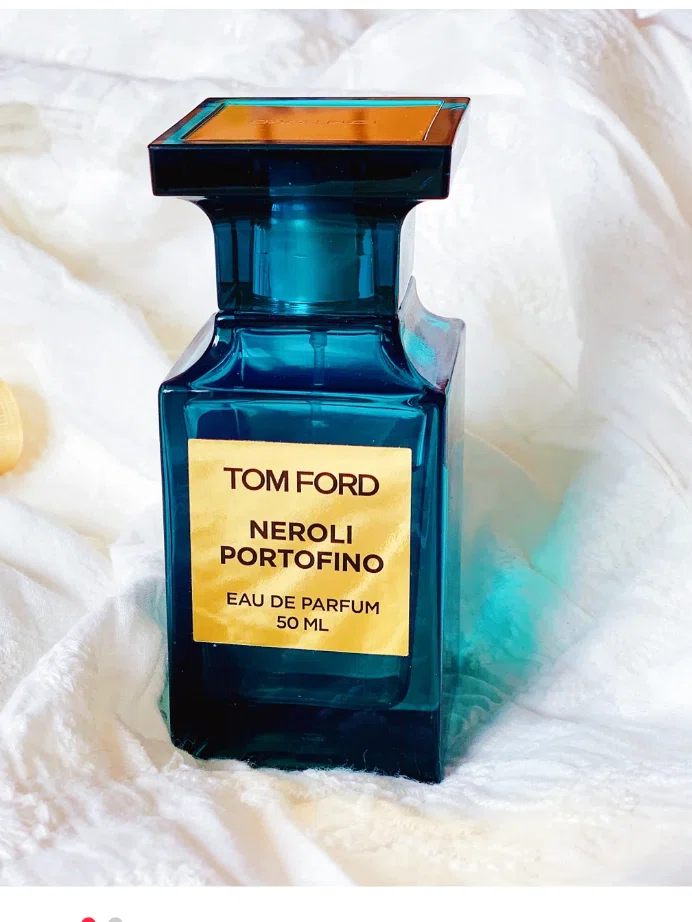
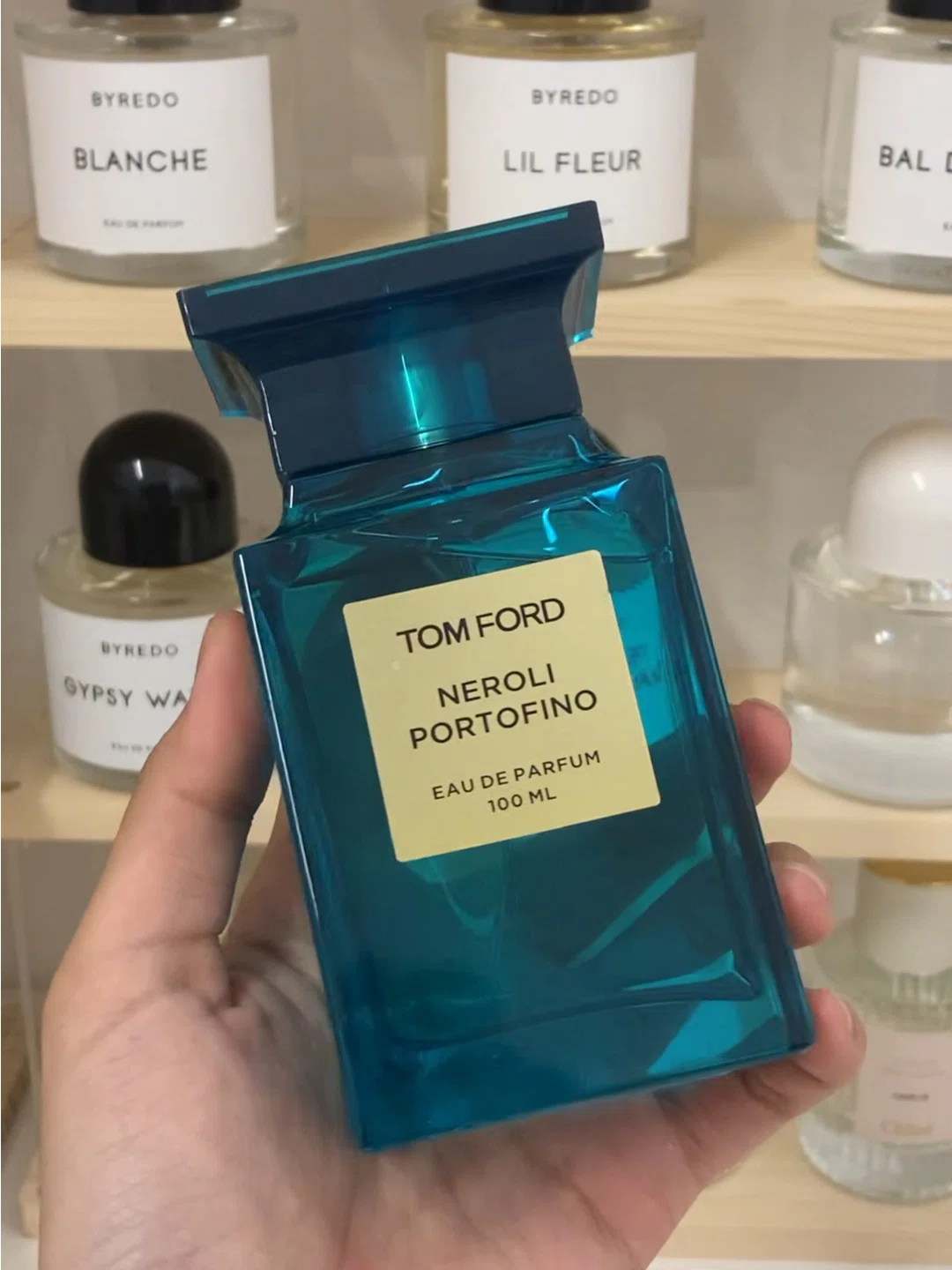
TOM FORD Neroli Portofino EDP
Current official U.S. listing checked: $300 for 1.7 fl oz / 50 mL.
Choose it when the exact composition, bottle, presentation, prestige retail experience and brand provenance are part of what you value.
IMIXX No.56 Inspired by Neroli Portofino
Current IMIXX listing checked: $39, with 18% concentration disclosed.
Choose it when you want to explore the citrus–neroli–orange blossom–musk direction at a much lower purchase price and you accept that it is an independently formulated inspired fragrance.
My buying rule is simple: pay for the tradeoff you actually want. A shopper seeking the closest overall scent progression has a different goal from someone who wants the longest possible wear, and both differ from someone who mainly wants a fresh summer fragrance under $50. I therefore compare four dimensions: scent architecture, quality of persistence, product transparency and total value.
What Does Neroli Portofino Smell Like?
The original is officially presented as a sparkling citrus-amber fragrance centered on Tunisian neroli, Italian bergamot, winter yellow mandarin, orange flower and lavender. In my structural reading of the official note architecture—not as a claim of fresh side-by-side wear testing—the important idea is not simply “citrus.” It is the contrast between bright peel-like freshness, green bitterness, airy white florals, aromatic herbs and a clean amber-musk foundation.
1. The opening should sparkle without becoming sugary or harsh
A convincing opening should feel crisp, lively and slightly bitter. Bergamot, mandarin and lemon-like facets can create the flash of brightness people expect, but a strong formula needs context. If the citrus is too sweet, the scent can drift toward candy. If it is too sharp and isolated, it can suggest detergent or surface cleaner. I want the opening to signal early that neroli and aromatics are coming next.
2. The heart should keep the green-floral identity alive
The heart is where many inexpensive citrus fragrances become generic. Neroli, orange blossom, lavender, jasmine-like diffusion and herbal accents should soften the opening without turning it into a sweet white-floral perfume. In a strong Neroli Portofino alternative, I expect the citrus to remain recognizable while the floral-green structure becomes more obvious.
3. The drydown should support the freshness, not replace it
A musk-and-amber base can improve body, diffusion and persistence, but too much sweetness, wood or dense amber can move the fragrance into another genre. That is why I do not automatically reward the option that lasts the longest. If a scent survives eight hours only because the last six hours are dominated by a generic woody musk, that is not necessarily a better structural match than a lighter formula that stays recognizably citrus-neroli for a shorter period.
Neroli vs. Orange Blossom: Why the Difference Matters
Neroli and orange blossom originate from flowers of the bitter orange tree, but perfumery treats the materials differently because extraction and composition can produce distinct effects. Neroli oil is commonly associated with a greener, fresher, more bitter and more cologne-like character. Orange blossom absolute is often perceived as richer, sweeter and more overtly floral. The distinction is useful even though finished perfumes may use multiple natural extracts, isolates and synthetic materials to build the final accord.
When I evaluate a formula in this style, I listen for green bitterness and aromatic lift as well as floral softness. A formula dominated by sweet orange-flower effects can be attractive but still miss the crisp Mediterranean tension that makes this scent profile distinctive.
Why Longevity Varies More Than Online Hour Counts Suggest
One of the weakest habits in fragrance content is promising a universal number of hours. Performance depends on the full formula, the volatility of individual materials, spray count, application area, temperature, humidity, clothing, skin condition and the wearer’s own perception. A 2025 peer-reviewed study indexed by PubMed examined how both fragrance-molecule properties and measurable skin properties influence evaporation behavior. That research supports a more careful conclusion: different aroma materials can evaporate differently across people, so “this lasts exactly X hours” is not a scientifically responsible universal promise.
Fresh citrus materials often contribute strongly to the first impression and then recede faster than heavier musk, amber or woody materials. But “more heavy materials” is not automatically the solution. The challenge is to extend useful wear without burying the fragrance’s identity. I call this quality of persistence: how long the recognizable scent character survives, not merely how long any trace of fragrance remains.
How I measure useful wear
Under this protocol, at the two-hour mark I ask whether the scent is still recognizably citrus, neroli and white floral. At four to six hours, I ask whether the base still feels connected to that opening or has become a generic musk. This approach produces more useful information than reporting only the last moment when I can detect something on skin.
Why Some Citrus Dupes Smell Like Cleaner
I do not accept the simplistic explanation that natural ingredients smell luxurious while synthetic materials smell cheap. Modern fine fragrance routinely uses both natural extracts and synthetic aroma molecules. “Synthetic” does not mean inferior, and “natural” does not automatically mean safer, smoother or longer lasting. A cleaner-like effect is often a problem of balance, proportion and association.
A cleaner-like effect can appear when:
- sharp lemon, lime or terpenic freshness dominates without enough floral-green context;
- the transition from citrus to neroli and orange blossom is weak;
- lavender, rosemary or other aromatic bridge materials are missing or out of balance;
- the heart disappears quickly, leaving a thin citrus-musk skeleton;
- the drydown uses persistent materials that feel detached from the opening;
- the overall accord resembles scent patterns consumers already associate with household products.
That is why I place disproportionate weight on the 15-to-45-minute transition. The first five minutes can be engineered to impress quickly. The transition reveals whether the fragrance has a coherent structure.
My Stage-by-Stage Framework for Evaluating a Neroli Portofino Dupe
Instead of assigning a dramatic similarity percentage, I use a stage-based evaluation. It forces me to look at what actually happens over time and makes it easier for readers to reproduce the same process at home.
| Evaluation stage | What I smell for | Good sign | Warning sign |
|---|---|---|---|
| 0–5 minutes | Bergamot, mandarin, lemon-like brightness, bitter-green lift | Bright, airy, crisp, slightly bitter | Piercing lemon, syrupy citrus, detergent association |
| 15–45 minutes | Neroli, orange blossom, lavender, jasmine, aromatic greenery | Citrus softens into a green-floral heart | Opening vanishes with no meaningful heart |
| 1–3 hours | White-floral air, clean musk, continuing aromatic freshness | Still recognizable as citrus-neroli | Turns generic woody, sweet or soapy |
| 4+ hours | Residual florals, soft musk, transparent warmth | Clean drydown connected to the opening | Heavy base overwhelms the Mediterranean style |
| Overall value | Price, size, transparency, policies, useful wear | Clear facts and realistic claims | “Exact” or fixed-hour promises without public methods |
Why Concentration Alone Does Not Tell Me Which Fragrance Will Last Longer
Shoppers often assume that an Eau de Parfum label automatically beats an Eau de Toilette, or that a higher percentage automatically creates better performance. Concentration matters, but composition matters too. Eighteen percent of a bright, volatile citrus-heavy formula will not behave like eighteen percent of a dense amber-wood formula. The identity, proportions and interactions of the materials matter.
IMIXX currently lists No.56 at an 18% concentration. I treat that as a useful, measurable product specification—not a guarantee of a fixed wear time. A more meaningful question is whether the fragrance at that concentration preserves its citrus-neroli identity as it evolves. If only the base survives, then the headline concentration has told you less than you might think.
Maceration: What I Treat as Evidence and What I Treat as Marketing
“Maceration” is used loosely online. In fragrance manufacturing, a finished mixture may rest before filtration, quality control and filling. Resting can support integration and stability, but there is no universal magic number of days that turns a weak formula into a sophisticated one.
If a brand wants maceration to function as an E-E-A-T signal, I would rather see specifics: batch date, normal resting range, storage conditions, filtration method and quality-control criteria. Without those details, “perfectly macerated” is a marketing description, not reproducible evidence. As a consumer, I care more about the finished product’s smoothness, stability, transition quality and consistency between bottles.
TOM FORD Neroli Portofino vs. IMIXX No.56: Current U.S. Comparison
This is where commercial transparency matters most. IMIXX is the seller of No.56, so I do not pretend this comparison comes from an independent review publication. I can, however, make the comparison more trustworthy by clearly labeling what is verifiable and what remains subjective.
| Factor | TOM FORD Neroli Portofino EDP | IMIXX No.56 |
|---|---|---|
| Current listed price checked | $300 for 1.7 fl oz / 50 mL on the official U.S. page | $39 on the current product page |
| Positioning | Original luxury fragrance and official brand experience | Independent inspired fragrance sold by IMIXX |
| Key scent direction | Tunisian neroli, Italian bergamot, winter yellow mandarin, orange flower, lavender | Neroli, bergamot, mandarin, lemon; orange blossom, jasmine, lavender; musks, amber |
| Concentration disclosure | Officially sold as Eau de Parfum; percentage not stated on the product page I reviewed | 18% listed on the product page |
| What I can verify | Current official notes, size and price | Current listed price, concentration, notes, ingredients and seven verified-owner reviews |
| What I cannot independently prove | A universal wear time on every wearer | An exact sensory-similarity percentage or universal wear time |
What that price gap actually means
The price difference is real, but the simplistic story that one bottle is “only juice” while the other is “only marketing” is not useful. Luxury pricing can include formula development, packaging, custom components, global distribution, retail counters, sampling, campaign production, inventory, prestige positioning and brand equity. A direct online seller can operate with a different cost structure, simpler packaging and fewer wholesale layers. That can make a lower price commercially possible, but it does not prove the formulas are identical or that every raw material is the same.
How I Read the IMIXX No.56 Formula Disclosure
The current No.56 page lists top notes of neroli, bergamot, mandarin and lemon; middle notes of orange blossom, jasmine and lavender; and a musk-and-amber base. It also publishes a detailed ingredient list that includes bergamot, lemon, lime, mandarin, neroli and rosemary essences, Hedione, multiple musks, linalyl acetate, linalool, methyl anthranilate and other perfumery materials.
From a formulation-logic perspective, that disclosure helps me understand why the product belongs in the same broad olfactory territory:
- Citrus materials support the bright, volatile opening expected in the style.
- Neroli and orange-blossom materials aim at the bitter-green and floral core instead of relying on lemon alone.
- Lavender and rosemary-type aromatics can help bridge sparkling citrus into the heart.
- Hedione and related floral materials can contribute diffusion and airiness.
- Musks and amber effects can add body and persistence without requiring an especially sweet or woody base.
That does not prove an exact match. Ingredient identity alone cannot tell me the exact dosage, material quality, interactions, evaporation sequence or finished sensory result. But publishing more detail than a generic note pyramid gives shoppers something concrete to evaluate.
Why I Do Not Use “99.98% Similarity” as Independent Proof
IMIXX publishes a 99.98% similarity claim and describes analytical equipment and an internal ingredient database. Analytical tools such as gas chromatography and mass spectrometry can be valuable in fragrance development, component identification, quality control and comparative analysis. The problem comes when a chemistry output is presented as if it automatically equals human sensory similarity.
Human odor perception depends on concentration, thresholds, molecular interactions, volatility, timing and how the brain integrates an accord. Unless a public method explains how analytical data are converted into a percentage, identifies reference samples and batches, and includes a documented sensory-validation protocol, I treat a numerical similarity percentage as a brand claim rather than independent proof.
This is an important trust improvement. I can say the disclosed architecture makes sense for the scent family. I can say the price, concentration and listed ingredients are published. I can report what verified buyers wrote. I cannot responsibly turn those facts into an independent “exact match” verdict without independent testing.
What the Seven Verified-Owner Reviews Do—and Do Not—Tell Me
The current IMIXX page shows seven verified-owner reviews, all dated in 2021. Several describe the fragrance as citrus-forward, refreshing or unisex, and one reviewer reports that it remained noticeable around seven hours on their skin. Those comments are useful as anecdotal experience, especially because the reviewers are marked as verified owners.
However, seven older reviews are not a controlled sensory panel and should not be used to promise current-batch performance to every buyer. I do not know each reviewer’s spray count, climate, skin condition, comparison method or whether they evaluated the current batch. I therefore use those reviews as a supporting signal, not the foundation of the recommendation.
Fragrance Safety and Labeling in the United States
For U.S. shoppers, perfume applied to the body for attractiveness is generally regulated as a cosmetic. The U.S. Food and Drug Administration explains that fragrance cosmetics must be safe when used as labeled or customarily used and that companies are responsible for product safety and proper labeling. The FDA also explains that fragrance mixtures can, in many cases, be declared collectively as “fragrance” under U.S. labeling rules.
Some consumers can be sensitive to fragrance ingredients, so I recommend reading the product label, following the manufacturer’s directions and stopping use if you experience irritation or another unexpected reaction. “Natural” is not a shortcut to safety. Certain natural materials can also be restricted or require careful use depending on composition and product category.
Industry ingredient-use standards are developed through the International Fragrance Association (IFRA) Standards Library. IFRA standards can restrict, prohibit or specify conditions for certain fragrance materials in particular applications. That is one reason I prefer safety and compliance information over vague claims that a perfume is “clean” simply because it uses natural-sounding ingredients.
How I Would Test a Neroli Portofino Alternative at Home
If you want to know which fragrance is closest for you, use a repeatable method. I did not perform a fresh controlled side-by-side wear test for this article, so I am giving you a protocol you can reproduce rather than pretending my desk research is the same thing as personal wear data.
- Start with clean, unscented skin. Avoid fragranced lotion or strongly scented soap right before testing.
- Use the same spray count. Two sprays of one fragrance versus six of another will distort both projection and longevity.
- Keep the test areas separate. One scent per arm is an easy approach.
- Write down the 1–5 minute opening. Look for bright bergamot/mandarin, lemon-like lift, bitter-green neroli and aromatic freshness.
- Check at 20–30 minutes. Note whether citrus transitions into orange blossom, lavender, jasmine and green aromatics or simply disappears.
- Check around two hours. Ask whether the fragrance is still recognizably citrus-neroli or whether only a generic musk remains.
- Check at four to six hours. Record detectability, projection and the quality of the drydown.
- Repeat on another day. Temperature, humidity, clothing and olfactory fatigue can change your impression.
This method also helps you compare a more expensive original against an affordable inspired option without reducing the decision to a single number. You may discover that one fragrance matches the opening better while another gives you a more satisfying drydown. That is more actionable than a blanket “95% similar” label.
Skin Type, Climate and Summer Wear in the USA
Fresh citrus-neroli fragrances are natural warm-weather choices because they feel bright, clean and relatively transparent. In hot U.S. climates, however, higher temperatures can increase early diffusion while also speeding evaporation. That means a scent can feel stronger in the first thirty minutes and quieter later.
I also avoid the simplistic rule that oily skin always makes every fragrance last longer. Skin properties interact with different aroma molecules in different ways. If your skin feels dry, an unscented moisturizer may make application more comfortable and can change how the fragrance sits on the skin, but I would not promise that it adds a specific number of hours.
How many sprays should I use?
For a fresh fragrance in warm weather, I would start conservatively—often two to four sprays—and adjust based on the environment, concentration and your own sensitivity. More spray is not always better. Overspraying can make a crisp formula feel harsher and can increase olfactory fatigue, which may cause you to think the fragrance disappeared when other people can still smell it.
Layering Without Losing the Neroli Character
Layering can make a fragrance more versatile, but it is not automatically a longevity upgrade. A heavy vanilla, smoky wood or dense amber may persist longer while covering the citrus-neroli identity you bought the perfume for.
If I wanted to preserve the Mediterranean profile, I would pair it with a light musk, transparent wood, soft orange blossom or another restrained citrus. I would apply the more persistent fragrance first and the brighter neroli scent second, then use fewer total sprays than I would if wearing either alone. The goal is support, not competition.
How the Supply Chain Can Create a $39 vs. $300 Price Gap
Consumers often assume the price difference must mean either “the expensive perfume is all marketing” or “the affordable perfume must be poor quality.” Neither conclusion follows automatically. Fragrance prices reflect multiple cost layers, and different business models can carry very different overhead.
| Cost layer | Luxury retail model | Direct online model | Does it directly change smell? |
|---|---|---|---|
| Fragrance concentrate & alcohol | Core product cost | Core product cost | Yes—formula and materials matter |
| Bottle, cap, decoration, carton | Can be highly customized | Can be simpler or more standardized | Usually no |
| Wholesale & retail layers | May include distributor and retailer margins | Can be reduced in direct sales | No |
| Campaigns & retail experience | Can be substantial | Usually leaner | No, but affects ownership experience |
| Brand equity | Can be a major component of willingness to pay | Usually lower premium | No |
| Quality control & compliance | Necessary | Necessary | Indirectly supports consistency and safety |
The useful conclusion is not that one model is morally better. It is that shoppers can decide which parts of the ownership experience they value. Some people genuinely value the official bottle, luxury presentation, in-store service and brand history. Others would rather spend less and focus on the scent direction. Both choices can be rational.
How I Buy a Neroli Portofino Dupe Under $50 in the USA
Price should be a filter, not the only quality test. An affordable fragrance is more attractive when the seller gives me enough information to understand what I am buying and sets realistic expectations.
My under-$50 checklist
- Confirm bottle size before comparing sticker prices.
- Look for concentration information when the brand publishes it.
- Check whether the note structure includes neroli/orange blossom and supporting aromatics rather than generic citrus alone.
- Read ingredient, safety and usage information.
- Look at verified-owner reviews, but treat each as an individual experience.
- Check shipping, return and customer-contact information.
- Be skeptical of “exact,” “identical” and fixed-hour promises without public methodology.
- Buy the original when official-brand ownership and exact formula provenance are central to your purchase.
For a shopper whose ceiling is $50, IMIXX No.56 currently fits that price intent at $39. The more important reason I include it is not simply the low price: the current page publishes an 18% concentration, a note structure and a detailed ingredient list. Those disclosures give the buyer more to evaluate than a generic “designer-inspired” label.
Dupe, Clone, Alternative and “Inspired By”: What I Mean by Each Term
These words are used loosely in fragrance search behavior, so I prefer to define them. A Neroli Portofino dupe generally means a lower-cost fragrance intended to provide a similar scent experience. “Clone” often implies a more direct attempt to reproduce the recognizable profile. “Alternative” is broader and can mean a fragrance that shares the same citrus-neroli mood without trying to match every stage. “Inspired by” is a commercial description for a separate product that references a recognizable scent direction.
That distinction protects expectations. An independently formulated inspired fragrance is not the official luxury product and should not be presented as if it came from the luxury house. I prefer language that helps the shopper understand the relationship rather than language that tries to erase it.
My Five Structural Checkpoints for the Closest Neroli Portofino-Style Scent
- Citrus quality: sparkling but not sugary, abrasive or flat.
- Neroli identity: airy, green, floral and slightly bitter rather than generic orange candy.
- Aromatic bridge: enough lavender, rosemary-like or green character to connect the opening to the heart.
- White-floral body: orange blossom and jasmine-like diffusion that prevents the middle from collapsing.
- Transparent drydown: musk and amber that support the fragrance without dragging it into a dense woody or sweet direction.
I would rather evaluate those five checkpoints than pretend a single similarity number captures everything. Two formulas can share many ingredients and still smell different because dosage, material grade, interaction and evaporation sequence change the final experience.
A More Useful Value Score Than “Best Overall”
Ranked lists often flatten different buyer goals into a single winner. I think value is better separated into four categories:
How well the scent preserves the desired citrus–neroli–floral structure.
How long the recognizable character remains useful, not just detectable.
Price, bottle size, shipping, return policy and repeat-purchase affordability.
How clearly the brand publishes concentration, notes, ingredients, safety information and limitations.
This framework also reduces the commercial bias of a brand-owned guide. I can recommend the product I sell, but I should also show the reader where the recommendation is strong, where evidence is limited and when the original is the better choice.
What Evidence Would Make My Recommendation Stronger?
Because this is a brand-owned guide, I think it is useful to say what would materially improve the evidence rather than pretending the current evidence is complete. The strongest next step would be a controlled side-by-side sensory study performed independently of the seller. I would want matched spray counts, coded samples, multiple evaluation points, enough participants to reduce the effect of individual anosmia or preference, and a published method explaining how similarity was scored.
An analytical chemistry comparison could add another layer, but I would keep it separate from sensory testing. A chromatogram can help characterize volatile components and compare chemical patterns; it does not automatically tell me whether two people will perceive two fragrances as “99.98% the same.” To make a numerical similarity claim genuinely persuasive, I would want the reference-bottle batch identified, the tested No.56 batch identified, sample preparation disclosed, analytical procedures published, and the relationship between instrumental data and human sensory scoring explained.
I would also place more confidence in newer, larger sets of verified-owner reviews that include both positive and critical experiences. The seven reviews currently visible on the IMIXX page are useful, but they are all from 2021. A broader set across climates, seasons and current production batches would make performance patterns easier to interpret. Until that evidence exists, I keep my conclusion deliberately narrower: No.56 has a published structure that logically targets the same broad citrus–neroli–aromatic–white-floral–musk territory and is priced far below the official bottle, but exact sensory similarity remains a subjective proposition.
I can independently verify the current public product specifications I cite and the external science/regulatory references I use. I cannot independently verify an exact-similarity percentage or promise a universal number of wear hours. That distinction is the boundary I use throughout this guide.
My Recommendation for U.S. Shoppers in 2026
If you want TOM FORD Neroli Portofino exactly as created, branded and presented by TOM FORD BEAUTY, buy the original. That is the only option that gives you the official formula, official packaging and official ownership experience.
If your priority is a much lower purchase price and a fragrance built around the same broad citrus, neroli, orange blossom, aromatic and musk-amber direction, I would put IMIXX No.56 Inspired by Neroli Portofino on the shortlist. The current page lists it at $39, publishes an 18% concentration and gives a detailed note and ingredient disclosure. Seven verified-owner reviews are also visible, although those reviews date from 2021 and should be treated as anecdotal rather than universal evidence.
What I would not do is tell you to buy it because a brand-owned article says it is “the best” or because a numerical similarity claim sounds precise. My recommendation is narrower: the disclosed structure is appropriate for this scent family, the current price is transparent, the concentration is published, and you can test it using the same stage-by-stage criteria laid out above. That is a more defensible reason to evaluate it.
Frequently Asked Questions
What is the best Neroli Portofino dupe in the USA?
There is no independent universal winner because shoppers prioritize different things. If you want the official formula and brand experience, choose TOM FORD Neroli Portofino. If you want an under-$50 inspired option with a published 18% concentration and detailed citrus-neroli structure, I recommend evaluating IMIXX No.56 while treating similarity and longevity as subjective.
What is the closest Neroli Portofino dupe?
The closest option should match more than the first citrus burst. I look for bergamot and mandarin brightness, bitter-green neroli, orange blossom and white florals, an aromatic bridge, and a clean musk-amber drydown that stays connected to the opening.
Why does Neroli Portofino seem to fade quickly on some people?
Fresh citrus materials can recede faster than heavier base materials, but performance also changes with the formula, skin, temperature, humidity, spray count and application. Peer-reviewed research shows evaporation behavior can vary across different skin properties and fragrance molecules, so there is no universal hour count.
Does a higher perfume concentration always last longer?
No. Concentration can influence intensity and persistence, but composition matters just as much. A citrus-heavy formula can still evolve quickly at a relatively high concentration, while persistent woods, musks and amber materials can last longer but also change the scent character.
Why do some cheap citrus perfumes smell like cleaner?
The effect usually comes from accord balance and consumer association, not simply from the use of synthetic materials. Sharp citrus without enough neroli, floral, aromatic and musky support can resemble household products. A stronger formula manages the transition from opening to heart and drydown.
Is Neroli Portofino a men’s or women’s fragrance?
The citrus, neroli, orange blossom, lavender, musk and amber profile works naturally as a unisex style. I would choose it by scent preference, setting and desired freshness rather than by a gender label.
Is Neroli Portofino good for summer?
Yes. The bright citrus, neroli and transparent base make this scent family especially comfortable in spring and summer. In very hot weather, start with a moderate spray count because heat can increase initial diffusion and speed evaporation.
What is a good Neroli Portofino dupe under $50?
IMIXX No.56 currently fits that budget at $39. Its page lists an 18% concentration and a citrus, neroli, orange-blossom, jasmine, lavender, musk and amber structure. I recommend treating that as a shortlist candidate rather than as independently proven “identical.”
Do Neroli Portofino dupes smell exactly like the original?
I would not promise exact identity without independent formulation access and controlled sensory testing. “Dupe” is better understood as a similar scent direction. Differences in raw materials, dosage, batch, evaporation and the wearer’s skin can change the experience.
Is a GC-MS similarity claim the same as a human smell test?
No. GC-MS can support chemical analysis and comparison, but human sensory similarity is a separate question. A trustworthy percentage would need a public methodology explaining reference samples, data processing and sensory validation before I would treat it as independent proof.
How can I make a citrus-neroli fragrance last longer?
Use a consistent spray count, apply to clean skin, consider unscented moisturizer if your skin feels dry, avoid rubbing the fragrance aggressively and test clothing application only when appropriate for the fabric and product directions. Do not overspray simply to chase longevity.
Is Neroli Portofino worth $300?
It can be worth it if you value the exact original composition, official bottle, brand provenance and luxury ownership experience. If your priority is mainly the citrus-neroli scent direction at a lower cost, an inspired alternative may provide better personal value. “Worth it” is a buyer-specific judgment, not an objective fact.
Did I personally perform a blinded side-by-side test for this update?
No. I did not perform a new controlled, blinded side-by-side wear study for this 2026 update. My evaluation is based on current product disclosures, fragrance-structure analysis, verified-owner comments, regulatory guidance and peer-reviewed research. I therefore describe IMIXX No.56 as a product worth evaluating rather than as an independently proven exact match.
Sources & Evidence Notes
- U.S. FDA — Fragrances in Cosmetics
- PubMed — Research on fragrance molecular properties, skin properties and evaporation
- IFRA — Standards Library
