

Author Transparency Note: I have spent over 15 years in the cosmetics and fragrance manufacturing supply chain, working closely with laboratories and direct-to-consumer brands. While I am affiliated with Imixx Perfumes, this guide is written to provide objective, industry-level education. My goal is to equip everyday consumers with the knowledge to navigate the complex fragrance market, evaluate various brands fairly, and understand the science and economics behind perfume pricing.
Article Summary
The quest for the best dupe for Penhaligon’s Duchess Rose is a hot topic among fragrance lovers in the USA. This deep-dive guide strips away the marketing fluff to reveal how modern perfumes are actually made. We will deconstruct the famous woody-rose scent profile, analyzing its delicate balance of mandarin, damask rose, and musky woods. More importantly, we pull back the curtain on the luxury perfume supply chain to explain why the original costs over $300, and how independent lab-based brands create high-fidelity alternatives.
We will fairly review several market options—ranging from fast-fashion alternatives like Zara to independent clone houses and direct-to-consumer brands like Imixx Perfumes—so you can choose the right option for your budget and longevity needs. Packed with two analytical comparison tables, actionable tips to make your perfume last longer on the skin, and a comprehensive FAQ, this 3000+ word guide is your ultimate resource for navigating the world of affordable niche perfumery without sacrificing quality or safety.
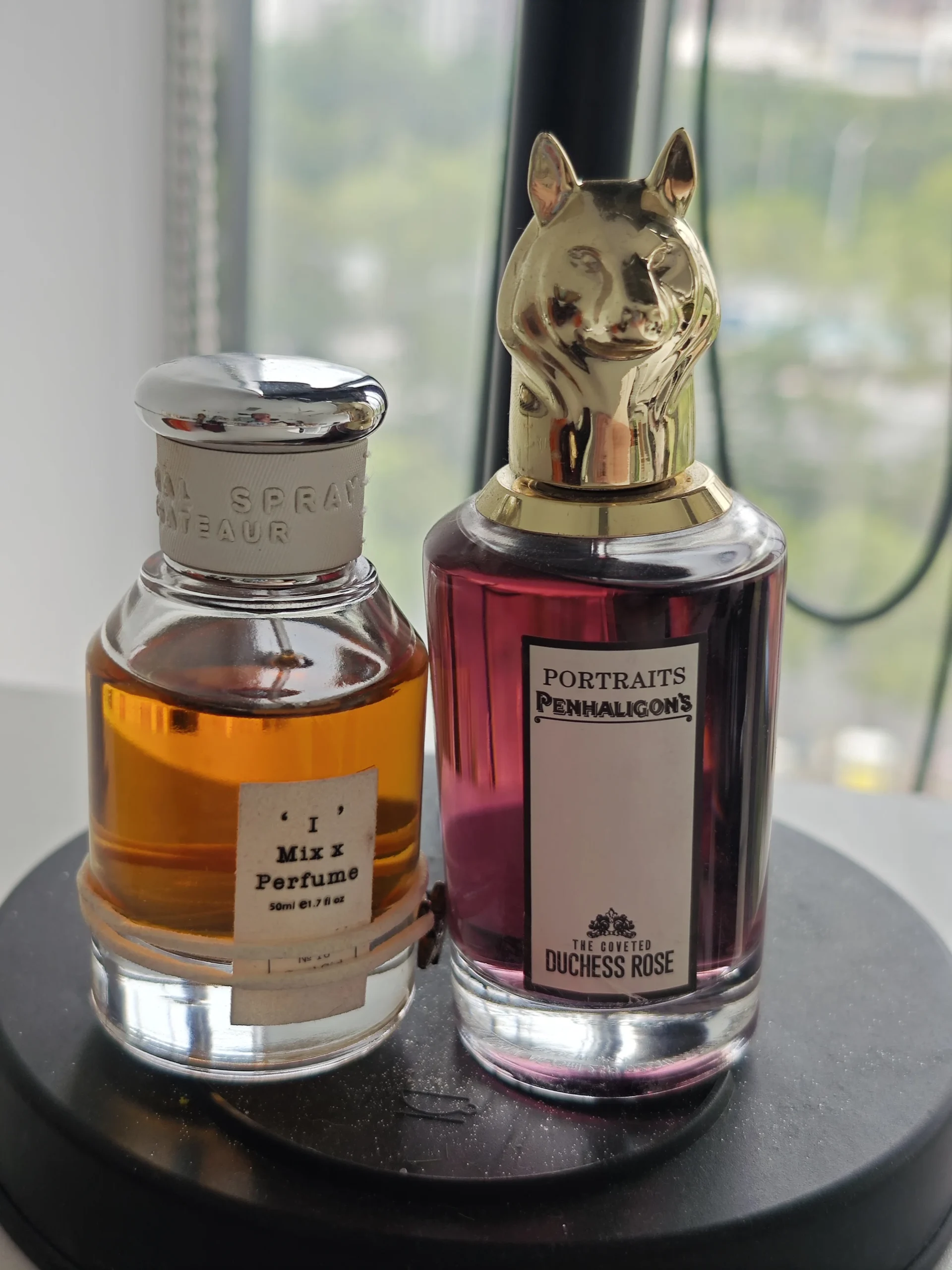
Introduction: The Magic and the Markups of “The Coveted Duchess Rose”
If you are exploring the world of niche perfumery in the USA, you have undoubtedly stumbled upon the mesmerizing Portraits collection by the historic British house, Penhaligon’s. These bottles, crowned with heavy, golden animal heads, are as much status symbols as they are olfactory experiences. At the absolute center of this collection’s popularity is “The Coveted Duchess Rose” (represented by the fox). It is widely regarded as a masterpiece of modern floral perfumery.
But when you fall in love with a fragrance that retails for upwards of $300 for a 75ml bottle, a very practical question arises: Is Penhaligon’s Duchess Rose worth the money?
For some, the unboxing experience, the brand heritage, and the beautiful bottle on their vanity justify the cost. However, for the pragmatic fragrance enthusiast who simply wants to smell incredible throughout their daily life, the price tag is a massive barrier. Furthermore, one of the most common complaints found on platforms like Fragrantica or Reddit’s r/fragrance is its performance. Many users find themselves asking, How long does Duchess Rose last on the skin? The frustrating reality is that due to its sheer, delicate composition, it often fades within three to four hours.
This intersection of high cost and moderate longevity has sparked a massive search for a high-quality Penhaligon’s Duchess Rose dupe. But the “dupe” market is notoriously tricky. For every expertly crafted alternative, there are ten cheap, alcohol-heavy knockoffs that smell like synthetic room spray. As a supply chain expert, I want to teach you how to look past the label. We are going to explore the chemistry of the scent, the economics of why it costs so much, and how to scientifically evaluate the alternatives available to you today.
1. Decoding the Formula: What Notes are in Coveted Duchess Rose?
Before you can find a good alternative, you must understand what makes the original so special. Perfume is not magic; it is chemistry and art combined. The reason Duchess Rose is so beloved is that it entirely reinvents the traditional rose perfume.
Historically, rose fragrances were heavy, powdery, and often associated with older generations. The genius of Duchess Rose is its transparency. It is what the industry calls a “Woody Rose.” Let’s break down the olfactory pyramid—the top, heart, and base notes—and see what chemical components are required to build it.
The Top Note: Sparkling Mandarin
The very first thing you smell when you spray the original is a bright, uplifting, and slightly sweet citrus note. This is sparkling mandarin. In high-end perfumery, this is usually achieved using cold-pressed essential oils from Italy or Brazil. The challenge with citrus is that the molecules (terpenes like limonene) are extremely tiny and volatile. They evaporate into the air within 15 to 30 minutes. A low-quality dupe will use cheap, harsh synthetic aldehydes that smell like lemon cleaning products. A high-quality alternative will use premium citrus oils to ensure the opening is smooth, zesty, and natural.
The Heart Note: The Jammy, Dewy Rose
The core of the fragrance is the rose. But it’s not just any rose. It is often described as “jammy” (having a sweet, almost berry-like quality) and “dewy” (smelling fresh and wet). To achieve this, master perfumers blend natural Rose Centifolia or Rose Damascena absolute with modern aromachemicals. Ingredients like Damascone (which adds a fruity, plum-like sweetness) and Geraniol (which enhances the green, leafy aspect of the flower) are meticulously balanced. The goal is to make you feel like you are smelling a living rose in a garden after a morning rain. If a dupe smells “flat” or “soapy,” it means the laboratory failed to balance these complex rose accords.
The Base Note: Musky Woods and The Drydown
Perhaps the most crucial phase of this perfume is the drydown. Which perfume is similar to Coveted Duchess Rose drydown? You are looking for a scent that leaves a sensual, skin-like aura. This is achieved through a combination of clean white musks (synthetic molecules that mimic the softness of skin) and woody notes. A key ingredient often used in this style of perfumery is Iso E Super, a fascinating aromachemical that smells like velvety cedarwood and gives the fragrance an airy, expansive quality. The base notes act as fixatives—they are heavy molecules that hold the lighter rose and citrus notes onto your skin for as long as possible.
2. The $300 Question: Why is Penhaligon’s Perfume So Expensive?
To understand the rise of high-quality affordable niche perfumes, we have to look at the traditional luxury supply chain. When an American consumer walks into a high-end department store and pays $300 for a bottle of perfume, what exactly are they buying?
Many people assume the liquid inside the bottle must contain incredibly rare, magical ingredients that cost hundreds of dollars. While high-end brands certainly use premium raw materials, the raw ingredient cost is only a tiny fraction of the retail price. Let’s look at the standard economic breakdown of luxury cosmetics, a reality openly discussed by industry watchdogs and publications like Business Insider and various supply chain analysts.
- The “Juice” (Fragrance Oil and Alcohol): Even with high-quality natural absolutes and premium synthetics, the actual liquid inside a 75ml bottle rarely exceeds $10 to $20 to manufacture at scale.
- Packaging and Hardware: For brands like Penhaligon’s, the packaging is art. Heavy glass from European foundries, bespoke zinc-alloy animal head caps, and intricate, gold-foiled boxes can easily cost more to produce than the perfume itself (often $20 to $40 per unit).
- Marketing and Brand Equity: Millions of dollars are poured into advertising, paying brand ambassadors, maintaining gorgeous boutique storefronts, and creating an aura of exclusivity. You are paying a premium to participate in the brand’s story.
- Retail Margins: This is the biggest factor. In the USA, standard retail markup in department stores is between 50% and 65%. If a bottle sells for $300, the retailer keeps roughly $150 to $180 just for putting it on their shelf.
This is where the concept of a “thin content” or purely promotional dupe falls apart. A good alternative brand isn’t doing magic; they are simply bypassing the inefficiencies of the traditional supply chain. By using standardized bottles, relying on word-of-mouth rather than million-dollar ad campaigns, and selling directly to consumers online, a direct-to-consumer (DTC) brand can invest the same amount of money into the actual fragrance juice while selling the final product for $40 to $60.
Table 1: Estimated Industry Cost Structure (Traditional Luxury vs. DTC Supply Chain)
Note: The figures below are industry averages based on standard cosmetic supply chain modeling, intended for educational purposes, and do not represent the proprietary financials of any specific brand.
| Supply Chain Component | Traditional Luxury Retail ($300+ MSRP) | Direct-to-Consumer Lab Model ($40-$60 MSRP) |
|---|---|---|
| Liquid Formulation (The Juice) | $10.00 – $20.00 (Premium Quality) | $10.00 – $15.00 (Premium Quality) |
| Packaging (Bottle, Cap, Box) | $25.00 – $40.00 (Bespoke/Heavy Metal) | $4.00 – $8.00 (Standardized/Minimalist) |
| Marketing, PR, & Operations | $50.00 – $80.00 | $5.00 – $10.00 (Digital/Organic) |
| Retailer Margin (Middleman) | $150.00 – $180.00 | $0.00 (No middleman) |
| Brand Profit | $40.00 – $80.00 | $15.00 – $25.00 |
3. The Laboratory Process: Unlocking the Scent with GC-MS and IFRA
How does a brand actually create a clone or a “dupe”? In the past, a perfumer would simply sniff the original and try to guess the ingredients. Today, the process is driven by advanced chemistry, specifically a technology called GC-MS (Gas Chromatography-Mass Spectrometry).
Understanding GC-MS Analysis
Think of a GC-MS machine as a highly advanced recipe scanner. When a sample of Coveted Duchess Rose is placed into the machine, it is vaporized. The Gas Chromatograph separates the complex mixture into individual chemical molecules based on how fast they travel through a column. Then, the Mass Spectrometer identifies each molecule. The machine prints out a graph showing exactly how much Limonene, Linalool, Damascone, and Iso E Super is in the bottle.
However, the machine only gives the chemical names. It takes an experienced, human master perfumer to interpret that data. If the machine reads “Linalool,” the perfumer must decide whether to source cheap synthetic linalool or high-quality natural bergamot extract. This human element is the difference between a cheap knockoff and a high-fidelity alternative.
Safety First: The Importance of IFRA Compliance
When shopping for alternatives, especially from unknown overseas vendors, safety is a massive concern. Professional perfumery is strictly regulated by the International Fragrance Association (IFRA). IFRA sets the global standards for safe usage levels of natural extracts and synthetic molecules to prevent skin sensitization and allergies. Reputable USA and European brands—whether luxury or affordable alternatives—strictly adhere to these guidelines, ensuring that their woody rose perfumes are safe for daily wear.
The Secret Ingredient: Time (Maceration)
Have you ever bought a cheap perfume that smelled strongly of rubbing alcohol when you first sprayed it? That happens because the manufacturer skipped a vital step: Maceration. Maceration is the process of letting the fragrance oils blend with the alcohol in a dark, temperature-controlled environment for several weeks or months. It is similar to letting a fine wine breathe or a stew sit overnight—the chemical bonds fuse, the harsh edges of the alcohol soften, and the true scent profile blossoms. High-quality alternative brands factor maceration into their production timelines.
4. Evaluating the Market: Which Duchess Rose Alternative is Right for You?
As a supply chain professional, my goal is to give you a transparent look at the market. There is no single “perfect” option for everyone. It depends on your budget, how much you value longevity, and your preferred shopping experience. Let’s evaluate the different avenues you can take when searching for the best dupe for Penhaligon’s Duchess Rose.
Option A: The Direct-to-Consumer Lab Engineered (e.g., Imixx Perfumes)
The Approach: Brands like Imixx Perfumes operate by connecting high-end formulation labs directly to the consumer. For example, our formulation, Inspired By The Coveted Duchess Rose, utilizes rigorous GC-MS data and premium ingredients to capture the exact jammy rose and mandarin profile.
Pros: Excellent scent accuracy (often hitting 95%+ similarity). We specifically address the original’s weak longevity by boosting the concentration to Extrait levels, ensuring it lasts 8-10 hours. It is fully IFRA compliant and properly macerated.
Cons: You do not get the beautiful metal fox head bottle; the packaging is minimalist. It is an online-only experience, so you cannot test it in a physical store prior to purchase.
Option B: The Fast-Fashion Alternatives (e.g., Zara)
The Approach: Does Zara have a dupe for Penhaligon’s Duchess Rose? Zara is famous for producing highly accessible fragrances crafted by renowned perfumers (like Jo Malone). While they do not have a 1:1 named clone of Duchess Rose, fragrances in their floral/woody lines (such as *Fashionably London* or *Rose Gourmand*) often scratch that “modern rose” itch for a fraction of the price.
Pros: Extremely affordable (usually under $30). You can walk into almost any Zara store in the USA to smell it before you buy. Beautiful, modern scent profiles.
Cons: They are rarely exact matches; they are more “in the same family.” Furthermore, to keep costs incredibly low, Zara often formulates at Eau de Toilette (EDT) concentrations, meaning the longevity is famously fleeting, often requiring reapplication every 2 hours.
Option C: Mass-Market Clone Houses (e.g., Dossier, Alt Fragrances, Eden Perfumes)
The Approach: Brands like Dossier (USA) or Eden Perfumes (UK) have built massive businesses explicitly recreating popular scents. They offer a wide variety of designer and niche inspirations.
Pros: Standardized, reliable purchasing experience. They offer good return policies and transparent ingredient lists (Dossier is known for its vegan/cruelty-free stance). They generally offer good value for money.
Cons: Because they produce hundreds of different fragrances on an industrial scale, the nuance of highly delicate niche scents (like the specific sheer quality of Duchess Rose) can sometimes feel a bit more synthetic or “flattened” compared to smaller, specialized lab batches. Scent accuracy can vary wildly from batch to batch.
Option D: Indie Perfume Oils and Rollerballs (Etsy Sellers)
The Approach: If you search on platforms like Etsy, you will find many small artisans selling “Coveted Duchess Rose pure perfume oil.”
Pros: Pure oils do not contain alcohol, which is great for people with incredibly sensitive skin. Because they are dense, the base notes (the musky woods) tend to linger on the skin for a very long time.
Cons: Oils lack “projection” or “sillage.” The alcohol in spray perfumes acts as a delivery system, lifting the scent into the air so others can smell it. Oil rollerballs sit very close to the skin; you are essentially the only one who will smell it. Furthermore, quality control and IFRA compliance are often unverifiable with small, independent home-mixers.
5. Expert Tips: How to Make Your Rose Perfume Last All Day
Even if you invest in a high-concentration Extrait de Parfum, your personal body chemistry and environment play a massive role in how a fragrance performs. A common question among everyday consumers is, How to make Penhaligon’s perfume last longer? Here is a supply-chain expert’s guide to maximizing your fragrance yield, heavily influenced by the science of skin pH and evaporation.
- The Lipid Barrier (Moisturize!): Perfume is largely alcohol. If your skin is dry, it will literally “drink” the fragrance oils, causing the scent to disappear rapidly. The secret is to create a lipid barrier. Apply an unscented body lotion, shea butter, or a carrier oil (like Jojoba or Sweet Almond oil) immediately after a warm shower. Spraying your fragrance over this hydrated layer gives the scent molecules something to cling to, extending longevity by hours.
- Targeting the Pulse Points: The heat of your body helps diffuse the fragrance. Spray on pulse points where blood vessels are closest to the skin: the wrists, the sides of the neck, behind the ears, and the inner elbows. Crucial tip: Do not rub your wrists together! Friction creates heat that can literally burn off the delicate citrus top notes, ruining the intended scent journey.
- The Clothing Hack: While your skin chemistry makes the base notes unique to you, fabric is incredible at holding onto top and heart notes (like the mandarin and rose). Spraying a light mist onto a scarf, the lining of a jacket, or your shirt collar will create a scent trail that lasts for days. Note: Always patch-test on a hidden area first, as high-oil concentration perfumes can stain light-colored silks or cottons.
- Proper Storage is Non-Negotiable: The worst place to keep your perfume is on a vanity in a steamy bathroom. Heat, humidity, and direct UV sunlight break down the chemical bonds of the fragrance molecules. To protect your investment—whether it’s a $300 original or a $50 premium alternative—store your bottles in a cool, dark place, like a bedroom drawer or a dedicated closet shelf.
6. The Buyer’s Checklist: How to Spot a Quality Dupe
Before making a purchase, use this checklist to evaluate whether the brand you are considering is offering a high-quality product or a cheap cash grab.
Table 2: Quality Assessment Criteria for Fragrance Alternatives
| Feature to Check | Red Flags (Low Quality) | Green Flags (High Quality) |
|---|---|---|
| Ingredient Transparency | Vague descriptions; no mention of safety standards. | Clear listing of notes; explicit mention of IFRA compliance and safe synthetics. |
| Concentration Level | Listed as Body Mist, Cologne, or Eau de Toilette (often under 10% oil). | Listed as Eau de Parfum (EDP) or Extrait de Parfum (15% to 30%+ oil). |
| The Opening Sniff | Smells like rubbing alcohol or harsh chemical cleaners for the first 5 minutes. | Immediate, smooth delivery of the top notes (citrus/floral); indicates proper maceration. |
| Brand Positioning | “We are exactly the same!” (Unrealistic marketing). | “We use GC-MS data to create a highly accurate, high-concentration inspired formulation.” (Honest science). |
Frequently Asked Questions (FAQ)
To further assist you, I have compiled answers to the most common questions USA consumers ask regarding this specific fragrance profile.
It is a sophisticated, transparent woody rose. It opens with bright, zesty mandarin orange, transitions into a fresh, sweet, and dewy rose (lacking any vintage powderiness), and dries down into a warm, sensual base of clean musk and soft woods. It smells elegant, modern, and effortless.
The “best” depends on your needs. For accessibility, Zara offers great woody-rose cousins. For sheer scent accuracy and improved longevity, lab-direct brands offer the closest experience. For example, Imixx Perfumes’ Inspired By The Coveted Duchess Rose is highly regarded for bridging the gap between 95% scent accuracy and an upgraded Extrait-level performance.
If you have disposable income and highly value brand heritage, elaborate packaging, and the luxury retail experience, yes. However, purely from a biochemical and supply chain perspective, the liquid itself does not justify a $300+ price tag. You are paying a massive premium for marketing and retail markup.
The original is notoriously delicate. Due to the high volatility of its citrus and sheer floral notes, most wearers report it becoming a very faint skin scent within 3 to 5 hours. This is why many seek out alternatives that formulate the same scent profile at higher oil concentrations.
Zara does not have an officially acknowledged, direct 1:1 clone of Duchess Rose. However, Zara is famous for its collaborations with master perfumers. Fragrances like Zara Rose Gourmand or Fashionably London play in a very similar “modern woody rose” sandbox and are excellent, budget-friendly ways to test if you like this style of perfumery.
If you want to explore beyond dupes, look for fragrances that list Rose, Cedarwood, Iso E Super, and Musk. Examples include Le Labo’s Rose 31 (which is much spicier and woodier) or Byredo’s Rose of No Man’s Land (which is slightly more medicinal). For a direct scent-profile match, dedicated alternative brands are your best bet.
They serve different purposes. Perfume oils (often sold in roll-ons) last a very long time on the skin but have almost zero “sillage” (they don’t project into the air). Alcohol-based sprays (EDP/Extrait) are required if you want to leave a beautiful scent trail as you walk by.
Designer perfumes (like Dior or Chanel) are created to appeal to the masses and are widely available in department stores. Niche perfumes (like Penhaligon’s, Creed, or Byredo) are produced by specialized fragrance houses. They often feature more daring, unconventional scent profiles and limited distribution, which justifies their higher price points in the luxury market.
Yes, brands like Eden Perfumes (UK) and Dossier (USA) are legitimate businesses that offer good value. They are excellent for everyday wear. However, because they mass-produce hundreds of profiles, some fragrance connoisseurs feel they occasionally lack the subtle, three-dimensional nuance found in alternatives crafted by smaller, specialized labs.
Yes. While perfume doesn’t spoil like milk, the chemical compounds degrade over time, especially if exposed to heat and light. A well-stored perfume can last 3 to 5 years (sometimes longer). If your perfume starts smelling like vinegar or the liquid turns significantly darker, the top notes have likely oxidized.
Conclusion: Empowering Your Olfactory Choices
Navigating the fragrance market in the USA does not have to be a guessing game. By understanding the basics of GC-MS chemistry, IFRA safety standards, and the realities of supply chain markups, you are no longer just a consumer; you are an educated fragrance enthusiast.
You now know that the allure of Coveted Duchess Rose lies in its masterful blend of sparkling mandarin, jammy rose, and musky woods. You also know that you do not need to spend over $300 to capture that exact feeling. Whether you choose to explore the accessible aisles of Zara, test the extensive catalogs of mass-market clone houses, or invest in a high-fidelity, lab-direct formulation like Imixx Perfumes, the choice is yours to make based on data, not just marketing.
Great perfume is not about the logo on the bottle; it is about how the scent makes you feel and how it projects your personality into the world. Choose wisely, store your bottles carefully, moisturize your skin, and enjoy the beautiful, luxurious aura of the woody rose.

 No.20 Inspired by Soleil Blanc Perfume
  No.31 Inspired by Replica Sailing Day Perfume
  NO.40 Inspired by Black Opium Perfume
  No.59 Inspired by Santal Blush Perfume
  No.51 Inspired by Wood Sage And Sea Salt Perfume
 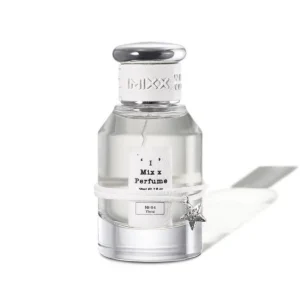 No.64 Inspired by Ylang 49 Perfume