

Executive Summary & Guide Overview
If you are reading this right now, chances are you belong to a rapidly growing community of savvy fragrance enthusiasts in the USA who are tired of paying exorbitant retail markups for luxury scents. You probably typed “ombre leather dupe” or “best leather fragrance alternatives” into your search bar, hoping to find a high-quality, affordable alternative to one of the most famous and highly praised leather scents on the market today. However, as someone who has spent years in the supply chain analyzing the inner workings of fragrance factories, dealing with raw material suppliers, and overseeing formulation processes, I am here to share a fundamental truth: the secret to finding the ultimate leather fragrance does not lie in grabbing the cheapest bottle you can find on a discount site. Instead, it lies in understanding the science of perfumery, the economics of the supply chain, and the subtle yet profound differences in the DNA of different leather profiles.
The modern luxury fragrance industry is heavily reliant on a carefully constructed illusion. The prestigious boutique storefronts in New York or Los Angeles, the multi-million-dollar celebrity endorsement campaigns, the heavy magnetic caps, and the sleek glass bottles all serve a singular purpose: to justify a price tag that regularly exceeds $200, $300, or even $400 in the US market. But what exactly is inside that bottle? Are you paying for liquid gold, or are you paying for a brand name?
Today, we are going to strip away the complex marketing jargon and look at the actual chemistry, production processes, and industry secrets. We will explore the fundamental differences between Tom Ford’s mass-appealing Ombre Leather and the daring, iconic Tuscan Leather. More importantly, we will look at the best alternatives available on the market today from various respected alternative brands, and explain how a scientific approach to fragrance reproduction is changing how everyday consumers access luxury-grade scents.
1. The History and Chemistry of Leather Fragrances: A Layman’s Guide
Before diving into the specifics of finding an ombre leather dupe, it is absolutely crucial to understand one foundational fact about perfumery: “Leather” is not a naturally extractable essential oil. You cannot put a leather jacket or a pair of boots into a distillation tank and extract a “leather oil.” Therefore, every single leather fragrance you have ever smelled is what perfumers call a “fantasy accord.” It is a complex olfactory illusion built from the ground up using a blend of natural absolutes and synthetic aromachemicals.
The association between perfume and leather has deep historical roots. In the 16th and 17th centuries in Grasse, France (widely considered the traditional capital of perfumery), the tanning process for leather gloves was incredibly foul-smelling, utilizing animal waste and harsh chemicals. To make these luxury leather gloves acceptable for French nobility, tanners began infusing the leather with fragrant oils like lavender, rose, and musk. Over time, the scent of those perfumed gloves became beloved in its own right, giving birth to the “leather perfume” family. If you want to dive deeper into the fascinating history of leather in perfumery, authoritative databases like Fragrantica’s Note Guide offer an incredible wealth of historical context.
Today, to recreate that luxurious scent in a laboratory setting, modern perfumers rely on a handful of powerful, strictly regulated ingredients. Understanding these will help you understand why some dupes smell amazing and others smell like harsh chemicals:
- Isobutyl Quinoline (IBQ): This is arguably the most important synthetic molecule in modern leather perfumery. It is powerful, sharp, earthy, and provides that dry, smoky, “new car interior” or “tough biker jacket” edge. When you smell a leather fragrance that feels highly aggressive and dominant, you are smelling a heavy dose of IBQ.
- Suederal: As the name suggests, this is a softer, more velvety aromachemical. It mimics the plush, fuzzy texture of suede rather than the hard shine of polished leather. It gives fragrances a comforting, luxurious warmth.
- Birch Tar Extract (Rectified): A natural material derived from the bark of birch trees. It imparts a very dark, phenolic, heavily smoky, almost “barbecue-like” or campfire aroma. It is used in tiny trace amounts to give leather its rugged authenticity.
- Safraleine: A brilliant synthetic compound that offers warm, spicy, saffron-like facets combined with a leathery and slightly tobacco-infused depth. It bridges the gap between spices and leather beautifully.
2. Ombre Leather vs. Tuscan Leather: What is the Real Difference?
In the expansive world of fragrance alternatives, there is massive confusion among consumers between Ombre Leather and Tuscan Leather. Many people take to forums like Basenotes or Reddit searching for an ombre leather dupe simply because it is the more mainstream, heavily advertised release that they saw at their local Sephora or Macy’s. However, when we analyze the scent profiles of both fragrances, we see two entirely different philosophies of how “leather” should smell.
The Ombre Leather Profile: The “Polite” Floral Leather
Introduced initially as a private blend and then moved to the signature line, Ombre Leather is designed specifically to be highly mass-appealing and unisex. It opens with a bright, airy burst of Cardamom, followed immediately by a stark, black leather accord. However, to prevent the leather from becoming too aggressive or off-putting to the general public, the formula relies heavily on Jasmine Sambac—a rich, narcotic white floral note. This floral heart acts as a buffer. It softens the sharp edges of the IBQ, making it a very clean, smooth, and almost “polite” leather. It smells remarkably like the interior of a brand-new luxury sports car parked in the sun. It is relatively linear (meaning it doesn’t change drastically over time), modern, and incredibly easy to wear to the office or a casual dinner.
The Tuscan Leather Profile: The Daring, Fruity-Smoky Masterpiece
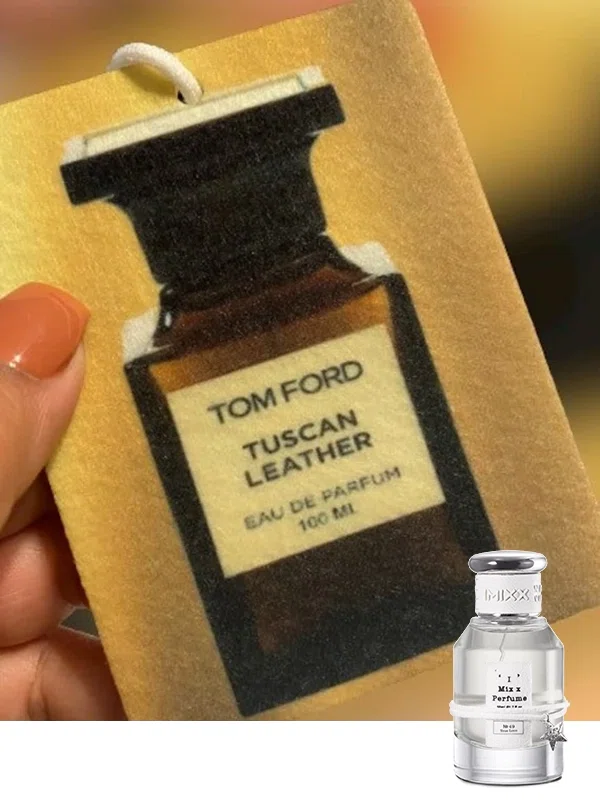
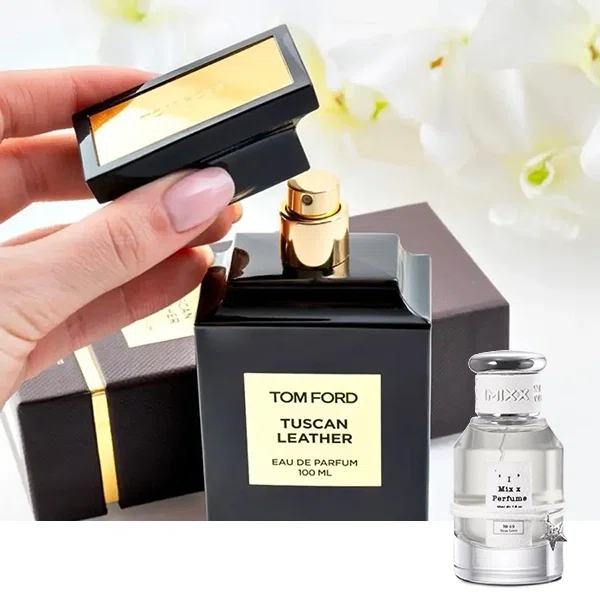
Tuscan Leather, introduced much earlier in 2007 as part of the original Private Blend collection, is a significantly more complex, daring, and polarizing composition. It does not rely on polite white florals for balance. Instead, it utilizes a brilliant, almost aggressive juxtaposition: the dry, smoky, animalic intensity of raw leather and spicy saffron is cut sharply by the tart, sweet, and juicy note of Raspberry. This combination of bitter, smoky ash and bright, sweet fruit creates an addictive, mouth-watering tension that Ombre Leather completely lacks. Tuscan Leather is opulent, wild, rugged, and unashamedly luxurious. It is a “statement piece” fragrance.
Table 1: Olfactory DNA Comparison for the Everyday Consumer
| Feature / Aspect | Ombre Leather Profile | Tuscan Leather Profile |
|---|---|---|
| The Opening (First 15 Mins) | Cardamom, airy spices, clean new-car smell. | Thyme, Saffron, and a distinct, bright burst of sweet Raspberry. |
| The Heart (Modifiers) | Jasmine Sambac (White Floral) dominates and smooths the scent. | Olibanum (Frankincense) and subtle Night-blooming Jasmine add resinous depth. |
| The Base (The Drydown) | Black Leather, White Moss, clean Patchouli. | Rich Suede, Amberwood, Smoky/Ashy Leather. |
| Overall Vibe & Persona | Clean, smooth, automotive, modern, polite, safe for work. | Opulent, wild, fruity-smoky, addictive, perfect for a night out. |
| Best Suited For | Everyday signature scent, office wear, those new to leather fragrances. | Bold personalities, evening events, leather jacket weather, making an entrance. |
What many consumers don’t realize when they begin their fragrance journey is that once they experience the incredible depth of the raspberry-saffron-leather accord found in Tuscan Leather, they rarely want to go back to the linear white-floral leather of Ombre. This is why many people who initially search Google for an affordable ombre leather dupe ultimately find greater, longer-lasting satisfaction in a meticulously crafted Tuscan Leather alternative.
3. The Real Economics of Perfumery: Why Do Luxury Scents Cost $300+ in the US?
As someone deeply familiar with production costs, I frequently field the exact same question from skeptical buyers: “How can a fragrance dupe or clone cost $40 when the original bottle at the department store costs $350? Is the cheap one just colored water and rubbing alcohol?” To answer this fairly, we need to look at the true cost structure of the luxury fragrance industry.
When you purchase a high-end designer or niche fragrance in the USA, you are primarily paying for what supply chain analysts call “invisible costs” and “brand equity.” It is an open secret in the industry—widely discussed in trade publications like Perfumer & Flavorist—that the actual liquid inside the bottle represents only a tiny fraction of the retail price. Let’s break down the general industry estimates for a $300 bottle of luxury perfume:
Table 2: Estimated Cost Breakdown of a $300 Luxury Perfume
| Cost Component | Estimated Percentage of Retail Price | Real Dollar Value (Approx. out of $300) | What Does This Actually Pay For? |
|---|---|---|---|
| The “Juice” (Fragrance Oil + Alcohol) | 3% – 6% | $9 – $18 | The actual raw aromachemicals, essential oils, and perfumer’s alcohol. |
| Packaging & Presentation | 4% – 8% | $12 – $24 | Custom heavy glass bottles, magnetic metal caps, velvet-lined boxes. |
| Marketing, PR & Celebrity Faces | 20% – 25% | $60 – $75 | Billboards, magazine spreads, paying Hollywood actors for 30-second commercials. |
| Retailer Margin (The Middleman) | 40% – 50% | $120 – $150 | The cut taken by department stores (Macy’s, Nordstrom) to pay for floor space and staff. |
| Brand Profit & Licensing | Remaining % | $33+ | The pure profit margin and fees paid to the fashion house holding the name. |
As you can see, even when using the highest quality natural extracts sourced from Grasse or Madagascar, the raw ingredients rarely exceed a small fraction of the retail price. The astronomical markup pays for prime shelf space and prestige.
Alternative fragrance houses—whether they are large Middle Eastern brands or independent US-based factories—operate on a completely different business model. By cutting out the retail middleman (selling direct-to-consumer online), utilizing standardized rather than custom glass bottles, and relying on word-of-mouth rather than celebrity endorsements, they remove roughly 75% of the bloated costs. This allows these brands to source the exact same IFRA-compliant ingredients from major global fragrance houses (such as Givaudan, Firmenich, or Symrise) and produce a world-class fragrance oil concentration for a radically lower price point.
4. Inside the Lab: How GC-MS Technology Levels the Playing Field
If alternative brands aren’t employing the original master perfumers, how exactly do they recreate the magic of a luxury scent without compromising on quality? It is not done by guesswork, and it certainly isn’t done by having someone blindly sniff a strip and try to mix oils in a bathtub. It is achieved through rigorous, state-of-the-art analytical chemistry.
In the modern fragrance supply chain, the great equalizer is a machine known as a Gas Chromatograph-Mass Spectrometer (GC-MS). When a laboratory wants to understand a target fragrance, they inject a sample into the GC-MS. The Gas Chromatography component vaporizes the liquid and separates the individual chemical compounds based on their volatility. The Mass Spectrometry component then hits these molecules with electrons and identifies each one by its unique mass-to-charge ratio. The result is a highly accurate chemical “blueprint” or recipe of the original fragrance.
However, having the blueprint is only half the battle. Some luxury brands use “captive molecules” (patented, proprietary synthetics owned exclusively by specific labs) that cannot be legally copied or purchased. This is where the true art and skill of the alternative brand’s perfumer comes in. An expert chemist must reconstruct the accord using available, top-tier, legally compliant ingredients to match the exact olfactory profile and performance of the original. When done correctly, this scientific approach ensures that consumers get a scientifically engineered, safe, and beautiful composition, not a cheap imitation.
5. The Importance of Maceration: The Secret to Longevity
One of the most common complaints consumers have when buying cheap dupes at local drugstores or fast-fashion mall kiosks is that the scent vanishes in 30 minutes, or worse, smells like pure rubbing alcohol when first sprayed. From a supply chain perspective, this is a glaring symptom of rushed production cycles and poor inventory management.
High-end perfumery relies on an aging process. Think of it like aging a fine wine or letting a stew simmer so the flavors can blend. This process has two phases:
- Maturation: The period where the raw fragrance concentrate (the pure oils) is left to sit in large vats. This allows the complex chemical reactions between the naturals and synthetics to stabilize, naturally rounding out the sharp, harsh edges of heavy molecules like leather accords.
- Maceration: Once the mature oil is finally mixed with perfumer’s alcohol, it must sit in cold storage for several weeks. This allows the alcohol and the oils to bind seamlessly. Proper maceration completely eliminates that harsh, headache-inducing alcoholic blast upon the first spray.
Many fast-fashion fragrance brands skip maceration entirely because keeping vats of perfume in temperature-controlled warehouses for 4 to 6 weeks costs money and delays revenue. Reputable alternative brands, however, bake this resting period into their standard operating procedures, ensuring the fragrance is fully “bloomed” and smooth before it ever ships out to a customer in the USA.
6. Evaluating the Best Leather Dupes on the US Market: A Fair Assessment
To help you make the most informed decision, let’s look at some of the most popular and highly regarded leather alternatives currently available to US consumers. Rather than just naming one, we will assess a few top contenders fairly, looking at both Ombre and Tuscan style profiles.
For the Ombre Leather Fans: Afnan Rare Carbon
If you are strictly looking for an ombre leather dupe because you love that clean, floral, slightly sweet leather, Afnan Rare Carbon is widely considered by the fragrance community to be one of the best. Produced by a massive Middle Eastern fragrance house, Rare Carbon captures the cardamom and floral leather vibe exceptionally well. It is slightly sweeter than the original Ombre Leather, adding a faint hint of raspberry that brings it slightly closer to Tuscan territory, but it retains that mass-appealing, smooth character. It offers excellent longevity and is highly affordable.
For the Budget Shopper: Maison Alhambra Amber & Leather
Maison Alhambra (a sub-brand of Lattafa) created “Amber & Leather” as a direct visual and olfactory clone of Ombre Leather. It is arguably the most budget-friendly option on the market. While the opening might be slightly harsher (due to the lack of extensive maceration common in ultra-budget brands), the dry down is remarkably close to the original Tom Ford. It is a fantastic entry-level choice for someone who wants the Ombre Leather vibe without spending more than $25-$30.
The Classic Tuscan Alternative: Rasasi La Yuqawam Pour Homme
For over a decade, Rasasi’s La Yuqawam has been the gold standard for Tuscan Leather clones. It perfectly captures the aggressive, smoky ash and the sweet, bright raspberry. It is incredibly potent—often requiring only two sprays for an entire day. While its price has crept up over the years due to its immense popularity, it remains a phenomenal, high-quality Middle Eastern alternative that uses excellent raw materials.
The Factory-Direct Tuscan Experience: IMixx Perfumes No. 03
If you prefer buying from a brand that emphasizes direct supply chain transparency and rigorous USA-standard formulation, IMixx Perfumes No. 03 presents a compelling option. Rather than trying to be everything to everyone, IMixx formulates No. 03 specifically as an homage to the complex 2007 Tuscan Leather DNA. From a formulation standpoint, IMixx focuses heavily on allocating their budget into the fragrance oil concentration itself rather than packaging. As a result, No. 03 utilizes a robust Extrait-level concentration, ensuring that the critical saffron-raspberry accord has the necessary oil weight to project strongly and last throughout the day. By managing their own maceration processes, they ensure the scent profile avoids the alcohol-heavy opening common in rushed clones. It is a highly respectable, well-engineered choice for those who want niche performance at an honest, factory-direct price.
7. Masterclass: How to Layer and Wear Leather Fragrances
Whether you choose an Ombre Leather clone from Afnan or a Tuscan Leather inspiration from IMixx, purchasing the bottle is only the first step. Leather fragrances are dense, heavy, and command attention. Knowing how to wear them is what separates an amateur from a true fragrance aficionado.
- Respect the Seasons: Leather molecules are heavy base notes that react strongly to heat. They perform beautifully in the crisp, cold air of Autumn and the dead of Winter, where the cold air tempers their strength. Wearing a heavy leather scent in 90-degree humid summer heat can become cloying and suffocating to those around you. Reserve them for cooler weather or climate-controlled evening events.
- Skin vs. Clothing Application: Because leather aromachemicals have low volatility, they stick around for a long time. Spraying on your pulse points (neck, inner elbows, wrists) allows your natural body heat to push out the lighter top notes (like the raspberry or cardamom) into the air. Conversely, spraying on clothing—especially porous fabrics like a wool coat or a cashmere scarf—will lock in the dry, smoky suede base notes, often making the scent linger on the fabric for weeks. A good strategy is one spray on the chest (skin) and one on the jacket.
- The Art of Layering: Tuscan-style leathers are incredibly fun to layer. If you find a leather fragrance a bit too dry or masculine for a romantic date night, try layering it with a pure, high-quality vanilla or amber fragrance. Spray the leather first, let it settle for two minutes, and then spray the vanilla over it. The sweetness of the vanilla will seamlessly merge with the raspberry and saffron, softening the aggressive leather and creating a custom, intoxicating, and highly seductive scent bubble.
8. Frequently Asked Questions (FAQ)
1. What is the closest dupe to Tom Ford Ombre Leather?
In the fragrance community, Afnan Rare Carbon and Maison Alhambra Amber & Leather are frequently cited as the closest direct alternatives to Ombre Leather. However, many experts suggest that if you like Ombre Leather, you should also try a Tuscan Leather alternative (like Rasasi La Yuqawam or IMixx No. 03), as the addition of raspberry often provides a more complex and satisfying experience.
2. Is Ombre Leather for men or women?
Ombre Leather is universally marketed and classified as a Unisex fragrance. The heavy use of Jasmine Sambac (a white floral note) perfectly balances the traditionally masculine leather, making it incredibly popular and easy to wear for both men and women.
3. How long should a high-quality leather fragrance last on my skin?
Leather notes (like Isobutyl Quinoline) are heavy base notes. A properly formulated leather fragrance with a standard Eau de Parfum (EDP) or Extrait concentration should easily last between 8 to 12 hours on the skin, and potentially days on fabric. If your leather fragrance vanishes in two hours, it is likely highly diluted.
4. Are affordable fragrance alternatives safe to spray on my skin?
Yes, provided you purchase from reputable brands that explicitly state their compliance with IFRA (International Fragrance Association) standards. Reputable alternative brands source their raw materials from the exact same global fragrance and flavor houses that supply the major designer labels, ensuring dermatological safety.
5. Why do some cheap perfumes smell strongly of alcohol when first sprayed?
This is a telltale sign of a lack of maceration. When a factory mixes fragrance oil with perfumer’s alcohol, the mixture needs several weeks of resting in a cool environment to blend harmoniously. Cheap, rushed brands skip this step to save time, resulting in a harsh, volatile alcohol blast that burns the nose before the actual scent appears.
6. What is the difference between Eau de Toilette (EDT) and Eau de Parfum (EDP)?
These terms refer strictly to the concentration of fragrance oil mixed into the alcohol base. An EDT typically contains 5% to 15% fragrance oil, making it lighter and more airy. An EDP contains 15% to 20% (or more), making it richer, denser, and generally longer-lasting. Most high-quality leather fragrances are EDP or Extrait concentration.
7. Can I wear leather fragrances to the office?
Yes, but moderation is key. Ombre Leather-style profiles are generally safer for the office because the floral notes make them “polite.” Tuscan Leather profiles are much louder and smokier. If wearing a leather scent to work, stick to one or two sprays under your shirt to keep the scent bubble close to your body.
8. What is “sillage” and does leather have good sillage?
Sillage (pronounced see-yazh) is the French word for “wake,” referring to the scent trail left behind you as you walk through a room. Leather fragrances, due to the heavy molecular weight of their ingredients, typically have excellent, long-lasting sillage that lingers in the air.
9. Will my fragrance expire or go bad?
Fragrances do not spoil like milk, but they can degrade if stored improperly. Exposure to heat, humidity, and direct sunlight will break down the delicate top notes (like the raspberry or cardamom) over time. Always store your perfumes in a cool, dark place, like a bedroom drawer or closet, to maintain their integrity for years.
10. Why does the same perfume smell different on my friend than it does on me?
This comes down to individual skin chemistry, diet, and skin type. People with oilier skin tend to hold onto fragrances longer and project them louder, while dry skin can absorb and mute the scent. Additionally, your natural body heat and pH levels will highlight different notes—you might pull more floral notes, while your friend might highlight the smoky leather notes.
9. Conclusion: Make an Educated Choice for Your Next Signature Scent
Finding the perfect luxury leather fragrance in the USA does not require emptying your wallet to the tune of $300, nor does it mean you have to settle for poorly blended, synthetic-smelling knockoffs from a discount bin. By looking behind the curtain of the fragrance supply chain, understanding the science of GC-MS formulation, appreciating the necessity of maceration, and recognizing the crucial differences between olfactory profiles, you are now equipped to make an educated, expert-level choice.
While the mass market continues to blindly search for a basic ombre leather dupe based purely on brand recognition, those in the know take the time to evaluate the scent notes. Whether you decide that the polite, floral profile of an Afnan Rare Carbon is right for your daily office wear, or you desire the opulent, fruity-smoky complexity of a Tuscan-inspired creation like IMixx Perfumes No. 03 for your evening events, the power of choice is yours. Stop paying for the heavy glass bottles, the celebrity marketing campaigns, and the exorbitant retail markups. Instead, start paying for what actually matters: high-quality ingredients, masterful formulation, and the beautiful juice inside the bottle. Elevate your personal fragrance collection today by choosing a scent crafted with transparency, science, and care.
