

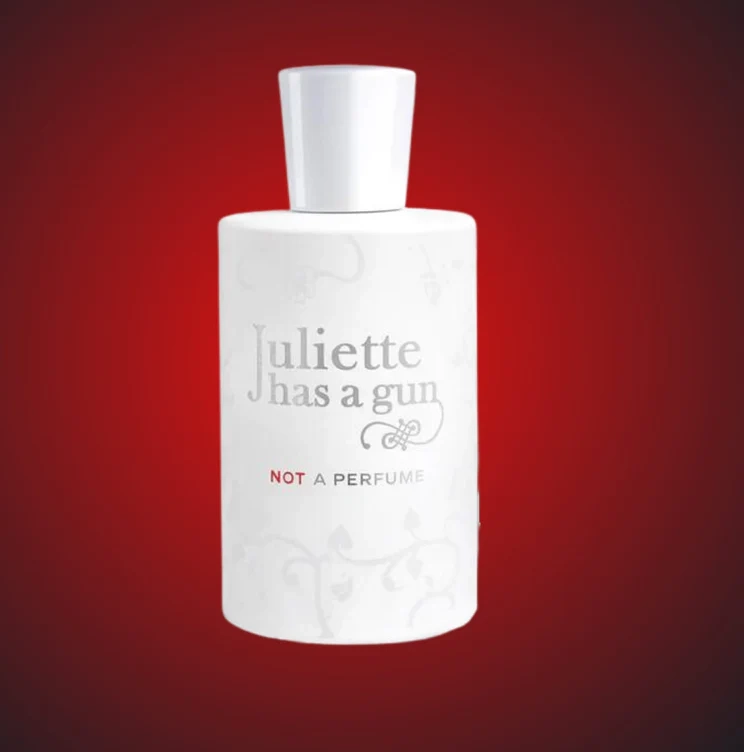
What Is Special About Juliette’s Got a Gun Not a Perfume? Discover Affordable Alternatives for This Unique Fragrance
I have always found minimalist fragrances interesting because they force me to judge perfume differently. Instead of asking how many flowers, fruits, spices, woods, and gourmand notes are packed into a formula, I have to pay attention to texture, diffusion, warmth, and the way a scent sits close to the skin. That is one reason juliette’s got a gun not a perfume attracts so much attention despite having a deliberately simple concept.
When I research juliette’s got a gun not a perfume, I think its most important feature is not simply that it smells clean. The real story is how a Cetalox-centered fragrance can create a recognizable woody, musky, ambery effect while avoiding the conventional top-heart-base structure consumers expect from many perfumes.
If I were shopping for the same general scent direction at a lower cost, I would also examine juliette’s got a gun not a perfume alternatives such as IMIXX Perfume No.15. I would not, however, assume that a lower-priced inspired-by fragrance is chemically identical, performs identically, or has been independently proven to match the original. Those distinctions matter, especially when the comparison appears on a retailer’s own website.
This guide therefore takes a more evidence-conscious approach than a typical promotional comparison. I will explain what the original fragrance is, what Cetalox contributes, why individual perception can vary, what the manufacturers actually claim about performance, what has and has not been independently verified, and how I would conduct a fair side-by-side wear test.
I will also explain where IMIXX Perfume No.15 fits into the decision. My goal is not to tell every reader that the lower-priced bottle is automatically the better choice. My goal is to separate documented facts, seller claims, sensory expectations, and personal preference so that the final buying decision is easier to make.
Editorial Transparency: Why I Am Being Explicit About Bias
This article is published on a website that sells IMIXX Perfume No.15. I consider that commercial relationship relevant information for readers. I am therefore not presenting this article as an independent third-party fragrance review.
Where I discuss IMIXX product specifications or performance claims, I identify them as seller-provided information unless independent evidence is available. I also avoid assigning an unsupported similarity percentage or pretending that I conducted a blind wear test when I did not. For me, that distinction is essential to a trustworthy comparison.
Key Points at a Glance
- Core idea: Not a Perfume is built around Cetalox as its featured scent material rather than a conventional multi-note perfume pyramid.
- Smell: I would describe the target profile as clean, woody, musky, softly ambery, and relatively transparent.
- Performance: The original manufacturer describes the fragrance as moderate in sillage and long-lasting, but that is still manufacturer information rather than an independent controlled test.
- IMIXX evidence: The current No.15 product listing gives specific performance claims, but I treat those as seller claims because I have not found independent controlled testing that verifies them.
- Formula distinction: IMIXX No.15’s own current listing names Cetalox, Iso E Super, Habanolide, and musks, so I would not describe it as literally identical to the original’s minimalist aromatic concept.
- Best decision: I would choose the original for the original composition and brand experience; I would consider IMIXX No.15 when price and access to the general scent direction matter more.
What Is Juliette Has a Gun Not a Perfume?
Juliette Has a Gun is the fragrance house founded by Romano Ricci, and Not a Perfume became one of its most recognizable creations by challenging the usual expectations surrounding perfume composition.
Instead of presenting a long list of citrus notes, florals, spices, fruits, woods, and sweet materials, the brand puts Cetalox at the center of the experience. On the official product page, Cetalox is shown across the top, heart, and base of the scent pyramid.
That unusual structure is why I think the fragrance is best understood as a study in texture and molecular perfumery rather than as a conventional note journey.
The brand describes the scent family as woody, musky, and ambery. It also positions the fragrance as a skin scent: something intended to merge closely with the wearer rather than behaving like an aggressively projecting perfume.
Why Is It Called “Not a Perfume”?
I interpret the name as a creative statement rather than a literal declaration that the bottle contains no perfume.
The concept rejects the idea that a fragrance needs an elaborate collection of recognizable notes to feel complete. Cetalox, normally useful as a base material in perfumery, becomes the focus instead of the supporting actor.
The result is intentionally stripped down. That minimalism can feel sophisticated to someone who enjoys transparent skin scents, but it can also feel too simple to a shopper expecting dramatic development.
I think both reactions are valid. Minimalism is not automatically better or worse than complexity. It is simply a different creative goal.
Does “One Ingredient” Literally Mean One Ingredient in the Bottle?
This is an area where I think fragrance writing needs more precision.
The brand describes the scent concept as based around one ingredient or one note, Cetalox. However, the finished retail product also lists alcohol denat., fragrance, and water in its ingredient information.
Therefore, when I call it a “single-note” or “Cetalox-centered” perfume, I am talking about the aromatic concept. I am not claiming that a retail bottle is filled with pure, undiluted Cetalox.
Knowledge Point: Aromatic Concept vs. Finished Formula
Aromatic concept: The scent material or note around which the fragrance is designed.
Finished formula: Everything contained in the commercial product, including the fragrance concentrate, alcohol, water, and any other declared materials.
I use this distinction because it prevents a simplified marketing description from being mistaken for a complete chemical formulation. Readers can review the manufacturer’s current description and ingredient information on the official Juliette Has a Gun Not a Perfume page.
What Makes Cetalox Special in Perfumery?
To understand why this perfume feels unusual, I think it helps to understand Cetalox itself.
Cetalox is a synthetic fragrance molecule associated primarily with amber and woody effects. Its manufacturer, dsm-firmenich, describes it as an especially powerful and elegant ambery material with pronounced woody character.
That description matches the general sensory vocabulary used around Not a Perfume: warm, dry, smooth, woody, musky, and skin-like.
Cetalox can be used as part of complex formulas, but in Not a Perfume it receives far more attention than it would in a conventional composition where dozens of ingredients might compete for notice.
What Does Cetalox Smell Like to Me Conceptually?
I think of the smell in terms of texture rather than literal objects.
Woody does not necessarily mean freshly cut cedar. The effect can be polished, dry, and abstract.
Ambery does not automatically mean sweet vanilla. Here, the sensation is more radiant and warm than dessert-like.
Musky describes an intimate, clean, skin-adjacent effect rather than an overtly animalic one.
Together, those impressions create the “clean skin” atmosphere that makes this fragrance recognizable.
Is Cetalox the Same Thing as Ambroxan?
I would describe Cetalox and Ambroxan as closely related concepts within modern amber-woody perfumery, but I would not casually claim that every commercial material bearing these names is chemically or sensorially identical.
Raw-material suppliers can differ in manufacturing processes, purity, isomer composition, and specifications. Finished fragrances also depend on concentration and the other materials surrounding the molecule.
For shoppers, the useful takeaway is that fragrances centered on Cetalox- or Ambrox-type materials often share a transparent amber-woody character, but they should not automatically be treated as interchangeable.
Knowledge Point: What the Raw-Material Supplier Says
The current dsm-firmenich Cetalox technical page classifies Cetalox in the ambery family and describes both ambery and woody characteristics. I consider this a stronger source for the raw material itself than retailer copy or anonymous fragrance commentary.
What Does Not a Perfume Smell Like?
If I were explaining this scent to someone who normally wears floral, fruity, or gourmand fragrances, I would first say what not to expect.
I would not expect a sparkling citrus opening followed by a large bouquet and then a sweet vanilla base. I would expect a comparatively linear experience in which the same general woody-amber material remains recognizable from beginning to end.
Opening: Dry, Clean, and Transparent
After the initial alcohol evaporates, the fragrance is generally described as clean and airy rather than colorful or juicy.
The opening can seem almost minimalist to the point of disappearance for some noses. For others, the woody-amber character is immediately obvious.
That difference is one reason I would never assume that one review accurately predicts another person’s experience.
Middle: A Skin-Scent Effect
The middle of the wear is where I think the “my skin but better” idea becomes most relevant.
The scent does not need to project several feet to create an effect. A skin scent can be noticeable mainly when someone approaches the wearer, when body heat increases, or when movement briefly pushes aromatic molecules into the air.
This kind of diffusion can feel sophisticated because it creates intermittent detection instead of continuous intensity.
Drydown: Warm Woods and Amber
As the fragrance settles, I would expect the warmer, drier aspects to become increasingly important.
Because the composition is intentionally simple, the drydown may not feel radically different from the earlier stages. What changes most may be intensity rather than identity.
For me, understanding that linearity is important before buying. Someone seeking dramatic evolution might be disappointed. Someone who wants consistency may consider it a strength.
Why Can Different People Perceive the Same Fragrance So Differently?
Not a Perfume has a reputation for producing unusually different reactions. One person may describe it as obvious and persistent while another barely detects it.
I would not explain that difference with vague claims that the fragrance magically creates an entirely new chemical formula on every person’s skin.
There are simpler and more defensible explanations: individual odor sensitivity, olfactory adaptation, application amount, skin condition, temperature, humidity, and the testing environment.
Specific Odor Sensitivity Matters
People do not perceive every aroma molecule at the same intensity.
That means two reviewers can smell the same application and honestly report different experiences. One person’s “strong amber” can be another person’s “almost nothing.”
This is particularly important with a minimalist fragrance because there are fewer obvious secondary notes available to compensate when a wearer is relatively insensitive to the featured material.
Olfactory Adaptation Can Look Like Poor Longevity
If I continuously smell the same fragrance, my awareness of it may decrease even though molecules remain present.
That is one reason I would not judge longevity by putting my wrist against my nose every few minutes.
A better approach is to leave the scent alone and reassess periodically. If possible, a second person can also help determine whether the fragrance remains detectable.
Environment Changes Diffusion
Heat generally increases volatility and can make a fragrance seem more noticeable for a period of time. Cooler conditions can reduce how quickly aromatic materials move into the air.
Humidity, airflow, clothing, moisturizer, application quantity, and spray placement can also affect the experience.
For that reason, I become skeptical when a review presents a single longevity number as if it applies universally.
How Long Does Not a Perfume Last? What the Evidence Actually Supports
This is where I think the original version of a comparison article needs the most discipline.
Longevity is often discussed as though it were one simple measurement, but at least three different performance concepts should be separated: longevity, projection, and sillage.
Longevity
Longevity is how long the fragrance remains detectable on the wearer or a test surface.
The original manufacturer characterizes Not a Perfume as long-lasting. That tells me how the company positions the fragrance, but it is not the same thing as a peer-reviewed or independently replicated wear-duration study.
Projection
Projection is how far the fragrance radiates from the wearer at a particular time.
A fragrance can last for many hours while staying very close to skin. Therefore, long wear does not automatically mean large projection.
The manufacturer describes the original’s sillage as “middle volume,” which suggests an intentionally moderate presence rather than an enormous fragrance cloud.
Sillage
Sillage refers to the scent trail a wearer leaves behind while moving.
It is related to projection, but I do not treat the two terms as identical. A fragrance can project modestly while still becoming noticeable when someone walks past.
What I Can and Cannot Say About Performance
I can say: the original manufacturer currently describes Not a Perfume as moderate in sillage and long-lasting.
I can say: IMIXX currently publishes its own specific longevity and projection claims for No.15.
I cannot honestly say: that I have independently verified those claims through a controlled blind comparison unless such a test has actually been performed and documented.
My Evidence-Graded Comparison: Original vs. IMIXX Perfume No.15
Rather than mixing marketing statements and verified facts together, I find it more useful to grade the evidence behind each comparison point.
I use three simple categories: documented product information, seller/manufacturer claim, and not independently verified here.
| Comparison Point | Juliette Has a Gun Not a Perfume | IMIXX Perfume No.15 | Evidence Strength |
|---|---|---|---|
| Product position | Original fragrance | Inspired-by alternative | Documented product information |
| Scent direction | Woody, musky, ambery | Designed to target a similar clean, musky, woody direction | Documented positioning; sensory similarity not independently quantified |
| Featured materials | Cetalox-centered aromatic concept | Current listing names Cetalox, Iso E Super, Habanolide, and musks | Documented on current product pages |
| Concentration | Marketed as Eau de Parfum | Seller currently lists 18% | Manufacturer/seller information |
| Longevity | Brand describes it as long-lasting | Seller currently states a 6–8 hour range | Claims not independently validated in this article |
| Projection / sillage | Brand describes “middle” sillage | Seller describes a subtle personal scent aura | Claims not independently measured here |
| Exact chemical equivalence | Original reference formulation | No independent evidence presented here proving identical formulation | Not established |
| Current listed size | Multiple sizes available through the brand | 50 mL / 1.7 oz | Documented product information |
| Current IMIXX listed price | Not used as a fixed benchmark because original pricing varies by size and market | $29 for 50 mL at the time this guide was reviewed | Seller listing; price can change |
Why This Evidence Table Matters
I think this format is more useful than simply declaring one bottle “better.” It tells me which information comes directly from a product listing and which conclusions still require independent testing.
For example, I can verify that IMIXX No.15 is currently listed at 50 mL and $29. I can also verify that its current note information names Cetalox, Iso E Super, Habanolide, and musks.
What I cannot establish from a seller page alone is whether the fragrance objectively achieves a particular similarity percentage to the original or whether every wearer will experience a specific number of hours of longevity.
That evidence gap does not mean the product performs poorly. It means I do not want to transform a marketing claim into a supposedly independent fact.
A More Honest Look at IMIXX Perfume No.15
IMIXX Perfume No.15 is positioned as a lower-cost interpretation of the Not a Perfume scent direction.
Its current product listing shows a 50 mL / 1.7 oz bottle priced at $29 and identifies the concentration as 18%. The listing also names Cetalox and Iso E Super in the middle and Habanolide and musks in the base.
That information is important because it tells me No.15 should not be described as merely one isolated molecule. Its listed aromatic structure is broader than that.
What I Like About the Value Proposition
The simplest advantage is price accessibility.
A $29 50 mL bottle works out to approximately $0.58 per milliliter before tax and shipping. That gives me a concrete metric that can be compared with the current cost per milliliter of whatever original bottle size I am considering.
I also see value in having a lower-cost bottle for casual use or experimentation with layering, particularly for someone who does not care about owning the original bottle or luxury packaging.
What I Would Not Claim Without Better Evidence
I would not claim that No.15 is chemically identical to the original.
I would not state that every wearer will receive 6–8 hours of performance simply because that number appears in seller material.
I would not present an extremely precise similarity percentage as an independent fact unless the underlying test methodology, samples, instruments, acceptance thresholds, and raw results were available for examination.
I would also avoid describing the product as universally hypoallergenic. That is too strong a medical-style conclusion for a fragrance retailer to make without appropriate substantiation.
I believe this more cautious language actually makes the product comparison more credible, because it distinguishes what is known from what is promoted.
How I Would Perform a Fair Original-vs.-Alternative Wear Test
The strongest improvement I can make to the empirical side of this article without inventing results is to define a reproducible protocol.
If I wanted to test the two fragrances properly, I would use the same protocol repeatedly rather than spraying them casually on different days and relying on memory.
My Suggested Side-by-Side Testing Protocol
- Avoid scented lotion, shower gel, deodorant, and other fragrances immediately before testing.
- Use the same skin area or identical paper blotters for both products.
- Apply one standardized spray of each fragrance from approximately the same distance.
- Do not rub either application.
- Label the samples A and B if another person can randomize them for a simple blind comparison.
- Record impressions at approximately 5 minutes, 30 minutes, 1 hour, 3 hours, 6 hours, and 8 hours.
- At every interval, score scent similarity, intensity, warmth, woodiness, muskiness, and detectability.
- Use a second evaluator when possible to assess projection without relying entirely on the wearer’s adapted nose.
- Repeat the procedure on more than one day.
- Only after repeated testing should I make a personal conclusion about similarity and performance.
The Metrics I Would Record
I would score opening similarity separately from drydown similarity. Two fragrances may begin differently but move closer together later, or vice versa.
I would also score texture: does one feel sharper, smoother, drier, creamier, more metallic, or more musky?
Then I would assess projection at controlled distances such as close skin, approximately 30 centimeters, and about one meter.
Finally, I would record detectable longevity rather than simply guessing when I think the perfume disappeared.
Why Blind Testing Would Improve Trust
Brand names and prices affect perception.
If I know that one wrist carries the expensive original and the other carries the cheaper alternative, expectation bias can influence what I think I smell.
Having another person label the samples without telling me which is which would not turn a home test into a scientific clinical trial, but it would reduce one obvious source of bias.
I consider that a much stronger way to generate future first-person experience than simply declaring that two scents are “almost identical.”
How I Would Interpret Longevity and Projection Results
Suppose one fragrance remains faintly detectable after eight hours but is barely noticeable beyond the skin after the first hour. I would call that good longevity but low projection.
If another fragrance projects noticeably for two hours but becomes difficult to detect after four hours, I would describe it as stronger initially but less persistent.
Those two patterns are different, and reducing both to a single “performance” score would hide useful information.
| Metric | What I Would Measure | Why It Matters |
|---|---|---|
| Opening intensity | Strength during first 5–15 minutes | Shows immediate impact, not total longevity |
| Projection | Detectability at increasing distance | Shows how noticeable the scent is to others |
| Skin longevity | Time until scent is no longer detectable close to skin | Separates persistence from projection |
| Drydown similarity | Similarity after several hours | Often more useful than comparing only the first spray |
| Olfactory texture | Smoothness, dryness, warmth, muskiness, sharpness | Captures differences a simple similarity score can miss |
Is Not a Perfume a Good Choice for Sensitive Skin?
This subject requires particularly careful wording.
A fragrance with a minimalist scent concept may sound safer than a fragrance built around many botanical materials, but simplicity does not create a universal guarantee against irritation or allergy.
The FDA notes that fragrances are among the categories of cosmetic ingredients capable of causing allergic reactions in some consumers.
The FDA also explains that in the United States, terms such as “hypoallergenic” do not have a federal standard or definition that guarantees a consumer will not react.
That means I would not use a marketing label as a substitute for an individual’s known allergy history, ingredient review, or medical advice.
Safety Knowledge Point
If I had a history of fragrance allergy, asthma triggered by scent, or significant contact dermatitis, I would review ingredient information carefully and speak with an appropriate healthcare professional when needed. The FDA’s Allergens in Cosmetics guidance explains why terms such as “hypoallergenic” should not be treated as an absolute safety guarantee.
Why I Would Apply the Same Caution to IMIXX No.15
An inspired-by fragrance is a separate finished formulation.
Even when two perfumes aim for a similar odor profile, I cannot assume that their complete ingredient systems are identical.
The current IMIXX listing names several aromatic materials and also lists alcohol denat., fragrance, and water. Therefore, I would evaluate its suitability separately rather than transferring any safety assumptions from the original.
Original vs. Affordable Alternative: Which One Would I Choose?
I think the decision becomes easier when I separate emotional value from functional value.
I Would Choose the Original When…
I would choose the original when I specifically wanted Romano Ricci’s reference composition and the branded product experience.
I would also choose it if I had already sampled the original, knew exactly how it behaved on my skin, and wanted that specific result rather than an interpretation.
The original is also the more logical purchase for collectors who care about provenance, presentation, and owning the fragrance that established the concept.
I Would Consider IMIXX No.15 When…
I would consider IMIXX No.15 when my main objective was to explore a clean, woody-musky scent direction while keeping the upfront cost lower.
I might also consider it as an everyday bottle for layering experiments or frequent casual use.
However, I would make that decision because I liked No.15 as its own fragrance and considered its price reasonable—not because I had been promised scientifically proven identity with the designer original.
The Price-Per-Milliliter Test
At the current listed IMIXX price of $29 for 50 mL, the product-only cost is about $0.58 per milliliter.
I would compare that figure against the current checkout price of the exact original bottle size I was considering.
I would also include shipping, tax, discounts, and expected usage. A bottle that costs less but rarely gets worn is not automatically better value.
Related Minimalist Fragrances: Similar Concept Does Not Mean Same Smell
If I enjoy Not a Perfume, I might naturally become curious about other molecular fragrances.
That can be useful, but I would avoid assuming that every transparent woody molecule produces the same sensory result.
Reference Product
Juliette Has a Gun – Not a Perfume
Focus: Cetalox-centered minimalist composition
General character: Woody, musky, ambery
How I categorize it: The benchmark product for this comparison.
Budget-Oriented Interpretation
IMIXX Perfume No.15
Focus: Inspired by the clean woody-musky direction
Listed materials: Cetalox, Iso E Super, Habanolide, musks
How I categorize it: A lower-cost interpretation that should be judged independently rather than presumed identical.
Related Molecular Style
Molecule 02
Focus: Ambroxan-centered minimalist perfumery
Why it is relevant: It helps illustrate the broader amber-molecule fragrance category.
Important distinction: I would not describe it as an automatic substitute for Not a Perfume.
Different Molecular Direction
Molecule 01
Focus: Iso E Super
Why it is relevant: It demonstrates another transparent modern woody effect.
Important distinction: A different featured molecule means a different olfactory experience.
How I Decide Whether a Fragrance Alternative Is Actually Good
I do not think “good alternative” should simply mean “cheap.” I use several criteria.
1. Does the Scent Direction Make Sense?
First, I look for the defining features of the reference fragrance.
In this case, I want clean woody amber, soft musk, transparency, and relatively linear development.
If an alternative becomes heavily floral, sugary, fruity, or smoky, it may still smell good, but I would no longer consider it a close conceptual substitute.
2. Does the Drydown Stay Convincing?
The first five minutes are not enough.
Affordable fragrances can have an attractive opening but move in a different direction after the volatile materials evaporate.
For this scent style, I would pay particular attention to the one-hour and three-hour marks.
3. Is the Performance Appropriate Rather Than Merely Powerful?
A skin scent does not need enormous projection to be successful.
In fact, making a minimalist fragrance significantly louder could change the character that attracted me in the first place.
I therefore ask whether the fragrance performs appropriately for its intended style, not whether it produces the largest possible scent cloud.
4. Is the Value Claim Transparent?
I look for bottle size, actual current price, shipping terms, return conditions, ingredient information, and concentration where available.
I prefer concrete information over vague language about “luxury quality.”
5. Are Marketing Claims Clearly Identified?
This matters especially when the retailer is reviewing its own product.
I think a trustworthy seller should distinguish its own claims from third-party testing. If performance numbers or similarity scores come from the seller, I want that context to remain visible.
Can I Layer Not a Perfume With Other Fragrances?
Yes. The minimalist character makes layering one of the more interesting ways to use this scent style.
Because the fragrance does not have an elaborate collection of obvious notes competing for attention, a woody-amber foundation can interact with other perfumes without necessarily overwhelming them.
With Vanilla
I would use vanilla when I wanted greater warmth and softness.
A restrained vanilla can make the combination feel rounder and more comforting without turning it into an extremely sweet gourmand.
With Citrus
I would use citrus when I wanted a brighter opening.
The citrus can provide an immediate sparkling effect while the woody-amber foundation remains after the brighter notes fade.
With Florals
Rose, jasmine, or another relatively focused floral can gain additional depth from a warm musky base.
I would begin conservatively because layering two full-strength perfumes can quickly become more intense than intended.
With IMIXX No.15
I would approach No.15 in the same experimental way.
Its current listed materials suggest more than just Cetalox, so I would not assume it layers exactly like the original. That does not make it unsuitable for layering; it simply means I would test the combination instead of predicting the outcome.
My Low-Risk Layering Method
- Start on clean skin without strongly scented lotion.
- Apply one light spray of the woody-musky fragrance.
- Allow the alcohol to evaporate.
- Apply one light spray of the second fragrance nearby rather than directly on top at first.
- Evaluate the combination for at least 30–60 minutes.
- Increase only if the result remains balanced.
Common Mistakes I Avoid When Comparing Fragrance Alternatives
Mistake 1: Treating Seller Claims as Independent Evidence
A seller can provide useful product information, but it has an obvious commercial interest in the result.
I therefore label seller-derived performance statements instead of presenting them as independent findings.
Mistake 2: Inventing Personal Experience
First-person writing should not imply that I personally wore a fragrance for eight hours if I did not.
I can explain how I would evaluate the scent, what sources say, and what evidence is missing without manufacturing a sensory story.
Mistake 3: Confusing Similarity With Identity
Two fragrances can occupy the same olfactory space without having identical formulas.
That is especially relevant here because the IMIXX listing currently names multiple aromatic materials.
Mistake 4: Ignoring Nose Fatigue
If I keep smelling my wrist, I may become less aware of the fragrance and incorrectly conclude that it disappeared.
Mistake 5: Assuming Expensive Automatically Means Better
Luxury positioning can involve branding, presentation, distribution, packaging, and creative heritage in addition to the aromatic liquid itself.
Whether those elements justify the price is a personal value judgment.
Mistake 6: Assuming Cheaper Automatically Means Better Value
If I dislike an inexpensive bottle and never wear it, the low purchase price does not create meaningful value.
I would rather compare cost, enjoyment, frequency of wear, and performance together.
Who Is Not a Perfume Best For?
I think the original makes the most sense for someone who appreciates restrained fragrance rather than perfume as a statement of maximum projection.
It may appeal to people who like clean musk, modern woody materials, minimalist fashion, subtle office-friendly fragrances, or layering.
It may be less satisfying for someone who wants obvious citrus, flowers, fruit, vanilla, spice, or major transformations throughout the wear.
It can also be challenging for people who have difficulty detecting its featured aroma material.
Who Is IMIXX Perfume No.15 Best For?
I see No.15 as most relevant to someone who already understands the basic Not a Perfume scent direction and wants a less expensive interpretation.
It may also appeal to a shopper who wants a 50 mL everyday fragrance without making a premium-priced purchase.
I would be more cautious about recommending it to someone whose top priority is owning the exact original formula, guaranteed identical performance, or independently verified one-to-one similarity.
Is Not a Perfume Still Worth Buying?
I think it remains interesting because its creative concept has not become irrelevant simply because molecular fragrances are now more familiar.
The appeal is still the tension between minimal ingredients and a recognizable olfactory identity.
For the right wearer, that simplicity is precisely the point.
Whether the original is worth its price depends on how much I value the reference product, how often I wear it, and how distinctive it feels on my skin.
If price matters more, I would explore alternatives—but I would do so with realistic expectations rather than expecting molecular identity at a fraction of the price.
Frequently Asked Questions
My Final Verdict
What keeps Not a Perfume interesting to me is not simply that it is minimalist. It is the way that minimalism changes what I pay attention to.
Instead of following a dramatic sequence of recognizable notes, I pay attention to the way the woody-amber material moves around the skin, how detectable it remains over time, and how strongly my own nose perceives it.
The original remains the most defensible choice for someone who wants the actual Juliette Has a Gun creation. Its identity, creative concept, and manufacturer-described Cetalox focus are documented directly by the brand.
IMIXX Perfume No.15 makes a different value argument. Its lower current price gives shoppers an accessible way to explore a related woody-musky direction. Its current product information also gives me useful details about size, concentration, and listed aromatic materials.
At the same time, I do not think trust requires pretending that every promotional claim has already been proven. I have not independently verified a precise similarity percentage, identical formulation, or universal 6–8 hour performance. I would rather make that limitation clear than exaggerate the evidence.
For me, that produces a more useful buying recommendation: choose the original when originality and exact product identity matter most; investigate IMIXX No.15 when budget matters more; and whenever possible, test both under the same conditions before deciding which one delivers better value for your own nose.
Explore IMIXX Perfume No.15
If I wanted a lower-cost interpretation of this minimalist woody-musky fragrance style, I would compare No.15 with the original using the testing framework above rather than assuming automatic equivalence.
Current product information and pricing can change. IMIXX Perfume is an independent fragrance brand and is not affiliated with or endorsed by Juliette Has a Gun.
Editorial methodology: I reviewed current manufacturer and seller product information together with fragrance raw-material information and U.S. FDA consumer guidance. I distinguish manufacturer claims, seller claims, and facts that can be directly confirmed from published product information.
Testing disclosure: This article does not claim that I completed an independent laboratory analysis, gas-chromatography comparison, clinical allergy study, or controlled blind wear test of the two finished perfumes. Performance figures attributed to a seller or manufacturer should therefore be understood as their claims unless independent verification is specifically stated.

