

Which replica perfume sample Should You Try? 5 Best Picks for 2026
When I shop for a replica perfume sample, I am not trying to find the loudest bottle, the biggest discount, or the most aggressive “smells exactly the same” promise. I want a low-risk way to understand a scent direction on my own skin before I decide whether it deserves a regular place in my rotation. That matters because fragrance changes with skin chemistry, temperature, humidity, application amount, and even what I have been wearing recently.
For 2026, my approach is simple: I compare the scent structure, the role the fragrance can realistically play in a wardrobe, the disclosed product information, and the value of testing before buying more. If you want to browse the full range while you read, start with this replica perfume sample collection and use the five picks below as a practical shortlist rather than a rigid ranking.
I wrote this guide as a first-person buying framework based on currently published product information, note structures, concentration disclosures where available, and the way different scent families fit different use cases. I do not present laboratory analysis, undisclosed formulas, or personal wear tests as facts when I do not have evidence for them. Prices, inventory, sample formats, and shipping terms can change, so I recommend checking the live product page before ordering.
My 2026 Shortlist at a Glance
I narrowed the field to five fragrance directions that cover very different preferences: airy amber, fruity-smoky woods, boozy cherry gourmand, clean musky skin scent, and sweet floral gourmand. That variety is intentional. A useful sample guide should help you identify your taste, not push five variations of the same trend.
| Pick | Scent Direction | Best For | Key Notes / Accords | My Main Caution |
|---|---|---|---|---|
| IMIXX No.19 Inspired by 540 | Airy amber-floral | Statement wear, evenings, year-round rotation | Saffron, jasmine, cedarwood, amber-style materials | This profile can feel very noticeable, so I would test spray count carefully. |
| IMIXX No.35 Inspired by Aventus | Fruity, smoky, woody | Versatile daytime wear, smart casual, office-to-evening | Blackcurrant, bergamot, apple, pineapple, birch, oakmoss, musk | The balance between fruit and smoke is the part I would judge on skin, not on paper alone. |
| IMIXX No.18 Inspired by Lost Cherry | Boozy cherry gourmand | Dates, nights out, cooler weather, sweet-fragrance fans | Black cherry, cherry liqueur, bitter almond, rose, tonka, sandalwood | If I dislike almond or syrupy fruit, I would sample before considering a full bottle. |
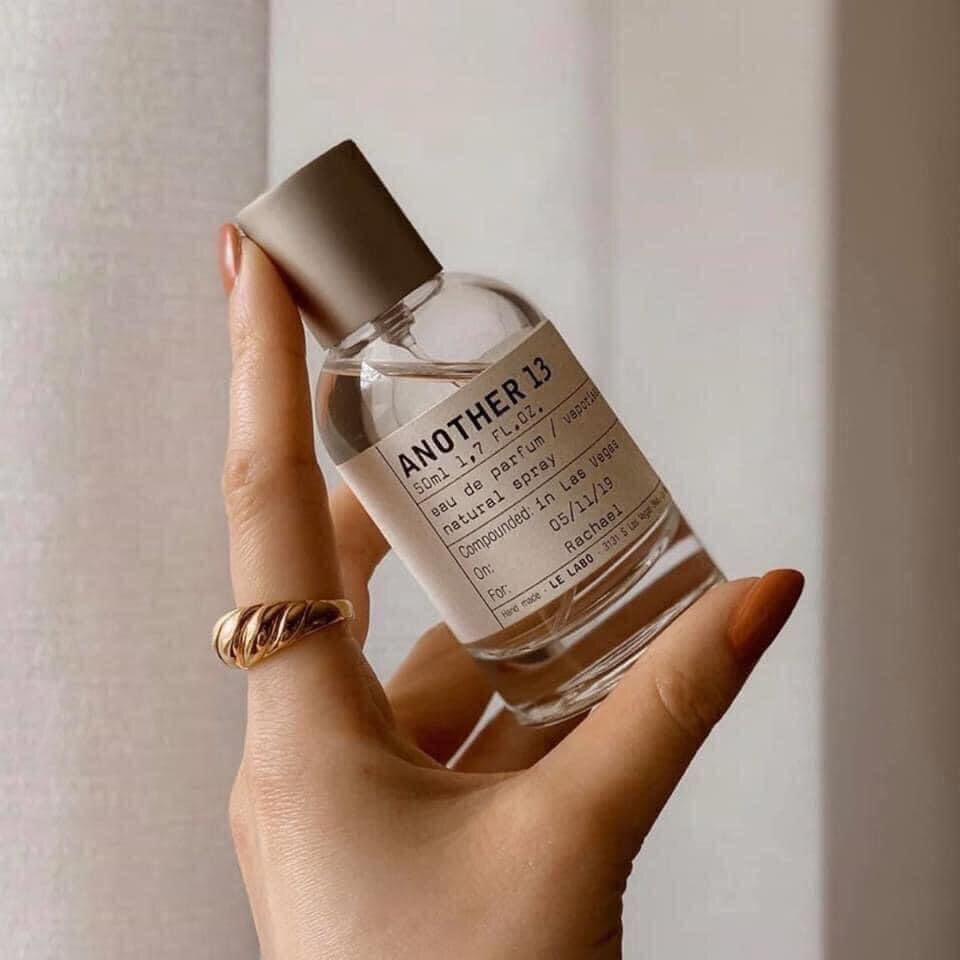
| IMIXX No.65 Inspired by Another 13 | Clean musky, woody-amber, skin scent | Office, everyday minimalism, layering | Musky amber direction, jasmine, soft woods | Minimalist musks can smell stronger to some people than others, so perception varies. |
| IMIXX No.74 Inspired by Love Don’t Be Shy | Sweet floral gourmand | Dessert-like sweetness, evenings, playful signatures | Orange blossom, bergamot, jasmine, rose, caramel, vanilla, marshmallow | The sweetness is the point; I would skip it if I prefer dry, mineral, or sharply citrus scents. |
How I Choose a Replica Perfume Sample in 2026
I do not believe there is one “best” replica perfume sample for everyone. Scent is too subjective for that. Instead, I use a repeatable evaluation process that helps me separate useful product information from marketing language. The goal is to answer a practical question: will this fragrance direction fit the way I actually live and wear perfume?
1. I Start With the Scent Architecture, Not the Brand Association
I first look at the top, heart, and base structure. Top notes help me understand the opening, but I do not let a bright first five minutes decide the purchase. Heart and base materials tell me more about the personality I may live with for hours. A cherry opening backed by almond, tonka, and woods is very different from a cherry opening that dries into clean musk. Likewise, pineapple over birch and oakmoss gives me a different wardrobe role than saffron and amber woods.
This is also why I avoid treating a list of shared notes as proof that two perfumes are identical. Two formulas can use similar note language and still differ in material quality, dosage, diffusion, texture, sweetness, dryness, and dry-down. Notes are a map, not a chemical formula.
2. I Judge the Intended Use Case
I ask where I would realistically wear the scent. Is it quiet enough for an office? Does it feel too sweet for high heat? Is it distinctive enough for an evening event? Could I wear it three days a week without getting tired of it? This prevents me from buying a fragrance just because the opening is exciting.
For example, a clean musky composition may not create the same immediate “wow” as a rich cherry gourmand, but it may deliver more value if I need something for work, errands, travel, and layering. The most impressive scent is not automatically the most useful scent.
3. I Look for Disclosed Details and Clear Limitations
For E-E-A-T and for ordinary consumer trust, I prefer information I can verify: listed notes, bottle size, price at the time of publication, concentration when the brand discloses it, ingredient or formulation statements, and return or shipping terms. I am more cautious with unsupported percentages such as “99% identical” unless the methodology, sample size, reference batch, analytical method, and sensory protocol are explained.
When I evaluate an inspired fragrance, I treat it as an independent formulation aiming for a recognizable scent direction. I do not assume access to a luxury house’s proprietary formula, and I do not think shoppers need that assumption to make a sensible value comparison.
4. I Test on Skin Before I Judge the Dry-Down
Blotter strips are useful for side-by-side openings, but skin tells me more about whether a perfume works for me. Body heat and skin condition influence evaporation and perception. I normally want to observe at least three stages: the first 10 to 15 minutes, the heart after roughly an hour, and the late dry-down several hours later. I also avoid testing five strong fragrances on the same arm because sensory fatigue can make the comparison meaningless.
If I have sensitive skin or a history of reactions, I take extra care. The U.S. Food and Drug Administration explains that fragrances are regulated as cosmetics when they are applied to the body for beautifying purposes and notes that some people can be sensitive to fragrance ingredients. I recommend reviewing the FDA guidance on fragrances in cosmetics rather than relying on vague “safe for everyone” marketing.
My 5 Best Replica Perfume Sample Picks for 2026
These five picks are not arranged from “objectively best” to “worst.” I am ranking them by how useful they are as sampling targets for different scent preferences. If I were building a discovery tray for someone who wanted to learn their taste quickly, I would rather give them five distinct styles than five nearly interchangeable crowd-pleasers.
1. IMIXX No.19 Inspired by 540 — My Pick for an Airy Amber Statement
Best for: people who want a recognizable, radiant amber-floral direction with more presence than a conventional fresh scent.
Published scent structure: saffron and jasmine in the opening; jasmine, plum, and cedarwood in the middle; oakmoss, fir balsam, and amber in the base. IMIXX currently lists an 18% concentration for No.19.
I would sample No.19 first if I wanted a fragrance that feels simultaneously sweet, dry, airy, and woody. This family has a distinctive diffusive quality: it can feel transparent up close yet surprisingly noticeable in the air around the wearer. That contrast is part of the appeal, but it is also why I would not judge it from one heavy spray at close range.
My practical test would be conservative. I would apply one or two sprays, avoid adding anything scented on top, and check how noticeable it feels after 30 minutes, two hours, and later in the day. I would also ask someone I trust whether they notice it at conversational distance. Some modern amber materials can create olfactory adaptation, meaning I may stop noticing the scent while people around me still can.
Why it earns a place in my top five: it teaches me whether I enjoy the modern “radiant amber” style at all. If I love that airy sweetness and mineral-woody impression, I have learned something useful about my taste. If I find it too persistent or too abstract, I have also learned something useful before committing to more bottles in the same family.
2. IMIXX No.35 Inspired by Aventus — My Pick for Fruity, Smoky Versatility
Best for: someone who wants a polished woody scent that can move from daytime to evening without feeling like a dessert fragrance.
Published scent structure: blackcurrant, bergamot, apple, and pineapple at the top; rose, dry birch, jasmine, and patchouli through the heart; oakmoss, musk, ambergris-style depth, and vanilla in the base. IMIXX lists a 15% concentration for No.35.
This is the pick I would use to test my tolerance for contrast. Fruity brightness can make the opening feel approachable, while birch, moss, musk, and woods pull the scent in a drier direction. That tension is more interesting to me than a fragrance that stays uniformly sweet or uniformly fresh from beginning to end.
When I sample this style, I pay close attention to the transition between the first 20 minutes and the later dry-down. I want to know whether the fruit remains smooth as the woods emerge, whether the smoky facet feels refined or harsh to my nose, and whether the base feels comfortable enough for repeated wear. Those questions matter more than whether I can identify every listed note.
Why it earns a place in my top five: it is a useful “bridge” profile. Someone coming from mainstream fresh fragrances may find the fruit easy to understand, while someone who already enjoys woods can focus on the birch, moss, and musk side. I see it as one of the more practical sampling choices for discovering whether I want a versatile signature rather than a special-occasion-only scent.
3. IMIXX No.18 Inspired by Lost Cherry — My Pick for Boozy Cherry Gourmand
Best for: people who already suspect they enjoy sweet fruit, almond, tonka, and warm woods.
Published scent structure: black cherry, cherry liqueur, and bitter almond in the opening; Griotte-style cherry syrup, rose, and jasmine sambac in the heart; Peru balsam, roasted tonka bean, sandalwood, vetiver, and cedar in the base. IMIXX currently lists an 18% concentration.
I would not blind-buy this scent family unless I already knew I liked cherry-almond fragrances. The reason is simple: the very qualities that make it memorable can also make it polarizing. Cherry can read as juicy, boozy, candy-like, medicinal, or syrupy depending on the formula and the wearer’s perception. Bitter almond adds another distinctive layer that some people love and others immediately reject.
My test would focus on the dry-down rather than the initial cherry burst. I would ask whether the tonka and woods make the fragrance smoother after an hour, whether the floral heart gives enough lift, and whether I still enjoy the sweetness after several hours. If I am only excited for the first 10 minutes, that is not enough reason for me to buy a larger bottle.
Why it earns a place in my top five: it is a decisive sample. A small amount can quickly tell me whether rich cherry gourmand belongs in my wardrobe. It also gives me a strong contrast against the cleaner No.65 and the woodier No.35, which makes the overall discovery process more informative.
4. IMIXX No.65 Inspired by Another 13 — My Pick for Clean, Minimalist Musk
Best for: office wear, understated daily fragrance, people who like “your skin but more noticeable” compositions, and fragrance layering.
Published direction: a clean musky, woody-amber profile with jasmine and soft woody facets. IMIXX currently lists No.65 at 50 ml and identifies a 25% concentration on its updated informational material.
This is the fragrance I would sample when I want to know whether subtlety actually suits me. Minimalist musk scents can be deceptive. They may feel quiet because they do not contain an obvious fruit, spice, or dessert accord, but that does not necessarily mean they disappear quickly. Modern musky and amber materials can cling to fabric and create a persistent aura even when the wearer stops consciously noticing them.
I would test No.65 on a low-stimulation day: no scented body lotion, no strongly fragranced laundry product near my collar, and no second perfume. That gives me a better chance to understand the skin-like quality without interference. I would also smell the sleeve or collar later, because fabric can reveal parts of a minimalist fragrance that my nose tunes out on skin.
Why it earns a place in my top five: it represents the opposite of the obvious gourmand. If I want one scent for work, travel, coffee runs, and casual evenings, a clean musky profile may deliver more real-world wear than something more dramatic. It is also a smart test for people who think they “do not like perfume” but may actually dislike loud traditional perfume structures.
5. IMIXX No.74 Inspired by Love Don’t Be Shy — My Pick for Sweet Floral Gourmand
Best for: people who actively want a sweet, playful, dessert-like fragrance rather than merely tolerating sweetness.
Published scent structure: orange blossom and bergamot on top; jasmine and rose through the heart; caramel, vanilla, and marshmallow in the base.
I include No.74 because “sweet” is not one category. The cherry-almond richness of No.18 and the fluffy floral-gourmand direction of No.74 can appeal to completely different people. Here, orange blossom and florals can keep the composition from reading like pure vanilla syrup, while caramel, vanilla, and marshmallow provide the soft edible character that defines the style.
If I sampled this fragrance, I would test it in both climate-controlled indoor air and outdoors. Gourmands can behave very differently in heat. What feels cozy and enveloping in cool weather may feel much denser in summer. I would also test a lighter spray count than I use with a fresh cologne-style scent.
Why it earns a place in my top five: it tells me whether I truly enjoy a sweet floral signature. If I do, this profile can be highly satisfying for evenings, dates, and cooler months. If I find it cloying, I know to move toward woods, musks, citrus, aromatics, or mineral scents instead.
Which Pick Fits Your Scent Personality?
When readers ask me which replica perfume sample they should start with, I prefer to answer with a decision tree rather than a universal winner. My shortlist works best when I connect each perfume to a sensory preference I already understand.
I start with No.19. I expect an airy amber-floral effect rather than a conventional citrus-fresh opening.
I start with No.35. The fruity-smoky contrast makes it easier to wear across different settings.
I start with No.18. I choose it because I already like almond, tonka, liqueur-like fruit, or gourmand bases.
I start with No.65. I treat it as a skin-scent experiment and give the dry-down time to reveal itself.
I start with No.74. I know in advance that vanilla-marshmallow sweetness is central, not incidental.
How I Test a Perfume Sample Without Wasting It
A good sample can tell me far more than “I like this” or “I hate this” if I use it methodically. I do not need a laboratory to make a better personal decision. I need consistency.
Day 1: I Learn the Shape of the Fragrance
I use one or two sprays on clean skin and avoid layering it with another fragrance. I note the opening, then stop smelling my wrist every two minutes. Constant sniffing creates fatigue. After 30 to 60 minutes, I check the heart. Later, I check the dry-down. I write a few plain words: bright, dry, creamy, smoky, sharp, clean, sweet, soft, woody, powdery, or musky. I do not force myself to detect a note just because a product page lists it.
Day 2: I Test It in My Actual Routine
I wear it where I expect to use it: work, class, dinner, errands, or an evening out. This is where I learn whether the perfume is distracting, comforting, too strong, too quiet, or easy to forget in a good way. A fragrance that performs beautifully in a controlled test can still be wrong for my routine.
Day 3: I Adjust the Spray Count
I test one variable at a time. If two sprays felt too strong, I try one. If it felt too quiet and I had no irritation, I may try a little more. I do not assume that “more sprays” equals better performance. Projection, longevity, and pleasantness are different qualities.
A perfume can last many hours close to the skin while projecting only modestly. Another can create a strong aura early and then settle quickly. When I sample, I score these separately because “long-lasting” alone does not tell me how the fragrance behaves around other people.
Day 4 or Later: I Compare Only the Finalists
Once I have two favorites, I compare them on separate arms in similar conditions. I do not compare a winter gourmand worn at night against a fresh scent tested after a hot afternoon and pretend the conditions are equal. The closer I can keep temperature, activity, application, and timing, the more useful the comparison becomes.
Safety, Skin Sensitivity, and Ingredient Transparency
Perfume is a cosmetic product, and I think an E-E-A-T-focused buying guide should acknowledge safety instead of treating fragrance as purely aesthetic. The FDA notes that some fragrance components may cause allergic reactions or sensitivities in some people. Its consumer information on allergens in cosmetics explains that fragrance is among the categories associated with allergic contact dermatitis and recommends reviewing ingredient information and avoiding known triggers.
I also distinguish regulation from industry standards. The International Fragrance Association maintains a science-based risk-management system that can prohibit, restrict, or set specifications for certain fragrance materials. Its IFRA Standards overview is useful context, but I do not treat “IFRA compliant” as a substitute for all applicable U.S. laws, individual sensitivity, or a complete safety assessment.
If I have a known fragrance allergy, eczema, or a history of reactions, I do not use a perfume article as medical advice. I read the label, contact the manufacturer when necessary, and seek qualified medical guidance for persistent or serious reactions. If irritation develops, I stop using the product.
Under U.S. cosmetic labeling rules, individual fragrance materials are not always listed one by one and may appear collectively as “fragrance.” That is one reason I value clear manufacturer communication when I have a specific sensitivity concern.
What I Would Not Use as a Buying Shortcut
I Would Not Buy Based Only on a Similarity Percentage
A precise-looking number can feel scientific even when the underlying method is not explained. If a brand says a fragrance is 98%, 99%, or 99.9% similar, I want to know what was measured. Was it a trained sensory panel? Consumer preference testing? Instrumental analysis? Which batch of the reference fragrance was used? What variables were controlled? Without that information, I treat the number as marketing rather than as a measurement I can independently evaluate.
I Would Not Assume a Higher Concentration Is Automatically Better
Concentration can influence richness and evaporation, but formula architecture matters too. A higher percentage does not guarantee a more beautiful scent, stronger projection, or better compatibility with my skin. Some materials are powerful at small amounts; others create volume differently. I use concentration as one data point, not a quality score.
I Would Not Treat Reviews as a Replacement for Sampling
Reviews help me identify patterns. If many reviewers describe a scent as very sweet, very smoky, or unusually soft, that is useful context. But reviews cannot tell me exactly how the perfume will smell to me. Perception differs, and people use different spray counts in different climates. I read reviews to generate questions for my own test, not to outsource my nose.
How I Think About Price and Value
Value is not simply “the cheapest fragrance.” I calculate value in terms of how often I expect to wear a scent, how much I enjoy the full dry-down, how much product I realistically need, and whether sampling prevents an unnecessary full-bottle purchase. A $29 bottle I never wear is worse value than a $49 bottle I reach for every week.
For the live IMIXX catalog I reviewed, the five featured 50 ml fragrances are currently positioned around the $39 to $49 range, depending on the product. I would still verify the current listing before checkout because pricing and promotions can change. More importantly, I would decide whether the fragrance fills a gap in my collection. I do not need three sweet amber scents just because each is individually affordable.
My Simple Cost-Per-Wear Test
If I think I will wear a fragrance 60 times in a year, a $39 bottle works out to about $0.65 per wear before tax or shipping. A $49 bottle worn 60 times is about $0.82 per wear. These rough numbers are more meaningful to me than comparing retail prices in isolation. If I only expect to wear a dense gourmand six times, however, the cost per wear changes dramatically.
My Recommended Order for Beginners
If I were completely new to inspired fragrances, I would not start by ordering five full bottles at once. I would sample across scent families. My first three would be No.35 for fruity woods, No.65 for clean musk, and either No.18 or No.74 depending on whether I prefer dark cherry sweetness or fluffy floral sweetness. I would add No.19 if I wanted to explore the modern radiant amber style.
That sequence gives me contrast. Contrast is how I learn. If every fragrance I test is sweet and woody, I may wrongly conclude that perfume in general feels too heavy. A varied sample lineup helps me identify not only what I like but also what I should stop buying.
Common Mistakes I Avoid When Sampling Inspired Fragrances
Spraying Too Many at Once
I keep the test simple. Two fragrances on skin is usually enough for a direct comparison. If I cover both arms with several strong scents, I lose the ability to track development and may create a mixed cloud that tells me nothing about the individual perfumes.
Deciding in the First Five Minutes
Openings sell bottles, but dry-downs determine whether I can live with them. Alcohol evaporation and volatile top notes make the first moments unusually bright. I wait for the heart and base before making a decision.
Testing Only in One Season
Heat increases volatility, while cold can make some perfumes feel quieter. A sweet gourmand that feels ideal in winter may become dense in humid summer weather; a fresh woody scent may feel more vivid in warmth. If a sample is large enough, I keep some for a second weather condition when possible.
Confusing Nose Fatigue With Weak Performance
If I cannot smell my perfume after an hour, I do not immediately add five more sprays. I move to fresh air and ask whether the scent is still detectable on clothing or by someone nearby. My nose can adapt to a persistent aroma faster than I expect.
Key Takeaways Before I Choose
- I choose by scent family and real-life use case before I compare hype or popularity.
- I treat note lists as descriptive guides, not proof of formula identity.
- I test the heart and dry-down, not just the opening.
- I separate longevity, projection, and scent quality because they are different attributes.
- I am cautious with unsupported precision claims and prefer verifiable product details.
- I take skin sensitivity seriously and use authoritative safety resources when needed.
- I consider cost per wear and wardrobe fit, not just bottle price.
Final Verdict: Which Replica Perfume Sample Would I Try First?
If I had to choose only one replica perfume sample from this list without knowing anything else about my preferences, I would begin with IMIXX No.35 Inspired by Aventus because its fruity, smoky, and woody structure covers a broad middle ground between fresh and rich. It gives me several facets to evaluate without committing immediately to a very sweet gourmand or a very minimalist skin scent.
If I already knew I loved sweet fragrance, I would move No.18 or No.74 to the front. If I wanted a cleaner everyday option, I would prioritize No.65. If I wanted an airy amber scent with a more noticeable presence, I would start with No.19. The best decision is not the perfume with the loudest promise; it is the one whose structure, use case, and dry-down make sense for me.
Most importantly, I use sampling as a decision tool. A small test can save me from buying a bottle based on a famous name, a viral review, or an exciting first spray. In 2026, that is what I want from fragrance shopping: more information, less guesswork, and a collection built around what I genuinely enjoy wearing.
FAQ: Key Questions About Replica Perfume Samples

