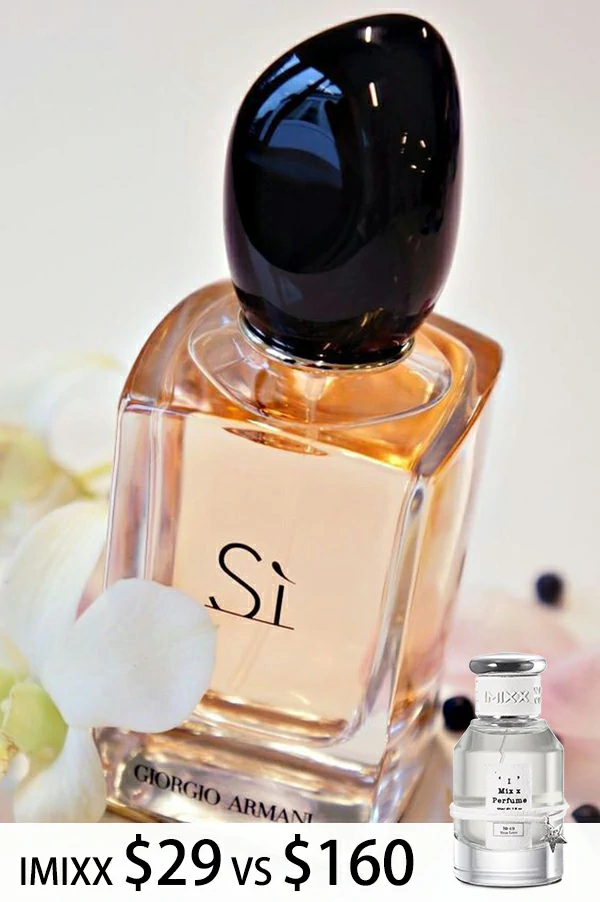


5 Things to Know About perfume si price
Last updated: November 12, 2026
When I research perfume si price, I do not start with the cheapest number I can find in a search result. I start by confirming the exact fragrance, bottle size, concentration, seller, and date of the price. That matters because Sì is a fragrance family with multiple versions, and a 10 mL travel size should not be compared with a 100 mL full-size bottle as though they were the same purchase. I also calculate the cost per milliliter because the lowest checkout price is not always the strongest value.
For anyone comparing perfume si price, I think the most useful question is not simply, “Where is it cheapest?” I would ask, “Which size gives me the right balance of upfront cost, amount of fragrance, seller reliability, and realistic use?” A $37 bottle requires much less money today than a $180 bottle, but that does not automatically make it the better value. Likewise, a 100 mL bottle can offer excellent unit economics and still be a poor purchase if I rarely use it.
I built this guide around a simple research process. On November 12, 2026, I manually checked the official Armani Beauty U.S. product information and compared it with current listings from major U.S. beauty retailers. I then calculated the price per milliliter myself instead of relying on a search snippet or an undated third-party price table. Where retailers show promotions, subscriptions, or size-specific differences, I identify those as variable rather than presenting them as permanent prices.
My Research and Transparency Note
I want to be clear about what this guide does and does not claim. I researched current published U.S. prices and product information, but I am not presenting unverified personal longevity tests or pretending that I conducted a laboratory analysis of Sì. When I discuss value, size selection, or buying strategy, those are my consumer-oriented conclusions based on the verified pricing data.
This article is published on imixx perfume, a fragrance retailer. Because there is a commercial context, I believe pricing claims should be especially easy to check. That is why I anchor designer-product facts to the official brand and established U.S. retailers rather than asking readers to accept our commercial perspective as independent authority.
Price-check date: November 12, 2026. Prices, promotions, subscriptions, shipping terms, and availability can change after publication.
1. I Treat Sì Perfume as a Range of Prices, Not One Price
The first thing I learned from checking the current listings is that there is no single correct answer to “How much does Sì perfume cost?” The answer depends heavily on size. On the official Armani Beauty U.S. page, the original Sì Eau de Parfum currently appears in four sizes: 10 mL, 30 mL, 50 mL, and 100 mL.
As of my November 12, 2026 check, the published prices are $37 for 10 mL, $105 for 30 mL, $145 for 50 mL, and $180 for 100 mL. I verified those figures against the official Armani Beauty U.S. Sì Eau de Parfum page.
I find the size ladder more useful once I convert every option to the same measurement. The arithmetic is straightforward: I divide the listed price by the number of milliliters in the bottle. That shows me how much I am paying for each milliliter of fragrance.
| Sì Eau de Parfum Size | Verified U.S. Brand Price | My Cost-per-mL Calculation | How I Would Think About It |
|---|---|---|---|
| 10 mL / 0.34 oz | $37 | $3.70 per mL | Lowest commitment; useful for travel or trying the fragrance |
| 30 mL / 1.0 oz | $105 | $3.50 per mL | A smaller full bottle for moderate or occasional use |
| 50 mL / 1.6 oz | $145 | $2.90 per mL | A middle-ground size for regular wear |
| 100 mL / 3.4 oz | $180 | $1.80 per mL | Strongest unit value if I know I will use the volume |
The math changes the way I interpret perfume si price. The 10 mL bottle costs $37, so it is clearly the least expensive way to get the original Sì Eau de Parfum among the official sizes I checked. But at $3.70 per milliliter, it is also the most expensive option on a unit basis.
The 100 mL bottle tells the opposite story. At $180, it has the highest checkout price, but the unit cost drops to $1.80 per milliliter. That is less than half the 10 mL bottle’s cost per milliliter.
Why I Separate “Cheapest” From “Best Value”
I think this distinction prevents a lot of bad fragrance-buying decisions. When someone says a bottle is “cheaper,” I want to know whether they mean the lowest total price or the lowest price for the quantity received.
If my budget is $50, the 10 mL bottle may be the only relevant choice from the official size ladder. It does not matter that the 100 mL bottle is mathematically more economical per milliliter if I do not want to spend $180.
On the other hand, if I already wear Sì several times a week and know I am likely to finish a larger bottle, paying $35 more to move from 50 mL at $145 to 100 mL at $180 is a much more interesting proposition. My fragrance volume doubles while my checkout total rises by only $35.
Knowledge Point: I Use Two Definitions of Value
I call the smallest dollar amount the lowest entry price. I call the amount of fragrance received for each dollar the unit value. Those measurements answer different questions, so I do not use them interchangeably.
Why I Still Would Not Automatically Buy 100 mL
This is where I think a purely mathematical price guide can become misleading. If I only look at cost per milliliter, 100 mL wins easily. But fragrance is not gasoline or bottled water; I am not guaranteed to consume every milliliter I purchase.
I may change preferences. I may rotate among several bottles. I may want something easier to travel with. I may simply prefer spending less upfront. If half of a large bottle sits unused for years, the attractive unit price becomes much less meaningful.
That is why my first rule is simple: I only let cost per milliliter influence my decision after I have decided that the fragrance itself and the bottle size fit my habits.
2. I Verify Retailer Prices Instead of Treating Search Results as Proof
The second thing I pay attention to is the source of the number. Fragrance pricing pages can become outdated quickly. Search snippets can lag behind a retailer’s live product page, and a promotional price can disappear while an article continues quoting it months later.
To improve accuracy, I checked the brand first and then compared major beauty retailers. This gives me a reference price and shows whether legitimate retail differences are present.
At Sephora, the current Sì Eau de Parfum listings I checked show $105 for 30 mL, $145 for 50 mL, and $180 for 100 mL, aligning with the corresponding sizes on Armani Beauty. Readers can independently review the retailer’s current Armani selection through the Sephora Armani Beauty fragrance section.
Ulta illustrates why I do not assume all retailers have identical size ladders or promotions. During my research, the 3.4 oz / 100 mL listing showed a $180 list price, while the 1.0 oz listing showed a different list price from Armani’s official 30 mL price. Ulta also displayed subscription savings on eligible listings. I therefore treat retailer-specific numbers as retailer-specific rather than silently merging them into one “official” price. The current product details can be checked on the Ulta Sì Eau de Parfum listing.
Official Armani Beauty
My role for this source: Primary pricing benchmark.
What I verified: Four original Sì EDP sizes ranging from $37 to $180.
Why I prioritize it: It is the brand’s own U.S. product page, so I use it as my baseline before discussing retailer differences.
Sephora
My role for this source: Major-retailer cross-check.
What I found: The 30 mL, 50 mL, and 100 mL prices I checked match the corresponding official brand prices.
Why that matters: Matching independent retail listings increase my confidence that I am not relying on an isolated or stale brand-page value.
Ulta Beauty
My role for this source: Retail-price and offer comparison.
What I found: The 100 mL list price matches the $180 official benchmark, while some other sizes and subscription offers differ.
Why that matters: It demonstrates why I check the exact size and offer conditions instead of assuming every retailer uses the same price structure.
My Rule for List Price, Sale Price, and Subscription Price
I label these separately because they are not the same thing.
A list price is the regular displayed reference price for the product. A sale price is usually temporary and may depend on a promotional event. A subscription price can require enrollment in recurring deliveries or another condition.
For example, the official Armani Beauty page was displaying promotional messaging when I checked it, including a percentage-off offer and a separate auto-replenishment saving. I do not rewrite those conditional discounts as the permanent price of Sì because the promotion can expire or change.
When I research perfume si price, I therefore use the regular official price as my stable comparison point and describe temporary discounts as potential savings rather than guaranteed prices.
Knowledge Point: A Search Snippet Is Not My Final Source
If a search result says $95 but the live product page says $105, I use the live page and investigate whether the lower figure came from an expired promotion, subscription discount, different bottle, or stale crawl.
What I Check Before Calling One Retailer Cheaper
I compare the exact bottle size first. Then I check whether the displayed number is a normal price, sale price, member price, subscription price, or coupon-dependent price. I also look for shipping requirements and exclusions.
This sounds obvious, but it prevents misleading comparisons. A $95 subscription price is not automatically better than a $105 one-time purchase if I do not want recurring orders. Likewise, a coupon headline does not necessarily mean the fragrance is eligible for the coupon.
I also avoid making permanent statements from short-lived holiday promotions. If I publish a guide that says “Retailer A is always cheaper,” that statement can become false the moment a promotion ends. A more trustworthy approach is to show the dated evidence and explain how I would compare current offers.
3. I Match Bottle Size to Real Usage, Not Just the Price-per-mL Winner
The third thing I consider is how much fragrance I realistically expect to use. This is the part of a price guide where I think buyer behavior matters more than arithmetic.
Suppose I am interested in Sì but rotate among eight or ten fragrances. Even if I like the scent, I may not need 100 mL. A 30 mL or 50 mL bottle could provide enough wear for a long time while taking up less space and requiring less money upfront.
Now imagine the opposite situation. If Sì is one of my most-worn fragrances and I already know that I reliably finish bottles, the 100 mL size becomes financially persuasive because its $1.80-per-mL rate is dramatically lower than the smaller sizes at current official pricing.
My “Volume Utilization” Test
I use a simple idea that I call volume utilization. Instead of asking only how much fragrance I am buying, I ask how much of that fragrance I genuinely expect to use.
If I purchase 100 mL for $180 but only use 40 mL before my preferences change, the theoretical $1.80-per-mL advantage did not translate into the same practical value. I paid for 60 mL that provided no wear value to me.
If I purchase 50 mL for $145 and use nearly all of it, I technically paid more per milliliter, but I may have made the more efficient personal purchase.
| My Buying Situation | Size I Would Consider First | Reason |
|---|---|---|
| I have never worn Sì before | 10 mL or testing before purchase | I want to limit commitment until I know I enjoy the fragrance |
| I like Sì but rotate many fragrances | 30 mL or 50 mL | Moderate volume may match my slower usage rate |
| I wear Sì regularly | 50 mL or 100 mL | A larger bottle begins to make practical as well as mathematical sense |
| Sì is one of my signature fragrances | 100 mL | The strongest unit value aligns with high expected usage |
I Do Not Pretend to Know Exactly How Many Days a Bottle Will Last
I see fragrance guides sometimes convert bottle size into a precise number of days. I avoid doing that because the calculation depends on too many variables unless the writer actually measures the atomizer output and controls the number of sprays.
Different atomizers can release different amounts. One person may use two sprays. Another may use six. Some people wear fragrance daily, while others use it only for evenings or events.
I can confidently say that 100 mL contains twice as much liquid as 50 mL. I cannot honestly promise that it will last exactly twice as many calendar months for every buyer.
That distinction is important to me because E-E-A-T is not improved by sounding more certain than the evidence allows. I would rather give a useful range of decision factors than create a precise-looking claim that I cannot substantiate.
Knowledge Point: My Best-Value Size Is the Size I Will Actually Use
A lower cost per milliliter is only an advantage if I expect to consume enough of the larger bottle. I use unit price as a decision tool, not as an automatic instruction to buy the maximum size.
4. I Confirm the Exact Sì Version Before I Compare Prices
The fourth issue is product identity. “Sì” is not just one bottle. The fragrance family includes the original Sì Eau de Parfum, Sì Passione Eau de Parfum, Sì Eau de Parfum Intense, and other releases or sets that may appear in search results.
If I compare only the brand name and bottle volume, I can accidentally compare different products.
The official description for the original Sì Eau de Parfum places it in a fruity-floral direction and identifies notes including blackcurrant nectar, Rose de Mai, white musk, and freesia. The live official page also describes blackcurrant and mandarin in the opening, orange blossom in the heart, and warm vanilla in the overall composition.
I mention those details for identification, not to make a claim that every person’s nose will experience the fragrance in exactly the same sequence. Fragrance perception is subjective, and the same formula can be perceived differently depending on skin, environment, application, and personal sensitivity.
How I Distinguish the Main Sì Options in a Price Search
Sì Eau de Parfum
What I am comparing: The original Sì EDP discussed throughout this price guide.
Verified 100 mL price: $180 on the official U.S. product page at the time of my check.
Official positioning: Fruity floral with blackcurrant-centered character and floral/musky elements.
My buying point: I use this product as the baseline when someone asks broadly about Sì perfume pricing.
Sì Passione Eau de Parfum
What I am comparing: A separate fragrance within the Sì family, not simply another size of the original.
Official collection pricing: The current Armani Beauty Sì collection shows the line reaching $180 depending on the selected size.
My buying point: I would compare its scent and exact size separately rather than assume it is interchangeable with the original EDP.
Sì Eau de Parfum Intense
What I am comparing: An Intense interpretation with its own product identity.
Verified official listing: Armani Beauty currently shows a 100 mL size at $180.
My buying point: I would choose it because I prefer that specific formulation, not merely because the word “Intense” sounds like more perfume for the money.
Why I Do Not Use “Intense” as a Shortcut for Better Value
Fragrance concentration names can help describe how a product is positioned, but I do not treat the label alone as a performance guarantee. An Eau de Parfum Intense may be designed as a richer or amplified interpretation, yet longevity and projection still depend on the formulation and how it behaves for the individual wearer.
I also do not assume that a stronger-sounding name makes a fragrance economically superior. If I prefer the original Sì Eau de Parfum, buying an Intense version simply because the prices are similar would not improve my personal value.
This is another reason I keep product identity separate from price. I want the scent choice to come first and the value calculation to come second.
Knowledge Point: I Check Three Fields Before Comparing
Before I compare two listings, I confirm the full product name, fragrance concentration or version, and bottle volume. If any of those fields differ, I treat the listings as different offers rather than a simple price match.
5. I Judge the Final Purchase, Not Just the Sticker Price
The fifth thing I think shoppers should know about perfume si price is that the displayed product number is only one part of the transaction.
Two stores can show the same bottle at $180 while providing different practical value because of shipping, loyalty benefits, subscription conditions, gifts, return rules, or availability. Conversely, a store can show a lower number that only applies after enrolling in recurring delivery.
I therefore evaluate the complete purchase rather than declaring one retailer “best” from the headline price alone.
I Check Seller Reliability Before I Get Excited About a Deep Discount
When I see a price that is dramatically below the brand’s current retail benchmark, my reaction is not automatically “great deal.” My reaction is “why is the price lower?”
There can be legitimate explanations. The bottle may be on clearance. The packaging may be older. The item may be a smaller size than the image makes obvious. A retailer may be funding a real promotional event.
But I still want to know the seller, product condition, fulfillment arrangement, and return policy. A very low number is not useful if I cannot determine what I am buying.
I Read Fragrance Return Policies Before Blind-Buying
Fragrance is personal enough that I consider the return policy part of the economic decision. A scent can smell appealing on paper and feel very different after developing on my skin. Even without making specific performance claims, I know that personal preference can change once I live with a fragrance rather than simply smell its opening.
That is why I would rather know a retailer’s current return terms before opening an expensive bottle. I do not assume that every opened fragrance can be returned, because retailer policies and product conditions can differ.
I Calculate the Checkout Cost, Not Just the Product Price
My real cost can include tax and shipping. A promotion may require a minimum spend. A subscription may require recurring shipments. Free shipping may depend on an order threshold.
At the same time, a retailer can provide benefits that matter to some buyers, such as loyalty points, samples, or gifts with purchase. I do not automatically assign those extras their full advertised value. A sample I do not want is not equivalent to cash in my pocket.
I therefore think in terms of “effective personal value”: what I pay, what I receive, and how much of what I receive I actually care about.
My Five-Step Sì Buying Check
- I verify the product. I confirm that I am looking at the original Sì Eau de Parfum or the exact Sì version I intend to buy.
- I verify the volume. I compare 30 mL with 30 mL, not 30 mL with 50 mL.
- I calculate unit cost. I divide price by milliliters so I can see the size premium clearly.
- I verify the offer conditions. I check whether the number is a list price, sale price, subscription rate, or coupon-dependent price.
- I match it to my use. I buy the amount I realistically expect to wear instead of automatically choosing the mathematically cheapest milliliter.
My Deeper Price Analysis: What the Size Ladder Actually Tells Me
Once I have verified the data, I can extract more useful information than simply repeating four prices.
The move from 10 mL to 30 mL raises the official price from $37 to $105. The bottle volume triples, while the price increases by $68. The cost per milliliter falls modestly from $3.70 to $3.50.
The move from 30 mL to 50 mL costs another $40. I receive 20 additional milliliters, and the unit cost falls more noticeably to $2.90 per milliliter.
The strongest step in the size ladder appears between 50 mL and 100 mL. The price rises by just $35, from $145 to $180, while the fragrance volume increases by 50 mL. In other words, I pay roughly 24% more money and receive 100% more fragrance volume.
That is why the 100 mL size looks compelling for a committed wearer. It is not simply “larger.” The marginal cost of those additional 50 mL is relatively low compared with the first 50 mL.
My Incremental-Cost View
| Upgrade | Extra Cost | Extra Volume | Cost of Added Volume |
|---|---|---|---|
| 10 mL → 30 mL | +$68 | +20 mL | $3.40 per added mL |
| 30 mL → 50 mL | +$40 | +20 mL | $2.00 per added mL |
| 50 mL → 100 mL | +$35 | +50 mL | $0.70 per added mL |
I find this incremental view more revealing than a standard price list. It shows that the final jump to 100 mL gives me the cheapest additional volume by a wide margin.
Still, I return to the same practical limitation: I only benefit from cheap added volume if I use it. That is why I consider this analysis a strong reason for an existing Sì wearer to consider 100 mL, not a universal recommendation for every shopper.
How I Think About Sì’s Price Versus Its Scent Profile
Price cannot tell me whether I personally like a fragrance. That sounds simple, but it is easy to lose sight of when comparing value charts.
The original Sì Eau de Parfum is officially described around a fruity-floral profile, with blackcurrant playing an important role alongside floral and musky elements. The official product information also references warm vanilla in the composition.
If those characteristics appeal to me, the next step is to determine whether I enjoy the actual fragrance on my skin. If I do not enjoy the scent, no cost-per-milliliter calculation can make the purchase worthwhile.
I also avoid claiming universal longevity or projection numbers. I did not conduct a controlled wear test for this pricing article, and I do not want to invent empirical authority that I do not have. Performance can be influenced by application, environment, formulation, skin, clothing, and individual perception.
That limitation does not weaken the price analysis. It makes the scope clearer: this guide is about verified U.S. pricing, size economics, retailer comparison, and purchase strategy. It is not a laboratory performance test.
When I Would Buy the 10 mL Size
I would consider 10 mL when my priority is flexibility rather than unit value.
At $37, it gives me a relatively low-cost way to own the fragrance. It also makes sense when I want a portable format, expect to use Sì infrequently, or have a large rotation and know that finishing 100 mL could take a very long time.
The obvious tradeoff is the $3.70-per-mL rate. I am paying for convenience and a smaller commitment.
I do not consider that a mistake. Paying more per milliliter can be rational when it prevents me from spending $143 more on volume I do not need.
When I Would Buy the 30 mL Size
The 30 mL bottle is interesting because it feels like a conventional full-bottle purchase without requiring the $145 or $180 commitment of the larger sizes.
Its current official price is $105, or $3.50 per milliliter. That is only a small unit-value improvement over the 10 mL format, so I would choose it primarily because I want more fragrance, not because I believe it is the strongest bargain in the size ladder.
I think it can suit someone who already likes Sì but expects moderate wear. It is also easier to justify if storage space or collection size matters.
When I Would Buy the 50 mL Size
At $145, the 50 mL bottle reduces the unit rate to $2.90 per milliliter. This is where I see a clearer improvement in quantity value.
I would consider it for regular wear when I am confident about the fragrance but do not necessarily want a 100 mL bottle. The size provides a meaningful amount of product without requiring the largest bottle footprint.
However, I would always notice that another $35 currently moves me to 100 mL. If my budget allows and I expect to use the fragrance heavily, that comparison makes the 50 mL option harder to justify on unit economics alone.
When I Would Buy the 100 mL Size
The 100 mL bottle is the clearest value winner in the verified official size ladder. At $180, my calculation comes to $1.80 per milliliter.
I would choose it when I already know Sì works for me, when I expect frequent use, and when the additional $35 over 50 mL fits comfortably within my budget.
I would not choose it simply because a spreadsheet says it is cheaper per milliliter. I still want confidence that I am likely to use a substantial portion of the bottle.
Knowledge Point: The 50-to-100 mL Upgrade Is the Key Price Decision
At the verified official prices, I pay $35 more to move from 50 mL to 100 mL. For an established wearer, that is the most economically attractive size upgrade in the current ladder.
When I Would Wait for a Sale
If I do not urgently need the fragrance, I may wait for a legitimate promotion. When I checked the official Armani Beauty page, promotional messaging was active. Retailers can also run holiday events, loyalty offers, subscription discounts, gifts with purchase, or other incentives.
But I make the product decision before I make the sale decision.
I first decide which Sì version I want. Then I decide which size makes sense. Only after that do I evaluate whether a promotion improves the deal.
This order protects me from one of the easiest shopping mistakes to make: buying something because the discount feels large rather than because I wanted the product in the first place.
If I would never have paid $145 for a 50 mL bottle, a 10% discount does not automatically transform it into a good personal purchase.
My Practical Checklist for Spotting a Meaningful Sì Deal
When I see an offer, I run through a short checklist.
- I confirm the exact product name. I want to know whether I am looking at the original EDP, Passione, Intense, a gift set, or another version.
- I confirm the size in milliliters or fluid ounces. Product photography can make bottle sizes look deceptively similar.
- I compare the regular price with the official benchmark. This tells me whether the advertised discount is meaningful.
- I identify the condition. I check whether I need a coupon code, subscription, account, or minimum purchase.
- I check the final checkout amount. Shipping and other costs can narrow the difference between retailers.
- I review the return terms. I want to understand my options before opening an expensive fragrance.
- I ask whether I would still want the bottle without the sale timer. If the answer is no, I usually reconsider the purchase.
Is Sì Eau de Parfum Worth the Price?
I do not think “worth it” can be answered responsibly with a universal yes or no.
At $180 for 100 mL, Sì can represent strong value for someone who loves the fragrance, wears it frequently, and uses most of the bottle. The same $180 can be poor value for someone who buys it blind, wears it twice, and leaves it on a shelf.
I therefore judge worth through four variables: satisfaction, frequency of use, amount consumed, and price paid.
If I love the fragrance, use it several times a week, and finish most of a 100 mL bottle, the current unit price looks compelling. If I am uncertain, I would rather spend less initially, learn whether the fragrance earns a place in my routine, and upgrade later if necessary.
That is a more human definition of value than simply saying, “The biggest bottle is cheapest per milliliter.”
What I Would Do If Two Retailers Show Different Prices
I would not immediately assume one listing is inaccurate.
First, I would check size. Then I would check whether one price is promotional or subscription-based. I would confirm that both products are the same version and concentration. I would also check the date because retailers can update at different times.
If the difference remains after those checks, I would choose based on the total purchase package: final price, seller confidence, shipping, return terms, and any benefits I actually value.
This is exactly why I avoid presenting retailer prices without context. A useful price guide should help me investigate differences rather than hide them.
My Bottom Line on Sì Perfume Pricing
After checking the official U.S. brand page and major retailers, my main conclusion is straightforward: there is no single “best” Sì price without first defining the bottle size and buyer.
The official original Sì Eau de Parfum currently ranges from $37 for 10 mL to $180 for 100 mL. The 100 mL bottle clearly has the strongest cost-per-milliliter value at the official prices I verified. The 10 mL option provides the lowest financial commitment. The 30 mL and 50 mL sizes occupy the middle ground for shoppers who want more fragrance without buying the largest bottle.
For me, a trustworthy perfume si price comparison therefore has five parts: verify the exact product, verify the current price, calculate unit value, evaluate retailer conditions, and match the bottle size to realistic use.
I also think transparency matters. This page appears on a fragrance retail website, so I do not want readers to rely on commercial positioning alone. The designer pricing in this guide is tied to dated, checkable sources, and I have clearly separated those verified facts from my own purchasing framework.
If I were buying Sì today, I would not automatically choose the cheapest checkout total or the largest bottle. I would choose the smallest bottle that still makes economic sense for the amount I expect to use. For a committed Sì wearer, that could very reasonably be 100 mL. For a first-time buyer, it may be much smaller.
That decision process is ultimately more useful than chasing a temporary sale because it remains valid even after today’s promotions change.
Key-Points FAQ About Sì Perfume Price
How much does Sì perfume cost in the U.S.?
When I checked the official Armani Beauty U.S. page on November 12, 2026, the original Sì Eau de Parfum was listed at $37 for 10 mL, $105 for 30 mL, $145 for 50 mL, and $180 for 100 mL. I treat these as a dated pricing snapshot because promotions and retail prices can change.
Which Sì Eau de Parfum size gives me the best price per milliliter?
Using the current official prices, I calculate the 100 mL bottle at approximately $1.80 per milliliter, compared with $2.90 for 50 mL, $3.50 for 30 mL, and $3.70 for 10 mL. That makes 100 mL the strongest unit value, provided I expect to use the fragrance.
Why can Sì perfume have different prices at different retailers?
I see differences caused by bottle size, temporary sales, retailer-specific pricing, subscriptions, loyalty programs, and promotional conditions. I compare the exact product and size before deciding that one retailer is genuinely cheaper.
Is the 100 mL Sì bottle worth the extra money?
For me, the key comparison is 50 mL versus 100 mL. At the current official prices, moving from $145 to $180 costs only $35 more while doubling the fragrance volume. I think that is strong value for someone who already knows they wear Sì regularly, but it is less compelling for an occasional user.
Are Sì Eau de Parfum, Sì Passione, and Sì Eau de Parfum Intense the same perfume?
No. I treat them as separate fragrances within the Sì family. Before comparing prices, I verify the full product name, concentration or version, and bottle size so that I do not compare different fragrances as though they were identical products.
Should I wait for Sì perfume to go on sale?
I may wait if the purchase is not urgent, because brand and retailer promotions can reduce the effective cost. However, I decide which fragrance and size I want before I look at the discount. That helps me avoid buying unnecessary volume simply because a promotion looks attractive.
How do I know whether a Sì discount is really a good deal?
I compare the offer with the current official brand price, confirm the bottle size, check whether the discount requires a subscription or coupon, and calculate the final checkout cost. I also review seller reliability and return terms before treating a low price as a good value.
Is the cheapest Sì bottle always the best choice?
No. I distinguish the lowest entry price from the best unit value. The 10 mL bottle has the lowest current official checkout price, while the 100 mL bottle has the lowest cost per milliliter. The better choice depends on my budget and how much fragrance I realistically expect to use.
How often should I verify Sì perfume pricing?
I would verify the live product page immediately before purchasing. This article records prices checked on November 12, 2026, but fragrance prices, promotions, subscriptions, and inventory can change. A dated price guide is useful as a benchmark, not as a permanent guarantee.
Editorial methodology: I checked current U.S. brand and retailer listings, compared matching bottle sizes, and calculated price per milliliter from the displayed list prices. I distinguish official list prices from temporary promotional and subscription offers.
Commercial disclosure: This article is published on imixx perfume, a fragrance retailer. I use external brand and retailer references for designer-product pricing so readers can independently verify factual price claims.
Pricing disclaimer: Prices and promotions cited here were checked on November 12, 2026 and may change. Always review the current retailer page and final checkout terms before buying.