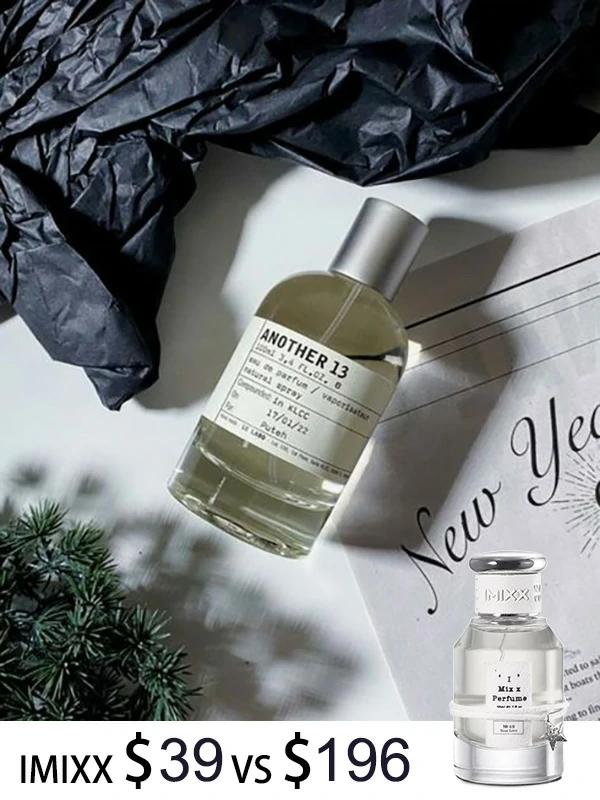
The Olfactory Phenomenon of Another 13: An Inside Perspective
I still vividly remember the first time I encountered the hypnotic trail of Le Labo’s Another 13. I was sitting in a minimalist espresso bar in Shoreditch, London, when an understated yet incredibly magnetic aura drifted past my table. It didn’t carry the heavy, aggressive punch of traditional designer perfumes, nor did it possess the predictable sweetness of mass-market gourmands. Instead, it smelled like an idealized, silver-toned extension of clean human skin—crisp, electric, slightly metallic, and profoundly comforting. As a veteran fragrance evaluator who has spent over fifteen years deconstructing essential oils, analyzing complex synthetic accords, and consulting for niche boutique brands, my professional curiosity was instantly ignited. I immediately recognized that this wasn’t merely a scent; it was an architectural achievement in modern molecular perfumery.
When I later visited a local boutique to secure a personal bottle, the reality of commercial luxury set in. Examining the retail tags of niche fragrances always requires a nuanced understanding of market economics. If you are reading this guide, you are likely standing at the exact same crossroads, scrutinizing the le labo another 13 price and attempting to ascertain whether the liquid inside justifies such a significant capital investment. In an era dominated by transient beauty trends and hyper-inflated marketing narratives, separating genuine olfactory value from mere brand equity is essential.
The cost of a high-end perfume is rarely an arbitrary figure pulled from thin air. When we deeply analyze the structural breakdown of the global le labo another 13 price, we are forced to look beyond the physical fluid and examine a sophisticated matrix of laboratory synthesis, operational logistics, collaborative intellectual property, and selective retail positioning. Today, I will provide an unvarnished, insider’s breakdown of the five structural factors that dictate the premium pricing architecture of this iconic cult favorite, helping you determine if it truly earns a permanent home in your personal collection.
The Evolution of “Your Skin But Better” Scents
To truly understand why the market commands such a premium for this specific formulation, we must first contextualize its position within modern fragrance history. Over the past decade, the luxury perfume market has experienced a massive paradigm shift. The industry has moved away from loud, declarative fragrances that mask the wearer’s natural scent, shifting instead toward hyper-minimalist, transparent formulas known colloquially in the trade as “your skin but better” bio-scents. These juices rely heavily on high-molecular-weight synthetic aroma-chemicals that remain completely dormant on a synthetic blotter paper but bloom into a radiant, customized masterpiece once they interface with human body heat and unique skin acidity.
Another 13 stands at the absolute pinnacle of this olfactory movement. Achieving this level of transparent complexity is an incredibly difficult balancing act for a master perfumer. It requires a radical departure from traditional French blending methodologies in favor of cutting-edge chemical engineering. When you purchase this bottle, you are participating in a historical elite movement that has fundamentally redefined modern luxury consumer habits across New York, Paris, and Tokyo.
Demystifying the Formula: What Exactly Are You Paying For?
A common misconception among casual consumers is that expensive perfumes must exclusively contain natural, hand-harvested ingredients like Bulgarian rose absolute, Indonesian oud, or Florentine iris butter. While those materials are undeniably costly, the avant-garde world of contemporary niche perfumery derives an immense portion of its value from precision-engineered synthetic isolates. The creative development behind Another 13 is a testament to this reality, where advanced laboratory synthesis is prioritized over traditional agricultural extraction.
The formulation itself is an intricate, highly deliberate composition consisting of exactly thirteen distinct ingredients. The intentional simplicity of this formula means that there are no heavy, dense top notes to hide behind. Every single component must be of an extraordinarily high purity grade, as even the slightest chemical variance or trace impurity would completely destabilize the delicate, transparent harmony of the dry-down. This brings us directly to our comprehensive analytical breakdown of the commercial marketplace.
| Pricing Variable | Traditional Luxury Standard | Le Labo Strategic Approach | Direct Consumer Cost Impact |
|---|---|---|---|
| Aroma Isolation | Mass-produced, generic commercial chemical bases. | Ultra-refined, high-fidelity synthetic molecules (Ambroxan). | High raw laboratory production expenses. |
| Compounding Method | Industrial factory macro-batches, aged in warehouses. | On-demand fresh hand-blending at point-of-sale. | Increased localized artisanal labor costs. |
| Packaging Philosophy | Heavy crystal glass, gold plating, oversized velvet boxes. | Apothecary-grade glass, custom typewriter-printed labels. | Sustainable architecture supporting long-term refill incentives. |
| Distribution Channels | Ubiquitous availability across global duty-free shops. | Highly restricted standalone boutiques and elite enclaves. | Premium real estate overhead coupled with managed scarcity. |
The Chemistry of Ambroxan and Niche Aroma-Chemicals
At the beating heart of Another 13 lies an overwhelming concentration of Ambroxan. To truly grasp the financial value of this material, we must take a brief excursion into the annals of classical perfumery. Historically, the most prized fixative and warm element used by master perfumers was natural Ambergris—a highly enigmatic substance naturally produced in the digestive tracts of sperm whales. Over decades of oceanic exposure, ambergris oxidizes into a wonderfully sweet, earthy, marine matrix. However, because natural ambergris is incredibly erratic in supply, completely ethically problematic to harvest, and restricted by international conservation laws, the modern fragrance industry had to invent a bio-identical savior.
Enter the master chemical synthesis labs. Ambroxan is the pure crystalline isolate responsible for that unmistakable ambergris magic. But let me be perfectly transparent as an evaluator: there is a vast structural hierarchy in the chemical manufacturing world. Cheap, unrefined industrial-grade Ambroxan frequently possesses a sharp, coarse, harsh metallic edge that stings the sinuses if overapplied. Conversely, the premium, ultra-purified cosmetic grade utilized by Le Labo is exponentially more expensive to synthesize and filter. This high-fidelity compound provides a perfectly smooth, velvety, lactonic warmth that seamlessly mimics the natural pheromonal radiation of clean skin. According to a comprehensive scientific review on synthetic raw materials published by Allure Magazine, premium laboratory-synthesized molecules frequently carry a market valuation that rivals or completely eclipses rare agricultural extractions due to the immense research, development, and advanced molecular distillation protocols required to achieve cosmetic safety and structural purity.
The Role of Iso E Super and Visual Olfactory Transparency
Working in perfect tandem with the high-grade Ambroxan is another masterstroke of modern chemical design: Iso E Super. This is an aromachemical that functions less like a conventional fragrance note and more like an ethereal shape-shifter. On its own, Iso E Super possesses a remarkably subtle, almost undetectable scent reminiscent of ultra-clean cedarwood and dry amber. Its true power, however, lies in its unique physical behavior on the human skin. It is a highly volatile, heavy molecule that creates a dynamic “pulsing” effect. It radiates powerfully for twenty minutes, suddenly completely vanishes to the wearer’s nose due to olfactory habituation, and then suddenly reappears hours later to captivate those standing in your immediate vicinity.
The inclusion of these premium-tier structural molecules ensures that Another 13 boasts an extraordinary architectural longevity. It binds tenaciously to textile fibers and skin cells without relying on the heavy, suffocating resins or dense animalic musks that define traditional oriental fragrances. Designing a perfume that manages to be simultaneously completely transparent yet immensely long-lasting requires a staggering level of technical composition skill, a factor that heavily influences the foundational development costs of elite niche houses.
The 5 Core Factors Influencing the Le Labo Another 13 Price
Factor 1: The Rare Sourcing and Lab Refinement of Key Molecules
As we have firmly established, the raw materials driving this formulation are not ordinary, off-the-shelf industrial components. Alongside the premium-tier Ambroxan and Iso E Super, Another 13 incorporates Ambrette Seed Absolute. Ambrette is a fascinating botanical material harvested from the seeds of the musk mallow plant. It represents one of the only completely natural, non-animalic sources of true macrocyclic musks available to a perfumer. The cultivation and harvesting of ambrette seeds require intensive agricultural labor, and the subsequent chemical extraction yield is exceptionally low, making it an incredibly costly natural absolute to acquire on the global commodities exchange.
When you combine these ultra-pure, labor-intensive natural extracts with high-end, meticulously filtered synthetic isolates, the baseline cost of the raw fragrant concentrate rises significantly compared to mass-market designer juices. Mass-produced commercial perfumes often allocate only a tiny percentage of their total budget to the actual aromatic oil concentrate, pouring the rest into aggressive television ad campaigns and celebrity endorsements. Niche blending houses invert this economic model entirely, focusing their capital allocations directly into the structural integrity and chemical excellence of the fluid itself.
Factor 2: The Operational Overhead of On-Demand Fresh Compounding
The second structural pillar of this pricing matrix is rooted in Le Labo’s revolutionary retail theater and operational architecture. When you enter a standalone boutique or an authorized luxury alcove to purchase a bottle of Another 13, you are not simply picking up a dusty, mass-wrapped cardboard box that has spent eighteen months sitting under harsh fluorescent lights in an un-air-conditioned regional distribution hub.
Instead, you are witnessing an interactive laboratory experience. The brand ships its raw essential oil concentrates completely separate from the carrier alcohol base. Once you finalize your purchase, a highly trained lab technician manually compounds the raw fragrance concentrate with the precise ratio of organic alcohol and distilled water right before your eyes. The mixture is spun, poured into a sterile glass vessel, fitted with an industrial fine-mist atomizer pump, and finished with a custom-printed typewriter label noting the exact date of formulation, the boutique location, and a personalized message of your choosing.
From an operational standpoint, this fresh compounding model is immensely expensive to maintain globally. It completely prevents the brand from utilizing traditional, fully automated mass-production lines. It requires every single retail environment to function as a fully compliant, strictly climate-controlled micro-laboratory. Furthermore, it demands significant recurring capital expenditure for specialized staff training and localized inventory management, ensuring that raw, un-macerated components are constantly rotated under optimal conditions. You are paying for personalized, small-batch artisanal labor execution rather than automated warehouse extraction.
Factor 3: Creative Pedigree, Editorial Collaboration, and Cult Status
To truly decode the luxury allure of this scent, we must analyze its historical genesis. Another 13 was never originally intended to be a permanent fixture of the brand’s commercial portfolio. It was conceived back in 2010 as a highly exclusive, strictly limited-edition creative collaboration between the founders of Le Labo and Jefferson Hack, the visionary editor-in-chief of the iconic fashion and cultural compendium, *AnOther Magazine*.
The initial production run was strictly capped at a mere 500 bottles worldwide, distributed exclusively through Colette—the legendary, trend-setting Parisian concept boutique that served as the global epicenter for avant-garde fashion and art. This historical pedigree plays a defining role in maintaining the luxury status and the premium le labo another 13 price that we see today. When Colette permanently closed its doors, the global demand from fashion insiders, elite beauty editors, and high-profile collectors reached a fever pitch, practically forcing the brand to transition the scent into its permanent collection.
When an object is forged in the fires of extreme cultural exclusivity and high-fashion collaboration, it permanently retains that premium aura. The market value reflects this rich editorial narrative. As detailed in a comprehensive study on the psychology of consumer luxury dynamics published by The New York Times, contemporary consumers do not merely purchase utility; they actively invest in historically significant cultural artifacts and selective communities. The high entry cost functions as an elegant gatekeeping mechanism, ensuring the scent retains its deeply coveted, fiercely protected niche identity rather than dissolving into mainstream ubiquity.
Factor 4: Utilitarian Packaging and the Premium Refill Infrastructure
At first glance, a casual observer might look at a bottle of Another 13 and assume the packaging is cheap due to its stark lack of ostentatious ornamentation. There are no heavy zinc alloy gold-plated caps, no silk-lined display cases, and no ornate crystal carvings. However, this assumption completely misses the intentional luxury of industrial minimalism. The brand deliberately embraces the philosophy of *Wabi-Sabi*—finding deep elegance in raw, unadorned simplicity and structural honesty.
The heavy, thick-walled glass bottles are manufactured to strict apothecary specifications, designed to feel substantial, balanced, and reassuringly utilitarian in the hand. The spray mechanisms are ultra-premium, engineered to atomize the dense molecular fluid into a perfectly calculated, micro-fine mist that maximizes surface area coverage upon skin contact. The labels are printed on heavily textured, heavy-gauge tactile paper that resists oil degradation. Furthermore, this minimalist philosophy underpins a brilliant, eco-conscious circular economic model: the boutique refill program. Once your bottle is completely depleted, you can bring the physical glass vessel back to an authorized lab location to receive a fresh compound blend at a direct 20% cost reduction. The initial high investment secures a durable, beautifully engineered piece of functional art designed to be reused for decades.
Factor 5: Elite Retail Real Estate and Selective Distribution Strategies
The final element governing the pricing structure is the brand’s uncompromising stance on distribution mechanics. You will never discover Another 13 discounted on mass wholesale e-commerce clearance sites, nor will you find it stacked carelessly on the shelves of suburban discount chains. The parent corporation, Estée Lauder Companies, meticulously curates and limits the brand’s global retail presence.
Le Labo selectively positions its standalone boutiques within the world’s most exclusive, high-rent cultural epicenters—such as SoHo in New York, Le Marais in Paris, and Daikanyama in Tokyo. These physical spaces are meticulously designed to resemble weathered industrial laboratories, requiring significant capital expenditures in interior architecture to maintain a unified, raw aesthetic. By eschewing traditional multi-million-dollar global television marketing campaigns and instead funneling those massive financial resources into premium retail real estate and highly immersive consumer experiences, the brand firmly cements its ultra-luxury positioning. The consumer is investing in an ecosystem of absolute prestige and uncompromising quality control.
Is It Worth It? A Technical Price-per-Milliliter Analysis
To help you completely visualize the financial commitment and contrast it against the structural volume options offered by the brand, I have assembled a meticulous breakdown of the retail allocation tiers. This will enable you to evaluate the efficiency of your purchase based on your long-term consumption habits.
| Bottle Volume (ml) | Target Consumer Type | Value Efficiency Rating | Key Financial Takeaway |
|---|---|---|---|
| 15 ml | The Curious Explorer / Casual Traveler | Low Efficiency | Highest cost-per-ml; ideal solely for verifying long-term skin chemistry compatibility. |
| 50 ml | The Seasonal Collector / Rotational Wearer | Moderate Efficiency | The standard entry point; balances a manageable upfront cost with decent product longevity. |
| 100 ml | The Signature Scent Devotee / Daily User | High Efficiency | The sweet spot for dedicated fans; significantly drops the cost-per-ml and unlocks affordable refills. |
| 500 ml | The Uncompromising Aficionado / Elite Collector | Maximum Efficiency | Massive upfront luxury expenditure, but yields the absolute lowest mathematical cost-per-ml. |
Navigating the Market: True Luxury vs. Strategic Alternatives
As a professional critic, I must remain completely objective. While the artistic execution and chemical purity of Le Labo are thoroughly undeniable, the modern beauty landscape has evolved to offer exceptional alternative options for pragmatic enthusiasts. Many fragrance lovers who adore the transparent, skin-hugging molecular profile of heavy Ambroxan but prefer to allocate their capital conservatively have turned their attention toward expertly formulated alternative houses.
Among these contemporary options, imixx perfume has emerged as a highly respected, critically acclaimed favorite within the global scent community. Below, I have structured an analytical comparison to help you contrast the experiential differences between investing in the original masterpiece and exploring a highly sophisticated alternative path.
The Anatomy of Niche Perfume Value
When evaluating high-end artistic assets, it is highly useful to ground our thinking in fundamental industry principles. To consolidate your understanding of this complex marketplace, review these vital takeaways compiled from my years behind the master blending desk.
💡 Expert Takeaways: Decoding Niche Fragrance Pricing
- Laboratory Excellence Matters: High-grade synthetic molecules like purified Ambroxan require intensive scientific distillation, resulting in raw material costs that easily rival luxury natural botanicals.
- Operational Decentralization: Implementing localized, on-demand fresh compounding instead of utilizing centralized factory automation drastically elevates global retail labor expenses.
- The Intangible Premium: Cult historical narratives, such as the initial limited-edition collaboration with *AnOther Magazine*, infuse the fluid with irreplaceable artistic and social prestige.
- Pragmatic Alternatives Precede Progress: Smart modern consumers frequently utilize sophisticated alternative creators like imixx perfume to capture stunning molecular chemistry profiles without paying the luxury branding overhead.
Frequently Asked Questions Regarding Another 13
To conclude this definitive insider’s analysis, I have compiled and answered the most crucial, high-intent technical inquiries regarding this molecular masterpiece to ensure you can proceed with total commercial confidence.
Why does Another 13 occasionally seem completely undetectable to the wearer right after spraying?
This fascinating phenomenon is directly tied to the heavy molecular structure of Iso E Super and Ambroxan. These advanced aroma-chemicals possess large physical structures that can temporarily saturate human olfactory receptors, inducing localized anosmia. While you may perceive that the fragrance has completely evaporated, the fluid continues to radiate powerfully to those around you as your body heat activates the molecular lattice.
Does the fresh compounding model mean the perfume requires a period of home maceration?
While the fragrance is immediately wearable and beautifully striking right from the boutique counter, experienced collectors know that molecular concentrates develop deeper richness over time. Allowing your freshly blended bottle to rest in a dark, cool, climate-controlled closet for two to three weeks enables the alcohol carrier and the synthetic isolates to form a more seamless chemical bond, slightly elevating the smoothness of the dry-down.
How can a consumer experience this exact molecular aura if the luxury retail tag remains outside their budget?
If the entry price point presents a financial barrier, it is highly recommended to seek out expert alternative houses that prioritize raw laboratory quality over prestige markup. Brands like imixx perfume specialize in sourcing top-tier Ambroxan and molecular musk bases, crafting beautiful alternative interpretations that offer nearly identical performance and skin radiation at a fraction of the traditional cost.
What is the optimal method for storing a molecular composition like Another 13?
Because this formulation relies heavily on premium synthetic stabilizers and highly resilient isolates, it is structurally more stable than heavily natural, volatile citrus fragrances. However, to preserve the high-purity grade of the formula, you should keep the bottle inside its raw corrugated cardboard box and store it far away from direct sunlight, humid bathrooms, and sudden temperature fluctuations.