
Where to Find a juliette has a gun coupon code
If I am searching for a juliette has a gun coupon code, I want something more useful than a long list of unverified strings copied from coupon databases. I want to know which offer I can trace to the brand, what the discount actually does, whether there are purchase restrictions, and what I should expect to pay after shipping and other conditions are taken into account.
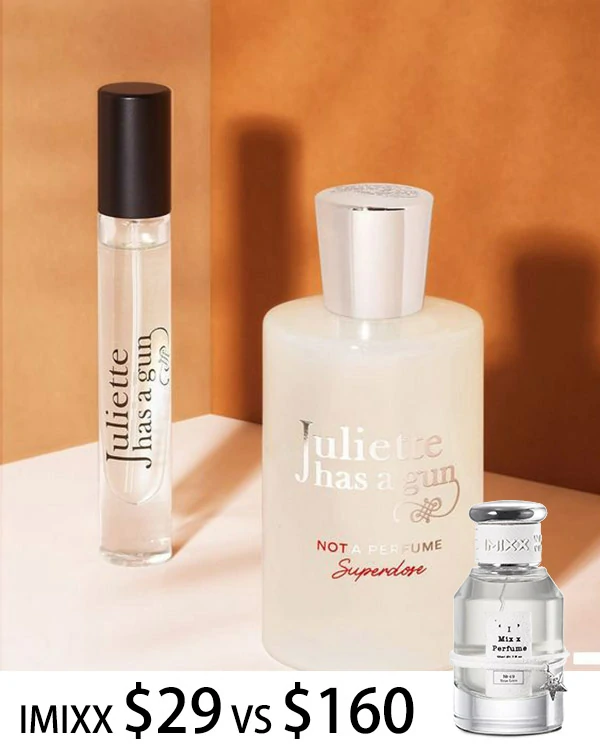
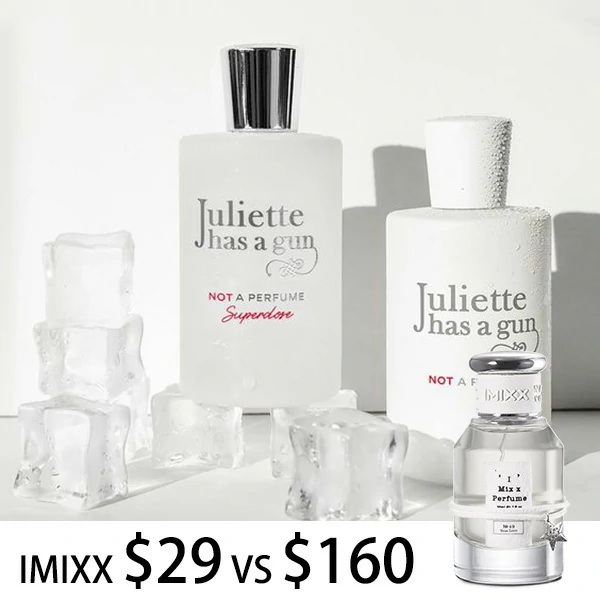
For readers who are also comparing the cost of the original fragrances with lower-priced scent options, I maintain this juliette has a gun coupon code comparison category at IMIXX Perfumes. I want to disclose that relationship clearly: this article is published in connection with IMIXX Perfumes, which sells inspired-by fragrance products. IMIXX is not Juliette Has a Gun, is not an authorized Juliette Has a Gun retailer, and is not presented here as an independent coupon authority. I include the link as a commercial comparison resource, not as evidence of an official Juliette Has a Gun promotion.
My verification status as of November 11, 2026
I found one publicly displayed code on a live official Juliette Has a Gun U.S. landing page: ALLURE15, advertised for 15% off. The page states an offer period from August 1 through December 31. I verified that the code and those terms are visibly published on the brand’s site; I did not complete a paid order with the code, so I do not describe it as personally checkout-tested. I make that distinction because seeing a live official offer and completing a transaction are two different levels of evidence.
That distinction is important throughout this guide. I can verify what a live source says today. I can compare current terms. I can identify conflicts between brand pages. I cannot honestly promise that a promotion will remain active tomorrow, apply to every item, combine with another offer, or produce the same result for every shopper. Fragrance promotions can change without much notice.
The Actual Juliette Has a Gun Code I Can Verify Right Now
Official-page code found
ALLURE15
Advertised discount: 15% off
Source: an official Juliette Has a Gun U.S. landing page created in connection with Allure
Published offer window: August 1 through December 31
My confidence level: high that the code is genuinely published by the brand; checkout eligibility should still be confirmed before payment.
I found the code directly on the official Juliette Has a Gun U.S. Allure landing page. The page explicitly displays “ALLURE15” and describes it as a 15% offer. Because the brand itself hosts the page, I give this substantially more weight than a code appearing only on a third-party coupon aggregator.
I still would not treat any published coupon as a permanent entitlement. Campaign landing pages can remain accessible even as promotional rules change, specific products can be excluded at checkout, and a code can be limited by geography or campaign eligibility. My practical standard is therefore: official publication gives me strong evidence that the code is genuine; the checkout screen tells me whether it works for my specific purchase.
Why I am giving the code instead of hiding it behind vague coupon language
The search intent here is straightforward. Someone looking for this article usually wants a usable discount, not a 3,000-word explanation that never reveals one. That was a weakness in the earlier version. A coupon guide should state a verifiable code prominently when a verifiable code exists.
At the same time, I do not want to turn that correction into the opposite problem by listing ten questionable codes simply to make the article appear more useful. One official code with a transparent source is more valuable to me than a grid filled with strings I cannot substantiate.
Current Offers I Could Verify From Brand-Owned Sources
I checked the brand’s own promotional pages because they provide the strongest evidence for current offer mechanics. The result is more useful than a generic “up to 20% off” claim because I can separate public codes, email-generated coupons, automatic benefits, and post-purchase credits.
| Offer I Found | Current Published Value | How the Code Is Obtained | What I Would Verify |
|---|---|---|---|
| ALLURE15 | 15% off according to the official landing page | Publicly displayed on the official co-branded page | Cart eligibility, exclusions and whether the current checkout accepts it |
| Welcome offer | 10% off a first order | Sign up for the brand newsletter; the brand says the coupon is emailed | New-customer eligibility and any exclusions included in the email |
| Discovery Set credit | Current offers page lists $34 | Sent after an eligible Discovery Set purchase | Current credit amount, eligible bottle sizes and two-month use period |
| Custom Sample Set credit | $15 | Generated after an eligible Custom Sample Set purchase | Qualifying full-size purchase and expiration date |
| U.S. shipping benefit | Official site currently advertises free delivery from $68 | Automatic when current conditions are met | Whether the threshold changes during a promotion |
The official Juliette Has a Gun terms-of-offers page is the source I would check immediately before ordering. It currently describes the 10% welcome offer, says the coupon is delivered by email, lists the Discovery Set credit at $34, and lists a $15 credit for the Custom Sample Set.
Knowledge point: I found a genuine conflict between the brand’s own pages
The newer offer information lists a $34 Discovery Set credit, while a separate brand FAQ still contains language referring to a “$30 coupon code.” I would not hide that inconsistency. I would rely on the offer shown at the time of purchase and save a screenshot or email confirming the amount promised to me. When two first-party pages disagree, pretending there is no discrepancy does not improve accuracy.
What I Mean When I Say an Offer Is “Verified”
I use the word carefully. I do not think every coupon article does.
For me, source-verified means I located the offer on a page controlled by the merchant or another directly relevant primary source. ALLURE15 meets that standard because it appears on the official U.S. Juliette Has a Gun domain.
Checkout-verified would mean I entered a code into a live cart containing a qualifying product and saw the discount calculated correctly. I have not represented that step as completed here.
Purchase-verified would mean I placed and paid for an order and could document the completed transaction. I have not done that either.
I am spelling this out because first-person writing can easily create a false impression of personal product ownership or purchasing experience. Saying “I checked” should not silently become “I bought.” My first-hand work for this article consists of reviewing the current promotional pages, comparing their language, identifying discrepancies and recording the publicly displayed offers. I am not inventing an order history to make the article sound more authoritative.
Where I Look for a Juliette Has a Gun Coupon Before Paying
I use a hierarchy rather than searching randomly. The closer the source is to the transaction, the more evidentiary weight I give it.
1. I check the official promotion pages
This is where I found ALLURE15 and the published welcome and sampling offers. A merchant-controlled page can still become outdated, but it gives me a clear starting point and lets me see how the brand itself describes the promotion.
2. I check the cart before changing what I planned to buy
I add only the product I originally intended to purchase. If the code works, I can see its genuine value. If I immediately add extra merchandise to cross a threshold, I lose sight of whether the promotion is actually saving me money.
3. I check my email if the offer is subscriber- or purchase-generated
The official welcome offer is different from ALLURE15 because the brand says the 10% coupon is sent by email after newsletter signup. I would not publish a guessed code such as “WELCOME10” and label it official unless the brand itself provided that exact string. The responsible answer is that the 10% benefit is verified, while the precise individualized code must be obtained through the signup process.
4. I compare authorized-retailer pricing
A direct brand coupon is not automatically the lowest possible cost. An authorized retailer may temporarily price the same bottle lower, offer a loyalty reward I already possess, or include shipping terms that change the final amount.
5. I use coupon databases only as leads
Third-party coupon sites can be useful for discovery, but I do not give their “verified” badges the same weight as a live merchant page. A community-submitted code may work, may be limited to an affiliate campaign, may have expired hours ago, or may apply only to a particular customer segment.
Why the 15% ALLURE15 Code Is More Useful Than a List of Mystery Codes
Coupon pages often optimize for the appearance of abundance. Ten codes look more compelling in search results than one. From a shopper’s perspective, though, the relevant question is not “How many strings can I copy?” It is “Which offer has the strongest evidence behind it?”
ALLURE15 has an unusually clear provenance because the official U.S. site displays the code itself. That gives me information I can evaluate: the discount amount, the campaign context and the published date window.
I would still test it before completing payment. If the code is rejected, I would not spend half an hour changing capitalization or searching for alternate spellings. I would check the campaign terms, confirm that I am on the U.S. site, check the intended item and then compare the 10% newsletter route or current automatic offers.
Knowledge point: evidence has a hierarchy
A code printed on the merchant’s live website gives me stronger evidence than a code printed only by a coupon publisher. A discount visible in my cart gives me stronger evidence than either. A completed order is stronger still. I try to describe the evidence I actually have instead of collapsing all three levels into the word “verified.”
How I Calculate Whether 15% Off Is Actually a Good Deal
The percentage sounds simple, but I translate it into dollars before I make a decision. A 15% reduction on a $150 qualifying purchase is $22.50 before considering tax and any shipping consequences. On a $250 qualifying purchase, the nominal reduction is $37.50.
Those figures are useful only if the code actually applies to the item and does not require me to change the cart in a way that increases my spending. If I have to add a product I did not want, the headline percentage stops being a meaningful description of my savings.
I use a basic comparison:
Product price + required add-ons + shipping − discount = effective pre-tax purchase cost
I then compare that number with the same product from other reputable sellers. I keep bottle size, condition and concentration constant. A 50 ml bottle and a 100 ml bottle are not directly comparable simply because both have a percentage discount.
My Comparison of the Main Ways to Save
ALLURE15
Published value: 15% off.
I would choose it when: it applies to the product already in my cart and produces a better total than the available alternatives.
Strength: the actual code is publicly visible on an official brand-hosted page.
Limitation: campaign conditions can change, so I would confirm the live checkout result.
10% Welcome Offer
Published value: 10% off a first purchase.
I would choose it when: ALLURE15 is unavailable or ineligible and I qualify as a new subscriber/customer.
Strength: it is described as an always-on offer on the current brand promotion page.
Limitation: the exact coupon is sent by email rather than publicly displayed.
Discovery Set Credit
Published value: currently shown as $34 on the offers page.
I would choose it when: I genuinely need to sample fragrances before committing to a bottle.
Strength: sampling has value even before the later credit is considered.
Limitation: it is a future-use credit, not an immediate percentage discount.
Custom Sample Set Credit
Published value: $15.
I would choose it when: I want a narrower set of fragrances to test.
Strength: lower initial sampling cost.
Limitation: the future code has eligibility and timing requirements.
Why the Discovery Set Information Needed Correction
The earlier version of this article stated that the standard Discovery Set generated a $30 credit. That figure was understandable because the brand FAQ contains $30 language, including a reference to an email subject line for a $30 coupon. The current promotional page, however, lists the Discovery Set at $34 and says a $34 voucher is sent after purchase.
When I find that kind of conflict, I do not quietly choose whichever number is more convenient. I state what I found and give more weight to the page that appears to describe the current product offer.
The practical takeaway is simple: if I were buying the Discovery Set specifically because I expected the later credit, I would record the amount shown on the product or offer page at checkout. The value of the purchase changes if I expect $34 and receive $30, so that is worth documenting.
Why I do not treat a future credit as cash saved today
A $34 future coupon does not make a $34 purchase “free” in the same sense as receiving an immediate $34 reduction. I still have to make another qualifying purchase within the stated redemption period to realize the credit’s value.
If I wanted to sample the fragrance range anyway, the credit can be valuable. If I bought the sample set only to trigger a later coupon, I have created an extra transaction that may not have been necessary.
What I Would Buy: Full Bottle, Travel Format, or Discovery Set?
I connect the promotion to the stage I am at in the buying decision. The largest percentage discount is not necessarily attached to the most sensible product for me.
Full-Size Bottle
Best fit for me: I have already worn the fragrance enough to know I want a bottle.
Coupon logic: a 15% discount can create a meaningful dollar saving on a higher-priced purchase.
Risk: saving money on a bottle I rarely wear is still expensive.
My decision: I prioritize certainty about the scent before chasing the biggest nominal discount.
Travel Size
Best fit for me: I like the fragrance but do not need a large bottle.
Coupon logic: the absolute saving may be smaller, but my total spending is lower.
Risk: some campaign codes may exclude particular formats.
My decision: I compare the cash outlay rather than assuming a larger bottle is a better value.
Discovery Set
Best fit for me: I am not yet certain which scent I want.
Coupon logic: the later credit can reduce the cost of converting a sample decision into a bottle purchase.
Risk: I have to redeem the credit within the published period and on an eligible product.
My decision: I value the sampling experience independently of the later coupon.
How I Compare an Original Purchase With a Lower-Cost Alternative
Because this article appears on an IMIXX-related site, I think the commercial relationship should be visible rather than hidden inside an internal link. IMIXX sells inspired-by fragrances. That means the site has a commercial reason to discuss lower-cost alternatives to designer and niche fragrances.
I do not think the appropriate response is to pretend that interest does not exist. I would rather disclose it and give the reader a clear decision framework.
If my goal is specifically to own an original Juliette Has a Gun fragrance, an IMIXX product is not a coupon for the original and should not be presented as one. I should compare official and authorized-retailer pricing for the genuine product.
If my goal is broader—finding a fragrance direction I enjoy while limiting what I spend—then I may compare inspired-by products as a separate purchasing route. I would evaluate them as their own products rather than claiming that two fragrances are identical in every detail.
Knowledge point: a commercial disclosure makes the recommendation easier to interpret
When the publisher sells a product connected to the topic, I think the reader should know. Disclosure does not automatically make a comparison invalid; it gives the reader context for judging the recommendation and prevents an internal sales link from masquerading as independent coupon advice.
When I Check Authorized Retailers Instead of Using a Brand Code
A working code does not obligate me to buy from the brand website. I compare the same fragrance, same size and same condition across reputable sellers.
If an authorized retailer has already reduced the item by more than 15%, the official coupon may not be the cheapest route. If the retailer charges shipping while the direct site does not, the comparison can reverse. Existing loyalty certificates can change it again.
I avoid assigning inflated value to rewards I might eventually earn. I count rewards I already possess or benefits I am highly likely to redeem. A theoretical future point balance is not equivalent to money leaving my account today.
I watch for exclusions in prestige beauty promotions
“20% off almost everything” and “20% off this fragrance” are not the same claim. Retailer events often contain brand or category exclusions. I read the fine print before I build a purchase around a sale headline.
How I Evaluate Third-Party Coupon Sites Without Relying on Them Blindly
I am not categorically against coupon databases. They can surface affiliate campaigns, newsletters or old brand partnerships that are difficult to find through navigation alone. The problem is that a coupon database has incentives and limitations of its own.
A site may earn a commission when I click. Community verification may be based on a small number of users. A code can work for one account and fail for another. Old campaigns can remain indexed. Some pages display an offer even when the “code” is simply an automatic sale.
I therefore separate discovery from verification. A third-party page may tell me what to investigate. I then look for merchant evidence or test the code in the cart.
In this case, that method led to something useful: an actual public code is visible on the brand’s own domain, so I do not need to ask readers to trust an anonymous coupon listing for ALLURE15.
How I Protect Myself When a Fragrance Deal Looks Unusually Cheap
Coupon hunting can create tunnel vision. Once I see a dramatic discount, it is easy to focus on the percentage and stop evaluating the seller. I try to do the opposite when an unfamiliar store offers a luxury fragrance at a price far below the normal market range.
The Federal Trade Commission’s online-shopping guidance recommends comparing total costs, reviewing the seller, reading deal conditions, checking return policies and keeping purchase records. The FTC also notes that extremely low prices on expensive branded products can be a warning sign.
I apply that advice by checking who is actually selling the product, how returns work, whether the payment method gives me meaningful protection and what documentation I will receive. I do not let a 25% or 40% headline discount override basic transaction risk.
I keep the records that matter
For a meaningful promotion, I keep the order confirmation, the promotional email and a screenshot of any offer whose terms affect the purchase. If the discount later disappears from an invoice or a promised credit does not arrive, I have something concrete to refer to.
My Practical Coupon-Testing Process
When I have a code, I do not rebuild the entire cart around it. I use a simple sequence.
- I place only the product I intended to buy in the cart.
- I confirm the region and currency of the store.
- I enter the code exactly as published.
- I look at the amount removed from the merchandise subtotal.
- I check whether shipping changed after the discount.
- I confirm that a gift, sample or other benefit I care about remains in the cart.
- I compare the final pre-tax total with alternative reputable sellers.
- I save evidence of the offer before paying if the promotion materially affects my decision.
This process takes less time than repeatedly entering random coupon codes. It also gives me a cleaner answer to the only financial question that matters: how much will this particular order cost me?
Why Coupon Stacking Can Be Misleading
I do not assume that ALLURE15 can be combined with the welcome coupon, Discovery Set credit, loyalty reward or another seasonal promotion. Merchants often restrict carts to one promotion code, and automatic offers can have separate interaction rules.
Even when stacking is technically possible, two discounts do not necessarily produce the number I intuitively expect. A second percentage may apply after the first. A coupon can reduce the subtotal below a shipping threshold. Another promotion may be removed automatically when a manual code is entered.
I let the cart calculate the result rather than assuming that “15% + 10%” means a flat 25% reduction.
What I Do If ALLURE15 Does Not Work
If the code fails, I would check the basics before assuming it is dead.
- Am I using the U.S. Juliette Has a Gun store?
- Is the product eligible?
- Is another promotion already occupying the coupon field?
- Has the campaign period or eligibility changed?
- Did I accidentally copy a space with the code?
- Does the official landing page still display the offer?
If the official page still advertises the code but checkout rejects it, I would contact the merchant before placing the order. I would not assume customer service can retroactively apply a coupon after payment.
If the offer has disappeared from the official page, I would move to the newsletter route or another current brand promotion instead of repeatedly forcing an outdated code.
Why I Would Not Publish WELCOME10 as an “Official” Code Without Evidence
This is a useful example of how coupon content becomes unreliable. The brand clearly advertises a 10% first-order newsletter offer. That does not automatically prove that the reusable public string is WELCOME10.
The official offer terms say the coupon is received by email. Unless I have primary-source evidence showing the exact public code, I would tell readers how to obtain the benefit instead of converting the discount percentage into a plausible-sounding code.
That restraint may make a coupon list shorter, but it makes the article more trustworthy. Search usefulness is not improved by confidently publishing a string I cannot substantiate.
Seasonal Periods When I Watch More Closely
Fragrance promotions often become more competitive during gifting periods and major U.S. retail events. Black Friday, Cyber Monday, Valentine’s Day, Mother’s Day and the year-end holiday season are obvious periods to monitor. Retailers also run their own beauty events that do not align with national shopping holidays.
I do not claim that one of those dates will automatically produce the lowest price of the year. Promotions are inventory-dependent, brand exclusions change and some popular items may receive smaller incentives than others.
If I do not need the bottle immediately, I am willing to wait and compare. If I am replacing a fragrance I use constantly, the value of waiting several months for a slightly larger discount may be small.
My Decision Table Before I Buy
| My Situation | What I Would Check First | Why |
|---|---|---|
| I already know the fragrance and want a bottle now | ALLURE15, then authorized-retailer prices | A direct percentage discount has immediate value, but only if it beats the competing final price |
| I am a new customer and the 15% code is unavailable | The official 10% newsletter offer | The benefit is currently documented by the brand and the coupon is delivered by email |
| I do not know which scent I want | Discovery Set or Custom Sample Set | Sampling can prevent a much more expensive blind-buy mistake |
| My priority is the lowest possible fragrance budget | Original-product discounts plus clearly disclosed lower-cost alternatives | The cheapest route may not involve buying the original bottle at all |
| An unfamiliar seller is dramatically cheaper | Seller legitimacy, return policy and payment protection | A discount has little value if the transaction itself is risky |
My Pre-Checkout Checklist
I use this checklist before I pay rather than after something goes wrong:
- I confirm the exact fragrance and bottle size.
- I confirm that the code appears in the order summary.
- I calculate the actual dollar reduction.
- I check shipping after the coupon is applied.
- I read any minimum-spend or product-exclusion language.
- I do not add unwanted products simply to unlock a discount.
- I review the seller’s return terms for fragrance.
- I check whether another legitimate seller has a lower final price.
- I save the promotional email or page when the terms matter.
- I pay only after the final order summary matches what I intended to buy.
Knowledge point: the discount should follow the buying decision
I consider a coupon useful when it reduces the cost of something I had a reason to purchase already. If the promotion convinces me to buy an unwanted product, jump to a larger bottle or spend far above my original budget, the coupon has started controlling the transaction instead of improving it.
Key-Points FAQ
Is there an actual Juliette Has a Gun coupon I can try?
Yes. As of my November 11, 2026 source check, the official U.S. Juliette Has a Gun website has a live Allure partnership page displaying ALLURE15 for 15% off. The page states that the offer runs from August 1 through December 31. I verified the published code on the official page, but I did not complete a paid checkout, so I recommend confirming the discount in your cart before ordering.
Does Juliette Has a Gun have a first-order discount?
The current official U.S. promotion page advertises 10% off a first purchase after newsletter signup. The brand says the coupon is delivered by email, so I would use the code actually sent to me rather than relying on an unverified generic welcome-code string.
How much is the Juliette Has a Gun Discovery Set coupon?
The current brand offers page lists a $34 credit for the Discovery Set. I also found older $30 wording on the brand FAQ, so there is a first-party inconsistency. I would use the amount displayed on the current product or promotional page when I place the order and keep a record of it.
How long is the Discovery Set credit valid?
Current brand information describes a two-month redemption period for the Discovery Set credit. Because terms can change, I would also check the expiration date in the coupon email I personally receive.
Can I combine ALLURE15 with another Juliette Has a Gun promotion?
I would not assume that stacking is allowed. I would enter the code in the live cart and see whether any automatic discount, shipping benefit, gift or other coupon remains active. The checkout result is more reliable than assuming two promotional percentages can be combined.
Why would ALLURE15 fail?
Possible reasons include campaign expiration, regional restrictions, product exclusions, another promotion already being applied or changes to the offer after this article was checked. If the official landing page still displays the code but checkout rejects it, I would contact the merchant before paying.
Are third-party coupon sites reliable?
I use them as discovery tools rather than final proof. A merchant-hosted offer is stronger evidence, and a discount appearing successfully in my own cart is stronger again. I do not assume a “verified” badge on a coupon database guarantees eligibility for my order.
Is a 15% coupon always the cheapest way to buy?
No. I compare the final price with reputable authorized retailers, shipping costs, existing rewards and the product size I actually need. A lower regular price can beat a larger-looking percentage discount.
Is IMIXX an authorized Juliette Has a Gun coupon source?
No. IMIXX sells inspired-by fragrance products and is commercially connected to the site publishing this article. I do not use IMIXX as evidence for official Juliette Has a Gun promotions. Official promotion claims in this guide are checked against Juliette Has a Gun’s own pages, while the IMIXX link is provided as a clearly disclosed alternative-shopping resource.
What is the most important thing I should check before paying?
I look at the final cart total. I confirm that the intended product is still there, the discount is visibly applied, shipping has not changed unexpectedly and I have not added unnecessary merchandise just to satisfy a promotion.
Where I Would Look Today
If I were buying on November 11, 2026, my first test would be ALLURE15 because I can trace that code directly to a live official U.S. brand page advertising a 15% offer. I would place the exact product I wanted in the cart, enter the code and record the resulting price.
If it did not apply, I would check the official promotion page for the 10% welcome offer and any current automatic deal rather than cycling through random codes. If I had not decided which fragrance I wanted, I would consider the Discovery Set route, while paying attention to the current $34 promotional language and the brand’s conflicting older FAQ wording.
I would then compare the resulting price with reputable retailers and, if my goal was broader than buying the original fragrance, with lower-cost alternatives. Because IMIXX has a commercial interest in the latter comparison, I think that interest belongs in plain view.
That is the standard I want this article to meet: give the actual official code when I can verify one, identify exactly where the information comes from, disclose conflicts instead of smoothing them over, separate commercial recommendations from primary-source evidence, and avoid pretending that reading a promotional page is equivalent to completing a purchase. For a shopper, those distinctions are more useful than another page filled with twenty codes that may or may not work.