

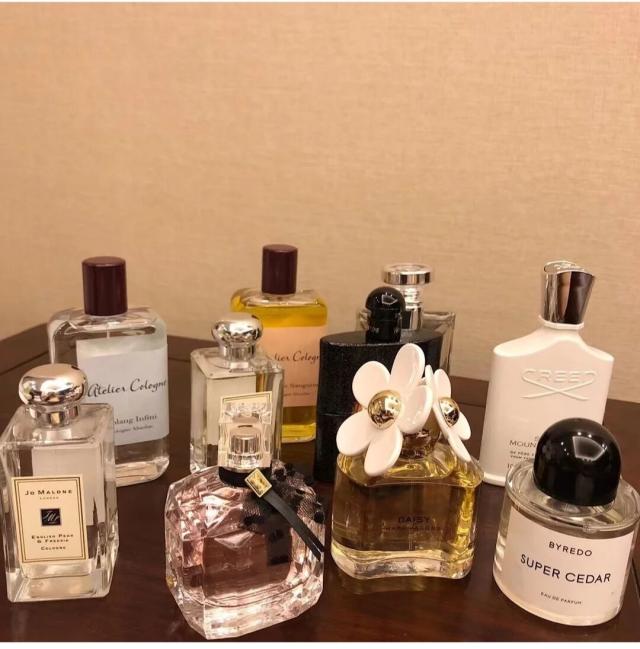
I understand the appeal of inspire by perfumes: the possibility of enjoying a recognizable fragrance style without committing to a luxury-bottle price. But I also know that a familiar opening is not the same as a convincing fragrance from first spray to final dry-down. If I am deciding whether an affordable interpretation deserves a place on my shelf, I want more than a flattering description. I want to understand what it smells like, which compromises might appear, how to compare it fairly, and what the seller can actually substantiate.
In this guide, I use inspire by perfumes as the common search phrase for fragrances created around a recognizable scent direction rather than an exact copy of another brand’s formula. My focus is IMIXX Perfumes, but I will distinguish product positioning from independently verified results. No bottles were supplied for this article, no blind panel was conducted, and I have not carried out a controlled wear test. That means I will not invent compliments, wear times, batch data, or first-hand sensory observations.
For readers ready to examine a range of options, I would begin with inspire by perfumes in the IMIXX catalog, then return to the criteria below before choosing a bottle. I think that order makes sense: discover the possibilities first, then evaluate individual fragrances on their own merits rather than treating a similarity claim as proof.
What Does “Inspired by” Actually Mean in Perfumery?
When I read that a perfume is inspired by a popular fragrance, I interpret that as a statement about olfactory direction. The perfumer may aim for a similar contrast between fresh and warm notes, a recognizable floral heart, or the same general woody or amber atmosphere. That is different from saying the two products contain identical materials in identical concentrations. A finished fragrance is a complex mixture, and its smell depends on both the materials chosen and the balance among them.
Two formulas can evoke a similar style while behaving differently on skin. A citrus top accord may seem strikingly familiar for the first few minutes, yet the heart could become sweeter, soapier, greener, or more powdery. Later, one formula may emphasize musk while the other develops a drier woody finish. To me, those differences matter more than a headline percentage because they shape the hours when a perfume is actually being worn.
There is also a practical distinction between inspiration and endorsement. An independently produced scent is not automatically affiliated with the luxury house whose style it evokes. I look for clear labeling that identifies the actual manufacturer and avoids implying authorization or a shared formula. A comparison can be useful as a scent-navigation tool, but the product should ultimately stand on its own.
The three stages I compare
Opening: This is the first impression after application, often shaped by volatile citrus, aromatic, or bright fruity materials. Heart: As the initial intensity settles, floral, spicy, green, or gourmand aspects may become easier to recognize. Base: Woods, musks, resins, vanilla-like materials, and other persistent effects influence the later character. These are useful descriptive stages, not hard chemical boundaries; different aroma materials evaporate and interact continuously.
Why Affordable Fragrance Interpretations Are Appealing—and Where They Fall Short
The obvious benefit is a lower financial barrier. If I enjoy the idea of a plush amber scent but do not want to use an expensive bottle for errands or everyday office wear, an accessible interpretation may broaden my options. It can also make exploration less intimidating: instead of choosing one signature scent for every situation, I can compare light, aromatic, floral, and richer evening styles without treating every experiment as a major purchase.
Still, price alone does not establish value. A bottle that costs less but disappoints after thirty minutes may offer less pleasure per wear than a more expensive fragrance I genuinely love. Conversely, a modestly priced perfume that works beautifully for a specific occasion could be a sensible purchase even if it is not especially close to its reference scent. My standard is not “does it cost less?” but “does it deliver an experience I would willingly repeat?”
I also watch for a hidden expectation problem. Marketing can encourage a buyer to imagine a perfect substitute for a favorite fragrance, but small differences become conspicuous when the reference is deeply familiar. If the original’s dry-down is the reason I love it, a similar opening will not resolve that mismatch. For a first-time fragrance shopper, the same difference might be insignificant. Neither reaction is wrong; the relevant question is which part of the scent matters to the person wearing it.
My quick value checklist
- Scent preference: Do I like the fragrance on its own, without constantly thinking about another bottle?
- Wearability: Does its intensity fit my workplace, climate, and daily routine?
- Development: Do I enjoy both the bright opening and the settled base?
- Transparency: Can I find the size, usage directions, ingredients, and return conditions before ordering?
- Cost per use: Is the amount I will realistically wear worth the purchase price?
How I Evaluate IMIXX Claims Without Relying on a Magic Similarity Number
IMIXX positions its products around accessible interpretations of familiar luxury fragrance styles. That proposition is understandable, but I would not translate it into a universal claim that every scent is virtually identical to its inspiration. In particular, the previously circulated figure of 99.98% similarity is not a result I can verify. Without a disclosed test method, sample size, reference batches, scoring criteria, uncertainty range, and independent analysis, the number should not be treated as an established fact.
Even a chemical comparison would require careful explanation. Gas chromatography–mass spectrometry, often shortened to GC–MS, can help identify and compare many volatile constituents in a fragrance sample. However, a chromatographic resemblance is not automatically equivalent to perceived similarity: some materials have very low odor thresholds, some compounds are difficult to differentiate with a single method, and minor changes can affect the overall accord. A sensory panel would answer a different question from an instrumental analysis.
If I were reviewing a particular IMIXX fragrance in a publishable, hands-on test, I would disclose which bottle and batch I used, when I acquired it, how many wears I completed, what comparison product I selected, and whether anyone else participated in a blind assessment. I would report the results scent by scent. Because those steps have not been performed here, I prefer a candid evaluation framework over an invented score.
| Claim I might encounter | Evidence I would want | What I can responsibly conclude |
|---|---|---|
| “Nearly identical scent” | Blind sensory comparison, scoring rubric, multiple participants | Unverified until the method and results are available |
| “Lasts all day” | Repeated wear tests, defined time points, comparable application | Performance may vary with wearer and setting |
| “Skin-safe for everyone” | Appropriate safety assessment and accurate ingredient information | No fragrance can be guaranteed suitable for every user |
| “Sustainable formula” | Defined metrics, sourcing records, packaging and lifecycle evidence | I cannot verify broad environmental claims from marketing alone |
The Real Fragrance Craft: Accords, Materials, and Balance
What makes an inspired perfume interesting to me is not the promise of duplication but the formulation challenge. A perfumer is essentially balancing numerous odor effects: sparkle against sweetness, diffusion against density, naturalistic detail against consistency, and immediate appeal against a coherent dry-down. The result depends on selection, dosage, interactions, and the constraints of the intended product.
Take a tobacco-and-vanilla direction. “Tobacco” in a fragrance description often suggests an impression of dried leaf, warm spice, honeyed depth, or subtle smokiness rather than the smell of cigarette smoke. “Vanilla” can range from dessert-like creaminess to a dry, resinous warmth. If the sweet facet becomes too dominant, the accord may feel sticky. If the spicy facet is overemphasized, the scent can feel harsh or angular. The artistry lies in achieving an intentional contrast, not simply placing two recognizable notes next to each other.
Or consider fresh citrus compositions. Their opening can be lively, but certain bright effects dissipate more quickly than heavier base materials. A perfumer can support that brightness with aromatic herbs, clean musks, woody facets, or other structural materials. This may extend the impression of freshness, but it can also change the scent’s character. Consequently, I never assume that the longest-lasting fragrance is automatically the most faithful one.
Natural does not necessarily mean superior
I avoid the easy assumption that a formula with more botanical extracts must smell better or be gentler. Both naturally derived and synthetic fragrance materials can contribute beautiful effects; both require appropriate safety consideration. The quality of a perfume depends on how materials are used, not on a simplistic natural-versus-synthetic hierarchy. Likewise, a familiar note name does not tell me the purity, concentration, origin, or environmental footprint of every constituent behind the accord.
When brands discuss craftsmanship, I would like them to explain their approach in practical language: what scent structure they targeted, how they balance the different phases, what testing supports consistency, and what documentation they can share. Those details are more informative than claiming that a secret process has perfected imitation.
A Fair At-Home Comparison: My Testing Protocol
Since I have not personally tested the specific bottles discussed in this guide, I want to provide a protocol readers can actually reproduce. I would use it myself before making any confident statements about resemblance, projection, longevity, or comfort. The goal is to minimize avoidable bias, not to pretend that home testing can replace a professional analytical laboratory.
Step 1: Control the starting conditions
I would use clean, unscented skin; avoid fragranced lotion immediately before testing; and perform comparisons in a space without strong cooking, cleaning, or room-fragrance odors. I would also use equivalent application patterns where practical. Spray output varies from bottle to bottle, so equal spray counts do not necessarily mean identical doses. That is one reason I would describe the procedure rather than claim perfect experimental control.
Step 2: Compare on blotters, then on skin
Paper blotters can make side-by-side scent comparisons convenient because they reduce the influence of skin chemistry. I would label strips with neutral codes so I am not distracted by the bottle name. After forming a preliminary impression, I would wear each fragrance on separate occasions. Skin temperature, hydration, clothing, and ambient weather may all influence how a perfume is experienced. A fragrance that smells polished on paper can become unexpectedly sweet or sharp on skin.
Step 3: Record several time points
I would note the scent immediately, after roughly 15 minutes, around one hour, and later in the wear period. These times are checkpoints rather than universal evaporation stages. For each checkpoint, I would describe brightness, sweetness, dryness, floral character, spice, woods, musk, and overall balance in ordinary language. I would not infer the presence of a specific chemical merely from its apparent note.
Step 4: Separate longevity, projection, and similarity
Longevity is how long I can still perceive the fragrance under a defined assessment method. Projection describes how far the scent is noticeable around the wearer; sillage is the impression or trail left in the air as someone moves. These concepts overlap but are not interchangeable. A perfume may stay detectable close to skin long after it stops filling a room. I would also acknowledge olfactory adaptation: after prolonged exposure, I may stop noticing a perfume even when others can still perceive it.
Which Fragrance Family Should I Explore First?
Instead of promising that one bottle is universally the best, I start with fragrance families. They are imperfect categories, but they help me predict what kind of atmosphere I might enjoy. I also find them more reliable for narrowing a shortlist than selecting only by the name of a famous fragrance.
| Family | Typical sensory character | Where I might wear it | Possible drawback |
|---|---|---|---|
| Floral | Petal-like, creamy, airy, green, or powdery | Daytime, celebrations, spring | May lean too sweet or powdery for some |
| Amber and spicy | Warm, resinous, vanilla-like, aromatic | Cool evenings, intimate settings | Can feel dense in heat |
| Citrus and aromatic | Zesty, herbal, brisk, clean | Warm days, errands, casual work | Bright top effects may fade quickly |
| Woody and musky | Dry, creamy, soft, textured | Versatile everyday settings | Some musks are perceived differently by wearers |
| Gourmand | Edible associations: caramel, cocoa, vanilla | Relaxed evenings, cool weather | Sweetness can become tiring |
I would also resist rigid seasonal rules. People often reach for lighter profiles in hot weather because heavy sweetness can feel overwhelming, but there is nothing inherently wrong with wearing vanilla in summer or citrus in winter. Application quantity and context matter as much as the family label. My preferred starting point is to identify two notes or textures I already enjoy, then sample a corresponding family before purchasing a large bottle.
IMIXX Comparison Cards: Three Different Ways to Shop
These cards are shopping orientation, not verified head-to-head results. The names below reflect references included in the original article and should be checked against the current catalog. I do not assign invented scores, exact note pyramids, or wear-time guarantees. Instead, each card identifies the style to investigate, the evidence I would seek, and a realistic reason a shopper might choose—or skip—it.
IMIXX No.21 — Tobacco-Vanilla Reference
What I would look for: a balanced contrast between dried-leaf warmth, spice, and sweet vanilla impressions.
Potential appeal: cozy evening character and a distinctive cooler-weather mood.
Potential drawback: too much sweetness or density can make repeated wear tiring.
Status: Example name from supplied article; current listing and exact composition not independently confirmed.
IMIXX No.44 — Gucci Guilty-Inspired Reference
What I would look for: the balance between clean freshness, aromatic accents, and a comfortable base.
Potential appeal: an approachable profile for everyday rotation.
Potential drawback: a recognizable opening may not guarantee a matching dry-down.
Status: Example name from supplied article; verify its current scent description before ordering.
IMIXX Bloom-Style Reference
What I would look for: fullness, naturalistic floral texture, and a smooth transition toward the base.
Potential appeal: expressive daytime wear or an occasion scent.
Potential drawback: white-floral styles can feel intense, creamy, or heady.
Status: Descriptive reference from supplied copy, not a verified current product title.
What a genuine product comparison should show
For each fragrance, I would prefer an image of the exact retail bottle, the volume and concentration stated on its label, a full ingredient declaration where applicable, the current price, and a clear return policy. If the company publishes wear-test results, I would look for the date, procedure, and number of participants. These details build confidence without requiring exaggerated marketing language. If a listing does not provide enough information, my response is not to assume the worst; it is to ask for clarification before spending money.
Longevity and Sillage: What I Would—and Would Not—Promise
One of the most common questions about affordable perfumes is whether they last as long as luxury ones. I cannot make a blanket statement either way. Concentration labels alone do not settle the issue, and price does not map neatly onto performance. The materials, their proportions, the fragrance’s architecture, the way it is sprayed, the wearer, and the environment all influence the experience.
A more honest statement is that performance should be evaluated for each formula. For example, a restrained musky perfume might remain gently noticeable on clothing while projecting very little. A bold spicy scent might announce itself immediately, yet the most forceful part of its opening could subside relatively quickly. Neither observation means the perfume has failed. The intended wearing style matters: I do not need an office scent to fill a restaurant, and I do not expect a close-to-skin composition to behave like a dramatic evening fragrance.
I would also be cautious about casual “all day” claims. They often lack a defined measurement and may unintentionally encourage overspraying. Instead, I recommend applying a modest amount, checking how the scent develops under normal activities, and recording when it remains detectable at a comfortable distance. Repeating that process on different days gives a better personal benchmark than a single enthusiastic impression.
Sensitive Skin, Ingredient Labels, and Responsible Use
I would not call any scented product universally hypoallergenic or claim that it is suitable for every sensitive-skin user. Fragrance compounds can cause reactions in some people, and a material’s natural origin does not eliminate that possibility. The U.S. Food and Drug Administration’s discussion of allergens in cosmetics explains that fragrances are among the ingredient categories associated with cosmetic allergic reactions. That guidance is more useful than a blanket claim of guaranteed gentleness.
If I have a known fragrance allergy, I need more than a reassuring headline. I would review available ingredient information, follow labeled instructions, and ask the manufacturer about specific constituents if the declaration does not resolve a concern. If a product has previously caused irritation, I would stop using it rather than trying to “build tolerance.” A person with persistent reactions should seek guidance from a qualified healthcare professional. In a shared workplace, I would also consider fragrance-sensitive colleagues even if I personally tolerate the perfume well.
Another useful reference is the International Fragrance Association’s explanation of IFRA Standards, which describes restrictions or specifications for certain fragrance ingredients and the way conformity statements work. I would not interpret an unsupported claim of “IFRA certified” as a personal safety guarantee: IFRA explains that it does not certify finished perfumes itself, and conformity documents do not replace a complete safety assessment. If a seller makes technical compliance claims, I would ask what those claims cover and what evidence is available.
Can I Layer IMIXX Fragrances?
Layering can be creative, but I think it works best as a deliberate experiment rather than a rule that more fragrance is always better. I begin by identifying what each perfume contributes. A clean musky base may soften a sharper citrus scent; a gentle woody composition may add structure to a sweet floral. But combining two already powerful fragrances can produce a muddled result with too many competing effects.
My preferred approach is to test a small amount of each fragrance on separate blotters before combining them. If the pairing is promising, I would try minimal applications on skin on a day when I can pay attention to its development. I would also remember that layering increases total fragrance exposure; it is not automatically advisable for someone with irritation or sensitivity concerns. Nor does it guarantee better longevity.
Three combinations I would explore cautiously
Fresh plus woody: The idea is to add depth to a citrus-aromatic fragrance without losing brightness. Floral plus soft musk: I would aim for a quieter, more enveloping finish rather than extra sweetness. Amber plus restrained spice: This could create evening warmth, although I would keep the total application light. These are blending concepts, not verified recipes involving specific IMIXX products; compatibility depends on the exact formulas.
Sustainability: Questions I Ask Before Believing a Green Claim
It is tempting to describe affordable fragrance as inherently more responsible because it avoids the perceived excess of luxury branding. That conclusion does not follow automatically. Manufacturing, ingredient supply chains, shipping, bottle weight, packaging, and disposal can all contribute to a product’s environmental footprint. A smaller price does not tell me which of those impacts is higher or lower.
For that reason, I would avoid repeating broad claims that IMIXX uses fully sustainable production or universally eco-friendly ingredients without supporting records. I would look instead for measurable specifics: recyclable components identified by material, refill options if actually offered, packaging reduction quantified over a defined baseline, responsibly sourced inputs with relevant documentation, and clear limits to any certification or lifecycle claim.
I also distinguish between recyclable in principle and accepted locally. Mixed-material perfume pumps can complicate recycling even when the glass bottle itself is recyclable. Shipping protection may also vary by destination. If I care about reducing waste, I can start with a manageable number of bottles, avoid buying purely because of a discount, and store what I own properly so it remains enjoyable. Those habits are within my control even when supplier-level data is not available.
How I Read Customer Reviews Without Mistaking Hype for Evidence
Customer feedback can tell me a great deal, but only when I understand its limitations. A review saying “I got compliments” may be a sincere personal experience, yet it does not prove that everyone will find the perfume attractive or that it matches a reference product. I also avoid presenting anonymous testimonials as though I interviewed the reviewers. The original draft contained enthusiastic customer quotations without a verifiable source; I have intentionally excluded them.
Instead, I look for reviews that mention the exact product, purchase or testing context, expected scent family, skin-versus-clothing wear, and both positives and negatives. A detailed three-star review can be more informative than an unspecific five-star review. I pay attention when several independent reviewers describe the same dry-down characteristic, but I still treat their reports as subjective observations rather than laboratory measurements.
The Federal Trade Commission’s advertising guidance on endorsements and testimonials emphasizes that endorsements should reflect genuine experiences and should not make unsupported advertising claims. That is the standard I want to see applied to fragrance marketing. If a review is incentivized or a writer has a commercial relationship with a brand, the relationship should be made clear so readers can judge the context.
The review details that help me most
First, I want a concrete description: “the opening feels peppery, while the late stage is much sweeter” tells me something useful. Second, I want consistency: did the writer wear it once or several times? Third, I want awareness of alternatives: did they compare on the same day, weeks apart from memory, or not at all? Finally, I want candid drawbacks. A review that includes an awkward transition, an unexpectedly strong opening, or short projection can still lead me to purchase; it simply allows me to set realistic expectations.
Choosing for Work, Weekends, and Special Occasions
I prefer to choose perfume based on how close other people will be to me. In a small office or on public transport, a lower-intensity application of a fresh, soft woody, or gentle floral profile may be easier to wear than an assertive sweet-amber composition. This is not a universal rule—some fresh perfumes project powerfully—but it gives me a starting point for evaluating context.
For casual weekends, I might prioritize ease and comfort over dramatic complexity. A citrus or herbal style can feel refreshing for a daytime outing, while a creamy musk may suit a quieter routine. For an evening event, I might explore richer spices, amber effects, or textured florals. I would still test the fragrance ahead of time rather than assuming that a more expensive-smelling profile is always more appropriate.
Travel creates its own considerations. A sturdy, properly sealed container matters, and I check relevant travel rules rather than assuming any bottle size is acceptable in every setting. I also keep fragrance away from high heat and strong direct sunlight when possible, since storage conditions can change the experience over time. For gifts, I prefer to know the recipient’s broad fragrance tastes. Surprise can be exciting, but a perfume that smells wonderful to me may be uncomfortable or simply unappealing to someone else.
The Practical Economics of a Perfume Purchase
Before checkout, I compare the full cost rather than only the headline bottle price. Shipping, taxes, any sample purchase, and the return policy can change the value proposition. I also consider the amount in the bottle and how often I expect to wear it. A large fragrance wardrobe can be fun, but collecting numerous inexpensive bottles that I rarely reach for is not necessarily thriftier than buying one carefully chosen scent.
My simplest decision rule is to calculate the approximate cost per milliliter and then ask whether the smell is something I would actually use. Cost per milliliter is easy to compare, but it does not measure quality or personal enjoyment. If one fragrance requires a smaller application because of its intensity, cost per wear might look different; estimating that accurately requires knowing how much a particular sprayer dispenses. I avoid false precision when that information is absent.
What IMIXX Could Disclose to Make Future Reviews Stronger
Because this is a brand-focused article, I think it is especially important to state where stronger evidence would make a meaningful difference. Product-by-product disclosure of bottle size, batch identification, concentration category when applicable, and current ingredient labeling would help buyers compare options. An explanation of how the company checks batch consistency would be valuable too, as long as it accurately describes the quality-control process and does not disclose proprietary information that cannot reasonably be shared.
More ambitious claims require correspondingly robust evidence. A quantified similarity claim should specify whether it concerns instrumental analysis, expert sensory ratings, consumer preference, or some other definition of resemblance. A performance claim should describe how many wears or participants were observed and under what conditions. An environmental claim should name the measured impact and its scope. This level of transparency is more convincing than language about perfection or miracles.
I would also welcome clearly labeled customer feedback that allows critical as well as positive experiences. In my view, a brand that makes room for reasonable disagreement is more credible than one that publishes only praise. Fragrance preference is inherently personal: an interpretation can be well made, attractive, and affordable while still failing to suit a particular wearer. Explaining that limitation is a service to customers, not a weakness.
Frequently Asked Questions About Inspired Fragrances
Are IMIXX fragrances exactly the same as luxury originals?
I would not assume exact equivalence. Inspired scents may share a recognizable fragrance direction, but formula composition, opening, dry-down, and wear performance can differ. I have not seen a documented independent test that supports a universal percentage of similarity for the products discussed here.
How long do inspired perfumes last?
There is no dependable duration that applies to an entire category. I would evaluate each scent on skin over repeated wears, observing when it remains perceptible, how far it projects, and whether its later stages are enjoyable.
Are inspired fragrances safe for sensitive skin?
They cannot be guaranteed safe for everyone. Fragrance ingredients can cause irritation or allergic responses in susceptible people. I recommend checking the ingredient information, following product instructions, and seeking professional guidance if you have known allergies or previous reactions.
Is a higher fragrance concentration always better?
No. Concentration describes one aspect of formulation and does not automatically predict pleasantness, fidelity, projection, or longevity. The type and balance of aromatic materials matter, along with how a scent behaves during wear.
Can I layer two IMIXX perfumes?
I can explore layering carefully, starting with small amounts and simple combinations. I would test the pairing before wearing it for a full day, since layering may increase intensity and does not guarantee improved performance.
What should I check before buying an inspired perfume online?
I check the intended scent family, available product and ingredient details, bottle volume, total delivered price, and return rules. I also look for specific, balanced reviews instead of relying on unverified similarity statistics.
Are more affordable perfumes automatically more sustainable?
No. Price alone does not establish an environmental advantage. I look for documented information about sourcing, packaging, transport, refillability, and the scope of any sustainability claim.
My Conclusion: Can an Affordable Interpretation Deliver the Feeling of Luxury?
I think affordable inspired fragrances can make excellent sense for someone who enjoys discovering new scent profiles and wants flexibility in a collection. They can also disappoint when expectations are built around an exact-match promise rather than the actual experience of the bottle. The most useful question is not whether an interpretation has reproduced luxury down to an implausibly precise percentage. It is whether the perfume develops beautifully, feels comfortable in the situations where I wear it, and earns its place through repeated use.
For IMIXX specifically, I view the collection as a starting point for exploration, not as proof of identical scent chemistry or guaranteed performance. I would shortlist by fragrance family, verify current listings, evaluate real product information, and sample when practical. I would also stay open to a fragrance that differs from its reference but is appealing in its own right. A successful purchase does not need to win a laboratory contest that was never conducted.
Ultimately, I value clear claims, thoughtful craftsmanship, and the freedom to form my own judgment. That is how I would approach any inspired perfume: curious about the possibilities, alert to the trade-offs, and unwilling to confuse advertising language with evidence. If the scent itself makes me want to wear it again, then it has already passed the most meaningful personal test.

