

Article Summary & Executive Overview
Searching for a reliable mon paris dupe can feel like navigating a minefield of overly synthetic body mists, fleeting fast-fashion fragrances, and disappointing dry-downs. If you have ever bought an affordable perfume only to have it vanish in an hour, or worse, turn sour on your skin, you are not alone.
As professionals with deep roots in the fragrance manufacturing supply chain, our goal is to pull back the curtain on the perfume industry. In this comprehensive guide, we step away from traditional marketing hype to offer you a transparent, educational look at how modern fragrances are formulated. We will explore the complex chemical anatomy of Yves Saint Laurent’s iconic “Fruity-Chypre” masterpiece, explain why luxury brands charge upwards of $150 for a bottle, and provide a fair, unbiased review of the most popular alternatives on the market today—including options from Target, Zara, Dossier, and our own factory-direct brand, Imixx Perfumes.
Whether your priority is strict budget-friendliness, maximum longevity, or exact scent replication, this guide will equip you with the knowledge to choose the best perfumes that smell like Mon Paris for your specific needs, all while teaching you industry secrets to make any fragrance last longer.
The Allure of the City of Love: Why We Can’t Get Enough of Mon Paris
Before we can figure out how to find a perfect YSL Mon Paris alternative, we have to understand what makes the original such a monumental success. Launched in 2016 by the luxury design house Yves Saint Laurent (now a powerhouse in the beauty sector under L’Oréal), Mon Paris was crafted by a trio of master perfumers: Olivier Cresp, Harry Fremont, and Dora Baghriche. Their goal was ambitious: to capture the dizzying, euphoric, and slightly dangerous feeling of falling passionately in love in Paris.
To achieve this, they didn’t just create another sweet floral scent. They modernized one of the oldest and most respected families in perfumery: the Chypre. By doing so, they created a fragrance that appeals to both younger consumers who love sweetness, and mature fragrance enthusiasts who demand depth, sophistication, and incredible sillage (the trail a perfume leaves behind).
Understanding the DNA: What Exactly is a “Fruity-Chypre”?
If you frequent fragrance review sites like Fragrantica or Basenotes, you will constantly see Mon Paris referred to as a “Fruity-Chypre.” But what does that actually mean to a normal consumer?
The Classic Chypre vs. The Modern Chypre
The term “Chypre” (pronounced sheep-ra, French for Cyprus) dates back to a groundbreaking 1917 perfume by François Coty. Traditionally, a chypre fragrance relies on a stark, almost startling contrast: a bright, zesty top note (usually bergamot citrus) crashing into a dark, earthy, mossy base (traditionally oakmoss and labdanum). Classic chypres are often described as smelling like a damp, beautiful forest floor.
However, due to modern restrictions by organizations like the International Fragrance Association (IFRA) on natural oakmoss (which was found to be a skin allergen for some), perfumers had to innovate. Enter the “Modern Chypre.” Instead of heavy oakmoss, modern formulations use clean, fractionated patchouli and synthetic musks to provide that earthy base. When you add heavy, jammy fruits to the top notes, you get the “Fruity-Chypre”—a genre that YSL Mon Paris dominates. It gives you the flirty, edible sweetness of berries, grounded by an expensive-smelling, woody depth. This complexity is exactly why cheap affordable alternatives to YSL Mon Paris often fail; they get the fruit right, but completely botch the complex earthy base.
Deconstructing the Scent Profile: Why is it So Hard to Clone?
Creating a high-quality impression is not about randomly mixing oils together until it smells “close enough.” It requires a deep understanding of molecular chemistry. Let’s break down the exact notes that make up Mon Paris and explore why duplicating them is a true test of a perfumer’s skill.
The Top Notes: A Berry Illusion
When you first spray Mon Paris on your skin or clothes, you are greeted with an explosion of Strawberry, Raspberry, Pear, and Calabrian Bergamot. Here is the industry secret: there is no such thing as natural strawberry essential oil in perfumery. The fruit contains too much water and too little volatile oil to be extracted via steam distillation or cold pressing.
Therefore, master perfumers must build a “fantasy accord” using advanced aroma chemicals. They use molecules like Ethyl Maltol (which smells like cotton candy and jam) combined with Fructone (which provides a crisp, apple-pear freshness). In cheap Zara dupes or standard drugstore body mists, manufacturers often use low-grade fruit esters that you might find in room sprays or cheap hard candies. This results in a sickly sweet, headache-inducing opening. A high-quality alternative must balance these synthetic fruit notes with the tart, zesty bite of authentic, high-grade bergamot essential oil to cut through the sweetness.
The Heart Notes: The Hypnotic Datura Flower and Headspace Technology
The core (or the “heart”) of Mon Paris is a lush white floral bouquet featuring Jasmine Sambac, Orange Blossom, Peony, and the fragrance’s signature note: the Datura flower. Also known as the Moonflower, Datura is a notoriously poisonous and hallucinogenic plant that blooms at night, known in folklore for its intoxicating properties.
Because extracting natural oil from Datura is virtually impossible and highly dangerous, modern perfumery uses “Headspace Technology.” Imagine placing a glass dome over a living flower in nature. A machine analyzes the exact chemical makeup of the scented air trapped inside the dome. Chemists then take that data—like a recipe—and recreate the scent perfectly in the lab without ever harming the plant.
“Many budget clone houses skip the Datura accord entirely because it requires a complex blend of indolic (slightly animalic) and lactonic (creamy) molecules. Instead, they just dump a massive dose of cheap, powdery synthetic Jasmine (like Hedione) into the mix. This is why many dupes smell ‘flat’ and lack the hypnotic, slightly dizzying romance of the original.”
The Base Notes: Patchouli, Ambroxan, and White Musk
The dry-down is where the men are separated from the boys in the perfume industry. Mon Paris relies heavily on Indonesian Patchouli, White Musk, and Ambroxan. Patchouli is a highly polarizing ingredient. In its raw form, it can smell like damp earth, wet leaves, or even mold. To make it smell luxurious, high-end brands use “fractionated patchouli”—a high-tech distillation process that removes the dirty, camphor-like molecules, leaving only a clean, smooth, woody resonance.
Furthermore, the use of Ambroxan (a modern, cruelty-free synthetic replacement for ambergris) acts as an olfactory magnifying glass. It doesn’t just smell like warm, salty skin; it actually grabs onto the lighter strawberry and pear notes and forces them to stick to your skin for hours. If your fruity patchouli perfume fades within two hours, it is almost certainly because the manufacturer cut costs on Ambroxan and high-quality patchouli.
The Elephant in the Room: Why Do Designer Perfumes Cost Over $150?
As experts who operate directly within the fragrance manufacturing supply chain, we are passionate about supply chain transparency. A common question we receive from consumers is: “If a clone can smell 95% identical, why does the original cost $150, while the dupe costs $35?”
The uncomfortable truth of the luxury beauty industry is that when you buy a designer fragrance from a major department store like Sephora or Macy’s, you are rarely paying for the liquid inside the bottle. According to industry analyses by groups like The Perfume Society, the actual fragrance concentrate (the “juice”) generally accounts for less than 5% to 10% of the final retail price.
Table 1: Cost Structure Breakdown – Designer Brand vs. Factory-Direct
| Cost Component | Traditional Designer Perfume ($150 Retail) | Factory-Direct Model (e.g., Imixx Perfumes) |
|---|---|---|
| Fragrance Concentrate (The Juice) | 5% – 10% (Often restricted by corporate budgets) | 35% – 50% (Investment focused on raw materials) |
| Packaging & Custom Bottle Molds | 15% – 25% (Heavy glass, customized ribbons, boxes) | 15% – 20% (Standardized, elegant, minimalist bottles) |
| Marketing & Celebrity Endorsements | 30% – 40% (Global ad campaigns, billboards, TV spots) | 0% – 5% (Word of mouth, SEO, organic social media) |
| Retailer Markup & Distribution | 40% – 50% (Store profits, shelf space fees) | 0% (Direct-to-Consumer shipping) |
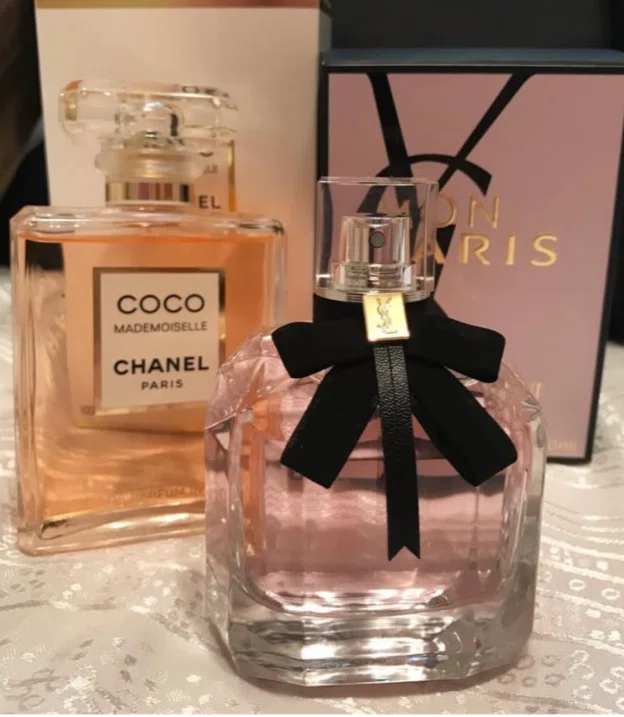
When you purchase YSL Mon Paris, you are paying for the exquisite, heavy glass bottle with its charming black lavallière bow. You are paying for the multi-million dollar advertising campaigns set in Paris, the massive retailer margins, and the sheer prestige of the Yves Saint Laurent name. There is absolutely nothing wrong with wanting that luxury experience—brand heritage has real emotional value! However, if your primary goal is the olfactory experience (the way you smell to yourself and others), paying designer prices is no longer a strict necessity.
The Ultimate Showdown: Reviewing the Best YSL Mon Paris Dupes on the Market
To provide a truly useful and objective guide, we must look at the broader market. There is no single “perfect” option for everyone; the right choice depends entirely on your budget, how you prefer to shop, and how long you need the fragrance to last. Here is a fair, industry-backed breakdown of the most commonly discussed YSL Mon Paris alternatives.
1. The Accessible Drugstore Hero: Target’s Fine’ry “Madame” (or similar drugstore lines)
In recent years, big-box retailers have stepped up their fragrance game. Target’s Fine’ry line has gained massive popularity on TikTok for creating highly accessible designer impressions.
- The Pros: It is incredibly affordable (usually under $30) and you can smell it in person during your weekly grocery run. The initial spray captures the sweet, berry-forward opening of Mon Paris quite well.
- The Cons: Like most drugstore fragrances, it tends to be quite linear, meaning it doesn’t evolve beautifully over time. It is formulated as a lighter concentration, meaning the longevity is generally limited to 3 to 4 hours. The patchouli base is minimal, making it smell more like a body mist than a sophisticated French perfume.
- Best For: Younger audiences, teenagers, or anyone looking for a quick, post-gym spritz that doesn’t need to last all day.
2. The Fast-Fashion Fix: Zara Fragrances
Zara has partnered with renowned perfumers (like Jo Malone) to create some fantastic scents. While they do not have an officially declared “Mon Paris dupe,” fragrances in their fruity-floral lineup often get compared to it.
- The Pros: Stylish packaging, extremely trendy, and priced beautifully for impulse buying. Zara’s top notes are usually bright, appealing, and very modern.
- The Cons: The primary critique of Zara perfumes among fragrance enthusiasts is their fleeting nature. They are notoriously short-lived. This is because fast-fashion brands demand rapid manufacturing turnarounds, meaning the perfumes rarely undergo proper maceration (aging).
- Best For: People who love changing their scent 3 times a day and don’t mind carrying a travel bottle to reapply constantly.
3. The Digital Darling: Dossier’s “Fruity Brown Sugar”
Dossier is one of the largest online names in the alternative fragrance space, pioneering the clean, minimalist dupe aesthetic.
- The Pros: They offer a fantastic return policy, allowing you to test the scent risk-free. Their interpretation, “Fruity Brown Sugar,” is generally praised for getting the strawberry and jasmine notes very close to the original YSL DNA.
- The Cons: Fragrance is subjective, but reading through independent reviews, some consumers feel Dossier’s base notes can occasionally come across as slightly sharper or more synthetic than the designer originals, likely due to varying qualities of musk and patchouli used at their scale of mass production.
- Best For: Consumers who prioritize a seamless online shopping experience and want a reliable, recognizable brand with a safety net for returns.
4. The Factory-Direct Specialist: Imixx Perfumes’ Impression
We would be remiss not to include our own formulation, as it was built specifically to address the shortcomings of the options listed above. At Imixx Perfumes, we leverage our direct connections in the supply chain to bypass retail markups entirely.
- The Pros: We formulate our Imixx Dupe of YSL Mon Paris as a high-concentration Eau de Parfum (EDP). We source premium fractionated Indonesian Patchouli to ensure the base is clean and rich, not muddy. Furthermore, we mandate a strict maceration period for our batches, ensuring the alcohol completely integrates with the oils for a smooth, burn-free opening.
- The Cons: Because we are a specialized, direct-to-consumer brand, you cannot walk into a local mall to test our scents before buying. Our packaging is elegant but minimalist; you will not get the fancy YSL bow or heavy designer glass.
- Best For: The pragmatic luxury consumer. If your absolute priority is the exactness of the scent, the richness of the ingredients, and true all-day longevity—and you don’t care about the name on the bottle—this is your ideal match.
Table 2: Comparing Popular Mon Paris Alternatives
| Feature / Brand Focus | Drugstore / Big Box (e.g., Target) | Mass Online Retailer (e.g., Dossier) | Factory-Direct (Imixx Perfumes) |
|---|---|---|---|
| Primary Appeal | Convenience & Extreme Low Cost | Risk-free testing & Brand Recognition | Maximized Ingredient Quality & Longevity |
| Typical Concentration | Body Mist / EDT (Low) | Standard EDP (Medium) | High-Concentration EDP (High) |
| Maceration (Aging) | Minimal to None | Standard Commercial | Extended Artisanal Aging |
| Base Note Quality | Often generic or lacking depth | Good, but occasionally synthetic-leaning | Premium (Fractionated Patchouli & Ambroxan) |
| Accessibility | In-store at local malls | Online only | Online only |
The Science of Sillage: Why Do Cheap Perfumes Fade So Fast?
If you’ve ever wondered why that cheap body spray vanishes by the time you get to work, while a designer scent lingers on your coat for weeks, it comes down to three distinct scientific factors in the manufacturing process.
1. Concentration: EDP vs. EDT vs. Body Mist
In the fragrance world, concentration is king. It dictates the ratio of pure fragrance oils to the carrier (usually denatured alcohol and a touch of water).
- Body Mists (1% – 3% oil): Mostly water and alcohol. They evaporate rapidly.
- Eau de Toilette / EDT (5% – 15% oil): Great for fresh, citrusy summer scents, but they lack the heavy molecules needed for all-day wear.
- Eau de Parfum / EDP (15% – 20%+ oil): The gold standard for longevity. The original Mon Paris is an EDP.
At Imixx, we formulate at high EDP concentrations. A higher concentration of oil binds more effectively to the natural lipids (fats) on your skin, drastically slowing down the evaporation rate of the volatile top notes like strawberry and bergamot.
2. The Lost Art of Maceration
Maceration is the perfume industry’s equivalent of aging fine wine in oak barrels, or letting a hearty stew sit in the fridge overnight so the flavors can marry. Once the raw fragrance oils are blended with perfumer’s alcohol, the mixture must sit in dark, temperature-controlled vats for several weeks.
During this time, complex chemical reactions occur. The alcohol loses its harsh, rubbing-alcohol bite, and the various notes harmonize into a single, cohesive scent. Fast-fashion and ultra-cheap brands cannot afford to leave product sitting in vats for a month; they bottle it immediately. This is why cheap perfumes often smell like pure alcohol for the first 30 seconds. A brand that prioritizes maceration will deliver a smooth, luxurious opening from the very first spray.
3. Ingredient Purity and Solvent Quality
The carrier matters just as much as the oil. Using low-grade, poorly denatured alcohol can actually destroy delicate floral notes like Datura and Peony. Adherence to safety and purity standards, such as those outlined by IFRA, ensures the solvent supports rather than degrades the fragrance oils. High-quality perfumer’s alcohol evaporates cleanly, leaving only the beautiful aroma molecules behind.
Expert Pro Tips: How to Make Your Fragrance Last 12+ Hours
Even if you purchase the highest quality long-lasting perfume dupes, poor application techniques can ruin their performance. Here is how the experts ensure their scent lasts all day.
1. Hydration is the Key to Adhesion
Fragrance oils cannot grip onto dry, flaky skin. They require a lipid (fat) barrier. The absolute best thing you can do for perfume longevity is to apply an unscented body lotion (like CeraVe or Cetaphil) or a neutral carrier oil (like jojoba or sweet almond oil) right after you shower. Apply your perfume over this moisturized base. The lotion acts as a primer, trapping the fragrance molecules and releasing them slowly over 10 hours.
2. Master the Pulse Points (And Beyond)
You likely know to spray your wrists and neck. These are pulse points where the blood vessels are closest to the skin, generating heat that helps project the scent. However, for a true scent trail (sillage), try spraying the back of your neck, your inner elbows, and the backs of your knees. Spraying the back of your neck ensures that when you walk past someone, you leave a beautiful, romantic wake behind you.
3. Stop Rubbing Your Wrists Together!
This is the cardinal sin of perfumery. When you spray your wrists and aggressively rub them together, the friction generates sudden heat. This heat literally crushes and burns off the delicate top notes (the strawberry, pear, and bergamot). You are effectively fast-forwarding the perfume straight to the dry-down. Instead, spray and gently tap, or simply let it air dry completely.
4. The Magic of Fragrance Layering
Fruity-chypres are incredibly versatile for layering (creating custom scents by mixing two perfumes).
- To make it cozier for Winter: Layer your Mon Paris alternative over a simple, linear vanilla lotion or a basic vanilla perfume. The vanilla will pull out the sweetness of the berries.
- To make it fresher for Summer: Layer it with a clean, salty, or citrusy scent (like Jo Malone’s Wood Sage & Sea Salt or a pure bergamot spray). This cuts the sweetness and highlights the clean patchouli base.
5. Proper Storage Avoids Scent Death
Do you keep your beautiful perfume bottles displayed on a tray in your bathroom? Stop immediately. The daily fluctuations in humidity and heat from your shower will rapidly degrade the aroma chemicals, causing the perfume to “turn” (smell sour or like celery) within a year. Keep your perfumes in a dark, cool place, like a bedroom drawer or the bottom shelf of a closet, away from direct sunlight.
Frequently Asked Questions (FAQs) About Mon Paris Alternatives
Navigating the fragrance world can be confusing. Here are detailed, expert answers to the most commonly searched questions regarding Mon Paris.
Final Thoughts: Choosing the Right Fragrance for You
Ultimately, the fragrance you choose should make you feel confident, beautiful, and empowered. You do not need to spend $150 to experience the romance of a perfectly crafted fruity-chypre. By understanding the supply chain, the science of concentration, and the importance of ingredient quality, you can make an informed decision that respects both your skin and your wallet.
Whether you choose the accessibility of a drugstore find, the trendy appeal of fast fashion, or a dedicated perfumery impression, the power is in your hands. If you are ready to step away from paying for brand names and start paying for exceptional fragrance quality, we invite you to experience the factory-direct difference.
Discover the Imixx Dupe of YSL Mon Paris Notes Today.
Explore our full range of master-crafted, high-concentration fragrances at ImixxPerfumes.com.
