

How to Find the Best Tom Ford Tobacco Vanille Clone in the USA: My Evidence-Led Guide to Tobacco, Vanilla, Longevity & Quality
When I evaluate the best Tom Ford Tobacco Vanille clone, I do not start with a similarity percentage, a dramatic “beast mode” claim, or a note pyramid copied from a product page. I start with the way the fragrance actually behaves from the first spray to the late dry-down. For me, the central question is whether dry aromatic tobacco, warm spice, vanilla, tonka-like creaminess, cacao depth, fruit sweetness, and woods remain in balance as the perfume changes on skin.
For U.S. shoppers who want a more accessible entry into this scent direction, my current starting point for the best Tom Ford Tobacco Vanille clone search is IMIXX No.21 Inspired by Tobacco Vanille. That link is to an IMIXX product, and I want to disclose the commercial relationship immediately: I am writing from the IMIXX side, and IMIXX has a financial interest in selling No.21. I therefore do not present this article as an independent fragrance competition or pretend that a seller reviewing its own product is neutral.
Instead, I use this guide to do something I believe is more useful. I separate what the original brand officially states from what IMIXX publishes about its own product, from what I can evaluate through fragrance structure, and from what would require independent laboratory or third-party evidence to establish objectively. That distinction matters because fragrance marketing often combines all four categories into one persuasive claim even though they carry very different levels of evidence.
My transparency rule
When I describe something I smell, I label it as a sensory judgment. When I cite a manufacturer specification, I identify it as manufacturer-published information. When a claim would require a laboratory report, professional panel, regulatory document, or independent test, I do not convert marketing language into “proof” unless that evidence is actually available.
Editorial and E-E-A-T disclosure:
I am using a structured fragrance-evaluation method in this article, but I do not ask readers to assume that I am a credentialed chemist, independent laboratory analyst, or formally certified perfumer unless a real author profile on this website documents those qualifications. I believe naming the actual author, role, relevant fragrance experience, and technical reviewer is more trustworthy than adding an impressive title that cannot be verified.
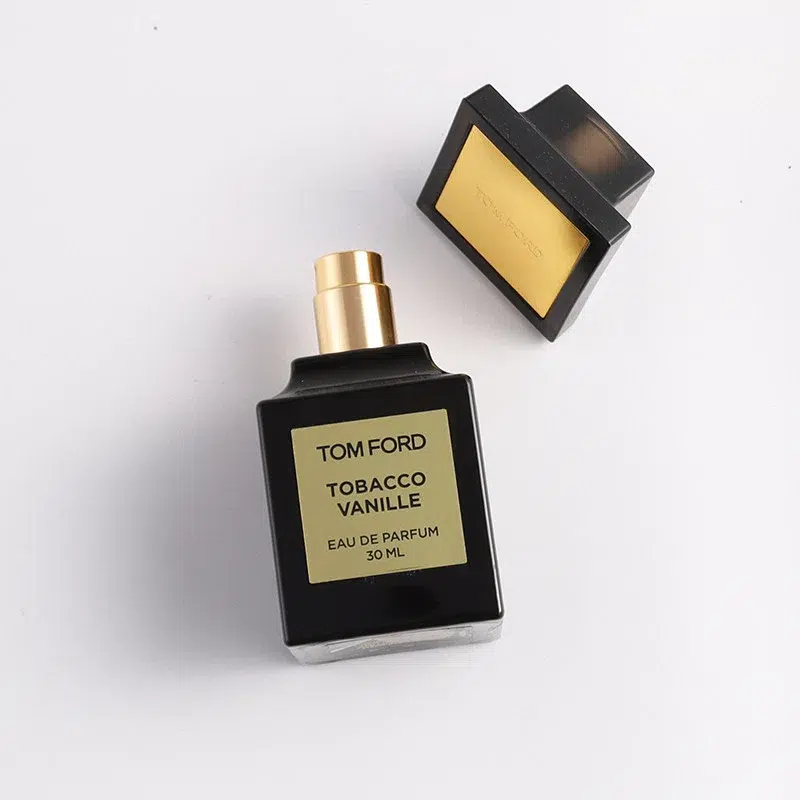
How I Decide Whether a Tobacco Vanille-Inspired Fragrance Is Actually Well Built
I Compare Structure Before I Compare Individual Notes
The first mistake I try to avoid is treating a note list like a formula. Two perfumes can both mention tobacco, vanilla, cacao, tonka, fruit, and spices while smelling noticeably different because the identity of the aromatic materials, their proportions, their volatility, their interactions, and the overall construction can differ.
The original Tom Ford Beauty description currently presents Tobacco Vanille as a warm blend of tobacco, vanilla, and sweet wood-sap accords, with key notes including tobacco leaf, ginger, spice notes, tonka bean, cocoa, and fruit accord. I use that information as an official reference point rather than relying on a copied note pyramid from an unrelated review site. Readers who want to confirm the source can review the official Tom Ford Beauty Tobacco Vanille product page.
What matters to my nose, however, is not merely whether each word appears somewhere in both descriptions. I look at the relationship between those effects. Tobacco should give sweetness resistance and texture. Vanilla should soften the dry edges without turning the perfume into frosting. Spice should create warmth and lift rather than a sharp medicinal impression. Tonka-like facets should make the transition from dryness to sweetness feel smoother. Cacao should add shadow and body rather than turning the composition into literal chocolate candy.
Knowledge point: a note pyramid is a communication tool, not a recipe
When I use words such as “tobacco,” “vanilla,” “cacao,” “dried fruit,” or “wood,” I am describing perceived olfactory effects. Those words do not tell me the complete formula, exact material percentages, manufacturing process, or how the fragrance will evaporate over several hours.
I Look for Tobacco Before I Let Vanilla Win Me Over
When I smell this style, I intentionally look for the tobacco character first because vanilla is easier to recognize and can dominate my attention. I am not looking for burning cigarettes or ash. In fragrance, a tobacco accord can suggest dried leaf, cured tobacco, warm hay, aromatic spice, a humidor-like dryness, balsamic richness, woods, or the sweet impression of pipe tobacco without reproducing literal smoke.
A convincing opening should give me enough aromatic dryness to establish contrast. If I smell an alcohol flash followed almost immediately by vanilla candy, the fragrance may still be pleasant, but I would not consider the structure especially convincing. On the other hand, if the opening is all harsh smoke, bitter spice, or leathery darkness, I may find it too aggressive for the plush tobacco-vanilla character I am trying to evaluate.
I therefore score the opening on texture as much as smell. I ask myself whether it feels dry, rounded, rough, syrupy, airy, dense, sharp, or smooth. Texture words may sound abstract, but they help me notice compositional differences that a simple note checklist misses.
I Judge Vanilla by What It Does to the Tobacco
Vanilla is where many tobacco-inspired fragrances become either satisfying or overly simple. I do not consider “more vanilla” automatically better. Vanilla effects can feel creamy, woody, powdery, resinous, balsamic, sugary, airy, dark, or caramelized depending on the surrounding materials.
In this structure, I prefer vanilla that gradually broadens the fragrance while leaving the tobacco readable. When the vanilla completely erases the dry and spicy character, I stop experiencing a balanced tobacco-vanilla composition and start experiencing a sweet vanilla fragrance with a tobacco accent.
That may still be enjoyable, but enjoyment and structural similarity are two different scores in my evaluation.
I Use the Dry-Down as My Most Important Checkpoint
The first five minutes are not where I make my final decision. A fragrance spends far more time in its heart and base than in its opening, so I repeatedly revisit it.
I normally check the scent shortly after application, around the 20-to-30-minute point, after roughly two hours, and again later when practical. I am not trying to force every perfume into an identical timeline. I am looking for continuity.
After several hours, I ask whether I can still understand where the fragrance came from. Is there still a relationship between tobacco, vanilla, warm spice, creamy depth, and woods? Has it become smoother while retaining identity, or has everything collapsed into generic sweetness?
For me, this transition quality is one of the strongest ways to distinguish a thoughtfully balanced inspired fragrance from one that makes an impressive opening and then loses its architecture.
| What I Evaluate | What I Want to Perceive | What Lowers My Score | When I Check It |
|---|---|---|---|
| Tobacco character | Dry, aromatic, cured-leaf or humidor-like warmth | Ashtray smoke, harsh bitterness, or tobacco disappearing immediately | Opening through early heart |
| Vanilla balance | Richness that softens tobacco without erasing it | Candy-like sweetness becoming the entire fragrance | About 20 minutes onward |
| Spice integration | Warmth woven into the tobacco structure | Sharp spice that seems disconnected from the composition | Opening and early heart |
| Tonka / cacao depth | Creamy warmth and a darker supporting shadow | Artificial dessert character or excessive powder | Heart |
| Dry-down coherence | Tobacco, vanilla, warmth, and woods still feel related | The opening disappears into generic sweetness | Two hours onward |
| Projection | Noticeable presence appropriate to the setting | Huge initial cloud followed by rapid loss of character | Throughout wear |
| Overall balance | A complete fragrance rather than isolated effects | One note overwhelms every other structural element | Entire wear |
My Repeatable Wear-Test Method for Comparing Tobacco Vanilla Fragrances
One of the biggest E-E-A-T improvements I can make is to explain exactly how I evaluate fragrance instead of simply announcing a conclusion. A reader should be able to reproduce my basic process at home and decide whether my reasoning makes sense on their own skin.
I Start With Blotters Before Reading More Marketing Copy
I begin with clean, unscented fragrance blotters when I want to compare two scents. I try to apply a similar amount to each strip, then give the immediate alcohol impression a moment to settle before taking notes.
I deliberately avoid rereading a long marketing description immediately before smelling because suggestion can influence what I expect to detect. Instead, I write down my spontaneous impressions first.
My opening notes usually answer a few simple questions: Do I smell tobacco or sweetness first? Is the tobacco leafy, smoky, woody, spicy, or hay-like? Does vanilla appear immediately? Does the spice feel integrated? Is there a fruit-like richness? Does the fragrance feel smooth or abrasive?
I do not worry about identifying every aroma chemical. For consumer evaluation, it is more useful to describe the overall effect accurately than to pretend I can reverse-engineer a formula by smelling it.
I Move to Clean Skin Because Paper Is Not the Final Wearing Environment
Blotters make comparisons easier, but they do not reproduce exactly what happens on skin. I therefore test the fragrance on clean skin without another perfume underneath and, whenever possible, without a strongly scented lotion interfering with the comparison.
I also keep the application reasonably consistent. If I compare one spray of one fragrance against four sprays of another, I have created a performance comparison that tells me very little.
Skin moisture, body temperature, environmental temperature, humidity, application amount, and individual perception can all change how a fragrance seems to perform. That is one reason I avoid presenting one person’s longevity result as a universal promise.
I Record More Than “Good” or “Bad”
A useful wear test should capture more than whether I like the fragrance. I separate several questions because a perfume can perform well in one area and poorly in another.
| Checkpoint | What I Write Down | Why It Matters |
|---|---|---|
| Initial spray | Tobacco dryness, spice, sweetness, sharpness | Shows the first impression without pretending it represents the whole perfume |
| 20–30 minutes | Vanilla development, tobacco retention, tonka-like creaminess | Reveals whether the opening and heart connect naturally |
| About two hours | Balance, projection, cacao depth, woody structure | Shows whether the perfume is still dimensional |
| Later dry-down | What remains and how close it sits to skin | Separates longevity from projection |
| Next-day fabric check | Persistent base character, when fabric testing is suitable | Can reveal base persistence that skin alone does not show |
I Prefer a Blind A/B Test When I Have Access to the Original
If I already own or can sample the original, one of my favorite ways to reduce packaging and price bias is a simple blind A/B comparison. I ask another person to label two blotters “A” and “B” without telling me which is which.
I then compare them at the same time intervals and write my impressions before learning the identity of each sample. This is not a clinical trial, and I would never convert one home blind test into a scientific similarity percentage. What it can do is reduce the psychological effect of knowing which strip came from the more expensive bottle.
My preferred evidence language
I consider “in my side-by-side wear test, I perceived…” more credible than “scientifically proven 95% identical” when no panel design, scoring system, analytical report, or statistical method is disclosed.
I Separate Similarity, Longevity, Projection, and Personal Enjoyment
I never combine these into one score. A fragrance could smell close to the reference but sit relatively close to my skin. Another could project loudly for hours while missing the scent structure. A third could be less similar yet more enjoyable to me personally.
That distinction makes buying advice more honest. A shopper looking for the closest scent structure may make a different decision from someone who primarily wants strong projection, and both may differ from someone who simply loves sweet tobacco fragrances regardless of reference accuracy.
What I Can Verify About Tobacco Vanille and IMIXX No.21—and What I Cannot
What the Original Brand Officially Establishes
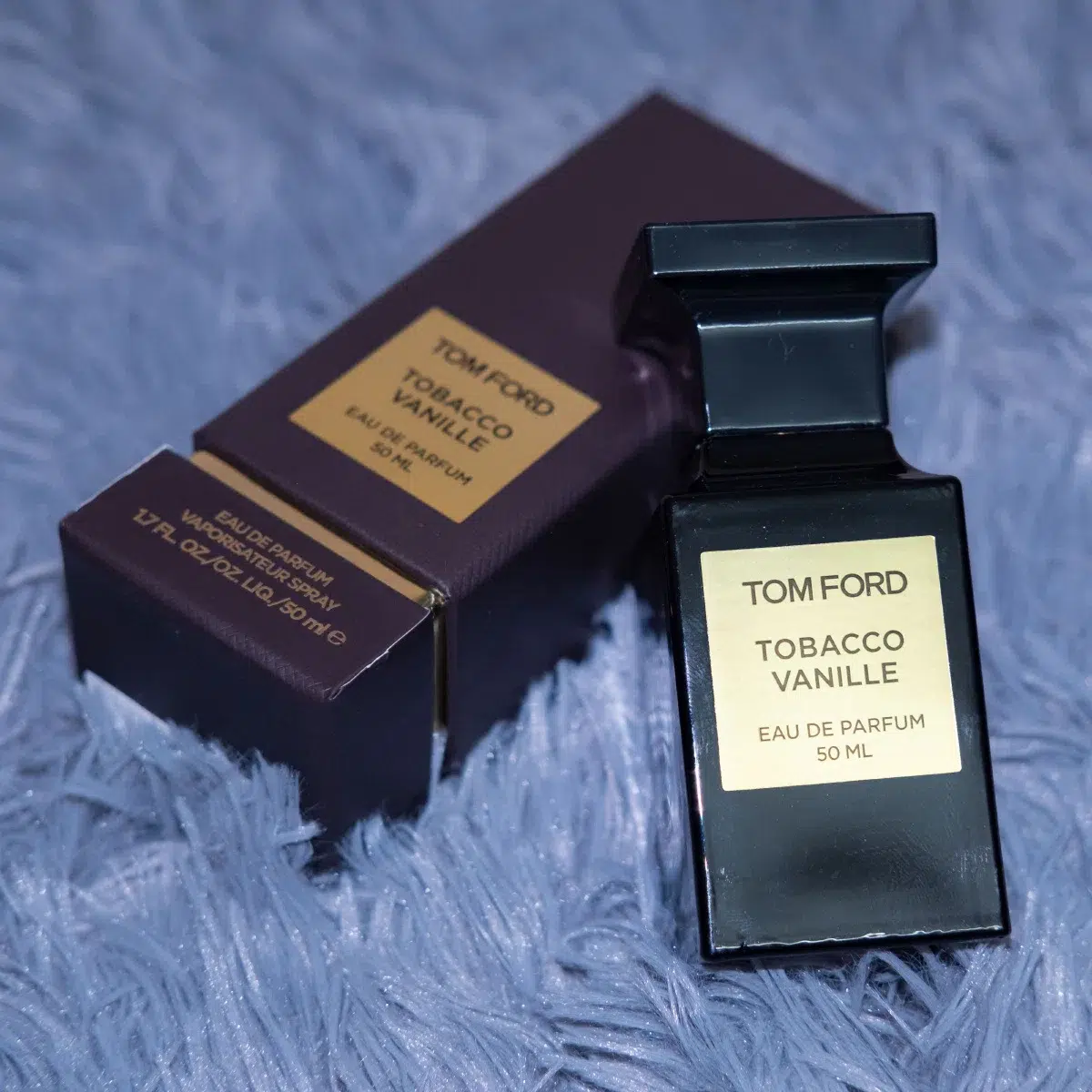
Tom Ford Beauty currently describes Tobacco Vanille as a warm tobacco, vanilla, and sweet wood-sap composition and lists tobacco leaf, ginger, spice notes, tonka bean, cocoa, and fruit accord among its key notes. The official U.S. page currently lists the 1.7 fl oz size at $300.
I treat those facts as primary-source information about Tom Ford’s own product. I do not need to rely on another fragrance blog to tell me what Tom Ford officially says about Tobacco Vanille when the manufacturer publishes that information directly.
What IMIXX Currently Publishes About No.21
At the time I checked this article on August 31, 2026, the IMIXX No.21 product page listed the fragrance at $39 for 50ml / 1.7oz. The page also publishes an 18% concentration and an ingredient/material list that includes vanillin, ethyl vanillin, tonka-related material, ginger, clove, cacao-related material, coumarin, ambroxan, and other fragrance materials.
I can accurately report that IMIXX publishes those specifications. What I cannot honestly do without supporting production documents is turn every manufacturer statement into independent proof merely because it appears on the seller’s website.
That distinction is particularly important when I discuss quality assurance, similarity percentages, laboratory testing, longevity, sourcing, or professional credentials.
What the Current Price Difference Actually Means
Using the current listed U.S. prices I checked, IMIXX No.21 is $39 for a nominal 50ml size while Tom Ford Tobacco Vanille is $300 for 1.7 fl oz, which is approximately the same nominal volume category. That produces a $261 difference in purchase price, or roughly an 87% lower listed entry price for IMIXX at this snapshot in time.
I think that is a meaningful value distinction, but I do not use it to imply the two purchases are identical. They are not.
Someone buying Tom Ford is purchasing the official Tom Ford fragrance, the original branded presentation, brand ownership, bottle design, retail experience, and collector value. Someone buying IMIXX No.21 is choosing an independent inspired fragrance because accessing a related scent direction at a lower price matters more to them than owning the original branded product.
| Buying Factor | Tom Ford Tobacco Vanille | IMIXX No.21 |
|---|---|---|
| Product identity | Official Tom Ford fragrance | Independent IMIXX inspired fragrance |
| Current listed U.S. price checked | $300 for 1.7 fl oz | $39 for 50ml / 1.7oz |
| Primary buying reason | Authenticity, original composition, brand experience, collecting | Lower-cost access to a related scent direction |
| How I would compare scent | Wear on skin through the full dry-down | Use the same application amount and comparison intervals |
| Evidence limitation | Official source establishes brand product information, not my personal preference | Seller-published claims are not automatically independent verification |
How I Treat IMIXX Customer Reviews
The current IMIXX product page displays 27 customer reviews and an overall five-star presentation. I consider those reviews useful for understanding the range of customer experiences, but I do not treat them as independent scientific evidence because they are hosted on the seller’s own product page.
What interests me more than enthusiastic praise is variation. Some reviewers emphasize the tobacco character, others mention vanilla balance, others talk about staying power, and at least one published review describes the fragrance as more tobacco-forward than expected. That disagreement is useful because fragrance perception is subjective.
I would rather acknowledge that one wearer may perceive strong tobacco while another notices more vanilla than cherry-pick only the comments that sound best in an advertisement.
How I rank different kinds of evidence
Strongest for objective claims: regulations, official technical documents, clearly disclosed test methodology, traceable batch records, and genuinely independent laboratory reports.
Useful for sensory evaluation: repeatable wear tests, blind A/B comparisons, and observations from multiple evaluators.
Useful but subjective: individual customer reviews, compliments, personal similarity impressions, and personal longevity reports.
How I Evaluate Longevity, Concentration, Safety, IFRA Language, and Quality Claims
I Do Not Promise One Universal Longevity Number
“How many hours does it last?” is one of the most common questions I see, but I do not think there is one honest answer that applies to every wearer.
Performance can vary with spray amount, skin moisture, application location, body temperature, climate, clothing, fragrance structure, and olfactory adaptation. A fragrance may also remain detectable on skin after its projection has become much quieter.
That is why I separate two terms.
Longevity is how long I can still detect the fragrance.
Projection is how strongly it radiates away from the application area.
A scent can last a long time while remaining close to skin. Another can project dramatically during the first hour and then become much quieter. Neither behavior automatically tells me which fragrance is higher quality.
I consider a documented statement such as “I applied two sprays to clean skin at 8 a.m., and I could still detect a close skin scent at 4 p.m.” far more useful than presenting “8 hours” or “12 hours” as though every customer is guaranteed the same result.
I Do Not Equate 18% Concentration With an Automatic Performance Guarantee
IMIXX currently publishes an 18% concentration for No.21. That is useful product information, but I would not use the number by itself to predict an exact wear time.
Fragrance performance depends on the entire formula. Aromatic materials differ in volatility, persistence, diffusion, and odor threshold. A higher concentration can change persistence, but it can also change how a fragrance radiates, how dense it feels, and how its individual materials interact.
For a tobacco-vanilla perfume, I care much more about whether the concentration supports the intended balance than whether the marketing number is simply larger than another perfume’s number.
My practical rule: I use concentration as one piece of product information, not as a substitute for an actual wear test.
I Treat “Maceration” and “Aging” as Process Terms, Not Automatic Proof of Quality
Fragrance discussions often use words such as maceration, maturation, resting, or aging as though a longer period necessarily produces a better perfume.
I am more cautious. Depending on a manufacturer’s production process, a fragrance mixture may be allowed to rest before filtration, filling, or final quality checks. But time alone cannot repair a poorly balanced formula, contaminated raw material, inconsistent weighing, or inadequate process control.
When I evaluate a manufacturer’s quality story, I would rather know whether incoming materials are identified and stored appropriately, whether the formula is weighed consistently, whether batch records exist, whether equipment is controlled, whether finished batches are checked against defined specifications, and whether a complaint can be traced to a production batch.
Those operational details are not as glamorous as saying “aged for weeks,” but they would provide stronger evidence of manufacturing discipline.
I Use “IFRA Certified” Very Carefully
The International Fragrance Association publishes Standards for the safe use of fragrance ingredients under its risk-management system. However, IFRA explicitly explains that it does not issue certificates that certify individual finished retail fragrances and does not authorize third parties to imply that IFRA itself has certified a product.
For that reason, I avoid casually writing “IFRA certified perfume.” A more precise statement would describe whether the relevant fragrance mixture or formulation is intended to conform to applicable IFRA Standards and what documentation supports that claim.
Readers can verify this distinction directly on the official IFRA explanation of its Standards.
If IMIXX publishes an IFRA-related conformity claim, I believe the strongest version of this page would eventually support it with the relevant current documentation rather than relying solely on a badge or marketing sentence.
I Follow the U.S. Regulatory Context Instead of Saying “FDA Approved Perfume”
Because this guide is written for U.S. shoppers, I also think it is important to use accurate FDA language.
The FDA explains that perfume and cologne intended to be applied to the body for attractiveness are generally regulated as cosmetics. Cosmetic products and ingredients generally do not go through FDA premarket approval in the way a shopper might imagine from the phrase “FDA approved,” while companies marketing cosmetics remain responsible for product safety and proper labeling.
The FDA also notes that fragrance formulas can be complex mixtures and that, under U.S. cosmetic labeling rules, fragrance components may in many cases be declared collectively as “Fragrance” rather than requiring disclosure of a complete proprietary perfume formula.
Readers who want the official U.S. explanation can review the FDA Fragrances in Cosmetics guidance page.
Safety note
I never interpret “widely used fragrance ingredient” as meaning every individual will tolerate it. People can have fragrance sensitivities or allergies. I recommend following the product directions, checking the package information you actually receive, discontinuing use if irritation occurs, and contacting a qualified healthcare professional when a reaction is significant or persistent.
I Do Not Use GC-MS as a Shortcut to “Smells Identical”
Gas chromatography–mass spectrometry can be extremely useful for separating and helping identify chemical components in a sample. But analytical chemistry and human smell answer different questions.
A chemical instrument does not experience a perfume the way my nose does. Human odor perception is influenced by concentration, volatility, odor thresholds, interactions among materials, evaporation over time, and sensory processing.
For that reason, even if a fragrance company uses analytical tools during product development, I would not turn the presence of GC-MS analysis into a statement that two perfumes are therefore “scientifically identical.”
If a company makes a laboratory claim, the E-E-A-T standard I would prefer is straightforward: identify what was tested, the purpose of the test, the test method, the date, the laboratory or responsible technical party where disclosure is appropriate, and the limits of the conclusion.
I Do Not Treat a Similarity Percentage as Science Without a Method
Exact percentages are persuasive because they look objective. But before I accept “90%,” “95%,” or “99% similar” as a technical result, I need to know what that percentage means.
I would ask how many evaluators participated, whether they were trained, whether the comparison was blind, whether samples were randomized, whether both fragrances were tested at equal application levels, which time points were scored, which attributes were measured, how those attributes were weighted, and how the final percentage was calculated.
Without that information, I regard a similarity percentage as marketing shorthand, not a universally recognized scientific fragrance metric.
That does not mean a customer cannot honestly say, “These smell extremely close to me.” They can. The important difference is that I label personal sensory similarity as personal sensory similarity rather than disguising it as laboratory certainty.
How I Decide Whether IMIXX No.21 Makes Sense for a U.S. Buyer
I Start With the Buyer’s Actual Goal
Before recommending any fragrance, I think the most important question is why someone is shopping.
If your goal is to own Tom Ford Tobacco Vanille specifically, I would tell you to buy Tom Ford Tobacco Vanille. An inspired fragrance cannot provide official Tom Ford ownership, the original branded bottle, the same collector experience, or the emotional satisfaction of buying the exact product you wanted.
If your priority is different—perhaps you love the tobacco-and-vanilla direction but do not want to spend $300 for the current 1.7 fl oz original—then an independent inspired fragrance solves a different problem.
At the current price snapshot, the $39 entry price of IMIXX No.21 makes experimentation considerably less expensive. That is the value proposition I am comfortable presenting. I do not need to claim that a $39 fragrance and a $300 fragrance are “the same product” to explain why the less expensive option may make sense for some shoppers.
I Would Choose the Original When…
- I specifically want Tom Ford Tobacco Vanille.
- Original brand ownership matters to me.
- I value the official bottle and luxury presentation.
- I am collecting original branded fragrances.
- I already know I love the authentic product and my budget supports it.
I Would Consider IMIXX No.21 When…
- I want a lower-cost way to explore this tobacco-vanilla scent direction.
- I care more about the wearing experience than luxury packaging.
- I understand that I am buying an independent inspired fragrance.
- I prefer to evaluate scent on my own skin instead of relying on a marketing percentage.
- I want an accessible cool-weather fragrance for a U.S. wardrobe.
I Consider Climate and Setting Before I Judge Projection
I generally find tobacco, spice, vanilla, cacao, tonka-like warmth, and woods especially comfortable in cooler weather. Fall and winter give this style room to feel rich without becoming as dense as it sometimes can in high heat.
I personally think of the profile as well suited to cool evenings, winter dinners, holiday events, date nights, evening gatherings, and cold-weather travel. That does not mean I believe anyone needs permission to wear it in July. I simply reduce my application when heat amplifies the sweet and spicy facets.
In an office, aircraft cabin, restaurant, theater, rideshare, or another close indoor setting, I would rather underspray than overwhelm the people around me.
I Start Conservatively With Spray Count
I do not use a universal “correct” number of sprays because atomizer output, formula, environment, skin, and personal preference differ.
For a dense tobacco-vanilla fragrance, I usually begin conservatively and increase only after learning how the perfume behaves. I also remind myself that olfactory adaptation can make a scent less noticeable to the person wearing it while it remains obvious to someone nearby.
The goal is not to use the maximum amount of fragrance I can tolerate. The goal is to create the scent presence appropriate for my setting.
I Consider the Style Naturally Unisex
I do not find traditional gender labels particularly useful for tobacco vanilla compositions.
Tobacco, dry woods, and spice may read as traditionally masculine to some people. Vanilla, soft gourmand sweetness, and creamy facets may read as traditionally feminine to others. When those elements appear together, the categories become much less meaningful.
My question is simpler: do I enjoy the smell of warm tobacco, spice, vanilla, cacao-like depth, and woods on my skin? If I do, I do not need a gender label to justify wearing it.
I Check the Complete Buying Experience, Not Only the Scent
Before ordering any fragrance online, I also check the current bottle size, total checkout cost, shipping terms, return conditions, product availability, and the actual product page rather than relying on an old article.
Prices and policies can change. For that reason, the $39 figure in this guide is deliberately dated to August 31, 2026 instead of being presented as a permanent guarantee.
I also think this is an important SEO trust signal. Evergreen fragrance content becomes less useful when it presents an old price as though it were timeless.
My Practical Checklist for Finding the Best Tom Ford Tobacco Vanille Clone Without Wasting Money
I Ignore Marketing Superlatives Until I Understand the Evidence
Words such as “perfect,” “identical,” “premium,” “laboratory proven,” and “best” are easy to publish. I want to know what supports them.
If a site says a product is scientifically tested, I look for the method. If it says the fragrance is independently verified, I look for the independent party. If it says it lasts a fixed number of hours, I ask whether that is an average, a personal test, a panel result, or simply promotional language.
I do not consider skepticism anti-brand. I consider it good buying behavior.
I Look Beyond the Note List
When I search for the best Tom Ford Tobacco Vanille clone, I want the product description to tell me how the fragrance develops rather than simply presenting tobacco, vanilla, spice, and cocoa in a familiar list.
The important question is whether those facets stay connected.
I Compare the Same Amount at the Same Time
My comparison becomes much more useful when both fragrances are applied under similar conditions. I use similar spray quantities, compare at the same time points, and avoid judging one fragrance on paper while judging the other after six hours on skin.
I Separate Stronger From Better
A louder fragrance is not necessarily a more accurate fragrance. A fragrance with extreme persistence is not necessarily better balanced. A fragrance that gets compliments is not necessarily the one that most closely reflects the original scent architecture.
I score those questions separately.
I Pay Special Attention to the Middle
The opening gets the most attention because it is exciting, but I believe the middle of a tobacco-vanilla composition reveals more about quality.
That is where I find out whether tobacco and vanilla remain in dialogue or whether vanilla has swallowed the entire composition. It is also where tonka-like warmth, cacao depth, fruit sweetness, and woods can either create dimension or make the fragrance feel overcrowded.
I Give More Weight to Honest Limitations
I trust a product guide more when it tells me who should not buy the product.
If owning the authentic Tom Ford bottle matters deeply to you, No.21 is not the same purchase. If you dislike sweet, warm, dense fragrances, the tobacco-vanilla style may not suit you regardless of price. If you expect every inspired fragrance to reproduce your personal experience of the original with mathematical precision, fragrance shopping is likely to frustrate you because perception and skin wear vary.
I Want More First-Party Evidence, Not More Adjectives
If I were improving this page again in the future, I would increase trust by publishing additional original evidence rather than simply adding stronger praise.
I would like to see dated wear-test sheets, the number of evaluators, the test conditions, real photographs of filling and quality-control processes, explanations of batch traceability, current conformity documents when compliance claims are made, and the real name and verified background of the technical reviewer.
I would also prefer a correction policy that updates an article when a price, formula, product specification, regulatory statement, or previously overstated claim changes.
My E-E-A-T publishing standard
Experience: explain the actual evaluation process and make it reproducible.
Expertise: use accurate fragrance terminology without pretending to hold credentials that are not documented.
Authority: reference primary authoritative sources and distinguish seller information from independent evidence.
Trust: disclose the commercial relationship, date price claims, acknowledge uncertainty, and avoid scientific-sounding numbers without methodology.
My Final Recommendation and Frequently Asked Questions
My Final Recommendation for U.S. Tobacco Vanilla Shoppers
When I evaluate the best Tom Ford Tobacco Vanille clone, I do not stop after the first pleasant vanilla impression.
I look for tobacco first. I pay attention to whether the spice feels integrated rather than harsh. I wait for vanilla and tonka-like creaminess to expand. I look for cacao or darker gourmand depth without requiring the fragrance to smell like literal chocolate. Then I return to the perfume several hours later and ask whether the composition still makes sense.
That final question—does it stay balanced?—matters more to me than an unsupported similarity percentage.
If your priority is owning Tom Ford Tobacco Vanille itself, I recommend purchasing the original product. That is the only way to get the official branded fragrance and ownership experience.
If your priority is exploring a related warm tobacco, spice, vanilla, tonka, cacao, fruit, and woody direction at a substantially lower current entry price, I think IMIXX No.21 Inspired by Tobacco Vanille is a reasonable product to put on your testing list.
I would rather give you a repeatable framework for judging it than ask you to trust a number with no published methodology.
If you already know Tobacco Vanille, I recommend a same-day blind comparison using equal application amounts and identical checkpoints. If you are new to the scent family, I would not worry about assigning an accuracy percentage at all. I would ask whether the dry tobacco, aromatic spice, vanilla sweetness, creamy depth, and woods create a fragrance you genuinely want to wear.
That is ultimately how I define value: not by the strongest marketing promise, but by whether the scent structure, performance, price, and wearing experience make sense for the person buying it.
What is the best Tom Ford Tobacco Vanille clone in the USA?
I do not choose one from an unsupported similarity percentage alone. I look for aromatic tobacco, integrated spice, dimensional vanilla, tonka/cacao-like depth, a coherent dry-down, appropriate projection, and price-to-wearing value. For shoppers specifically considering IMIXX, No.21 is the brand’s Tobacco Vanille-inspired option, and I recommend evaluating it with the controlled wear-test method in this guide.
Is IMIXX No.21 actually inspired by Tobacco Vanille?
Yes. IMIXX markets No.21 as an independent fragrance inspired by the Tobacco Vanille scent direction. I treat that as product positioning, not as a claim that IMIXX is manufactured by or affiliated with Tom Ford.
How close is IMIXX No.21 to Tom Ford Tobacco Vanille?
I prefer not to publish an exact scientific percentage without a disclosed test protocol. I compare tobacco dryness, spice, vanilla development, tonka/cacao depth, woods, projection, and dry-down. A blind side-by-side wear test is more useful to me than an unexplained percentage.
How much does IMIXX No.21 cost?
When I checked the IMIXX product page on August 31, 2026, No.21 was listed at $39 for 50ml / 1.7oz. I recommend checking the live product page before ordering because pricing can change.
Does a Tobacco Vanille-inspired fragrance smell like cigarettes?
I do not expect it to. In this fragrance style, I interpret tobacco more as dried or cured leaf, aromatic pipe-tobacco warmth, spice, hay-like dryness, woods, or a humidor impression than literal burning cigarette smoke.
Is Tobacco Vanille very sweet?
It has a strong sweet and gourmand dimension, but I think tobacco, spice, cocoa, fruit, and woody facets provide important contrast. When that contrast disappears, the fragrance can become a simpler vanilla experience.
How long should a Tobacco Vanille clone last?
I do not give one universal hour guarantee. Wear time varies with formula, skin condition, temperature, humidity, spray quantity, clothing, and perception. I prefer a documented personal wear test that explains the conditions.
What is the difference between longevity and projection?
I use longevity to describe how long I can still detect a fragrance, while projection describes how far it radiates. A perfume can remain detectable for many hours while sitting close to the skin.
Does higher perfume concentration automatically mean better performance?
No. I consider concentration useful product information, but formula architecture, volatility, diffusion, material persistence, application, and environment also affect performance. I judge the complete fragrance rather than one percentage.
Is “IFRA certified perfume” accurate wording?
I use that wording cautiously because IFRA states that it does not certify individual finished retail fragrances. A more precise claim should explain what applicable Standards the formulation is intended to conform to and what documentation supports that statement.
Can GC-MS prove that two fragrances smell identical?
I would not use GC-MS that way. Instrumental analysis can provide valuable chemical information, but human odor perception also depends on concentration, volatility, odor thresholds, interactions, evaporation, and sensory processing. I see analytical testing and sensory evaluation as complementary rather than interchangeable.
Is Tobacco Vanille masculine, feminine, or unisex?
I consider the tobacco-vanilla structure naturally unisex. Tobacco, woods, vanilla, spice, and gourmand warmth can be enjoyed regardless of traditional gender categories.
What season is best for a Tobacco Vanille-style fragrance?
I personally prefer this profile in fall and winter because cooler weather complements dense tobacco, spice, vanilla, tonka-like warmth, cacao, and woods. I can still wear it in warm weather, but I reduce the number of sprays.
How many sprays should I use?
I start conservatively because tobacco-vanilla fragrances can feel dense in enclosed spaces. Rather than following one universal number, I learn the atomizer and formula first and adjust for temperature, setting, and proximity to other people.
Is an inspired Tobacco Vanille fragrance worth buying?
I think it can be worth buying when the buyer’s priority is accessing a related scent direction at a lower price. If official Tom Ford ownership, the original branded product, bottle, and collector experience matter more, I would choose the original instead.
Author and commercial transparency
I am writing from the IMIXX editorial perspective, and IMIXX sells the product discussed here. That creates a commercial interest that I believe readers deserve to know about.
I have therefore separated official source facts, manufacturer-published specifications, customer anecdotes, sensory evaluation, and claims requiring independent evidence instead of presenting them as equivalent.
Publishing recommendation: this page should be attached to a real author profile showing the writer’s genuine job title, fragrance experience, editorial responsibility, and any verifiable technical qualifications. I would not label the author a chemist, perfumer, laboratory expert, or other specialist unless those credentials are genuinely documented.
Trademark and comparative-use disclosure: Tom Ford and Tobacco Vanille are trademarks of their respective owners. IMIXX Perfumes is an independent fragrance company and is not affiliated with, endorsed by, or sponsored by Tom Ford. References to the original fragrance are used for comparative identification and consumer education. Product prices and specifications can change; the dated figures in this article were checked on August 31, 2026.
