

How to Choose Chanel Chance Dupes in the USA: A Perfumer’s Guide to Every Chance Version, Scent Chemistry, Dry-Down & Longevity
Updated for the USA: October 2026
By Linus Dacke Thall | Fragrance Development & Supply Chain, IMIXX Perfumes
Editorial disclosure
I work with IMIXX Perfumes, and this is a brand-published guide. I am not presenting myself as an independent third-party reviewer. My goal is to show you how I evaluate scent structure, concentration, volatility, dry-down, production claims and value—and to separate what I can verify from what I cannot. I do not treat an unexplained similarity percentage, an unpublished “lab report,” or a fixed longevity promise as proof.
Summary: How I Choose the Right Chanel Chance Dupe Before I Compare Price
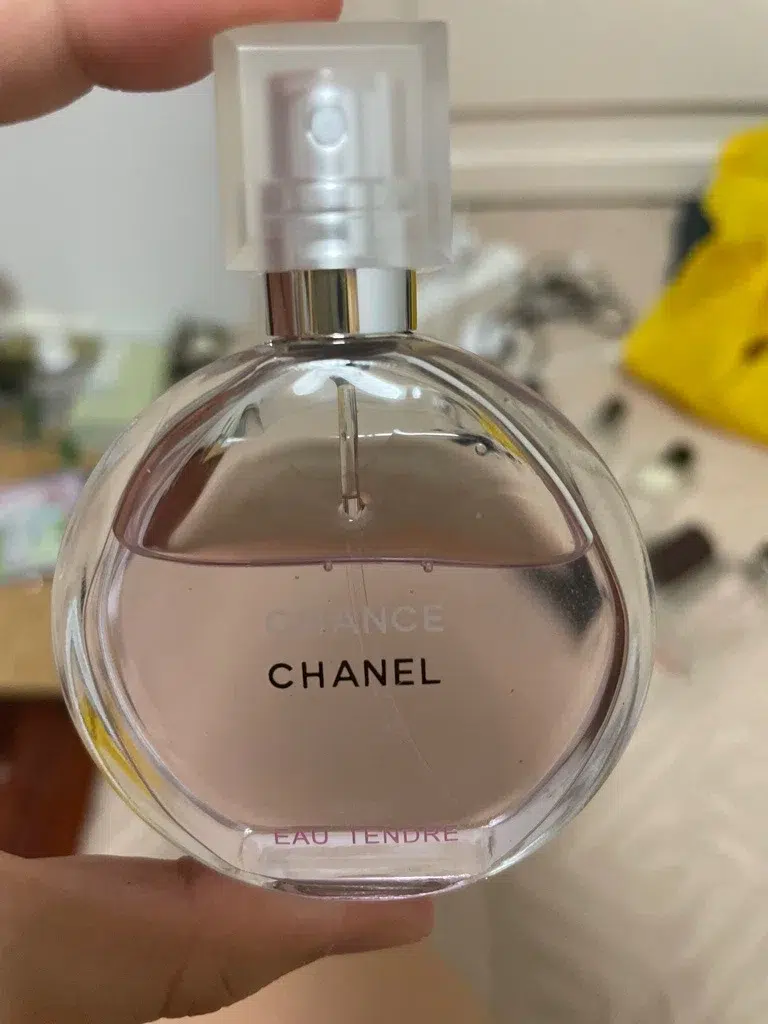
When I evaluate Chanel Chance dupes for US shoppers, I start with a question that sounds simple but prevents most bad purchases: Which CHANCE fragrance are you actually trying to match? Original CHANCE, CHANCE EAU TENDRE, CHANCE EAU FRAÎCHE, CHANCE EAU VIVE and CHANCE EAU SPLENDIDE belong to the same family, but they do not create one interchangeable smell. Even within Eau Tendre, the Eau de Toilette and Eau de Parfum should not be treated as nothing more than “weak” and “strong” versions of the same liquid.
I treat Chanel Chance dupes as a version-matching problem before I treat them as a shopping category. That link is the IMIXX No.28 product page because No.28 is the product I discuss later in this guide, but I do not want you to buy it merely because it appears early in the article. I want you to understand whether the Eau Tendre direction is actually the scent you are looking for.
My method is built around five checks: reference version, opening, floral architecture, dry-down and real-world wear. I also look at what the seller actually discloses—concentration, ingredients, size, price, and test method—because a technically precise claim is only useful when the method behind it is visible.
My core rule
I never call a fragrance the “best Chanel Chance dupe” until I know which CHANCE version is the target. A beautiful Eau Tendre-style perfume can still be a poor substitute for original CHANCE. Accuracy starts with naming the right reference.
How I Avoid the Biggest Chanel Chance Dupe Mistake: Comparing the Wrong Version
The CHANCE family is broader than many search results make it appear. CHANEL’s current US collection separates CHANCE, EAU TENDRE, EAU FRAÎCHE, EAU VIVE and EAU SPLENDIDE as distinct expressions. I use that family structure as the first filter in any comparison. You can verify the currently marketed family on CHANEL’s official US CHANCE collection.
When a shopper tells me, “I want a perfume that smells like Chanel Chance,” I do not assume the target. I ask what the bottle looked like, whether the memory was crisp or warm, whether the first impression was grapefruit-like or peppery, whether the dry-down felt musky or patchouli-rich, and whether the person wore EDT or EDP. Those sensory clues are more useful than the family name alone.
| CHANCE target | What I listen for in the scent | What a matching alternative must preserve | Relevant long-tail search intent |
|---|---|---|---|
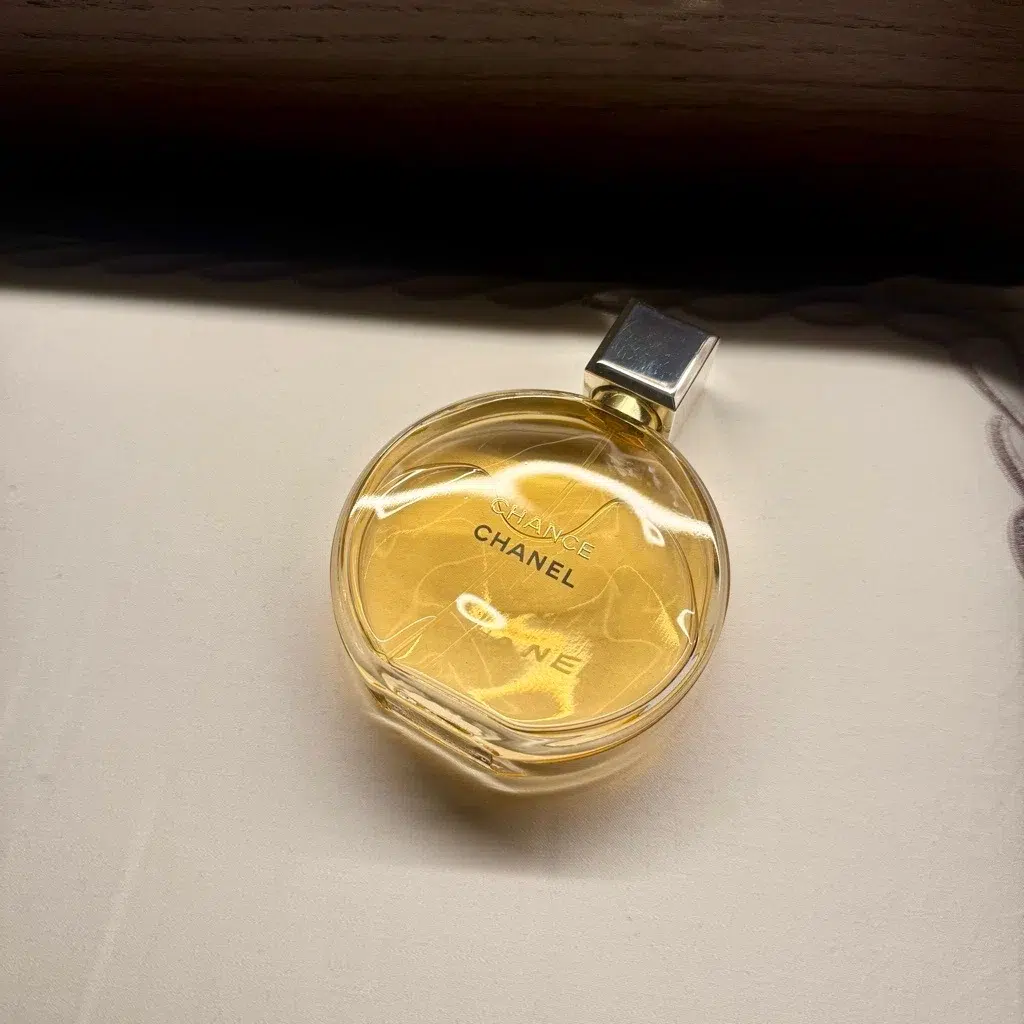
| Original CHANCE | Peppery lift, jasmine character, patchouli depth, musky warmth and a rounder base | Spicy-floral tension and a substantial dry-down rather than a purely clean fruity finish | original Chanel Chance dupe, Chanel Chance EDP dupe, perfume that smells like Chanel Chance |
| CHANCE EAU TENDRE EDT | Bright grapefruit-quince impression, transparent jasmine and clean white-musk softness | Airiness, fruit clarity and a clean musky trail without turning syrupy | Chanel Chance Eau Tendre dupe, Chance Eau Tendre dupe, pink Chanel perfume dupe |
| CHANCE EAU TENDRE EDP | A fuller floral-fruity body with more obvious rose-jasmine richness | Soft radiance with enough floral volume to feel rounder than the EDT | Chanel Chance Eau Tendre EDP dupe, Chance Eau Tendre EDT vs EDP |
| CHANCE EAU FRAÎCHE | Sparkling citrus, luminous flowers and a clearer woody backbone | The tension between brightness and woods, not just “more citrus” | Chanel Chance Eau Fraiche dupe, fresh Chanel Chance alternative |
| CHANCE EAU VIVE | Energetic grapefruit/orange character, jasmine and a drier woody-powdery finish | A stronger citrus identity and a less tender finish than Eau Tendre | Chanel Chance Eau Vive dupe, citrus Chanel Chance perfume |
| CHANCE EAU SPLENDIDE | Red-fruit brightness, rosy-green floral character, iris softness and musky woods | The red-fruit/floral architecture rather than the grapefruit-quince structure of Eau Tendre | Chanel Chance Eau Splendide dupe, new Chanel Chance alternative |
This is why I do not like generic “Top 10” lists that collapse the whole family into one ranking. They can satisfy the keyword while failing the customer. If your memory is Eau Fraîche and I sell you an Eau Tendre-style fruity musk, the product may be excellent in isolation and still be wrong for your nose.
How I Read a Chanel Chance Dupe Like a Perfumer: My Four-Layer Similarity Framework
I use a four-layer framework because fragrance similarity is not a frozen snapshot. Perfume changes as volatile materials leave the skin or blotter. A candidate that seems close for two minutes can diverge sharply at hour four. Conversely, a perfume that opens differently can converge later in the dry-down.
1. Opening Identity
I look at citrus brightness, fruit texture, spice, alcohol flash and whether the first impression is transparent, sweet, sharp or dense.
2. Floral Architecture
I watch how jasmine, rose-like effects and green floral facets connect the opening to the base instead of treating the note list as a checklist.
3. Dry-Down Geometry
I compare musk, woods, patchouli, powder, warmth and sweetness after the bright materials have receded.
4. Wear Context
I separate longevity, projection and sillage because they are not the same measurement and they change with skin, climate and application.
This framework gives me a more honest way to discuss the closest perfume to Chanel Chance. “Closest” is not one universal property. A fragrance can be close in the opening and less close in the base; close on blotter and different on skin; or close to Eau Tendre EDT but not to Eau Tendre EDP.
Knowledge point: notes are descriptions, not formulas
When I say “quince,” “white musk,” or “rose,” I am describing an olfactory effect. In modern perfumery, that effect may come from an accord built from several materials rather than one literal ingredient. Two perfumes can publish the same notes and still smell different because the materials, proportions and supporting structure differ.
How I Tell Original CHANCE, Eau Tendre, Eau Fraîche, Eau Vive and Eau Splendide Apart
How I Identify an Original Chanel Chance Dupe Target
If the memory is warmer, more peppery, more patchouli-driven and less obviously fruity-clean, I consider original CHANCE first. For me, the diagnostic moment is the transition from the floral heart into the base. If that transition lacks depth and stays purely fresh-musky, I would hesitate to call it a convincing original Chanel Chance dupe.
How I Identify a Chanel Chance Eau Tendre Dupe Target
If the memory is tender, airy, fruity-floral and polished, Eau Tendre becomes the stronger candidate. I listen for a bright grapefruit-quince impression, a transparent floral center and a soft clean-musk finish. This is the search intent behind phrases such as what does Chanel Chance Eau Tendre smell like, perfume similar to Chanel Chance Eau Tendre, what smells like Chanel Chance Eau Tendre but cheaper and best Chanel Chance Eau Tendre dupe in the USA.
The part I pay closest attention to is the fruit texture. A well-balanced grapefruit-quince effect should feel crisp and diffusive, not like candy syrup. If the fruit becomes sticky or the musk arrives too early and flattens the top, the fragrance may still be pleasant, but it loses the transparent tension that makes this style attractive.
How I Understand Chance Eau Tendre EDT vs EDP
I do not explain Chance Eau Tendre EDT vs EDP as “light versus strong.” The EDT and EDP are different interpretations. In practical terms, I expect the EDT idea to foreground airy grapefruit-quince freshness and clean musk, while I expect the EDP idea to feel more rounded and floral, with the rose-jasmine body taking more space.
That distinction matters when someone asks for a Chanel Chance EDT dupe or a Chanel Chance EDP dupe. If the reference itself is unclear, the recommendation can be technically competent and still fail the shopper.
How I Recognize a Chanel Chance Eau Fraiche Dupe
For a Chanel Chance Eau Fraiche dupe, I want more obvious citrus-to-wood tension. I do not accept “fresh” as enough. The formula needs a woody backbone that changes the silhouette of the scent. If it stays soft, fruity and musky from beginning to end, it is probably closer to a different branch of the family.
How I Recognize a Chanel Chance Eau Vive Dupe
A Chanel Chance Eau Vive dupe should feel more energetic and zesty. I expect the citrus identity to be more assertive, followed by a floral center and a drier finish. If you love Eau Vive, buying purely on the phrase “Chanel Chance alternative” is especially risky because the family name hides the profile you actually want.
How I Recognize a Chanel Chance Eau Splendide Dupe
For a Chanel Chance Eau Splendide dupe, I look toward red-fruit brightness, rosy-green floral facets, soft iris texture and musky woods. I would not use an Eau Tendre formula as the automatic answer. This newer branch deserves its own reference map.
How I Compare EDP vs EDT Without Treating Concentration as a Quality Score
One of the most persistent fragrance myths in the US market is that a larger perfume-oil percentage automatically means a better fragrance. I do not use concentration that way. Concentration tells me something about how much aromatic material may be present, but it does not tell me whether the balance is correct, whether the reference structure is accurate, or how the materials will diffuse.
In an Eau Tendre-style composition, loading the formula with too many heavy base materials can extend persistence while damaging the airy character that made the reference appealing. In other words, a formula can be “stronger” and less accurate at the same time.
My concentration rule
I ask whether the concentration supports the scent architecture. I do not award extra points simply because an EDP number is higher than an EDT number.
This is especially important for shoppers searching Chanel Chance dupe long lasting, long lasting Chanel Chance dupe or which Chanel Chance dupe lasts the longest. Longevity is not identical to projection, and neither is identical to sillage. A fragrance may remain detectable close to the skin for hours while projecting quietly. For office wear, that can actually be a benefit.
How I Account for Skin Type, Temperature and USA Climate When Judging Longevity
I do not trust a universal statement such as “this perfume lasts exactly eight hours” unless the conditions are defined. Skin is not a neutral laboratory surface. Temperature, application amount, humidity, clothing, skin properties and the volatility of the fragrance materials can all affect what a wearer perceives.
A peer-reviewed study indexed by PubMed on fragrance evaporation and skin properties examined fragrance molecules on multiple volunteers and found variation associated with both molecular characteristics and skin properties. I find that useful because it supports a practical point I see every time I compare wear conditions: one person’s result should not be marketed as a universal clock.
For a US buyer, climate adds another layer. A fresh fruity-floral can feel different during a humid Florida summer, a dry Arizona afternoon, a cool Pacific Northwest morning or a heated northeastern winter. I therefore separate two questions: How long is the fragrance detectable? and How does the fragrance smell as it ages on my skin? The second question is just as important.
If you are testing a Chanel Chance Eau Tendre dupe, I recommend evaluating both blotter and skin. The blotter gives you a more controlled look at the formula’s progression. Your skin tells you whether that formula actually works for you.
How I Think About Maceration: Useful Manufacturing Step, Weak Marketing Shortcut
I use the word maceration carefully because it has become a marketing shortcut. The manufacturing step is real: after blending, a fragrance may rest so the composition can settle before filtration, quality checks and filling. But I do not believe a single number of weeks can prove luxury quality.
IFF’s explanation of how perfume is made describes maceration as a resting period that can take weeks to months depending on the formula, and it also emphasizes testing for stability, safety and consistency. That “depending on the formula” point is the part I consider most important.
If a brand says, “We macerate for six weeks,” my next question is: Why six weeks for this formula, and what happens before the batch is released? I want to know whether the process includes batch control, filtration, stability observation and sensory review. A rigid aging number without those controls is not meaningful evidence.
What I would rather publish than a vague “aged longer” claim
- What stage of production the resting period follows
- What the team checks before filtration and filling
- Whether the same QC procedure is applied across batches
- Whether stability observations are separated from subjective scent preference
How I Use GC-MS Without Pretending a Chromatogram Is a Human Nose
GC-MS is genuinely useful in fragrance work. It can help separate and identify volatile compounds, compare profiles, investigate raw materials and support quality-control questions. What it cannot do by itself is convert a perfume into a universally valid human similarity percentage.
If I see a claim such as “99% identical,” I want to know what the number means. Was it calculated from chromatographic peak matching? Were concentrations normalized? Was the reference sample authenticated? Were trace materials weighted the same as dominant materials? Was a trained sensory panel involved? Did the evaluation include the dry-down? Was more than one production batch tested?
Without that information, the precision of the number is greater than the precision of the evidence. For that reason, I would rather describe where a formula converges and diverges than use a decimal-heavy score that readers cannot reproduce.
My evidence boundary
I can discuss published ingredients, disclosed concentration, note architecture, price, bottle size and a transparent wear-test method. I will not present an unpublished analytical result or an unexplained blind-test claim as independent proof.
How I Use Natural and Synthetic Materials Together in Modern Fragrance Thinking
I do not divide perfumery into “natural equals luxury” and “synthetic equals cheap.” That story is attractive because it is simple, but it does not describe how modern fine fragrance is built. A perfumer may use natural extracts for complexity and recognizable texture while using synthetic aroma materials for diffusion, stability, cleanliness, radiance or a scent effect that nature does not conveniently supply in a consistent form.
White-musk effects are a good example. The clean, soft musky impression many consumers associate with modern fruity florals is not a reason to assume an animal-derived ingredient. Modern musk effects are generally created through synthetic materials. Likewise, “quince” on a note list describes a scent impression, not necessarily a literal quince extract.
When I evaluate an affordable Chanel Chance alternative, I therefore care more about how the materials are balanced than about whether a marketing page maximizes the word “natural.” The question is whether the composition preserves clarity, floral lift and a coherent dry-down.
How I Explain the Fragrance Supply Chain Without Claiming the Juice Costs “Almost Nothing”
USA shoppers often ask me how a cheap Chanel Chance dupe can be sold for far less than a prestige fragrance. I think the honest answer is more interesting than the viral answer. I do not use a universal statistic claiming that the liquid inside every luxury bottle is only a tiny fixed percentage of the retail price, because real cost structures vary by formula, materials, packaging, volume, retail channel and brand strategy.
What I can explain is the cost stack. A fragrance’s retail price may support formula development, aroma materials, alcohol, glass, pumps, caps, decoration, cartons, testing, compliance work, filling, warehousing, freight, wholesale distribution, physical retail, returns, sampling, advertising, celebrity or creative campaigns and corporate overhead.
| Cost layer | What it can include | How a factory-direct / DTC model may differ | What I refuse to assume |
|---|---|---|---|
| Formula | Aroma materials, naturals, solvents and formulation work | Direct sourcing and scale can change purchasing economics | Lower retail price does not prove equal materials |
| Packaging | Custom glass, cap, atomizer, decoration, carton and inserts | Standardized components can reduce tooling and decoration expense | Fancy packaging does not prove a better formula |
| Manufacturing & QC | Compounding, resting, filtration, filling, batch and stability work | An integrated operation can shorten handoffs | Efficiency should never mean skipping control steps |
| Distribution | Warehouses, distributors, wholesale margins and freight | Direct-to-consumer sales can remove some intermediary margins | DTC is not automatically better quality |
| Retail & marketing | Stores, staff, testers, media, campaigns, events and sampling | Digital-first brands may operate with a different overhead structure | Lower marketing spend does not prove scent similarity |
This is the supply-chain point I want consumers to remember: price and formula quality are connected through many business layers, not through a simple one-to-one equation. A lower-priced perfume can be excellent, average or disappointing. Evidence still matters.
How I Run a Reproducible 0–8 Hour Chanel Chance Dupe Wear Test
This is where I want to add more than a standard SEO summary. When I evaluate a fragrance for practical similarity, I use a repeatable timeline instead of making a decision from the cap or the first spray. I am publishing the protocol so a reader can reproduce the logic at home.
How I Set Up the Test
I use unscented blotters for the controlled comparison and clean skin for the personal-wear comparison. I apply the same number of sprays from a similar distance, note the time, and avoid strongly scented lotion or body products beforehand. I keep the reference and candidate on separate blotters and separate skin areas so they do not mix.
I also write down the basic conditions: indoor or outdoor, approximate temperature, number of sprays, skin or blotter, and whether I have already been smelling fragrance for a long time that day. I do this because olfactory fatigue can make a fragrance seem to “disappear” when it has not actually vanished.
| Time point | What I record | Eau Tendre-specific question | Why it matters |
|---|---|---|---|
| 0–5 min | Alcohol flash, citrus sharpness, fruit texture, immediate sweetness | Does the grapefruit-quince impression feel bright or syrupy? | Useful first impression, but too early for a verdict |
| 15–30 min | Opening after alcohol flash, transition into florals | Does the fruit stay airy as jasmine/rose effects emerge? | Shows whether the opening is polished or only briefly convincing |
| 1–2 hr | Floral balance, sweetness, transparency, projection | Does the floral heart remain luminous rather than dense? | This is where formula balance becomes easier to judge |
| 3–4 hr | Musk, woods, patchouli, powder and residual fruit | Is the dry-down clean and soft without becoming flat? | Often reveals the biggest structural differences |
| 6–8 hr | Skin persistence, texture, remaining identity and comfort | Does what remains still feel like the same fragrance? | Longevity is useful only if the late dry-down is still pleasant |
How I Score the Result Without Pretending It Is a Laboratory Certificate
For my own working notes, I prefer descriptive scoring over a dramatic “99.x%” number. I record opening resemblance, heart resemblance, dry-down resemblance, balance, projection and comfort separately. That tells me where a perfume is convincing and where it diverges. It is also much easier for another person to challenge or reproduce.
My practical similarity worksheet
Opening: close / moderately close / clearly different • Heart: close / moderately close / clearly different • Dry-down: close / moderately close / clearly different • Projection: stronger / similar / softer • Late wear: coherent / changed / faded
How I Evaluate IMIXX No.28 Without Turning This Guide Into an Advertisement
Because this article is published by IMIXX, I think the most credible way to discuss No.28 is to separate what the live product page currently discloses from what those disclosures do not prove. At the time I updated this guide, the product page listed a 50 ml / 1.7 oz bottle at $29, an 18% concentration, top notes of quince and grapefruit, middle notes of rose and jasmine, and a white-musk base. Pricing and availability can change.
That architecture gives me a rational reason to place No.28 in the Chanel Chance Eau Tendre dupe conversation: bright fruit, floral heart, clean musk. It does not give me a rational basis to say that every person will experience an exact percentage of similarity or an exact number of hours on skin.
Product fit
IMIXX No.28: Why I Would Shortlist It
- Published 18% concentration
- Quince + grapefruit opening
- Rose + jasmine heart
- White-musk base
- 50 ml / 1.7 oz format
- Detailed ingredient disclosure on the product page
Evidence boundary
What I Would Not Infer From Those Facts
- They do not prove identical raw-material ratios
- They do not prove an exact sensory-similarity percentage
- They do not guarantee the same longevity for every wearer
- They do not make No.28 the right choice for every CHANCE flanker
- They do not replace your own skin test if you are sensitive to scent differences
This is an important change in how I want to talk to consumers. I would rather show you the evidence I have, admit the evidence I do not have, and give you a way to test the product yourself. That is more useful than repeating “best,” “closest,” “luxury quality” or “identical” until those words stop meaning anything.
How I Compare the Eau Tendre Reference Need With IMIXX No.28
The comparison below is intentionally narrow. I am not ranking third-party alternative brands. I am comparing the consumer need behind an Eau Tendre search with the facts currently disclosed for No.28. This helps me avoid giving free SEO relevance to unrelated products while still giving the reader a decision framework.
| What the shopper is looking for | What I would evaluate | What No.28 currently discloses | My interpretation |
|---|---|---|---|
| Bright fruity opening | Fruit clarity after the alcohol flash | Quince and grapefruit | Strong semantic fit for Eau Tendre-style search intent; still needs smell testing |
| Luminous floral heart | Transparency, rose/jasmine balance, sweetness | Rose and jasmine | Relevant architecture; ingredient names alone do not prove exact balance |
| Clean soft dry-down | Musk texture at 3–8 hours | White musk | Directionally appropriate; wear test determines whether it feels close to your memory |
| EDP-style presence | Balance between radiance and base persistence | 18% concentration | Useful disclosure, not a guarantee of hours or similarity |
| Lower acquisition cost | Current price, size, shipping and return conditions | 50 ml and $29 at this update | Potential value for a USA shopper if the scent profile is the correct target |
How I Decide Whether a “Cheap Chanel Chance Dupe” Is Actually Good Value
Price matters. I am not going to pretend consumers search cheap Chanel Chance dupe or affordable Chanel Chance alternative without caring about money. But I separate cheap to buy from good value to own.
A $25 fragrance that you dislike after one hour is expensive in practice because it becomes clutter. A $40 fragrance you wear three times a week may be better value. I therefore think in terms of cost per satisfying wear, not only bottle price.
Before buying, I check five things:
- Version accuracy: Is this aimed at the CHANCE flanker I actually like?
- Disclosure: Does the seller publish meaningful notes, concentration or ingredient information?
- Dry-down: Does the scent remain coherent after the bright opening fades?
- Wear context: Do I need office-friendly restraint, stronger evening projection or easy daytime freshness?
- Purchase economics: What are the current bottle size, price, shipping terms and return conditions?
That checklist is more useful than a ranking because it travels with you. You can use it for any perfume similar to Chanel Chance, whether you are shopping today or two years from now.
How I Choose a Chanel Chance Alternative for Everyday Wear, Office Wear and USA Seasons
I do not believe fragrance needs rigid seasonal rules, but structure changes how a perfume feels in context. Bright citrus, transparent fruit, jasmine and clean musk often feel easy in spring and summer because they create lift rather than dense sweetness. Cooler weather can pull your attention toward the floral and musky base.
How I Think About Office Wear
For office use, I care more about controlled projection than maximum longevity. A scent that remains close to the body for many hours can be ideal in a shared environment. When someone asks for a long lasting Chanel Chance dupe for work, I clarify whether “long lasting” means detectable on the skin or filling a room. Those are very different goals.
How I Think About Spring and Summer in the USA
Eau Tendre-style fruity florals are naturally easy to understand in warmer weather. Grapefruit-like brightness, transparent flowers and clean musk can feel especially appropriate for daytime use. In very hot weather, however, sweetness and projection can feel stronger, so I would start with fewer sprays and adjust.
How I Think About Cooler Weather
In cooler conditions, I pay more attention to whether the base has enough presence to keep the fragrance interesting after the top fades. If your preference shifts toward woods, patchouli or warmth in winter, original CHANCE or another structure may fit your taste better than an airy Eau Tendre-style profile.
How I Decide Whether IMIXX No.28 Is the Right Chanel Chance Eau Tendre Alternative for You
I would shortlist No.28 if your target is specifically the Eau Tendre-style combination of bright fruit, soft flowers and clean musk and you want a lower-cost direct-to-consumer option in the USA. I would not shortlist it simply because you typed Chanel Chance dupe USA into Google.
I Would Consider No.28 If You Want
- An Eau Tendre-style fruity-floral-musky direction
- Quince/grapefruit brightness with rose and jasmine
- A clean white-musk base
- A disclosed 18% concentration
- A 50 ml format at a lower current price point
- An online USA purchase option
I Would Not Choose It Blindly If You Want
- The warmer peppery-patchouli identity of original CHANCE
- The citrus-wood tension of Eau Fraîche
- The more overt citrus energy of Eau Vive
- The red-fruit/floral direction of Eau Splendide
- The official bottle, presentation and brand experience
- An in-store smell test before purchase
I think this “who should not buy it” section is as important as the recommendation. A trustworthy fragrance guide should reduce bad-fit purchases, not maximize clicks at any cost.
How I Would Improve Trust on Any Fragrance Product Page
If I were auditing a perfume product page for E-E-A-T, I would reward evidence before adjectives. “Premium,” “luxury,” “expertly crafted” and “long-lasting” are easy to write. What builds trust is showing the reader how those claims were reached.
My preferred evidence stack
- Exact product size and current price
- Concentration disclosure
- Clear note architecture
- Ingredient information when it can be published
- Batch or update date for empirical tests
- Number of testers and test conditions for longevity claims
- Clear distinction between laboratory analysis and sensory opinion
- Disclosure of the commercial relationship
If IMIXX later publishes a GC-MS comparison, sensory panel or controlled longevity study, I would add the date, sample size, reference source, procedure and raw or summarized results. Until that exists publicly, I believe the more credible choice is to keep the claim narrower.
FAQ: How I Answer the Most Common Chanel Chance Dupe Questions in the USA
What is the best Chanel Chance dupe in the USA?
I do not name one universal winner until I know the reference version. Original CHANCE, Eau Tendre, Eau Fraîche, Eau Vive and Eau Splendide have different scent structures. If your target is Eau Tendre-style bright fruit, soft florals and clean musk, No.28 is the IMIXX option I would evaluate first.
What is the best Chanel Chance Eau Tendre dupe for a USA shopper?
I would look for grapefruit/quince-style brightness, a transparent floral heart and a soft musky dry-down, then test the fragrance over several hours. From the IMIXX range, No.28 is the relevant product because its disclosed structure uses quince, grapefruit, rose, jasmine and white musk.
What smells like Chanel Chance Eau Tendre but cheaper?
I would focus on scent architecture rather than price first: bright fruit, airy florals and clean musk. A lower-cost product only becomes good value when that structure matches the version you actually enjoy. No.28 is one IMIXX option in that Eau Tendre-style direction.
What perfume is similar to Chanel Chance Eau Tendre?
I look for a polished fruity-floral structure with a transparent heart and clean musky finish. I do not call a perfume similar simply because it lists jasmine or grapefruit. The transition from opening to dry-down matters more than note overlap alone.
What is the difference between Chanel Chance and Eau Tendre?
I hear original CHANCE as warmer, spicier and more patchouli-centered, while Eau Tendre moves toward a softer fruity-floral and clean-musky identity. That difference is large enough that an excellent Eau Tendre-style fragrance can still be the wrong answer for someone who loves original CHANCE.
What is the difference between Chance Eau Tendre EDT vs EDP?
I do not describe the difference only as strength. I expect the EDT idea to feel more transparent and sparkling, while the EDP interpretation gives more room to the floral body. If you are shopping for a dupe, match the concentration you remember rather than assuming one is simply a stronger copy.
Which Chanel Chance is the pink one?
Eau Tendre is the CHANCE expression most strongly associated with the pink presentation shoppers describe. I still recommend checking whether the bottle is Eau de Toilette or Eau de Parfum because that distinction can change what you should compare.
Which Chanel Chance dupe lasts the longest?
I would not give a universal winner without controlled side-by-side testing. Concentration, molecular volatility, skin properties, spray count and climate all affect performance. I prefer a transparent wear-test method over a fixed hour claim.
How long should a Chanel Chance Eau Tendre dupe last?
I treat longevity as a range that varies by wearer rather than a guaranteed number. I check the scent at 30 minutes, 1–2 hours, 3–4 hours and 6–8 hours, and I care whether the late dry-down still smells coherent, not merely whether I can detect a trace.
Are Chanel Chance dupes worth it?
They can be worth it when your priority is the scent direction rather than the official bottle, retail environment or brand ownership. I would judge value by version accuracy, wear quality, transparency and cost per satisfying wear—not by price alone.
Do Chanel Chance dupes smell exactly like the original?
I would not assume exact chemical or sensory identity. Different formulas can create a related olfactory impression while differing in materials, proportions, projection and dry-down. If someone gives you an exact similarity percentage, I recommend asking for the method behind it.
Is a higher perfume-oil concentration always a better Chanel Chance dupe?
No. I want the concentration to support the intended structure. Extra heavy materials may increase persistence while making a delicate fruity-floral smell denser and less reference-accurate.
Does maceration automatically make a Chanel Chance alternative better?
No. I regard maceration as one manufacturing step, not a quality trophy. The useful question is why a resting period is chosen for a formula and what stability, filtration and quality checks happen before release.
Can GC-MS prove that a Chanel Chance dupe is 99% identical?
Not by itself. GC-MS can reveal valuable chemical information, but a human similarity claim needs a transparent definition and, ideally, a sensory method. I would want to know the reference sample, normalization, scoring rules, testers and time points before trusting a precise percentage.
Where can I buy a Chanel Chance Eau Tendre-style alternative in the USA?
If you want the IMIXX option discussed in this guide, you can check the live No.28 page for current US price, stock, size, shipping terms, concentration, notes and ingredients. I recommend checking the live listing before ordering because commercial details can change.
How I Make the Final Recommendation for USA Shoppers
If you remember one principle from this guide, I want it to be this: the best Chanel Chance dupe is version-specific. Start with the reference, not the discount. Then compare the scent through time.
If you love original CHANCE, I would pay closer attention to spicy-floral lift, patchouli depth, musk and warmth. If you love Eau Fraîche, I would prioritize citrus and woods. If you love Eau Vive, I would look for brighter citrus energy and a drier finish. If you love Eau Splendide, I would look toward a red-fruit/floral structure. If you love Eau Tendre, I would focus on bright fruit, a transparent floral heart and clean musk.
For that last Eau Tendre-style use case, I would put IMIXX No.28 on the shortlist because its live product page currently discloses quince, grapefruit, rose, jasmine, white musk and an 18% concentration. I would not ask you to buy it because of an unsupported decimal-point similarity claim. I would ask you to test whether its opening, floral balance and dry-down satisfy your own memory of the fragrance style.
That is the standard I want this article to model. I would rather earn trust by making a narrower claim I can explain than a spectacular claim I cannot independently demonstrate.
My recommendation
Start With Version Accuracy, Then Test the Dry-Down
If Eau Tendre is truly the profile you want, review No.28’s current notes, concentration, ingredients and purchase terms, then use the 0–8 hour protocol above to decide whether it works for you.
My Three Reference Sources for This Guide
I intentionally keep the external reference list short. I use the official CHANEL collection to verify the family structure, IFF to support the manufacturing discussion around maceration and testing, and peer-reviewed research indexed by PubMed to support the point that skin properties can affect fragrance evaporation. I use those sources for facts; I keep my sensory framework and buying recommendations clearly identified as my own professional interpretation.
- CHANEL — The CHANCE Collection (US): official family/version reference; linked earlier in the article.
- IFF — How Perfume Is Made: industry reference for maceration, testing and production workflow; linked earlier in the article.
- PubMed — Research on Fragrance Evaporation and Skin Properties: peer-reviewed research reference; linked earlier in the article.
