

How to Find the Best Cherry Smoke Dupe in the USA: A Perfumer’s Guide to Dark Cherry, Saffron, Leather & Smoke
Quick summary of the previous version and this rewrite: The earlier guide correctly focused on Cherry Smoke’s dark cherry, saffron, leather and smoke contrast, but it leaned too heavily on exact similarity percentages, universal wear-time claims and ranked alternatives without enough reproducible evidence. This revised version keeps the useful scent breakdown and buying intent, removes unsupported precision, separates Cherry Smoke from Lost Cherry more carefully, and adds a transparent formulation, supply-chain and fragrance-science framework. If you are searching for the best Cherry Smoke dupe in the USA, do not judge a fragrance by the word “cherry” on the label, a dramatic similarity percentage, or a low price. A convincing Tom Ford Cherry Smoke alternative has to reproduce a specific architecture: dark or sour cherry in the opening, saffron-like heat, an osmanthus/leather effect in the heart, and a dry smoky-woody base built around materials such as cypriol, resins, woods, and related aroma molecules. The most common mistake in the US market is buying a sweet, boozy, almond-heavy Lost Cherry style and expecting the drier, darker, more leathery effect of Cherry Smoke. These are related cherry fragrances, but they are not the same scent direction.
This guide takes a formulation-first approach. Instead of ranking a long list of clone brands, I will show you how a perfumer or fragrance evaluator thinks about a cherry smoke dupe: which accords matter, why some cherry perfumes turn medicinal, why oil concentration does not automatically equal longevity, how skin changes evaporation, what maceration actually does in manufacturing, and where an affordable fragrance can save money without pretending that every lower-priced bottle is “identical” to a luxury original.
Commercial disclosure: IMIXX publishes this guide and sells inspired fragrances in the USA, including IMIXX No.18 Inspired by Lost Cherry. That creates a commercial interest, so I want to make the boundary clear at the beginning: No.18 is a Lost Cherry-style fragrance, not a Cherry Smoke dupe. I recommend it later only for readers who discover that they actually prefer the sweeter, boozier, almond-forward side of cherry. If your target is specifically Tom Ford Cherry Smoke, you should judge any candidate by smoke, leather, saffron, dry woods, and the full dry-down—not by cherry alone.
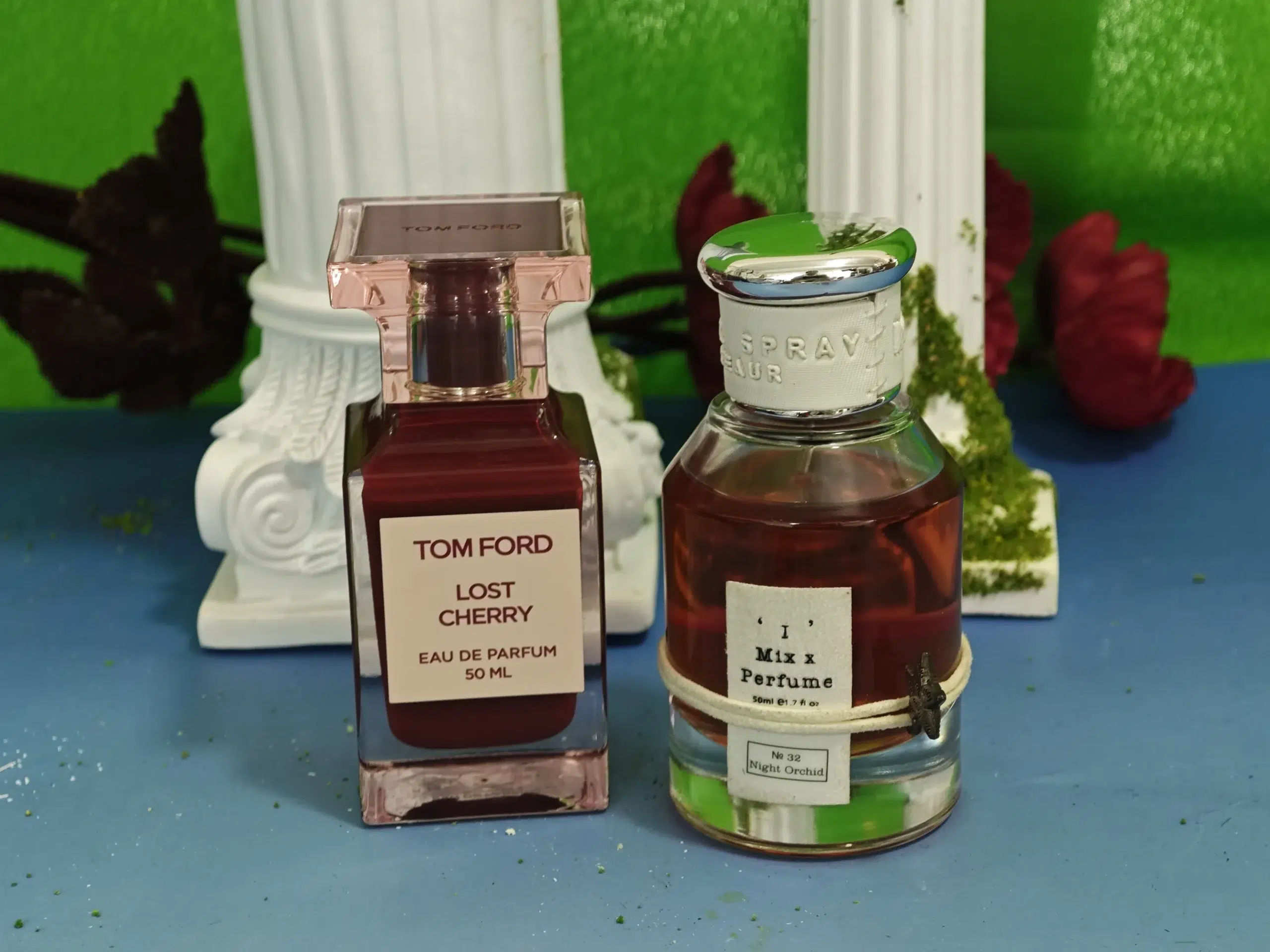
How to Identify a Real Cherry Smoke Dupe Before You Buy It in the USA
The starting point is the original scent structure. Tom Ford’s official US page describes Cherry Smoke Eau de Parfum around dark cherry, saffron, osmanthus, smoked wood, olibanum, Peru balsam, and cypriol. That matters because a note list is not just marketing copy; it tells you what the fragrance is trying to make your nose perceive over time.
A good Tom Ford Cherry Smoke dupe should therefore do more than open with a recognizable red-fruit or cherry effect. In the first minutes, the cherry should feel dark, tart, or slightly bitter rather than like bright candy. Saffron or a saffron-like spicy-leathery effect should keep the fruit from becoming juvenile. As the top evaporates, the fragrance should become more textured: floral-fruity osmanthus facets can suggest apricot, while leather adds dryness and tension. Finally, the base should move toward smoke, cypriol/nagarmotha, woods, incense-like resins, or balsamic materials.
That progression is why the search phrase “perfume that smells similar to Tom Ford Cherry Smoke” is more complicated than it looks. Two perfumes can share cherry in the opening and still become completely different after thirty minutes. For a true Cherry Smoke alternative, the dry-down is more important than the first five seconds.
| Fragrance direction | Cherry Smoke | Lost Cherry | Electric Cherry |
|---|---|---|---|
| Overall character | Dark, smoky, woody, leathery, dry-spicy | Sweet, boozy, almond-rich, gourmand, plush | Bright, sparkling, fruity-floral, lighter |
| Cherry style | Dark/sour cherry framed by smoke | Black cherry and cherry liqueur with bitter almond | Brighter cherry with a fresher, more playful feel |
| Key tension | Fruit versus smoke/leather | Fruit versus almond/balsamic sweetness | Fruit versus floral/musky freshness |
| Best search intent | “cherry smoke dupe,” “smoky cherry perfume,” “leather cherry perfume” | “lost cherry dupe,” “boozy cherry perfume,” “cherry almond perfume” | “bright cherry perfume,” “fresh cherry fragrance” |
| Typical mood | Evening, cool weather, statement wear | Evening, gourmand, sensual wear | Daytime, spring/summer, playful wear |
Tom Ford’s own Lost Cherry Eau de Parfum page emphasizes black cherry accord, bitter almond, cherry liqueur, rose, jasmine, balsam, tonka, sandalwood, vetiver, and cedarwood. That is a different olfactory engine. The distinction is essential for anyone searching Cherry Smoke vs Lost Cherry, Lost Cherry vs Cherry Smoke, or which is better, Cherry Smoke or Lost Cherry.
Why So Many “Cherry Smoke Dupes” Are Actually Lost Cherry-Style Perfumes
Cherry is a high-recognition idea. Consumers smell a sweet or tart red-fruit accord and quickly label it “cherry,” even when the surrounding structure is wrong. This creates a predictable problem in the affordable-fragrance market: a product can smell convincingly cherry-like, yet still fail as a Tom Ford Cherry Smoke dupe because it lacks the smoky wood, leather, saffron, and dry aromatic tension that define the target.
Lost Cherry is easier for many consumers to recognize because the cherry-almond-gourmand combination is immediately legible. Cherry Smoke is more difficult. It asks the formulator to keep fruit present while introducing materials that can easily overpower it. Too much smoke and the result can feel ashy, tarry, or barbecue-like. Too much leather and the cherry disappears. Too much sweetness and the composition collapses back toward a generic cherry gourmand. Too much almond and the fragrance can read as marzipan or cough syrup.
This is why I consider “how to choose a good Cherry Smoke dupe” a better consumer question than “which bottle is cheapest?” The answer is structural. You are looking for controlled contrast.
How a Perfumer Evaluates the Best Cherry Smoke Dupe: A Seven-Part Scorecard
When I evaluate an inspired fragrance, I do not start with a claimed “98% match.” A percentage without a published protocol is not very useful. A better method is to break the olfactory experience into stages and judge each stage separately. This also makes it easier for a consumer in the USA to test a sample at home without specialized laboratory equipment.
| Evaluation area | What to smell for | Common failure | Why it matters for a Cherry Smoke dupe |
|---|---|---|---|
| 1. Opening cherry | Dark, tart, juicy, slightly bitter or wine-like fruit effect | Candy, cough syrup, artificial maraschino | The fruit must feel adult enough to support leather and smoke |
| 2. Saffron/spice | Dry warmth, subtle metallic/leathery spice | Flat sweetness with no tension | Saffron is part of the bridge from cherry to leather |
| 3. Heart texture | Osmanthus-like apricot/floral nuance with leather | Cherry jumps directly to vanilla | The heart gives Cherry Smoke its dimensionality |
| 4. Smoke quality | Dry smoked wood, incense-like shadow, cypriol earthiness | Burnt rubber, BBQ, harsh tar | Smoke should frame the fruit, not destroy it |
| 5. Dry-down fidelity | Wood, resin, leather and remaining dark fruit in balance | Generic sweet amber after 30 minutes | The dry-down reveals whether the formula truly follows the target architecture |
| 6. Wear performance | Clear evolution and usable presence over time | Loud first 15 minutes, then sudden collapse | Longevity is about the evaporation curve, not only initial strength |
| 7. Value and transparency | Clear notes, concentration guidance, seller identity, return/shipping information | Unsupported lab claims or fake precision | Trust is part of fragrance quality, especially for online US purchases |
For a consumer, this framework answers several common searches at once: what is the closest dupe to Tom Ford Cherry Smoke, what is the best affordable smoky cherry perfume, which cherry perfume smells smoky and leathery, and what perfume smells similar to Tom Ford Cherry Smoke. The closest match should score well across the whole structure, not just the opening.
How Cherry Is Built in Perfumery: Why “Natural Cherry” Is Not the Whole Story
One of the most useful pieces of fragrance education is understanding that a perfume “note” is not necessarily a single ingredient. Cherry is often an accord: a constructed smell made from multiple aromatic materials. Benzaldehyde is famous for an almond/cherry-kernel character, but a believable cherry effect can also involve fruity esters, floral materials, sweeteners, woody or balsamic supports, and modifiers that change whether the fruit feels tart, syrupy, liqueur-like, candied, or dark.
This is where simplistic marketing such as “natural ingredients are always better” becomes misleading. Modern fine fragrance uses both naturals and synthetic aroma molecules. The ingredient toolbox exists because naturals can vary from crop to crop, some odor ideas do not exist as practical natural extracts, and synthetic molecules can provide precision, diffusion, stability, or safety advantages. IFF’s overview of perfume creation explains how contemporary perfumery combines botanical extracts and lab-made molecules, while its Perfumer’s Compendium demonstrates how individual fragrance materials are evaluated for odor character and note impact.
For a cherry smoke perfume dupe, the important question is not “synthetic or natural?” It is “does the accord behave convincingly?” A cherry accord should not scream one raw material. It should have texture: a juicy top, enough bitterness or tartness to prevent candy sweetness, and a smooth handoff into the darker heart.
How Saffron, Leather and Smoke Make Cherry Smoke Harder to Copy
The hardest part of a Cherry Smoke clone is not cherry. It is controlling the transition from fruit to dry, smoky materials.
Saffron is often perceived as warm, dry, slightly medicinal, leathery, metallic, or hay-like depending on the composition. In a Cherry Smoke-style structure, it prevents the cherry from becoming one-dimensional. If the saffron effect is too strong, however, it can amplify medicinal associations. That is why a formulator needs to balance fruit brightness against dry spice.
Leather in modern perfumery is usually an accord rather than a literal extract from leather. The effect can be soft suede, smoky hide, tarry birch-like darkness, or polished leather depending on the materials. Cherry Smoke uses leather as texture: it makes the fruit feel darker and more adult.
Smoke is similarly abstract. A perfumer can suggest smoke with woods, cypriol/nagarmotha, incense materials, balsams, phenolic facets, or other woody/amber materials. The official Cherry Smoke page specifically highlights smoked wood, olibanum, Peru balsam, osmanthus, and cypriol. Community resources such as Parfumo and Fragrantica also consistently place cherry, smoke, woods, and leather among the dominant perceived themes, although community ratings should be treated as subjective experience rather than laboratory measurement.
The practical lesson is simple: when you test a smoky cherry perfume, wait. If the fragrance is still essentially sweet cherry and vanilla after an hour, it may be pleasant, but it is not delivering the full Cherry Smoke idea.
How EDP vs EDT Concentration Affects a Cherry Smoke Alternative—and Why More Oil Is Not Automatically Better
US shoppers often search “Cherry Smoke dupe long lasting” or assume that a higher perfume-oil percentage must guarantee better performance. Concentration matters, but that conclusion is too simple.
The Perfume Society’s concentration guide explains that terms such as Eau de Parfum and Eau de Toilette generally refer to fragrance strength or concentration, while also warning that actual percentages vary by brand and that different concentrations may use different formulas rather than being simple stronger/weaker copies.
Longevity also depends on molecular volatility, formula design, skin, temperature, airflow, application amount, and the balance of top, heart and base materials. A perfume loaded with highly volatile materials can be intense at first and then disappear quickly. A less explosive formula with substantive woods, musks, balsams, or other low-volatility materials may stay detectable much longer.
This is not just perfumery folklore. A recent peer-reviewed study indexed by the US National Library of Medicine examined how fragrance molecules evaporate from different people’s skin and found that molecular properties and skin characteristics can both influence evaporation behavior. You can read the abstract on PubMed. Earlier fragrance research also used headspace analysis to show that individual odorants diffuse from skin at different rates.
So when someone asks, “Do Cherry Smoke dupes last as long as Tom Ford Cherry Smoke?”, the technically correct answer is: some may last longer, some shorter, and a concentration label alone cannot prove it. Test the complete evaporation curve on your skin.
How Skin Type Changes a Cherry Smoke Dupe in Real Life
This matters especially in the USA, where a fragrance may be worn in very different climates—from humid Miami to dry Phoenix to cool Seattle. Temperature, humidity, air movement, clothing, and skin condition can change the way a perfume projects and how long different materials remain noticeable.
The PubMed-indexed research above found that skin characteristics can influence fragrance-molecule evaporation, with different patterns for more volatile and less volatile compounds. That is a scientific reason to distrust absolute claims such as “this perfume lasts exactly eight hours on everyone.”
For consumers, the practical method is straightforward:
- Test on clean skin and use the same number of sprays when comparing fragrances.
- Record impressions at 0 minutes, 15 minutes, 1 hour, 4 hours, and the end of your normal wear day.
- Do not judge a Tom Ford Cherry Smoke alternative from a cap smell or the first spray alone.
- Compare both skin and a blotter. Skin tells you real-world behavior; blotter makes structural differences easier to observe.
- Repeat the test on another day before deciding that a perfume is weak, especially if weather conditions changed.
This also explains why online reviews disagree. One person may describe a Cherry Smoke dupe as powerful while another calls it soft, and both reports can be sincere.
How Maceration Works in Perfume Manufacturing—and What It Does Not Prove
Maceration is one of the most overused words in dupe marketing, so it deserves a precise explanation.
In professional fragrance production, after aromatic materials are blended with the carrier system, the mixture may be allowed to rest before final filtration and bottling. IFF describes maceration as a resting period after blending that allows ingredients to merge and mature, with the duration depending on the formula. The important part is process control: time, temperature, light exposure, filtration, batch consistency, and stability all matter.
What maceration does not prove is that one perfume is automatically higher quality than another simply because a brand quotes a long number of weeks. Different formulas require different manufacturing choices. Longer is not universally better. Likewise, leaving a finished consumer bottle in a closet is not a substitute for controlled factory production.
For a factory-backed fragrance business, this is where real expertise should be visible. Instead of saying “our perfume macerates longer, therefore it is superior,” a trustworthy brand should explain what it actually controls: batch records, raw-material specifications, compounding accuracy, filtration, packaging compatibility, stability, and sensory release criteria.
How Raw-Material Sourcing Affects a High-Quality Cherry Smoke Dupe
Supply chain is one of the least visible parts of perfume quality. Consumers see the bottle; formulators see dozens of decisions before the bottle exists.
Natural materials can vary by origin, harvest, extraction method, storage, and supplier specification. Synthetic aroma materials also come in different grades and can have different purity specifications or odor profiles. A professional fragrance operation therefore does not merely “buy expensive oil.” It manages specifications and consistency.
Large fragrance-material companies make this point clearly. Robertet’s raw-material overview emphasizes supply-chain control, traceability, processing, and perfumery expertise. IFF’s ingredient compendium likewise treats materials as technical objects with physical data and performance characteristics—not just romantic names.
For a best affordable Cherry Smoke dupe, consistent sourcing matters because the formula has little room for error. A tiny imbalance in the cherry-saffron-leather-smoke relationship can turn sophistication into medicinal fruit, burnt wood, or generic sweetness.
How Fragrance Safety and IFRA Standards Fit Into the Cherry Smoke Dupe Conversation
Another common marketing shortcut is “IFRA compliant,” used as if it were a luxury-quality certificate. That is not what IFRA is.
The International Fragrance Association’s Code of Practice explains that IFRA Standards may prohibit, restrict, or set purity requirements for particular fragrance ingredients, while companies still remain responsible for applicable law and safety in the markets where products are made and sold.
For a US consumer, that means safety compliance and olfactory similarity are two separate questions. A fragrance can follow relevant safety requirements and still be a poor Cherry Smoke perfume dupe. Conversely, a beautiful smell still needs appropriate safety, labeling, and quality controls. Trustworthy fragrance content should not blur those categories.
How an Affordable Perfume Can Cost Less Than Luxury Without Claiming the Liquid Costs “Almost Nothing”
You will often see dramatic perfume-cost infographics claiming that the liquid inside a luxury bottle costs only a few dollars and everything else is “brand markup.” I do not think that is a responsible universal claim. There is no single cost structure that applies to every fragrance house.
A retail perfume price can include fragrance concentrate, alcohol and functional ingredients, development work, stability testing, regulatory work, bottles, pumps, caps, decoration, cartons, filling, quality control, warehousing, freight, duties, distributor margins, retailer margins, sampling, returns, staff, advertising, creative campaigns, and brand overhead. Luxury brands may spend heavily on packaging, retail environments, image, and global marketing, but that does not mean the fragrance concentrate itself is irrelevant.
A factory-direct or vertically integrated model can reduce some layers—especially wholesale/retail intermediaries, elaborate packaging, and high advertising spend. That can create a real price advantage. But the intellectually honest argument is not “a $40 perfume is chemically identical to a $400 perfume because both cost the same to make.” The better argument is: if a company spends less on prestige distribution and presentation, more of the consumer’s budget can be directed toward formula, manufacturing, and usable product value.
That is the supply-chain logic I want US shoppers to understand when comparing a cheap Cherry Smoke dupe, a premium inspired fragrance, and the original luxury bottle.
How IMIXX Approaches Inspired Fragrance—and Why I Do Not Use an Unsupported “99% Similarity” Claim Here
IMIXX’s product pages describe the use of analytical fragrance work, scent databases, and GC-MS-related tools in developing inspired fragrances. Those are legitimate technologies in analytical chemistry and fragrance development. However, a number such as “98.3% similar” becomes meaningful only when the scoring method, reference sample, instrument method, sensory panel, and weighting system are disclosed.
For that reason, this guide does not ask you to trust a Cherry Smoke dupe because of a precise percentage. My preferred evidence hierarchy is:
- Correct fragrance architecture.
- Transparent note and product information.
- Repeatable sensory testing over the full wear cycle.
- Batch consistency and quality control.
- Clear commercial disclosure.
- External sources for factual claims about the original fragrance and fragrance science.
- Consumer reviews used as supporting experience, not as laboratory proof.
This approach is more demanding, but it is also more useful. It turns “we can copy this fragrance” into an explanation of how inspired perfumery works: analyze the reference profile, identify the important odor directions, build and rebalance accords, test evaporation and dry-down, refine concentration and carrier behavior, control manufacturing variables, and evaluate the finished batch against the intended sensory brief.
How IMIXX No.18 Fits This Guide: A Lost Cherry Alternative for People Who Prefer Sweet, Boozy Cherry
This is the most important product distinction in the article.
IMIXX No.18 Inspired by Lost Cherry is built around a Lost Cherry-style direction, not a Cherry Smoke-style direction. The current product page lists black cherry accord, bitter almond and cherry liqueur in the top; rose and jasmine in the heart; and roasted tonka, sandalwood, vetiver and Peru balsam in the base.
That architecture makes sense for someone searching Tom Ford Lost Cherry dupe, sweet cherry perfume, boozy cherry perfume, cherry almond perfume, or an affordable cherry fragrance with a warmer gourmand dry-down. It does not justify calling No.18 a direct Cherry Smoke clone.
| If you want… | Look for this scent structure | Best IMIXX path |
|---|---|---|
| A true Cherry Smoke-style profile | Dark cherry + saffron + leather/osmanthus + smoked woods/cypriol | Use this guide’s scorecard and choose only a product whose published structure actually matches those elements |
| A sweeter Tom Ford cherry direction | Black cherry + bitter almond + cherry liqueur + florals + tonka/balsamic woods | IMIXX No.18 Inspired by Lost Cherry |
| Not sure which cherry profile you like | Compare smoke/leather dryness against almond/liqueur sweetness | Read this guide first, then explore the IMIXX fragrance collection |
From a trust perspective, this distinction is more valuable than forcing the product into the wrong keyword. A shopper who wants Cherry Smoke should not be sold Lost Cherry under a different name. A shopper who discovers that the smoky leather is too dry, however, may find No.18 much closer to the cherry experience they actually wanted.
How to Choose Between Cherry Smoke and Lost Cherry for Your Personal Style
If you are asking “Is Cherry Smoke sweeter than Lost Cherry?”, I would generally frame the answer the other way around: Lost Cherry is the more overtly sweet, boozy, almond-gourmand direction, while Cherry Smoke is darker, drier, smokier and more leathery.
If you are asking “Which is better, Lost Cherry or Cherry Smoke?”, there is no objective winner because the decision depends on what you want the fragrance to communicate.
Choose a Cherry Smoke-style scent if you like dry woods, leather, incense, saffron, shadowy fruit, cold-weather fragrances, or a more dramatic unisex profile. Choose a Lost Cherry-style scent if you want a plush cherry accord, bitter almond, liqueur-like sweetness, balsamic warmth, and a more gourmand sensuality.
If your search started with “Cherry Smoke dupe USA” but you keep preferring the sweet opening and dislike leather or cypriol in the dry-down, that is useful information: your real search intent may be “Lost Cherry alternative in the USA.” Buying for your nose is better than buying for a keyword.
How to Compare Cherry Smoke vs Lost Cherry vs Electric Cherry
The phrase Cherry Smoke vs Lost Cherry vs Electric Cherry appears frequently because Tom Ford’s cherry fragrances share a recognizable fruit theme but express it in different ways.
Cherry Smoke is the darkest and most structurally smoky. Lost Cherry is the richest and most gourmand. Electric Cherry is the brighter, more energetic direction. If you are trying to identify what perfume smells like Cherry Smoke, do not treat the other two as interchangeable substitutes. Use them as reference points on a spectrum.
A useful mental model is:
- Lost Cherry: fruit + liqueur + almond + balsamic gourmand warmth.
- Cherry Smoke: fruit + saffron + leather + smoke + dry woods.
- Electric Cherry: fruit + floral/musky freshness + brighter energy.
This framework expands your search vocabulary naturally without keyword stuffing: dark cherry fragrance, smoky cherry perfume, leather cherry fragrance, saffron cherry perfume, boozy cherry perfume, unisex cherry perfume, and long-lasting cherry perfume all describe distinct consumer needs.
How to Test a Cherry Smoke Dupe at Home Without a Laboratory
You do not need GC-MS equipment to make a better buying decision. You need consistency.
Step 1: Control the application. Use the same number of sprays and similar skin areas. If you are comparing two perfumes, avoid testing one with two sprays and the other with six.
Step 2: Smell the opening at 30 seconds and 5 minutes. Ask whether the cherry feels dark and tart or sugary and medicinal. Do not decide yet.
Step 3: Revisit at 20–30 minutes. This is where the best Cherry Smoke dupe should begin moving beyond fruit. Look for saffron-like dryness, floral-apricot nuance, leather, or a woody transition.
Step 4: Evaluate the 1–2 hour heart. A Cherry Smoke-style fragrance should feel more integrated now. The question is not “can I still smell cherry?” but “does cherry still belong inside the darker structure?”
Step 5: Evaluate the late dry-down. At four hours and later, note whether the scent becomes smoky wood/resin/leather or collapses into generic sweet amber. This is often where a convincing Cherry Smoke alternative separates itself from a merely pleasant cherry perfume.
Step 6: Repeat on another day. Skin condition, weather, fatigue, and anosmia can distort one test. A second wear is cheap insurance against a bad blind buy.
Step 7: Write notes. Even five words per checkpoint are enough. “Tart cherry / dry spice / suede / smoked wood / soft resin” tells you far more than “9.5/10.”
How to Judge Cherry Smoke Dupe Longevity, Projection and Sillage
These three terms are often mixed together.
Longevity is how long you can still detect the fragrance. Projection is how far it radiates from you, especially early in wear. Sillage is the scent trail or aura left around you as you move.
A long-lasting Cherry Smoke dupe does not need to project across a room for ten hours. In fact, many well-constructed fragrances transition from a stronger opening to a more intimate dry-down. For date night, that can be preferable. For office wear, a moderate scent bubble is often more appropriate than maximum projection.
Community pages such as Parfumo provide large numbers of user impressions about longevity and sillage. Those data are useful for identifying patterns, but I would still treat them as subjective. Your own repeat test matters most.
How to Wear a Smoky Cherry Perfume in Different US Seasons
Cherry Smoke’s dark cherry, saffron, leather and smoked-wood profile naturally suits fall and winter because cooler air can make dense, resinous, woody fragrances feel controlled rather than overwhelming. That is why searches such as “best Cherry Smoke dupe for winter” and “Cherry Smoke date night perfume” make sense.
In warm US climates, reduce sprays and apply farther from the nose. In summer humidity, a dense smoky cherry fragrance can become heavier than expected. In air-conditioned indoor environments, one or two well-placed sprays may be enough. In cold, dry weather, you may prefer an additional spray on clothing—but test fabric first because fragrance oils can mark delicate materials.
For spring, a smoky cherry fragrance can work at night if applied lightly. The idea that a perfume is “only for winter” is a styling convention, not a rule.
How to Decide Whether Cherry Smoke Is Masculine, Feminine or Unisex
Consumers often ask “Is Tom Ford Cherry Smoke masculine or feminine?” and “Is Cherry Smoke unisex?” The fragrance is widely worn as unisex, and the note structure supports that flexibility. Cherry can read sweet or sensual, while leather, saffron, woods and smoke can read drier or traditionally masculine to some noses.
My advice is to ignore the gender label and focus on the texture you enjoy. If you like smoky leather fragrances, Cherry Smoke can feel natural regardless of gender. If you prefer airy florals, it may feel dense. The same principle applies when shopping for a unisex Cherry Smoke dupe in the USA.
How to Make a Cherry Smoke Dupe Last Longer Without Overspraying
If your fragrance disappears quickly, start with application variables before assuming the formula is defective.
- Apply to clean skin rather than spraying over strongly scented lotion.
- If your skin is very dry, a small amount of unscented moisturizer can reduce the feeling that fragrance vanishes immediately.
- Do not rub your wrists together aggressively after spraying; let the fragrance dry normally.
- Use clothing strategically for added persistence, but avoid silk, light-colored delicate fabrics, and materials that may stain.
- Store perfume away from heat, direct sunlight, and large temperature swings.
- Do not deliberately “age” a finished bottle by leaving it open or in heat. Controlled manufacturing maceration is not the same as uncontrolled oxidation.
These habits are more useful than chasing exaggerated “beast mode” claims.
How to Buy a Cherry Smoke Dupe in the USA Without Falling for Marketing Traps
The best Cherry Smoke dupe USA shopping checklist is less glamorous than social media, but it will save you money:
- Check the scent architecture. Does the description include a credible path from dark cherry to saffron/leather/smoke/woods?
- Check whether the seller confuses Cherry Smoke and Lost Cherry. If those two are treated as interchangeable, be cautious.
- Ignore unsupported precision. “99.7% identical” is not evidence unless the brand explains how that number was produced.
- Look for a clear company identity. US shoppers should be able to find shipping, returns, contact information, and product details.
- Separate safety claims from similarity claims. Regulatory compliance does not prove olfactory closeness.
- Read negative reviews as well as positive reviews. Complaints about medicinal cherry, weak smoke, excessive sweetness, or harsh leather can reveal the formula’s direction.
- Prefer a documented wear method. A reviewer who tells you how and when they tested is more useful than a reviewer who only says “identical.”
If you are searching “best affordable Cherry Smoke dupe under $50”, price can be a filter, but it should not become the quality metric. First define the scent structure you want; then find the best value within your budget.
What High-Ranking Cherry Smoke Dupe Pages Get Right—and What a Better Guide Must Add
Many pages that rank for cherry smoke dupe, Tom Ford Cherry Smoke dupe, and Cherry Smoke alternatives do several things correctly from a user-experience perspective. They give the answer quickly, use comparison tables, explain Cherry Smoke vs Lost Cherry, discuss longevity and price, and answer common questions. Those elements reduce friction for shoppers.
Where the category often becomes weaker is evidence. Numerical similarity scores appear without a methodology. Wear-time claims are presented as universal facts. “Lab tested” may be stated without a linked report. Some pages also mix perfumes that are merely cherry-forward with fragrances that actually reproduce the smoke/leather architecture.
The information gain in this guide is the evaluation framework itself: judge accord architecture, evolution, evaporation, sourcing logic, manufacturing process, and disclosure separately. That gives you a method you can reuse even when product assortments change in the USA.
How to Think About “Closest Cherry Smoke Dupe” Claims
The phrase “closest Cherry Smoke dupe” implies a single winner, but closeness has dimensions. One fragrance may match the opening cherry best. Another may capture the leathery heart. Another may reproduce the smoky base but feel less fruity. Without weighting those dimensions, “closest” is only an opinion.
If I were designing a documented sensory study for Cherry Smoke alternatives, I would score at least: opening cherry fidelity, saffron/spice character, heart texture, leather quality, smoke/wood quality, late dry-down, sweetness level, evolution, longevity, projection, and overall balance. I would also disclose the number of evaluators, test surfaces, spray count, room conditions, sample age, and whether the test was blinded.
Until a brand publishes that level of detail, treat exact similarity percentages as marketing shorthand rather than scientific measurement.
How to Decide Whether Tom Ford Cherry Smoke Is Worth the Money
The question “Is Tom Ford Cherry Smoke worth it?” cannot be answered only by comparing dollars per milliliter. The original gives you the original creative composition, official packaging, brand experience, and the certainty that you are wearing the reference itself. Tom Ford’s official US site currently positions Cherry Smoke in its premium Private Blend universe and publishes its key-note structure directly.
An inspired fragrance offers a different value proposition: access to a similar olfactory direction at a lower entry price. The trade-off is that similarity can vary, packaging may be simpler, and the product should be judged on its own execution rather than assumed identical.
If owning the original brand matters to you, buy the original. If your priority is the scent family and practical cost per wear, a well-made inspired fragrance can be rational. Neither choice needs to be framed as morally or aesthetically superior.
Our Recommendation for US Cherry-Fragrance Shoppers
If your target is specifically the best Cherry Smoke dupe in the USA, use the seven-part scorecard in this guide and insist on a dark-cherry, saffron, leather/osmanthus and smoked-wood progression. Do not accept a sweet almond-cherry perfume as “close enough” simply because both fragrances contain cherry.
If you discover that what you really love is the sweeter, boozier, almond-rich Tom Ford cherry profile, then my first IMIXX recommendation is IMIXX No.18 Inspired by Lost Cherry. It is the relevant IMIXX product for that scent direction, and its product page provides the cherry, bitter almond, floral and warm woody/balsamic structure that distinguishes Lost Cherry from Cherry Smoke.
If you are still exploring, start with education rather than impulse buying. Visit the IMIXX Perfumes USA store, compare note structures, and choose the fragrance family that matches your taste instead of forcing every cherry perfume into the same category.
FAQ: Cherry Smoke Dupe Questions US Shoppers Ask Most
What is the best Cherry Smoke dupe?
The best Cherry Smoke dupe is the one that reproduces the full dark-cherry-to-smoke progression rather than only the fruit. Look for tart or dark cherry, saffron-like dryness, leather or osmanthus texture, and a smoked woody/cypriol-style base. I would not call a product the “best Cherry Smoke dupe” based only on price, an opening sniff, or an unsupported similarity percentage.
What is the closest dupe to Tom Ford Cherry Smoke?
The closest dupe to Tom Ford Cherry Smoke should be evaluated across opening, heart and dry-down. A credible comparison needs to examine dark cherry, saffron, leather, smoke, woods, sweetness and wear performance separately. Without a disclosed testing method, exact “95%” or “99%” closeness claims should be treated as marketing rather than objective measurement.
Is there a cheaper alternative to Tom Ford Cherry Smoke in the USA?
Yes, the US market contains many lower-priced cherry and smoky-cherry fragrances, but “cheaper alternative to Tom Ford Cherry Smoke” should not be treated as a guarantee of scent fidelity. Check whether the fragrance actually includes the smoke/leather/saffron architecture rather than simply a sweet cherry accord.
What perfume smells similar to Tom Ford Cherry Smoke?
A perfume that smells similar to Tom Ford Cherry Smoke should combine dark or sour cherry with dry spice, leathery texture and a smoky woody base. Fragrances that emphasize cherry liqueur, bitter almond, vanilla and tonka without smoke usually sit closer to a Lost Cherry-style profile.
What does Tom Ford Cherry Smoke smell like?
Tom Ford Cherry Smoke smells like dark cherry pushed into a drier, smokier and more leathery direction. Tom Ford’s official description highlights dark cherry, saffron, osmanthus, smoked wood, olibanum, Peru balsam and cypriol. The overall effect is darker and less gourmand than a typical sweet cherry perfume.
What are the notes in Tom Ford Cherry Smoke?
The official Cherry Smoke key notes include dark cherry flavor accord, smoked wood accord, olibanum, Peru balsam, Chinese osmanthus absolute and Indian cypriol, with saffron highlighted in the opening description. These notes explain why a true Cherry Smoke dupe needs more than cherry and vanilla.
What is the difference between Cherry Smoke and Lost Cherry?
The biggest difference between Cherry Smoke and Lost Cherry is the frame around the fruit. Cherry Smoke emphasizes saffron, leather, smoke and dry woods. Lost Cherry emphasizes black cherry, cherry liqueur, bitter almond, florals, tonka and balsamic woods. In simple terms: Cherry Smoke is darker and smokier; Lost Cherry is sweeter and more gourmand.
Is Cherry Smoke sweeter than Lost Cherry?
Generally, no. When comparing Cherry Smoke vs Lost Cherry, Lost Cherry usually reads sweeter, boozier and more almond-gourmand, while Cherry Smoke reads drier, smokier, woodier and more leathery. Individual perception can vary, but that structural distinction is the better buying guide.
Which is better, Lost Cherry or Cherry Smoke?
Neither is universally better. Choose Cherry Smoke if you want a smoky cherry perfume with saffron, leather and dry woods. Choose Lost Cherry if you prefer a rich cherry-almond perfume with liqueur-like sweetness and balsamic warmth. IMIXX No.18 is positioned for the latter preference.
Is Tom Ford Cherry Smoke masculine, feminine or unisex?
Cherry Smoke works well as a unisex fragrance. The cherry adds fruit and sensuality, while saffron, leather, smoke and woods add dryness and depth. Instead of treating gender as a rule, decide whether you personally enjoy a dark, smoky cherry fragrance.
How long does Tom Ford Cherry Smoke last?
There is no single wear time that applies to everyone. Longevity varies with skin properties, climate, spray count, clothing and individual perception. Community ratings can provide a useful range, but the most reliable method is to test the fragrance on your own skin across several hours and more than one day.
Do Cherry Smoke dupes last as long as Tom Ford Cherry Smoke?
Some Cherry Smoke dupes may last longer, some shorter, and some may project more strongly while lasting for a similar total time. Oil concentration alone cannot predict the result. Formula composition, molecular volatility, skin and environment all influence performance.
What season is Tom Ford Cherry Smoke best for?
Cherry Smoke’s smoky woods, leather, saffron and dark fruit naturally fit fall and winter, especially evening wear. A Cherry Smoke dupe can still work in spring or summer nights in the USA, but lighter application is usually more comfortable in hot or humid weather.
What is the best affordable smoky cherry perfume?
The best affordable smoky cherry perfume should preserve smoke and dry woods after the opening rather than turning into generic cherry-vanilla. Use the scorecard above: dark cherry, saffron/spice, leathery heart, smoke quality, dry-down, wear performance and transparent value.
Which cherry perfume smells smoky and leathery?
Look specifically for a cherry fragrance whose structure includes leather, smoked woods, cypriol/nagarmotha, incense or related dry materials. Those cues are more useful than the word “cherry” alone when searching for a smoky and leathery cherry perfume.
How do you choose a good Cherry Smoke dupe?
Choose a good Cherry Smoke dupe by testing the whole scent evolution. Start with the cherry, then check saffron-like dryness, leather/osmanthus texture, smoke and woods, and finally the late dry-down. Repeat the wear test and compare the result with the original note architecture rather than trusting a single similarity score.
What is the best Cherry Smoke dupe under $50 in the USA?
For a Cherry Smoke dupe under $50, do not let the price ceiling replace the fragrance brief. Shortlist only products that disclose a dark-cherry, saffron/leather and smoked-wood structure, then compare shipping, return policy, reviews and real wear. If your preference shifts toward sweet cherry and almond rather than smoke, IMIXX No.18 is the more relevant IMIXX choice.
Is Cherry Smoke worth it compared with a dupe?
Cherry Smoke is worth it if owning the original composition, presentation and brand experience matters to you and fits your budget. A dupe or inspired fragrance is worth considering if you primarily want the scent direction at a lower cost. The right answer depends on what you value, not on a universal “luxury versus cheap” rule.
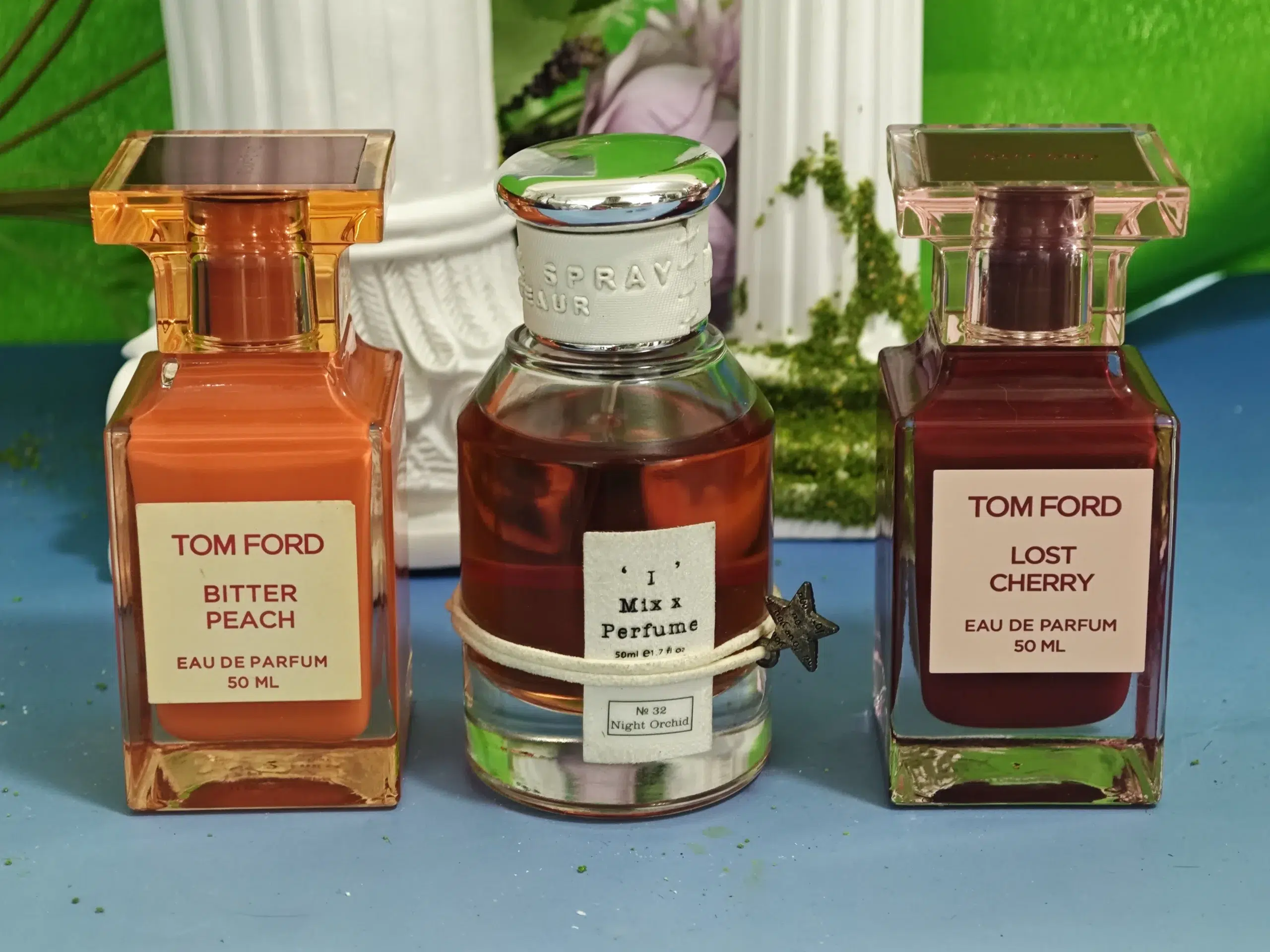
Final Verdict: How to Find Your Best Cherry Smoke Dupe in the USA
The most useful way to shop for a Cherry Smoke dupe is to stop treating “cherry” as the target. The target is an architecture: dark cherry, saffron-like heat, osmanthus/leather texture, and a smoky woody base. That structure is what separates Cherry Smoke from the much sweeter Lost Cherry family and from brighter cherry fragrances.
For US shoppers, I recommend three rules. First, test the dry-down, not just the opening. Second, distrust unsupported precision—especially perfect similarity percentages, universal longevity claims, or “lab proven” language without a report. Third, choose the fragrance family you genuinely prefer.
If you want smoke, leather and dark woods, use this article as your evaluation framework for any Tom Ford Cherry Smoke alternative. If you want cherry liqueur, bitter almond and warm gourmand depth, go in the Lost Cherry direction; in that category, IMIXX No.18 Inspired by Lost Cherry is the IMIXX product I would point you to first.
The purpose of a good fragrance guide is not to tell you that the product we sell is automatically “the best.” It is to give you enough technical knowledge to smell the difference yourself. Once you can identify cherry, saffron, leather, smoke, woods, almond, liqueur and the way they evolve on skin, you are no longer shopping by hype. You are shopping by structure.
Sources and Further Reading
- Tom Ford Beauty — Cherry Smoke Eau de Parfum (official US product page)
- Tom Ford Beauty — Lost Cherry Eau de Parfum (official US product page)
- International Fragrance Association — IFRA Code of Practice
- IFF — How Perfume Is Made: Ingredients, Maceration, Testing and Refinement
- IFF — Fragrance Ingredients Perfumer’s Compendium
- Robertet — Natural Raw Materials and Supply-Chain Expertise
- The Perfume Society — Guide to Cologne, EDT, EDP and Parfum Strengths
- PubMed — Research on Skin Properties and Fragrance Evaporation
- Parfumo — Tom Ford Cherry Smoke Community Data and Reviews
- Fragrantica — Tom Ford Cherry Smoke Notes, Accords and Community Reviews
- IMIXX Perfumes — No.18 Inspired by Lost Cherry Product Page
About the Author
Linus Dacke Thall is the founder of IMIXX Perfumes and is presented on IMIXX editorial pages as a fragrance specialist with more than a decade of experience in scent formulation and inspired-fragrance development. His editorial focus is fragrance structure, formulation, supply-chain logic and helping consumers separate verifiable perfume information from marketing shorthand.
Editorial transparency: IMIXX is a fragrance seller and therefore has a commercial interest in inspired-perfume searches. This article distinguishes brand-reported information from independent or primary external sources and does not present unpublished GC-MS data, blind-test results, exact similarity percentages or universal longevity claims as verified facts.
