

My disclosure: I am writing from the perspective of IMIXX Perfumes, which sells an armani the yulong dupe. I have a commercial interest in No.38. This is a seller-authored buying guide, not an independent fragrance review or laboratory report.
I use armani the yulong dupe as a familiar search term for a scent inspired by the original. I do not mean that the two formulas are identical, officially connected, or proven to match by a specific percentage.
If I were considering an armani the yulong dupe, I would want a fair way to evaluate it beyond a persuasive product description. Below, I separate what I checked online in November 2026 from what only a timed, side-by-side skin test can establish.
My 2026 Verdict: Compare the Tea Structure, Not a Made-Up Similarity Score
My short answer is that the most useful comparison has five moments: the citrus opening, the transition into tea, the balance of green and black tea, the middle-to-base connection, and the final drydown. A fragrance that impresses for thirty seconds but loses its tea character after an hour may be an enjoyable perfume, yet it has not demonstrated a convincing interpretation of Thé Yulong across the whole wear experience.
I can confirm that Armani’s current US description identifies green mandarin, natural green tea, and natural black tea as the key notes of Thé Yulong. I can also confirm that the IMIXX No.38 product listing advertises a 50 mL bottle for $39 and states a 12% concentration. Those are two different kinds of evidence: information published by the original house and information published by the company selling the inspired product. Neither tells me how the products perform side by side on human skin.
I have not completed or documented a November 2026 side-by-side wear test of No.38 against Armani Thé Yulong. I therefore will not invent an opening score, a longevity result, tester reactions, or a scent-match percentage. I have, however, completed a product-page and reference check, and I show the resulting facts, calculations, and unanswered questions below. That is the empirical contribution I can honestly make now.
Key point: what this guide proves—and what it does not
I verify publicly displayed notes, listings, label guidance, and a price-per-milliliter comparison. I provide a repeatable sensory protocol. I do not present that protocol as completed testing, and I do not use IMIXX’s marketing claims as independent proof of similarity.
What I Actually Verified in November 2026
I started with the source pages rather than copying figures from another comparison post. This matters because a price, product label, note list, or stock indicator can change without warning. The table records what the pages displayed when I reviewed them for this update; it is not a sales receipt, a laboratory certificate, or evidence of what a customer will see at a later checkout.
| Item checked | Result visible in November 2026 | Evidence status |
|---|---|---|
| Armani’s key-note direction | Green mandarin, natural green tea, natural black tea; woody-aromatic family | Original house’s published description |
| Armani US reference price | 50 mL displayed at $150 ($3.00/mL) | Public retail listing; not a completed checkout |
| Armani EDT/EDP wording | The house says the label changed, while concentration, quality, and scent stayed the same | Original house’s explicit statement |
| IMIXX No.38 listing | 50 mL; $39; stated concentration 12% | Seller-published specifications, not independent testing |
| IMIXX standard US shipping shown | $8.90 for a one-item order; promotional free shipping shown for two items | Seller’s shipping statement; verify at checkout |
| No.38-versus-Armani wear measurements | No dated, auditable side-by-side results available for this article | Not measured; no performance verdict issued |
For the original composition, I rely on the official Armani Beauty US Thé Yulong listing. For No.38, I rely on the linked IMIXX store listing disclosed at the top of this article. I distinguish the two because a retailer’s own price and specifications are useful to shoppers but do not transform that retailer into a neutral evaluator of its product.
What Armani Thé Yulong Is Trying to Smell Like
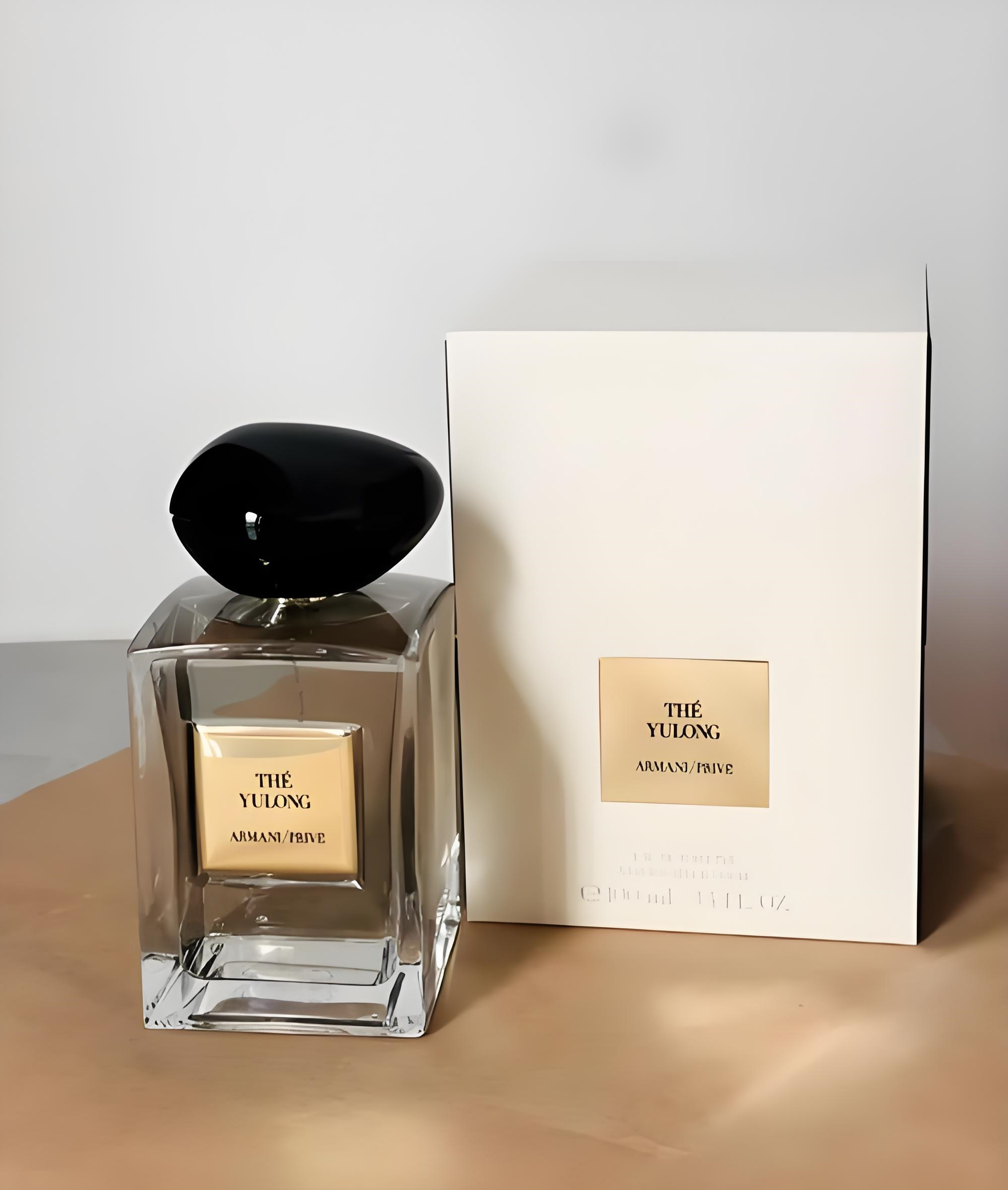
Before I judge any Yulong-inspired fragrance, I need a reliable reference. Armani describes Thé Yulong as a woody-aromatic, unisex composition with a contrast between sparkling citrus and two expressions of tea. The official page also credits perfumer Julie Massé. I find the contrast more informative than a long list of supposed notes because it tells me how the elements should relate, not merely which descriptive words appear on a page.
Why green mandarin matters in the opening
The green-mandarin direction gives me a specific question for the first spray: does the brightness feel lively and slightly green, or is it just generic lemony sharpness? Mandarin as a note description does not guarantee that a perfume contains any particular mandarin extract. It is a sensory description of an effect. A formula might create that impression through a blend of natural and synthetic materials. For a fair comparison, I care about the perceived character and its transition, not an ingredient assumption.
Why I listen for both green tea and black tea
I think of the green-tea facet as the fresher, more transparent side of the profile and the black-tea facet as its drier, deeper counterweight. That is my evaluative vocabulary, not a claim that I measured two tea extracts in a sample. In practice, I would ask whether the heart remains airy without becoming thin, and whether the darker accent adds depth without taking over. A formula that supplies only clean, watery greenery may be pleasant but may miss the essential tension. A much smokier, denser fragrance may travel too far in the opposite direction.
Why a matching note list cannot establish a matching perfume
A published note pyramid is not a complete formulation. The words tea, jasmine, iris, vetiver, or musk can refer to perceived accords rather than individual ingredients, and the same note can be built in markedly different ways. Ratios, raw-material quality, evaporation, stability, and interactions matter. Even if two lists contain identical names, the opening might be more acidic in one fragrance, the heart sweeter in another, and the base dramatically heavier in the third. I treat note lists as starting hypotheses to test rather than evidence that I have already found an equivalent scent.
My Five-Checkpoint Armani Yulong Wear-Test Method
This is the practical centerpiece of the comparison. I use checkpoints rather than a single end-of-day memory because the impression a fragrance creates changes across time. For each interval, I compare how the reference and candidate develop under the same conditions. I do not assume that the clock marks chemical boundaries: they are easy-to-repeat observation windows. If the fragrance has faded before a later checkpoint, I record that instead of imagining a drydown.
| When I check | Question I ask | What supports the intended direction | Current No.38 result |
|---|---|---|---|
| 0–2 minutes | Does the opening feel fresh, green, and composed? | Lively citrus with room for the tea to emerge | Not tested |
| 20–30 minutes | Does citrus move naturally toward tea? | A smooth transition rather than an unrelated scent switch | Not tested |
| About 1 hour | Can I distinguish light and dark tea facets? | Transparent green freshness with a dry black-tea counterpoint | Not tested |
| 2–3 hours | Does the heart still belong to this fragrance? | Floral and woody details support rather than erase the tea | Not tested |
| 4–6 hours | What remains, and how clearly can I detect it? | A dry, clean trace that still feels connected to the tea profile | Not tested |
Checkpoint 1: I judge the first two minutes for shape, not volume
I would begin by recording the time and smelling each application after the initial alcohol lift settles. What I want to know is whether the scent creates a clear green-citrus idea. I would not award extra points merely because one fragrance is louder. A very forceful spray can seem impressive while its sharpness obscures the softer tea accord. I also would not expect a perfect one-to-one opening: different volatility profiles can lead two scents to begin differently while growing closer, or the reverse.
Checkpoint 2: I check whether the citrus-to-tea transition is believable
At roughly twenty to thirty minutes, the bright top may become quieter. I would write down what has taken its place rather than forcing a yes-or-no answer about similarity. Does tea now feel easier to recognize? Does the fragrance become soapier, sweeter, more floral, or more metallic? Those observations locate the difference. This checkpoint also helps me avoid being fooled by a convincing citrus opening that masks a less related heart.
Checkpoint 3: I look for the signature green-versus-black tea balance
Around an hour is where I would give the tea architecture its closest attention. I would compare both wrists or blotters at the same distance and note whether one reads as sheer and grassy, another as dry and lightly smoky, or either as merely clean musk. My aim is not to force the candidate to mimic one isolated adjective. It is to decide whether the profile retains the original’s unusual combination of brightness and shadow. For a buyer whose favorite thing about Thé Yulong is its tea character, this stage may matter more than total hours on skin.
Checkpoint 4: I test whether the middle and base are connected
At two or three hours, a formula may feel softer and woodier. I would accept natural evolution, but I would mark down a version that suddenly becomes a sweet floral perfume or loses every recognizably tea-like detail. In my notes, I would describe the actual shift: for example, whether it becomes warmer, more musky, drier, or more powdery. That language is much more useful than writing “still close” without explaining what close means.
Checkpoint 5: I measure drydown continuity and detectability separately
At four to six hours, I would check first whether a scent remains detectable close to the application area. If so, I would describe its character and compare it with the reference; if not, I would record that the scent was not detectable at that checkpoint. I would also ask another observer to check, where practical, because repeated exposure can change my own perception. I would not automatically penalize a refined tea fragrance for projecting less than a heavy sweet perfume. Scent fidelity and projection are different tests.
My non-negotiable reporting rule
The final column says “Not tested” deliberately. These are the checkpoints I recommend, not observations I secretly made. If I later publish results, I should add dated notes, exact bottle identities, the testing conditions, and any relationship the testers have with IMIXX before drawing a conclusion.
How I Would Make a Real Wear Test Reproducible
I can improve a fragrance comparison without dressing it up as an academic study. My preferred minimum would be at least two separate wear days, the same application procedure each day, and a written log completed at the scheduled times rather than from memory. Where available, I would note batch or lot identifiers, bottle age, and where each bottle was obtained. I would record the room temperature approximately, whether I was mostly indoors or outside, and whether I used unscented moisturizer.
To reduce expectation bias, I would ask someone else to label two samples A and B and keep the code until I finished my notes. I would not call this fully blinded if I could distinguish the bottles, atomizers, or appearance, and I would not call a single person’s result a representative consumer panel. The goal is a fairer personal comparison, with its limitations plainly named.
| What I would log | Why I need it | Suggested entry |
|---|---|---|
| Date and location conditions | Environment can alter evaporation and perception | Date, approximate temperature, indoors/outdoors |
| Bottle identity | A later reader needs to identify the samples | Product, size, source, batch where available |
| Application | Different spray doses undermine comparisons | Sprays per side, location, moisturizer use |
| Scent at each checkpoint | Prevents one impression dominating the verdict | Citrus, tea, sweetness, dryness, woods, musk |
| Detection and projection | Separates wear time from scent resemblance | Close-skin detectable? Observer at set distance? |
| Tester disclosure | Readers should know about commercial bias | Employee, seller, customer, or independent tester |
I would also resist the temptation to create a composite “97% similar” score after the fact. If I chose a rating system, I would define the categories in advance and disclose who scored them. A simple written comparison might be more credible than a numerical index when the number of testers is small. For example, I could say one sample had a sharper opening but a more comparable tea heart, provided that was genuinely what I observed and had documented at the time.
My Evidence Ladder: Source Fact, Seller Specification, or Sensory Opinion?
When I read commercial perfume content, I look for a basic separation of evidence. An official house can authoritatively describe the product it created. A seller can state what its own product page lists. An individual can describe what they smelled. Those are not interchangeable claims, and none alone supplies an independent panel comparison.
1. Externally checkable
I can point to Armani’s listed notes, pricing, and label-change explanation or to professional guidance from IFRA. The reader can inspect those documents independently.
2. Brand-published
I can report the 50 mL size, $39 price, and 12% figure displayed by IMIXX. I should not call them independent lab measurements or proof of equal performance.
3. Sensory judgment
I can describe a scent as dry, sheer, smoky, or soft only after I have evaluated it. Without test notes, I present these as criteria rather than observed No.38 results.
This framework also addresses a conflict of interest. I cannot make a merchant-authored article independent simply by adding scientific terminology. The best I can do is identify my commercial role, provide sources readers can open, specify what I did not measure, and give buyers a method that could lead them to disagree with me. I regard that as more persuasive in the long run than an unsupported superlative.
Armani Thé Yulong vs. IMIXX No.38: My Product and Value Comparison
The most concrete head-to-head comparison I can complete without a wear test is a retail-value calculation. I compare equal 50 mL sizes, distinguish published prices from final checkout totals, and leave scent-performance claims unscored. I avoid pretending that a lower price proves equal formula quality or that luxury presentation is meaningless to someone who enjoys the original.
Armani/Privé Thé Yulong
Listed US size: 50 mL
Listed US price: $150
Base price per mL: $3.00
Role in my test: Original scent reference
I would buy this when I want Armani’s own composition, bottle, presentation, and provenance—not an interpretation of them.
IMIXX No.38 Inspired by Yulong
Seller-listed size: 50 mL
Seller-listed price: $39
Base price per mL: $0.78
Seller-stated concentration: 12%
I would consider testing this when lower entry cost matters and I am comfortable evaluating an inspired scent on its own merits.
My actual price calculation
At the displayed prices, $150 − $39 = $111 less for the IMIXX 50 mL bottle before shipping and tax. Dividing by 50 mL gives $3.00/mL for Armani and $0.78/mL for No.38. That is a 74% lower listed bottle price per mL, not 74% greater value in scent accuracy or longevity.
IMIXX also lists $8.90 standard shipping for one item. Under that published assumption, a one-bottle No.38 order would be $47.90 before tax, or about $0.96/mL delivered. I cannot calculate an equivalent final delivered Armani price without matching checkout terms. Promotions and shipping policies may change.
There is a site consistency issue worth acknowledging: while Armani’s official 50 mL page displayed $150 in my check, the IMIXX product page displayed a separate “Luxury Price” of $190. I would not reuse $190 as though it were the verified like-for-like 50 mL US price. For an evidence-first article, the sensible course is to identify the exact size, market, date, and source and to update any conflicting comparison badge.
My price comparison also leaves out things that matter to different buyers. The original offers the authentic product and luxury-brand experience. An inspired fragrance may emphasize access, standardized packaging, and a different distribution model. Neither choice guarantees that the alternative is a close sensory match. If I want the original, the price difference does not change what product I am buying. If I mainly want to experiment with a citrus-and-tea profile, the lower listed entry price gives me a reason to investigate No.38 rather than proof that I should purchase it.
What No.38’s Published Note List Tells Me—and What It Cannot
The IMIXX page describes mandarin orange, cardamom, and petitgrain at the top; green tea, black tea, jasmine, and orange blossom in the middle; and vetiver, ambrette, and iris in the base. I can see the intention: bright citrus and green materials up front, tea in the center, and a restrained woody-musky finish. That positions No.38 in the appropriate family for a Yulong-inspired product. It does not tell me whether the notes are balanced in the same way on skin.
If I were reviewing the sample, I would pay special attention to the cardamom and floral details. They might add attractive lift, or they might make the interpretation feel more spicy or floral than my reference. I would not decide that question by reading the pyramid. Instead, I would listen for whether those accents support the citrus and tea or become the dominant story. An ingredient list and a note description answer different questions, and neither substitutes for an actual sniff.
I also treat the 12% concentration on the product page as a seller-published number. It does not tell me the identity or odor activity of the materials in that portion of the formula. Ten different perfumes with the same nominal concentration can have very different perceptions of intensity and lasting power. I would not promise a certain number of hours on skin based on that specification.
Can GC-MS Prove Two Fragrances Smell 99.98% the Same?
My answer is no—not by itself. Gas chromatography–mass spectrometry (GC-MS) is a legitimate analytical approach for separating and identifying certain compounds. For example, a PubMed-indexed 2019 study of 27 fragrance compounds describes a GC-MS method for analyzing selected ingredients in cosmetics and fragrance materials. That paper demonstrates an analytical measurement approach; it does not establish that a fragrance formula with matching peaks smells a particular percentage identical to another perfume.
Smell depends on more than the list or relative height of analytical peaks. Odor thresholds vary. Some substances can be noticeable at tiny quantities, while others contribute less to the overall impression despite a larger measured amount. Volatility changes the mixture reaching the nose over time, and interactions can alter the perceived result. Instruments are useful for composition questions and quality-control investigations, but a well-defined human sensory assessment remains necessary for claims about perceived similarity.
The IMIXX site displays a 99.98% similarity claim, including on the No.38 page. Because I could not locate a public explanation of the sample identities, method, comparison metric, test date, uncertainty, and independent oversight supporting that number, I do not repeat it as a verified No.38 result. I would either publish the supporting method and evidence or revise that claim sitewide to nonnumerical wording such as “designed around the original’s citrus, green-tea, black-tea, and woody direction.” A scientifically precise-looking percentage without an intelligible measurement standard creates a trust problem, not extra authority.
Knowledge point: an instrument score is not a human-smell score
If I cite chromatographic analysis, I should specify precisely what it measured. If I cite a sensory similarity percentage, I should explain who smelled what, under which conditions, using which scale and with what uncertainty. Without those details, I avoid converting an analytical claim into a statement about what customers will perceive.
What IFRA Conformity Actually Means to Me
I want safety language to be as careful as scent language. The International Fragrance Association develops standards for the safe use of fragrance materials. Its official Certificate of Conformity guidance explains that IFRA does not itself issue these certificates. Such a certificate is associated with a fragrance mixture and an identified intended use; it is not a substitute for a finished-product safety assessment or compliance with applicable laws.
That distinction matters when a seller casually writes “IFRA certified.” I would want to know what document is available, who prepared it, the relevant product category, and what level of use it covers. Without that, the phrase risks implying an endorsement that IFRA has not given. I also would not equate conformity with smelling luxurious, achieving strong projection, or matching Thé Yulong. These are different questions, supported by different evidence.
If I were preparing a more rigorous No.38 technical page, I would give a clear contact point for documentation requests and label supplier declarations as supplier declarations. I would check that the listed ingredients and current labeling are reviewed against the relevant requirements. I would not publish private manufacturing details without appropriate authorization, but I would describe the basis of safety-related claims accurately. Transparency can coexist with legitimate formula confidentiality.
Armani Thé Yulong EDP vs. EDT: A Specific 2026 Clarification
This is one question I can answer more precisely from the original brand’s current information. Armani states on its US Thé Yulong page that the Les Eaux line is being labeled Eau de Parfum instead of Eau de Toilette to better reflect its concentration. Crucially, Armani says the change concerns the name only: concentration, quality, and olfactory experience remain unchanged. The house also warns that available stock may arrive with either designation.
I therefore would not claim that a newly labeled Thé Yulong EDP necessarily lasts longer than a previously labeled EDT or that a different label proves a reformulation. For this product, Armani provides a direct explanation that is stronger than a general rule of thumb about fragrance concentrations. If someone notices a difference between two bottles, I would investigate storage, age, application, and batch details before attributing it to the label.
More broadly, concentration names alone are incomplete predictors of longevity. A bright, volatile formula can wear differently from a resinous or ambery formula at a similar nominal percentage. When I discuss No.38’s stated 12% concentration, I apply the same caution. It is a specification to record, not a stopwatch result or a guarantee that one bottle outperforms the other.
How I Separate Longevity, Projection, and Sillage
Many shoppers ask whether a cheaper Yulong-style perfume will last longer than Armani. Without a controlled wear comparison, I cannot answer that honestly for No.38. I can explain what I would measure. Longevity is the time I can detect the scent under stated conditions. Projection is its reach into the surrounding air at a given moment. Sillage is the trail perceived as the wearer moves. A fragrance may remain detectable on skin for hours while projecting only softly.
| Metric | What I would record | Common mistake I avoid |
|---|---|---|
| Longevity | Last scheduled checkpoint with a detectable scent | Equating a faint skin trace with strong room-filling wear |
| Projection | Whether an observer detects it at a consistent distance | Calling greater projection automatically more faithful |
| Sillage | A second person’s description of the trail in motion | Treating nose-to-wrist smelling as a trail measurement |
When I evaluate a fresh tea scent, I also consider olfactory adaptation. Repeatedly smelling the same wrist can make a fragrance appear to disappear even when another person can still detect it. I would make scheduled checks, take breaks between them, and avoid rubbing the application area. Those procedures improve the usefulness of my personal notes; they do not turn them into laboratory measurements.
In the USA, local conditions can be dramatically different. A dry, air-conditioned office, a humid summer afternoon, and a windy outdoor commute create different wearing environments. I would not transfer one person’s reported six-hour wear time into a universal performance promise. I would look for repeated observations under clearly described conditions before making comparative claims about longevity.
Maceration, Maturation, and Manufacturing Claims: What I Would Ask
Maceration is often described as though more weeks inevitably produce a better perfume. I do not accept that equation. Resting after blending may be part of a fragrance manufacturer’s process, but the necessary time and handling depend on the specific formula and production method. I would be more impressed by well-controlled raw materials, reproducible weighing, appropriate filtration, stability checks, and batch traceability than by a dramatic number printed without context.
If a brand tells me it uses an extended maturation period, I would ask what stage of manufacturing is being described, whether the process is consistent across lots, how temperature and light are managed, and what acceptance criteria establish that a batch is ready. If the company cannot answer those questions publicly, I would not interpret the claim as proof of a closer match to Armani. A process can be real and still have no demonstrated link to a particular consumer-facing outcome.
The same standard applies to claims about expensive equipment, special ingredient databases, or raw-material origins. These may be relevant background, but a photograph of a machine or a statement about sourcing does not measure how No.38 smells at the one-hour checkpoint. For an evidence-based comparison, I would need the chain from the claim to the specific tested product and ultimately to a meaningful sensory result.
When I Would Wear a Yulong-Style Tea Fragrance
The scent direction makes sense to me for people who like freshness without overt sweetness. I see the greatest appeal in daytime, spring and summer, professional settings, and warm-weather travel. That is an informed style recommendation based on the published citrus-and-tea profile, not the result of a field test of No.38 in those settings. On a hot day, I usually value a fragrance that feels crisp and controlled; in a small office, I value considerate application more than a powerful scent cloud.
Is the profile unisex?
Armani presents Thé Yulong as unisex, and the IMIXX No.38 listing does the same. I treat that classification as an invitation to choose by preference, not a rule about who may wear the fragrance. Tea, citrus, light florals, and woods can appeal to a wide range of wearers. If I were choosing a gift, I would pay more attention to whether the recipient enjoys transparent green scents or darker tea accents than to a gender label.
What would I do in very hot or dry conditions?
I would start with a modest application and see whether the opening becomes too sharp, whether the tea remains clear, and how quickly the scent becomes a close-to-skin trace. I would not assume that humidity guarantees better projection or that dry skin guarantees poor longevity. If I wanted to test fabric application, I would check compatibility on an inconspicuous area first because perfume can stain some textiles. I would also avoid comparing a shirt application on one day with a skin application on another as though they were the same experiment.
My Buying Decision: Original Armani or IMIXX No.38?
I see two different purchase motivations. If I want the exact Thé Yulong made and presented by Armani, I should purchase the original. A lower-cost interpretation cannot supply the same brand provenance, bottle ownership, or assurance that I am wearing the house’s composition. The original therefore has value beyond the amount of liquid in the bottle.
If I mainly want to explore the citrus, green-tea, black-tea, and woody direction at a lower listed price, No.38 is the candidate within the IMIXX range that I would investigate. The published note structure makes that choice understandable. The $39 listed price also changes the entry cost. Yet my real question remains whether its development on my skin delivers the part of the reference scent I actually love. At present, this article does not establish that outcome.
I would choose the original when…
- I want Armani’s actual scent and official presentation.
- The story, authorship, and collectible bottle matter to me.
- I prefer a known reference over evaluating an interpretation.
I would consider No.38 when…
- I want a lower-priced entry into this scent family.
- I am comfortable with a fragrance inspired by, not made by, Armani.
- I will judge the tea heart and drydown instead of trusting a slogan.
I would also consider the seller’s return terms, total shipping charge, and the availability of a sample before placing an order. A seemingly small bottle-price difference can become less attractive if the final checkout total or return process is unfavorable. I would not make up policy details here: these are items I would verify on the live checkout or customer-service pages at the time of purchase.
My FAQ: Armani Thé Yulong Notes, Similarity, Price, and Wear
These are the questions I would want answered before buying. My answers distinguish published facts from anything that would still require a wear test.
My Final Recommendation for US Buyers in 2026
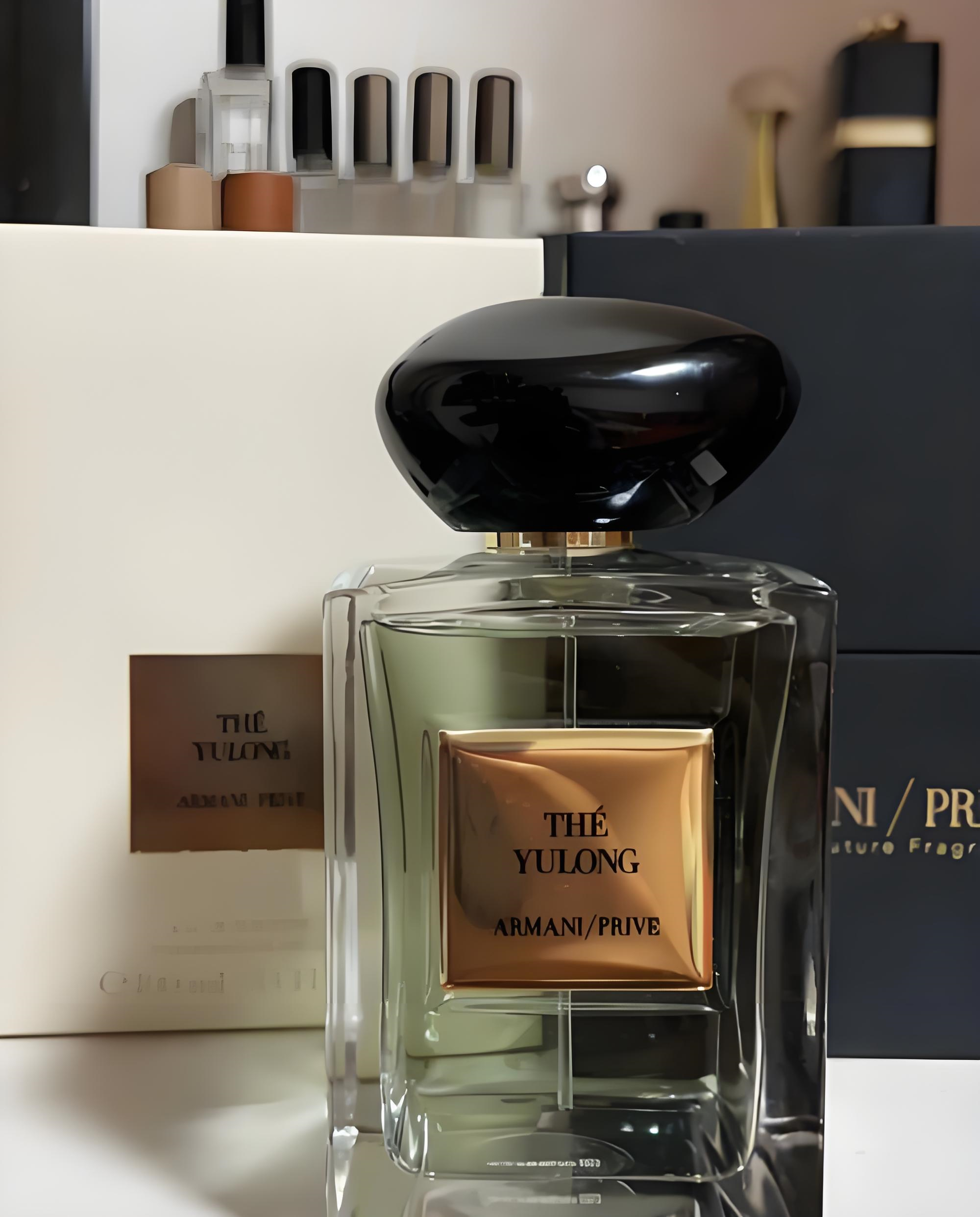
If I want Armani’s exact fragrance, I would buy Armani Thé Yulong. If I want a lower-priced fragrance designed to explore its citrus-and-tea character, I would consider IMIXX No.38 and use the five-checkpoint method to decide whether it works for me. The posted 50 mL prices provide a concrete cost distinction. The available product descriptions provide a reason to compare. Neither provides a completed scent-match test.
My main editorial standard is to make every important claim traceable. I have identified where the original brand supplies the facts, where IMIXX supplies its own product specifications, and where sensory conclusions remain unmeasured. I have also called out the sitewide numeric similarity claim and inconsistent luxury-price reference rather than ignoring them. To me, the most useful fragrance buying guide is one that gives customers a fair method, clear limitations, and permission to reach a different conclusion after smelling the perfume themselves.
Source and update note: I reviewed the public Armani and IMIXX product listings in November 2026 and used three external authoritative references in this article: the original house’s official product page, IFRA’s conformity guidance, and a PubMed-indexed analytical chemistry paper. Product listings can change. I have not represented this article as an independent perfume panel, chemistry validation, or completed side-by-side wear diary.
