
How to Choose the Best Tom Ford Oud Wood Dupe in the USA: A Perfumer’s Factory-Level Guide to Scent Architecture, Dry-Down, Raw Materials & Real Value
By Linus Dacke Thall | Fragrance Formulation & Supply-Chain Perspective at IMIXX Perfumes
Editorial disclosure: I am writing from the IMIXX side of the fragrance business, and IMIXX sells a Tom Ford Oud Wood dupe. That commercial relationship matters. I therefore separate four things throughout this guide: facts published by Tom Ford, facts published by regulators or industry bodies, specifications published by IMIXX, and my own sensory/formulation judgment.
I will not use an unexplained similarity percentage, an unpublished blind test, a vague “lab verified” claim, or a fixed longevity promise as if it were independent science. If you are comparing an inspired-by Oud Wood fragrance with the original, I believe the most useful approach is to understand the scent architecture first and then test the fragrance across time.
For readers in the United States who want to evaluate a Tom Ford Oud Wood dupe, my recommendation is to judge the dry-down, not the sales claim. That product link is intentionally provided early because No.48 is the IMIXX formula discussed in this guide; the rest of the article explains exactly how I think it should be evaluated rather than asking you to accept a marketing conclusion.
Article Summary: What I Think USA Shoppers Should Know First
My short answer: the best Oud Wood-inspired fragrance is not automatically the one with the strongest opening, the highest oil percentage, the longest stated wear time, or the lowest price. I care most about whether the spicy-woody structure remains coherent after the first impression has faded.
For me, the critical checkpoints are the opening at 0–15 minutes, the transition at roughly 45–90 minutes, the woody dry-down at 2–4 hours, and the residual character later in the wear. If the fragrance becomes a generic sweet amber after the opening, I do not consider that a convincing interpretation of the Oud Wood idea.
Tom Ford Oud Wood is compelling because it makes oud feel polished, dry, restrained, and wearable. The composition is not simply “dark wood plus sweetness.” Its identity depends on the relationship between cool spice, dry wood, sandalwood-like creaminess, vetiver-like dryness, oud-style depth, and a warm tonka-amber base. A strong alternative therefore has to preserve proportion and movement, not merely reproduce a note list.
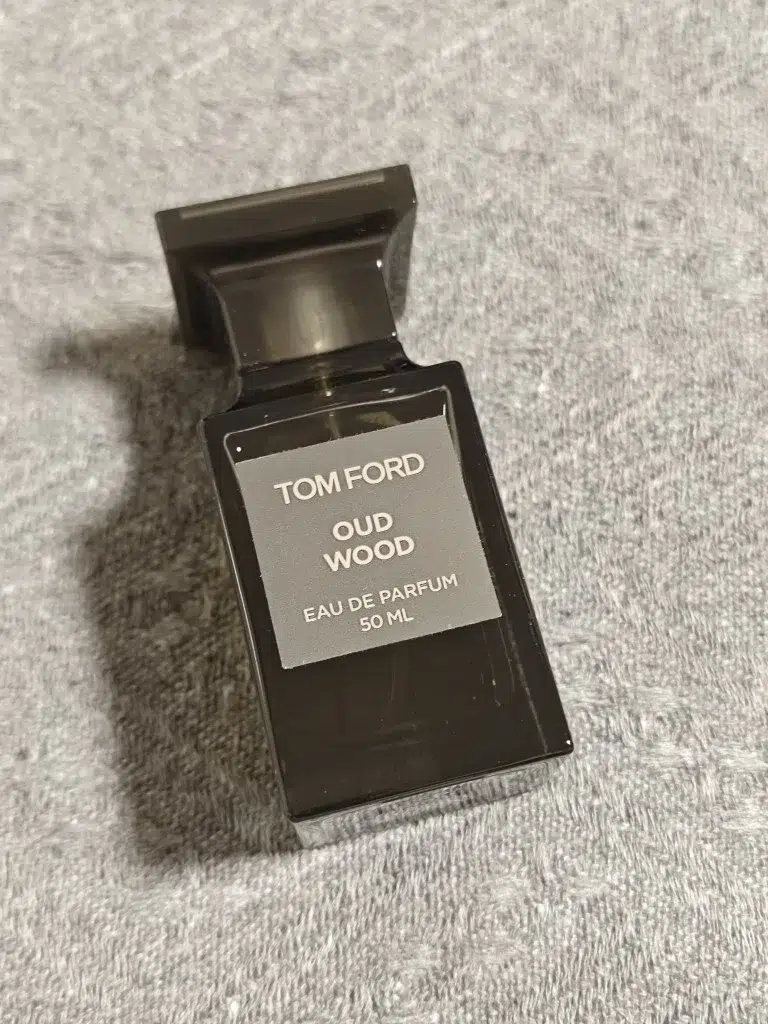
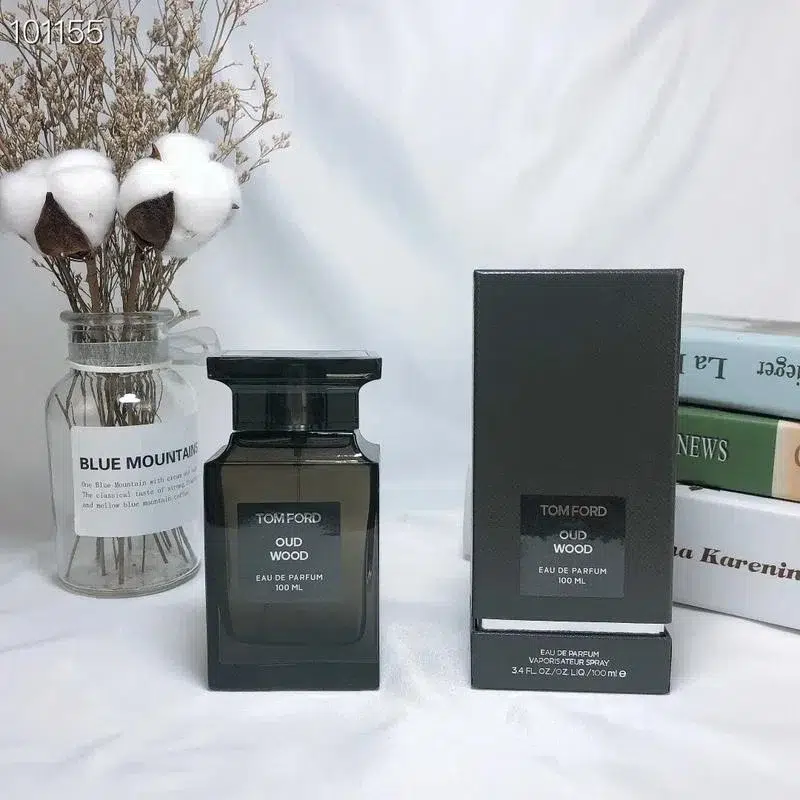
As of October 29, 2026, Tom Ford’s U.S. product page lists Oud Wood Eau de Parfum at $300 for 1.7 fl oz and highlights cardamom, pink pepper, patchouli, amber, oud, and tonka, with the product description also referring to rosewood, sandalwood, and vetiver. You can verify those current reference details on the official Tom Ford Beauty Oud Wood page.
On our side, the current IMIXX No.48 page lists 50 ml / 1.7 oz at $39 and publishes an 18% concentration. It describes Brazilian rosewood, cardamom, and Sichuan pepper in the opening; sandalwood, vetiver, and agarwood in the middle; and amber, vanilla, and tonka bean in the base. I treat those as brand-published specifications, not as independent proof that two liquids are identical.
My Evidence Ladder: How I Separate Facts, Experience, and Marketing
One reason fragrance guides lose credibility is that they mix different kinds of evidence together. An official price, a note description, a sensory impression, a customer review, and an analytical result are not interchangeable. I use the following evidence ladder when I write about fragrance.
| Evidence Type | Example | What I Think It Can Prove | What It Cannot Prove by Itself |
|---|---|---|---|
| Official manufacturer information | Price, size, published notes, usage directions | What the manufacturer currently states | Independent similarity or universal performance |
| Regulatory / standards information | FDA labeling context; IFRA standards framework | Rules, responsibilities, and technical framework | That a particular perfume smells better |
| Brand-published IMIXX specifications | 50 ml, $39, 18% concentration, listed note structure | What IMIXX says about its own product | Third-party superiority or a universal “best” ranking |
| My sensory framework | Opening, transition, dry-down, projection, balance | A repeatable way to evaluate scent behavior | A scientific equivalence percentage |
Knowledge point: I think transparency is more persuasive than pretending a brand-owned article is independent journalism. My job here is to show you how I evaluate the product, disclose where the information comes from, and give you enough methodology to disagree with me intelligently.
How Does Tom Ford Oud Wood Actually Smell?
Before I compare any perfume similar to Tom Ford Oud Wood, I start with the reference architecture. “Woody,” “oud,” and “spicy” are too broad to be useful on their own. The real question is how the fragrance moves from one stage to another.
The Opening: Dry Spice, Cardamom Lift, and Polished Wood
In the opening, I listen for lift rather than weight. Cardamom brings an aromatic, cool-spicy impression. Pepper gives sparkle and movement. Rosewood-style facets can make the transition into the wood feel polished rather than blunt. If an inspired-by fragrance starts with syrupy vanilla, heavy smoke, or a medicinal oud effect, it may still smell attractive, but it has already moved away from the restrained character I associate with the reference.
This is one reason I do not trust a five-second “first spray” review. Alcohol flash, volatile spice materials, and expectation bias are all strongest at the beginning. A dramatic opening can impress on social media and still tell you very little about how the fragrance will smell during most of the day.
The Heart: Oud Effect, Sandalwood Creaminess, and Vetiver Dryness
The heart is where I think formulation skill becomes easier to notice. Oud Wood is not compelling because it is the darkest oud on the market. It is compelling because the oud-style depth is disciplined. Sandalwood-like creaminess adds body; vetiver-like dryness prevents the composition from becoming too soft; spice remains present enough to keep the woods dimensional.
If I were evaluating a cheaper alternative to Tom Ford Oud Wood, I would ask three questions at the 60–90 minute mark: Has the spicy opening collapsed? Has the woody center become generic amber? Has sweetness started to dominate the structure? If the answer to all three is no, I am much more interested in the formula.
The Dry-Down: Amber, Tonka, Vanilla, and Restraint
For me, the dry-down is the decisive stage. Tonka and amber can make the wood feel warmer and more human on skin. Vanilla-like facets can soften edges, but too much sweetness changes the genre. A convincing Oud Wood-style dry-down should still feel woody first and warm second.
That is also why “longest-lasting Oud Wood dupe” and “closest Oud Wood dupe” are not the same search intent. A perfume can last ten hours as a sweet amber residue while losing the woody identity early. I care about meaningful longevity: how long the recognizable scent idea survives, not how long any trace remains.
Why an Oud Wood Note Pyramid Is Not a Perfume Formula
Consumers often assume that if two fragrances list the same notes, they should smell the same. In formulation work, that logic breaks down quickly. A note pyramid is a communication tool. It describes an olfactory story. It does not reveal the full formula, the dosage of each material, the supporting bases, the solvents, the stabilizing decisions, or the interactions among dozens of components.
Relative Dosage Changes Everything
Imagine two formulas that both contain cardamom, sandalwood effects, vetiver, oud materials, amber, and tonka. If one formula doubles the sweet base and reduces the dry woody support, the note list can remain identical while the smell changes dramatically. The human nose perceives relationships and contrast, not a checklist.
“Oud” Can Be an Accord, Not a Single Ingredient
In modern perfumery, an oud impression can be constructed from a combination of naturals, woody aroma materials, leathery facets, smoky nuances, balsamic materials, and trace modifiers. That does not automatically make the result inferior. In fact, a constructed accord gives a perfumer control over cleanliness, diffusion, consistency, cost, and style.
Natural agarwood itself varies enormously by species, origin, resin formation, extraction, age, and quality. Treating “natural oud” as one standardized smell is already an oversimplification. For an Oud Wood-style fragrance, the creative goal is usually not to reproduce the wildest natural agarwood possible; it is to create a polished oud effect that fits the rest of the composition.
Trace Materials Can Change the Whole Impression
Very small amounts of peppery, leathery, musky, balsamic, or diffusive materials can change how the entire perfume reads. A trace can make wood feel drier, smoother, smokier, more radiant, or more animalic. This is why reverse-engineering by note list alone is not enough. The craft is in balance and proportion.
Factory-level takeaway: when I judge an Oud Wood-inspired formula, I am not asking, “Does it contain the same named notes?” I am asking, “Does it recreate the same functional relationships—cool spice over dry wood, creamy body without heaviness, oud depth without harshness, and warmth without turning gourmand?”
How I Test an Oud Wood-Inspired Fragrance Across Time
I prefer a staged wear test because fragrance is an evaporation system. The materials you smell at minute five are not present in the same proportion three hours later. A useful test therefore needs fixed checkpoints.
| Time Point | What I Evaluate | Common Failure Mode | What I Write Down |
|---|---|---|---|
| 0–15 min | Cardamom/pepper lift, dry wood, alcohol integration, first texture | Harsh alcohol, medicinal wood, syrupy sweetness | Bright vs dark; dry vs sweet; smooth vs sharp |
| 45–90 min | Transition into sandalwood/vetiver/oud territory | Opening disappears into generic amber | How much woody identity remains |
| 2–4 hr | Dry-down structure, warmth, creaminess, dryness, oud effect | Excess sugar, smoke, leather, or flatness | Whether the reference DNA still feels recognizable |
| 6+ hr | Residual wood/amber/tonka character and useful persistence | Only a faint sweet residue remains | Skin scent vs still-projecting fragrance |
My Practical Wear-Test Routine
When I want a cleaner comparison, I start on unscented skin and keep the spray count controlled. If I am comparing two fragrances, I use comparable areas on opposite arms. I do not add scented lotion, aftershave, or another fragrance nearby. I smell at the same checkpoints rather than repeatedly sniffing every two minutes, because constant smelling increases olfactory fatigue.
I also separate skin persistence from projection. If I have to press my nose to my wrist to find a trace at hour eight, that is not the same thing as a fragrance projecting pleasantly at hour eight. For office wear in the USA, lower projection can actually be desirable. For someone who wants a date-night scent with more presence, the same behavior may feel too quiet.
What I Would Record in a Real Test Log
If I were building a publishable comparison dataset, I would record the date, room temperature, approximate humidity if known, application site, spray count, whether skin was moisturized, time-to-skin-scent, and subjective descriptors at each checkpoint. I would also repeat the test on more than one day. That is the level of detail I would want before making a strong performance claim.
Trust point: I have not inserted invented test dates, fake panel sizes, or fabricated laboratory values into this article. Where I describe a testing protocol, I am giving you the method I believe should be used—not pretending that an unpublished study already exists.
How Concentration Really Affects an Oud Wood Alternative
Another common shortcut is “higher oil concentration equals better perfume.” I do not think that is a reliable rule. Concentration changes the ratio of fragrance concentrate to carrier, but performance also depends on the volatility and substantivity of the materials, the balance of the formula, skin chemistry, temperature, application, and intended diffusion.
A dense formula can be highly concentrated and still sit close to the skin. A more diffusive formula can project strongly at a lower concentration. Some materials bloom quickly and leave early; others remain close to the skin for many hours. This is why “EDP,” “Parfum,” and “Extrait” should be understood as product categories and brand conventions, not as universal performance guarantees.
IMIXX currently publishes an 18% concentration for No.48. I consider that a useful specification because it tells you something about how the product is positioned. I do not consider it proof that No.48 must last a specific number of hours on every wearer in New York, Los Angeles, Miami, Houston, Seattle, Chicago, or Las Vegas.
What Maceration and Maturation Can—and Cannot—Tell You
“Maceration” is now one of the most overused words in fragrance discussions. In manufacturing, a fragrance concentrate or finished alcoholic perfume may be allowed to rest or mature as part of a controlled process. Depending on the formula and production system, manufacturing can also involve mixing, chilling, filtration, stability checks, and batch release criteria.
What I do not accept is the idea that every fragrance needs exactly four, eight, or twelve weeks to become “premium.” Different formulas behave differently. A citrus-heavy composition, a resinous woody fragrance, and a dense vanilla fragrance do not necessarily respond the same way to storage. Temperature, light exposure, headspace, raw-material solubility, and filtration all matter.
Consumers sometimes use “maceration” to mean leaving a newly delivered bottle in a drawer after shipping. If a bottle has experienced temperature swings, letting it return to a stable indoor temperature before judging it is sensible. But that home-resting practice is not the same thing as a documented factory maturation process.
What would strengthen this claim further? If we publish a precise maturation period for a production batch, I would want the page to state the batch procedure, storage conditions, release criteria, and the role responsible for quality control. That is better evidence than simply saying “we macerate longer.”
Why a Luxury Fragrance Can Cost More Without the Liquid Being “300 Dollars of Ingredients”
I think fragrance cost discussions become misleading when they invent a pie chart for another company’s private finances. Without internal accounting, I cannot responsibly tell you that a luxury fragrance is “90% marketing” or that the liquid costs a precise number of dollars.
A luxury retail price can include formulation and development, raw materials, stability work, safety work, packaging design, bottle and cap tooling, decoration, freight, duties, wholesale margins, retailer margins, sampling, inventory, returns, advertising, staff, real estate, corporate overhead, and brand positioning. Different companies allocate those costs differently.
A digitally native or factory-direct fragrance business can operate with a different cost structure. Simpler packaging, fewer retail intermediaries, tighter assortments, and direct-to-consumer fulfillment can reduce the final price. That makes a lower price structurally plausible. It does not prove that two formulas are chemically identical or that the cheaper one uses objectively “better” raw materials.
For USA shoppers, I think the fairest value calculation is simpler: compare the actual price you pay, bottle size, return terms, published specifications, how the fragrance smells after several hours, and how often you genuinely want to wear it.
Tom Ford Oud Wood vs IMIXX No.48: What I Can Verify and What I Cannot
Tom Ford Oud Wood Eau de Parfum
Current U.S. listed price: $300
Size referenced: 1.7 fl oz / 50 ml
Official direction: cardamom, pink pepper, patchouli, amber, oud, tonka; description also references rosewood, sandalwood, and vetiver.
Why I would choose it: I want the original Tom Ford formula, presentation, and brand experience.
IMIXX No.48 Inspired by Oud Wood
Current listed price: $39
Size: 50 ml / 1.7 oz
Published concentration: 18%
Published direction: rosewood, cardamom, Sichuan pepper; sandalwood, vetiver, agarwood; amber, vanilla, tonka.
Why I would choose it: I want a lower-cost interpretation of the classic spicy-woody Oud Wood direction and I am comfortable judging it on its own merits.
| Category | Tom Ford Oud Wood | IMIXX No.48 | My Interpretation |
|---|---|---|---|
| Market role | Original luxury fragrance | Inspired-by fragrance | Different price and brand propositions |
| Current listed price | $300 / 1.7 fl oz | $39 / 50 ml | No.48 has a much lower entry cost |
| Approx. price per ml | About $6.00/ml | About $0.78/ml | Useful value metric, not a quality score |
| Published concentration | EDP; exact percentage not stated on the official page | 18% | Concentration alone does not predict projection or longevity |
| Independent similarity percentage | Not applicable | Not claimed here | I prefer staged sensory evaluation to unexplained percentages |
| Best reason to buy | Original formula and full brand experience | Accessible interpretation and low entry cost | The “better” choice depends on what you value |
How IMIXX No.48 Approaches the Oud Wood Scent Architecture
When a USA shopper asks me which product on our site is intended for the classic Oud Wood direction, No.48 is the first one I point to. The reason is not a claimed 99% match. The reason is the architecture published on the product page.
Opening Structure: Rosewood, Cardamom, and Sichuan Pepper
I see the opening as the “framing device” for the woods. Cardamom gives aromatic lift, pepper adds sparkle, and rosewood-style facets help keep the opening polished. The goal is to avoid two extremes: a blast that smells purely alcoholic and a sweet opening that pushes the fragrance toward amber-gourmand territory before the wood has a chance to develop.
Middle Structure: Sandalwood, Vetiver, and Agarwood
This middle stage is the technical center of the concept. Sandalwood effects can give body and smoothness. Vetiver effects can create dryness and structure. Agarwood/oud effects add depth and darkness. What matters to me is not whether each note can be isolated individually, but whether the three functions work together.
If sandalwood dominates too strongly, the result can feel creamy but soft. If vetiver dominates, it can become austere or grassy. If the oud effect dominates, it can become medicinal, leathery, smoky, or animalic. The classic Oud Wood style is persuasive because no single one of those effects overwhelms the others.
Base Structure: Amber, Vanilla, and Tonka Bean
The base gives warmth and persistence, but restraint matters. I want enough vanilla-tonka roundness to make the woods comfortable on skin without making the fragrance read as a sweet dessert. That balance is especially important in warm U.S. climates, where heat can make sweet materials feel more expansive.
What I Can Verify About No.48
- Our current product page lists No.48 at $39 for 50 ml / 1.7 oz.
- Our current product page publishes an 18% concentration.
- The published scent structure moves from rosewood/cardamom/pepper to sandalwood/vetiver/agarwood and then amber/vanilla/tonka.
- The product is presented as unisex.
- The product page provides an ingredient declaration and product attributes for shoppers to review.
What I Do Not Present as Independently Proven
- I do not present an unexplained similarity percentage as scientific proof.
- I do not guarantee a single longevity number for every wearer, season, climate, or spray count.
- I do not claim that a lower retail price proves equal or superior raw-material quality.
- I do not claim that GC/MS can replace sensory evaluation.
- I do not claim that “natural” automatically means safer, more luxurious, or more beautiful.
I believe that distinction improves the product story. A consumer does not need a fake laboratory certainty to understand why a fragrance may offer strong value. They need a clear scent target, transparent specifications, a fair price, and a method for deciding whether the dry-down works for them.
Why GC/MS Is Useful—but Cannot Be a Magic “Similarity Meter”
Gas chromatography–mass spectrometry is an important analytical tool. It can help separate and identify many volatile components in a fragrance mixture. But I become skeptical when a marketing page jumps directly from “we used GC/MS” to “therefore the perfume is scientifically 99% identical.”
To make a numerical similarity statement meaningful, the method has to define what the percentage represents. Are we comparing peak identity, relative peak area, odor activity, sensory panel scores, weighted odor impact, or something else? How are proprietary bases treated? How are co-eluting peaks handled? What about compounds below detection limits? What about non-volatile components, batch variation, and instrument settings?
Even if two chromatograms look similar, the nose does not weight every molecule equally. A trace odorant with high impact can change the perception of a formula more than a large amount of a low-impact material. That is one reason analytical chemistry and sensory evaluation complement each other rather than replace each other.
For a consumer searching for the closest Oud Wood dupe in the USA, I would rather show a transparent four-stage wear protocol than offer an unexplained decimal.
How USA Climate Changes Oud Wood Performance
“How long does Oud Wood last?” sounds like a universal question, but climate and application change the answer. A cool November evening in New York is not the same test as an October afternoon in Las Vegas or Miami. Heat can increase diffusion and make sweet or ambery facets feel larger. Cold can suppress projection and make a fragrance seem quieter.
For Hot and Dry U.S. Climates
In hot, dry areas, I start with fewer sprays and give the fragrance time to expand. I also pay attention to skin hydration. Very dry skin can change how quickly a perfume seems to disappear, while clothing may hold certain materials longer than skin.
For Hot and Humid U.S. Climates
Humidity can make rich fragrances feel denser. If the formula has a warm amber-tonka base, I use a conservative spray count during the day and evaluate whether the sweetness becomes too prominent.
For Cold U.S. Weather
Cool weather often suits the woody, spicy, and ambery character of this fragrance family. The base can feel smoother and less expansive, making fall and winter a natural fit for many wearers.
For Office Wear
I do not think “stronger” automatically means “better” in an office. A polished wood fragrance with moderate projection can be easier to live with in elevators, meeting rooms, and shared workspaces. I would rather wear two controlled sprays and understand the formula than overspray and then conclude that it is overwhelming.
Is Oud Wood Better for Men, Women, or Unisex Wear?
I treat this scent family as unisex. Woods, cardamom, vetiver, amber, tonka, and oud effects do not have a biological gender. What people call “masculine” or “feminine” usually reflects cultural associations, styling, sweetness level, dosage, and personal history with fragrance.
If you are searching for a Tom Ford Oud Wood dupe for men, you may be especially drawn to the dry wood, spice, vetiver, and restrained amber. If you are searching for a Tom Ford Oud Wood dupe for women, I would not assume you need a sweeter version. Many women prefer the same polished, dry, woody profile. If you want a unisex Oud Wood alternative, your own skin test is more useful than the gender label on a product page.
How I Decide Whether a Tom Ford Oud Wood Alternative Is Worth Buying
I use a decision matrix rather than one “best” score. This helps prevent a common SEO problem: pretending every reader has the same priority.
| Your Priority | What I Look For | What I Avoid | Best Test |
|---|---|---|---|
| Closest scent direction | Dry spice, smooth woods, restrained oud, warm but controlled base | Excess sugar, medicinal oud, heavy smoke | Compare 15 min, 90 min, and 3 hr |
| Office wear | Moderate projection, smooth dry-down, low harshness | Large scent cloud in enclosed rooms | Two-spray full workday test |
| Date night | Warm close-range presence, smooth spice, attractive base | Opening that stays abrasive | Judge after two hours |
| Under-$50 value | Clear size, price, concentration, ingredients, shipping, returns | Unsupported “luxury quality” language | Calculate price/ml and test dry-down |
| Longest useful wear | Recognizable woody DNA remains late into wear | A long-lasting but generic sweet residue | Record transition to skin scent |
How U.S. Fragrance Labeling and IFRA Standards Fit Into the Buying Decision
I also think trust improves when brands explain what regulation and standards actually mean instead of using regulatory language as decoration. The U.S. FDA guidance on fragrances in cosmetics explains that companies marketing cosmetics are responsible for product safety and proper labeling, and that fragrance mixtures may be listed simply as “Fragrance” in the ingredient declaration under U.S. rules.
That means a retail ingredient list is not the same thing as the note pyramid and not the same thing as the full confidential fragrance formula. A product page can truthfully describe “cardamom,” “oud,” or “tonka” as olfactory notes without revealing every material used to build those effects.
Likewise, I do not think “IFRA compliant” should be treated as a magic badge. The International Fragrance Association’s explanation of conformity with the IFRA Standards states that IFRA itself does not issue a retail-product certificate and that a Certificate of Conformity does not replace a safety assessment or applicable law.
Knowledge point: I separate three layers: (1) the note story that helps you imagine the smell, (2) the formula materials that actually build the perfume, and (3) the retail ingredient declaration required for the finished product. Treating those as the same thing creates confusion.
How to Test IMIXX No.48 at Home Before You Decide
If you are considering IMIXX No.48 in the USA, I recommend a simple home test instead of chasing a similarity score.
- Start on clean, unscented skin. Avoid scented moisturizer on the test area.
- Use a controlled spray count. One or two sprays are enough for evaluation.
- Write down the opening. Note spice, sweetness, woodiness, sharpness, and smoothness at 5–15 minutes.
- Check the 60–90 minute transition. Ask whether sandalwood/vetiver/oud-style wood becomes clearer or whether the perfume collapses into generic amber.
- Evaluate at 2–4 hours. This is the stage I care about most for the classic Oud Wood profile.
- Separate projection from skin persistence. Record when the fragrance becomes intimate rather than waiting until every trace disappears.
- Repeat on another day. Weather, hydration, nose fatigue, and expectations can change one wearing.
- If you own the original, test blind when possible. Apply one fragrance to each arm, let them settle, and smell before reminding yourself which side is which.
If you perform that test honestly, your own result matters more than my recommendation. That is how I think a brand-owned buying guide should work.
Frequently Asked Questions About Tom Ford Oud Wood Dupes in the USA
What is the best Tom Ford Oud Wood dupe?
I do not think there is one universal answer. The best option depends on whether you prioritize scent fidelity, projection, longevity, price, or access in the USA. I recommend judging the spicy opening, 60–90 minute transition, and 2–4 hour woody dry-down separately. On IMIXX, No.48 is the formula specifically positioned around the classic Oud Wood direction.
What is the closest Tom Ford Oud Wood dupe?
For me, “closest” only has meaning if you define the stage of wear. A fragrance can smell close for ten minutes and move far away later. I compare at roughly 15 minutes, 60–90 minutes, and three hours, paying particular attention to the balance among dry spice, sandalwood-like creaminess, vetiver dryness, oud depth, and amber-tonka warmth.
What perfume smells like Tom Ford Oud Wood?
I look for dry aromatic spice, polished woods, a restrained oud effect, sandalwood/vetiver structure, and a warm but controlled amber-tonka base. If a fragrance becomes heavily sugary, smoky, medicinal, or animalic, I consider it a different interpretation even if the note list looks similar.
Is there a Tom Ford Oud Wood dupe under $50 in the USA?
Yes. IMIXX No.48 is currently listed at $39 for 50 ml, so it fits the under-$50 search intent at the time of writing. I still recommend checking the current product page before purchase because pricing and promotions can change.
How long does Tom Ford Oud Wood last?
I would not promise one universal number. Skin hydration, temperature, humidity, application site, spray count, clothing, and olfactory adaptation can change perceived wear. I prefer to record when the fragrance becomes a skin scent rather than claiming that it “lasts exactly X hours” for everyone.
Which Tom Ford Oud Wood dupe lasts the longest?
I separate longevity from similarity. A fragrance can last a very long time while losing the Oud Wood identity early. I consider useful longevity to be the period during which the spicy-woody DNA still feels intentional, not simply the time until the final trace disappears.
Why is Tom Ford Oud Wood so expensive?
I would not pretend to know Tom Ford’s private cost breakdown. Luxury retail pricing can reflect formulation, development, packaging, logistics, wholesale and retail margins, inventory, sampling, marketing, overhead, and brand positioning. A lower-cost direct-to-consumer model can reduce some of those layers, but lower price alone does not prove formula equivalence.
Is Tom Ford Oud Wood worth the money?
If you value the original formula, presentation, Tom Ford brand experience, and collecting the authentic reference, it may be worth the premium to you. If you mainly want the broad spicy-woody scent direction at a much lower entry price, an inspired-by fragrance may offer better personal value.
What are the notes in Tom Ford Oud Wood?
Tom Ford’s current U.S. page highlights cardamom, pink pepper, patchouli, amber, oud, and tonka, while the product description also discusses rosewood, sandalwood, and vetiver. I use those official details as the reference architecture rather than relying on an unofficial copied note pyramid.
Is Tom Ford Oud Wood unisex?
I treat Oud Wood as a unisex woody fragrance. The key materials—woods, spice, vetiver, amber, tonka, and oud effects—can work on anyone. Your preference for dryness, warmth, projection, and sweetness matters more than a gender label.
Is there a Tom Ford Oud Wood dupe for men?
Yes. If you are shopping for men, I would focus on dry woods, cardamom, vetiver, and restrained amber rather than assuming “for men” must mean stronger, smokier, or more aggressive.
Is there a Tom Ford Oud Wood dupe for women?
Yes. I do not think a women’s interpretation needs extra sugar or flowers. Many women prefer the same dry, polished spicy-woody structure. Test the actual fragrance on skin rather than using the gender label as a proxy for smell.
What season is Tom Ford Oud Wood best for in the USA?
I find the style especially intuitive in fall, winter, and cool evenings because woods, amber, and tonka feel comfortable in lower temperatures. In hot U.S. climates, reduce the spray count and watch how heat expands sweetness and projection.
Can I wear an Oud Wood dupe to the office?
Yes. I actually think moderate projection can be an advantage in an office. Start with a conservative spray count, especially in shared rooms, elevators, and close meetings. A polished wood fragrance does not need to fill the room to feel sophisticated.
Is Oud Wood good for date night?
The warm sandalwood, amber, tonka, and spicy-wood profile can work very well at close range. I judge a date-night fragrance after two hours rather than at first spray because the dry-down is closer to what another person will smell during most of the evening.
Are Tom Ford Oud Wood dupes legal in the USA?
An inspired-by fragrance is not the same thing as a counterfeit that pretends to be an authentic Tom Ford product. Trademark, trade dress, labeling, and advertising questions can be fact-specific, so I do not present this article as legal advice. As a consumer, I would avoid sellers that misrepresent the identity or origin of the product.
What is the difference between Oud Wood, Oud Wood Parfum, and Oud Wood Intense?
I treat them as separate fragrance targets and separate search intents. Someone looking for a classic Oud Wood alternative should compare against the classic reference. Someone looking specifically for an Oud Wood Intense dupe or Oud Wood Parfum alternative should evaluate against that exact version rather than assuming the names are interchangeable.
Does a higher fragrance concentration always mean longer-lasting Oud Wood performance?
No. I consider concentration one variable among many. Material volatility, diffusion, formula design, skin, climate, and application all influence performance. A dense high-concentration formula can stay close to the skin, while a more diffusive lower-concentration formula can project more strongly.
Should I macerate a new Oud Wood dupe at home?
If the bottle has just experienced extreme shipping temperatures, I think letting it stabilize at room temperature before judging it is reasonable. But I do not believe every fragrance needs a fixed number of weeks in a drawer. Home resting is not the same thing as a documented production maturation process.
Final Recommendation: How I Would Choose an Oud Wood Alternative in the USA
If you remember one line from this guide, remember this: I would buy the dry-down, not the claim.
I would choose the fragrance that keeps the polished spicy-woody idea coherent after the opening, feels comfortable in my real climate and lifestyle, and costs an amount I am happy to pay. I would ignore unsupported similarity percentages, separate projection from longevity, and treat note pyramids as descriptions rather than formulas.
If owning the original formula, Tom Ford presentation, and brand experience matters most to you, I would buy or sample the original. If your priority is a lower-cost way to explore the classic spicy-woody Oud Wood direction, I would start with IMIXX No.48 Inspired by Oud Wood and use the four-stage test in this article to decide whether it earns a place in your rotation.
That is a brand recommendation, not an independent award. I am comfortable saying that plainly. Our current page lists No.48 at $39 for 50 ml with an 18% published concentration, and the listed scent architecture targets the familiar rosewood-cardamom-pepper to sandalwood-vetiver-oud to amber-vanilla-tonka progression. Those facts explain why I recommend it as the first IMIXX product to test for this scent profile. Your own skin test should decide the rest.
If you want to understand how IMIXX positions its broader fragrance collection, you can also visit the IMIXX Perfumes homepage.
