

How to Choose the Best Gucci Bloom Dupe in the USA: My Guide to White-Flower Structure, Longevity & Value
When I evaluate a Gucci Bloom dupe, I do not start with a similarity percentage, a dramatic “identical” claim, or the loudest opening spray. I start with structure. Gucci Bloom is recognizable because its white-floral idea feels unusually concentrated and continuous: jasmine brings petal-like brightness, tuberose supplies creamy volume, and a green-to-powdery floral effect keeps the bouquet from collapsing into generic sweetness.
If you already know that this lush jasmine-and-tuberose direction is what you want, my practical starting point is this Gucci Bloom dupe from IMIXX. I am linking it early because it is the product this guide discusses, not because I want you to treat my recommendation as independent research. IMIXX sells the fragrance, so I have a commercial interest to disclose clearly. My goal here is to give you a repeatable way to judge the scent on your own skin and to separate what I can verify from what remains subjective.
Editorial disclosure
I am writing from the perspective of a fragrance seller discussing a product in the IMIXX catalog. This is not an independent review of IMIXX No.43, and I do not treat first-party product-page reviews as independent validation. Where I make factual claims about Gucci Bloom, fragrance-industry standards, or U.S. cosmetic regulation, I point to primary or official sources. Where scent perception or wear time varies from person to person, I say so.
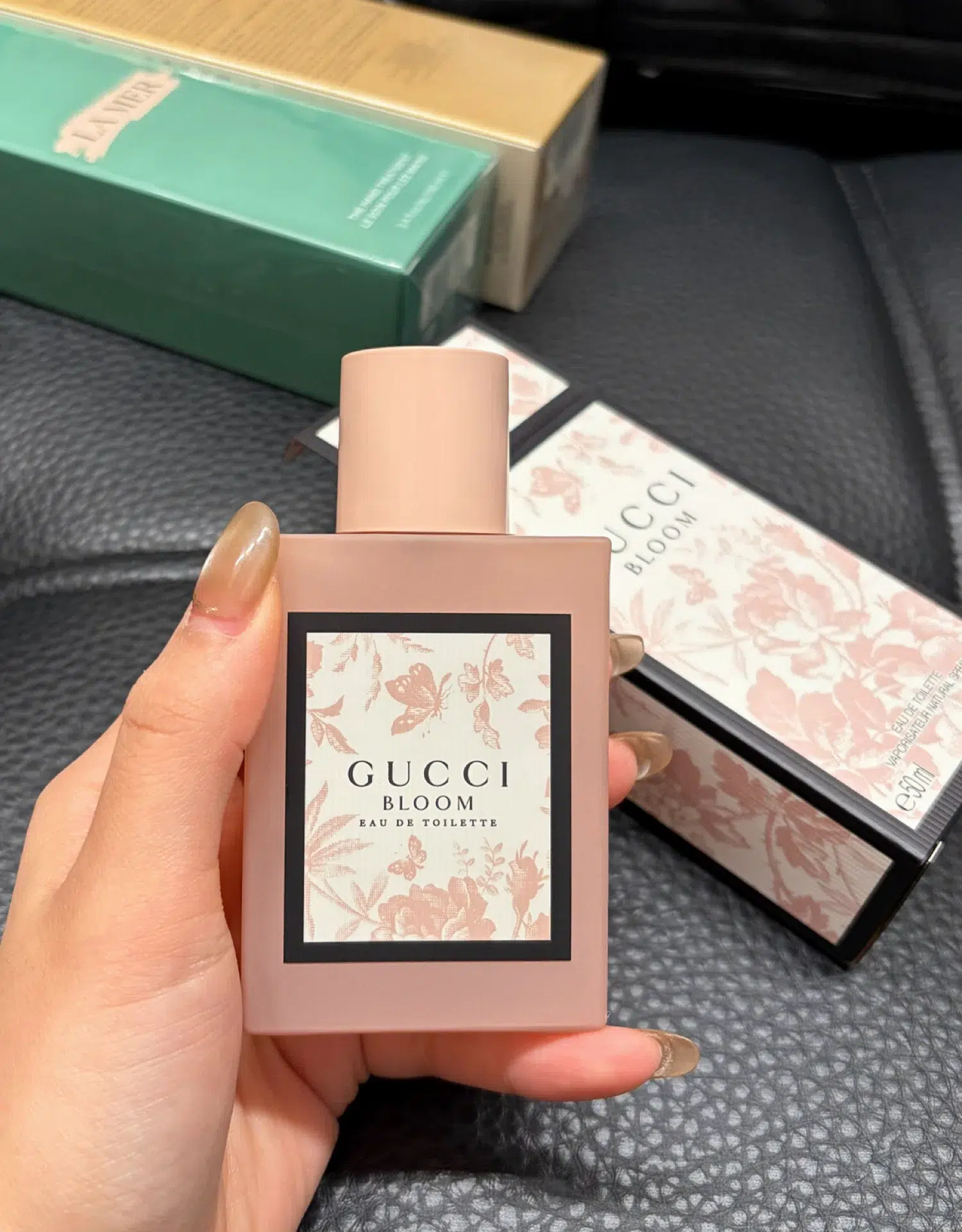
My Quick Answer: What I Look for in a Convincing Bloom-Style White Floral
I look for four things before I call a fragrance convincing: a bright but not detergent-sharp jasmine impression, a creamy tuberose heart with real body, a green botanical tension that keeps the flowers feeling alive, and a dry-down that still belongs to the same floral story two or more hours later. If those four pieces are coherent, the perfume can feel recognizably Bloom-like even if it is not a molecule-for-molecule copy.
Opening
I want a fresh, botanical floral lift rather than a metallic or air-freshener effect.
Heart
I want tuberose to become creamy and substantial without turning into candy or bubblegum.
Dry-down
I check whether the white-flower identity survives after the brightest materials fade.
Performance
I separate longevity, projection, and scent trail instead of treating them as one number.
What Gucci Bloom Smells Like: The Original Structure I Use as the Reference
The cleanest reference point is Gucci’s own description of the original Eau de Parfum. Gucci identifies tuberose, jasmine bud extract, and Rangoon creeper as defining materials and explains the fragrance through the idea of a thriving, flower-filled garden. In a conversation with master perfumer Alberto Morillas, the brand also describes Bloom as opening more fully at once rather than relying on a sharply separated top-heart-base pyramid. I use that description as the structural benchmark, rather than inventing extra notes to make a comparison sound more technical than it is.
You can review that primary source on the official Gucci website. I prefer this source for the core scent concept because it comes from the brand and perfumer responsible for the fragrance, not from a reseller copying a note pyramid from another page.
Jasmine: the fresh-petal dimension
I do not think of jasmine as a single smell. Depending on the materials and proportions used, a jasmine accord can lean luminous, green, creamy, fruity, indolic, airy, soapy, or narcotic. In this scent family, I listen for freshness and petal texture. The jasmine should create light around the denser tuberose. If it becomes aggressively sharp, the whole fragrance can veer toward detergent. If it is too quiet, the composition can feel thick and flat.
Tuberose: the creamy architectural center
For me, tuberose is the load-bearing wall of the Bloom experience. It gives the perfume density, creaminess, and the sensation of a room filled with white flowers. But tuberose is easy to caricature. Push it too sweet and it can read as bubblegum or tropical candy; push it too green and it can become waxy or medicinal. I judge a Bloom-inspired perfume by whether its tuberose gains body after the first half hour while staying floral.
Rangoon creeper and the green-powdery bridge
Gucci describes Rangoon creeper as part of Bloom’s distinctive floral identity and associates it with a softly powdery character. As a consumer-facing test, I translate that into something simpler: I want to perceive more than jasmine plus tuberose. I want a suggestion of stems, leaves, pollen, damp petals, and soft floral powder. That green-to-powdery bridge is what stops the bouquet from feeling like a two-note sketch.
Two perfumes can publicly list jasmine and tuberose yet smell very different because odor quality depends on materials, dosage, supporting accords, volatility, balance, and the way the composition evolves. I therefore treat note lists as orientation, not proof of similarity.
Why I Do Not Use Unsupported “95% Identical” Scores
A percentage sounds precise, which is exactly why it can be misleading. If I say that one fragrance is “95% identical” to another but do not publish who tested it, how many people participated, whether the bottles were blinded, what concentration and batch were used, which time points were scored, and how the number was calculated, I have offered marketing theater rather than reproducible evidence.
I would rather explain the dimensions you can actually evaluate: opening character, floral balance, tuberose texture, green lift, continuity of the dry-down, total detectable wear, projection, and value. That approach is less glamorous than a giant accuracy badge, but it is more useful because another person can repeat it.
| Claim | What I Need Before I Trust It | What I Do Instead When Evidence Is Missing |
|---|---|---|
| “95% identical” | Published scoring method, blinded comparison, sample size, and repeatable criteria | Describe specific similarities and differences without assigning a pseudo-scientific score |
| “Lasts 8+ hours” | Defined test conditions, spray count, skin/fabric method, and what “lasts” means | Report a range or describe the wearer-specific test protocol |
| “Premium ingredients” | Supplier documentation, specifications, or meaningful quality-control detail | Avoid equating price, naturalness, or origin stories with quality by default |
| “IFRA approved” | Correct explanation of what IFRA Standards do and do not mean | Describe conformity or safety responsibilities accurately instead of implying a blanket endorsement |
My Repeatable Wear-Test Method: How I Evaluate a Gucci Bloom Dupe on Skin
The biggest E-E-A-T improvement I can make is to show you a method, not merely an opinion. I use a staged wear test because the first 30 seconds tell me almost nothing about how a white-floral perfume will behave over a full day. You can reproduce this test at home with a notebook, your phone timer, and consistent spray placement.
Step 1: standardize the setup
I begin on clean, unscented skin. I avoid fragranced lotion, scented laundry products touching the test area, and another perfume nearby. I use the same number of sprays from roughly the same distance each time. If I am comparing two fragrances, I put one on each forearm and swap sides on a second testing day. That side swap helps reduce the risk that warmth, habitual movement, or simple expectation is driving the result.
Step 2: record the 0–15 minute opening
At the start, I write down whether the floral impression is green, sharp, creamy, sweet, airy, soapy, or powdery. I am not deciding which perfume “wins.” I am checking whether the opening points toward a living white-flower garden or toward a generic sweet floral. I also note whether alcohol dominates longer than expected, but I do not confuse normal alcohol evaporation with poor quality.
Step 3: judge the 30–60 minute heart
This is the most informative stage for me. Tuberose should have expanded, jasmine should still provide some lift, and the composition should feel integrated rather than layered like separate scented strips. I ask: Is the tuberose creamy or candy-like? Is the jasmine floral or cleaning-product sharp? Is there still a green thread? Has sweetness taken over?
Step 4: check continuity at 2–3 hours
Many fragrances make a polished first impression and then become anonymous. At two to three hours, I look for continuity. I do not require the fragrance to smell unchanged, because perfume is supposed to evolve. I do require it to preserve enough of the white-floral identity that I can connect the dry-down to the opening without reading the label.
Step 5: separate longevity from projection at 5–8 hours
I test close to skin and from normal conversational distance. If I can still smell the fragrance with my nose near the wrist but nobody around me would detect it, that is longevity without much projection. If it produces a noticeable aura for two hours and then fades quickly, that is strong early projection with shorter total wear. Neither profile is automatically better. The best choice depends on whether you want office discretion, a noticeable scent trail, or simply a perfume you can still smell at the end of the day.
| Time Point | What I Record | Why It Matters |
|---|---|---|
| 0–15 min | Alcohol fade, green lift, jasmine freshness, harshness, sweetness | Shows the quality and direction of the opening, but not the whole perfume |
| 30–60 min | Tuberose body, jasmine balance, green texture, creaminess | This is where the Bloom-style white-floral architecture becomes easiest to judge |
| 2–3 hr | Floral continuity, powder, musk, remaining botanical character | Reveals whether the fragrance keeps its identity after the opening fades |
| 5–8 hr | Skin detectability, projection, scent trail, comfort | Separates total wear from room-filling strength |
My nose, mood, environment, and expectations can change. A second wear is not glamorous, but it is one of the easiest ways to reduce snap judgments. If I am comparing two perfumes, I also swap arms on the second day and keep spray count consistent.
What I Can and Cannot Claim About IMIXX No.43
The current IMIXX product page lists No.43 Inspired by Bloom at $39 for 50 ml and shows 19 verified reviews. Those are useful first-party facts about the listing and customer feedback environment. They are not the same as a laboratory comparison, an independent editorial test, or a blinded consumer panel. I keep that distinction visible because trust is more valuable than pretending every piece of evidence has equal weight.
The first-party reviews include comments describing the scent as floral, jasmine-forward, strong with a small number of sprays, wearable for everyday use, and long-lasting for some individuals. I treat those comments as examples of wearer experience, not universal performance claims. Fragrance reviews are particularly sensitive to skin, climate, spray amount, nose adaptation, and personal taste.
That is the price and size I verified on the live IMIXX product page at the time of this update. Pricing and availability can change.
I can use these to understand reported experiences, but I do not present them as independent proof of similarity or longevity.
Without a published blinded protocol, I will not use a precise similarity percentage as if it were an objective scientific result.
If you want to inspect the live listing, current price, size, and customer reviews yourself, you can view IMIXX No.43 Inspired by Bloom. I recommend checking the page at the time you buy because price, stock, promotions, and policies can change.
Gucci Bloom vs. IMIXX No.43: My Decision Framework, Not a “Winner” Table
I do not think a fair comparison should declare one product universally “better.” The original and an inspired fragrance answer different shopping priorities. One gives you the original composition, Gucci bottle, brand presentation, and ownership experience. The other can make sense if your priority is entering the same general white-floral direction at a lower price.
Gucci Bloom Eau de Parfum
- The original composition and brand presentation
- Officially described around jasmine, tuberose, and Rangoon creeper
- Best fit when owning the Gucci product itself matters
- Price varies by size, market, and retailer
IMIXX No.43 Inspired by Bloom
- Designed for shoppers seeking a Bloom-style white-floral direction
- Currently listed at $39 for 50 ml
- Best fit when price and everyday use matter more than owning the original bottle
- I recommend testing the full dry-down rather than trusting a similarity slogan
| Decision Factor | Original Gucci Bloom | IMIXX No.43 |
|---|---|---|
| What you are buying | The original designer fragrance and presentation | A separate inspired fragrance in the same general scent direction |
| Core scent target | A lush white-floral garden built around its official composition | A jasmine-tuberose-forward white-floral interpretation |
| Evidence standard | Original product information can be checked through Gucci | Price, size, and first-party reviews can be checked on IMIXX; similarity remains a sensory judgment unless independently tested |
| Best for | Buyers who want the original composition and luxury presentation | USA shoppers prioritizing scent direction and a lower entry price |
Why Concentration Alone Does Not Tell Me Which Fragrance Will Last Longer
I often see perfume oil percentage used as a shortcut for quality and longevity. I do not use it that way. Concentration can influence wear, but it is not a universal performance meter. Different aroma materials evaporate at different rates, formulas distribute weight differently, and the same percentage can behave very differently depending on the composition.
In a dense white floral, simply adding more aromatic concentrate can even make the perfume feel heavier without improving diffusion. If the tuberose becomes too dominant, the jasmine can lose air. If dense base materials accumulate, the perfume may sit closer to skin. Performance is therefore a result of formula architecture, material volatility, application, skin, and environment, not one impressive number on a product page.
I can smell a perfume on my wrist after seven hours while its scent trail has become quiet. I can also experience the reverse pattern: a perfume projects strongly for the first hour and then fades quickly. When I compare value, I record both.
What Resting and “Maceration” Can Really Tell Me
I am cautious when the word “maceration” is used as a magic explanation for quality. Controlled maturation and resting can be normal parts of fragrance manufacturing. A finished mixture may need time for assessment, filtration, and production consistency. But time does not turn an imbalanced formula into an elegant one. If the jasmine is abrasive because the formula is wrong, a few extra weeks in a bottle do not guarantee that the problem disappears.
The more meaningful manufacturing questions are mundane but important: Are batches identifiable? Are raw materials stored appropriately? Is there a quality-control process? Are changes documented? Is the finished product evaluated consistently? These are the boring gears behind the pretty bottle.
For industry context, I refer readers to the International Fragrance Association’s official Standards resource. IFRA explains that its standards form a risk-management system that can prohibit, restrict, or set specifications for certain fragrance materials. It also states that final responsibility for placing safe products on the market remains with companies. I consider that a more accurate framework than using “IFRA” as a vague badge that supposedly certifies every aspect of a perfume.
How I Think About Raw Materials Without Falling for “Natural vs. Synthetic” Myths
I do not divide fragrance materials into a fairy-tale battle where natural automatically means luxurious and synthetic automatically means cheap. Modern perfumery uses both. Natural extracts can bring extraordinary complexity, but they can also vary from harvest to harvest and contain many constituent molecules. Synthetic aroma materials can provide stability, diffusion, effects that are difficult to obtain from nature, and precise control over facets of an accord.
For a white-floral perfume, the question I care about is whether the materials work together. The tuberose needs weight without syrup. The jasmine needs brightness without detergent harshness. Green facets need enough bite to suggest living vegetation without turning bitter. Musks and softer materials need to support the bouquet without erasing it. Quality lives in those relationships.
That is also why I avoid claiming that two brands use “the same suppliers” unless I have documentation I can show. Supplier identity does not prove formula identity anyway. Two perfumers can buy materials from the same large fragrance supplier and build completely different perfumes.
How Skin, Nose Adaptation, and Application Change the Result
One reason fragrance reviews contradict each other is that wear conditions are not standardized. Skin moisture, body temperature, spray amount, clothing, ambient temperature, humidity, and nose adaptation can all change what a wearer notices. I therefore treat “lasts all day” or “gone in two hours” as personal observations unless test conditions are described.
Dry skin
On dry skin, I usually test once without moisturizer and once over a plain, unscented moisturizer. That does not guarantee a dramatic improvement, but it gives me a fairer sense of whether the fragrance benefits from a more hydrated surface. I keep everything else the same, especially spray count.
Warm skin and hot environments
Warmth can make a dense floral feel more expansive. In hot conditions, I start with fewer sprays because tuberose and jasmine can become overwhelming before I personally register them as “too much.” Nose adaptation can make the wearer less aware of a scent that remains noticeable to other people.
Clothing
Fabric can hold fragrance differently from skin, so I consider it a separate test. I patch-test delicate fabric first because perfume can spot or discolor some materials. I also avoid using fabric performance as proof of skin longevity; they are different surfaces with different evaporation behavior.
How USA Climate Changes the Way I Wear a Bloom-Style Perfume
The United States is too climatically diverse for me to give one “best season” answer. A creamy white floral in humid South Florida can feel much bigger than the same perfume in a cool, dry interior. I use climate as an application variable, not a rule that tells you when you are allowed to wear something.
| USA Climate Example | What I Watch For | My Starting Approach |
|---|---|---|
| Hot & humid Miami, Houston, New Orleans | Large floral diffusion, faster sense of saturation, heavy tuberose | Start with fewer sprays and reassess after 30 minutes |
| Dry heat Phoenix, Las Vegas | Quick opening evaporation and the effect of skin dryness | Test on hydrated skin and avoid judging only the first 10 minutes |
| Mild coastal Los Angeles, San Diego | Balanced year-round wear with less temperature extremity | Use moderate application, then tune for indoor or outdoor plans |
| Cooler seasons New York, Chicago, Boston | Softer projection and a creamier impression | Normal application, with an optional extra spray for outdoor wear |
Fragrance Safety in the USA: What I Verify Before Making Safety Claims
Safety claims deserve more discipline than marketing usually gives them. I do not say a fragrance is safe merely because it uses natural materials, and I do not say synthetic materials are unsafe simply because their names sound chemical. Both natural and synthetic substances can have use limits or sensitivity considerations depending on the material and exposure.
For U.S. context, the U.S. Food and Drug Administration’s fragrance guidance explains that perfumes and colognes used to make a person more attractive are generally regulated as cosmetics. The FDA also states that cosmetic companies and marketers are legally responsible for ensuring their products are safe when used as labeled or customarily used, and that retail cosmetics generally require ingredient labeling even though fragrance mixtures may often appear collectively as “Fragrance.”
That distinction matters to me because “complies with a standard” and “FDA approved” are not interchangeable phrases. I avoid implying premarket FDA approval for ordinary perfumes. If you have known fragrance sensitivities, allergies, or a history of reactions, the product label and manufacturer information matter more than any SEO claim about being “clean,” “natural,” or “non-toxic.”
I treat IFRA Standards as an industry risk-management framework and FDA guidance as the relevant U.S. regulatory context. Neither should be stretched into a blanket claim that a finished perfume is universally irritation-free or individually suitable for every wearer.
What You Are Really Paying For: Original Designer Fragrance vs. Inspired Fragrance
I think the “designer perfume is only expensive because of the logo” argument is too simplistic. A designer retail price can reflect fragrance development, bottle engineering, molds, caps, decoration, cartons, quality assurance, global distribution, wholesale margins, retail margins, advertising, sampling, merchandising, inventory risk, and the brand experience itself. The liquid is only one layer of the onion.
A direct-to-consumer fragrance business can operate differently. It may use standardized packaging across multiple scents, sell online rather than through department-store networks, and work with a more focused development brief. Those choices can reduce certain costs. They do not prove that every affordable fragrance equals every luxury fragrance, but they do explain why price alone is a weak proxy for olfactory quality.
| Value Layer | Designer Model Can Include | Direct-to-Consumer Model Can Include |
|---|---|---|
| Development | Original creative brief, perfumer development, brand approval cycles | A narrower brief focused on an established scent direction |
| Packaging | Custom bottles, molds, decoration, presentation | More standardized bottles and packaging across a catalog |
| Distribution | Wholesale and retail networks with multiple margin layers | Online direct sales can reduce distribution layers |
| What I judge | Original scent plus brand and presentation value | Scent direction, consistency, wearability, policies, and price |
How I Shop for the Best Gucci Bloom Dupe Under $50
Under $50, I do not let “cheap” become the entire decision. A fragrance that costs less but annoys me after 45 minutes is not good value. I want a coherent floral structure, a dry-down I enjoy, realistic performance for my use case, transparent product information, and a buying experience that does not hide important details.
- I check the scent direction. Jasmine and tuberose should be central if I want a true Bloom-style profile.
- I check the 30–60 minute heart. The perfume should become more integrated, not merely sweeter.
- I check the two-hour dry-down. The white-floral identity should still be recognizable.
- I check real-world fit. An office fragrance and a wedding fragrance can have different ideal projection.
- I check price and size together. Bottle price without volume can distort value comparisons.
- I check policies. Shipping, returns, and satisfaction terms matter when buying scent online.
- I check the evidence behind claims. If a brand gives an exact similarity percentage, I look for the methodology.
On those practical terms, IMIXX No.43 sits inside the under-$50 category at its currently listed $39 price. I see that as a reason to consider it, not proof that it is automatically the best choice for every nose.
When I Recommend a Dupe vs. a Broader White-Floral Alternative
“Dupe” and “similar perfume” are not the same shopping intention. When I say dupe, I mean a fragrance designed to evoke a recognizable reference profile. When I say similar perfume, I mean a fragrance that shares part of the same family, such as tuberose and jasmine, without necessarily trying to reproduce Bloom’s overall architecture.
I choose a Bloom-inspired dupe when…
- I already enjoy the original scent direction.
- I want a lower-cost everyday bottle.
- I want to preserve an original bottle for special use.
- I specifically want the jasmine-tuberose-green-floral balance.
I explore broader white florals when…
- I love tuberose but want a different treatment.
- I want more jasmine and less creamy weight.
- I prefer a lighter or greener flower style.
- I like the “garden” idea but do not need close resemblance.
My Office, Everyday, and Occasion-Wear Advice
White florals can be wonderfully versatile, but tuberose is not shy. In a small office, I start with one or two sprays and evaluate the scent trail before adding more. I do not assume that because I stop noticing the perfume, everyone else has. Nose adaptation can turn a strong scent into a private ghost for the wearer while coworkers are still very aware of it.
For outdoor events, dinners, weddings, and social occasions, the same floral volume can be an advantage. The point is not to follow a rigid spray chart. I adjust to room size, temperature, duration, and how close I expect to be to other people. Courtesy is part of good fragrance wear.
How I Make a Bloom-Style Perfume Last Longer Without Overspraying
- I apply to clean skin and test over an unscented moisturizer if my skin is dry.
- I avoid rubbing my wrists together because it is unnecessary and can change how I experience the opening.
- I use fewer sprays in hot, enclosed spaces and reassess after the scent has expanded.
- I patch-test fabric before spraying clothing, especially delicate or pale materials.
- I store the bottle away from direct sunlight and extreme temperature swings.
- I judge longevity at several time points instead of repeatedly spraying whenever I stop noticing the scent.
Dense jasmine and tuberose can cause nose fatigue. If I keep adding fragrance because I personally stop noticing it, I can accidentally overwhelm the room and make my own longevity test meaningless.
My Evidence Ladder: How I Decide What Deserves the Most Trust
Not all fragrance information carries the same evidentiary weight. I use a simple ladder. For the original fragrance’s declared concept and materials, I prioritize the original brand and perfumer. For safety frameworks, I prioritize IFRA and U.S. regulatory sources. For IMIXX price, size, policies, and first-party reviews, I use the IMIXX product page. For subjective similarity, I treat my own wear test and customer reactions as experience, not universal fact.
| Question | Source I Trust Most | What It Can Establish |
|---|---|---|
| What defines Gucci Bloom? | Gucci and master perfumer statements | Official scent concept and named key materials |
| What do IFRA Standards mean? | IFRA | How its ingredient-risk standards work and where responsibility remains |
| How are perfumes treated in U.S. cosmetics regulation? | FDA | Regulatory treatment, safety responsibility, and labeling context |
| What is IMIXX No.43’s current price and size? | Live IMIXX product page | Current first-party listing details |
| Does it smell close to the original on me? | My own controlled side-by-side wear | Personal sensory similarity under my test conditions |
What Would Make This Review Even Stronger?
I want to be explicit about the limits of this article. A stronger future version would publish a blinded side-by-side wear study with a defined sample size, consistent spray count, multiple time points, and a scoring rubric that separates scent similarity from projection and longevity. It would also include testing across more than one batch and more than one climate. That kind of evidence would let readers audit the method instead of trusting my conclusion.
Until that exists, I consider the best practice to be transparency: explain what I know, show how I test, identify the commercial relationship, cite primary sources for factual claims, and avoid fake precision. In fragrance writing, credibility often comes from admitting where the nose ends and the evidence begins.
Frequently Asked Questions
What is the best Gucci Bloom dupe?
I define the best option as the one that recreates the recognizable white-floral structure you care about, not the one with the biggest similarity claim. I look for fresh jasmine, creamy tuberose, green botanical texture, and a dry-down that stays coherent. IMIXX No.43 is my brand’s $39, 50 ml interpretation, but I recommend judging it with the wear-test method above rather than treating my recommendation as independent.
What perfume smells most like Gucci Bloom?
I look for a perfume centered on jasmine and tuberose with a green-to-powdery white-floral effect. I do not decide from the note list alone. The 30–60 minute heart and the two-hour dry-down tell me much more about whether the fragrance keeps the same architectural idea.
What are the main Gucci Bloom notes?
For the original Eau de Parfum, I use Gucci’s own description: tuberose, jasmine bud extract, and Rangoon creeper are central to the fragrance’s garden-like white-floral identity. I prefer that primary source over copied note pyramids.
Is there a Gucci Bloom dupe under $50?
Yes. At the time of this update, IMIXX No.43 Inspired by Bloom is listed at $39 for 50 ml. I always recommend checking the live product page before ordering because price, stock, promotions, and shipping terms can change.
Which Gucci Bloom dupe lasts the longest?
I do not give one universal winner because longevity depends on formula, spray count, skin, climate, and what you mean by “lasting.” I measure close-to-skin detectability separately from projection and scent trail, ideally over at least two wears.
Does a higher perfume-oil concentration always last longer?
No. I treat concentration as one variable among many. Material volatility, formula balance, skin, environment, and application all influence performance. A denser formula can sit closer to skin even when its concentration is high.
Does perfume maceration make a dupe better?
Controlled resting can be part of fragrance manufacturing, but I do not treat it as a cure-all. Time cannot guarantee that a poorly balanced formula becomes refined. I care more about formulation quality, storage, batch control, and repeatable quality assurance.
Is Gucci Bloom good for everyday or office wear?
It can be, especially if you enjoy assertive white florals. I use lighter application in small offices because tuberose can project strongly, particularly in warm rooms. One or two sprays is a sensible starting point before adding more.
Is Gucci Bloom better for summer or winter?
I wear the style year-round, but I change dosage. Heat and humidity can make jasmine and tuberose feel larger, while cooler weather can make the same bouquet feel smoother and more contained. Climate affects application more than it dictates a fixed season.
Are inspired fragrances the same as counterfeit perfumes?
No. I use “inspired fragrance” to mean a separate product sold under its own brand that evokes aspects of another scent profile. A counterfeit product falsely presents itself as the authentic branded item. Those are different categories.
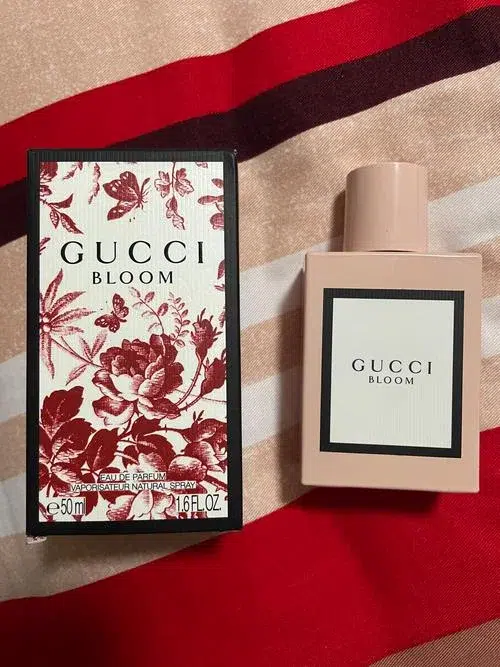
My Recommendation for USA Shoppers
If what you love about Gucci Bloom is the sensation of a dense white-flower garden, I would first decide which facet matters most to you. Is it the fresh jasmine? The creamy tuberose? The green botanical feeling? The soft powderiness? Once you know the answer, your shopping becomes much more precise.
If you want the original composition, bottle, presentation, and Gucci ownership experience, I think the original is the straightforward choice. If you mainly want a lower-priced fragrance in the same broad white-floral direction for everyday wear, then I think IMIXX No.43 is worth testing, especially at its current $39 price point.
My strongest recommendation is not “trust me.” It is: use the same test every time. Smell at 15 minutes, 60 minutes, two to three hours, and late in the day. Record jasmine freshness, tuberose texture, green floral character, dry-down continuity, projection, and skin longevity. Repeat the test once. That small amount of discipline turns fragrance shopping from a roulette wheel into something much closer to a useful experiment.
Want to evaluate No.43 with the same framework?
Check the current size, price, availability, and verified first-party reviews before you buy.
Authoritative References I Used
I used three primary or official references for claims that should not depend on a seller’s opinion:
- Gucci: Alberto Morillas and Alessandro Michele discuss Gucci Bloom — for the original fragrance concept and named floral materials.
- International Fragrance Association: IFRA Standards — for how fragrance-material restrictions, prohibitions, and specifications work.
- U.S. FDA: Fragrances in Cosmetics — for U.S. cosmetic safety responsibility and labeling context.
