

How to Choose the Best Creed Aventus Dupe in 2026: A Fragrance Formulator’s 7-Test Guide to Scent Accuracy, Longevity & Value
By Linus Dacke Thall — Founder of IMIXX Perfumes and fragrance formulator with more than 10 years of scent-formulation experience.
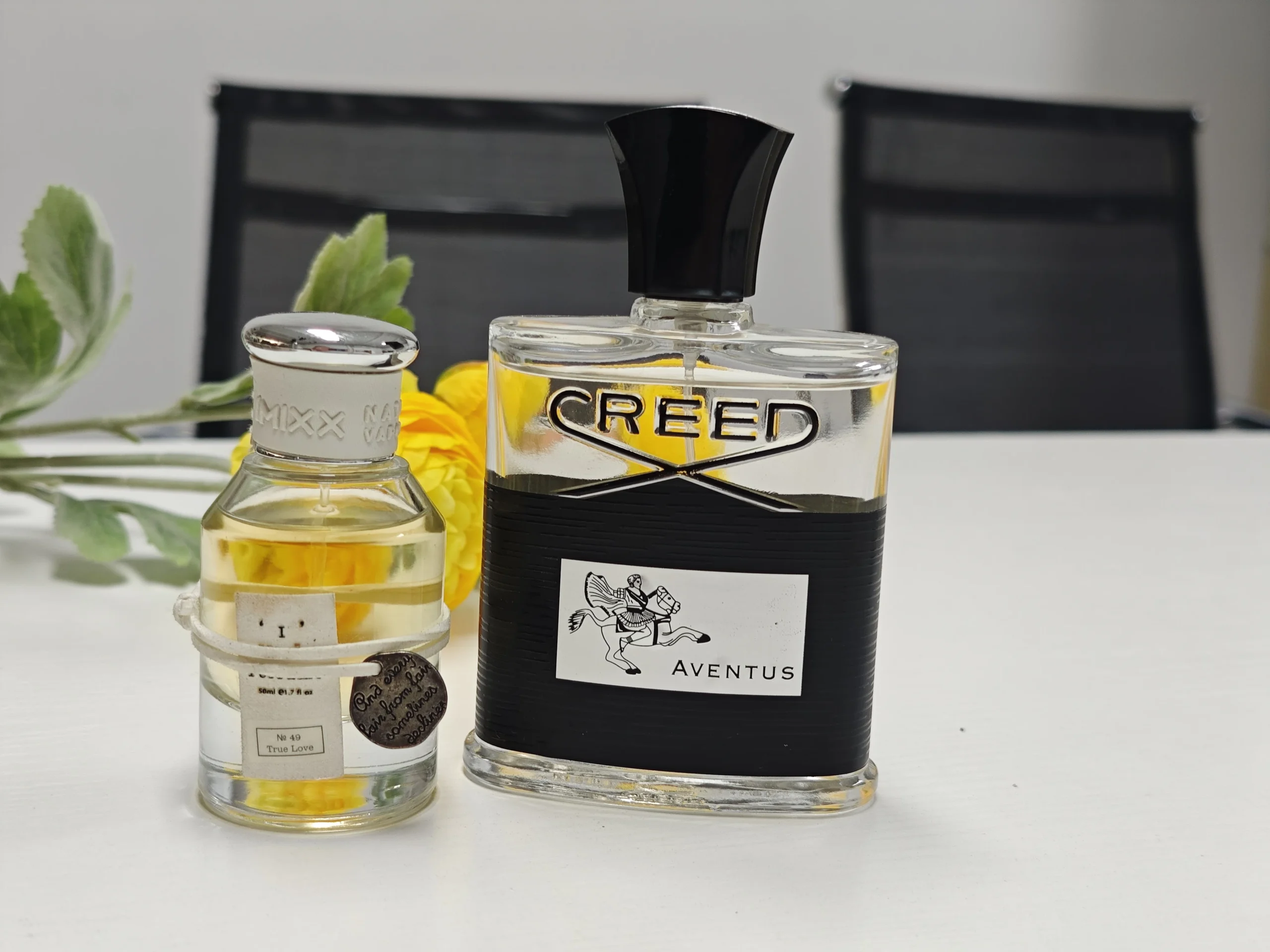
Quick Summary: How I Judge an Aventus-Inspired Fragrance Without Falling for Marketing
When I evaluate a Creed Aventus dupe, I do not start with the loudest pineapple note, the biggest longevity promise, or a percentage printed beside the word “similarity.” I start with the complete wearing curve. Aventus works because bright citrus and dark fruit lead into a recognizable pineapple accord, then meet dry smoky birch, woods, patchouli and musk. If an inspired fragrance gets only the first ten minutes right, I do not consider the job finished.
If your goal is to buy a Creed Aventus dupe for regular wear, I recommend judging seven things in order: opening quality, pineapple-to-birch balance, the 30–90 minute transition, dry-down character, real-world longevity and projection, concentration/formula architecture, and manufacturing transparency. That is the same framework I use below to explain why some fragrances smell impressive on a test strip for five minutes yet become generic on skin later.
My practical conclusion is simple: the best Aventus-inspired option is not the one that shouts “clone” the loudest. It is the one that gives you a coherent fruity-smoky-woody profile over time, performs appropriately for your skin and lifestyle, discloses enough product information to be evaluated, and is priced in a way that makes sense for how often you will actually wear it.
I deliberately removed the usual “Top 10 clone” format. I do not rank competing dupe brands here. Instead, I explain the scent architecture, the formulation logic, the limits of GC-MS claims, the role of skin evaporation, the economics of direct-to-consumer fragrance, and a repeatable home wear-test protocol. That gives you a method you can use even if prices, batches, or marketing claims change.
What Does Creed Aventus Smell Like in 2026? I Start With the Current Official Reference
Before I ask what is the closest fragrance to Creed Aventus, I define the reference. This is one of the biggest weaknesses I see in fragrance content online: a writer copies an old note pyramid, treats it as a formula sheet, and then judges everything else against that copied list.
For the current reference, I use Creed’s official U.S. Aventus page. Creed currently describes Aventus as dry woods, fresh, citrus and fruity, with Calabrian bergamot, Sicilian lemon and blackcurrant leaf accord in the head; pineapple accord, pink pepper and jasmine accord in the heart; and birch, patchouli and musk accord in the base.
| Stage | Current Creed reference | What I listen for | Common formulation failure |
|---|---|---|---|
| Opening | Bergamot, lemon, blackcurrant-leaf effect | Brightness with tart-green tension, not flat sweetness | Piercing lemon-cleaner sharpness or syrupy fruit |
| Heart | Pineapple accord, pink pepper, jasmine accord | A believable pineapple impression with air and lift | Candy-like pineapple that never develops |
| Base | Birch, patchouli, musk accord | Dry smoke, woods, clean musk and structural persistence | Burnt harshness, muddy woods, or a weak base |
Why “pineapple + birch” matters more than memorizing a note list
From a formulator’s perspective, the signature is a relationship. Pineapple creates brightness and recognizable character; birch creates dryness and contrast; woods, patchouli and musk keep the composition from collapsing after the fruit volatilizes. That is why a fragrance can contain “pineapple” and still fail to smell convincingly Aventus-like.
I also treat note pyramids as sensory maps, not ingredient disclosures. “Pineapple accord” does not mean the perfumer simply poured pineapple juice into alcohol. It is a constructed olfactory effect. The same principle applies to smoke, amber, moss and many other perfume notes. A formula is quantitative and proprietary; a note pyramid is descriptive. Confusing the two makes fragrance comparisons sound more scientific than they are.
How I Test a Creed Aventus Dupe: My 7-Criteria Fragrance Framework
Search terms such as best Creed Aventus clone, closest Creed Aventus alternative, longest lasting Aventus-inspired fragrance, and best projecting Aventus clone sound precise, but they are often used without a test method. I prefer to define the test first and the recommendation second.
| My test | When I evaluate it | What I am checking | Why it matters |
|---|---|---|---|
| 1. Opening quality | 0–5 min | Controlled citrus, believable fruit, no abrasive solvent-like effect | The most volatile phase is easy to exaggerate |
| 2. Pineapple–birch balance | 5–30 min | Fruit stays vivid while dry smoky structure appears | This contrast defines the style |
| 3. Transition | 30–90 min | No sudden collapse, sour turn, or generic woody wall | Good perfumery connects stages |
| 4. Dry-down | 2–6 hr | Smooth woods, musk, patchouli/moss-like depth, residual brightness | Weak copies often fail here |
| 5. Longevity & projection | Hourly | Useful scent life and appropriate radius | Performance must fit the use case |
| 6. Formula architecture | Before purchase + during wear | Concentration, materials, balance and volatility | A percentage alone is not quality |
| 7. Transparency & value | Before purchase | Traceable claims, realistic pricing, quality information | Trust is part of product quality |
Test 1: I judge the opening for quality, not volume
The first five minutes can mislead shoppers because highly volatile materials rush from the skin. A fragrance may appear “stronger” simply because its opening is sharper. I look for brightness without a household-cleaner edge, fruit that feels layered rather than syrupy, and enough green or dry structure to stop the top from becoming juvenile.
A forceful opening is not automatically bad. Top notes are designed to move. What concerns me is an opening that stays abrasive or has no relationship to the next stage. If you are sampling in a store, give the fragrance at least 20–30 minutes before deciding whether the initial sharpness was purposeful lift or poor balance.
Test 2: I listen for the pineapple-to-birch handoff
This is the part I care about most. The closest Aventus-style interpretation should not merely contain a pineapple impression. It should show how that fruit changes once dry, smoky and woody materials arrive. If the birch side is too aggressive, the result becomes ashy or medicinal. If the fruit is too sweet, it loses the dry elegance that makes the style compelling.
In practical terms, I want the pineapple to remain recognizable while becoming less literal. The composition should feel drier, more dimensional and more grown-up as it develops. That transition is harder to build than a loud opening, which is why it is a more useful quality signal.
Test 3: I wait 30–90 minutes before calling anything “close”
Perfume is time-based. Top, heart and base are convenient language, but materials overlap. At 30–90 minutes I ask whether citrus has softened naturally, whether fruit is still identifiable, whether the woody structure is emerging, and whether the base is starting to support the whole blend.
A weak imitation often reveals itself here. The opening may have been recognizable, but once the obvious fruity materials fade, the fragrance becomes a generic woody amber. A better interpretation keeps a family resemblance throughout the evaporation curve.
Test 4: I give the dry-down more weight than the first spray
At two to six hours, I look for a smooth woody-musky foundation, controlled smoke, patchouli or moss-like depth, and enough residual brightness to connect the base to the opening. I do not want a “hole” in the composition where the fruit disappears and only a heavy amber block remains.
This is also where comfort matters. A technically persistent fragrance can still be tiring if the base is rough or monotonous. For daily wear, I would rather have a coherent, comfortable six-hour experience than a twelve-hour fragrance I want to scrub off after two hours.
Test 5: I separate longevity from projection
When shoppers ask how long Creed Aventus dupes last, I avoid one universal number. Longevity is how long a scent remains detectable; projection is how far it radiates at a given time; sillage is the trail it leaves in the air. Those are related but not identical.
Independent research helps explain why wear time varies. A 2025 study indexed by PubMed examined fragrance evaporation on volunteers and found that both the properties of fragrance molecules and measurable skin properties contributed to differences in evaporation behavior. That is why “lasts 10 hours” should be treated as a wearer report, not a physical constant.
My own performance notes use four fields: how long the fragrance projects at normal conversational distance, when it becomes a skin scent, whether another person can still detect it after I have become nose-blind to it, and whether the remaining dry-down still smells attractive. That produces more useful information than one big hour count.
Test 6: I treat concentration as a specification, not a quality score
EDP versus EDT, or 15% versus a higher number, does not automatically tell me which fragrance is better. Concentration can affect density and persistence, but formula architecture still decides how the fragrance moves. Two formulas at the same nominal concentration can behave very differently because their materials have different volatility, odor thresholds, diffusion and substantivity.
A higher concentration can even reduce perceived lift if the formula becomes too dense. For an Aventus-style fragrance, I want enough top-note mobility to create brightness, enough heart structure to preserve the fruit-smoke contrast, and enough substantive base to create a polished dry-down. Balance matters more than chasing the highest percentage.
Test 7: I ask whether the manufacturer shows its work
This is where I think brand-owned content must be more demanding of itself. If I mention laboratory instrumentation, similarity analysis, special sourcing, safety standards or maturation, I should tell you what is public, what is inferred, and what is still undocumented. A technical term is not evidence by itself.
In manufacturing, repeatability depends on unglamorous details: raw-material control, batch records, clean handling, trained staff, sample retention, filling consistency, storage, and appropriate safety documentation. Those practices matter whether a bottle costs $49 or several hundred dollars.
Why an Aventus-Style Formula Is Harder Than “Pineapple + Birch + Musk”
A note list can make perfumery sound like a recipe: add pineapple, add birch, add musk, stir, and you are done. Real formulation is more complicated. I have to think about volatility, odor threshold, diffusion, masking, lift, persistence, texture, and how one material changes the perception of another.
Volatility is the hidden structure behind top, heart and base
The top/heart/base model is useful because it gives consumers a language for time, but it is not three sealed boxes. More volatile materials usually become noticeable quickly and leave sooner. More substantive materials stay longer and can shape the whole composition. In a good formula, those phases overlap so the scent changes gradually rather than falling off a cliff.
That is why I design the opening and dry-down as one system. A beautiful fruit accord can become hollow once its most volatile parts leave. A heavy base can suppress the brightness that makes the opening attractive. The skill is in managing the handoff.
What modern woody, amber, musk and moss-like materials contribute
IMIXX No.35 publicly lists materials such as Hedione, Iso E Super, Ambroxan, Helvetolide, Musk T and Mousse LHB/Evernyl among its disclosed aroma materials. A public material list does not reveal a full quantitative formula, but it does offer clues about architecture.
Broadly speaking, diffusive woody materials can create dry volume; amber materials can add persistence and radiance; modern musks can smooth the base and extend it; moss-like materials can add shaded green dryness; and jasmine-related materials such as Hedione can create air and diffusion between fruit and woods. None of these is a “magic Aventus molecule.” The effect comes from proportion and interaction.
Maceration and maturation: useful production steps, not magic numbers
I also avoid the internet myth that every perfume needs exactly four, six or eight weeks to become “good.” Resting, maturation, filtration and stability decisions depend on the concentrate, solvent system, materials and manufacturing process. A fixed number without batch data is marketing, not methodology.
For the same reason, I do not invent an IMIXX maturation period here. If a manufacturer publishes batch-specific dates, retention samples, stability observations or a defined production SOP, that is meaningful first-party evidence. Until then, it is more trustworthy to explain the principle than to manufacture false precision.
How I Evaluate IMIXX No.35 Without Asking You to Take My Word for It
Because this article is published by IMIXX, the most important E-E-A-T improvement is not stronger praise. It is stronger separation between fact, brand claim and judgment. I want you to be able to see exactly what the product page tells you, what that information reasonably supports, and where more evidence would still be useful.
Current listed price: $49
Size: 50 ml / 1.7 oz
Listed concentration: 15%
Direction: Fruity, smoky, woody, musky
My reason to consider it: accessible price, disclosed concentration, named aroma materials, and a structure intentionally designed around the Aventus scent family.
Reference role: the original branded fragrance
Current U.S. direction: dry woods, fresh, citrus and fruity
Signature contrast: bergamot/pineapple against smoky birch, patchouli and musk
Why someone may prefer it: the exact current Creed product, house heritage, official presentation, collecting value and brand experience.
| No.35 information | What is public | What I think it supports | What I will not claim from it |
|---|---|---|---|
| Price & size | $49; 50 ml at this fact check | About $0.98/ml before shipping/tax; clearly budget-oriented | Low price does not prove scent quality |
| Concentration | 15% listed | A useful comparison specification | A guaranteed number of wear hours |
| Scent structure | Blackcurrant, bergamot, apple, pineapple; dry birch, florals, patchouli; moss/musk/amber-style base language | Intentional targeting of the fruity-smoky-woody family | Identical ingredients or identical proportions |
| Named aroma materials | Hedione, Iso E Super, Ambroxan, Helvetolide, Evernyl/Mousse LHB and others | A modern diffusive woody/musky/moss-like toolkit | The quantitative formula |
| Customer feedback | The current page displays 44 reviews marked verified | Qualitative real-customer feedback | A controlled blind sensory panel |
| 99.98% similarity statement | A manufacturer-reported number appears in IMIXX marketing | It tells you how the brand positions its internal analysis | Independent scientific verification without public method/report |
Why I no longer use “99.98%” as the reason you should buy
A scientific-looking number can create false certainty. A similarity percentage only becomes meaningful when the calculation is defined: reference batch, sample preparation, instrument method, peak treatment, identification library, weighting, repeats, similarity equation, and ideally a separate sensory protocol. Without those details, I consider the number a manufacturer-reported internal claim, not an independently verified consumer truth.
That distinction makes the recommendation more credible, not less. Analytical chemistry and smell are connected, but they are not interchangeable. Trace odorants can have very low odor thresholds; two chromatograms can look close while a small sensory difference is obvious, and two people can perceive the same formula differently.
What would make IMIXX’s evidence stronger
If I were building the strongest possible evidence page, I would publish a concise methodology sheet with the reference sample, IMIXX batch code, instrument model, GC column and method, sample-preparation approach, identification library, similarity calculation, number of replicate injections, analyst/date, and a separate blinded sensory procedure. I would also show original photos of controlled evaluation blotters, retained samples, filling/QC steps, and—only where genuinely used—the analytical instrument or a redacted chromatogram.
Those additions would do more for trust than repeating “lab tested” or “99.98%” in more places. They would create first-party information competitors cannot copy without doing the work.
How I Use GC-MS Without Confusing Chemistry With Human Smell
GC-MS—gas chromatography–mass spectrometry—is a legitimate analytical technique used to separate volatile components and gather molecular information. In fragrance work, it can help with composition analysis, quality control, comparison, troubleshooting and raw-material investigation.
But GC-MS does not automatically produce a statement such as “this smells 99.98% identical.” Someone must define which peaks count, how peaks are identified, how unknowns are handled, whether abundance is normalized, what reference sample is used, and how the final similarity score is calculated. Sensory perception then adds another layer because odor impact is not proportional to chromatographic peak size alone.
What a transparent lab claim should include
- Reference fragrance and batch/code, where appropriate.
- Inspired-fragrance sample batch and production date.
- Instrument make/model and GC column.
- Basic sample-preparation and analytical method.
- Spectral library or retention-index approach.
- Rules for unidentified or low-level peaks.
- The mathematical definition of “similarity.”
- Repeat injections and quality-control checks.
- Analyst or laboratory identity and test date.
- A separate sensory evaluation method if the brand makes claims about perceived smell.
This kind of disclosure is how a manufacturer turns technical capability into consumer trust. The important move is “show your work,” not “use more scientific vocabulary.”
How Skin Type, Heat, Office Wear and Daily Use Change Aventus-Style Performance
Dry skin vs. more emollient skin
People often use the phrase “skin chemistry,” but I prefer to be more specific. Hydration, sebum, temperature, barrier properties, application dose and individual perception can all change the wearing experience. If your skin is very dry, using an unscented moisturizer and allowing it to absorb before spraying can make your test surface more consistent. I still recommend testing on your own skin rather than assuming a universal dry-skin rule.
Summer and hot weather
An Aventus dupe for summer can work well because citrus and pineapple feel naturally fresh in heat, but warmer air can increase diffusion. I therefore lower the spray count before I decide a fragrance is “too strong.” A smoky or ambered base that felt moderate indoors can become more noticeable outside. Two sprays in real heat can tell you more than five sprays in air conditioning.
Office wear
For a Creed Aventus alternative for the office, I prioritize smoothness and controlled projection over maximum power. A fragrance that radiates across an elevator is not automatically performing “better.” In close shared spaces, I want the scent to remain polished inside a personal radius. Start with two or three sprays and adjust based on your workplace rather than chasing internet performance numbers.
Daily wear and cost of ownership
This is where a lower-priced inspired fragrance can make practical sense. If you enjoy the Aventus scent profile but hesitate to use an expensive bottle for commuting, errands, travel, casual dinners or workdays, a more affordable bottle can remove the psychological cost of every spray. For daily wear, comfort, consistency and cost per wear are often more useful than theoretical maximum longevity.
How to Compare Original Creed Aventus and IMIXX No.35 Without Pretending They Are the Same Product
I think the fairest comparison is architectural and economic, not rhetorical. Creed Aventus is the original branded product. No.35 is an independent Aventus-inspired fragrance. They can occupy a similar olfactory direction while still serving different buying motivations.
| Decision point | Original Creed Aventus | IMIXX No.35 |
|---|---|---|
| What you are buying | The current original Creed product and house experience | An independent fragrance inspired by the Aventus scent direction |
| Core sensory idea | Fresh citrus/fruit, pineapple, smoky birch, woods and musk | Designed around a related fruity, smoky, woody and musky architecture |
| Public product detail | Official current note structure and Creed manufacturing story | 15% concentration, named notes/materials, 50 ml size and current price |
| Main value proposition | Original house, heritage, presentation, collecting and exact current expression | Budget-conscious frequent wear in a similar scent family |
| My advice | Choose it if ownership of Creed itself is part of the value | Test it if scent direction and cost per wear matter more than luxury-house ownership |
I would never tell a collector that an inspired fragrance makes the original pointless. If you want the exact current Creed composition, bottle, service and brand experience, buy the original. If you mainly want an Aventus-style pineapple-birch-woods profile for frequent wear and you are trying to keep the bottle cost around the under-$50 range, No.35 is the IMIXX product I would test first.
Why Creed Aventus Costs More—and How I Think About Factory-Direct Value
I am cautious with perfume “cost breakdown” content because it often invents percentages. Without audited company data, I cannot responsibly tell you that the liquid is exactly 2%, 5% or 10% of a luxury bottle’s retail price. Luxury fragrance economics include far more than aromatic materials.
A retail price can reflect formula development, perfumery work, quality programs, bottles, decoration, boxes, warehousing, logistics, distributors, department stores, boutiques, samples, marketing, campaigns, staff, customer service, returns and brand equity. A direct-to-consumer manufacturer may reduce some distribution and presentation layers, but that does not mean fragrance materials, quality control or compliance become free.
| Value layer | Luxury-house model | Factory-led / direct model | Question I ask as a buyer |
|---|---|---|---|
| Fragrance concentrate | One part of total product economics | Still a real cost; savings elsewhere do not make materials free | Does the brand disclose concentration or meaningful product specs? |
| Packaging | May include custom glass, decoration and luxury presentation | Can be simpler and more functional | Am I paying for collectible presentation or mostly scent? |
| Distribution | May include wholesale, retail partners and boutiques | Direct web sales can remove some intermediaries | Does channel efficiency show up in the final price? |
| Marketing & brand equity | Global campaigns and long-term brand building can be significant | Often relies more on digital acquisition, content and repeat customers | How much do I value brand ownership itself? |
| Manufacturing & QC | Must be controlled | Must also be controlled | Can the manufacturer substantiate its quality claims? |
Price per milliliter is a cleaner comparison than “fraction of the cost” slogans
No.35 is currently listed at $49 for 50 ml, which is about $0.98 per ml before tax or shipping. That number is easy to verify and easy to compare. Cost per wear is less precise because atomizers and spray counts vary, but you can still track your own routine: bottle price, sprays per wear, number of wears and whether you reapply.
I also include emotional value. A prestige bottle you love as an object can be worth more to you than its cost per ml suggests. A $49 bottle you comfortably wear three times a week can also deliver more everyday value than a luxury bottle you rarely spray. Neither preference is irrational; they are simply different value systems.
How I Check IFRA and Safety Language Before Trusting a Technical Fragrance Claim
One phrase I would avoid is “IFRA certified” unless the statement is carefully defined. IFRA explains that it does not itself certify compliance with the IFRA Standards. A Certificate of Conformity is established in the fragrance-supply relationship, and it does not replace a safety assessment or applicable legal requirements.
That distinction matters for E-E-A-T because technical accuracy builds trust. If I say a fragrance conforms to a standard, I should be able to identify the relevant product/use category and documentation. “Safe because IFRA approved us” is too vague. A precise conformity statement supported by actual records is better.
How to Compare an Aventus-Inspired Fragrance With the Original at Home
You do not need laboratory equipment to make a better buying decision. You need a controlled routine. The goal is not to calculate a fake “97.6%” sensory score; the goal is to observe the same stages under the same conditions.
- Start with clean, unscented skin. Avoid fragranced lotion, soap residue or another perfume on the test area.
- Use equal application. Apply the same number of sprays from similar distance. If atomizers deliver visibly different doses, note that limitation.
- Use separate forearms. Keep the scents far enough apart that the clouds do not merge.
- Add two blotters. Skin shows personal interaction; blotters give you a more neutral reference.
- Record 0–5 minutes. Note citrus quality, pineapple realism, blackcurrant/green effect, sharpness and balance.
- Return at 20–30 minutes. Look for the pineapple-to-birch transition and whether the top remains coherent.
- Return at 60–90 minutes. Evaluate woods, smoke, florals/spice and the emerging musky base.
- Check at four hours. This is where many inexpensive interpretations separate from better-built ones.
- Check at six to eight hours if detectable. Record skin-scent persistence without pressing your nose directly to the wrist every minute.
- Ask one other person once. Olfactory adaptation can make your own fragrance disappear from awareness even when others still smell it.
My simple scorecard
I use a 1–5 score for opening quality, pineapple balance, birch/smoke quality, transition, dry-down, useful projection, longevity, smoothness and overall wearability. Then I write one sentence describing the biggest difference. That sentence is usually more useful than the number.
For example: “The inspired fragrance is brighter and sweeter in the first 20 minutes, then becomes drier and closer in character after the woody base emerges.” That statement tells a shopper what to expect without pretending the nose can generate laboratory precision.
Who I Think Should Choose IMIXX No.35—and Who Should Buy Original Creed Aventus
If your priority is an affordable Aventus-inspired fragrance around the under-$50 range, a disclosed 15% concentration, a fruit-birch-musk structure and a bottle you can use freely for office days, travel, errands or warm weather, IMIXX No.35 is the product from our line I would test first.
I would not recommend it on the basis of the “99.98%” statement alone. I would recommend testing it because the current product specifications are clear enough to evaluate, the formula direction is relevant to the scent profile people are searching for, and the price makes side-by-side testing economically accessible. The stronger long-term case for IMIXX should come from better public methodology and first-party production evidence, not louder adjectives.
If your priority is the exact current Creed fragrance, Creed’s own formulation, its bottle and presentation, luxury service, house heritage, or the collecting experience, I would buy Creed. An inspired fragrance cannot reproduce those intangible parts of ownership, and pretending otherwise weakens trust.
Buy the original if you want Creed itself. Test No.35 if you mainly want the Aventus-style scent architecture for frequent wear at a much lower bottle price. In both cases, judge the fragrance after several hours on your own skin—not from a headline, not from a note list, and not from a single similarity percentage.
FAQ: Creed Aventus Dupe, Clone, Longevity, Notes, Skin Chemistry and Value
What is the best Creed Aventus dupe?
I define the best Creed Aventus dupe as the one that keeps the fruity-smoky-woody structure coherent from opening through dry-down, performs appropriately on your skin, and makes transparent claims. From the IMIXX line, No.35 is the product I would test first because it is intentionally built in that scent direction and currently lists a 15% concentration at $49 for 50 ml. Because this is a brand-owned recommendation, I suggest using the side-by-side protocol in this guide rather than accepting the recommendation on faith.
What is the closest dupe to Creed Aventus?
I would not name a universal “closest” option without a defined sensory protocol. The closest fragrance on your skin should preserve bright citrus/dark-fruit tension, a recognizable pineapple accord, dry smoky birch, woods and a clean musky base over several hours. Compare at 0, 30, 90 and 240 minutes instead of judging the first spray.
What cologne smells like Creed Aventus?
Look for a fragrance built around fresh citrus and dark fruit, pineapple, dry or smoky birch/woods, patchouli and a musky base. IMIXX No.35 is intentionally designed in that olfactory direction. I recommend comparing the whole wearing curve because many fragrances can imitate the opening while diverging sharply in the dry-down.
What is the best Creed Aventus clone under $50?
For an IMIXX shopper, No.35 is my first under-$50 option because its current listed price is $49 for 50 ml and the published structure targets the pineapple, birch, woody and musky Aventus profile. Price alone is not proof of quality, so I still recommend testing transition, dry-down and performance rather than buying from the price claim alone.
How long do Creed Aventus dupes last?
There is no responsible universal number. Formula, concentration, dose, skin, clothing and climate all affect wear. I track useful projection during the first hours, the point where the fragrance becomes a skin scent, and total detectable dry-down separately. That gives a more realistic picture than a single “8–10 hours” promise.
Which Aventus-inspired fragrance has the best projection?
I do not treat the largest scent cloud as “best.” Office wear, travel and close social settings often benefit from controlled projection. Measure how far the scent radiates in the first one to two hours and whether that radius suits your real use case.
What are the main Creed Aventus notes in 2026?
Creed’s current U.S. page lists Calabrian bergamot, Sicilian lemon and blackcurrant leaf accord in the head; pineapple accord, pink pepper and jasmine accord in the heart; and birch, patchouli and musk accord in the base. I use that current official description as the reference rather than assuming every older online note pyramid is chemically exact.
Does a higher fragrance-oil concentration make a better Aventus clone?
No. Higher concentration can increase density or persistence, but it can also reduce lift or make a poor balance feel heavier. I evaluate concentration together with volatility, diffusion, transition and dry-down. A well-balanced 15% formula can be more wearable than a poorly designed fragrance with a higher nominal percentage.
Does perfume maceration make an Aventus dupe last longer?
Maturation can be part of a controlled production process, but there is no universal number of weeks that guarantees better longevity. Formula design and material volatility remain fundamental. I treat maturation time as one manufacturing detail, not a substitute for a wear test.
Are Aventus clones good for summer and office wear?
They can be. Citrus and pineapple can feel natural in warm weather, while the woody-musky base gives enough structure for work. I reduce sprays in heat and prioritize moderate projection in offices. The right dose is part of performance.
Is Creed Aventus worth the price?
It can be if you value the exact Creed product, brand heritage, presentation, service and collecting experience. If your priority is mainly an Aventus-style scent profile for frequent wear, a lower-priced inspired fragrance may deliver better personal value. “Worth it” depends on what you are actually buying.
Do Creed Aventus dupes smell exactly like the original?
I would not promise that every nose will perceive a different formula as literally identical in every phase. Inspired fragrances can be close in direction, but formula proportions, raw materials, batch variables, skin and perception can create differences. I judge the whole evaporation curve rather than demanding a mathematically perfect sensory copy.
What is the difference between an Aventus clone, dupe and alternative?
In everyday fragrance language, the terms overlap. “Clone” usually implies an intentional attempt to get close to a scent profile; “dupe” usually means a lower-cost similar option; “alternative” can be broader and may only share a style or mood. None of those words proves identical ingredients or identical performance.
Where can I buy an Aventus-inspired fragrance in the USA?
If you want the IMIXX option discussed in this guide, No.35 is sold directly on the IMIXX product page. Check the live page for current stock, price, shipping terms and specifications, because ecommerce details can change.
My Research Method and the Claims I Refuse to Invent
I built this guide around three evidence layers. First, I use Creed’s current official product information for the reference scent structure. Second, I use the live IMIXX product page for No.35 specifications such as price, size, concentration, materials and customer-review count. Third, I use independent professional or scientific sources when I discuss skin evaporation and IFRA terminology.
I have not claimed that an independent third-party laboratory verified IMIXX’s 99.98% number. I have not claimed that a new blind consumer panel was conducted for this article. I have not invented a fixed No.35 maturation period. I have not invented an audited cost breakdown for Creed. I also do not call a product “IFRA certified” when that wording is not supported by how IFRA itself describes conformity.
Those limitations are intentional. In my view, the most defensible way for a factory-backed fragrance brand to build authority is to publish more original evidence over time: batch documentation, real production photography, retained-sample protocols, stability/QC explanations, transparent sensory panels and properly explained analytical data. That is more useful to a consumer than producing another page that repeats “best clone” fifty times.
