

How I Judge a Lost Cherry-Style Fragrance Before I Recommend It
Editorial disclosure: I am writing this guide for IMIXX, a company that sells inspired-by fragrances. That means I have a commercial interest in the category I am discussing. I do not treat IMIXX product claims as independent evidence, and I do not use an unpublished similarity percentage as proof that one fragrance is “identical” to another.
My goal is to show you exactly how I would evaluate the scent structure, performance, concentration, price and practical value so you can make your own decision.
When I evaluate a tom ford lost cherry dupe, I do not begin with the bottle price or a dramatic “percent similar” score. I begin with the smell itself: the quality of the cherry effect, the bitter-almond contrast, the liqueur-like warmth, the floral bridge into the heart, and the tonka-balsam-wood drydown that gives this style its recognizable shape.
I also do not think this kind of Lost Cherry dupe should be judged from the first spray alone. Cherry accords are especially easy to make impressive for thirty seconds and much harder to keep convincing after the bright top notes evaporate. I care about what happens at 15 minutes, 30 minutes, two hours and later in the wear, because that is where balance and formulation decisions become easier to smell.
Because this is brand-published content, I want the commercial relationship to be visible rather than hidden. If you want to inspect the IMIXX product I use throughout this guide as the in-brand case study, you can view the tom ford lost cherry dupe product page for No.18. That link comes first intentionally: everything I say about IMIXX specifications below should be checked against the current product page rather than accepted as a permanent fact.
A convincing Lost Cherry-style fragrance is not simply “cherry + vanilla.” I look for seven things: dark cherry character, bitter-almond balance, boozy depth, believable development over time, useful longevity/projection/sillage, transparent concentration information, and real value per wear. I use IMIXX No.18 as a case study, but I separate published facts from my interpretation and from anything that would require independent testing.
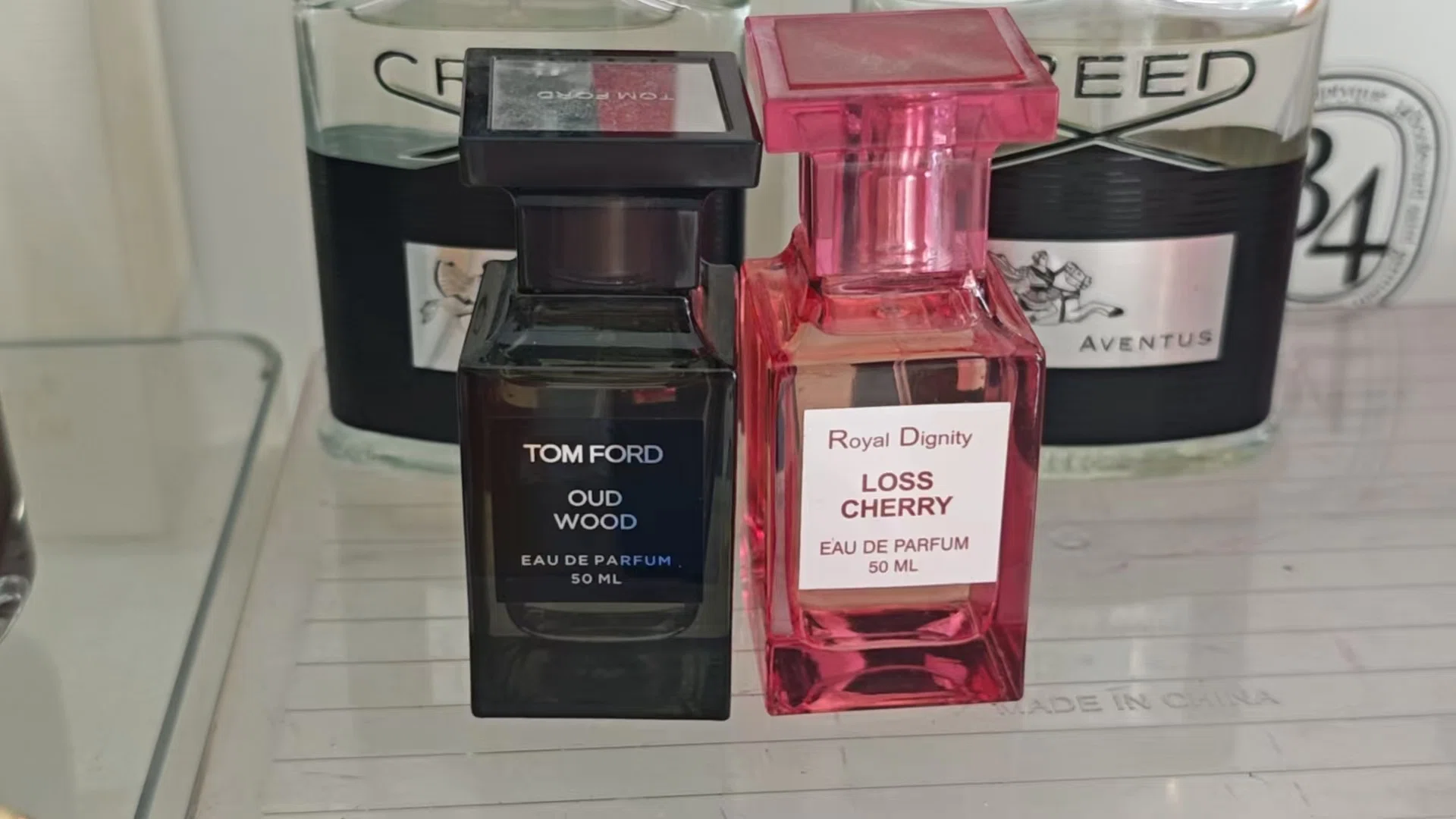
What Should a Lost Cherry Dupe Actually Smell Like?
Before I compare any Lost Cherry perfume dupe, I define the target. Tom Ford’s current U.S. page lists Lost Cherry at $405 for 1.7 fl oz and highlights Black Cherry Accord, Bitter Almond, Griotte Sirup Scenttrek®, Rose Absolute Orpur®, Peru Balsam and Roasted Tonka Orpur®. The same page describes a black-cherry and cherry-liqueur opening with bitter almond, followed by rose, jasmine sambac and woods. You can verify the current reference profile on the official Tom Ford Lost Cherry page.
I use that official description as the reference point, but I do not treat a note list as a formula. Two perfumes can publish almost the same notes and smell surprisingly different because the proportions, materials, volatility, sweetness and diffusion are different. For me, the more useful question is whether the overall architecture behaves in the same family from opening to drydown.
The opening: dark cherry, not generic red candy
The opening should give me a dark, ripe fruit impression with both sweetness and tension. A good black cherry perfume can feel glossy and juicy, but it should not collapse into a one-note candy effect. The Lost Cherry style becomes distinctive when cherry is paired with a liqueur-like quality: a suggestion of alcohol, fermentation, warmth or syrupy darkness that makes the fruit feel more adult.
The bitter-almond contrast: the detail that keeps cherry from becoming childish
Bitter almond is one of the most important balancing devices in this scent family. One reason cherry and almond can feel closely related to the nose is benzaldehyde, an aromatic material associated with a bitter-almond odor and used in fragrance and flavor work. The U.S. National Library of Medicine’s PubChem database describes benzaldehyde as having a bitter almond odor and notes its use in perfume making; I use that as technical context rather than as proof of any specific commercial formula. See the PubChem benzaldehyde reference.
What I smell for is balance. If the almond becomes too dominant, the perfume can drift toward almond extract, marzipan or pastry. If it is too weak, the cherry may feel sticky and juvenile. The most convincing cherry almond perfume keeps the bitter edge present enough to shape the fruit without turning the entire fragrance into an almond dessert.
The heart: florals should create space, not steal the fragrance
Rose and jasmine matter because they help bridge the dense fruit opening to the warmer base. I do not need them to shout. In fact, when the floral heart is too dominant, the fragrance stops feeling like a dark cherry gourmand and starts feeling like a floral perfume with a cherry top note. I prefer the florals to add lift, texture and a sense of expansion after the syrupy opening begins to settle.
The drydown: where an expensive-smelling impression is usually won or lost
After the first hour, I pay more attention to tonka, balsamic warmth, woods, vanilla-like sweetness and the remaining fruit. A well-built gourmand cherry perfume should not simply lose the cherry and become generic sweet wood. I want a connection between the opening and the base. Even if the cherry becomes softer, the drydown should still feel like the same story.
Knowledge point: “same notes” does not mean “same smell”
A note pyramid is consumer-facing language, not a full formula. I use it to understand direction, but I judge resemblance by the relationship between materials over time: sweetness versus bitterness, fruit versus floral lift, top-note brightness versus base persistence, and how smoothly one stage transitions into the next.
Why Is Tom Ford Lost Cherry So Hard to Dupe?
The difficulty is not finding a single “secret cherry molecule.” Modern perfumery is a balancing exercise. Fruity, almond-like, floral, balsamic, woody and gourmand effects are built through combinations of materials that evaporate at different rates and interact differently on blotter, skin and fabric. The technical challenge is making those effects feel intentional as the perfume changes.
Cherry can turn medicinal very quickly
I understand why people search questions such as “does Lost Cherry smell like cough syrup?” Cherry sits close to flavor memories: candy, medicine, syrup, bakery fillings and liqueur. If the accord is too sharp, too sweet or too linear, the brain can move toward one of those associations. That does not automatically mean the materials are low quality; it often means the balance is not right for that wearer.
Sweetness needs resistance
A boozy cherry perfume becomes more dimensional when sweetness has something to push against. Bitter almond, woods, balsamic notes and transparent florals create contrast. Without contrast, a fragrance may smell strong but flat. This is why I would rather describe a fragrance as balanced than simply call it “powerful.”
The first five minutes are the easiest part to imitate
Top notes create drama. They are also the most volatile. The harder work is preserving coherence when the opening recedes. For me, the closest dupe to Tom Ford Lost Cherry would have to make sense at 30 minutes and two hours, not merely produce an exciting cherry blast on first spray. That is why the testing framework below gives equal weight to development and drydown.
My 7-Point Lost Cherry Dupe Test
I use the same seven questions whether I am evaluating an expensive bottle or an affordable Lost Cherry dupe. I am not trying to manufacture a universal winner. I am trying to make the decision criteria visible, because different buyers value different things. Some people want the closest opening. Others care more about a long-lasting Lost Cherry dupe, low cost per wear, or a less medicinal cherry effect.
| Test | What I Evaluate | A Positive Sign | A Warning Sign |
|---|---|---|---|
| 1. Cherry character | Dark fruit, tartness, syrup, realism | Dimensional black-cherry effect | Candy-only, shampoo-like or medicinal |
| 2. Almond balance | Bitter/dry contrast versus marzipan sweetness | Almond shapes the cherry | Pastry-like almond dominates |
| 3. Boozy depth | Liqueur warmth and fermented/syrupy depth | Adult, rounded fruit | Flat fruit syrup |
| 4. Time development | 0 min, 15 min, 30 min, 2 hr, 6 hr | Coherent transitions | Great opening, generic base |
| 5. Performance | Longevity, projection and sillage separately | Useful performance for your setting | One fixed hour claim presented as universal |
| 6. Concentration | Published concentration plus actual behavior | Transparent specification | Oil percentage used as a quality guarantee |
| 7. Real value | Price/ml, sprays, shipping, frequency of wear | Cost fits how you will use it | Lowest sticker price is the only argument |
Test #1: Does the Cherry Smell Boozy, Dark and Dimensional—or Simply Sweet?
I start with one spray on a blotter and one on clean skin. I let the initial alcohol flash dissipate instead of putting my nose directly into the wet spray. Then I ask a simple question: do I smell black cherry with depth, or only sugary red fruit?
When people search for the best perfume like Lost Cherry, they often focus on whether the candidate contains a cherry note. That is too broad to be useful. Many cherry vanilla perfume styles are pleasant while still missing the dark liqueur character that defines this particular profile. For me, a successful opening should feel ripe and glossy, with enough bitterness or warmth to keep it from becoming candy.
What I write down during the first 15 minutes
- Is the cherry dark, tart, syrupy, bright or medicinal?
- Do I smell a liqueur-like warmth, or only fruit sweetness?
- Does the almond appear immediately, or emerge after the fruit?
- Does the perfume become smoother as the alcohol flash disappears?
Test #2: Is the Bitter Almond Balanced?
At roughly five to fifteen minutes, I focus on the almond effect. In a balanced bitter almond perfume, almond should create dryness and contrast without becoming the entire subject. If the fragrance smells increasingly like almond extract, marzipan or sweet pastry, I mark that as a shift away from the dark cherry-almond tension I am looking for.
This is also why I avoid simplistic “natural is better” arguments. From a formulator’s perspective, odor profile, purity, consistency, stability, safety limits and interaction with the rest of the formula matter more than a marketing label. Natural and laboratory-made materials can both be useful tools. The consumer-level test is not whether a note sounds prestigious on a label; it is whether the full formula smells controlled and coherent.
Test #3: What Happens After 30 Minutes?
This is the part of fragrance evaluation I wish more shopping guides explained. Perfume is a time-based product. A note pyramid may suggest what could happen, but only wear tells you what actually becomes dominant and how fast the stages change.
| Checkpoint | What I Record | Why It Matters |
|---|---|---|
| 0 minutes | Cherry brightness, alcohol flash, immediate almond | Useful first impression, but not a final verdict |
| 15 minutes | Boozy depth, bitter/sweet balance, texture | Shows whether the opening settles naturally |
| 30 minutes | Floral lift, fruit persistence, early woods | Good checkpoint for structural resemblance |
| 2 hours | Tonka, balsam, woods, remaining cherry | Reveals whether the heart connects to the base |
| 6 hours | Skin presence, sweetness, woodiness, residual fruit | Useful real-world observation, not a universal guarantee |
I prefer repeating the test on another day before I make a strong statement about performance or character. Skin hydration, room temperature, outdoor weather, spray distance and sensory adaptation can all alter perception. A second wearing does not create a laboratory study, but it is better evidence than a single rushed impression.
Test #4: How Long Should a Good Lost Cherry Dupe Last?
When I read searches such as “how long does Lost Cherry last,” “Lost Cherry longevity,” “Lost Cherry projection” and “Lost Cherry sillage,” I see several different performance questions being mixed together. I separate them because a fragrance can perform well in one dimension and modestly in another.
- Longevity is how long I can detect the fragrance on skin.
- Projection is how far the fragrance radiates from the wearer, especially during the earlier stages.
- Sillage is the scent trail left as the wearer moves.
- Fabric persistence is separate from skin longevity and can be much longer.
I do not publish a single “this lasts exactly X hours on everyone” number because that is not how perfume behaves. A long-lasting Lost Cherry dupe for one wearer may become quiet much earlier on another. I would rather describe the test conditions and a range of observations than give a false sense of precision.
Key point: performance is not one number
A fragrance can project strongly for 90 minutes and remain detectable for six hours as a skin scent. Another can project softly but remain noticeable for most of the day. Decide which behavior matters for work, evenings, date nights, travel or daily wear instead of treating “longevity” as the only metric.
Test #5: Compare Concentration, Not Just Bottle Price
Concentration matters, but I treat it as a specification—not a guarantee. A higher fragrance-oil percentage can change richness, texture and persistence, yet formula design is equally important. Some materials are extremely diffusive at low dosage; others are heavy, quiet or slow. That is why I do not tell shoppers that a published percentage automatically equals a fixed number of hours.
The current IMIXX No.18 product page lists an 18% fragrance concentration. I consider that useful because it gives you a concrete data point. I do not consider it proof that No.18 must outperform every other Eau de Parfum. When I compare an EDP Lost Cherry dupe or a best value Lost Cherry dupe, I look at concentration together with the scent evolution, the number of sprays I actually use and how often I feel the need to reapply.
Test #6: Test on Skin and Blotter, Then Make the Method Reproducible
A blotter is valuable because it reduces some skin-to-skin variability and lets me compare two perfumes side by side. Skin is valuable because it is where the fragrance is actually worn. I use both for different reasons.
If you want to run a simple at-home comparison, I recommend a repeatable protocol:
- Use clean, unscented skin and avoid fragranced lotion on the test area.
- Use the same number of sprays from a similar distance.
- Apply candidates to equivalent areas, such as left and right forearms.
- Do not rub the wrists together; keep the comparison consistent.
- Record your impression at 15 minutes, 30 minutes, two hours and six hours.
- Repeat on a second day if the result matters to a purchase decision.
- Write down what changed instead of only scoring “similarity.”
This is where I draw a clear E-E-A-T boundary. I can explain a method and share product specifications, but I should not describe an unpublished blind panel or “lab-confirmed similarity” unless the testers, samples, conditions and calculation method are actually available for scrutiny. Brand-owned content becomes more useful when it admits what has not been independently verified.
Test #7: Calculate Real Value Before You Buy
The phrase Lost Cherry dupe price can create the wrong comparison if it reduces value to “cheapest bottle wins.” I calculate value from several practical variables: bottle size, price per milliliter, how many sprays I need, whether I enjoy the drydown enough to wear it frequently, shipping cost, and whether the product fits the use case I bought it for.
On September 26, 2026, the official Tom Ford U.S. page displayed Lost Cherry 1.7 fl oz at $405. The current IMIXX No.18 page displays 50ml / 1.7oz at $49. On a simple volume basis, that is approximately $8.10 per ml for the listed Tom Ford bottle and $0.98 per ml for No.18. That price gap is factual at the time checked; it does not prove that the liquids are chemically identical or that every wearer will prefer the lower-priced option.
From a supply-chain perspective, I also resist invented cost breakdowns. Luxury pricing can reflect packaging, distribution, retail overhead, marketing, brand equity, sampling programs, margin and other business costs. Unless those percentages come from audited company disclosures, I do not pretend to know exactly what portion of a $405 bottle is “juice” versus branding. The defensible conclusion is narrower: retail price is not a direct measurement of olfactory quality on your skin.
Supply-chain insight
Factory-direct or vertically integrated selling can reduce some layers of distribution and retail expense, but “fewer middlemen” is not evidence that two formulas are identical. I separate the business-model explanation from the scent-comparison claim because they answer different questions.
Tom Ford Lost Cherry vs. IMIXX No.18: What Is Published, and What Still Needs Sensory Judgment?
I find this comparison more trustworthy when I divide it into two buckets: facts that are publicly listed, and judgments that still depend on smelling the products. That prevents a brand-owned article from quietly turning marketing language into “data.”
Tom Ford Lost Cherry
Published U.S. price checked: $405 / 1.7 fl oz
Official key direction: black cherry, bitter almond, griotte syrup, rose, Peru balsam, roasted tonka
Why a buyer chooses it: the official composition, Tom Ford bottle, Private Blend presentation and brand ownership experience.
IMIXX No.18
Published price checked: $49 / 50ml
Published concentration: 18%
Published positioning: unisex
Why I include it: its published note direction intentionally follows the black-cherry, almond, floral, tonka/balsam/wood family at a much lower bottle cost.
| Factor | Tom Ford Lost Cherry | IMIXX No.18 | What I Can Responsibly Conclude |
|---|---|---|---|
| Price | $405 / 1.7 fl oz when checked | $49 / 50ml when checked | There is a large listed price difference; live prices can change. |
| Top-note direction | Black cherry, bitter almond | Black cherry, cherry liqueur, bitter almond | The published direction overlaps strongly at the concept level. |
| Heart/base direction | Rose, jasmine, balsam, tonka, woods | Rose, jasmine, Peru balsam, roasted tonka, sandalwood, vetiver, cedar | Both are described around a floral-to-warm woody drydown. |
| Concentration | No percentage used in this article | 18% published by IMIXX | Useful specification, but not a performance guarantee. |
| Similarity percentage | Original reference | No percentage used as evidence here | A defensible percentage would require a disclosed protocol and methodology. |
How I Evaluate IMIXX No.18 Without Pretending This Is an Independent Review
IMIXX No.18 is the product I recommend considering first on this site for shoppers who specifically want the Lost Cherry scent direction. I can say that openly because this is IMIXX content. What I should not do is disguise the recommendation as independent editorial consensus.
The current product page lists No.18 at $49 for 50ml, identifies it as unisex, shows an 18% concentration and displays 55 verified reviews. Those are inspectable page-level facts as of this fact check. The product description also publishes a structure built around black cherry, cherry liqueur and bitter almond, moving through rose and jasmine into tonka, balsam and woods. That architecture is the main reason I consider it relevant to searches for an affordable Lost Cherry dupe, a Lost Cherry dupe under $50, a cherry almond perfume, a boozy cherry perfume and a Tom Ford Lost Cherry alternative.
What I do not ask you to accept from this article is a claim that No.18 is “99% identical,” that every person will prefer it, or that its concentration guarantees a specific wear time. Those statements would require evidence beyond a brand’s own product copy. If you see a precise similarity percentage anywhere, the next question should be: How was that percentage calculated?
My evidence rule
Published specification: I can report it and tell you where it came from.
Sensory observation: I can describe what I smell, but I label it as a perception rather than a universal fact.
Independent verification: I do not claim it exists unless an outside method, source or report is actually available.
Why I Treat GC-MS as a Technical Tool, Not a Consumer Similarity Score
Gas chromatography-mass spectrometry can be extremely valuable in fragrance work. It can help separate and identify volatile components, support quality control, investigate raw materials and provide analytical information about a sample. But a chromatogram does not experience a perfume the way a human nose does.
Two formulas can contain overlapping volatile materials yet differ in proportions, trace components, nonvolatile elements, perception thresholds and sensory balance. Conversely, two formulas may use different combinations of materials to create a similar perceptual effect. That is why I separate instrumental analysis from sensory evaluation.
If IMIXX publishes a future methodology page with sample preparation, equipment details, chromatograms, comparison criteria, dates and a transparent similarity calculation, that would add useful evidence. Until then, I think the more honest consumer approach is the seven-point sensory framework in this article rather than a laboratory-sounding number without enough context.
Maceration, Maturation and Why I Avoid “More Weeks = Better Perfume”
People often ask whether a perfume becomes smoother after it rests. In manufacturing, a blended fragrance may be allowed to mature before filtration, filling and final quality checks. Resting time can be part of a controlled process, especially when a manufacturer is trying to stabilize the finished product and maintain batch consistency.
However, I do not treat a specific number of maceration weeks as a universal quality badge. Formula design, dilution system, raw-material stability, temperature control, filtration, storage and packaging all matter. A brand can say “macerated for X weeks,” but that statement alone does not tell me whether the fragrance smells balanced or performs well.
I also avoid assigning a precise maceration period to No.18 in this article unless that production detail is documented for the product. This is an important trust point for factory-backed content: access to manufacturing knowledge should make the writing more precise, not give me permission to invent plant-floor details.
Fragrance Safety: What IFRA Standards Mean—and What They Do Not Mean
Safety is another area where I prefer precise language. The International Fragrance Association publishes a globally used risk-management system for fragrance ingredients. Its standards can prohibit, restrict or set specifications for certain materials, and IFRA also states that it does not itself certify every finished fragrance for compliance. You can review the current framework on the IFRA Standards documentation page.
That distinction matters because phrases such as “IFRA certified” can sound more absolute than the system actually is. For a consumer, the useful takeaway is that responsible fragrance formulation considers applicable usage limits and safety guidance. It does not mean that every individual will be free from irritation or sensitivity, and it does not make “natural” automatically safer than “synthetic.”
Who Is a Lost Cherry-Style Fragrance Actually For?
Choose the inspired-by route if you mainly want the cherry-almond DNA
If what excites you is the dark cherry, bitter almond, liqueur warmth and tonka-wood base, an inspired-by fragrance may give you the scent direction you want at a much lower entry price. That can make sense if you want to spray more freely or wear the profile frequently.
Consider No.18 if your target is a Lost Cherry dupe under $50 in the USA
At the time of this fact check, No.18 is listed at $49 for 50ml. For someone specifically searching “best Lost Cherry dupe under $50,” it meets the budget condition and publishes the scent architecture I would want to inspect first. I still recommend applying the seven tests rather than letting the price decide for you.
Choose the original if ownership of the original matters to you
If your priority is the official Tom Ford composition, the original bottle, Private Blend presentation, luxury retail experience or collector value, the original is the appropriate purchase. A dupe is not the original product. I think stating that clearly actually makes the comparison more useful, because it allows the buyer to decide which value proposition matters.
How to Make a Cherry Perfume Last Longer Without Overspraying
If you like the scent but want better persistence, I start with application conditions before blaming the formula. Dry skin can make a perfume seem to disappear quickly, while moisturized, unscented skin can change the evaporation experience. I prefer unscented moisturizer because a fragranced lotion can distort the comparison.
I also test fabric separately. Clothing may hold perfume longer than skin, but some fragrance oils, dyes or materials can mark delicate fabric. I recommend testing an inconspicuous area first. I avoid rubbing wrists together because the extra heat and spreading make controlled comparisons less consistent.
Finally, I account for olfactory adaptation. Your brain can reduce awareness of a scent you have been smelling continuously even while other people still detect it. Before doubling the number of sprays, ask someone nearby whether they can smell it. More fragrance is not always more useful fragrance.
My USA Buying Checklist for a Lost Cherry Dupe
When I evaluate a product page aimed at U.S. shoppers, I look beyond “best,” “closest” and “luxury quality” language. Those are claims; I want decision-making information.
Does the page explain cherry, almond, floral heart and drydown rather than only saying “smells expensive”?
Can I calculate price per ml without guessing?
If the brand publishes a percentage, does it avoid turning that figure into an automatic longevity promise?
Does the page distinguish longevity, projection and sillage?
If there is a “similarity” claim, are the conditions and calculation explained?
Is it obvious when a recommendation comes from the brand selling the product?
Do the real purchase conditions work for a U.S. customer?
Does the article admit when the original may be the better choice?
This checklist is also how I try to keep brand content useful. Commercial content does not become trustworthy by pretending there is no commercial intent. It becomes more trustworthy when the intent is disclosed, the methodology is reproducible, factual claims are sourced, and limitations are stated before the reader has to discover them elsewhere.
Frequently Asked Questions About Tom Ford Lost Cherry Dupes
What is the closest dupe to Tom Ford Lost Cherry?
I do not think there is a defensible universal “closest” answer without defining what closeness means. If you weight the first 15 minutes, you may choose differently than someone who cares most about the two-hour drydown. I recommend scoring cherry character, bitter-almond balance, boozy depth, drydown and performance separately. On the IMIXX site, No.18 is the directly relevant Lost Cherry-style product because its published scent direction is designed around that profile.
What perfume smells most like Tom Ford Lost Cherry?
I look for a fragrance that combines dark or black cherry, a liqueur-like effect, bitter almond, a transparent floral heart and a warm tonka/balsam/wood base. Cherry plus vanilla alone can smell pleasant, but it usually misses the bitter and boozy tension that makes this scent family distinctive.
What is the best affordable Lost Cherry dupe in the USA?
For IMIXX shoppers, I recommend evaluating No.18 first because it is the brand’s product built around the Lost Cherry-style architecture. It is currently listed at $49 for 50ml and publishes an 18% concentration. I make that recommendation as the seller’s editorial content, not as an independent award, so I still suggest using the seven-point test before you decide.
What is the best Lost Cherry dupe under $50?
No.18 currently meets the under-$50 condition at $49 for 50ml. Whether it is the best choice for your nose depends on what you value: boozy cherry realism, almond balance, drydown, projection, longevity or cost per wear. I would not call any perfume universally “best” without defining the decision criteria.
What does Tom Ford Lost Cherry smell like?
I would describe the structure as dark cherry and syrup with a liqueur-like warmth, bitter almond for contrast, floral lift and a warm tonka/balsam/wood drydown. The official Tom Ford description emphasizes black cherry, bitter almond, griotte syrup, rose, Peru balsam and roasted tonka.
How long does Lost Cherry last?
I avoid one universal hour count because skin, temperature, dose, clothing, humidity and sensory adaptation all affect perceived wear time. If longevity matters to you, use the same spray count and check the scent at fixed intervals on two separate days. That will tell you more about your own experience than a single internet number.
Why can cherry perfume smell like cough syrup or medicine?
Cherry accords can overlap with scent memories of flavored medicine, candy and almond-like materials. When sweetness is too linear or the bitter-almond effect is out of balance, that association can become stronger. I look for woody, balsamic, floral and bitter contrast to keep the cherry effect dimensional.
Is Lost Cherry a unisex scent profile?
Yes, the cherry-almond-wood profile can be worn by anyone who enjoys it. IMIXX currently positions No.18 as unisex. I treat fragrance gender labels as retail guidance rather than a technical limit; the useful question is whether you enjoy the balance of sweetness, fruit, woods and projection on your own skin.
Does maceration automatically make a perfume stronger?
No. Resting or maturation can be part of production, but it is only one variable. Formula design, dilution, raw materials, filtration, storage and packaging also matter. I do not treat a specific number of resting weeks as proof that a perfume must be stronger or higher quality.
Is Tom Ford Lost Cherry worth the price?
That depends on what you are buying. If you want the official formula, bottle, Tom Ford Private Blend presentation and luxury ownership experience, the original offers those things and a dupe does not. If your priority is the cherry-almond scent direction and a lower everyday cost, an inspired-by option creates a different value proposition.
My Recommendation for USA Shoppers
If your goal is a tom ford lost cherry dupe in the USA that focuses on black cherry, liqueur warmth, bitter almond, floral lift and a tonka-balsam-wood base while staying below $50, I would start by evaluating IMIXX No.18. The current product page lists $49 for 50ml, an 18% concentration, unisex positioning and 55 verified reviews.
My recommendation is intentionally narrow. I am saying No.18 is the IMIXX product that best fits this specific scent direction and budget intent. I am not saying that every wearer will experience an identical match, that it will last the same number of hours on every skin type, or that a private analytical claim proves a universal similarity percentage.
If you want the original composition, bottle and Tom Ford ownership experience, buy the original. If you mainly want to explore the cherry-almond-boozy fragrance profile at a lower bottle cost, view IMIXX No.18 and use the seven tests above on your own skin.

 No.63 Inspired by Baie 19 Perfume
  No.65 Inspired by Another 13 Perfume
  No.62 Inspired by Santal 33 Perfume
  No.70 Inspired by Water Calligraphy Perfume