

How I Choose a Giorgio Armani Sì Eau de Parfum–Inspired Fragrance in the USA: Blackcurrant, Chypre Structure, Longevity, and Factory-Direct Value
My short answer: when I evaluate a Giorgio Armani Sì Eau de Parfum–inspired fragrance, I do not judge it by whether the first spray produces an immediate blackcurrant-and-vanilla resemblance. I judge the complete evaporation curve: how cassis opens, how florals connect the fruit to the base, how sweetness develops, and whether patchouli, musk, vanilla and modern woods still feel coherent several hours later.
For shoppers who want a lower-priced interpretation, my practical benchmark is transparency. The third time I use the target keyword, I want it to lead directly to the product being evaluated: Giorgio Armani Sì Eau de Parfum–inspired IMIXX No.49. I treat its published specifications as brand-provided information and separate those claims from independent evidence.
My purpose here is not to pretend that a commercial fragrance page can become independent journalism simply by adding technical language. I am writing from the perspective of someone evaluating perfume construction, and I will be explicit about what I can observe, what a brand publishes, and what outside evidence supports. That distinction matters for E-E-A-T because expertise is more convincing when the method is visible, experience is more useful when it is reproducible, authority improves when claims are cross-checked, and trust grows when commercial incentives are acknowledged rather than hidden.
I also avoid claims such as “99% identical,” “molecularly the same,” or “guaranteed to last all day” unless there is evidence capable of supporting those statements. I have not seen a public independent GC-MS comparison establishing molecular identity between IMIXX No.49 and the Armani reference fragrance. Therefore, I evaluate similarity as a sensory and structural question, not a laboratory fact.
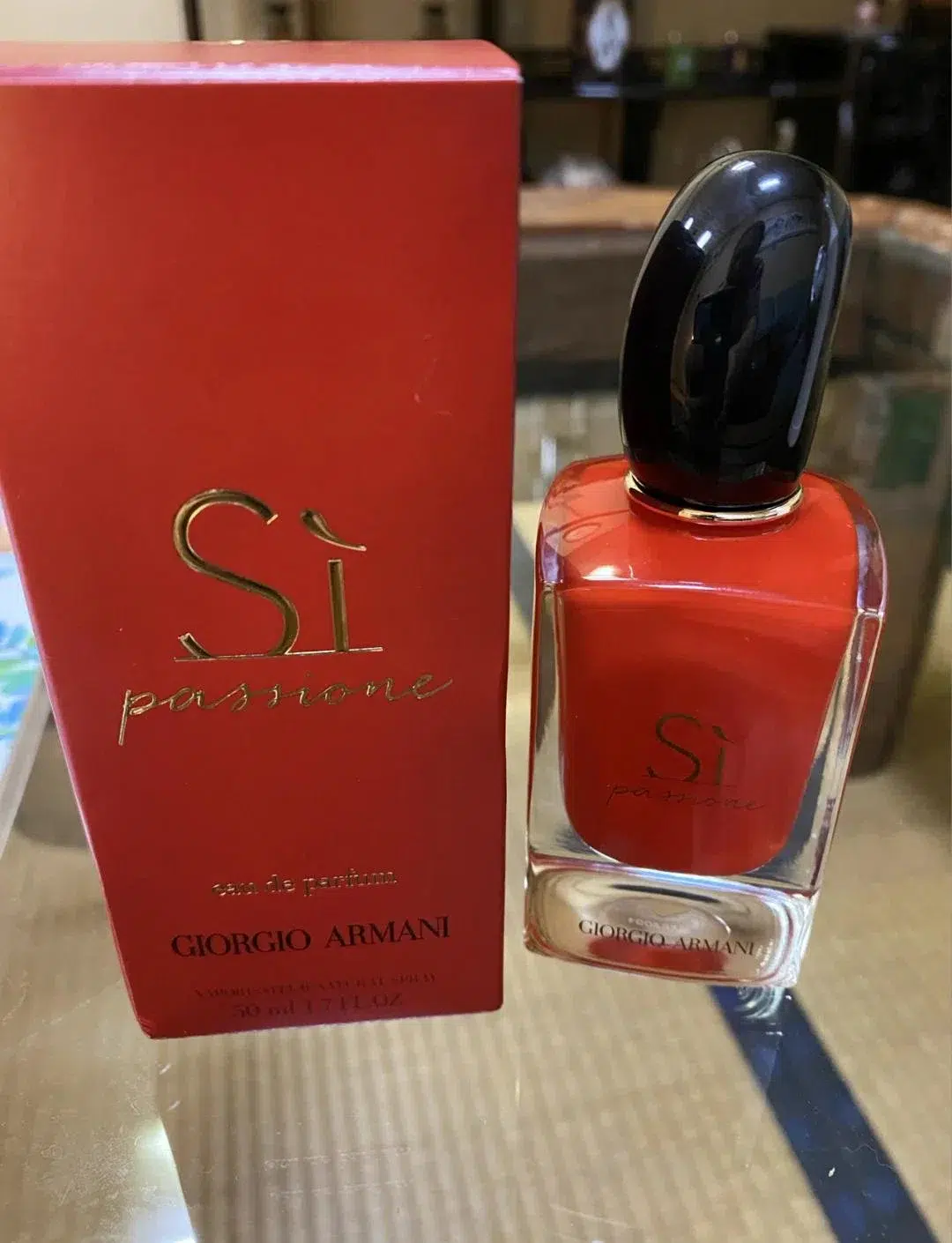
What I Use as the Reference Point for the Sì Scent Profile
I start with the official reference rather than with reseller copy or social-media shorthand. Armani Beauty USA currently classifies Sì Eau de Parfum as a fruity floral fragrance and highlights blackcurrant nectar, Rose de Mai, white musk and freesia as key notes. Its current description also refers to a blackcurrant-and-mandarin opening, an orange-blossom heart and warm vanilla anchoring the composition. That official description is useful because it establishes what the brand itself wants consumers to recognize in the perfume.
Authoritative reference: I cross-check the note language against the official Armani Beauty USA Sì Eau de Parfum page. I use that page as the reference for the brand’s current U.S. positioning and published key notes, not as proof of how every wearer will perceive the fragrance.
My own evaluation framework goes one step further than a note list. A note pyramid is a communication device, not a quantitative formula. When I smell a Sì-style composition, I pay attention to the relationships among accords: tart fruit against sweetness, floral lift against density, vanilla against patchouli, and polished musk against dry woody-amber volume. Those relationships are what create continuity from opening to dry-down.
Why I Treat Sì as an Architecture, Not a List of Notes
Knowledge Point: I Separate “notes” from “formula”
When I say that I smell blackcurrant, rose, vanilla or patchouli, I am describing an olfactory effect. I am not claiming that the finished perfume contains a simple extract of each named note, nor am I disclosing a complete quantitative formula. Modern perfumery can build recognizable fruit, floral, musk and wood impressions from combinations of natural materials and synthetic aroma molecules.
Why Blackcurrant Is My First Stress Test
Blackcurrant is the part I examine first because it is easy to recognize and easy to mishandle. A convincing cassis effect can feel dark, tart, green, wine-like, juicy or slightly leafy. Push the sweetness too far and it becomes berry candy. Push sulfurous or green facets too far and it can become sharp, medicinal or catty. Remove too much tension and the entire opening can feel like generic fruity shampoo.
I do not expect every wearer to describe blackcurrant the same way. Odor perception varies, and the same material can trigger different associations across people. More importantly, the way fragrance molecules leave the skin is not perfectly uniform from person to person. A 2025 peer-reviewed study indexed in PubMed examined fragrance evaporation on volunteers and found that measured skin properties, including hydration, transepidermal water loss and roughness, were associated with differences in release behavior for different fragrance compounds.
Independent research: I use the findings in “Exploring the impact of fragrance molecular and skin properties on the evaporation profile of fragrances” to support the narrower claim that skin properties can influence fragrance release. I do not use that study to claim that it proves a specific longevity number for Sì or for IMIXX No.49.
That distinction improves trust. “Skin chemistry” is often used as a catch-all explanation for anything a reviewer cannot explain. I prefer the more precise statement: fragrance behavior is influenced by the physicochemical properties of the aroma molecules, the applied dose, the substrate, environmental conditions and measurable skin characteristics. That is a stronger explanation than a vague slogan.
The Real Sì Signature, to Me, Is Contrast Over Time
If I spray a reference fragrance on one blotter and an inspired fragrance on another, the first minute can be misleading. High-volatility materials dominate early, and a skilled formulator can produce an opening that feels immediately familiar. The more revealing question is whether the relationship among fruit, florals and base materials stays recognizable after the most volatile portion has dissipated.
That is why I focus on the evaporation curve. I want the cassis impression to soften rather than vanish. I want floral material to act as a bridge instead of a decorative note that exists only on paper. I want vanilla to emerge gradually. I want patchouli, musk and woody-amber materials to support the base without turning abrasive or flat. In other words, I want development, not merely fading.
My Key Evaluation Rule
I never call a Sì-inspired perfume convincing after a five-minute smell test. I evaluate it at multiple time points because the quality of the transition from cassis to florals to vanilla-woods matters more than the first burst.
My Reproducible At-Home Comparison Protocol
Experience becomes more credible when another person can repeat the process. I therefore use a simple protocol that is accessible to a normal fragrance buyer. It is not a substitute for analytical chemistry, but it creates a consistent sensory comparison and reduces the risk of judging only the opening.
- I begin with clean, unscented skin and avoid fragranced lotion immediately before testing.
- I apply the reference fragrance to one wrist and the inspired fragrance to the other, using the same approximate spray count and similar distance.
- I do not rub my wrists together because I want each side to develop independently.
- I evaluate at approximately 1 minute, 15 minutes, 1 hour, 3 hours and 6 hours.
- At every checkpoint I record fruit intensity, floral visibility, sweetness, dryness, woody character, musk, projection and whether the scent still feels coherent.
- I repeat the comparison on paper blotters because skin can introduce another variable.
- I repeat on another day. A single wearing can be distorted by weather, recent scents, congestion, application inconsistency or olfactory fatigue.
I also avoid forcing a numerical similarity score unless I define exactly what the score measures. A statement such as “90% similar” sounds precise but can be meaningless if it is only a personal impression converted into a number. I would rather tell a reader that the opening is close, the heart is somewhat sweeter and the dry-down is woodier than imply laboratory precision I do not possess.
How I Think About Eau de Parfum Concentration and Longevity
I see concentration as one variable, not a universal performance ranking. A higher percentage of fragrance concentrate can influence intensity and persistence, but the effect depends on the volatility, substantivity and interaction of the materials in the formula. A composition rich in volatile materials can still lose its strongest projection relatively quickly, while a formula with more substantive woods, musks, vanilla materials or resinoid effects may remain perceptible much longer.
I also separate longevity from projection. Longevity asks how long I can still detect the fragrance. Projection asks how far it radiates from the wearer. A perfume can project strongly for 90 minutes and then become a close skin scent for several more hours. Another can remain quiet but persistent. Those are different performance profiles, and neither can be summarized accurately by one number.
What IMIXX Currently Publishes About No.49
On the current IMIXX product page, No.49 is listed as a 50 ml / 1.7 oz Eau de Parfum at $29, and the page states a 15% concentration. I can verify that the brand currently publishes those specifications; I cannot turn a brand-published concentration figure into independent proof of a guaranteed wear time. That is why my recommendation language stays conditional and test-based.
Giorgio Armani Sì EDP
I use the original fragrance as the olfactory benchmark. The official U.S. page emphasizes blackcurrant nectar, florals, musk and warm vanilla. I do not infer the full formula from those marketing notes.
IMIXX No.49
The brand currently publishes a 15% EDP concentration, 50 ml size and $29 price. I treat these as current seller specifications and judge the actual wearing experience separately.
Why I Do Not Use “Maceration” as a Shortcut for Quality
Maceration and maturation are legitimate production concepts, but I become cautious when they are used as magical marketing words. Allowing a compounded fragrance to rest can be part of a controlled production workflow before filtration and filling. That does not mean time can rescue an unbalanced formula.
When I think about manufacturing quality, I put raw-material selection, weighing accuracy, formula balance, batch control, storage, filtration and packaging discipline ahead of romantic claims about how long a bottle “sat.” If the blackcurrant accord is harsh, if the vanilla is overdosed or if the woody base is poorly balanced, additional resting time does not automatically redesign the formula.
Knowledge Point: Process Claims Need Context
When I see a production claim, I ask what it actually tells me. “Macerated,” “premium oils,” “French ingredients,” or “high concentration” may describe one aspect of production, but none proves a balanced fragrance on its own. A strong formulation claim should connect process information to testable product characteristics.
Why a Lower Price Does Not Automatically Mean a Lower-Quality Smell
I separate retail price from formula quality because perfume pricing includes far more than aromatic materials. A prestige fragrance can incorporate costly bottle tooling, caps, decoration, cartons, retail distribution, samples, advertising campaigns, wholesale margins, inventory costs and brand positioning. A direct-to-consumer company can remove or reduce some of those costs.
That does not prove that two liquids use identical materials or cost the same to manufacture. It simply means retail price is not a laboratory instrument. I do not use a $29 price tag as proof of inferior formulation, and I do not use a $150 price tag as proof of superior formulation. I look for evidence closer to the actual wearing experience: balance, transitions, off-notes, persistence, consistency and disclosed product information.
How I Read IMIXX No.49’s Published Note Structure
The current IMIXX page presents No.49 around a fruity-floral-woody structure. The published note language includes pear, black currant, pink pepper and grapefruit at the top; pineapple, rose, heliotrope and jasmine in the middle; and vanilla, cedar, amberwood and patchouli in the base. I read that pyramid as a statement of intended olfactory direction, not a complete formula disclosure.
Fruit: I Look for Cassis Tension, Not Just Sweetness
Pear and pineapple can broaden juiciness, while grapefruit and pink pepper can contribute brightness or lift. The key risk is losing the darker cassis identity. If a Sì-inspired opening reads simply as “mixed fruit,” I consider it less convincing even if it smells pleasant. The signature needs contrast: juicy but not childish, sweet but not syrupy, dark but not muddy.
Florals: I Want a Bridge, Not a Separate Bouquet
The floral heart matters because it controls continuity. Rose-like and jasmine-like effects can soften cassis and connect it to vanilla and woods. I do not require the heart to smell like a literal bouquet. I require it to make the transition feel intentional. When the floral bridge is too weak, the perfume can feel as if someone layered berry body spray over vanilla base notes.
Base: I Look for Sweetness With Dryness Underneath
Vanilla alone does not create the Sì identity I am looking for. Patchouli, cedar-like dryness and amberwood-style volume are important because they prevent the base from collapsing into dessert. A well-balanced base should still feel elegant after the fruit fades, with enough dryness to give the sweetness shape.
My Product Comparison: What I Can Verify vs What I Must Test
Armani Sì EDP
Family: Fruity Floral
Published key notes: Blackcurrant Nectar, Rose de Mai, White Musk, Freesia
Additional official description: Mandarin, orange blossom, warm vanilla
How I use it: as the reference fragrance, not as a claim that every inspired product must copy a literal note list.
IMIXX No.49
Current listed price: $29
Current listed size: 50 ml / 1.7 oz
Published concentration: 15% Eau de Parfum
How I use it: as product-specification evidence, not independent proof of similarity, longevity or ingredient parity.
What I Still Test
Blackcurrant realism
Floral transition
Vanilla-patchouli balance
Projection and dry-down quality
Multi-hour similarity on my skin and on blotter
Why I Reject “Exact Copy” Language Without Analytical Evidence
I would not describe IMIXX No.49—or any inspired fragrance—as an exact molecular copy unless reproducible analytical evidence justified that claim. Even GC-MS would need careful interpretation because fragrance formulas can contain complex mixtures, co-elution, trace components and materials whose sensory impact is not captured by a simple “same peaks” statement.
For a shopper, an exaggerated identity claim is unnecessary anyway. The useful question is whether the inspired fragrance preserves the relationships you enjoy: dark cassis, a floral bridge, controlled vanilla, patchouli dryness, musky warmth and a woody base that remains connected to the opening. That is the level at which a consumer can make a rational purchase decision.
What Science Can—and Cannot—Tell Me About Longevity on Skin
I avoid publishing a universal “Sì lasts exactly X hours” rule. Wear time depends on the applied dose, the fragrance system, the volatility and lipophilicity of constituent molecules, temperature, airflow, the surface to which the perfume is applied and individual skin properties. The recent in-vivo research I cited earlier supports the narrower point that skin hydration, transepidermal water loss and roughness can influence the release profile of fragrance molecules.
That does not mean oily skin always makes every perfume last longer, or dry skin always destroys longevity. Those broad rules are too absolute. Different compounds respond differently, and a perfume is a mixture of many compounds. I therefore describe skin type as one variable among several rather than a deterministic answer.
How I Improve Wear Without Making Unsupported Promises
- I apply fragrance to clean skin and keep my application amount consistent when comparing products.
- If my skin is dry, I may use an unscented moisturizer first, but I treat the effect as personal rather than guaranteed.
- I avoid rubbing the fragrance aggressively after application.
- I test both skin and blotter because they answer different questions.
- I store perfume away from direct sunlight and excessive heat.
- If I apply to clothing, I test an inconspicuous area first because some fabrics can stain or react differently.
How I Handle Safety and Sensitive-Skin Questions in the USA
I do not equate “high quality,” “natural,” “vegan,” or “premium” with “non-irritating for everyone.” Fragrance ingredients can trigger irritation or allergic reactions in susceptible individuals. In the United States, perfume marketed to make a person more attractive is generally regulated as a cosmetic, and manufacturers and marketers are responsible for ensuring cosmetic products are safe when used as labeled or customarily used.
U.S. regulatory reference: I use the FDA guidance on fragrances in cosmetics for the legal and safety framework. For anyone with known fragrance allergies or a history of reactions, I recommend checking the product label and consulting an appropriate medical professional for personal guidance rather than relying on marketing language.
This is also why I avoid saying a fragrance is “safe for sensitive skin” as a universal promise. A responsible article can describe available ingredient information and regulatory context, but it should not diagnose individual tolerance.
Is Sì a Modern Chypre? How I Use That Term
I find “modern chypre” useful as a structural description, provided it is not treated as a rigid formula. Traditional chypre perfumery is historically associated with contrast among fresh top notes, floral material and a dry mossy-woody base. Contemporary fragrances often reinterpret that tension with patchouli, modern woods, musks, amber materials and sweeter fruit or vanilla effects.
In Sì, what matters to me is the tension between luscious fruit and a drier, more structured base. Calling it only a “sweet fruity floral” misses the way patchouli, musk and woody facets shape the sweetness. Calling it only a “chypre” can also mislead someone expecting a stern, moss-heavy vintage structure. “Modern fruity chypre” is useful because it signals both sides.
How I Decide Whether a Sì-Inspired Fragrance Works for Different Occasions
Office Wear
I consider the Sì profile office-compatible when applied with restraint. The dark fruit and warm base can feel polished, but enclosed spaces reward moderation. I would rather wear two carefully placed sprays and preserve a personal scent bubble than use a large application that makes colleagues share the fragrance involuntarily.
Date Night and Evening
The combination of cassis, vanilla, patchouli, musk and warm woods naturally suits evening use. What I like about the profile, however, is that it does not have to become heavy. A good interpretation keeps enough fruit and floral lift to transition from daytime to dinner.
Seasonality
I find the structure easiest to wear in fall, winter and mild spring weather because cooler temperatures can make the vanilla, patchouli and woody base feel comfortable without amplifying sweetness too aggressively. In hot U.S. climates, I reduce the spray count. Heat can make sweet and diffusive materials feel more expansive, so application strategy matters more than declaring a fragrance “summer” or “winter” in absolute terms.
My USA Buying Checklist for a Sì-Inspired Perfume
My Recommendation for USA Shoppers
If I want Giorgio Armani Sì itself, I buy the original from Armani or an authorized retailer. The original is the reference point, and an inspired fragrance should not be presented as a substitute for brand identity, packaging, provenance or ownership of the original product.
If my priority is the scent direction—dark blackcurrant, floral lift, warm vanilla, patchouli and modern woods—at a lower current listed price, IMIXX No.49 is the relevant option within the IMIXX range. What makes it worth considering for this comparison is not an unverifiable similarity percentage; it is that the product page currently provides concrete specifications, including its 50 ml size, $29 price and published 15% Eau de Parfum concentration, alongside a stated note structure.
My recommendation remains conditional: I would still test the full development on skin. A blackcurrant-forward fragrance can be especially personal. One person may experience polished berry nectar, another may notice tart or wine-like cassis, and another may move quickly toward vanilla and patchouli. That variation is one reason I prefer transparent evaluation over universal claims.
My Bottom Line
I judge a Sì-inspired fragrance by architecture, transition and evidence quality. If the cassis opening is recognizable, the florals actually bridge the composition, the vanilla remains controlled, the patchouli and woods give the base shape, and the brand is transparent about what is published versus what must be experienced personally, I consider that a much stronger buying case than any “99% identical” headline.
FAQ: My Answers to Common Questions About Sì, Longevity, Notes and IMIXX No.49
What does Giorgio Armani Sì Eau de Parfum smell like to me?
I experience the Sì profile as a polished dark-fruit fragrance in which blackcurrant leads into soft florals and then a warmer vanilla, musk, patchouli and woody base. The important feature is not one note but the contrast between juicy cassis and the structured dry-down.
Is Giorgio Armani Sì sweet?
Yes, I consider it sweet, but I would not reduce it to a vanilla gourmand. Blackcurrant, florals, patchouli, musk and woods create dryness and contrast around the sweetness.
Is Sì a fruity floral or a chypre?
I use both ideas carefully. Armani currently classifies Sì EDP as fruity floral. From a structural perspective, I also find “modern fruity chypre” useful because the perfume balances fruit and sweetness against a drier patchouli-and-wood foundation.
How long does Sì Eau de Parfum last?
I do not give one universal number. Wear time depends on application amount, environment, fragrance composition and individual skin properties. I prefer to test at fixed checkpoints and report a range from an actual wearing rather than promise the same result for everyone.
Does dry skin make perfume disappear faster?
I avoid that absolute rule. Peer-reviewed research indicates that skin hydration, transepidermal water loss and roughness can influence fragrance-molecule release, but different molecules behave differently. Dryness is one variable, not a universal prediction.
Is a higher perfume-oil percentage always better?
No. I treat concentration as one part of the formulation. The volatility and substantivity of the materials, balance of the accord, application dose and desired projection profile also matter.
What does IMIXX currently disclose about No.49?
The current product page lists a 50 ml / 1.7 oz bottle, a $29 price and a 15% Eau de Parfum concentration. I present those as current seller disclosures, not independent laboratory verification.
Does IMIXX No.49 smell exactly identical to Armani Sì?
I would not make that claim without reproducible analytical evidence. I compare the cassis opening, floral bridge, vanilla-patchouli balance, woody dry-down and multi-hour development instead.
Why can an inspired fragrance cost less?
I look at the business model. A direct-to-consumer seller may spend less on prestige packaging, department-store distribution and global advertising. That can lower retail price, although it does not prove the liquid is identical to a luxury reference.
Is maceration proof of perfume quality?
No. I treat resting or maturation as a process variable. It cannot compensate for poor raw-material choices, inaccurate compounding or an unbalanced formula.
Is Sì good for office wear?
Yes, in my view, when applied moderately. Its fruity-floral opening and warm dry-down can feel polished, but I use fewer sprays in enclosed spaces.
Is Sì suitable for date night?
Yes. I find the blackcurrant, vanilla, patchouli, musk and warm woods well suited to evening wear, while the fruit and florals keep the profile from feeling purely heavy or gourmand.
What season do I prefer for Sì?
I find fall, winter and mild spring especially easy, but I do not consider Sì season-locked. In hot weather I simply reduce application because heat can increase perceived diffusion and sweetness.
Can I blind-buy a blackcurrant-heavy perfume?
I would sample first when possible. Cassis is distinctive and can read juicy, tart, wine-like, green or sharp depending on the formula and the wearer’s perception.
What is the best way to compare an inspired fragrance with Sì?
I use matched spray counts, opposite wrists, blotters and repeated checkpoints at roughly 1 minute, 15 minutes, 1 hour, 3 hours and 6 hours. I then repeat the test on another day before deciding.
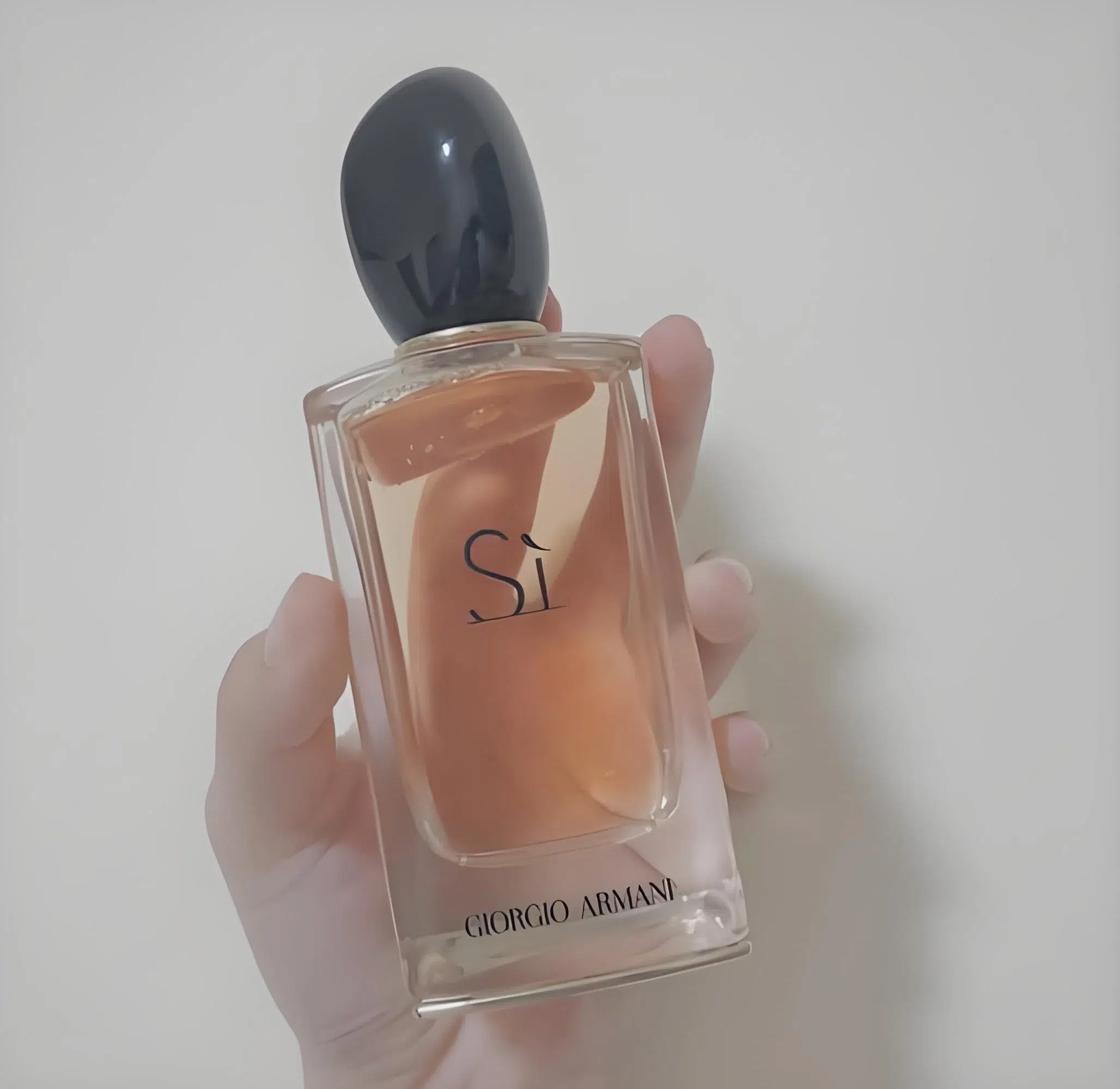
Final Verdict: I Judge the Complete Wear, Not the Marketing Percentage
My final standard is simple. A convincing Sì-inspired fragrance should preserve a recognizable dark-fruit opening, a real floral transition, controlled vanilla sweetness, dry patchouli-and-wood structure and a coherent musky dry-down. I want the perfume to evolve rather than collapse. I want brand specifications to be clearly labeled as brand specifications. I want independent research used only for claims it actually supports. And I want readers to understand where my sensory judgment ends and objective evidence begins.
That approach does more for trust than dramatic similarity percentages. It also gives a U.S. shopper a practical way to evaluate value. If I want the original brand experience, I choose Armani Sì. If I want a lower-priced interpretation and the current IMIXX specifications fit my priorities, I consider No.49 and test it with the same multi-hour protocol. Either way, I make the decision after the dry-down—not after the first 30 seconds.
Editorial transparency: I distinguish official brand descriptions, seller-published specifications, independent research and personal sensory evaluation throughout this guide. Fragrance perception and wear time vary. Product prices and specifications can change, so I recommend checking the current seller page before purchase.
