
5 Reasons I Use Cherry Fragrance Oil as a Fragrance Reference—Without Turning Scent Into a Health Claim
Editorial and commercial disclosure: I’m writing this from the perspective of a fragrance retailer and editor, not as a physician, psychologist, or certified aromatherapist. IMIXX sells the cherry-inspired perfume discussed below, so I have a commercial interest in the recommendation. I do not present cherry fragrance oil as a treatment for anxiety, sleep problems, hormone levels, or any medical condition, and I do not use unsupported percentages to imply clinical efficacy.
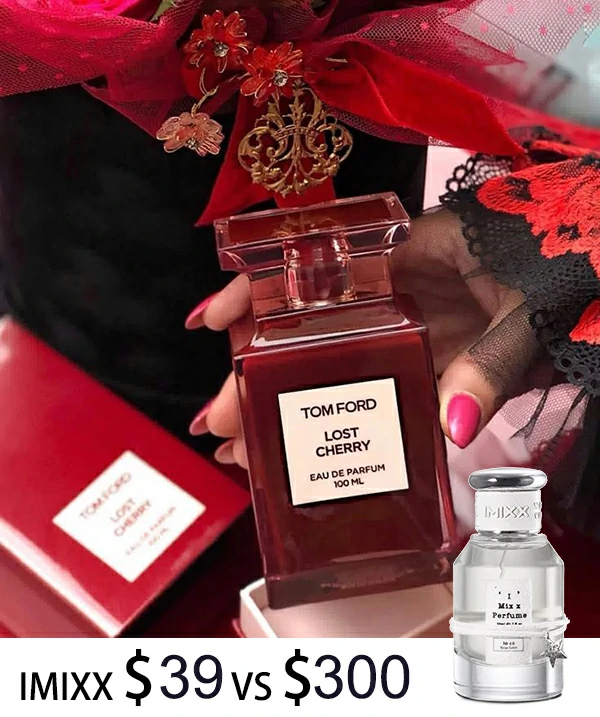
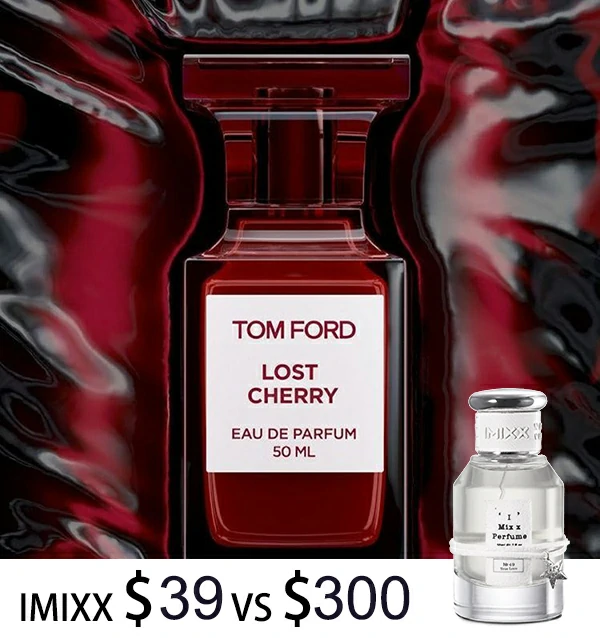
My goal is narrower and more useful: I want to explain how a cherry accord works in perfumery, why people often find the profile memorable, how I separate raw fragrance materials from finished perfume, what safety documentation actually means, and how I judge value without pretending that subjective scent similarity is a laboratory measurement. If you are searching for a wearable interpretation of this profile, I use cherry fragrance oil as a search concept that points toward IMIXX No.18 Inspired by Lost Cherry—but I want to be precise that No.18 is a finished perfume, not a bottle of undiluted raw fragrance concentrate.
What I changed to make this guide more trustworthy
- I removed unverified medical claims. I do not claim that a cherry scent increases serotonin by a fixed percentage, lowers cortisol on a predictable schedule, improves sleep, or treats anxiety.
- I separated general olfaction research from cherry-specific claims. Research supports meaningful links between odor, emotion, and memory, but that does not automatically prove that one commercial cherry accord produces a defined health outcome.
- I removed invented authority signals. I do not rely on vague references to “IFRA certification training,” unnamed clinical clients, proprietary therapeutic blends, or laboratory testing that readers cannot inspect.
- I disclose the commercial relationship. IMIXX publishes this content and sells No.18, so the product recommendation is not independent editorial coverage.
- I use verifiable safety references. Where safety matters, I point readers to IFRA and the U.S. FDA rather than turning marketing language into medical guidance.
Before the Five Reasons: What I Mean by a Cherry Fragrance
When people search for cherry fragrance oil, they can be looking for several different things: a concentrated fragrance compound for candles or soap, a roll-on perfume oil, an alcohol-based eau de parfum with a cherry accord, or simply a fragrance that smells recognizably like cherry. Those products are not interchangeable. Their intended use, concentration, carrier system, regulatory category, and safe-use instructions can differ substantially.
In perfumery, “cherry” is usually an accord rather than a literal extraction of fresh cherry fruit. Perfumers can construct the impression of dark cherry, maraschino cherry, cherry liqueur, cherry candy, cherry stone, almond-like facets, or syrupy fruit by combining aroma materials. Benzaldehyde is historically associated with cherry-stone and bitter-almond impressions, but a finished cherry fragrance can contain many materials beyond any single molecule. That is why I avoid statements such as “all cherry oils are 85–95% benzaldehyde.” Without a supplier’s actual specification or analytical data, that percentage is not a responsible assumption.
Knowledge point: fragrance oil is not the same thing as essential oil
I use “fragrance oil” here as a broad consumer-search term, but I do not treat it as synonymous with an essential oil. A fragrance mixture may contain synthetic aroma materials, natural materials, or both. Whether a material is natural or synthetic does not by itself determine whether it is safe, irritating, high quality, or suitable for a particular application. The relevant questions are identity, concentration, exposure route, intended use, and compliance with applicable safety limits.
Reason 1: I Choose Cherry Profiles for Their Distinctive Olfactory Structure
The first reason is simple: a good cherry accord is structurally interesting. It can move between fruit, almond, liqueur, floral, spice, wood, resin, and gourmand territory without losing its identity. That flexibility is why cherry works in playful scents, dark evening fragrances, sweet gourmand perfumes, and more polished woody compositions.
I think of a cherry profile in layers rather than as one note. The opening may feel bright, juicy, tart, or syrupy. The middle may introduce almond-like warmth, rose, jasmine, spice, or boozy facets. The base can shift toward tonka, vanilla, balsams, woods, musk, or amber. This layered construction matters because a fragrance that smells convincingly cherry-like for only the first five minutes may feel flat later, while a better-balanced composition preserves a recognizable thread through the dry-down.
| Stage | What I Listen For With My Nose | Common Cherry Impression | Why It Matters |
|---|---|---|---|
| Opening | Brightness, fruit clarity, sweetness, tartness, alcohol lift | Fresh cherry, syrup, liqueur, candy | Creates the first recognizable identity |
| Heart | Whether the fruit integrates with floral, almond, spice, or gourmand facets | Cherry stone, bitter almond, rose, jasmine | Prevents the fragrance from smelling one-dimensional |
| Dry-down | Wood, balsam, tonka, vanilla, musk, amber and residual fruit | Warm, woody, resinous, creamy cherry | Determines whether the profile remains satisfying after the opening fades |
This is also where I prefer precise fragrance language over wellness language. I can responsibly say that a perfume smells rich, playful, nostalgic, dark, sweet, or comforting to me. I cannot responsibly convert those impressions into a promise that the perfume will regulate neurotransmitters or produce a medical benefit for every reader.
Reason 2: I Value the Strong Connection Between Smell, Emotion, and Memory—With Proper Limits
Smell has a well-established relationship with emotion and memory. Reviews of olfactory neuroscience discuss how odor processing interacts with brain systems involved in affect, learning, and memory. That is enough for me to say that scent can be emotionally meaningful. It is not enough for me to claim that one cherry fragrance produces a predictable serotonin increase, a fixed cortisol reduction, or a standardized anti-anxiety effect.
The distinction matters for E-E-A-T. If I like a cherry accord because it reminds me of desserts, a celebration, a childhood candy, a cocktail, or a particular person, that is a valid personal fragrance experience. If another person finds the same accord too sweet, medicinal, or almond-heavy, that is equally valid. Odor perception is influenced by context, expectation, prior experience, concentration, and individual sensitivity. A trustworthy fragrance guide should allow for that variability rather than presenting subjective response as a universal biological law.
What the research supports—and what I do not claim
A peer-reviewed review indexed by PubMed describes extensive evidence that odors can modulate mood and emotion and discusses overlap between olfactory pathways and emotion-related neural circuits. I use that as background for understanding why fragrance can feel emotionally salient. I do not use it as proof that a specific commercial cherry scent is a treatment.
Reference: PubMed — Behavioral and Neurobiological Convergence of Odor, Mood and Emotion: A Review.
For practical fragrance use, I think the most defensible “benefit” is experiential: scent can become part of a routine, style identity, memory, or atmosphere. I may choose a cherry perfume for a date night because I associate dark fruit and warm woods with evening wear. Someone else may wear it during the day because the fruit note feels cheerful. Neither interpretation requires a medical claim.
How I use scent-memory language responsibly
I use phrases such as “may feel nostalgic,” “can become associated with a routine,” or “some people find it comforting.” I avoid “scientifically proven to reduce stress” unless a specific product, protocol, population, outcome, and study actually support that statement. Even when research finds an effect for odor-evoked positive memories, that does not mean every cherry accord will create the same response in every person.
Reason 3: I Like Cherry as a Study in Perfumery Chemistry, Not as a Shortcut to Medical Authority
A cherry accord is a useful way to understand how perfumery creates recognizable smells from a combination of materials. Benzaldehyde is one important reference point because its odor can suggest bitter almond and cherry stone. But a convincing modern cherry perfume usually depends on balance: fruity lift, sweetness, floral texture, liqueur-like depth, woods, balsams, musks, and other modifiers can all shape the final impression.
I therefore avoid publishing a universal chemical formula for cherry fragrance oil. The phrase covers too many supplier formulas and finished-product formats. One manufacturer’s concentrate can be materially different from another’s. A fine-fragrance formula can also be different from a candle fragrance designed for wax performance, and both can differ from a body oil designed for skin contact. Without a formula disclosure, supplier specification, safety data, or analytical report, I should not invent exact percentages.
Knowledge point: “natural” and “synthetic” are not quality grades
I judge an aroma material by whether it is suitable for the intended product, properly characterized, used within applicable limits, stable enough for the formula, and pleasant in the finished composition. Synthetic aroma chemicals can provide consistency and effects that are difficult or impossible to obtain from natural extracts alone. Natural materials can add complexity, but they can also contain constituents with restrictions or sensitization concerns. The label “natural” does not replace a safety assessment.
The chemistry questions I actually ask
When I assess a cherry-oriented fragrance concept, I ask practical questions rather than making therapeutic claims. Does the opening smell clearly fruity or mostly almond-like? Does the sweetness become sticky or stay balanced? Do floral notes create lift? Do woods and balsams give the dry-down enough structure? Does the cherry identity survive beyond the first stage? Does the finished product have appropriate documentation for its intended use? Those questions produce a more useful review than a list of neurochemical mechanisms that were never measured in the product.
Reason 4: I Can Use Cherry Across Many Fragrance Formats—But I Follow the Rules for Each Format
Cherry is versatile, but versatility does not mean one concentration works everywhere. A fine fragrance sprayed on skin, a leave-on body lotion, a rinse-off product, a candle, and a reed diffuser involve different exposure patterns and performance needs. I do not recommend generic “0.5% to 3%” or “5% to 10%” formulas as universal safety rules because the correct maximum use level depends on the actual fragrance mixture, the restricted constituents it contains, and the relevant end-use category.
The International Fragrance Association explains that its Standards can prohibit, restrict, or set purity requirements for specific fragrance ingredients, and that quantitative limits are expressed for the finished consumer product within the relevant category. IFRA also explicitly states that it does not certify individual products. For that reason, I use the phrase “conforms to applicable IFRA Standards” only when there is appropriate documentation; I avoid marketing language that suggests an official IFRA product certification.
Safety reference I rely on
For the current framework, I refer readers directly to IFRA Standards for the safe use of fragrance ingredients. I treat this as a starting point for formulation safety, not as a substitute for local law, supplier documentation, or a qualified safety assessment.
| Use Format | What I Check First | What I Do Not Assume | Practical Guidance |
|---|---|---|---|
| Fine fragrance / perfume | Finished formula, intended spray use, ingredient restrictions, label directions | That a raw fragrance concentrate is safe to apply neat | Use the finished perfume as directed |
| Body lotion or leave-on cosmetic | Supplier maximum-use data for that category and overall cosmetic formulation | That a perfume dosage can be copied into lotion | Formulate to the documented category limit and applicable law |
| Candle | Wax compatibility, supplier load range, burn testing, relevant fragrance restrictions | That a high fragrance load is automatically stronger or safer | Run controlled burn tests for the complete candle system |
| Reed diffuser / home scent | Carrier compatibility, evaporation behavior, product category, labeling | That a skin-safe perfume formula is optimized for diffusion | Use materials intended and documented for the home-fragrance format |
For consumers, I keep the advice simple: do not apply an undiluted fragrance concentrate to skin unless the manufacturer specifically designed and labeled it for that use. Follow the finished product’s directions. If you have known fragrance allergies, asthma, eczema, or other sensitivities, treat fragrance as a potential trigger and discuss persistent or serious reactions with a healthcare professional.
The U.S. FDA notes that some fragrance components can cause allergic reactions or sensitivities in some people. It also reminds consumers that cosmetic fragrance formulas may be listed collectively as “Fragrance” rather than disclosing every component. That is another reason I avoid promising that any scented product is universally “safe for all skin types.” Reference: U.S. FDA — Fragrances in Cosmetics.
Reason 5: I Can Judge Value by Wearability, Note Structure, and Price—Without Fake “Accuracy” Scores
The fifth reason is commercial but still legitimate: cherry fragrances span a wide price range. When I evaluate value, I care about whether the scent delivers the style a shopper wants, whether the dry-down remains pleasant, whether the performance fits the wearer’s expectations, and whether the price makes sense for the use case. I do not think an unexplained “95% scent accuracy” number is meaningful unless the publisher gives a reproducible method, panel design, sample size, scoring rubric, reference standard, and uncertainty range.
For the same reason, I do not present a blanket “85% savings” claim as permanent fact. Prices change by size, retailer, promotion, region, and date. A more transparent comparison is to show what each option is, what it is designed to do, and what a buyer should verify at the time of purchase.
IMIXX No.18 Inspired by Lost Cherry
Best for: shoppers who want a finished spray perfume in a dark cherry / almond / gourmand direction.
What I can verify: IMIXX currently lists No.18 as an inspired-by fragrance and sells it as a finished perfume.
What I do not claim: a laboratory-proven percentage match to another perfume, universal longevity, or a medical wellness effect.
Raw Cherry Fragrance Concentrate
Best for: experienced makers formulating candles, soap, cosmetics, or home fragrance with supplier documentation.
What I check: intended applications, SDS where relevant, allergen information, IFRA conformity information, and category-specific maximum use.
What I do not do: assume it is safe for direct skin application or copy a dosage from one product category to another.
Luxury Dark-Cherry Eau de Parfum Style
Best for: shoppers prioritizing the original luxury presentation, brand experience, and exact original formula.
What I compare: cherry character, almond impression, floral heart, woods/balsams, projection, and dry-down.
What I avoid: pretending a lower-priced inspired perfume is chemically identical when I do not have formula-level evidence.
My practical comparison framework
If I am comparing a cherry-inspired perfume with a luxury reference, I use a repeatable sensory checklist rather than an invented percentage. First, I compare the first spray for cherry clarity, sweetness, tartness, and almond-like character. Then I revisit the scent after the opening has settled. I note whether floral or boozy facets appear, whether the cherry remains obvious, and whether the transition feels smooth. Later, I focus on the dry-down: tonka-like warmth, vanilla, balsamic depth, woods, musk, and residual fruit. I also separate longevity from similarity. A fragrance can last a long time and still smell different; it can also smell close at first and diverge later.
I also treat skin and blotter as different tests. Skin chemistry, application amount, temperature, humidity, fabric, and nose fatigue can change the experience. That is why I prefer descriptive observations over absolute promises such as “lasts eight hours on everyone.” A credible review can report a test condition and result, but it should not universalize one person’s wear time.
How I Evaluate IMIXX No.18 Without Overstating the Evidence
Because IMIXX sells No.18, I want the commercial boundary to stay visible. I can describe how the product is positioned and what kind of shopper it is intended for. I can also explain a fair way to evaluate it. What I should not do is convert house marketing into independent scientific validation.
No.18 is positioned as a wearable perfume inspired by the dark cherry profile associated with Lost Cherry. The relevant buying question is therefore not “Does this cure stress?” It is “Do I want a cherry-forward, almond-tinged, sweet, warm fragrance at this price point, and does the actual dry-down suit me?” That question is honest, consumer-centered, and testable by the person wearing the product.
My five-point wear test
- Opening: Is the first impression recognizably cherry, and is it more juicy, syrupy, liqueur-like, candy-like, or almond-like?
- Transition: After the initial burst fades, does the fragrance become smoother and more complex, or does it collapse into generic sweetness?
- Dry-down: Do woods, balsams, vanilla-like warmth, tonka-like sweetness, musk, or amber give the scent structure?
- Performance: How long can I personally detect it under a stated test condition, and how quickly does projection settle?
- Value: Given the current price, presentation, and how often I would wear it, does it earn a place in my rotation?
This method also creates useful empirical content without pretending I ran a clinical trial. If a site wants stronger first-hand evidence, the best improvement is to publish dated wear logs, the number of testers, application conditions, bottle batch information where available, and consistent scoring definitions. That kind of documentation is more convincing than vague statements about “hundreds of clients” or unnamed laboratory comparisons.
How I Use Cherry Fragrance in Daily Life
I use cherry scent primarily as part of personal style and atmosphere. In cooler weather, a dark cherry profile can pair naturally with knitwear, leather, evening clothes, and richer textures. In warm weather, I usually prefer a lighter application because dense sweet notes can feel stronger in heat. For daytime, I might use fewer sprays; for evening wear, I may choose a more noticeable application while still respecting other people’s space.
I also pay attention to where I wear fragrance. Offices, classrooms, airplanes, healthcare settings, and shared transportation can be poor places for heavy fragrance because some people are sensitive to scented products. “I enjoy it” is not the same as “everyone around me should have to smell it.” Good fragrance etiquette is part of trustworthy fragrance education.
Daytime
I keep application lighter and judge the fragrance after the first hour, when the bright cherry opening has settled.
Evening
I let richer almond, balsamic, woody, and gourmand facets do more of the work, especially in cooler air.
Shared Spaces
I use restraint or skip fragrance entirely when close contact and sensitivity concerns make strong scent inconsiderate.
A More Accurate Safety Guide for Cherry Fragrance Oil and Cherry Perfume
The safest advice begins by identifying the product in front of you. A finished eau de parfum has already been formulated for a defined use and should be used according to its label. A raw fragrance concentrate is a manufacturing ingredient and may require dilution, category-specific limits, protective handling, or other controls. A scented candle has an entirely different exposure pathway. I do not collapse those categories into one dilution chart.
If I am using a finished perfume
I follow the product directions. I avoid spraying into eyes or onto irritated skin. If I know I react to fragrance, I avoid the product or seek medical advice as appropriate. If a new perfume causes burning, rash, swelling, breathing difficulty, or another concerning reaction, I stop using it; severe reactions require urgent medical attention.
If I am formulating with a fragrance concentrate
I start with the supplier’s documentation for the exact material—not a percentage copied from a blog post. I identify the intended consumer product category, confirm the applicable maximum-use information, and formulate the complete product accordingly. I also account for local regulatory requirements, ingredient labeling obligations, compatibility, stability, and the rest of the formula. For a product intended for sale, a qualified cosmetic safety or regulatory professional may be appropriate depending on jurisdiction and product type.
If I am making candles or home fragrance
I use fragrance materials intended for that purpose and test the complete system. For candles, fragrance load affects not only scent strength but also wax behavior, wick performance, soot, flame characteristics, and overall burn quality. A supplier’s maximum recommended load is not a guarantee that the candle will perform well at that level. Controlled testing matters.
Key safety point
I do not recommend applying undiluted manufacturing fragrance concentrate directly to skin, ingesting fragrance materials, or using scent as a substitute for medical treatment. “Smells pleasant to me” and “is safe for this exposure at this concentration” are different questions.
How I Choose a High-Quality Cherry Fragrance
Quality is not one magic certificate or one ingredient percentage. I look for a coherent formula, a convincing dry-down, appropriate product documentation, transparent labeling, realistic claims, and a seller that makes it easy to understand what is being sold. For a raw fragrance material, I care about technical documentation. For a finished perfume, I care about ingredient labeling as required, directions, packaging integrity, batch consistency, and whether the marketing stays within what can actually be supported.
| Quality Signal | Why I Care | What Good Evidence Looks Like | Red Flag |
|---|---|---|---|
| Clear product type | Prevents confusion between concentrate, perfume oil, and spray perfume | Specific format, size, use directions | Calling every scented product “oil” interchangeably |
| Safety documentation | Links claims to intended use | Supplier documentation and applicable category information | “IFRA certified product” with no explanation |
| Measured comparison method | Makes similarity claims auditable | Panel size, conditions, rubric, dates, samples | A precise percentage with no method |
| Realistic performance language | Acknowledges variation between wearers | Conditions and range from documented tests | Universal hour guarantees |
| Commercial disclosure | Lets the reader judge incentives | Plain statement that the publisher sells the recommended product | Sales copy presented as independent research |
What I Would Test If I Wanted to Publish Stronger First-Hand Evidence
Strong E-E-A-T does not require a fake laboratory. It requires showing the reader what was actually done. If I wanted to strengthen a future review of a cherry perfume, I would document a small but transparent wear-test protocol. For example, I would recruit multiple adult testers with no known fragrance sensitivity, use the same number of sprays at the same body location, test in similar environmental conditions, and record observations at consistent time points. I would keep similarity, liking, projection, and longevity as separate variables because they answer different questions.
I would also disclose limitations. A small sensory panel cannot prove chemical identity. A subjective similarity score is not the same as GC-MS analysis. A GC-MS chromatogram, even if available, would not by itself prove that two perfumes smell identical because odor perception depends on thresholds, interactions, concentration, and formulation context. Likewise, a favorable customer review does not prove that everyone will experience the same performance.
A transparent test log I would publish
- Date, temperature range, and indoor/outdoor context
- Bottle size and batch identifier if available
- Number and placement of sprays
- Blotter observations at 0, 15, 60, 180, and 360 minutes
- Skin observations recorded separately from blotter results
- Similarity notes by stage rather than one unexplained percentage
- Disagreements among testers, not just the average
That approach would directly address the weakness of unsupported “clinical experience” language. Evidence can be modest and still useful when the method is visible. What undermines trust is not the absence of a multimillion-dollar study; it is claiming more certainty than the available evidence can carry.
My Bottom Line on Cherry Fragrance Oil
I like cherry fragrance oil as a fragrance category because it gives perfumers a vivid, flexible palette: juicy fruit, bitter almond, liqueur, florals, woods, balsams, tonka-like warmth, and gourmand sweetness can all fit under the umbrella. I also understand why cherry scents can feel emotionally powerful. Smell and memory are closely connected, and personal associations can make a fragrance feel much bigger than the liquid in the bottle.
But I do not need to call that feeling a medical treatment to make the category interesting. The most credible case for a cherry perfume is olfactory and practical. Does it smell good to you? Does the structure stay coherent after the opening? Is it suitable for the way you plan to use it? Is the seller clear about what the product is? Are safety claims tied to real standards and documentation? Is the price worth it for your budget and expected wear?
For readers who want a finished perfume rather than a raw manufacturing concentrate, IMIXX No.18 is the product I point to within our own catalog. I make that recommendation with the commercial relationship disclosed. I would rather earn trust by saying exactly what I know—and what I do not know—than by adding scientific-sounding percentages that cannot be verified.
Key takeaway
I treat fragrance as fragrance: an artistic, sensory, and personal product category. I use science to improve safety and accuracy, not to manufacture health claims. That distinction makes this guide more useful for shoppers, more defensible for search quality, and more respectful of readers who deserve to know when they are reading commercial content.
Frequently Asked Questions About Cherry Fragrance Oil
What is cherry fragrance oil?
I use the term to describe a fragrance mixture or scent concept designed to create a cherry-like aroma, but the exact product matters. It may be a raw fragrance concentrate for manufacturing, a perfume oil, or a finished spray perfume marketed around a cherry accord. I do not assume that every cherry product has the same ingredients or that it is primarily benzaldehyde. Check the supplier’s product description and technical documentation for the exact material you are buying.
Is cherry fragrance oil the same as cherry essential oil?
No. I do not use those terms interchangeably. A fragrance oil can be a formulated aroma mixture containing synthetic and/or natural materials. Essential oils are volatile materials obtained from particular botanical sources through methods such as distillation or expression. Fresh cherry fruit is not commonly represented in fine fragrance by simply adding a “cherry essential oil”; perfumers usually build a cherry accord.
Does cherry fragrance oil increase serotonin or reduce cortisol?
I do not make that claim. General olfaction research supports relationships among odors, emotion, mood, and memory, but that does not establish a predictable neurotransmitter or hormone change from a specific commercial cherry fragrance. If a scent makes you feel relaxed or happy, that personal experience can be meaningful without being turned into a clinical guarantee.
Can I apply raw cherry fragrance oil directly to my skin?
I would not apply a manufacturing fragrance concentrate directly to skin unless the manufacturer explicitly designed and labeled that exact product for direct use. For raw fragrance materials, I follow supplier instructions and the applicable category limits for the finished formulation. For a finished perfume, I use it according to its label. Anyone with known fragrance sensitivity should be especially cautious.
What does IFRA compliant mean?
I use the phrase carefully. IFRA publishes Standards that can ban, restrict, or set purity requirements for fragrance ingredients, with limits tied to product categories and finished-product exposure. IFRA does not certify individual finished products. A fragrance mixture supplier may provide a Certificate of Conformity for a mixture, while the finished-product manufacturer remains responsible for appropriate use and legal compliance.
How do I compare IMIXX No.18 with a luxury cherry perfume?
I compare by stage rather than by an unexplained percentage. I look at the opening cherry character, almond-like facets, sweetness, floral transition, woods and balsams in the base, projection, and dry-down. I also compare current price and how often I would actually wear each product. Similarity, longevity, and value are separate judgments, so I report them separately.
Can I use cherry fragrance oil in candles or reed diffusers?
Yes, if the exact fragrance material is intended for that application and you formulate within the supplier’s technical and safety guidance. I do not use a universal percentage because wax systems, diffuser carriers, fragrance formulas, wicks, and relevant IFRA categories differ. For candles, I always treat burn testing as part of product development rather than assuming more fragrance automatically means better scent throw.
Why do cherry perfumes sometimes smell like almond?
The association comes partly from aroma chemistry and perfumery convention. Benzaldehyde is strongly associated with bitter-almond and cherry-stone impressions, so almond-like nuances often appear in cherry accords. A finished fragrance, however, is usually more complex than one molecule and may combine fruity, floral, boozy, woody, balsamic, vanilla-like, or musky materials to shape the complete effect.
Editorial note: I wrote this guide for fragrance education and product comparison. It is not medical advice. Individual scent preferences and sensitivities vary, and safety depends on the exact product, concentration, route of exposure, and intended use.
Commercial note: IMIXX publishes this article and sells IMIXX No.18. Product prices and availability can change, so I recommend checking the current product page before buying.