

Can You Carry Perfume on Airplane? Here’s What the TSA Says
Reviewed for accuracy: November 2026 | Primary sources: Transportation Security Administration (TSA) and Federal Aviation Administration (FAA)
If you are asking, “Can You Carry Perfume on Airplane,” the short answer is yes. I can bring perfume on a U.S. flight in either my carry-on or checked baggage, but the size of the bottle, how I pack it, and where I place it matter. For carry-on luggage, perfume is treated as a liquid and therefore falls under the TSA’s liquids restrictions. For checked luggage, larger bottles are generally permitted, but FAA limits still apply to toiletry products such as perfume and cologne.
For a simple shopping and packing reference, I use this rule whenever I consider Can You Carry Perfume on Airplane: if the fragrance container is 3.4 fluid ounces, or 100 milliliters, or smaller, it can normally travel through a U.S. airport security checkpoint in my carry-on as long as it fits inside my permitted quart-size liquids bag. Larger perfume bottles generally need to go into checked baggage unless they qualify under applicable duty-free rules.
Quick answer: What I need to know before packing perfume
I can carry perfume in my carry-on when each liquid container holds no more than 3.4 oz (100 mL) and my liquids fit into one quart-size clear, resealable bag. I can usually place larger perfume bottles in checked baggage, subject to FAA quantity limits and airline policies. The size printed on the container matters—not how much fragrance happens to remain inside it.
What Does the TSA Say About Carrying Perfume on a Plane?
When I am packing fragrance for a flight departing from a U.S. airport, I treat perfume like any other liquid toiletry at the security checkpoint. The TSA’s 3-1-1 liquids rule is the central rule I follow. According to the Transportation Security Administration’s liquids guidance, liquids, aerosols and gels in carry-on baggage are generally restricted to containers holding 3.4 ounces or 100 milliliters or less.
Those containers must fit inside one quart-size, clear, resealable bag. The rule applies per passenger, not per suitcase. This distinction matters if I am traveling with several small fragrance bottles, because each individual bottle may be under 100 mL while the entire group still needs to fit within my liquids allowance.
Perfume is not prohibited simply because it contains alcohol. Personal-use perfume and cologne qualify as toiletry articles under FAA regulations. What causes confusion is that multiple rules operate at the same time: TSA regulates security screening, while the FAA regulates hazardous materials carried aboard aircraft. Airlines can also impose their own baggage restrictions.
| Perfume Situation | Carry-On | Checked Bag | What I Do |
|---|---|---|---|
| Perfume bottle 100 mL / 3.4 oz or smaller | Generally yes | Generally yes | I place it in my quart-size liquids bag if carrying it through security. |
| Perfume bottle larger than 100 mL / 3.4 oz | Normally no through the checkpoint | Generally yes, within FAA limits | I put it in checked baggage or transfer fragrance into a compliant travel atomizer. |
| Half-full 150 mL bottle | Normally no | Generally yes | I judge compliance by the container’s capacity, not the remaining liquid. |
| Several travel sprays under 100 mL each | Yes, if they fit within the liquids allowance | Generally yes | I make sure all my liquids, not just perfume, fit in the required bag. |
| Duty-free perfume purchased after security | Special rules may apply | Generally yes | I keep the receipt and sealed duty-free packaging intact, especially when connecting. |
The 3.4-Ounce Rule Applies to the Container, Not the Amount Left Inside
This is one of the most important details I keep in mind. If I have a 150 mL perfume bottle with only 20 mL of fragrance remaining, the bottle is still a 150 mL container. It does not become carry-on compliant simply because most of it is empty.
To avoid problems, I use a bottle or travel atomizer whose stated maximum capacity is 100 mL or less. In practice, smaller sizes such as 5 mL, 10 mL, 30 mL and 50 mL are much easier to pack because they leave more room for toothpaste, skincare, sunscreen and other liquids.
All My Carry-On Liquids Have to Share the Same Allowance
Perfume does not receive its own special quart-size bag. If I have shampoo, conditioner, moisturizer, toothpaste, liquid makeup and fragrance, I need to account for all applicable liquids together.
For that reason, taking a 100 mL perfume bottle may technically comply with the individual-container limit but still be inconvenient. A compact travel spray often makes more sense if I am traveling with only a carry-on.
Knowledge point: 100 mL is a maximum, not a recommended travel size.
I usually choose a much smaller fragrance container for a short trip. A 5–15 mL atomizer can provide many applications while preserving valuable space in the liquids bag.
Can I Pack Perfume in Checked Luggage?
Yes. Checked baggage is usually the easiest option when I want to travel with a perfume bottle that is larger than the TSA carry-on limit. However, “checked baggage” does not mean unlimited quantities.
The FAA PackSafe guidance for medicinal and toiletry articles specifically includes perfumes and colognes among personal-use toiletries that may be carried under stated limits.
The FAA says the combined quantity of covered medicinal and toiletry articles per passenger may not exceed 2 kilograms or 2 liters in total, and each individual container may not exceed 0.5 kilogram or 500 milliliters. For most ordinary leisure travelers carrying one or two perfume bottles, those thresholds are well above typical fragrance sizes. They become more relevant when someone travels with a large fragrance collection or multiple toiletry products.
Why I Still Protect Perfume Carefully in a Checked Suitcase
The main practical risk in checked luggage is not the security rule—it is breakage and leakage. Perfume bottles are often made from thick glass, but checked bags can experience hard impacts, shifting weight and changes in orientation.
I would not place a glass perfume bottle directly against the outside wall of a suitcase. I prefer to secure the cap, place the bottle in a leak-resistant bag, cushion it with soft clothing, and position it near the center of the suitcase. If the bottle has a removable decorative cap, I make sure the actual spray mechanism cannot be pressed accidentally.
For an expensive or difficult-to-replace fragrance, I often prefer a small carry-on decant rather than checking the original bottle. That approach reduces both breakage risk and the possibility of losing the entire bottle if luggage is delayed.
How Much Perfume Can I Take on a Plane?
The answer depends on where I pack it.
In my carry-on, each liquid container must generally be 3.4 oz or 100 mL or smaller, and all applicable liquids must fit inside the permitted quart-size bag. That means there is not a simple rule such as “three perfumes maximum.” I could potentially carry multiple small sprays if they all fit within my liquids allowance and meet the individual-container size restriction.
In checked baggage, the FAA’s hazardous-material rules for medicinal and toiletry articles set the broader quantity limit described above: no more than 2 L or 2 kg in aggregate per person, with no individual covered container exceeding 500 mL or 0.5 kg.
I also remember that an airline can have additional baggage conditions. TSA approval does not override an airline’s weight, baggage-size or operational restrictions.
Does a 100 mL Perfume Bottle Count as TSA Approved?
A 100 mL perfume bottle is at the upper edge of the standard carry-on liquid limit. Because 100 mL is the metric equivalent TSA uses alongside 3.4 fluid ounces, a bottle marked 100 mL is normally appropriate for the liquids rule.
I still check the label carefully. A bottle marked 120 mL, 125 mL or 150 mL is too large for standard carry-on screening even if it contains less than 100 mL of actual perfume.
This is why I prefer clearly labeled containers. If I decant fragrance into a travel atomizer, using a container with an obvious capacity can make the packing decision more straightforward.
Knowledge point: “3.4 oz” refers to fluid ounces for liquids.
When I am comparing fragrance sizes, I look for the bottle’s liquid volume in mL or fl oz. A standard 50 mL bottle is comfortably below the individual-container limit, while a typical 100 mL bottle sits at the maximum permitted size.
My Comparison of the Best Perfume Sizes for Air Travel
From a packing standpoint, I do not automatically choose the largest bottle TSA permits. I choose the size that fits the trip. These three formats cover most situations.
Travel Spray: 5–15 mL
Best for: Weekend trips, short vacations and carry-on-only travel.
My view: This is the most convenient option because it occupies very little space in my liquids bag and reduces the amount of fragrance at risk.
TSA practicality: Excellent.
Standard Bottle: 30–50 mL
Best for: Longer trips or travelers who want the original bottle.
My view: A 30 mL or 50 mL perfume gives me a comfortable safety margin below the 100 mL carry-on limit.
TSA practicality: Very good.
Full-Size Bottle: 100 mL
Best for: Extended trips or travelers who want a full bottle available.
My view: It can comply with the carry-on container limit, but it consumes much more of my limited liquids-bag space.
TSA practicality: Acceptable, but less space-efficient.
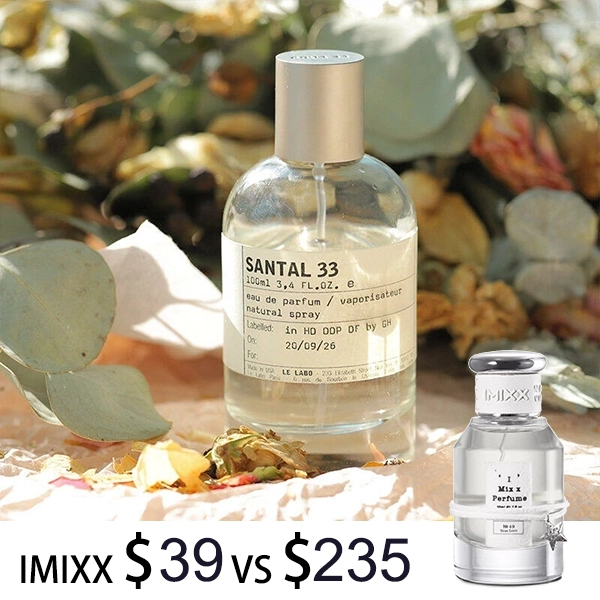
If I am deciding what fragrance to take, I generally favor a travel-friendly format. I can also browse imixx perfume options before traveling and choose a size that makes sense for my packing strategy instead of carrying more liquid than I realistically need.
Can I Bring Perfume in My Personal Item?
Yes, as long as the perfume complies with the same carry-on liquids restrictions. A purse, backpack or laptop bag that travels into the aircraft cabin does not create a separate liquid allowance.
If I place perfume in my personal item, I still treat it as part of my overall carry-on liquids allocation. I like keeping a travel spray somewhere accessible after screening, but before I reach the checkpoint, I make sure it is packed with the rest of the liquids as required.
I also avoid placing an unprotected fragrance bottle next to electronics. Even a small leak can damage a phone, tablet, charging cable or laptop.
Can I Take Perfume Through TSA PreCheck?
TSA PreCheck changes some aspects of the screening process, but I do not treat it as an exemption from the liquids size limits. Eligible travelers may generally leave their compliant liquids bag in their carry-on during standard TSA PreCheck screening procedures, but that convenience does not mean oversized liquid containers automatically become permitted.
If I have a 150 mL fragrance bottle, I do not expect TSA PreCheck status to make it acceptable as a normal carry-on liquid. I either use a smaller bottle or place the larger bottle in checked baggage.
What About Duty-Free Perfume?
Duty-free fragrance is a special case because perfume can be purchased after the normal security screening point, including at airport duty-free stores or on certain international flights.
The FAA’s duty-free perfume and cologne guidance recognizes a specific exception for perfumes and colognes purchased through airport or airline duty-free sales and carried on the passenger or in carry-on baggage.
However, I pay extra attention when I have a connecting itinerary. The fact that I bought a large fragrance bottle after security at one airport does not mean I can open it, discard the packaging and expect it to pass every subsequent checkpoint without question.
My Rule for Connecting With Duty-Free Perfume
I keep the perfume in the official sealed duty-free packaging, retain the receipt and avoid opening the package until I reach my final destination. International connections can involve additional security screening, and local rules at another airport or country may differ from U.S. rules.
If my itinerary requires me to collect checked baggage and go through security again, I pay particular attention to the next airport’s liquid requirements. When permitted and practical, placing a large duty-free bottle into checked baggage before a new security screening can sometimes be the simpler option.
Can I Carry Perfume on an International Flight?
Usually, yes, but I separate two questions: whether the airline allows the item and whether every security authority on my itinerary allows the quantity and packaging.
For a flight departing from the United States, TSA rules apply at the U.S. security checkpoint. When I depart from another country or connect internationally, that country’s aviation-security rules may apply instead. Many jurisdictions use the familiar 100 mL liquid-container standard, but I never assume every airport handles transfers, duty-free purchases or screening procedures identically.
I also distinguish aviation security from customs. Being allowed to bring perfume onto an aircraft does not necessarily determine whether I owe duties or must declare merchandise when entering another country. High-value purchases and unusually large quantities can raise separate customs questions.
How I Pack Perfume for a Flight Without Leaks or Broken Glass
Once I know the fragrance is permitted, my next goal is preventing a mess. Perfume contains volatile ingredients and is often sold in glass packaging, so thoughtful packing matters.
1. I Check the Bottle Size Before Leaving Home
I look at the stated volume on the bottle or packaging. I do not estimate by sight. If the container exceeds 100 mL and I am not relying on a valid duty-free exception, I do not place it in my normal carry-on liquids bag.
2. I Make Sure the Sprayer Cannot Discharge Accidentally
I replace the cap securely. If the design has no cap, I protect the spray head so clothing or another object cannot press it easily.
3. I Put the Bottle Inside a Leak-Resistant Bag
A small resealable bag creates a second layer of protection. If perfume leaks, I would rather contain it in a small bag than saturate clothing, documents or electronics.
4. I Cushion Glass Bottles
When checking perfume, I wrap the bottle in soft clothing or another padded layer and place it toward the middle of my suitcase. I avoid corners and hard-sided areas where impact transfers directly into the bottle.
5. I Consider Decanting Instead of Taking the Original Bottle
For a short trip, I often consider a refillable atomizer. It reduces weight, takes up less room and limits the amount I could lose if the container breaks or disappears.
Knowledge point: I do not fill a travel atomizer to the absolute brim.
Leaving a little internal space and ensuring every seal is properly closed can reduce leakage risk. I also test a refillable atomizer at home before trusting it inside luggage.
Can Perfume Leak Because of Airplane Cabin Pressure?
Changes in pressure can contribute to leakage from imperfectly sealed containers, although a properly manufactured and properly closed perfume bottle should normally remain secure. The greater practical issue is often the sprayer, cap, refill valve or threaded closure.
I therefore treat a leak-proof secondary bag as inexpensive insurance. I also keep refillable containers upright when practical and avoid packing them where other objects can press against the spray mechanism.
If I have filled a travel atomizer myself, I wipe the outside clean before packing it. That helps me distinguish an actual leak from fragrance left on the exterior during filling.
Can I Bring Perfume Oil on a Plane?
Liquid perfume oil is still a liquid for carry-on screening purposes. I do not assume that a roll-on or oil-based fragrance escapes the liquids rule simply because it does not use an alcohol-based spray formula.
If it is liquid, I apply the same conservative packing principle: the container should be 100 mL or smaller for normal carry-on screening and should travel with my other applicable liquids.
Most roll-on fragrance oils are far smaller than 100 mL, so the individual-container limit rarely presents a problem. The primary consideration is making sure everything fits within the liquids allowance.
What About Solid Perfume?
Solid fragrance can be an attractive alternative for travelers who want to minimize liquid products. A genuinely solid perfume balm is not packed like a conventional liquid spray, although final screening decisions always rest with security personnel.
I still make sure the product is genuinely solid rather than a thick liquid or gel. Consistency matters because gels and similar spreadable products may fall within liquid-screening requirements.
For a minimalist trip, a solid fragrance can remove one bottle from my liquids bag and reduce the possibility of spills.
Can I Bring Body Spray, Cologne or Fragrance Mist?
Yes in many ordinary personal-use situations, but I pay attention to the form of the product. Cologne and liquid fragrance mist are liquids. Aerosol body sprays add aerosol packaging considerations.
The FAA allows certain personal medicinal and toiletry aerosols under its toiletry exception, subject to quantity restrictions and protection against accidental release. The nozzle or release mechanism should be protected by a cap or other suitable means.
At the TSA checkpoint, carry-on liquids and aerosols remain subject to the 100 mL / 3.4 oz container rule. This is why a large aerosol body spray that might qualify as a personal toiletry under FAA rules can still be too large to pass through a standard TSA checkpoint in carry-on baggage.
Can I Spray Perfume While I Am on the Plane?
Being allowed to carry perfume does not mean I consider spraying it in the cabin a good idea. Aircraft cabins are shared, enclosed environments. Some passengers may have fragrance sensitivities, allergies, asthma or simply a strong reaction to concentrated scent.
I prefer applying fragrance before boarding or waiting until I arrive at my destination. If I feel I need to refresh it during travel, I can wait until I am in an appropriate airport restroom or another open environment where I can be considerate of people nearby.
This is a good example of the difference between what is legally transportable and what is courteous to use during a flight.
Does the Alcohol in Perfume Make It Dangerous to Fly With?
Many perfumes contain alcohol and can be flammable, which is one reason aviation hazardous-material regulations matter. However, the FAA provides an exception for limited quantities of personal medicinal and toiletry articles, including perfume and cologne.
So I do not treat an ordinary bottle of personal fragrance as automatically prohibited just because alcohol appears in its ingredient list. I follow the permitted quantity, container and baggage requirements instead.
I would be more cautious with unusual fragrance-related products that are not conventional personal toiletries, especially products with separate pressurized gas cartridges, industrial solvents or other hazardous components. When a product is not clearly an ordinary perfume or toiletry, I verify it separately rather than assuming the perfume rules apply.
Common Perfume Packing Mistakes I Avoid
Mistake 1: Assuming a Partially Empty Oversized Bottle Is Allowed
A half-empty 150 mL bottle is still a 150 mL container. For normal carry-on screening, I use a compliant container rather than relying on the amount left inside.
Mistake 2: Forgetting That Other Toiletries Use the Same Liquids Bag
A 100 mL perfume may be allowed individually but can consume valuable room. I decide whether carrying the original bottle is worth sacrificing space for skincare, toothpaste and other essentials.
Mistake 3: Putting an Expensive Glass Bottle Loose in Checked Luggage
I protect fragrance against both impact and leakage. A bottle placed next to a suitcase shell or heavy shoes can be exposed to unnecessary force.
Mistake 4: Opening Duty-Free Packaging During a Connecting Trip
If I may need to clear another security checkpoint, I preserve the receipt and official sealed packaging until I understand the rules at every connection.
Mistake 5: Assuming TSA Rules Are the Only Rules
TSA screening, FAA dangerous-goods regulations, airline baggage policies, foreign security requirements and customs regulations are separate systems. Depending on the itinerary, more than one can matter.
TSA Rules vs. FAA Rules: Why Both Matter for Perfume
This distinction makes the topic much easier to understand.
TSA rules determine what I can take through a U.S. passenger security checkpoint. For perfume in a normal carry-on, the 3-1-1 liquid limits are the main concern.
FAA rules address hazardous materials carried aboard aircraft. Because many perfumes contain flammable alcohol, the FAA’s exception for personal medicinal and toiletry articles explains why ordinary perfume can be transported in limited quantities.
Airline rules may separately determine baggage dimensions, checked-bag weight, number of bags and certain operational restrictions.
International security and customs rules may apply when I depart from, transfer through or enter another country.
This is why I avoid statements such as “TSA says it is allowed, so there are no other restrictions.” The more accurate conclusion is that perfume is commonly allowed for personal travel when it meets the applicable security, hazardous-material and baggage requirements.
Which Perfume Size Should I Choose for a Trip?
My choice depends on trip length rather than simply the maximum TSA allows.
For a weekend, 5–10 mL can be more than enough. For a one- or two-week vacation, a 10–30 mL travel spray may still be plenty. A 50 mL bottle is practical when I strongly prefer carrying the original presentation, while a 100 mL bottle is usually more fragrance than I need for an ordinary trip and consumes significantly more space.
Travel size also reduces financial risk. If my suitcase is lost, a decant or small travel spray represents less product than a full bottle. For fragrances I particularly value, I would rather leave the main bottle safely at home.
| Trip Type | Size I Would Consider | Why |
|---|---|---|
| 2–3 days | 5–10 mL | Compact, light and easy to fit in a liquids bag. |
| 1 week | 10–15 mL | Usually provides ample fragrance without taking much space. |
| 1–3 weeks | 15–30 mL | Useful balance between capacity and portability. |
| Extended travel | 30–50 mL | Still comfortably below the individual TSA liquid-container maximum. |
My Pre-Flight Perfume Checklist
Before leaving for the airport, I run through a short checklist. It prevents most fragrance-related packing problems:
- I check the volume printed on the perfume bottle.
- I make sure any carry-on fragrance container is 100 mL / 3.4 oz or smaller.
- I confirm my perfume can fit with my other applicable carry-on liquids.
- I secure the spray mechanism and replace the cap.
- I place the perfume inside a secondary leak-resistant bag.
- I cushion glass bottles if they are going into checked baggage.
- I keep duty-free perfume sealed and retain the receipt when connections may involve additional screening.
- I check my airline and destination rules when traveling internationally.
This process takes very little time and is easier than dealing with an oversized bottle at airport security.
Why I Base This Guide on TSA and FAA Sources
Air-travel advice is easy to oversimplify, especially when social media posts mix personal experience with official policy. I prefer to separate practical advice from regulatory information.
For the security-screening portion of this guide, I rely on TSA guidance about carry-on liquids. For hazardous-material limits affecting perfume and other toiletries, I use FAA PackSafe guidance. I also distinguish normal pre-packed perfume from duty-free fragrance because the FAA provides separate guidance for duty-free perfume and cologne.
Rules and screening procedures can change, so I recommend checking the relevant government guidance before a trip if the bottle is unusually large, the itinerary involves multiple countries, or the product is not a conventional personal fragrance.
Key travel knowledge
For a standard U.S. carry-on, I remember three things: 100 mL maximum per liquid container, one quart-size liquids bag per passenger under the standard 3-1-1 framework, and the container’s stated capacity matters. For larger fragrance bottles, checked baggage is usually the practical solution, subject to FAA and airline restrictions.
Final Answer: Yes, I Can Bring Perfume on a Plane
Perfume is one of the easier travel products to pack once I separate carry-on limits from checked-baggage limits.
For my carry-on, I keep perfume at or below 3.4 fluid ounces, or 100 mL, per container and make sure it fits with my other liquids in the permitted quart-size bag. If my bottle is larger, I normally pack it safely in checked baggage while remaining within FAA toiletry limits.
For short trips, my preferred approach is even simpler: I carry a small atomizer or travel spray rather than a full-size bottle. That saves room, reduces weight, protects the original fragrance and gives me fewer things to worry about at security.
If I buy perfume duty-free, I preserve the sealed packaging and receipt until I finish any connecting security procedures. And when I travel internationally, I check the rules that apply at each relevant airport rather than assuming U.S. procedures automatically apply everywhere.
The important point is that perfume itself is not the problem. Container size, total quantity, packaging and the stage of the journey determine how I should carry it.
Key-Points FAQ About Traveling With Perfume
Can I bring perfume in my carry-on bag?
Yes. I can generally bring perfume in a carry-on through a U.S. TSA checkpoint when the container is no larger than 3.4 oz (100 mL) and it complies with the standard liquids-bag requirements.
Can I take a 100 mL perfume bottle on a plane?
Yes. A bottle labeled 100 mL is generally within the TSA individual-container limit for carry-on liquids. It still needs to fit with my other applicable liquids in the permitted quart-size bag.
Can I bring a 150 mL perfume bottle if it is half empty?
Not as a normal carry-on liquid through a U.S. checkpoint. TSA liquid limits are based on the container’s capacity, so I would normally put a 150 mL bottle in checked baggage even if less than 100 mL remains.
Can perfume go in checked luggage?
Yes. Perfume can generally travel in checked baggage as a personal toiletry. FAA rules limit covered medicinal and toiletry articles to a combined 2 L or 2 kg per person, with each container limited to 500 mL or 0.5 kg.
How many perfume bottles can I carry on?
There is no simple perfume-specific bottle count under the standard TSA liquids rule. Each liquid container must be 100 mL or smaller, and all applicable liquids must fit within the passenger’s permitted quart-size bag.
Does perfume have to be in a clear bottle?
The perfume bottle itself does not generally have to be transparent. The TSA rule concerns the size of liquid containers and the clear quart-size bag used to organize applicable carry-on liquids.
Can I take duty-free perfume larger than 100 mL?
Duty-free perfume can qualify for special treatment. I keep qualifying duty-free purchases in the official sealed packaging and retain the receipt, especially when my itinerary includes additional security checkpoints or international connections.
Is perfume considered a liquid by TSA?
Yes. Conventional liquid perfume is treated as a liquid for carry-on screening, so I apply TSA’s standard liquids restrictions when packing it through a U.S. airport security checkpoint.
Can I bring perfume oil or a roll-on fragrance?
Yes, but liquid perfume oil and liquid roll-on fragrance are still liquids. I pack them according to the same carry-on liquid principles, although these products are usually sold in containers far smaller than 100 mL.
What is the safest perfume size for air travel?
For convenience, I prefer a 5–15 mL travel spray. It is well below the TSA container limit, takes up little room in my liquids bag and reduces the amount of fragrance at risk if my luggage is lost or the atomizer leaks.