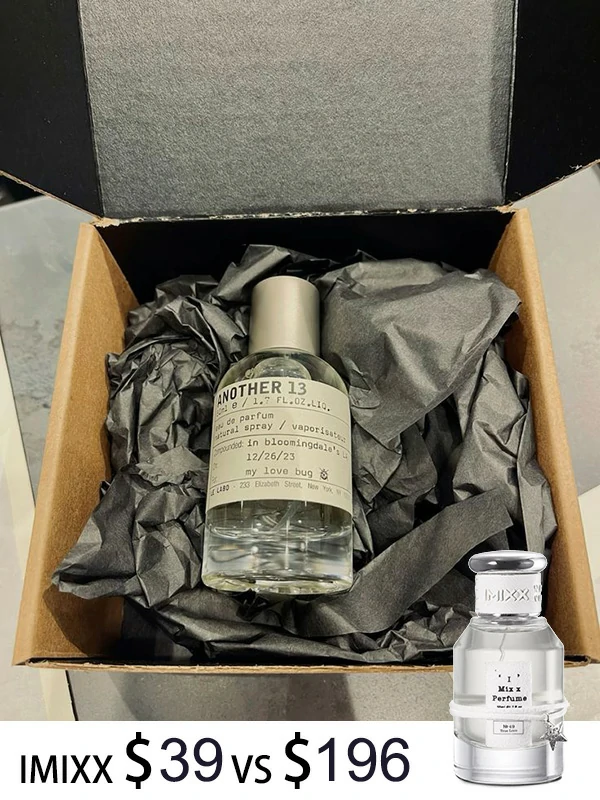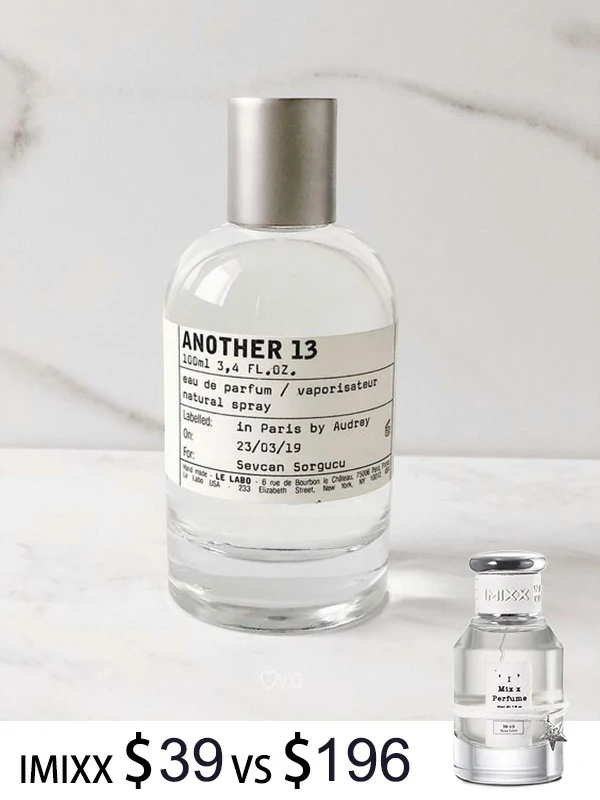
8 Best another 13 le labo dupe Perfumes: A Fair and Honest Guide
Let me take you back to a crisp autumn morning in New York City. I was standing in line at a boutique coffee shop in SoHo, bundled up in a wool coat, when the most intoxicating, inexplicable scent drifted past me. It wasn’t floral, it wasn’t citrusy, and it certainly wasn’t a traditional woody fragrance. It smelled like clean skin, fresh magazine paper, a subtle hint of sweet pear, and an airy musk that seemed to dance around the room. I politely tapped the stranger’s shoulder and asked what she was wearing. She smiled and simply said, “Le Labo Another 13.” I went straight to the boutique, sprayed it on my wrist, and fell in love. However, staring at the $300+ price tag for a standard bottle, I knew I couldn’t justify the expense. From that moment on, finding the ultimate another 13 le labo dupe became my absolute obsession.
If you are reading this, you already know the frustrating yet magical nature of this iconic fragrance. Commissioned originally by AnOther Magazine in 2010, it was an exclusive, limited-edition scent that eventually became a permanent part of the Le Labo collection due to overwhelming demand. But maintaining this signature scent can be financially draining for the average consumer. I spent months buying decants, testing high-street brands, and delving deep into the world of molecular perfumery. Let me tell you, finding a reliable another 13 le labo dupe requires immense patience. Molecular fragrances react completely differently depending on your unique skin chemistry, body temperature, and even the weather.
I tried almost everything on the market. Some contenders were far too heavy on the perfumer’s alcohol, burning my nose upon the first spray. Others smelled like cheap laundry detergent or baby powder, completely missing the metallic, radiant nuance of the original. But the turning point came when I broadened my horizons, researched the specific aromachemicals used, and explored specialized niche alternative houses alongside mainstream molecular brands. It took a lot of trial and error, testing on both skin and fabric, but my perseverance paid off when I finally discovered an another 13 le labo dupe that offered a genuinely compelling alternative, alongside several other fantastic options. In this comprehensive, unbiased guide, I am going to share my top 8 alternatives. I will break down their scent profiles, longevity, sillage, and explicitly outline where they succeed and where they differ from the original Le Labo masterpiece.
The Anatomy of a Cult Classic: Why is Another 13 So Hard to Replicate?
To understand why it is so phenomenally difficult to clone this specific perfume, we have to look closely at its composition. Another 13 is famously composed of exactly 13 ingredients. It is a masterclass in minimalist, synthetic perfumery. The undisputed star of the show is Ambroxan, a synthetic aromachemical designed to mimic the scent of natural ambergris (which is a rare byproduct of sperm whales). Ambroxan gives the fragrance its addictive, creamy, slightly salty, and radiant edge. But Ambroxan alone doesn’t make Another 13. The fragrance also relies heavily on Ambrette seed absolute, which provides a soft, sweet, and almost pear-like fruitiness that stops the perfume from smelling too sterile.
Additionally, there are sheer floral notes like jasmine petals, and green, earthy grounding notes like moss. The reason many alternative brands fail at creating an accurate replica is the delicate, razor-thin balance of these synthetics. According to an excellent deep dive on molecular perfumery by Snif, working with heavy aromachemicals like Ambroxan requires a master perfumer’s touch. If a brand overdoses the Ambroxan, the perfume becomes harsh, metallic, and headache-inducing. If they overdose the Ambrette, it becomes a fruity, powdery mess. The perfect balance results in a “your-skin-but-better” aura that is famously known for disappearing and reappearing throughout the day.
There is also a fascinating biological component to this fragrance. Research has shown that the human perception of Ambroxan is tied to a specific olfactory receptor called OR7A17. As noted in a scientific breakdown by Premiere Peau, some people have genetic variations in this receptor, making them partially or entirely “nose-blind” (anosmic) to the molecule. This means that while you might think your perfume has worn off after an hour, the person sitting two desks away from you is getting a massive, beautiful waft of your fragrance. This ghost-like behavior makes evaluating alternatives incredibly tricky, which is why I had to develop a strict testing methodology.
My Testing Methodology: How I Evaluated These Alternatives
To ensure this guide is genuinely helpful and completely fair, I didn’t just spray these perfumes on a paper strip and sniff them once. Molecular fragrances do not perform well on paper—they require the heat and oils of human skin to “bloom.” Therefore, my testing protocol was rigorous. I tested each of the 8 fragrances over the course of three months. I dedicated three full days of wear to each individual perfume. On day one, I wore it solely on my skin (pulse points on the neck and wrists) to judge the opening, heart, and dry down. I paid close attention to how the scent evolved after one hour, four hours, and eight hours.
On day two, I tested the fragrance on fabric. I sprayed it on a clean cotton t-shirt and left it in a neutral room, checking the scent progression periodically. This helped me determine the true longevity of the base notes without the interference of my skin’s pH or body heat. Finally, on day three, I wore the fragrance out in public. I asked my partner, my coworkers, and even friends for their honest feedback. I specifically asked them if they could still smell me at the end of the day, to account for my own potential olfactory fatigue. I evaluated these perfumes based on three main criteria: Scent Profile Closeness (how similar the vibe and notes are to the original Le Labo), Performance (longevity and projection), and Value for Money.
Quick Comparison: The Top Alternatives at a Glance
Before we dive into my deeply detailed reviews of each individual fragrance, I have put together a quick reference table. I have abandoned arbitrary “percentage accuracy” scores, as scent is highly subjective. Instead, I’ve categorized how closely they capture the “vibe” of the original, alongside their general longevity and price bracket.
| Brand & Perfume | Key Notes | Scent Profile Vibe | Tested Longevity | Price Range |
|---|---|---|---|---|
| 1. Juliette Has A Gun – Not A Perfume | Cetalox (Pure) | Minimalist, clean, lacks the fruitiness | 6-8 Hours | $$$ |
| 2. Escentric Molecules – Molecule 02 | Ambroxan (Pure) | Radiant ambergris base, purely synthetic | 10+ Hours | $$$ |
| 3. imixx perfume – Ambrette 13 | Ambroxan, Ambrette, Pear, Moss | Highly similar blend of musk and pear | 8-10 Hours | $$ |
| 4. Glossier – You | Pink Pepper, Iris, Ambrette | Powdery, peppery, much warmer | 5-7 Hours | $$ |
| 5. Clean Reserve – Skin | Praline, Salt, Musk | Sweeter, cozy, slightly gourmand skin scent | 4-6 Hours | $$ |
| 6. Zara – Blanc a Porter | Musk, Ambrette, Bergamot | Citrus opening, settles into soft musk | 3-5 Hours | $ |
| 7. Thomas Kosmala – No 4 Apres l’Amour | Lemon Blossom, Spices, Musk, Amber | Massive projection, sweeter amber base | 12+ Hours | $$$$ |
| 8. imixx perfume – Musky Woods | Ambroxan, Jasmine, Iso E Super | Deeper, woodier, less fruity evening take | 8+ Hours | $$ |
Deep Dive Reviews: Exploring the 8 Contenders
Now, let’s get into the details. I have styled these reviews to give you the clearest possible picture of what to expect from each bottle. No fragrance is absolutely perfect, and I will be highlighting both the strengths and the weaknesses of each option based on my empirical testing.
1. Juliette Has A Gun – Not A Perfume
The Minimalist Foundation
This is arguably the most famous molecular fragrance available at mainstream retailers like Sephora. The concept behind “Not A Perfume” is radically simple: it is composed of a single ingredient, Cetalox, diluted in alcohol and water. Cetalox is a synthetic musk that is structurally very similar to Ambroxan. Because it relies entirely on this one molecule, it operates on the exact same olfactive wavelength as the base of Le Labo’s creation. It captures that clean, skin-like, completely hypoallergenic aura perfectly.
During my wear test, I found that Not A Perfume is the ultimate “dumb reach.” It is what you spray when you don’t want to feel like you are wearing a traditional perfume. It simply makes your natural skin smell incredibly clean, slightly woody, and fresh. However, as an alternative to our target scent, it has one major drawback: it lacks complexity. The Le Labo original has that beautiful, slightly sweet pear and ambrette opening, followed by earthy moss. Not A Perfume is completely linear. It smells the exact same at minute one as it does at hour six.
Where this fragrance truly shines, however, is in layering. If you own another perfume that feels a bit too sharp, too floral, or too fleeting, spraying Not A Perfume over it acts as a magical anchor, smoothing out the rough edges and extending the longevity. It is a fantastic tool in any fragrance lover’s collection, even if it isn’t a complex clone.
- ✔️ The Good: Hypoallergenic; the ultimate layering perfume; smells incredibly clean and fresh.
- ❌ The Bad: Completely lacks the fruity and mossy complexity of Le Labo; still carries a designer price tag.
2. Escentric Molecules – Molecule 02
The Pure Ambroxan Experience
Perfumer Geza Schoen revolutionized the fragrance industry when he launched the Escentric Molecules line. While Molecule 01 focuses on Iso E Super, Molecule 02 is built entirely around pure Ambroxan. Because Ambroxan is the heavy-lifting, radiating heart of Another 13, wearing Molecule 02 gives you the exact same base experience. It is mineral, slightly salty, incredibly radiant, and sexy in a completely understated way.
My experience wearing Molecule 02 was fascinating. It is the definition of a ghost fragrance. I would spray it on my neck, smell a faint whisper of warm alcohol and minerals, and then within ten minutes, I couldn’t smell a thing. I thought the test was a failure. But eight hours later, I got into my car at the end of the day, and the entire cabin suddenly filled with the scent of rich, warm ambergris. My partner commented on it hours after I had stopped perceiving it.
If you love the purely woody, musky dry down of the Le Labo scent, this is a phenomenal purchase. However, much like Not A Perfume, it is a single-molecule creation. You will miss the subtle floral nuances and the sweet opening that gives the original its rounded, multidimensional character. It is a fantastic fragrance, but it is an architectural base, not a fully decorated house.
- ✔️ The Good: Unmatched sillage and longevity on fabric; the truest ambergris representation; very modern.
- ❌ The Bad: Highly prone to causing olfactory fatigue; lacks top notes entirely.
3. imixx perfume – Ambrette 13
The Balanced, Cost-Effective Alternative
This brings me to the alternative houses. Many brands try to copy the Le Labo DNA by just mixing cheap musk and alcohol, which results in a harsh, chemical mess. I was highly skeptical of imixx perfume’s Ambrette 13, but testing it proved to be a very pleasant surprise. Unlike the single-molecule scents mentioned above, this one attempts to recreate the entire olfactory pyramid of the original, from top to bottom.
The opening of Ambrette 13 is impressive. It hits you with that clinical, slightly metallic freshness right away, but it is quickly followed by the crucial ambrette seed note. This gives it the soft, sweet, pear-like fruitiness that makes the original so comforting. During my wear tests, it settled onto my skin beautifully. It doesn’t scream or project aggressively across the room, but it creates a persistent, highly pleasant scent bubble around you. In terms of capturing the specific “magazine paper” and clean-skin vibe, it is remarkably close.
However, to be completely transparent and fair, there are minor differences. The original Le Labo has a slightly sharper, earthier bite in the deep dry down due to the specific moss absolute they use. Ambrette 13 stays a bit softer and sweeter in its final stages. Additionally, while the longevity is very good (I clocked about 8 hours on skin), it doesn’t quite have the three-day persistence on clothing that a $300 niche bottle might boast. But for a fraction of the price, it is an incredibly well-blended, satisfying alternative that successfully captures the magic without feeling cheap.
- ✔️ The Good: Captures the complex blend of musk, ambrette, and pear very well; excellent value for the price; very wearable.
- ❌ The Bad: The late dry-down lacks the aggressive earthy moss of the original; occasional stock issues on their site.
4. Glossier – You
The Powdery Crowd-Pleaser
Glossier You took the internet by storm, becoming the signature scent for a whole generation of beauty enthusiasts. It falls squarely into the same “skin scent enhancer” category, utilizing heavy doses of ambroxan and ambrette seed. Because of these shared base ingredients, Glossier You shares a significant amount of DNA with our target scent. However, it takes the concept in a decidedly different, more accessible direction.
While the Le Labo DNA is sharp, metallic, and somewhat cool, Glossier You is fluffy, powdery, and deeply comforting. The addition of iris root gives it a cosmetic, lipstick-like softness, while the pink pepper provides a bright, sparkling opening. Wearing this feels like putting on a clean, expensive cashmere sweater right out of the dryer. It is incredibly inviting and rarely offends anyone.
I included this on the list because it serves as a wonderful daytime alternative for someone who likes the idea of molecular musks but finds the original a bit too cold or clinical. The downside? Performance. During my testing, Glossier You faded to a very faint whisper within five hours. It requires reapplication throughout the day if you want to maintain a scent trail.
- ✔️ The Good: Extremely comforting; affordable mainstream option; the pink pepper opening is beautiful.
- ❌ The Bad: Turns very powdery, which may not appeal to purists; longevity is only moderate compared to others.
5. Zara – Blanc a Porter
The Fast-Fashion Budget Find
Never underestimate Zara when it comes to fragrances. They frequently collaborate with master perfumers to create high-quality scents at unbelievable fast-fashion prices. Blanc a Porter is their venture into the minimalist, molecular world. It blends ambrette, bergamot, and a hefty clean musk base to create a surprisingly sophisticated aura. For a perfume that costs less than a decent lunch, it captures the airy, translucent vibe impeccably well.
During testing, I found the opening to be a bit misleading. It starts off much more citrus-forward than we want, with a sharp blast of bergamot. But patience is key here. If you give it twenty minutes, the citrus burns off entirely, and you are left with a beautifully soft, musky ambrette that feels remarkably close to our high-end target. It smells like luxury hotel soap mixed with warm skin.
The caveat, as you might expect with the price point, is performance. The heavy molecular fixatives used by niche brands are expensive, and Zara clearly had to compromise here. I found myself needing to reapply this every three to four hours. However, at this price, you can afford to keep a bottle in your car or gym bag and spray with abandon.
- ✔️ The Good: Unbeatable price tag; surprisingly sophisticated dry down; great for throwing in a gym bag.
- ❌ The Bad: The citrus opening feels out of place; poor longevity requires constant reapplication.
6. Clean Reserve – Skin
The Sweet & Salty Interpretation
Clean Reserve is a brand built on eco-conscious, straightforward fragrance concepts. Their offering ‘Skin’ is a gorgeous interpretation of the intimate fragrance genre. It strays from the pure, clinical ambroxan blast and instead incorporates a notable praline note, balanced perfectly with a hint of salt and a massive dose of clean white musk. It smells exactly like warm skin after a shower, mixed with the faintest hint of a vanilla-scented body lotion.
While it is significantly sweeter than the others on this list, it achieves the exact same emotional response. When I wore this, people didn’t ask, “What perfume are you wearing?” They asked, “Why do you smell so good?” It is an intimate, inviting, and entirely unpretentious scent. It leans a bit more feminine than the strictly unisex Le Labo, but it remains incredibly wearable.
Performance-wise, it acts exactly as the name implies—it is a skin scent. It sits very close to the body and doesn’t project far. You will enjoy it, and someone hugging you will enjoy it, but it won’t leave a trail in a hallway. It lasted about five hours on my skin before fading away entirely.
- ✔️ The Good: Beautifully sweet and salty contrast; very safe blind buy; eco-friendly packaging and ethos.
- ❌ The Bad: Noticeably sweeter than the original; very intimate projection with average longevity.
7. Thomas Kosmala – No 4 Apres l’Amour
The Beast Mode Contender
If your biggest complaint about skin scents is that they are too weak or fade too quickly, let me introduce you to Thomas Kosmala No 4. This fragrance is legendary in the niche perfume community for its absolutely nuclear performance. It takes the airy, ambroxan-heavy aesthetic, strips out the gentle pear note, and injects it with sharp lemon blossom, spices, and an incredibly dense amber base.
My wear test with this was almost overwhelming. A single spray on my wrist survived a shower, a full night’s sleep, and was still distinctly present the next morning. It shares the same metallic, sweet-musk vibe as our target, but it turns the volume up to 11. Interestingly, it is frequently compared to Baccarat Rouge 540 as well, sitting squarely in the middle of these two iconic scent profiles. It is sweet, woody, and incredibly loud.
However, its greatest strength is also its greatest weakness. The subtle, ghost-like elegance of the Le Labo original is completely lost here. This is not a “your skin but better” scent; it is a room-filling statement piece. If you overspray this, you risk giving yourself and those around you a headache. But if you want a molecular fragrance that leaves a massive, undeniable scent trail, this is the holy grail.
- ✔️ The Good: Unbelievable, room-filling performance; highly complimented; excellent niche quality ingredients.
- ❌ The Bad: Can be harsh and overwhelming if over-sprayed; lacks the delicate intimacy of the original; expensive.
8. imixx perfume – Musky Woods
The Evening Twist
I decided to include a second offering from imixx perfume because it presents a fascinating study in how molecular fragrances can be tweaked. While their Ambrette 13 attempts to be a straight clone, their Musky Woods formulation takes the same core DNA and twists it into something slightly deeper, woodier, and more suited for evening wear. It dials back the sweet fruitiness and amplifies the Iso E Super (a synthetic cedarwood note) and the moss.
When I tested Musky Woods on an evening out, I appreciated how it performed in a crowded environment. It retains that clean-skin identity but adds a layer of mysterious, dark woodiness that cuts through the heavy, sugary gourmand perfumes everyone else tends to wear at night. It is sharp, sophisticated, and commands attention without screaming.
To evaluate it fairly against the original, however, you must understand that this is an interpretation, not an exact match. If you are looking for the exact, light, airy magazine-paper smell for a sunny Tuesday morning, this will feel a bit too heavy and robust. But as a flanker—an evening companion to your daytime skin scent—it is a very solid, well-performing option.
- ✔️ The Good: Adds a beautiful, mature woody depth; excellent performance for evening wear; feels sophisticated.
- ❌ The Bad: Deviates from the airy, fruity lightness of the original; might be too woody for pure musk lovers.
Knowledge Points: Mastering Molecular Fragrances
Wearing molecular perfumes requires a slightly different approach than wearing traditional floral or citrus scents. Because these are heavily synthetic, molecule-based formulations, their behavior is deeply influenced by physics, biology, and chemistry. According to industry experts at Parfinity, understanding how these molecules function as amplifiers is key. Here are four critical knowledge points you must understand to get the most out of your fragrance.
🧪 Knowledge Point 1: The Illusion of Olfactory Fatigue
The most common complaint with ambroxan-heavy perfumes is, “It disappeared after ten minutes!” This is almost always a biological illusion. Large synthetic molecules like Ambroxan quickly bind to your olfactory receptors, causing your nose to temporarily “shut off” to that specific smell to prevent sensory overload. This is called olfactory fatigue or nose-blindness. You might not smell it on yourself, but the person walking behind you in the grocery store can smell you loud and clear. Resist the urge to keep spraying, or you will choke out the room!
🔥 Knowledge Point 2: Heat Activation vs. Fabric Linearity
Unlike natural citrus oils that evaporate faster in the heat, heavy molecules like Ambroxan actually perform better when warm. They “bloom” with your body heat. Spraying them onto a paper test strip will smell flat and lifeless. They need the warmth of human skin to fully develop. Apply directly to your pulse points: the neck, inner wrists, and inside of your elbows. However, if you want to extend the longevity and prevent olfactory fatigue, try spraying one spritz on your clothing. Fabric holds onto the scent profile in a much more linear, predictable way without activating the intense heat-bloom.
🎨 Knowledge Point 3: The Art of Layering
Because these fragrances are minimalist and operate fundamentally as “base notes,” they are the ultimate layering tools. If you have a favorite fresh citrus perfume that fades way too quickly in the summer, spray your molecular dupe first. Let it dry down for two minutes, and then spray the citrus directly over it. The heavy ambroxan acts as a massive anchor, gripping the lighter top notes and extending their lifespan by hours. It also works beautifully to modernize vintage perfumes, adding a clean, sharp edge to heavy, dated florals.
⏳ Knowledge Point 4: The Importance of Maceration
When you buy affordable alternative perfumes directly from the manufacturer, they are often blended very recently before shipping. During transit, temperature fluctuations and movement can cause the delicate synthetic molecules and alcohol to separate slightly, leading to a harsh, “rubbing alcohol” smell upon first spray. When you receive a new bottle, spray it 3-4 times to clear the plastic tube, then put it in a cool, dark drawer for 2 to 4 weeks. This process, known as maceration, allows the oils and alcohol to properly bind. The scent will become significantly smoother, stronger, and more accurate.
Frequently Asked Questions (FAQ)
As someone who talks about fragrances endlessly, I receive countless questions from ordinary consumers trying to navigate the tricky world of niche alternatives. Here are detailed answers to the most common questions regarding this specific scent profile.
1. Is this type of molecular fragrance suitable for a strict office environment?
Absolutely. In fact, it is arguably the most office-appropriate style of fragrance ever created. Because it functions as a “skin scent,” it doesn’t have a massive, intrusive scent bubble that will choke out an elevator. It simply makes you smell like a highly well-groomed person who uses luxurious, expensive soap. Furthermore, because it relies on synthetics rather than heavy natural florals or spices, it is generally considered hypoallergenic and safe for sensitive environments.
2. Why does the exact same perfume smell completely different on me than on my friend?
This is the beauty, and sometimes the frustration, of molecular perfumery. Heavy aromachemicals like Ambroxan and Ambrette interact significantly with your skin’s natural pH, your diet, and the lipid (fat) barrier on your skin. On someone with naturally oily skin, the fragrance might pull very sweet, emphasizing the pear and ambrette notes. On someone with dry skin, those top notes evaporate instantly, leaving only the sharp, woody, metallic ambergris base. It is a highly personalized experience.
3. Are there any seasonal restrictions for wearing this DNA?
Not at all. This DNA is the ultimate “dumb reach” signature scent precisely because it is completely seasonless. In the blistering heat and humidity of a July summer, the crisp, clean, metallic musk feels incredibly refreshing and cooling. Conversely, in the dead of winter, the warm ambrette seed and the deep woody ambergris facets feel cozy and enveloping, like a warm sweater. It adapts to the temperature around it.
4. How can I fix nose-blindness if I can’t smell my own perfume anymore?
First, you need to change your application technique. Stop spraying the perfume directly under your nose (avoid the front of your neck and your chest entirely). When you spray there, the molecules constantly bombard your receptors, shutting them down fast. Instead, spray only on your wrists, the back of your knees, or the back of your neck. Secondly, take a break. Wear a completely different, non-molecular fragrance (like a heavy vanilla or a sharp natural citrus) for three or four days to reset your olfactory receptors before returning to your molecular favorite.
5. Why are these molecules synthetically produced instead of using natural ingredients?
The primary molecule, Ambroxan, was developed as a synthetic alternative to ambergris. Natural ambergris is created in the digestive system of sperm whales and floats in the ocean for years before washing ashore. It is incredibly rare, wildly expensive, and its use is highly restricted or illegal in many countries for ethical reasons. Synthetic Ambroxan (derived from clary sage) allows perfumers to recreate that beautiful, salty-musky scent ethically, consistently, and at a fraction of the cost, democratizing luxury fragrance for all of us.
Final Thoughts: The exhaustive journey to finding the ideal alternative taught me an immense amount about fragrance chemistry and the deeply subjective nature of how we perceive scent. While the original Le Labo creation is undeniably a masterpiece of modern, minimalist perfumery, you absolutely do not need to spend upwards of $300 to experience its magic. By understanding how these molecules work and exploring the options on the market fairly—recognizing their individual strengths and weaknesses—you can find a scent that fits your budget and your skin chemistry perfectly. Whether you opt for a pure molecular minimalist spray, a fast-fashion steal, or a balanced niche alternative, the world of modern musks is ready to be explored. Happy sniffing!