

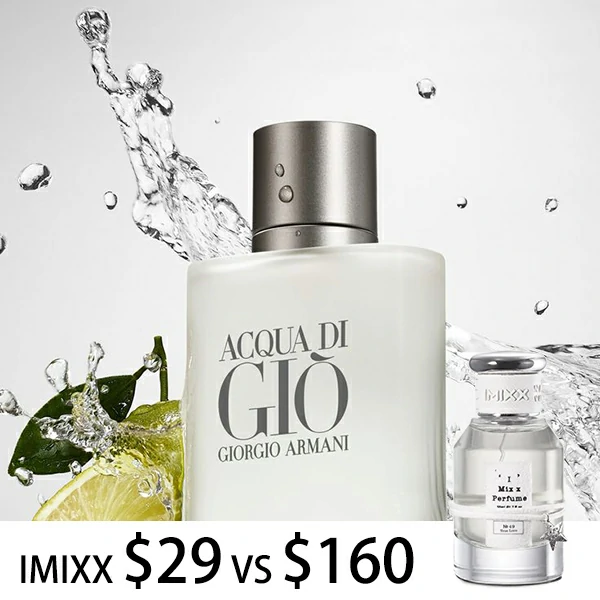
Buying Acqua di Giò Profumo at Chemist Warehouse
When I research acqua di gio profumo chemist warehouse, I do not start by assuming that an old product page, a search-engine result, or a discussion thread proves that the fragrance is currently sitting on a Chemist Warehouse shelf. I start with a simpler question: what can I actually verify today?
That approach matters because Acqua di Giò Profumo is no longer an ordinary current-production fragrance. It has a loyal following, it is frequently discussed by fragrance enthusiasts, and remaining bottles can attract more attention precisely because Giorgio Armani has discontinued it. That combination can make shopping confusing. A shopper may see references to Profumo, Profondo, Acqua di Giò Eau de Parfum, the classic Eau de Toilette, older retailer listings, resale offers, and discontinued inventory all in the same search session.
As of November 12, 2026, I could verify that Giorgio Armani’s official U.S. website identifies Acqua di Giò Profumo as discontinued. I also reviewed current Chemist Warehouse and related Ultra Beauty Giorgio Armani catalog pages. I found listings for other Acqua di Giò fragrances, including the Eau de Toilette, Eau de Parfum and Profondo, but I did not find Profumo in the current catalog results I reviewed. That is a dated online-catalog observation, not a claim that no individual physical location could possibly have residual stock.
For anyone investigating acqua di gio profumo chemist warehouse, that distinction is the most useful starting point I can offer. I would treat Profumo as a discontinued fragrance that may occasionally surface through remaining inventory rather than as a product I can assume Chemist Warehouse regularly replenishes.
I also want to be transparent about the commercial context of this page. This guide is published on the IMIXX Perfumes website, and the site sells its own fragrance product related to this scent profile. That commercial relationship is why I do not want to disguise the following link as an independent retailer recommendation. If I am comparing another buying route, this acqua di gio profumo chemist warehouse resource leads to an IMIXX Perfumes product page. It is a commercial internal link, not evidence of Armani inventory, Chemist Warehouse stock, an affiliation with Giorgio Armani, or an endorsement by Chemist Warehouse.
My goal in the rest of this guide is therefore narrower and more useful: I want to separate what I can verify from what I cannot, explain what makes Profumo different from other Acqua di Giò releases, show how I would evaluate remaining stock, and help a U.S. buyer understand the extra issues involved when considering an Australian retailer.
My Research Method: What I Know, What I Observed, and What I Cannot Claim
I think trust becomes stronger when I clearly explain the limits of an article rather than writing as though I have personally done things I have not done. I am not presenting this as a first-hand diary of walking into a Chemist Warehouse store, buying a bottle of Profumo there, wearing that exact bottle for several weeks, and reporting the result. I cannot substantiate that experience, so I will not invent it.
What I did for this guide was different. I checked primary sources. I reviewed Giorgio Armani’s current official information about Profumo, checked current Chemist Warehouse Giorgio Armani catalog pages, compared the names of currently listed Acqua di Giò products, and used U.S. FDA guidance when discussing fragrance as a cosmetic product.
| Question | What I Can Say | What I Will Not Claim |
|---|---|---|
| Is Profumo discontinued? | Yes. Armani’s official U.S. product page labels it discontinued. | I will not imply that Armani is still supplying normal new-production stock. |
| Is Profumo currently shown in the Chemist Warehouse catalog I reviewed? | I did not find it in the current catalog results I checked on November 12, 2026. | I will not claim that every store in every location has zero residual stock. |
| Have I personally bought Profumo from Chemist Warehouse? | I am not making that first-hand claim in this guide. | I will not manufacture a purchase experience for SEO purposes. |
| Can online stock change? | Yes. Retail catalogs, promotions and store inventory can change. | I will not present a dated observation as permanent availability information. |
This is the standard I use throughout the article. When I describe the scent, I rely on the manufacturer’s documented fragrance profile and explain how I interpret it. When I discuss shopping, I describe the checks I would make before spending money. When I discuss retailer stock, I date the observation.
Is Acqua di Giò Profumo Currently Available at Chemist Warehouse?
Based on the current online catalog pages I reviewed on November 12, 2026, I did not find Acqua di Giò Profumo among the Giorgio Armani fragrances displayed in those Chemist Warehouse results. I did find other members of the Acqua di Giò family, which is exactly why I think shoppers need to read product names carefully.
The current retailer catalog I checked included Acqua di Giò Eau de Toilette and Acqua di Giò Profondo, while the related Ultra Beauty Armani catalog also displayed Acqua di Giò Eau de Parfum. I recommend checking the current Giorgio Armani range at Chemist Warehouse immediately before purchasing because an inventory snapshot can change after an article is published.
I use careful wording here deliberately. If Profumo is absent from an online catalog today, that does not prove that an individual store, warehouse, clearance channel or previously allocated batch has no bottle anywhere. It does mean I would require fresh confirmation before traveling to a store or making a buying decision around presumed availability.
Why Older Google Results Can Be Misleading
Discontinued fragrances can leave a long digital trail. Search engines may continue surfacing old retailer pages, forum discussions, cached snippets, deal posts and shopping results after ordinary inventory has disappeared. The existence of a URL tells me that the product was indexed at some point; it does not necessarily tell me that I can buy it today.
If I saw an old Chemist Warehouse result mentioning Profumo, I would open the current retailer site and search again. If the product still appeared, I would check whether it could actually be added to a cart, whether a store-location tool reported availability, and whether the exact bottle size matched what I wanted.
Why I Date My Stock Check
I prefer saying “I checked on November 12, 2026” rather than writing “Chemist Warehouse does not sell Profumo.” The first statement describes something I actually verified at a particular point in time. The second is too absolute for a retailer whose inventory can change.
That small difference improves the usefulness of the article. It gives me a factual anchor while reminding the reader to conduct a live check rather than treating an SEO page as an inventory database.
What Giorgio Armani Says About Acqua di Giò Profumo
The most important primary source is Giorgio Armani itself. On the official U.S. Armani Beauty product page, Acqua di Giò Profumo is explicitly identified as discontinued. Armani describes the fragrance as an aquatic composition pairing fresh bergamot and marine accords with incense and places it in a mineral aromatic aquatic family.
I consider that more reliable than trying to infer status from reseller availability. Anyone who wants to inspect the source directly can view Giorgio Armani Beauty’s official Acqua di Giò Profumo page.
For me, the discontinued status changes the entire buying strategy. I no longer evaluate Profumo as though I were comparing three routinely replenished department-store fragrances. I evaluate it as a product whose remaining genuine stock may become more fragmented over time.
Why Acqua di Giò Profumo Still Attracts Attention
I think Profumo remains interesting because it takes a familiar aquatic idea and gives it considerably more gravity. The original Acqua di Giò identity is associated with freshness, marine air, citrus and an easy Mediterranean character. Profumo keeps a connection to that freshness while adding an incense-centered darker side.
That contrast is important. If the fragrance were merely a stronger version of the original Eau de Toilette, I would not expect the same level of continued interest. What distinguishes it is the way the brighter marine opening and darker aromatic-incense structure coexist.
How I Read the Scent Profile
I divide the profile into three practical impressions. First comes freshness: bergamot and marine accords create the immediate aquatic character. Next comes the aromatic transition, where the scent begins to feel less like a simple summer cologne. Finally, the incense-supported dry-down gives Profumo its darker reputation.
I am careful not to turn that description into a promise about exactly how it will smell on every person. Skin, climate, application amount, humidity and individual perception affect fragrance. The manufacturer’s note description tells me what the composition is designed around; it does not guarantee an identical sensory experience for every wearer.
Who I Think Should Be Most Interested
If I already know that I enjoy aquatic fragrances but want something less breezy and more serious than a classic fresh Eau de Toilette, Profumo makes conceptual sense. I can also understand its appeal for evening use, business-casual settings, dinners and situations where I want freshness without an extremely sporty feel.
On the other hand, if I dislike incense or strongly prefer bright citrus fragrances, I would not chase a discontinued bottle merely because enthusiasts praise it. Scarcity and reputation do not override personal taste.
My Comparison of Profumo, Profondo, Eau de Toilette and Eau de Parfum
One of the most useful things I can do before buying is stop treating every Acqua di Giò name as interchangeable. A shopper looking quickly at product thumbnails can easily mistake “Profumo” for “Profondo,” especially when both sit inside the same fragrance family.
| Fragrance | How I Characterize It | Why I Might Choose It | Buying Consideration |
|---|---|---|---|
| Acqua di Giò Profumo | Marine freshness contrasted with incense and a darker mineral-aromatic feel. | I want the specific Profumo character and already understand why it differs from the rest of the line. | Discontinued, so I pay more attention to provenance, price and condition. |
| Acqua di Giò Eau de Toilette | Bright, marine, citrus-aromatic and recognizably classic. | I want easy daytime freshness and the traditional Acqua di Giò direction. | Current retail availability is generally easier to verify. |
| Acqua di Giò Eau de Parfum | Fresh and aquatic with a fuller green-woody direction. | I want a contemporary Acqua di Giò with more body while staying fresh. | A current retail option is easier to compare across authorized channels. |
| Acqua di Giò Profondo | A modern aquatic direction with aromatic and mineral depth. | I want a deeper aquatic profile without insisting on Profumo’s incense identity. | It is not a one-for-one replacement for Profumo despite the similar naming. |
My Product Comparison Cards
Acqua di Giò Profumo
I would prioritize Profumo only when its marine-and-incense contrast is the actual reason I am shopping.
My caution: discontinuation can make price and provenance more important than they would be for a normal current-production bottle.
Acqua di Giò Eau de Toilette
I would choose the EDT when I care more about bright, familiar aquatic freshness than Profumo’s darker character.
My caution: belonging to the same family does not make it smell identical to Profumo.
Acqua di Giò Profondo
I consider Profondo when I want an available modern aquatic option and do not need Profumo’s precise incense signature.
My caution: I would compare it on its own merits rather than calling it “the same thing.”
How I Evaluate the Price of a Discontinued Bottle
Once a fragrance is discontinued, I stop judging price against the old recommended retail price alone. Remaining supply, collector interest, condition and seller type can distort the market. A bottle can become significantly more expensive without the fragrance itself changing in any way.
That is why I separate three kinds of value: scent value, scarcity value and emotional value. Scent value is what the fragrance is worth to me as something I will actually wear. Scarcity value is the premium created because fewer bottles are available. Emotional value is what I might be willing to pay because the fragrance has personal meaning or because I specifically miss it.
I Set a Maximum Price Before I Start Hunting
If I do not establish a limit, a discontinued-fragrance search can become an auction against my own fear of missing out. I prefer deciding what the scent is worth to me before I see the most dramatic reseller price.
If Profumo is a fragrance I already know and actively want to replace, my limit may reasonably be higher. If I have never smelled it, I would be much less willing to pay a collector-style premium for a blind purchase.
I never treat a rising resale price as proof that a fragrance smells better than current alternatives. Scarcity can increase market price even when the liquid inside the bottle is unchanged. I want to know whether I value the scent itself enough to pay the premium.
I Compare Price Per Milliliter—but I Do Not Let the Formula Make the Decision
If I am comparing two bottle sizes, calculating price per milliliter is useful. For example, a 100 ml bottle may offer a lower unit cost than a 50 ml bottle. But that does not automatically make the 100 ml bottle the smarter purchase.
If I have not worn the fragrance enough to know that I want a large quantity, the cheapest cost per milliliter can still produce the most expensive mistake. A smaller verified bottle that I actually finish may offer better real-world value than a larger bottle I buy because a spreadsheet told me it was cheaper.
What I Check Before Buying Remaining Profumo Stock
Because Profumo is discontinued, I put more weight on provenance than I would for a current fragrance bought from an established retail channel. I do not rely on one packaging trick or one batch-code website. I look for a chain of consistent evidence.
1. I Verify the Exact Product Name
I first confirm that the listing actually says Acqua di Giò Profumo. “Profumo” and “Profondo” are easy to confuse when I am scanning search results quickly. I also confirm whether the product is an Eau de Parfum, Eau de Toilette, Parfum, gift set, tester, miniature or another format.
A seller can use a broad title such as “Armani Acqua di Giò men’s fragrance,” but that is not enough information for a discontinued-product purchase. I want the exact version in writing.
2. I Check Who Is Actually Selling the Bottle
If I am on a marketplace, the marketplace brand is not necessarily the seller. I inspect the individual merchant, feedback history, return terms and listing quality. If I am buying from an established retailer, I still read the fulfillment and return information rather than assuming every product carries identical conditions.
3. I Look at the Price in Context
A reasonable discount is not automatically suspicious. But if every credible seller treats a discontinued fragrance as scarce and one unknown listing offers a sealed bottle at a dramatically lower price, I want to understand why before paying.
The lowest number on the screen is not always the lowest-risk purchase.
4. I Preserve the Evidence After Delivery
I keep the order confirmation, invoice, shipping materials and product packaging until I have inspected the bottle. If something is materially different from the listing, those records can matter when I contact the retailer or payment provider.
How I Think About Authenticity Without Using “One Trick” Tests
I am skeptical of authenticity guides that promise certainty from a single clue. A batch code, cap shape, box font, cellophane seam or bottle weight can contribute useful information, but I would not treat one detail as absolute proof.
Packaging can vary across production periods and markets. Authentic products can also have imperfect outer packaging after storage or shipping. At the same time, sophisticated counterfeits can copy obvious visual cues.
My stronger approach is cumulative. I ask whether the seller is credible, whether the price makes economic sense, whether the product description is consistent, whether packaging details align, whether the bottle quality seems appropriate, whether purchase documentation exists, and whether I have meaningful recourse if the product is not as described.
I trust a consistent chain of evidence more than a viral checklist item. If several independent details raise concerns, I take that seriously. If one tiny packaging detail differs from an online photo, I investigate before jumping to a conclusion.
What U.S. Buyers Need to Consider With Chemist Warehouse
For a U.S. reader, Chemist Warehouse introduces an extra layer of comparison because the retailer is associated with the Australian market. I therefore do not compare a displayed product price directly with a U.S. store price until I understand the currency, shipping eligibility and final delivered cost.
I Confirm the Currency First
A dollar sign alone can be misleading when I move between U.S. and Australian websites. I check the site region and the currency being displayed before deciding whether an offer is cheaper.
Exchange rates also move. I therefore calculate value using the rate available when I am ready to buy rather than relying on a conversion somebody posted months ago.
I Check Whether Fragrance Can Actually Be Shipped to My Address
Perfume contains alcohol and can be subject to transport restrictions. The fact that I can open a product page from the United States does not prove that the retailer or carrier will ship that particular item to my address.
I check delivery eligibility before comparing deals. Otherwise, I can spend time analyzing a price that I cannot actually use.
I Include Returns in the Real Cost
A cheaper international purchase may be less attractive if a return would be complicated or expensive. For discontinued stock, that issue matters even more because condition and authenticity questions may require documentation and customer support.
I therefore define “price” as more than the amount beside the Add to Cart button. To me, the real buying cost includes shipping, conversion, applicable taxes, return friction, delivery risk and the time required to resolve a problem.
How I Decide Whether to Buy Profumo or a Current Acqua di Giò Instead
I ask myself what I am actually trying to reproduce. If I specifically want the incense-driven character of Profumo because I already know that scent and miss it, searching for remaining genuine stock makes sense.
If my real goal is simply “a sophisticated Acqua di Giò that is deeper than a light summer cologne,” I widen the comparison. That opens the door to currently sold members of the Acqua di Giò family without pretending that any of them are identical.
When I Would Continue Looking for Profumo
I would keep searching if I already know the fragrance, genuinely prefer its profile, can verify a trustworthy seller, and find a price that remains within my predetermined limit. In that situation, the discontinued status is an inconvenience rather than a reason to abandon the search.
When I Would Stop Chasing It
I would stop if the only credible listings were priced far above what the fragrance is worth to me, if provenance became uncertain, or if my interest was mostly driven by online fear of missing out.
There is no prize for paying the highest premium for a discontinued bottle. My objective is to enjoy fragrance, not to win a scarcity contest.
Profumo vs. Profondo: The Difference I Would Keep in Mind
Profumo and Profondo are easy to confuse by name, but I would not treat them as interchangeable. Profumo is defined in large part by the contrast between aquatic freshness and darker incense. Profondo follows a modern aquatic direction with its own aromatic and mineral character.
If what I love is specifically the incense dimension, I would not buy Profondo expecting the same fragrance. If what I want is a modern Acqua di Giò with aquatic depth and easier present-day sourcing, Profondo can be a more practical candidate.
This is an example of why I compare fragrances by scent purpose rather than by name alone.
Profumo vs. the Classic Acqua di Giò Eau de Toilette
The classic Eau de Toilette is the direction I would explore when I want a lighter, brighter and more immediately fresh Acqua di Giò experience. Profumo feels conceptually darker because incense changes the way the aquatic framework is perceived.
For daytime heat, casual use and a clean fresh profile, the EDT may make more sense. For someone specifically attracted to the more serious, evening-friendly side of Profumo, the EDT should be viewed as a related family member rather than a substitute with identical character.
How I Would Use Profumo If I Owned a Bottle
I can discuss how I would use the fragrance without pretending that I personally wore a Chemist Warehouse bottle. Based on its profile, I would start with restrained application and adjust according to setting, weather and my own perception.
In an office or enclosed environment, I would prefer moderation. A fragrance can be pleasant to me while still being intrusive to somebody sitting nearby. In social or evening settings, I may have more flexibility, but I still would not assume that stronger application automatically creates a better experience.
How I Would Store a Discontinued Bottle
If I had paid a premium for remaining Profumo stock, storage would matter to me. I would keep it in a stable indoor environment away from direct sunlight, strong heat and major temperature swings. I would not leave it on a sunny windowsill or in a hot vehicle.
Good storage does not let me predict an exact lifespan, but it removes obvious environmental stressors that can affect fragrance quality.
Fragrance Safety and Ingredient Awareness
I also think a buyer’s guide should acknowledge that perfume is a cosmetic product applied to the body, not merely a collectible object. In the United States, the FDA explains that products such as perfume and cologne intended to make a person more attractive are generally regulated as cosmetics. The agency also explains that fragrance ingredients must meet cosmetic safety requirements and that companies marketing cosmetics have responsibility for product safety and proper labeling.
If I have known fragrance sensitivities, I would read the product labeling and manufacturer information rather than relying only on a scent description. For U.S. regulatory background, I use the FDA’s guidance on fragrances in cosmetics.
If I experienced an unexpected rash, burning sensation, breathing difficulty or another concerning reaction after using a fragrance, I would stop using it and seek appropriate medical guidance. The fact that a bottle is discontinued or expensive would not justify continuing to apply something that appears to be causing a problem.
My Step-by-Step Buying Checklist
Before I pay for any Profumo listing, I check:
- The exact fragrance name. I verify that the listing says Acqua di Giò Profumo rather than Profondo, Parfum, Eau de Parfum or Eau de Toilette.
- The bottle size. I confirm the number of milliliters instead of judging value from the product photo.
- The product condition. I identify whether it is sealed retail stock, a tester, an opened bottle, a miniature or a gift-set component.
- The seller identity. I distinguish the platform from the merchant when shopping through a marketplace.
- The date of the stock information. I do not rely on an old search result as evidence of current availability.
- The total delivered cost. For an international order, I include currency conversion, shipping and other applicable charges.
- Delivery eligibility. I verify that fragrance can actually be shipped to my destination.
- The return process. I understand what I would need to do if the product arrived damaged or materially different from the description.
- The price compared with alternatives. I decide whether I am paying for a scent I value or merely reacting to scarcity.
- My own reason for buying. I ask whether I genuinely want Profumo’s profile or simply want the discontinued product because other people say it is difficult to find.
What Makes This Buying Decision Different From a Normal Fragrance Purchase?
A normal current-production fragrance purchase is usually straightforward. I can compare several established retailers, check standardized bottle sizes, read the manufacturer’s current product information and assume that fresh inventory will continue entering the market.
Profumo requires a different mindset because discontinuation breaks that normal cycle. Every year that passes can make remaining inventory more fragmented. Some bottles may be sealed retail stock. Others may come from collectors. Others may have uncertain storage history. Price dispersion can widen.
That makes provenance more important and impulse buying less attractive.
Why I Do Not Treat Retailer Reputation as the Only Authenticity Check
A reputable retailer is a strong positive signal, but I still read the exact product page and transaction terms. Retailers can operate multiple fulfillment arrangements, websites can contain outdated information, and product descriptions can occasionally contain errors.
I therefore use retailer reputation as one component of a broader decision rather than a substitute for reading the listing.
The same principle applies to online reviews. Reviews can help me understand common buyer experiences, but they do not prove that the specific bottle in front of me is authentic, fresh or available.
Why I Would Not Call Profumo “Worth It” for Everyone
I dislike universal “worth it” claims because they hide the factors that actually determine value. Profumo may be worth a premium to someone replacing a favorite bottle. The same price may be unreasonable for a first-time buyer who has never smelled it.
My answer changes with the buyer’s experience, budget, interest in incense, tolerance for discontinued-product risk and willingness to compare alternatives.
If I already know I love Profumo and I find verifiable stock from a seller I trust, I can understand paying more than I would have paid when the fragrance was routinely available. If I am mostly curious, I would rather keep the experiment financially controlled.
My Practical Verdict on Buying Acqua di Giò Profumo Through Chemist Warehouse
If I were searching today, I would not begin by assuming that Chemist Warehouse currently has Profumo. My November 12, 2026 catalog check did not show Profumo in the current Armani results I reviewed, although other Acqua di Giò fragrances were present.
I would therefore treat any future Profumo listing as something to verify in real time. I would confirm the exact product, store or online availability, size, displayed currency, delivery eligibility and return terms before changing my plans around it.
The discontinued status is not a reason for me to panic-buy. It is a reason for me to become more methodical.
If my priority were the exact original Profumo scent, I would focus on trustworthy provenance and a price ceiling. If my priority were simply a high-quality contemporary Acqua di Giò experience, I would compare current releases rather than assuming a discontinued bottle is automatically the best choice.
That is how I approach acqua di gio profumo chemist warehouse today: I separate verified facts from assumptions, acknowledge the commercial context of this website, date retailer observations, avoid inventing personal experience, and make the final purchase decision only after the product and the transaction both make sense.
Key-Points FAQ
I researched this guide using current primary sources and dated retailer catalog checks. I am not claiming a personal Chemist Warehouse Profumo purchase or a controlled wear test of a bottle bought from that retailer. Inventory, pricing, currency conversion, delivery eligibility and retailer policies can change after publication, so I recommend confirming transaction-specific details directly before buying. IMIXX Perfumes has a commercial interest in fragrance sales; its internal product link should be understood in that context.

