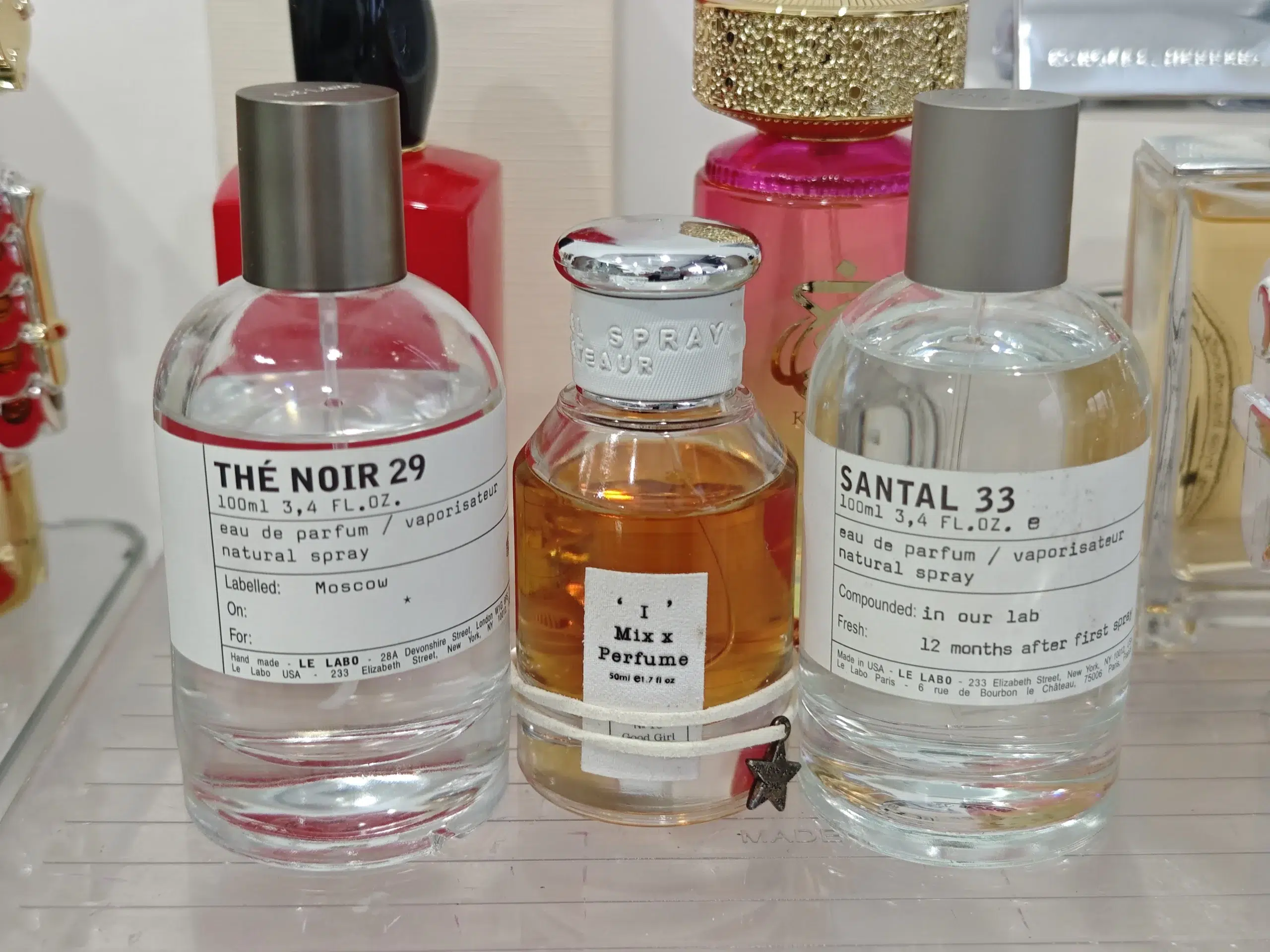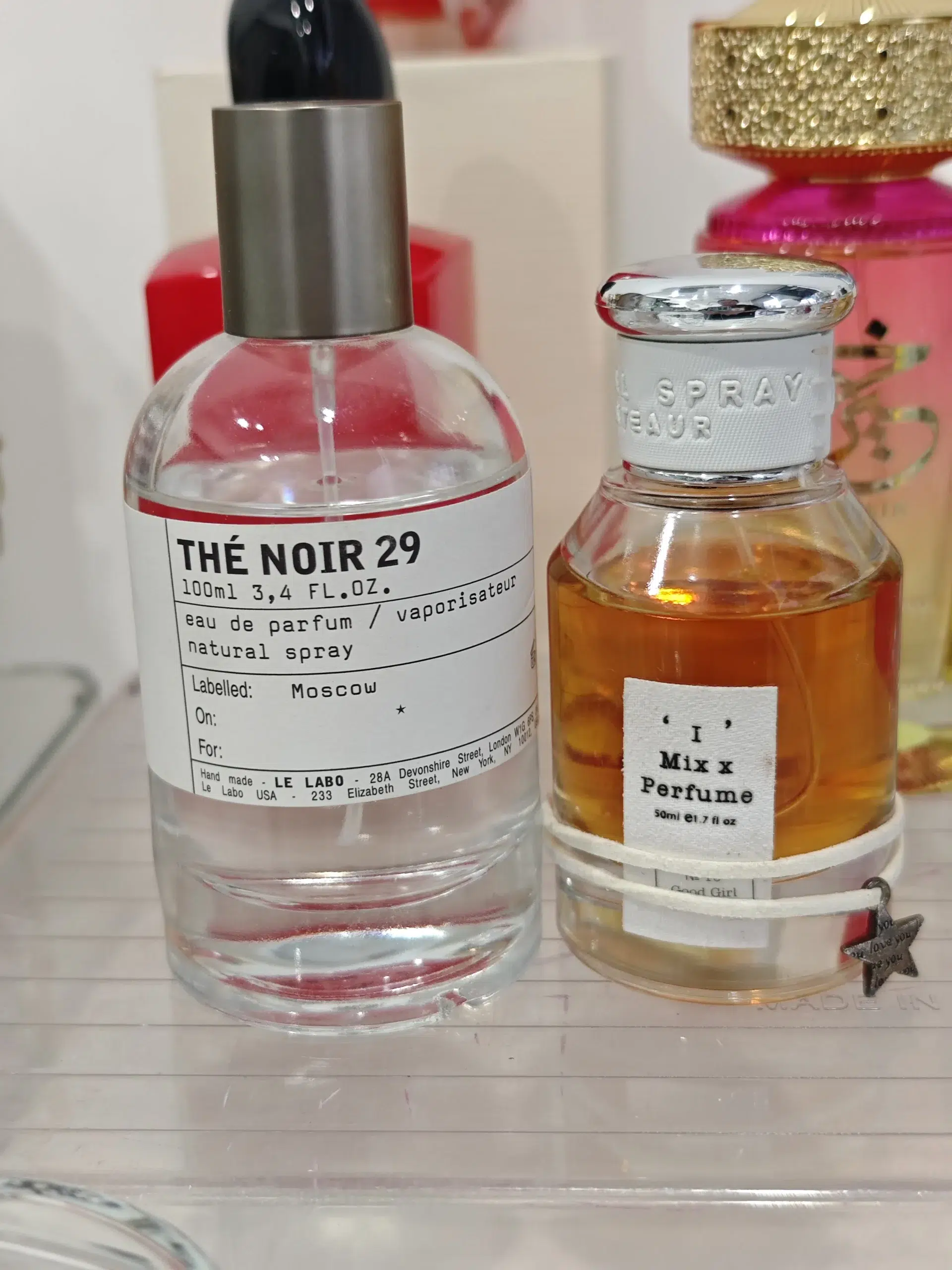
How to Find the Best Le Labo Thé Noir 29 Dupe in the USA: A Supply Chain Expert’s Guide to Black Tea Perfumes & Scent Replication
Author: Linus Dacke Thall — Supply Chain & Fragrance Industry Analyst
Executive summary: When I evaluate a le labo the noir 29 dupe, I do not judge it by whether the first spray produces an immediate flash of familiarity. I look at the entire scent curve: the bergamot-and-fig opening, the transition into cedar and vetiver, the dry black-tea impression, the texture of the musk, the way the fragrance diffuses, and whether it remains balanced several hours later.
I also look beyond the perfume itself. For a U.S. shopper, the best le labo the noir 29 dupe should come from a seller that communicates clearly about ingredients, product identity, fulfillment, returns, and fragrance safety. A convincing opening means little if the perfume becomes flat after an hour or arrives from a seller that gives me no confidence in its manufacturing standards.
For shoppers who already know that they want an inspired option rather than the original bottle, I recommend starting with the le labo the noir 29 dupe category and then using the testing framework in this guide instead of relying on a similarity percentage or a one-line review.
Editorial transparency: I am writing this guide for IMIXX, so there is an obvious commercial interest in the inspired-fragrance market. I think that relationship should be stated rather than hidden. Throughout this guide, I distinguish between facts that can be checked against primary sources, my fragrance-evaluation framework, and claims that should only be accepted when a manufacturer can substantiate them. I do not treat a brand-owned similarity percentage as independent laboratory evidence.
Article Table: My Quick Comparison Framework
| What I Compare | Thé Noir 29 Reference | What I Want From a Strong Inspired Version | Warning Sign |
|---|---|---|---|
| Opening | Bergamot, fig and aromatic green lift | Bright but controlled citrus; green, believable fig rather than candy | Aggressive citrus cleaner or syrupy fruit |
| Mid-development | Cedar, vetiver and increasing dryness | Clear movement from fresh to woody without a sudden collapse | The opening disappears and leaves generic sweet wood |
| Drydown | Dry leafy black-tea effect, hay/tobacco nuance, musk and woods | Astringent, textured tea character with a persistent woody base | Powdery musk with no recognizable tea structure |
| Performance | Must be assessed on skin rather than assumed from concentration | Useful longevity with controlled diffusion | Huge first-hour projection used to disguise a weak drydown |
| Value | Original product, brand experience and reference formula | Lower acquisition cost without sacrificing the aspects I actually enjoy | Choosing only by the cheapest bottle price |
What Am I Actually Trying to Replicate in Thé Noir 29?
The first mistake I see in fragrance comparison is reducing a perfume to a note list. Two perfumes can list fig, tea, cedar and vetiver yet smell dramatically different. Notes are useful vocabulary, but they are not a formula. They do not tell me the identity of every aromatic material, the concentration of those materials, their quality specifications, or how they interact as the volatile portion of the fragrance evaporates.
Le Labo itself describes Thé Noir 29 as an interplay between the lighter side of bergamot, fig and bay leaves and the deeper side of cedarwood, vetiver and musk. The brand also describes black tea as giving the drydown a dry, leafy, hay-like and tobacco-like effect. I use that official description as my reference point rather than treating crowdsourced note pyramids as laboratory data. Readers who want the primary-source description can consult Le Labo’s official fragrance description.
That contrast is what makes the perfume challenging to approximate. I do not want a straightforward tea cologne. I want brightness and darkness in the same composition. I want the fig to soften the opening without turning it into jam. I want the tea impression to feel leafy and tannic rather than like bottled peach tea. I want cedar and vetiver to provide structure without making the fragrance smell like a conventional men’s woody cologne.
The opening: bergamot, fig and aromatic tension
When I first spray a candidate, I pay attention to the quality of the contrast. Bergamot gives the structure lift, but an inspired fragrance that simply increases citrus to create instant impact can become sharp. Fig is equally easy to misread. In perfumery, the impression of fig can move from green leaf to milky fruit, woody stem or creamy flesh depending on the materials and proportions used.
For this scent profile, I prefer fig that feels green and textured. Too much sweetness destroys the tension that makes the reference interesting. If the first five minutes remind me more of tropical body spray than crushed leaves and fruit skin, I already know the formulation is emphasizing recognizability over structure.
The middle: cedar and vetiver matter more than many buyers realize
As the volatile opening materials recede, I listen for the transition. Cedar-type materials can create dryness, pencil-shaving texture, warmth or diffusion depending on the formulation. Vetiver can feel grassy, earthy, smoky, rooty or clean. The exact effect matters more to me than whether “cedar” and “vetiver” appear on a marketing page.
A weak imitation often has a recognizable first 10 minutes because citrus and fruity accords are relatively easy for a consumer to identify. The real test comes later. If the center of the fragrance becomes an anonymous amber-wood cloud, the scent may still be pleasant, but it has lost much of the character I associate with Thé Noir 29.
The drydown: where the black-tea illusion has to survive
I consider the final phase decisive. Black tea in fine fragrance is not simply the smell of a freshly brewed beverage. In this context I am looking for dryness, leafiness, subtle bitterness and a hay- or tobacco-like shadow. The impression should connect naturally to the woods and musk underneath it.
Knowledge point: A fragrance “note” is an olfactory description, not necessarily a literal ingredient declaration. When I see black tea, fig or tobacco listed as notes, I do not automatically assume that the bottle contains a straightforward extract of that material. Perfumers can construct recognizable impressions from combinations of natural materials and aroma chemicals.
My Definition of the “Best” Inspired Version
I do not think “best” means “the one that somebody on social media calls 100% identical.” Human olfaction is not a percentage meter, and similarity claims need a defined method before they mean anything. A fragrance can be extremely similar in the opening and noticeably different after four hours. It can also reproduce the broad DNA while changing sweetness, diffusion or texture enough that one person prefers it and another does not.
For me, a strong le labo the noir 29 dupe has five jobs. It should reproduce the recognizable scent direction, preserve the light-to-dark transition, avoid obvious low-quality off-notes, perform appropriately for the way I intend to wear it, and offer enough economic advantage to justify choosing an inspired fragrance instead of the reference product.
I therefore evaluate fidelity and quality separately. A fragrance can be well made without being especially close, and a technically close fragrance can still be unpleasant to wear. That distinction prevents me from awarding a high score simply because the first spray triggers recognition.
Product Comparison Cards: The Three Buying Paths I Would Consider
The Original: Thé Noir 29
Best for: Buyers who want the actual reference formula, Le Labo presentation and brand experience.
What I gain: There is no similarity question because this is the benchmark itself.
Trade-off: I pay the original brand’s current retail price rather than the lower price typically associated with an inspired fragrance.
My view: If brand ownership and the original formulation matter to me, this is the rational choice. A dupe is not a replacement for the ownership experience.
IMIXX Le Labo-Inspired Option
Best for: Buyers whose priority is the scent direction and value rather than owning the original bottle.
What I compare: Fig balance, tea dryness, cedar/vetiver structure, musk, development and wear time.
Trade-off: It is made by a different manufacturer, so I do not treat it as the original formula or claim independent proof of exact identity.
My view: This is the option I would test against the reference using the same skin-wear protocol described below.
Unknown Marketplace “Clone”
Best for: I would only consider this category when the seller provides enough identity, labeling and safety information for me to evaluate it.
What concerns me: Vague manufacturer information, copied packaging, missing ingredient information or extraordinary performance claims.
Trade-off: A very low price can come with greater uncertainty.
My view: I do not consider counterfeiting or copied branding an acceptable substitute for a clearly identified inspired fragrance.
How Scent Replication Actually Works: My Supply-Chain View
The phrase “reverse engineered” sounds simple, but fragrance replication is more complicated than feeding an original perfume into a machine and receiving a finished recipe. Analytical chemistry can provide powerful information, but interpretation and perfumery remain essential.
GC-MS is a tool, not a magic formula printer
Gas chromatography-mass spectrometry, commonly abbreviated GC-MS, can help analysts separate and identify many volatile components in a complex mixture. It is valuable for quality control, troubleshooting, research and compositional analysis. In fragrance work, that information can help a technical team understand which families of materials may be contributing to a scent.
But I would be skeptical of any marketing copy claiming that GC-MS automatically reveals an exact luxury formula. Analytical challenges remain. Some materials may co-elute, trace components may be difficult to quantify, natural materials contain complicated chemical profiles, and proprietary fragrance ingredients may require additional interpretation. The concentration of a detected molecule also does not tell a perfumer everything about its sensory role.
Once analytical information is available, a perfumer still has to reconstruct an accord, smell trials, adjust ratios, evaluate evaporation and repeat the process. That iterative sensory work is one reason two fragrances developed from the same reference can still differ noticeably.
Knowledge point: I treat analytical data as evidence about composition, not as proof that two finished perfumes are perceptually identical. Instrumental analysis and human sensory evaluation answer different questions, and a responsible development process uses both.
Raw-material sourcing influences texture and consistency
From a supply-chain perspective, I care about more than a romantic claim that ingredients are “premium.” I want consistency between lots. Natural materials can vary because of origin, harvest conditions, extraction method and storage. Synthetic materials also have specifications for purity and odor quality. A manufacturer has to manage those variables if it wants one production batch to smell like the next.
This is especially important in a fragrance built around subtle transitions. If the woody base shifts materially from batch to batch, the perceived tea accord can shift with it. Reliable sourcing, specifications, incoming quality control and controlled manufacturing are therefore part of fragrance quality even though consumers never see them on a note pyramid.
Why I avoid oversimplifying “maceration”
Maturation after blending can matter in fragrance production, but I avoid the common internet explanation that perfume molecules simply need weeks to “bond” to the alcohol. That wording turns a complicated physical and chemical system into a misleading metaphor.
Manufacturers may allow a freshly compounded fragrance to rest before chilling, filtering, quality checking or filling. During production and storage, a mixture can reach a more uniform state and certain reactions or equilibria may occur. The exact process depends on the formula and manufacturer.
What I do not assume is that a perfume will automatically become stronger because it sat for a specific number of weeks. Longevity comes primarily from formulation: material selection, volatility distribution, concentration, substantivity and how those materials behave on the wearer and in the environment. Resting a poor formula does not transform it into an excellent one.
My 100-Point Evaluation Method
If I am comparing the original with an inspired fragrance, I prefer a repeatable scorecard. This prevents a powerful opening, attractive packaging or unusually strong projection from dominating my judgment.
| Category | Weight | What I Evaluate |
|---|---|---|
| Opening fidelity | 15 points | Bergamot, fig, green/aromatic quality and absence of harsh imbalance |
| Heart structure | 20 points | Cedar, vetiver, dryness and continuity from the opening |
| Drydown fidelity | 25 points | Black-tea impression, leafy/hay nuance, musk and woody persistence |
| Wear quality | 15 points | Balance, diffusion, comfort and behavior over several hours |
| Consistency & presentation | 10 points | Atomizer, bottle function, labeling, batch confidence and seller transparency |
| Value | 15 points | Price relative to how much of the desired experience the fragrance delivers |
This system deliberately gives the drydown more weight than the opening. When I buy a fragrance, I will wear the base for far longer than the first five minutes, so I think the score should reflect that reality.
How I Test a Le Labo The Noir 29 Alternative at Home
I would never make a final decision from a cap, bottle neck or paper strip alone. Paper is useful for comparing compositions without skin chemistry, but perfume is ultimately worn on the body. My preferred home test is deliberately simple.
Step 1: Start with clean, unscented skin
I avoid scented body lotion, heavily fragranced soap or another perfume near the test area. If I compare two fragrances, I use separate arms and keep the number of sprays consistent. I also avoid rubbing my wrists together because I want to observe the natural evaporation curve.
Step 2: Record the opening after a few minutes
I ask whether the citrus feels controlled and whether the fig reads as green, milky, fruity or overly sweet. I do not expect alcohol itself to be completely absent immediately after spraying an alcohol-based fragrance; what matters is whether an unpleasant solvent impression persists and overwhelms the composition.
Step 3: Recheck at approximately one hour
This is where I expect the scent to show its architecture. Has the perfume moved from bright fruit and citrus into woods? Can I identify a dry tea-like character? Has the fragrance become smoother, or has it simply lost volume?
Step 4: Evaluate the late drydown
Several hours later, I want to know what is actually left. I smell the application point without pressing my nose directly into the skin, then check again at closer range. I distinguish between projection and longevity: a fragrance can stop projecting strongly while remaining clearly detectable on skin.
Step 5: Repeat on a different day
One wearing is not enough for me. Temperature, humidity, application amount, activity level and olfactory fatigue can all change perception. If possible, I repeat the comparison before deciding that one product is categorically stronger or closer.
Knowledge point: I do not confuse projection, sillage and longevity. Projection describes how far a fragrance radiates at a given time. Sillage is the scented trail it leaves as the wearer moves. Longevity is how long it remains perceptible. A perfume can be long-lasting without being loud.
Why U.S. Climate Changes the Way I Judge Performance
“How long does it last?” sounds like a simple question, but I do not think there is one reliable number that applies to every American wearer. A hot, dry afternoon in Las Vegas is a different test environment from a humid summer day in Miami or a cold winter evening in Chicago.
Heat generally increases volatility and can make a fragrance appear more expansive early in its wear. Dry conditions, air conditioning and individual skin characteristics can change perception in other ways. Clothing also retains some fragrance materials differently from skin.
That is why I distrust reviews that declare a fixed number of hours without explaining how the perfume was tested. If somebody gets five hours and another person gets nine, that does not automatically mean one of them is wrong. Different application patterns and environments can produce different experiences.
For Thé Noir 29-style compositions, I personally think cooler evenings are an intuitive fit because cedar, vetiver, dry tea and tobacco-like nuances become easy to appreciate without the composition feeling too dense. That is an aesthetic preference rather than a rule, though. The citrus and fig opening can make the structure wearable outside winter as long as the application level suits the environment.
Safety and Labeling: What I Check Before Buying Fragrance in the USA
Fragrance is a cosmetic product when it is intended to perfume the body, so I take labeling and manufacturer responsibility seriously. I do not equate a low price with danger, and I do not equate a luxury price with guaranteed compatibility for every person. Sensitivity is individual.
The U.S. Food and Drug Administration explains that fragrance ingredients in cosmetics must meet the same safety requirement as other cosmetic ingredients, while cosmetic products generally do not undergo FDA premarket approval in the way that approved drugs do. The FDA also explains that fragrance mixtures may appear in an ingredient declaration under a collective term such as “Fragrance.” Readers concerned about allergies or sensitivities can review the FDA’s guidance on fragrances in cosmetics.
I therefore look for a recognizable seller or responsible business, readable labeling and a way to contact the company. If I have a known sensitivity, I do not assume that phrases such as “clean,” “natural” or “hypoallergenic” guarantee compatibility. I read the information available and seek professional medical guidance when I have a history of serious reactions.
Where IFRA fits into my assessment
The International Fragrance Association maintains a standards system that can prohibit, restrict or specify conditions for certain fragrance materials based on safety assessment. I view IFRA conformity as relevant evidence of a manufacturer’s formulation practices, but I also keep the legal distinction clear: IFRA standards are an industry self-regulatory framework and do not replace applicable national or local law. The organization’s explanation is available through the official IFRA Standards resource.
I am also careful with the phrase “IFRA certified.” IFRA explains that the standards operate through conformity documentation and industry processes; shoppers should not assume that IFRA personally laboratory-tests and approves every retail perfume bearing an informal claim.
Inspired fragrance is not the same thing as counterfeit fragrance
I make an important consumer distinction here. An inspired fragrance sold under its own identity is different from a counterfeit product designed to impersonate another company’s bottle, label or source. If I want a lower-priced scent inspired by a particular olfactory profile, I prefer transparent branding. I want to know which company actually made and sold the product.
Copied packaging does not improve scent quality. If anything, it redirects money toward imitation presentation instead of helping me evaluate the formula itself.
How I Judge Value Without Falling for “Luxury Markup” Myths
It is tempting to say that an expensive fragrance costs hundreds of dollars while the liquid costs only a few dollars, therefore every difference is marketing. I think that explanation is too simplistic to be useful.
The retail price of fragrance can reflect raw materials, compounding, stability work, packaging, filling, quality control, regulatory work, logistics, damaged inventory, sampling, retail distribution, staffing, real estate, brand development and profit. The exact cost structure of a specific private company is not something I can infer responsibly from the shelf price.
A direct-to-consumer inspired-fragrance company can have a structurally different cost model. It may use standardized packaging, sell mainly online and avoid some physical retail costs. Those differences can help explain a lower selling price without requiring me to claim that the liquid inside two different bottles has the same cost or formula.
For a buyer, I think a better calculation is simple: what part of the experience am I paying for?
If I want the original composition, store environment, bottle, label, gifting experience and ownership of the brand itself, the original product offers things an inspired perfume cannot reproduce. If I mainly want to wear a dry fig-and-black-tea fragrance with a comparable overall direction, an inspired option may produce better value for my priorities.
What I Look for on an Inspired-Fragrance Product Page
A good product page should help me make a decision rather than overwhelm me with unsupported superlatives. I look for the fragrance format, bottle size, identifiable seller, useful scent description, ingredient or labeling information where applicable, shipping terms and return policy.
I become more cautious when the page relies on extreme claims such as “100% identical,” “guaranteed 24-hour projection,” “the exact same formula” or statements suggesting access to confidential formulas without credible evidence. Those claims are unnecessary. A good inspired fragrance can stand on its own performance.
I would rather read a precise description saying that a perfume emphasizes fig, dry tea, woods and vetiver than an impossible claim that every nose will perceive it as indistinguishable from the original.
The Importance of Batch Consistency and Quality Control
Supply-chain work makes me pay attention to repeatability. A sample that smells excellent is not very useful commercially if the next production run is dramatically different.
Consistency begins with specifications for incoming materials. It continues through weighing, compounding, mixing, storage, filtration, filling and packaging. Manufacturers may also assess appearance, odor and other physical characteristics according to their internal quality procedures.
Natural raw-material variability makes this work particularly important. A material can meet its identity specification while still showing sensory differences between lots. A competent manufacturer needs a process for deciding whether those differences remain acceptable in the finished fragrance.
As a consumer, I cannot audit every production record. What I can do is look for signs of an accountable business: clear contact details, coherent product information, sensible customer service and a track record that gives me a reasonable basis for expecting consistent fulfillment.
Should a Thé Noir 29 Inspired Perfume Be Extremely Strong?
No. Strength alone is not my definition of quality.
A black-tea fragrance benefits from contrast. If every material is pushed toward maximum intensity, the luminous bergamot and green fig can be buried under dense woody-amber materials. A perfume may then last longer or project farther but feel less faithful to the reference architecture.
I judge performance relative to purpose. For a dinner, office, creative workspace or close social setting, controlled projection may be more useful than filling a room. The ideal result is enough diffusion for the composition to be noticeable without sacrificing its transitions.
I also resist using oil concentration as a direct ranking system. Eau de parfum, extrait and other concentration terminology can provide useful context, but a higher percentage does not automatically guarantee better longevity, better projection or greater resemblance. Formula architecture still matters.
What Makes a Black Tea Perfume Smell Convincing?
Black tea is one of the most interesting fragrance ideas because the smell consumers expect is more complex than a single aroma. Brewed tea combines volatile aromatics with a broader sensory memory of tannins, warmth, dryness and bitterness. Perfumery has to suggest that experience through smell alone.
For a Thé Noir-style fragrance, I think three effects are especially important.
1. Dryness
The perfume should have enough woody, leafy or hay-like texture to keep the fruit from becoming syrupy. When I smell the drydown, I want the equivalent of an astringent edge.
2. Contrast
The fig provides softness and the bergamot provides lift. If the entire perfume is uniformly dark, it loses the tension that makes the reference distinctive.
3. Diffusive woods and musk
The base needs enough radiance to carry the scent beyond the application point. I do not want the musk to become laundry-like, however, because an overly clean base can erase the rustic tea-and-hay character.
Knowledge point: When I compare black-tea fragrances, I do not ask only, “Can I smell tea?” I ask what kind of tea illusion I am getting: smoky, leafy, citrusy, sweet, floral, tannic, milky or woody. That vocabulary makes comparisons substantially more useful.
My Buyer Checklist for the Best Le Labo The Noir 29 Dupe
Before I purchase, I run through the same checklist. First, does the scent description preserve the reference’s contrast between bright fig/citrus and dry tea/woods? Second, does the seller identify itself clearly and provide meaningful product information? Third, are performance claims believable rather than absolute? Fourth, can I find sensible information about shipping and returns for a U.S. order? Fifth, am I buying an inspired fragrance under its own identity rather than a counterfeit presentation?
Then I ask the most important question: what am I actually trying to save?
If I am saving money but sacrificing the drydown I love, the cheaper bottle may not be good value. If the inspired version gives me the parts I care about—fig, tea dryness, cedar, vetiver and a musky woody trail—then a substantial price difference can make sense.
That is why I recommend judging a le labo the noir 29 dupe by cost per satisfying wear rather than cost per milliliter alone. A bottle I reach for repeatedly is better value than a cheaper bottle I stop wearing after three attempts.
Who I Think Should Buy the Original—and Who Should Consider an Inspired Version
I would buy the original if the original itself is what I want. That sounds obvious, but it prevents a lot of disappointing purchases. If the label, bottle, boutique experience, gifting value and exact reference composition matter to me, no alternative can honestly provide all of those things.
I would consider an inspired fragrance when my priority is olfactory rather than collectible. Maybe I love the idea of dark tea, fig and cedar but want to reserve more of my budget for multiple scents. Maybe I use fragrance frequently and want a less expensive bottle for everyday wear. Maybe I simply enjoy comparing interpretations of the same scent architecture.
Neither decision needs to be ideological. The original and an inspired perfume solve different consumer problems.
Key-Points FAQ: Thé Noir 29 Dupes, Black Tea Perfumes and Scent Replication
What is the best Le Labo Thé Noir 29 dupe in the USA?
I do not think there is a defensible universal winner because skin, climate, projection preference and budget differ. I would choose the option that best reproduces the fig-to-dry-tea transition, maintains a convincing cedar/vetiver base and comes from a transparent seller. For an IMIXX option, I recommend using the Le Labo-inspired collection linked near the beginning of this guide and testing it with the same criteria I use for the original.
What does Le Labo Thé Noir 29 smell like?
I describe it as a contrast between a bright, green-fruity opening and a much drier woody-tea drydown. Bergamot and fig provide lift and softness, while cedarwood, vetiver and musk create depth. The black-tea effect moves toward dry leaves, hay and a tobacco-like nuance rather than smelling like a sweet bottled tea drink.
Is Thé Noir 29 a black tea perfume?
Yes, black tea is central to its identity, but I would not describe it as a literal photorealistic cup of tea. The tea impression is integrated with fig, bergamot, aromatic greenery, cedar, vetiver and musk, creating a dry and textured interpretation.
Can GC-MS reveal the exact formula of an expensive perfume?
I would not make that claim. GC-MS can provide valuable information about many volatile components in a fragrance, but analytical interpretation, unknown or proprietary materials, complex naturals and other technical factors mean that replication still requires skilled formulation and sensory evaluation. It is an analytical tool, not an automatic formula copier.
Does perfume need to macerate for months to become long-lasting?
Not as a universal rule. Manufacturers may mature or rest fragrance mixtures as part of their production process, but longevity depends primarily on the formula, material volatility, concentration and substantivity. I would be cautious about claims that a weak fragrance simply needs to sit for a fixed number of weeks before it becomes powerful.
How long should a good Thé Noir 29 alternative last?
I avoid guaranteeing a universal hour count. Skin condition, weather, spray count, formula and olfactory adaptation all affect perception. I prefer to compare two fragrances side by side under similar conditions and judge both how long they remain detectable and how their character changes during that time.
Is an inspired fragrance the same as a counterfeit?
No. I distinguish a clearly branded inspired fragrance from a counterfeit product that attempts to pass itself off as another company’s genuine product. When I shop for alternatives, I prefer products sold transparently under the actual manufacturer’s or seller’s identity.
Is a higher perfume-oil concentration always better?
No. Higher concentration can change persistence and diffusion, but it does not automatically mean better quality or closer similarity. Some top notes can feel less expansive in a denser structure, while certain base materials may dominate. I judge the finished perfume rather than ranking it by concentration alone.
When is the best season to wear a black tea perfume?
I particularly enjoy this style in fall, winter and cooler evenings because dry tea, cedar and tobacco-like nuances fit naturally into cool air. That is a preference, not a restriction. The bergamot and fig opening can make the profile work in milder weather when applied appropriately.
How should I compare an inspired perfume with the original?
I test them on separate areas of clean skin with the same spray count. I compare the opening after a few minutes, the heart around an hour later and the late drydown several hours afterward. I repeat the comparison on another day before deciding. This gives me much better information than smelling both bottles once in quick succession.
My Final Verdict: Focus on Structure, Not a Similarity Percentage
If I had to reduce this entire guide to one principle, it would be this: I buy the scent journey, not the marketing percentage.
Thé Noir 29 is difficult to approximate well because its identity depends on contrast. The fragrance has to move from bergamot, fig and aromatic freshness toward cedar, vetiver, musk and a dry black-tea impression without breaking into disconnected pieces. The late woody, leafy and tobacco-like texture is just as important as the recognizable opening.
That is why I would not select a le labo the noir 29 dupe based solely on price, bottle design, concentration or claims of extraordinary similarity. I would look at the formulation as a complete sensory experience and evaluate the manufacturer as part of the product.
For a U.S. buyer, I also want transparent product identity, sensible labeling, accessible customer-service information and realistic claims. Those details may not smell glamorous, but they tell me much more about a supply chain than a paragraph full of words such as “luxury,” “premium” and “identical.”
If owning the original Le Labo fragrance matters to me, I would buy the original rather than pretending an inspired product provides the same ownership experience. If the reason I am shopping is that I love the dry black-tea, fig and woody scent architecture and want to explore a more accessible interpretation, I would compare the IMIXX option on skin and judge it by the same demanding standards.
That approach gives me a much more useful answer than asking whether a fragrance is a “perfect clone.” I want to know whether it opens convincingly, develops naturally, finishes with the right tea-and-wood tension, performs appropriately for my lifestyle and offers enough value that I will genuinely enjoy wearing it. When those criteria are satisfied, I have found the right alternative for me.