
What Makes The Best Parfume In The World So Special? 5 Key Reasons Explained!
When I evaluate the Best Parfume In The World, I do not start with the price tag, the bottle design, a viral recommendation, or the reputation of the name printed on the box. I start with a more practical question: what does the fragrance actually give me from the first spray through the dry-down, and is that experience good enough to make me want to wear it again?
That is also why I approach the search for the Best Parfume In The World as an evaluation process rather than a contest with one universal winner. Fragrance is unusually personal. A perfume can be technically sophisticated and still feel wrong for my taste, climate, schedule, or preferred level of projection. At the same time, a relatively simple scent can become extremely valuable to me if I enjoy wearing it several times a week.
For this updated guide, I use five criteria: ingredient and formulation quality, scent architecture, real-world performance, emotional relevance, and value. I also add something that fragrance guides often omit: an evidence standard. Because this article appears on a fragrance retailer’s website, I believe I should clearly separate independent information from company-published product specifications and from my own evaluation framework.
I do not present marketing claims as laboratory findings. I do not call a perfume objectively superior because it costs more. I do not treat an advertised similarity percentage as scientific proof unless the methodology is public and independently reviewable. And where I have not personally conducted a controlled wear test, I do not write as if I have.
That distinction is important to me because trust is part of fragrance quality information. Readers should be able to tell whether they are looking at a regulatory fact, an industry standard, a peer-reviewed finding, a product specification published by a seller, or a subjective judgment.
My Evidence Standard for This Guide
Independent facts: I use authoritative or scientific sources for safety, fragrance standards, and claims about smell, memory, and consumer use.
Company-published specifications: When I discuss an IMIXX perfume’s price, size, concentration, or listed notes, I identify those details as information published by the company rather than as independent testing.
Personal evaluation framework: My scoring method reflects how I believe a fragrance should be judged. It is a decision-making framework, not an industry certification.
Testing limitation: I do not claim a blind panel, GC-MS analysis, laboratory longevity test, or personal wear result unless that test has actually been performed and documented.
What Does “Best Parfume In The World” Really Mean?
I think the phrase sounds more objective than fragrance really is. If I asked ten experienced fragrance enthusiasts to choose one scent above every other perfume ever made, I would expect disagreement. One person might prioritize natural floral materials. Another might care most about a technically innovative musk. Someone else might value projection, cultural significance, originality, or emotional attachment.
That does not mean quality is meaningless. Some fragrance characteristics can be evaluated with reasonable consistency. I can examine whether the composition feels coherent, whether its transitions are abrupt or graceful, whether the sweetness overwhelms the structure, whether the base supports the opening, and whether its performance suits its intended use.
What I cannot do responsibly is turn those characteristics into a universal law of taste.
So, when I use phrases such as “best perfume,” I mean a fragrance that performs exceptionally well against a clear set of criteria and suits the person buying it. I am not claiming that one formula will be everybody’s favorite.
My 100-Point Fragrance Evaluation Framework
To make my judgment more disciplined, I prefer a weighted framework rather than relying on the first ten seconds after spraying. The exact weights are my own editorial method, but they force me to consider more than hype.
| Evaluation Area | Weight | What I Examine |
|---|---|---|
| Composition & Balance | 30 points | Harmony between major accords, clarity, contrast, sweetness, dryness, texture, and overall coherence. |
| Development & Dry-Down | 20 points | How the scent changes from opening to heart to base and whether those transitions feel intentional. |
| Performance for Purpose | 15 points | Longevity, projection, sillage, and whether performance matches the intended setting. |
| Wearability & Versatility | 15 points | How easily I could use the fragrance across seasons, settings, and levels of formality. |
| Value | 10 points | Price, bottle size, likely frequency of use, and whether the experience justifies the cost. |
| Transparency & Consumer Information | 10 points | Useful note information, concentration information when available, safety information, and clarity about what is a claim versus a verified fact. |
I like this framework because a perfume cannot win simply by being strong. A fragrance with enormous projection but a rough dry-down might score poorly. A quiet fragrance with exceptional balance and excellent suitability for intimate wear could score much higher.
Reason 1: The Best Perfumes Use Ingredients and Formulation With Purpose
The first factor I examine is formulation quality. I deliberately use the word formulation rather than simply saying “expensive ingredients,” because price and quality are not interchangeable.
A perfume is a carefully engineered mixture. It may contain natural extracts, isolates, synthetic aroma materials, solvents, stabilizing components, and other materials selected to create a particular olfactory effect. A natural raw material can add complexity, but it can also vary from harvest to harvest. A synthetic aroma material can provide consistency, diffusion, stability, or an effect that is difficult to obtain directly from nature.
I therefore reject the simplistic idea that “natural” automatically means luxurious and “synthetic” automatically means cheap. Modern perfumery depends on both.
What I Look For Instead of a “Natural vs. Synthetic” Argument
I ask whether the formula feels intentional. Does a citrus opening disappear into an unrelated base, or does the base extend the character of the opening? Does a woody accord create structure, or does it feel rough and unfinished? Does vanilla provide warmth, or does it dominate everything around it?
I also look for texture. Fragrance can feel transparent, creamy, dry, mineral, smoky, powdery, airy, dense, waxy, green, or resinous. Those effects come from the interaction between materials, not from a simple count of expensive ingredients.
Another sign of skill is restraint. An excellent perfumer does not need to make every note loud. Some materials are most effective at concentrations where I perceive their effect without being able to isolate them immediately.
Safety Matters as Much as Luxury Language
In the United States, perfume products applied to the body for attractiveness generally fall within the cosmetic regulatory framework. The U.S. Food and Drug Administration’s fragrance guidance explains that cosmetic fragrance ingredients must meet the same safety requirements as other cosmetic ingredients and that companies marketing cosmetics are responsible for product safety and proper labeling.
The FDA also notes an important labeling detail: complex fragrance mixtures may be identified collectively as “Fragrance” rather than having every individual fragrance component disclosed on the retail label. I keep that in mind whenever I see a marketing page that implies a short note list is equivalent to a full ingredient formula. It is not.
For consumers with fragrance sensitivities or allergies, this distinction can matter. I would never interpret words such as “premium,” “clean,” “natural,” or “luxury” as proof that a fragrance cannot cause sensitivity.
I also consider the International Fragrance Association’s explanation of the IFRA Standards. IFRA explains that its standards can prohibit a fragrance material, restrict its maximum use level, or establish specifications such as purity criteria. IFRA also makes clear that responsibility for safe use remains with the company supplying the material.
Knowledge Point: “More Natural” Is Not a Quality Score
I judge a fragrance by what its materials accomplish together, not by whether a marketing page emphasizes botanical ingredients or laboratory-created aroma molecules.
My practical standard: I want coherent composition, responsible formulation, appropriate safety controls, and accurate consumer information.
How I Evaluate Ingredient Quality Without Pretending I Can See the Formula
Unless a company supplies the complete formula and analytical data, I cannot independently determine every raw material or its grade simply by reading the note pyramid. Note pyramids are primarily olfactory communication tools. They tell me what the fragrance is designed to evoke, not necessarily every molecule inside the bottle.
That is why I do not write, “This contains the finest sandalwood in the world,” unless there is reliable sourcing evidence behind the statement.
Instead, I use sensory and documentary questions:
- Does the brand clearly identify the fragrance’s intended profile?
- Does the scent architecture make sense from opening to dry-down?
- Are product specifications internally consistent?
- Does the manufacturer distinguish ingredient information from descriptive notes?
- Are safety and usage instructions available where relevant?
Those questions may sound less glamorous than calling everything “rare” or “exclusive,” but I believe they produce better buying decisions.
Reason 2: Great Composition Is About Architecture, Not Just a Long Note List
The second reason a perfume stands out is composition. A list of attractive ingredients does not automatically become an attractive fragrance. Composition is the work of arranging those materials into a recognizable structure.
I think of perfume in the same way I think of music: individual notes matter, but relationships matter more.
Top, Heart, and Base Notes Are Useful—but They Are a Model
Traditional perfume descriptions often organize scents into top, middle, and base notes. I find that model useful because it helps me discuss volatility and development in language most readers already understand.
Top notes are generally associated with the earliest impression. Citrus, aromatic herbs, light fruits, and certain bright spices often appear here.
Heart notes describe the character that becomes more obvious once the most volatile opening materials recede. Florals, spices, fruits, and aromatic accords frequently shape this stage.
Base notes describe longer-lasting structural effects such as woods, musks, amber-style accords, resins, vanilla, and other substantive materials.
However, I do not treat the pyramid as a literal stopwatch. A fragrance is not three sealed compartments that switch on at predetermined minutes. Materials overlap. Perception changes gradually. Some modern perfumes are intentionally linear and maintain a relatively stable character for much of their wear.
Why I Care About Transitions
The opening receives disproportionate attention because it is what shoppers smell at a counter. I think the transition matters more.
If a bright citrus opening becomes an abrasive woody base after twenty minutes, the first impression does not save the fragrance for me. If a sweet opening gradually becomes drier, softer, and more textured, I may appreciate the perfume much more after an hour than I did at first spray.
This is one reason I dislike instant rankings. A perfume designed to unfold over hours deserves more than a ten-second evaluation.
My Staged Evaluation Method
0–5 minutes: I evaluate the opening, volatility, sharpness, clarity, and first dominant accord.
30–60 minutes: I look for the emerging heart and whether the opening has transitioned naturally.
2–3 hours: I evaluate the main body of the scent, projection, texture, and balance.
6+ hours when detectable: I focus on the residual base, comfort, and whether I still enjoy what remains.
This is a testing protocol readers can repeat. I am not claiming that every perfume reaches the same stage at those exact times. The checkpoints simply give me a consistent method for comparison.
Balance Beats Complexity
I would rather wear a fragrance with six beautifully integrated ideas than one with twenty notes fighting for attention.
Balance does not mean everything must be quiet. A perfume can be dramatic and still balanced. A sweet gourmand can be extremely rich while retaining enough bitterness, wood, spice, or musk to prevent the composition from collapsing into one-dimensional sugar.
Likewise, a dry woody scent can remain austere without feeling unfinished if its structure is deliberate.
When I score composition, I look for three things: clarity, contrast, and continuity. Clarity means I understand what the fragrance is trying to be. Contrast gives it dimension. Continuity ensures the stages still feel like the same perfume.
Originality Does Not Require Weirdness
I also separate originality from novelty. A fragrance can be original because it interprets a familiar structure exceptionally well. It does not have to smell bizarre or deliberately difficult.
For daily wear, I often value a familiar structure with unusually good balance more than an experimental composition I admire intellectually but rarely want on my skin.
That is where personal utility enters the definition of quality. A museum-worthy scent that I never want to wear may be artistically fascinating, but it is not necessarily the best purchase for me.
Reason 3: Performance Should Fit the Purpose, Not Win a Strength Contest
Longevity has become one of the most common ways people judge fragrance online. I understand why. If I spend significant money on perfume, I want to experience it for a reasonable amount of time.
But I think “How many hours?” is incomplete.
A fragrance can last for ten hours and still be unpleasant. It can project strongly enough to dominate a room and still be badly suited to my workplace. Another fragrance may last five hours, stay relatively close to the skin, and be exactly right for dinner, a meeting, or travel.
Longevity, Projection, and Sillage Are Different Variables
Longevity is how long the fragrance remains perceptible.
Projection is how far the scent appears to radiate from the wearer at a given point in time.
Sillage describes the trail or wake of fragrance associated with movement through a space.
I avoid collapsing these into one category called “performance.” A perfume can have strong longevity with moderate projection. Another can project heavily during the first hour and then settle quickly.
Why Concentration Is Not a Guaranteed Longevity Formula
I frequently see simplified claims that eau de parfum automatically lasts longer than eau de toilette, or that a higher oil percentage always means stronger projection. I would not rely on those assumptions alone.
Concentration matters, but so do the identities of the aroma materials, their volatility, the solvent system, the overall formula, application amount, temperature, clothing, and individual perception.
Two fragrances labeled eau de parfum can behave very differently. Even two products with similar published concentration percentages may have different diffusion profiles.
| Performance Question | What I Measure | What I Do Not Assume |
|---|---|---|
| How long does it last? | Time until I can no longer reliably detect it under similar conditions. | That a higher concentration label guarantees more hours. |
| How far does it project? | How noticeable it feels away from the application area. | That greater projection is automatically better. |
| How does it behave later? | Dry-down quality, residual character, and comfort. | That a strong opening predicts the entire wearing experience. |
| Is it appropriate? | Whether the performance suits work, travel, evenings, or outdoor use. | That maximum strength is ideal for every environment. |
Olfactory Adaptation Can Distort My Own Impression
Another complication is sensory adaptation. When I smell the same fragrance continuously, my perception can decline even though the scent remains detectable to someone else.
That is why repeatedly pressing my nose directly against the application area is not a perfect way to test longevity. I prefer giving the scent space and checking it periodically.
I also try to compare products under reasonably similar conditions. Testing one fragrance after two sprays indoors and another after eight sprays outdoors produces weak evidence.
Knowledge Point: Stronger Is Not Automatically Higher Quality
I score fragrance performance against its intended job. A subtle office scent should not lose points simply because it does not project like an evening amber fragrance.
My test: Does the performance make the fragrance more useful, or does it merely make it louder?
Reason 4: Exceptional Perfume Has Emotional and Personal Relevance
Fragrance differs from many consumer products because part of its value exists inside memory. A bottle can become attached to a trip, a season, a person, a first job, a wedding, or an ordinary period of life that becomes meaningful later.
I think that emotional dimension deserves to be taken seriously, but I also want to describe it accurately.
What Research Actually Says About Odor and Memory
A recent 2026 systematic review and meta-analysis indexed by the U.S. National Library of Medicine’s PubMed database examined 18 experimental or quasi-experimental studies on odor-evoked autobiographical memories.
The researchers found that olfactory cues showed advantages over other cue types for some characteristics, including emotional intensity, pleasantness, evocativeness, and the age of recalled memories. Importantly, the authors did not conclude that smell universally outperforms every other cue for every memory measure.
I think that nuance matters. It supports the idea that smell can have distinctive relationships with autobiographical memory without turning perfume into a guaranteed psychological treatment or mood-altering intervention.
Why a Signature Scent Can Feel More Valuable Than a “Better” Perfume
I may admire one perfume more technically but reach for another far more often because it feels like me. That gap between admiration and attachment explains why personal fragrance collections rarely follow a purely objective ranking.
A signature scent works when its character, performance, and setting align with the person wearing it. It does not need to be rare. It does not need to receive compliments from strangers. It needs to create enough satisfaction that I repeatedly choose it over the alternatives available to me.
For me, that is one of the strongest indicators of practical quality: repeated voluntary use.
Three Questions I Use to Separate My Taste From Hype
- Would I still enjoy this fragrance if I could not see the bottle or brand name?
- Would I choose to wear it if nobody complimented me?
- Does it fit situations that actually occur in my life?
Those questions help me identify the difference between owning an impressive object and owning a perfume I genuinely value.
Reason 5: The Best Perfume Delivers Value Beyond the Price Tag
Luxury perfume pricing includes far more than fragrance concentrate. Packaging, design, retail distribution, marketing, logistics, branding, store experience, and business overhead can all contribute to the final price.
I do not consider those factors meaningless. A beautifully designed bottle or a heritage brand experience may be part of what someone wants to purchase.
What I reject is the assumption that price alone proves superior olfactory quality.
I Evaluate Cost Per Wear, Not Just Purchase Price
Suppose I buy a $180 fragrance and wear it 180 times. Ignoring the amount used per application, the purchase cost works out to approximately $1 per wear.
If I buy a $50 fragrance, wear it six times, and then leave it untouched, the cheaper purchase may deliver worse value to me despite the lower entry price.
This is not an exact accounting method because spray volume, bottle size, and application habits differ. I use it as a behavioral question: How often am I realistically going to use this?
My Value Equation
Personal Fragrance Value = Enjoyment × Wear Frequency × Versatility ÷ Total Cost
This is my conceptual framework, not a financial or scientific formula.
The point is that inexpensive perfume is not automatically good value and expensive perfume is not automatically poor value. Value depends on what I receive and how often I use it.
How I Handle Commercial Bias on a Retailer Website
This article appears on a retailer site, so I think it is important to address the conflict directly rather than pretending it does not exist.
IMIXX sells fragrance products. That commercial interest means readers should not treat an IMIXX article as an independent award organization declaring which perfume is objectively the world’s best.
For that reason, when I use IMIXX products below as examples, I label the specifications as company-published data. I do not present the examples as independent winners. I use them to show how I would apply the evaluation framework to concrete product information.
That separation between editorial analysis and commercial interest is, in my view, more trustworthy than hiding the relationship.
Concrete Product Evidence: Three IMIXX Perfume Examples I Can Document
One weakness in many fragrance guides is that they remain completely abstract. To make this guide more useful, I reviewed current IMIXX shop and product information on November 10, 2026.
At the time of my review, the main IMIXX shop page displayed 65 results. Rather than implying that I personally wore all 65 fragrances, I selected three examples with clearly published product information and used them to illustrate different scent styles and value propositions.
Evidence Label
The prices, sizes, concentrations, and note structures below are company-published specifications checked on or around November 10, 2026. They are not presented as independent laboratory verification, and prices or product details may change after publication.
Company-Published Example 01
IMIXX No.35
Listed price checked: $49
Published size: 50 ml / 1.7 oz
Published concentration: 15%
Published opening: Blackcurrant, bergamot, apple, pineapple
Published heart: Rose, dry birch, Moroccan jasmine, patchouli
Published base: Oakmoss, musk, ambergris accord, vanilla
Why I use it as an example: The fruit-to-smoky-wood-to-warm-base progression gives me a concrete structure to evaluate instead of relying on vague language such as “luxurious” or “powerful.”
What remains unproven here: A note list and concentration percentage do not independently establish longevity, similarity, or raw-material quality.
Company-Published Example 02
IMIXX No.48
Listed price checked: $39
Published size: 50 ml / 1.7 oz
Published concentration: 18%
Published direction: Cardamom and pepper-style spice; oud, sandalwood and vetiver; amber, tonka and vanilla
Why I use it as an example: It represents a dry spicy-woody profile where I would pay close attention to balance between spice, woods, warmth, and sweetness.
What remains unproven here: The concentration and note structure alone cannot prove a specific wear time or how closely the perfume resembles another formula.
Company-Published Example 03
IMIXX No.51
Listed price checked: $29
Published size: 50 ml / 1.7 oz
Published scent direction: Sea salt and grapefruit; sage and coastal florals; ambrette seed and driftwood
Why I use it as an example: It illustrates the opposite side of the fragrance spectrum from a dense amber or woody scent: airy, salty, aromatic, and understated.
What remains unproven here: Customer reviews and brand descriptions can provide context, but I do not treat individual longevity reports as guaranteed results for every wearer.
What These Three Products Actually Teach Me
The useful comparison is not “Which one is strongest?” They are trying to do different jobs.
No.35 has a fruit-smoke-wood structure. No.48 is organized around spice and woods. No.51 emphasizes an airy aromatic-mineral direction. Comparing them purely on projection would ignore the role of composition.
This is the same principle I apply to luxury fragrance. I compare products within the context of what they are designed to achieve.
Product Comparison Table: How I Would Evaluate Different Fragrance Profiles
| Example | Primary Direction | What I Would Test Closely | Likely Shopper Priority | Evidence Limitation |
|---|---|---|---|---|
| IMIXX No.35 | Fruity, smoky, woody | Whether fruit remains natural-feeling and whether smoky woods stay balanced in the dry-down | Bold everyday or social fragrance profile | Published specifications are not independent sensory testing |
| IMIXX No.48 | Spicy, woody, warm | Integration of spice, oud effect, sandalwood, vetiver and sweet base materials | Dry woody scent with warmth and structure | Published concentration does not guarantee performance |
| IMIXX No.51 | Salty, aromatic, airy | Whether freshness retains texture and whether the base gives sufficient structure | Light daily wear and warm-weather use | Individual review reports do not guarantee universal longevity |
How I Test a Perfume Before Buying a Full Bottle
If I want more reliable personal evidence, I need to move beyond a product page and test the fragrance consistently.
Step 1: I Start With a Blotter, but I Do Not End There
A paper strip helps me evaluate the opening without immediately committing skin space. It is useful for screening several fragrances.
However, I do not consider blotter performance identical to skin wear. Heat, skin surface conditions, application amount, and movement influence how I perceive the scent.
Step 2: I Limit the Number of Fragrances
Testing eight or ten perfumes at once makes careful evaluation difficult for me. I prefer a small number so I can remember which development belongs to which fragrance.
I also avoid constantly smelling the application point at extremely short intervals. Repeated exposure can make sensory adaptation more noticeable.
Step 3: I Record the Same Checkpoints
I use a simple note format:
- Opening: dominant accord, sharpness, sweetness, freshness, immediate dislikes.
- 30–60 minutes: emerging heart, major change, projection.
- 2–3 hours: primary character, balance, texture, comfort.
- 6 hours or later: residual base, continued enjoyment, detectability.
I am not trying to create laboratory data. I am trying to make my own comparisons less random.
Step 4: I Repeat the Wear on Another Day
I do not like making a full-bottle decision from one wear if a sample is available. Temperature, environment, fatigue, other smells, and my own attention can influence perception.
A second wear helps me identify whether the first impression was stable.
Step 5: I Ask Whether I Want to Wear It Again
This sounds simple, but it is one of my most important tests.
I can admire a perfume’s creativity while feeling no desire to wear it. If I repeatedly choose something else, that information matters more to me than an abstract quality ranking.
How I Choose Fragrance for Different Situations
I build a fragrance wardrobe by function rather than by collecting random bottles.
For Work or Shared Indoor Spaces
I generally favor controlled projection. Soft woods, clean musks, balanced florals, aromatic scents, or restrained citrus compositions can work well depending on personal taste.
I am especially cautious about overspraying in offices, classrooms, healthcare environments, airplanes, and other places where people cannot easily move away.
For Warm Weather
I usually consider citrus, aromatic, green, mineral, salty, or transparent floral styles. Warm temperatures can make rich fragrances feel more expansive, so I often reduce application intensity.
For Evening Wear
I am more open to amber, vanilla, woods, spice, leather-style accords, and richer florals when the setting allows greater presence.
Even then, I still want balance. Sweetness and projection are not substitutes for structure.
For a Signature Scent
I prioritize versatility. A signature perfume should work across enough of my real life that wearing it does not require elaborate planning.
I also want to enjoy the dry-down because that is the portion I may experience for the longest period.
Common Perfume Shopping Mistakes I Avoid
Mistake 1: Believing Price Is an Objective Quality Score
Price tells me what the seller is charging. It does not automatically tell me how much I will enjoy the perfume.
Mistake 2: Buying From the Opening Alone
The first spray is only one part of the formula’s behavior. I want to know what remains after the volatile opening has changed.
Mistake 3: Treating Concentration as a Performance Guarantee
A concentration percentage provides useful formulation context, but I do not treat it as a promise of a specific number of hours.
Mistake 4: Treating Every Customer Review as Experimental Evidence
Reviews are valuable because they reveal patterns of experience. They are not controlled studies. One person’s “12 hours” and another person’s “4 hours” can both reflect sincere perceptions under different conditions.
Mistake 5: Chasing Compliments Instead of Personal Enjoyment
I like positive reactions, but a fragrance I dislike wearing is not a good purchase simply because strangers notice it.
Mistake 6: Assuming a Note List Reveals the Complete Formula
Marketing notes describe an olfactory concept. They are not the same thing as a complete ingredient declaration or chemical analysis.
Mistake 7: Ignoring Commercial Incentives
I pay attention to who is making the recommendation. A retailer, affiliate publisher, independent critic, perfumer, customer, and scientific organization have different incentives and different forms of expertise.
That does not mean retailer information is useless. It means I label it correctly.
How I Decide Whether an Affordable Perfume Is Actually Good Value
I think affordable fragrance deserves to be evaluated on its own merits rather than being automatically praised because it is cheaper.
When I browse imixx perfume, for example, I want more than a low price. I want useful note information, a sensible fragrance structure, clearly stated size, concentration information when available, and enough product detail to make an informed choice.
I also want promotional claims to be distinguishable from independently established facts.
My Affordable-Fragrance Checklist
- Does the note structure match a fragrance family I already enjoy?
- Is the bottle size clearly stated?
- Is the concentration stated, and do I understand that it does not guarantee longevity?
- Can I separate company claims from independent evidence?
- Is the price low enough to improve value without becoming the only reason I buy?
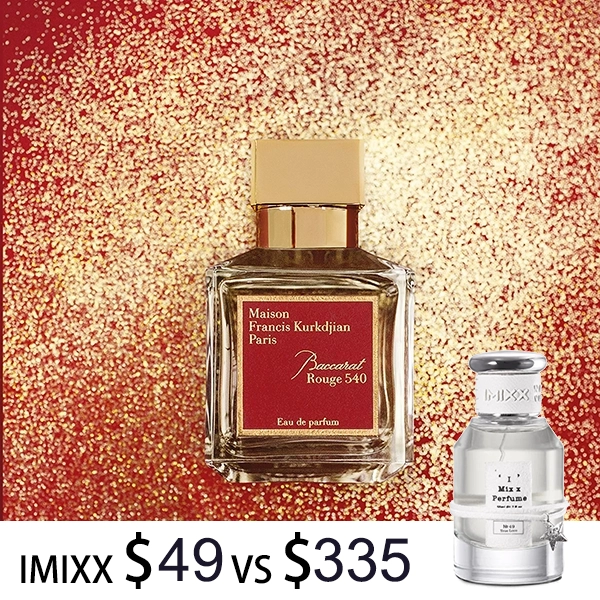
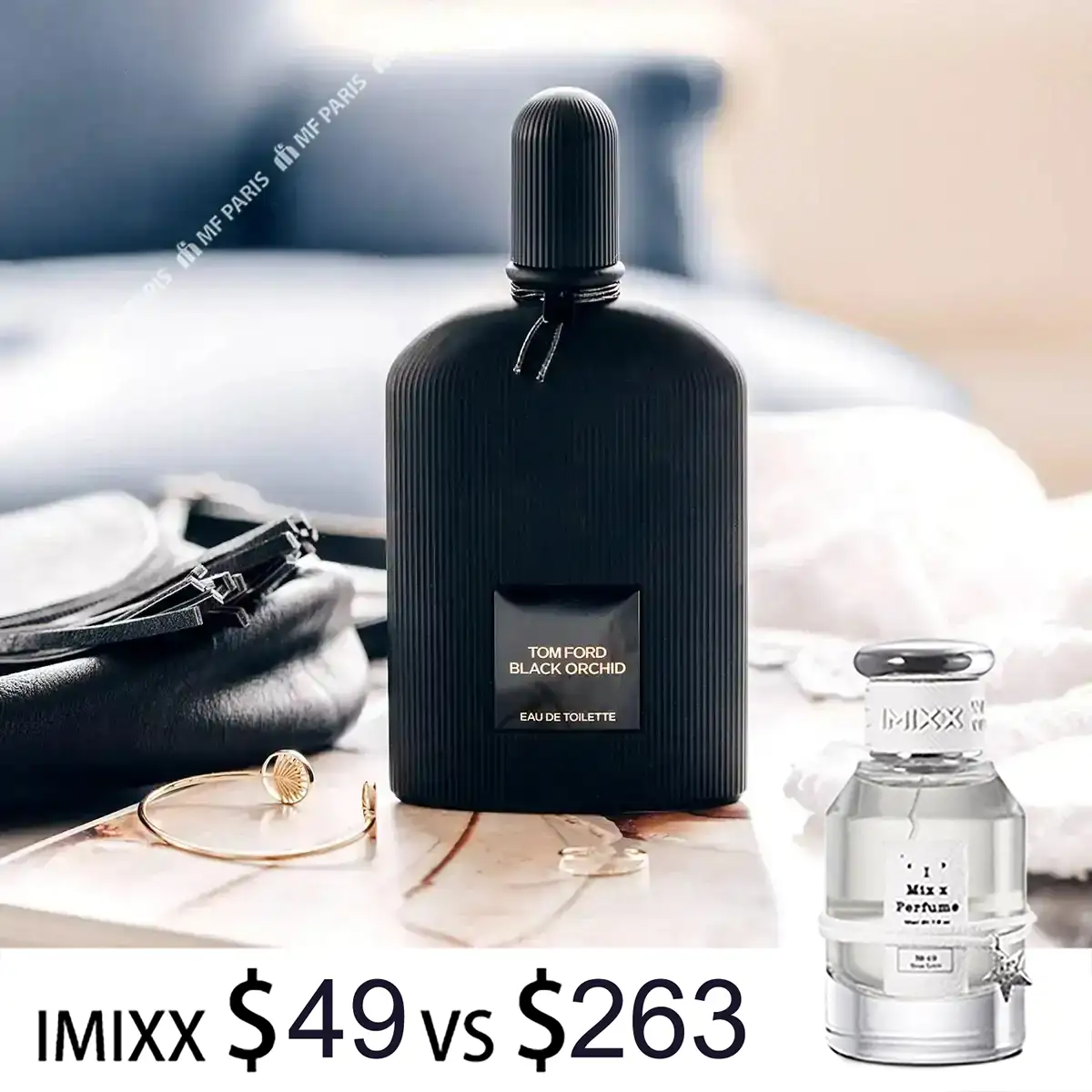
- Would I still want the scent if it did not resemble a more expensive reference?
- Does the retailer provide clear shipping, return, and contact information?
The sixth question is especially important to me. A fragrance should eventually earn its place because it smells good on its own, not simply because it is associated with a more expensive concept.
What Makes the Best Perfumes Feel Expensive?
When people say a fragrance “smells expensive,” they often mean several things at once.
They may be noticing smooth transitions, restrained sweetness, carefully controlled diffusion, convincing texture, or a base that does not become harsh as the brighter notes disappear.
They may also be reacting to context: packaging, brand expectations, store environment, or prior knowledge of the price.
I therefore try to separate olfactory quality from luxury signaling.
A beautiful bottle can improve the ownership experience. It cannot repair a composition I dislike.
Five Signs I Personally Associate With Refined Construction
- The opening does not feel disconnected from the base.
- Sweetness, freshness, woods, florals, or spice have enough contrast to create dimension.
- No single rough element dominates unintentionally.
- The dry-down remains recognizable as the same fragrance.
- The scent accomplishes its intended style without needing excessive volume.
Those characteristics matter more to me than the number of ingredients listed on a marketing page.
My Final Five Reasons a World-Class Perfume Stands Out
| Reason | My Standard | Red Flag I Avoid |
|---|---|---|
| 1. Purposeful formulation | Materials work together to create texture, structure, and stability. | Assuming rare or natural automatically means superior. |
| 2. Strong scent architecture | Opening, heart, and base feel coherent. | Judging from the first spray alone. |
| 3. Appropriate performance | Longevity and projection fit the fragrance’s intended purpose. | Confusing maximum projection with maximum quality. |
| 4. Personal relevance | I genuinely want to wear it and associate it with my life. | Buying only for trends, compliments, or status. |
| 5. Real value | Enjoyment, frequency of use, and versatility justify the cost. | Assuming expensive means best or cheap means best value. |
Frequently Asked Questions About Choosing an Exceptional Perfume
Final Thoughts: What Makes an Exceptional Perfume Special?
After looking at formulation, composition, performance, emotional relevance, evidence quality, and value, I do not think the world’s greatest fragrance can be reduced to one famous bottle.
The fragrances I respect most tend to do several things well at once. They have a clear idea. Their materials support that idea. Their development feels purposeful. Their performance suits their role. And after all the technical analysis is finished, I still want to smell them again.
I also believe fragrance content becomes more useful when it acknowledges uncertainty. A company can publish a concentration, note structure, price, or bottle size. Those are concrete product facts when accurately reported. But a claim about universal longevity, perfect similarity, emotional effect, or superiority requires a different level of evidence.
That is why I prefer to be explicit about where my information comes from.
When I evaluate imixx perfume products, I can use company-published specifications as starting data. I can compare price, size, fragrance direction, and stated concentration. What I should not do is convert those data into an independent award without real independent testing.
For me, that evidence-first approach actually makes fragrance shopping more enjoyable. I can appreciate artistry without pretending taste is objective. I can consider an affordable option without claiming price proves quality. I can admire a luxury bottle without assuming prestige guarantees a better dry-down.
The best perfume is therefore not simply the bottle with the highest price, the strongest projection, the rarest ingredient story, or the loudest online following.
It is the fragrance whose composition, performance, personal meaning, and value survive careful evaluation—and still make me want to wear it again.