

10 Surprising Facts About le labo fragrances’ santal 33
Meta title: 10 Surprising Facts About le labo fragrances’ santal 33 | Scent Profile, Longevity, History & Buying Guide
Meta description: I break down 10 surprising facts about le labo fragrances’ santal 33, including its sandalwood story, genderless appeal, scent profile, longevity, layering tips, and a smart alternative from IMIXX Perfume.
I have smelled a lot of woody fragrances over the years, but few have created the kind of instant recognition, debate, devotion, and curiosity that le labo fragrances’ santal 33 continues to inspire. Some people describe it as creamy sandalwood. Others notice leather, cardamom, violet, musk, or even a crisp cucumber-like twist on skin. That wide range of reactions is exactly why I find it so fascinating. This is not just another sandalwood perfume; it is a modern fragrance phenomenon that changed how many of us think about niche scent, personal style, and “signature fragrance” culture.
In this guide, I am taking a first-person, experience-driven look at le labo fragrances’ santal 33 through 10 surprising facts that go beyond the usual fragrance review. I will cover how it smells, why it became so recognizable, what makes it polarizing, how sandalwood behaves in perfumery, how to wear it, how it compares with an IMIXX Perfume-inspired option, and how I personally decide whether it belongs in a daily rotation.
For accuracy, I also checked official and educational fragrance resources, including the official Le Labo product description, chemistry-focused fragrance reporting from C&EN, and sandalwood ingredient education from Quintis. I have linked these references with rel='nofollow' as requested, while keeping the main shopping link above as the priority dofollow link.
Article Table
- Quick Overview: What I Think Makes Santal 33 So Different
- Scent Snapshot Table
- Fact 1: It Does Not Smell the Same on Everyone
- Fact 2: The Name Is Simpler Than Most People Think
- Fact 3: The Sandalwood Story Is More Complex Than “Woody”
- Fact 4: The Leather Accord Is a Major Reason It Feels Addictive
- Fact 5: Its Genderless Appeal Helped Redefine Modern Luxury
- Fact 6: It Can Feel Minimalist and Loud at the Same Time
- Fact 7: The “Pickle” Reaction Is Real for Some Noses
- Fact 8: Layering Can Completely Change Its Personality
- Fact 9: The Best Alternative Is About Balance, Not Copying
- Fact 10: It Is More Than a Perfume; It Is a Social Signal
- Product Comparison Cards
- How I Wear This Scent Family
- Key-Points FAQ
Quick Overview: What I Think Makes Santal 33 So Different
The first time I smelled this scent family, I understood why people either attach to it immediately or push back against the hype. It has the bones of a woody perfume, but it does not behave like a predictable woods-and-amber fragrance. On my skin, the opening feels dry, spicy, and aromatic. Then the sandalwood and cedar start to warm up. After that, the musky, leathery, slightly smoky base gives the fragrance its famous trail.
According to the official Le Labo description, Santal 33 includes cardamom, iris, violet, Australian sandalwood, cedarwood, spicy notes, leathery notes, musky notes, and ambrox. I like that structure because it explains why the fragrance does not sit neatly in one category. It is woody, but not only woody. It is spicy, but not a spice bomb. It is musky, but not just a clean-skin musk. It has floral touches, yet it never becomes a traditional floral perfume. You can review the official note description here: Le Labo Santal 33 official product page.
What surprises me most is how emotionally specific it feels. I do not think of it as a “nice smell” in a simple way. I think of it as an atmosphere: a quiet hotel lobby, a vintage leather jacket, warm wood, cool air, clean skin, and a little urban mystery. That is why it has lasted in the conversation for so long. A fragrance becomes culturally important when people remember not just how it smells, but where they smelled it, who wore it, and what it seemed to say.
Scent Snapshot Table
| Category | My Practical Take | Why It Matters |
|---|---|---|
| Main impression | Dry sandalwood, cedar, cardamom, leather, musk, and soft florals | It feels layered instead of flat, which helps explain the cult following. |
| Best season | Fall, winter, spring, and cool summer nights | The woody-leathery base can feel strong in high heat. |
| Best setting | Work, dinner, travel, creative events, casual evenings | It feels polished without being overly formal. |
| Longevity expectation | Moderate to long, depending on skin, climate, and application | Woody and musky notes often cling to fabric longer than skin. |
| Who may love it | People who like dry woods, spicy warmth, leather, and genderless scents | It is not sweet, fruity, or traditionally “pretty,” which makes it distinctive. |
Knowledge Point: Why I Test Woody Fragrances Slowly
I never judge sandalwood-heavy perfumes from the first spray alone. Woody notes can feel sharp, dusty, creamy, smoky, or milky depending on skin chemistry and weather. I usually test once on paper, once on clean skin, and once on fabric before deciding how I really feel.
1. It Does Not Smell the Same on Everyone
The most surprising thing I have learned about Santal 33-style fragrances is that they can smell dramatically different from person to person. On one wearer, the fragrance may feel creamy, polished, and warm. On another, it may turn sharper, greener, saltier, or more leathery. This is not just imagination. Skin chemistry, body temperature, moisture level, climate, fabric, and even how much you spray can change the way a fragrance develops.
When I wear this scent family on my skin, the cardamom comes forward early. It gives the opening a dry, airy spice that keeps the fragrance from feeling heavy. After about 20 to 40 minutes, the woods become smoother. The cedar brings structure, while the sandalwood adds warmth. Later, the musk and leather create the part I associate most with the famous Santal trail.
But when I smell it on someone else, I sometimes notice more violet, more ambrox, or more of that crisp edge people debate. This is why I always recommend testing before committing to a full-size bottle. A fragrance this recognizable should feel good on your skin, not just impressive in theory.
My Wearing Tip
I start with one spray on the wrist and one on the back of the neck. Then I wait at least two hours. If I still enjoy the drydown after the opening has faded, that is when I know the fragrance works for me. I avoid judging it from a paper strip because paper cannot recreate the warmth and texture of skin.
2. The Name Is Simpler Than Most People Think
The name Santal 33 sounds mysterious, but it is more practical than many people assume. “Santal” points toward sandalwood, the central woody idea. The number refers to the number of ingredients in the composition, which is a naming style Le Labo uses across many of its fragrances. I like this because the name feels technical and emotional at the same time. It suggests a formula, but the result feels personal.
This naming style also helps explain why the fragrance became so memorable in search behavior. People remember the short, unusual structure: word plus number. From an SEO perspective, that matters. Searchers often type the phrase exactly, especially when they want reviews, comparisons, scent notes, alternatives, or buying advice. That is why an article targeting this topic should use the keyword naturally, answer real buyer questions, and avoid stuffing the phrase in a way that feels robotic.
When I write about fragrance, I think the best SEO approach is the same as the best customer-service approach: help the reader make a confident decision. A person searching for this fragrance usually wants to know what it smells like, whether it lasts, whether it is worth the price, whether it is too popular, and whether there is a more accessible way to enjoy the same scent direction.
Knowledge Point: Search Intent Behind This Keyword
When I see someone search for “le labo fragrances’ santal 33,” I assume they are not only browsing. They are likely comparing price, performance, scent notes, authenticity, alternatives, and wearability. That is why I answer those questions directly instead of writing a vague luxury-perfume description.
3. The Sandalwood Story Is More Complex Than “Woody”
Many people describe Santal 33 as a sandalwood fragrance, and that is fair, but sandalwood itself is not one-dimensional. Depending on source, quality, surrounding notes, and formula style, sandalwood can smell creamy, milky, dry, dusty, soft, smoky, warm, or slightly sweet. That range is one of the reasons sandalwood is so important in perfumery.
I find sandalwood interesting because it can act like both a main character and a supporting structure. In some perfumes, it gives the whole composition a smooth foundation. In others, it becomes the star. In this scent profile, sandalwood is central, but it is sharpened by cedar, lifted by cardamom, softened by iris and violet, and made more sensual by musk and leather.
For ingredient context, Quintis explains that compounds such as alpha-santalol and beta-santalol are key contributors to sandalwood’s aroma, and that sandalwood oil can function as a long-lasting base note in perfumery. I find that helpful because it explains why sandalwood often feels persistent and rounded rather than fleeting. You can read more here: Quintis sandalwood perfumery guide.
There is also a sustainability side to sandalwood. Modern perfumery often uses a blend of natural materials, aroma molecules, and sandalwood-like accords to create a consistent scent while managing cost, performance, and environmental pressure. C&EN has reported on how fragrance companies use high-impact sandalwood replacements and related aroma materials to reduce reliance on large quantities of harvested wood. You can review that broader chemistry discussion here: C&EN fragrance chemistry article.
Why This Matters to Me as a Wearer
When I smell this fragrance family, I am not just looking for “sandalwood.” I am looking for how the sandalwood is shaped. Is it creamy or dry? Is it airy or dense? Does it feel clean, smoky, leathery, or powdery? The reason this scent profile remains interesting is that it lets sandalwood feel modern rather than old-fashioned.
4. The Leather Accord Is a Major Reason It Feels Addictive
When people talk about Santal 33, they often focus on sandalwood, but I think the leather accord deserves more attention. Leather gives the fragrance its lived-in, textural quality. Without it, the scent might feel like a polished woody perfume. With it, the fragrance feels more personal, more stylish, and more memorable.
Leather in perfume does not always smell like a literal leather bag or jacket. Sometimes it smells smoky, suede-like, dry, animalic, smooth, or slightly bitter. In this scent family, I experience the leather as soft and atmospheric rather than aggressive. It supports the woods and gives the fragrance a subtle edge.
This is one reason the fragrance can feel casual and upscale at the same time. It does not smell like a formal evening fragrance, but it also does not smell basic. I can imagine it with a white T-shirt, a black blazer, denim, a wool coat, or a minimal work outfit. That versatility is part of its power.
My Practical Take
If you usually dislike leather fragrances, I would still test this one because the leather is blended into the woods and musk. If you love bold leather scents, you may find this smoother and less rugged than expected. That middle ground helps explain why so many different people can wear it.
5. Its Genderless Appeal Helped Redefine Modern Luxury
One of the reasons I respect this fragrance is that it helped normalize the idea that a signature scent does not need to be divided into traditional “for men” or “for women” categories. It is not the first genderless fragrance, but it became one of the most visible examples of that idea in modern fragrance culture.
On my skin, the scent does not feel masculine or feminine in a fixed way. The cedar and leather can feel structured. The violet and iris can feel soft. The musk can feel intimate. The cardamom can feel bright and dry. Instead of pushing toward one gender code, the fragrance sits in a stylish middle space.
This matters because many fragrance buyers today shop by mood, texture, memory, and identity rather than by gender label. I think that is a healthier way to choose perfume. A scent should fit the person wearing it, not a marketing category. When I help someone think through this scent family, I ask what kind of atmosphere they want to create: clean and woody, smoky and intimate, polished and urban, or warm and mysterious.
Best For Minimalists
I like this scent family for people who wear simple clothing but want one memorable detail. It can make a plain outfit feel intentional.
Best For Woody-Scent Lovers
If sandalwood, cedar, musk, and dry spice are already in your comfort zone, this profile will feel familiar but more distinctive.
Best For Signature-Scent Seekers
I think it works best when worn with restraint. A light application can feel personal, while too much can overwhelm a room.
6. It Can Feel Minimalist and Loud at the Same Time
This is one of the contradictions I find most interesting. The bottle design, name, and overall aesthetic feel minimalist. The scent itself can also feel clean-lined and uncluttered. Yet the projection can be very noticeable, especially when freshly applied or sprayed on clothing.
That contrast is why I treat it carefully. I do not overspray this type of fragrance. Two sprays can feel elegant. Four or five can feel like the fragrance is wearing me instead of the other way around. Because the scent is recognizable, I think restraint makes it more personal.
The minimalist side comes from its focused woody-spicy structure. The loud side comes from the way the aromatic top, cedar, ambrox, musk, and leather create a trail. When people say they smelled it in a hallway, elevator, boutique, hotel, or subway, they are talking about sillage: the scented wake a fragrance leaves behind.
My Application Rule
For daytime, I use one spray on the chest under clothing or one spray at the back of the neck. For evening, I may add one wrist spray. I avoid spraying heavily on scarves or coats unless I want the scent to stay there for days.
7. The “Pickle” Reaction Is Real for Some Noses
I cannot write honestly about this fragrance without addressing one of the most talked-about reactions: some people get a pickle-like or cucumber-like impression. I do not think this means the fragrance is bad. It means the balance of woods, violet, cardamom, ambrox, musk, and skin chemistry can create a cool, salty, briny effect for certain noses.
Personally, I sometimes notice a crisp, almost mineral freshness in the opening, especially in warm weather. I do not experience it as unpleasant, but I understand why some people do. The important point is that this reaction is common enough that buyers should test first.
In my experience, the crisp effect is stronger on paper and in the opening. As the fragrance dries down, the sandalwood, cedar, musk, and leather usually become more dominant. If someone dislikes the opening but loves the drydown, I suggest applying lightly and giving it time before deciding.
How I Reduce the Sharp Opening
I apply unscented lotion first, wait a few minutes, then spray lightly. Moisturized skin can soften the way woody and spicy notes open. I also avoid applying right before walking into a hot, crowded space because heat can amplify the sharper facets.
8. Layering Can Completely Change Its Personality
One of my favorite ways to wear a Santal 33-inspired scent profile is through layering. Because the fragrance has a strong woody-musky structure, it can pair well with simple body products and other subtle scent families. The key is not to fight it. I avoid layering it with loud fruity, sugary, or overly aquatic fragrances because they can clash with the dry wood and leather.
Instead, I like pairing it with unscented lotion, soft vanilla body cream, clean musk, amber oil, or a very light tea fragrance. Vanilla can make the sandalwood feel creamier. Musk can make it feel cleaner. Amber can make it warmer. A tea note can make it feel more relaxed and modern.
Layering also helps if you love the scent direction but want it to feel less recognizable. I understand that some people hesitate because the fragrance is famous. A careful layering routine can make it feel more personal without losing the character that made it appealing in the first place.
Knowledge Point: My Safe Layering Formula
Step 1: Apply unscented lotion.
Step 2: Spray the woody fragrance once on the chest or neck.
Step 3: Add a small amount of vanilla, musk, or amber body product only if I want a softer finish.
Step 4: Wait 30 minutes before adding more. This keeps the scent polished instead of crowded.
9. The Best Alternative Is About Balance, Not Copying
When I compare a luxury fragrance with an inspired alternative, I do not look for a flat copy. I look for balance. Does it capture the recognizable mood? Does it feel smooth on skin? Does it keep the woody, spicy, musky, leathery structure? Does it offer good value? Does it feel wearable in real life?
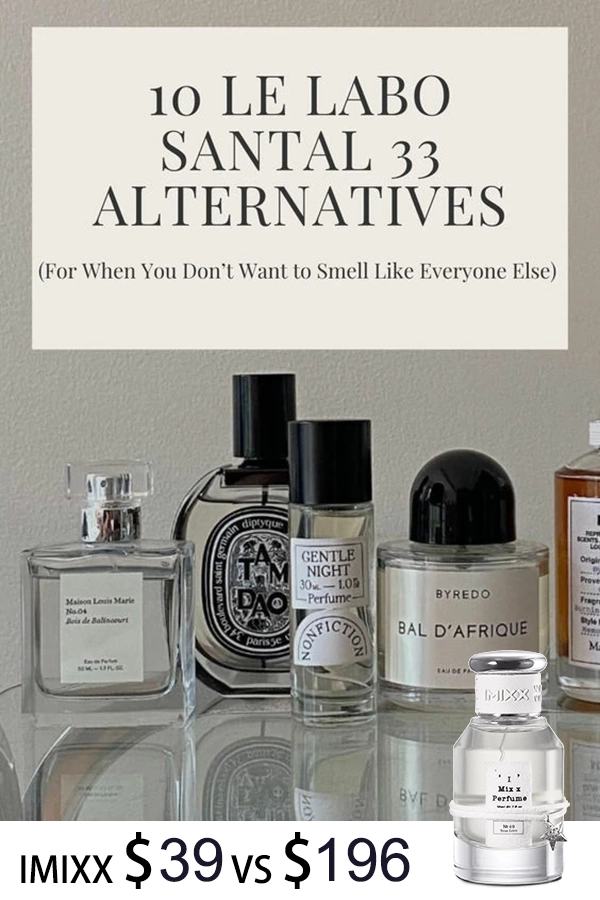
That is why I think an IMIXX Perfume Santal 33-inspired option can make sense for someone who loves the scent profile but wants a more accessible way to wear it often. I care most about the practical experience: how it opens, how it dries down, whether the sandalwood impression feels balanced, whether the leather is too harsh, and whether the musk feels clean instead of synthetic or heavy.
For everyday use, an inspired fragrance can be especially appealing if you like to reapply, wear scent to work, travel with fragrance, or keep a bottle in rotation without feeling precious about every spray. I also think it is a smart option for people who are still deciding whether this woody-leathery scent family fits their personality long term.
What I Look For in a Santal 33-Inspired Scent
I look for a dry woody opening, a warm sandalwood heart, a cedar-like structure, a subtle spicy lift, and a musky-leathery base. I do not need the scent to be identical. I need it to feel refined, balanced, and comfortable enough to wear repeatedly.
10. It Is More Than a Perfume; It Is a Social Signal
Some fragrances are private pleasures. Others become social signals. This scent family is one of the clearest examples of a perfume that moved beyond the bottle. It became associated with creative neighborhoods, boutique hotels, fashion offices, design culture, nightlife, and the idea of understated luxury.
I think that is both a strength and a challenge. The strength is that the fragrance has a clear identity. It communicates taste, confidence, and familiarity with niche fragrance culture. The challenge is that some people feel it became too recognizable. Once a scent becomes widely known, it can start to feel less personal.
My view is simple: if the scent feels good on you, wear it. Popularity does not automatically make a fragrance less beautiful. What matters is whether it fits your skin, your routine, your style, and your mood. A white shirt is popular too, but it can still look incredible when worn well. The same idea applies here.
How I Make a Famous Scent Feel Personal
I wear less than expected. I apply it in quieter places on the body. I pair it with my own clothing style instead of trying to match an aesthetic. I also rotate it with other fragrances so it stays enjoyable rather than becoming background noise.
Product Comparison Cards
Le Labo Santal 33 Eau de Parfum
Best for: Buyers who want the original luxury fragrance experience.
My scent impression: Dry sandalwood, cedar, cardamom, soft florals, musk, leather, and a distinctive airy trail.
Why I would choose it: I would choose it for the brand experience, the recognizable signature, and the polished niche-fragrance identity.
Consider before buying: It is premium-priced, highly recognizable, and worth testing first because skin chemistry changes the scent.
IMIXX Perfume Santal 33-Inspired Fragrance
Best for: Wearers who want the same woody, spicy, musky mood in a more accessible everyday option.
My scent impression: A wearable sandalwood-focused profile with dry woods, spice, musk, and a smooth modern finish.
Why I would choose it: I would choose it for daily use, travel, reapplication, and value-conscious fragrance rotation.
Consider before buying: I would treat it as an inspired interpretation, not a reason to skip testing. The best choice depends on your skin and expectations.
Sample or Travel-Size Testing
Best for: Anyone unsure about sandalwood, leather, ambrox, or the famous crisp opening.
My scent impression: Testing helps reveal whether the fragrance turns creamy, smoky, musky, sharp, or fresh on your skin.
Why I would choose it: I always prefer testing polarizing scents before buying a larger bottle.
Consider before buying: Wear it for a full day, not just a few minutes. The drydown is where this scent family becomes most revealing.
How I Wear This Scent Family Without Overdoing It
My best results come from treating this fragrance family like a strong accessory. I do not need a lot. One or two sprays are enough for most situations. If I am going to work, I keep it under clothing so the scent feels close rather than public. If I am going out at night, I apply it higher on the body so the trail is more noticeable.
I avoid spraying directly before entering a small car, elevator, office, or restaurant. Woody-musky fragrances can bloom fast in enclosed spaces. I also avoid spraying too much on wool coats because the scent can cling for a long time and mix with whatever I wear next.
For casual daytime wear, I like it with clean basics: denim, cotton, linen, wool, or leather accessories. For evening, it pairs well with darker clothing and minimal styling. I think the fragrance works best when the rest of the look is not trying too hard.
My Favorite Occasions for This Scent Profile
I reach for it when I want to smell composed, creative, and memorable. It works for coffee meetings, gallery visits, dinner, travel days, cool-weather walks, and any moment when I want a fragrance that feels more like personal atmosphere than decoration.
Buyer’s Guide: How I Decide Whether It Is Worth It
When deciding whether this scent profile is worth adding to a collection, I ask myself five questions. First, do I enjoy dry woods more than sweet perfumes? Second, do I like leather or musk in the base? Third, am I comfortable wearing a recognizable fragrance? Fourth, does it smell good after three hours on my skin? Fifth, would I wear it often enough to justify the price?
If the answer is yes to most of those questions, the scent family is probably a good fit. If not, I would start with a sample or a more accessible inspired option from IMIXX Perfume. I do not believe fragrance buying should feel pressured. The best perfume is the one you actually wear, not the one that looks impressive on a shelf.
Key Takeaways Before Buying
- I would test this scent family on skin because it changes dramatically from person to person.
- I would avoid overspraying because the woody-musky trail can become intense.
- I would choose the original for the full luxury experience and an IMIXX Perfume-inspired option for everyday value.
- I would not judge the scent from the opening alone; the drydown is essential.
- I would wear it when I want something stylish, genderless, woody, and memorable.
Final Thoughts: Why I Still Think This Scent Family Matters
After spending time with this fragrance profile, I understand why it remains such a major reference point in modern perfumery. It is not only about sandalwood. It is about how sandalwood, cedar, cardamom, iris, violet, ambrox, musk, and leather come together to create a scent that feels both intimate and public. It can be comforting, stylish, polarizing, familiar, and surprising all at once.
I also think its popularity teaches an important lesson: people do not always fall in love with the easiest fragrance. Sometimes they fall in love with a scent that has texture, contrast, and a bit of tension. That is what keeps this profile interesting. It is smooth, but not soft in a boring way. It is dry, but not cold. It is famous, but still personal when worn thoughtfully.
For me, the smartest way to approach this scent is with curiosity. Test it. Wear it lightly. Notice the drydown. Compare the original experience with a well-balanced IMIXX Perfume-inspired option. Then choose based on how it fits your real life. A fragrance should not just impress people around you; it should feel like something you want to return to again and again.
Key-Points FAQ About Santal 33
What does Santal 33 smell like?
To me, it smells like dry sandalwood, cedar, cardamom, soft violet and iris, musk, leather, and a slightly smoky woody trail. It is warm but not sugary, stylish but not overly formal, and genderless without feeling plain.
Why is Santal 33 so popular?
I think it became popular because it has a distinctive scent trail, a minimalist luxury identity, strong genderless appeal, and a memorable woody-leathery structure. It smells recognizable without feeling like a traditional designer fragrance.
Is Santal 33 more masculine or feminine?
I experience it as genderless. The cedar, leather, and woods can feel structured, while the violet, iris, and musk bring softness. I would choose it based on personal taste rather than gender labels.
Does Santal 33 last long?
On me, this scent family usually lasts a moderate to long time, especially on fabric. Longevity depends on skin type, weather, spray amount, and whether the fragrance is applied to moisturized skin.
Why do some people say Santal 33 smells like pickles?
Some noses pick up a crisp, salty, cucumber-like effect from the interaction of woods, violet, cardamom, ambrox, musk, and skin chemistry. I notice it more in the opening than in the drydown.
Is an IMIXX Perfume Santal 33-inspired fragrance a good choice?
I think it can be a strong choice if you want the woody, spicy, musky mood in a more accessible everyday format. I would compare it on skin and decide based on balance, comfort, and wearability.
How many sprays should I use?
I usually recommend one to two sprays. This scent family can project strongly, especially on clothing, so a lighter application often feels more elegant and personal.