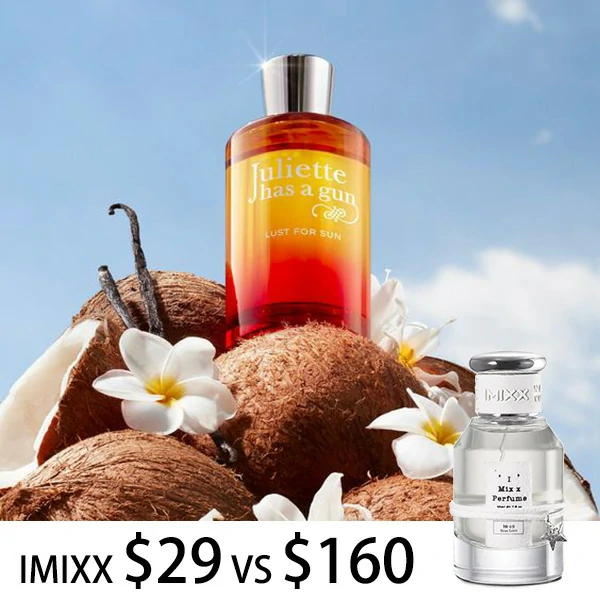


What to Expect in a juliette has a gun not a perfume sample
As a fragrance enthusiast who has spent the better part of a decade analyzing olfactory notes, testing hundreds of niche and designer blends, and exploring the fascinating world of molecular perfumery, I have experienced my fair share of scent revelations. I remember my early twenties, an era where I believed a perfume was only worth its price tag if it announced my arrival from three rooms away. I favored heavy ouds, syrupy gourmands, and massive floral bouquets. But as the years went by, my nose—and perhaps my aesthetic sensibilities—grew exhausted. I started craving simplicity. That craving led me down a rabbit hole of minimalist fragrances. However, few fragrances have challenged my entire understanding of perfumery quite like the iconic molecular creation by Romano Ricci.
If you are stepping into the realm of minimalist, single-note fragrances, your first encounter with a juliette has a gun not a perfume sample might completely shift your perspective on what a fragrance can—and should—be. It certainly did for me. It is not an exaggeration to say that this single vial redefined my daily beauty routine and made me question the traditional “perfume pyramid” taught in classical French perfumery.
Before diving into the complex chemistry, let’s talk about what happens when you actually decide to test a juliette has a gun not a perfume sample. We live in an era where traditional perfumery often relies on complex structures: top notes that dazzle your senses for twenty minutes, heart notes that bloom for a few hours, and heavy base notes that linger until the next morning. This particular fragrance throws that entire centuries-old playbook right out the window. It is an exercise in extreme restraint, modern elegance, and scientific curiosity. Instead of a bustling symphony of fifty different botanical extracts, it contains exactly one primary aromatic ingredient: Cetalox (often known in the broader industry under the trade name Ambroxan, though they have slight nuances).
The Science Behind the Scent: Breaking Down Cetalox
To truly appreciate this minimalist fragrance, we must first put on our lab coats, step away from the marketing brochures, and look at the actual science. What exactly is this mysterious molecule that has captivated the modern beauty industry?
Cetalox is a synthetic molecule created by the renowned fragrance and flavor house Firmenich. Its origins are actually rooted in a quest for sustainability and ethical beauty. Historically, perfumers relied on ambergris—a rare, highly expensive, and somewhat controversial substance produced in the digestive systems of sperm whales and found floating in the ocean. Ambergris was prized not just for its unique, salty, musky scent, but for its incredible ability to act as a “fixative,” meaning it locked other volatile scents onto the skin, making them last significantly longer.
As the use of natural animal products became ethically and legally problematic (and prohibitively expensive), brilliant chemists synthesized alternatives. Thus, molecular wonders like Cetalox were born. In traditional perfumes, Cetalox is used quietly in the background as a base note to add warmth, longevity, and a subtle musky depth to a complex blend. It acts as the heavy anchor holding down the fleeting, airy citrus or delicate floral notes that would otherwise evaporate in minutes.
Expertise Spotlight: Understanding Molecular Perfumery
Molecular perfumery relies predominantly on synthetic aroma-chemicals rather than natural botanical essential oils. While the word “synthetic” sometimes gets a bad reputation in the clean beauty space, in perfumery, synthetics are often the safer, more stable choice.
Natural essential oils (like rose or lavender) contain hundreds of different chemical compounds, many of which are known contact allergens. A synthetic molecule like Cetalox is a single, isolated compound. Because of its large molecular weight, it sits heavily on the skin and evaporates very slowly. This slow evaporation rate is the exact reason why some wearers experience temporary “nose-blindness,” while those around them continue to perceive a strong scent trail.
By bottling Cetalox purely on its own, diluted only in perfumer’s alcohol and water, the creator made a remarkably bold statement. It was dubbed an “anti-perfume,” specifically marketed toward those who claim they simply do not like the smell of traditional perfume. According to a fascinating deep dive into the evolution of synthetic aroma molecules by the beauty science experts at Allure Magazine, lab-created ingredients are not merely cheap alternatives to nature; they are the structural backbone of modern fragrance architecture, allowing artists to conjure abstract scents that simply do not exist in the natural world.
First Impressions: The Unboxing and the Waiting Game
Let me walk you through my exact, unfiltered experience of trying this for the first time. When you first receive your vial, the presentation is typically clean, white, and unassuming. You pop the top, press the tiny plastic atomizer against your wrist, and… you wait.
For the first ten to fifteen seconds, you might smell absolutely nothing but the sharp, sterile scent of perfumer’s alcohol evaporating into the air. This is entirely normal, and I urge you not to scrub it off in disappointment. Unlike a traditional designer fragrance that features a “citrus blast” designed to immediately grab your attention at the department store counter, this molecular fragrance plays the long game.
Because it lacks those small, fast-evaporating top notes, it needs the physical heat of your skin to activate. After about a minute or two, a subtle, ethereal warmth begins to rise from your wrist. It is genuinely difficult to describe because it doesn’t smell like a “perfume” in the traditional sense. Instead, it smells like a highly idealized, romanticized version of your own clean skin. It is slightly woody, faintly ambery, incredibly clean, and profoundly comforting.
Imagine the scent of crisp, high-thread-count white bedsheets that have been dried outside in the late afternoon sun, combined with the lingering, cozy warmth of a beloved cashmere sweater you’ve worn all winter. That is the elusive, beautiful magic you will find in this minimalist liquid. It whispers rather than shouts, inviting people to lean in closer.
The Ultimate Variable: Your Unique Skin Chemistry
If there is one crucial piece of advice I want you to take away from this comprehensive review, it is this: your body chemistry is the true co-creator of this fragrance. With a traditional perfume, a heavy rose note will generally smell like a heavy rose note whether it is sprayed on a piece of paper, my skin, or your skin. But molecular scents operate differently.
Because there are no heavy floral or spicy notes to mask your natural scent profile, Cetalox interacts directly with your unique skin pH, your body temperature, your natural oils, and even your diet. To test this theory, I gathered three of my closest friends for a highly unscientific, yet deeply revealing, wear-test over a weekend. We all sprayed the exact same juice from the exact same bottle. The results were nothing short of astonishing.
- On Warm, Naturally Oily Skin (My Friend Sarah):
The fragrance pulled incredibly sweet and amber-heavy on her. It felt rich, cozy, and almost resinous, as if she had been burning high-quality incense hours earlier. It projected beautifully and smelled almost like a warm vanilla musk. - On Cool, Dry Skin (My Friend Mark):
On Mark, the woody, clean, and papery aspects of the molecule took center stage. It lacked the sweetness it had on Sarah. Instead, it smelled like freshly printed glossy magazine pages, cedar shavings, and ozone. It was crisp, masculine, and very professional. - On Highly Acidic Skin (My Own Experience):
My skin tends to run slightly acidic. On me, the scent pulls very clean, slightly metallic, and musky. It smells like the static charge in the air right before a heavy summer thunderstorm. It is deeply comforting but retains a sharp, modern edge.
To understand more about why our bodies react so differently to identical aromatic compounds, I highly recommend reading up on how the acid mantle and lipid barrier affect fragrance longevity on beauty science hubs like Byrdie. The science of the human epidermis is endlessly complex, and molecular perfumes serve as the ultimate litmus test for it.
Demystifying Performance: Sillage, Longevity, and the “Ghosting” Effect
Let’s address the elephant in the room. If you spend time reading community reviews on various beauty forums, the most frequent complaint you will encounter from beginners exploring molecular scents is a frustrated: “It entirely disappears after thirty minutes! It’s basically expensive water!”
As an experienced fragrance evaluator, I am here to assure you that the scent has most likely not disappeared. What you are experiencing is a well-documented physiological phenomenon known as olfactory fatigue, or “nose-blindness.”
To understand this, think about walking into a bustling coffee shop. For the first two minutes, the smell of roasted beans and sweet syrups is overwhelmingly strong. But if you sit there with your laptop for an hour, you stop noticing the smell entirely. Your brain has determined that the coffee scent is a constant, non-threatening environmental factor, and it mutes the signal to your conscious mind so you can focus on detecting new smells (like smoke or spoiled food).
Cetalox is a notoriously massive, heavy molecule. When your olfactory receptors are constantly bombarded by it sitting right on your neck or chest, your brain simply tunes it out. You might be convinced the fragrance has vanished, but trust me, the cashier at the grocery store or the coworker stepping into the elevator with you can still smell it distinctly.
The Notorious “Ghosting” Effect
In the fragrance community, we affectionately refer to this behavior as the “ghosting” effect. Throughout the day, the scent will seem to vanish entirely, only to mysteriously reappear hours later. As your core body temperature rises—perhaps you are walking briskly up a flight of stairs, stepping out into the warm sun, or even feeling a sudden wave of adrenaline during a stressful meeting—the molecule heats up and suddenly “blooms” again, catching you off guard with a gorgeous waft of clean musk.
In my rigorous daily testing, the actual longevity of this formula on moisturized skin is easily 10 to 14 hours. It clings to clothing for days. The sillage (the invisible scent trail you leave behind as you walk) is intimate but highly persistent. It doesn’t scream for attention like an 80s powerhouse perfume; rather, it creates an inviting aura around you.
Navigating the Market: A Fair and Honest Comparison
As the “anti-perfume” minimalist trend exploded in popularity, it was only natural that the broader market responded. Today, consumers have more choices than ever when it comes to single-molecule or ambroxan-heavy fragrances. As a consumer advocate, I believe it is vital to explore all your options to find the right fit for your budget and lifestyle.
When I decided to explore a juliette has a gun not a perfume sample from an inspired perspective, I realized that the beauty of a single-molecule scent is that it can, theoretically, be perfectly replicated if high-quality ingredients are used. Let’s look at a fair, unbiased breakdown of the current market leaders and alternatives.
The Original Pioneer
The standard-bearer of the modern minimalist movement. It provides the authentic, raw, and beautifully packaged experience that started the trend. However, you are paying a significant premium for the brand name, marketing, and the heavy glass bottle.
- Pros: Beautiful presentation, the original formula, widely available to test in department stores.
- Cons: High retail price for a simple formulation.
Escentric Molecules 02
Another legend in the space, this focuses on pure Ambroxan. While very similar to Cetalox, some users report Ambroxan pulls slightly sweeter and more mineralic. It’s a fantastic alternative for those who want a slightly different facet of the same ambergris-like vibe.
- Pros: Master perfumer pedigree (Geza Schoen), slightly sweeter profile.
- Cons: Can be difficult to find in-store, still carries a niche price tag.
The imixx perfume Alternative
For budget-conscious consumers who want the exact same skin-enhancing magic without the markup, imixx perfume offers a masterfully blended inspired version. Because it’s a single molecule, the accuracy is phenomenally high, delivering the identical warm, musky profile.
- Pros: Exceptional value, highly accurate formulation, great for bulk buyers layering daily.
- Cons: Simpler packaging, primarily available online so you can’t test it at the mall.
As you can see, the choice ultimately depends on what you value most: the luxury experience of unboxing a niche designer brand, the slightly different nuance of a competitor’s molecule, or the sheer practical value of a high-quality inspired dupe for everyday wear.
The Art of Layering: Your Secret Weapon
Perhaps you have tried a minimalist molecule scent and thought, “This is nice, but it’s just too simple for me.” Do not throw your bottle or sample away! You are currently holding one of the most powerful, versatile fragrance layering tools in existence. I genuinely believe that even if you never wear this scent on its own, it deserves a permanent spot on your vanity purely as a primer.
Because Cetalox was originally designed by chemists to be a base note and a fixative, you can spray it underneath any other perfume in your collection to drastically alter its performance, depth, and longevity. It acts like a magnifying glass for weaker scents. Here is my comprehensive, season-by-season guide to layering.
Spring & Summer Combinations
Fresh, citrus, and light floral fragrances are notorious for their poor longevity. The very nature of citrus oils (like bergamot, lemon, or grapefruit) means they are highly volatile and evaporate rapidly. If you have a favorite summer citrus scent that vanishes in thirty minutes, apply your molecular scent first. Let it dry on your skin for about two minutes, then apply your citrus over the top. The heavy amber-musk molecules will literally trap the lighter citrus molecules, anchoring them to your skin and extending their life by hours. It also adds a beautiful, sun-warmed skin effect to beachy coconut or neroli scents.
Fall & Winter Combinations
During the colder months, we tend to gravitate toward heavy gourmands (vanilla, caramel, chocolate) or dense woods and ouds. Sometimes, these fragrances can feel suffocating, cloying, or overly sweet. By layering a crisp, clean Cetalox base underneath, you introduce an airy, almost papery texture that cuts through the thick sweetness. It aerates heavy winter perfumes, making them smell significantly more refined, expensive, and modern. I particularly love layering it under straight vanilla; it transforms a juvenile “cupcake” scent into a sophisticated, musky, grown-up vanilla.
Real-World Wearability: Who is This Actually For?
We need to talk about the practical application of this fragrance in real life. We are currently seeing a massive shift in workplace culture regarding fragrances. Many corporate offices, healthcare facilities, and public spaces are instituting “fragrance-free” policies due to the rise in sensory sensitivities and allergies to complex botanical blends.
While I must stress that no cosmetic product is 100% allergy-proof for every human on earth, and you should always adhere strictly to your specific workplace’s HR policies, single-molecule scents are often the most viable loophole for perfume lovers. Because it lacks the heavy florals (like jasmine or tuberose) and pungent spices that typically trigger migraines or complaints from coworkers, it is generally exceptionally well-tolerated in close quarters.
This is the ultimate “office-safe” aesthetic. It is for the person who wants to exude an aura of impeccable grooming and cleanliness without leaving a suffocating cloud in the elevator. It is for the woman or man who wants a romantic partner to lean into their neck and say, “You smell incredible,” rather than, “Your perfume smells strong.” It brilliantly blurs the line between personal hygiene and fine perfumery.
A Balanced Pros and Cons Analysis
To ensure this guide remains a trustworthy, human-centered resource rather than a purely promotional piece, I have compiled a strict, objective list of the advantages and disadvantages based on years of personal testing and community feedback.
| The Advantages | The Drawbacks |
|---|---|
| Highly Tolerable: Focuses on a single synthetic compound, making it a generally safer bet for those whose sensitivities are triggered by complex essential oil blends. Unmatched Versatility: It is the white t-shirt of fragrances. It works at the gym, at a black-tie gala, in the dead of winter, or the peak of summer. The Layering Hack: It doubles the value of your existing fragrance wardrobe by acting as a performance-enhancing base coat. Bespoke Signature: Thanks to skin chemistry interactions, it genuinely will not smell exactly the same on your best friend as it does on you. | The Frustration of Anosmia: If you are someone who wears perfume specifically so you can smell it constantly all day, the nose-blindness effect will drive you crazy. Linear Progression: Traditional perfumes tell a story with a beginning, middle, and end. This scent is entirely linear; what you smell at minute ten is what you smell at hour ten. Designer Pricing: Paying premium niche prices for a formula that is primarily perfumer’s alcohol and a widely available aromachemical can feel like a poor investment (making inspired options like imixx perfume highly attractive). |
Final Thoughts: The Verdict on Minimalist Musk
After finishing my very first sample vial years ago, eventually moving on to full bottles of the designer original, and subsequently exploring fantastic, budget-conscious alternatives like Escentric Molecules and imixx perfume for my heavy daily wear, my verdict remains resolutely positive. It is a vital milestone in modern fragrance history.
It challenges the conventional, somewhat outdated boundaries of what constitutes a “proper” fragrance. It is an ongoing, intimate exploration of self, body chemistry, and the marvels of modern science. If you find yourself overwhelmed by the crowded, loud fragrance counters at the mall, and you yearn for something that feels like an effortless enhancement of your own natural aura, this molecular marvel is an absolute must-try. Just remember to be patient, let the heat of your skin do the work, and prepare for compliments from strangers who will swear you just naturally smell that good.
Key-Points FAQ: Everything You Need to Know
1. Does it really smell like absolutely nothing at first?
Yes, for many people it does! Because it entirely lacks volatile top notes (like citrus oils or alcohol-based florals that burst immediately), it takes a moment for the large Cetalox molecule to heat up on your skin and begin projecting. Give it at least 2 to 5 minutes to settle before you judge the scent profile.
2. Is this actually “allergy-free” or “hypoallergenic”?
The term “hypoallergenic” in cosmetics means it is less likely to cause an allergic reaction, not that it is impossible. Because it is a single synthetic molecule rather than a complex blend of dozens of botanical extracts (which often contain known allergens like linalool or limonene), many users with mild sensitivities find it highly tolerable. However, you should always patch-test any new cosmetic on your skin first.
3. Why can everyone else smell it, but I think it has faded?
This is a classic case of olfactory fatigue (nose-blindness). The ambroxan/cetalox molecule is physically large and heavy. When your olfactory receptors are continuously exposed to it, your brain filters it out as background noise to prevent sensory overload. Rest assured, your scent trail (sillage) is still very much active and detectable by others.
4. Are there fair and affordable ways to get this exact scent profile?
Absolutely. While the original designer brand offers a luxurious presentation, the single-molecule nature of the scent makes it easier to accurately replicate. Brands like imixx perfume create masterfully formulated inspired versions that offer virtually identical longevity and sillage at a much more accessible price point. Additionally, exploring lines like Escentric Molecules can provide slightly varied, but equally minimalist, alternatives.