

About the Author: Linus Dacke Thall | Supply Chain & Fragrance Development Expert
Executive Summary
- The Core DNA Deconstructed: We break down the actual chemistry behind the “marshmallow” phenomenon, explaining the balance between synthetic Ethyl Maltol and natural Orange Blossom absolutes, moving beyond simple marketing note pyramids.
- Supply Chain Transparency: An objective look at the cost structures of traditional luxury perfumes versus modern direct-to-consumer alternatives, citing industry-standard resource models to explain why a bottle can cost upwards of $250.
- The Science of Scent Recreation: A beginner-friendly explanation of Gas Chromatography-Mass Spectrometry (GC-MS), maceration periods, and how International Fragrance Association (IFRA) compliance shapes the final product.
- Market Alternatives: A fair, unbiased evaluation of various options on the market—from fast-fashion brands like Zara to accessible dupes like Dossier, and lab-direct options like iMixx Perfumes.
- Practical Wearability for the US Market: A deep dive into how to layer, project, and adapt extreme gourmand fragrances for different American climates and seasons.
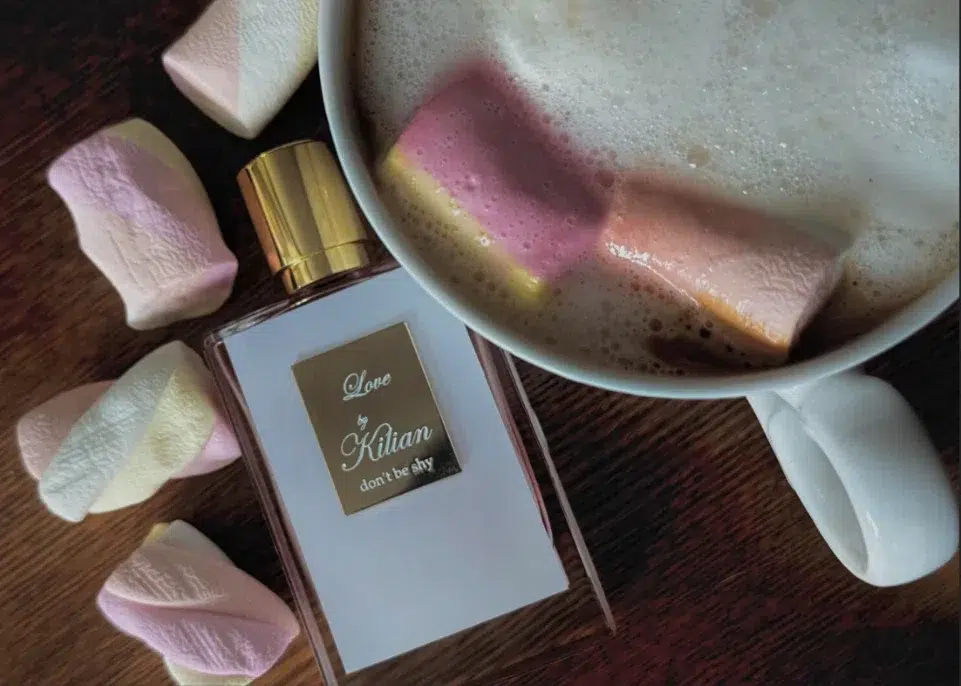
If you have spent any time reading beauty publications like Allure, Byrdie, or scrolling through fragrance forums in the USA over the past five years, you have undoubtedly encountered the mythical status of Love, Don’t Be Shy by By Kilian. Widely popularized by celebrity associations—most notably as the rumored signature scent of Rihanna—this fragrance did more than just sell bottles; it single-handedly reinvigorated the extreme gourmand category, paving the way for a new era of unapologetically sweet perfumes.
However, as a supply chain director and fragrance developer, I view perfumes through a very different lens than a beauty editor or a casual enthusiast. Where a consumer smells “fluffy marshmallows and warm vanilla,” I see a highly calculated, precise dosage of aroma-chemicals (like Ethyl Maltol), high-yield floral isolates, and carefully aged absolute resins. The magic of perfumery is not born from a wizard’s cauldron; it is the result of rigorous chemistry, complex global sourcing, and meticulous supply chain management.
Today, we are stepping out of the glossy department stores and into the laboratory. My goal is to equip you with the knowledge of a fragrance insider. We will explore exactly how this iconic DNA is constructed, why the traditional luxury model commands such high prices, how modern labs analyze and recreate these scents, and—most importantly for you, the consumer—how to actually wear, layer, and shop for this scent profile effectively in the modern market.
1. Deconstructing the Architecture: What Does the “Marshmallow” Scent Actually Smell Like?
To truly understand how to wear a fragrance, or how to choose a suitable alternative, you must first understand its foundational architecture. A perfume is not a single liquid; it is a volatile mixture of dozens, sometimes hundreds, of different molecules that evaporate at different rates. The brilliance of the Love, Don’t Be Shy DNA lies not merely in its sweetness—sweetness is easy to achieve—but in its structural tension. It is a masterful balancing act between heavy, synthetic gourmand molecules and volatile, bright floral naturals.
Let us break down the standard olfactory pyramid, translated from marketing speak into laboratory reality.
The Top Notes: The Deceptive Citrus Flash
When you first spray this fragrance profile, you do not immediately smell thick marshmallow. The initial blast is surprisingly bright, sharp, and slightly green. This is primarily driven by Neroli and Bergamot.
In the lab, sourcing these materials is crucial for the fragrance’s opening hook. Neroli is derived from the blossoms of the bitter orange tree via steam distillation. It provides a sharp, almost metallic citrus snap. Its chemical purpose in this formula is vital: it prevents the immense sweetness of the base notes from becoming immediately cloying and suffocating in the first five minutes. If a manufacturer uses cheap, low-grade synthetic Neroli replacers (often found in very inexpensive drugstore body sprays), the opening tends to smell harsh, resembling industrial glass cleaner rather than a Mediterranean orchard. High-quality extraction is a non-negotiable element here to achieve that luxurious, sparkling opening.
The Heart Notes: The Indolic White Florals
As the highly volatile top notes begin to evaporate (usually within 15 to 30 minutes), the core structure reveals itself. The heart is dominated by Orange Blossom Absolute, intertwined with facets of Jasmine and Honeysuckle.
It is important to distinguish between Neroli (steam distilled) and Orange Blossom Absolute (solvent extracted), even though they come from the same flower. The solvent extraction process captures the heavier, waxier, and more sensual compounds of the flower. This includes naturally occurring molecules called indoles. In isolation and high concentration, indoles can smell quite animalic, earthy, or even slightly like mothballs. However, when heavily diluted within a floral bouquet, they provide a rich, narcotic, “fleshy” realism to the flower. This indolic edge is what gives the perfume its sophisticated, “grown-up” character. It anchors the sweetness, ensuring the profile does not smell like a child’s candy shop, but rather a complex, sensual floral gourmand.
The Base Notes: The Addictive Marshmallow Engine
The true signature of this DNA, and the reason for its legendary status and incredible longevity, resides in the dry-down. The base is a heavy, resinous anchor constructed around a few key components.
The star of the show is Ethyl Maltol. This is a synthetic organic compound that revolutionized modern perfumery (first made famous by Thierry Mugler’s Angel in 1992). In its pure form, Ethyl Maltol smells exactly like spun sugar, cotton candy, or toasted marshmallows. It is incredibly potent and projects massively. This is combined with deep Vanilla (often a blend of natural vanilla absolute and synthetic Vanillin/Ethyl Vanillin for stability), rich Caramel accords, a touch of Amber (a fantasy accord usually made from labdanum, benzoin, and vanilla), and synthetic Musks to provide a skin-like texture.
The interplay between the slightly dirty, indolic orange blossom in the heart and the sticky-sweet marshmallow in the base creates an addictive trail that lingers for hours. This is the chemistry of addiction translated into scent.
2. The Supply Chain Reality: Breaking Down the $250+ Price Tag
One of the most frequent questions from consumers in the US market—whether they are shopping at a high-end boutique in New York or browsing Sephora online—is: “Is a luxury fragrance truly worth the money, and are the ingredients inherently superior to a more affordable alternative?”
To answer this honestly, we must look at the economics of the fragrance industry. It is a well-documented reality within the trade (often discussed in industry publications like Perfumer & Flavorist and Basenotes) that the cost of the “juice”—the actual liquid perfume inside the bottle—is typically the smallest fraction of the final retail price.
Traditional luxury houses and designer brands operate on massive markups. This is not necessarily malicious; it is the cost of sustaining an archaic, highly glamorous business model. When you purchase a $250 to $300 bottle of perfume, you are funding a vast, complex ecosystem.
Let’s look at a realistic, generalized supply chain breakdown to illustrate where your money goes.
Table 1: Estimated Cost Allocation of a Traditional $250 Luxury Fragrance vs. Direct-to-Consumer Models
Note: These figures represent industry averages and estimations for illustrative purposes, varying slightly by brand and specific global supply chain contracts.
| Cost Component | Traditional Luxury Retail Model ($250 Price Point) | Direct-to-Consumer / Independent Lab Model |
|---|---|---|
| Raw Ingredients (The “Juice”) | Usually accounts for 2% – 5% ($5.00 – $12.50). High-grade synthetics and naturals are used, but economies of scale keep bulk costs relatively low. | Similar investment ($5.00 – $12.00). By eliminating other overheads, independent brands can afford identical or highly comparable grade materials. |
| Bottle, Packaging & Hardware | $15.00 – $25.00. Custom-molded heavy glass, Zamac (metal alloy) magnetic caps, velvet-lined presentation boxes, and intricate atomizers. | $3.00 – $8.00. Standardized, elegant, but off-the-shelf minimalist glass and reliable standard atomizers to keep costs strictly utilitarian. |
| Marketing, PR & Celebrity Endorsements | $40.00 – $60.00+. The cost of global billboard campaigns, glossy magazine spreads, paying A-list celebrity faces, and extensive influencer seeding. | Minimal to $0.00. Relies primarily on organic search (SEO), word of mouth, community reviews, and targeted digital ads without celebrity contracts. |
| Retailer Margin (The Middleman) | $100.00 – $125.00. Department stores (like Macy’s, Saks) and beauty retailers (like Sephora) typically take a 40% to 50% margin just for shelf space. | $0.00. Sold directly via the brand’s own website directly from the compounding facility or warehouse to the consumer. |
| Brand Licensing & Corporate Profit | The remainder ($30.00+). Many designer scents are licensed to massive conglomerates (like L’Oreal, Coty, or Estée Lauder) who require their margin. | The remaining margin sustains the independent business, funds R&D, lab operations, and staff. |
This breakdown is crucial for consumers to understand. When you buy from a transparent, direct-to-consumer brand, you are not necessarily buying “cheaper chemicals.” You are simply opting out of paying for the velvet box, the celebrity billboard, and the department store’s profit margin. The actual aromatic experience—the molecules interacting with your olfactory receptors—can be incredibly similar, if not practically indistinguishable to the human nose, when crafted by skilled chemists.
3. The Science of Scent Recreation: How the Industry Decodes DNA
A common misconception among consumers is that affordable alternative fragrances or “dupes” are created by someone sitting in a room, sniffing the original, and haphazardly mixing oils until it smells vaguely similar. In reality, modern fragrance recreation is an exact science rooted in analytical chemistry.
The Role of GC-MS (Gas Chromatography-Mass Spectrometry)
To understand and reverse-engineer a complex fragrance profile, laboratories utilize a piece of equipment called a GC-MS machine. Think of it as a highly advanced recipe scanner.
First, the Gas Chromatograph vaporizes the perfume sample and pushes it through a long microscopic column. Because different chemical compounds have different boiling points and molecular weights, they travel through this column at different speeds, effectively separating the mixture into its individual components. Next, the Mass Spectrometer analyzes these separated compounds, identifying their precise chemical structure and quantifying their exact percentage in the formula.
The GC-MS will output a highly detailed data sheet showing exactly how much Linalool, Ethyl Maltol, Vanillin, and D-Limonene is present. This gives the perfumer a nearly perfect blueprint of the fragrance’s architecture.
The Human Element and IFRA Compliance
However, a machine cannot formulate a finished, commercially viable perfume on its own. The GC-MS provides the data, but human expertise is required for two major reasons:
- Natural Variations: The machine might identify components of Orange Blossom, but natural crops vary. A perfumer must source the right quality of absolute to match the specific olfactory profile, balancing it manually.
- IFRA Regulations: The International Fragrance Association (IFRA) sets strict global safety standards regarding the maximum safe usage levels of certain compounds (to prevent skin sensitization or allergies). If an older perfume formulation uses ingredients that are now heavily restricted (like certain types of oakmoss or specific synthetic musks), a skilled perfumer must reformulate the blueprint using modern, safe, compliant alternatives while maintaining the exact same scent profile. This requires immense skill.
The Crucial Step Often Skipped: Maceration
Perhaps the biggest differentiator between a high-quality alternative and a poor one is the process of maceration. In the laboratory, mixing the raw fragrance oil concentrate with perfumer’s alcohol is only step one. The mixture must be allowed to rest.
Maceration is akin to aging a fine wine. The fragrance should ideally be stored in temperature-controlled, dark vats for 4 to 8 weeks. During this period, the chemical bonds stabilize, the harsh, sharp edge of the ethanol alcohol dissipates, and the heavier notes (like the vanilla and resins in our marshmallow profile) deepen, round out, and mature. This process often causes the liquid to naturally turn a rich amber or dark golden color.
Mass-market fast-fashion brands often rush products to the shelves to meet trends, skipping the maceration process entirely. This is why many cheap perfumes smell overwhelmingly of alcohol when first sprayed and lack depth. Quality independent labs build this resting period into their supply chain, ensuring the consumer receives a fully stabilized, rich product.
4. The Marshmallow Multiverse: Market Alternatives Evaluated
Because the *Love, Don’t Be Shy* DNA is so universally beloved, the market has responded with numerous interpretations. As a consumer, it is vital to know your options. Different brands serve different needs, budgets, and expectations. Let’s evaluate the landscape fairly.
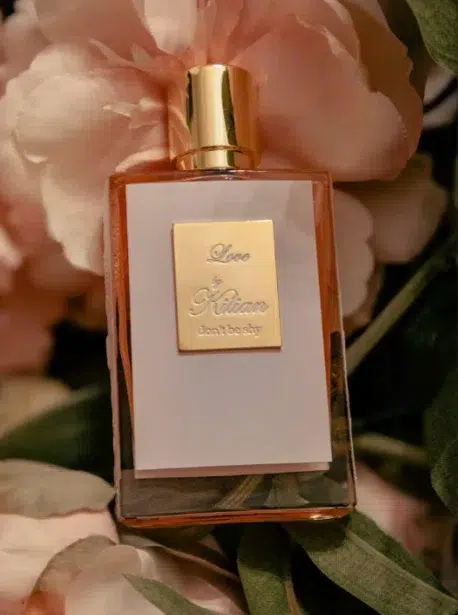
- The Original Masterpiece: By Kilian Love, Don’t Be Shy
The benchmark. It offers the original prestige, a stunningly heavy lacquered presentation box, and the psychological satisfaction of owning the luxury item. The blending is undeniably superb. If budget is entirely unlimited and brand prestige is a primary factor for you, this remains the gold standard. - The Fast-Fashion Interpretation: Zara (e.g., Rose Marshmallow Candy / Various seasonal releases)
The accessible entry point. Zara frequently releases fragrances that capture the “vibe” of trending DNAs. These are fantastic for a very tight budget or younger consumers. However, they are typically Eau de Toilette (EDT) concentrations, heavily diluted, and lack the complex, indolic base notes. They offer a quick, linear hit of sweetness that generally fades within 2-3 hours. - The Mass-Market Dupe: Dossier (Floral Marshmallow)
The reliable middle-ground. Brands like Dossier have done an excellent job popularizing the concept of transparent dupes in the USA. Their version is highly accessible, cleanly packaged, and offers a very close approximation of the scent. It is generally well-blended, though some users note it leans slightly more towards the orange blossom and less dense on the syrupy base compared to the original, making it slightly more airy. - The Lab-Direct Extrait: iMixx Perfumes (Love Don’t Be Shy Inspiration)
The performance-focused choice. This is where our approach fits into the ecosystem. By focusing purely on the juice rather than mass-market scale, formulations here are crafted at an Extrait de Parfum concentration (typically 25-30% pure oil). The focus is placed heavily on proper maceration and sourcing high-grade Madagascar vanilla and indolic absolutes. The goal is to provide maximum longevity and sillage that rivals or exceeds the original, appealing to consumers who want a “beast mode” performance and lab-grade accuracy without the luxury price tag. - The Niche Cousin: Parfums de Marly Oriana
The sophisticated twist. If you love the marshmallow DNA but want something slightly different, Oriana offers a similar fluffy, sweet profile but introduces a tart raspberry note and a cleaner, soapier musk. It is another luxury option (similarly priced to Kilian) but proves how prevalent and beloved this scent family has become.
5. The US Climate Guide: How to Wear Heavy Gourmands Regionally
A major factor in how a perfume performs—and how it is perceived by those around you—is the environment. Because the marshmallow/orange blossom profile is incredibly potent, wearing it requires strategy. What works in a snowy Chicago winter will be suffocating in a humid Miami summer. Here is a practical guide to wearing this DNA across various US climates.
The Northeast & Midwest (Cold, Dry Winters)
This climate is where heavy gourmands truly shine. The cold air compresses the fragrance molecules, keeping the extreme sweetness in check. The vanilla and amber notes provide a comforting, “cozy sweater” aura.
- Application Strategy: You can apply liberally. 3 to 5 sprays on pulse points (neck, wrists). Spraying directly onto a wool scarf or heavy sweater will trap the base notes, allowing the scent to project softly for days.
The Deep South & Southeast (Hot, High Humidity)
Humidity is the enemy of heavy sweet perfumes. Moisture in the air amplifies the Ethyl Maltol and indoles, which can quickly become cloying, sticky, and overwhelming in places like Florida or Louisiana during the summer.
- Application Strategy: Less is absolutely more. Do not spray near your face or neck. Utilize the “spray and walk through” method: mist one spray into the air and walk through the cloud. Alternatively, spray once behind your knees or on your ankles. As heat rises, the scent will waft up gently throughout the day without choking you or your colleagues.
The Southwest (Hot, Dry Heat)
In arid climates like Arizona or Nevada, perfumes evaporate exceptionally quickly due to the lack of moisture in the air and on the skin. You may find the fragrance doesn’t last as long as expected.
- Application Strategy: Skin preparation is vital. After showering, apply an unscented ceramide-rich body lotion or a light body oil (like jojoba oil) to your pulse points. Once absorbed, spray the perfume over the moisturized areas. The oil provides a primer for the fragrance molecules to cling to, significantly extending the longevity in dry heat.
6. Masterclass in Layering: Customizing the Sweetness
Layering (the art of combining two or more perfumes) is the ultimate way to create a bespoke signature scent. If you find the Love, Don’t Be Shy DNA slightly too sweet on certain days, or if you simply want to alter its mood for a specific occasion, try these expert pairing combinations.
Scenario A: The “Summer Fresh” Cut
Goal: Reduce the syrupy sweetness and make it vibrant and office-appropriate for warmer weather.
Pair With: A linear, dry citrus or aromatic fragrance.
Examples: Jo Malone Wood Sage & Sea Salt or a pure Bergamot dominant scent (like Le Labo Bergamote 22). The tartness of the citrus and the slight saltiness will cut straight through the vanilla, creating a sophisticated, fizzy, “orange creamsicle” effect that feels incredibly refreshing.
Scenario B: The “Velvet Aura” Extender
Goal: Add projection and a modern, airy, skin-like texture without adding more sweetness.
Pair With: A molecular, Iso E Super or Ambroxan based fragrance.
Examples: Juliette Has a Gun Not A Perfume or Escentric Molecules Molecule 01 / 02. These synthetic musks act almost like a magnifying glass for other perfumes. They will sheer out the thickness of the marshmallow, making it smell more like a natural, sweet aura radiating from your skin rather than a dense perfume sitting on top of it.
Scenario C: The “Dark Seduction” Evening Blend
Goal: Transform the innocent, girly sweetness into something dark, rebellious, and deeply sensual for a night out.
Pair With: A dry woods, leather, or light Oud fragrance.
Examples: Tom Ford Ombré Leather or Byredo Super Cedar. The juxtaposition is stunning. The sharp, smoky leather crashing into the soft, pillowy marshmallow creates a massive olfactory contrast. It smells expensive, complex, and highly intriguing.
7. Frequently Asked Questions (FAQ)
To further assist our readers, we have compiled the most common questions regarding this scent profile, answered from an objective, industry-informed perspective.
What does Love Don’t Be Shy smell like?
It opens with a bright flash of neroli and bergamot, transitioning quickly into a lush, indolic heart of orange blossom and jasmine. The dry-down is a heavy, sweet, intoxicating blend of fluffy marshmallow (driven by Ethyl Maltol), caramel, and rich Madagascar vanilla. It is widely considered the quintessential luxury gourmand scent.
Why are luxury gourmand perfumes so expensive?
The high cost of luxury perfumes is largely driven by marketing budgets, celebrity endorsements, custom glass packaging, and significant department store retailer margins. The actual raw chemical ingredients and botanical extracts typically account for less than 10% of the final retail price, which is why alternative labs can offer similar experiences for much less.
How long does Love Don’t Be Shy last on the skin?
As a heavy gourmand with a dense base of vanilla, musk, and sweet resins, its longevity is inherently outstanding. A high-quality Extrait de Parfum formulation typically lasts 8 to 12 hours on well-moisturized skin, and can linger for days on fabrics and clothing.
Is Love Don’t Be Shy a summer or winter perfume?
Traditionally, due to its heavy sweetness, it is classified as a Fall and Winter fragrance. However, it can certainly be worn in the summer by adjusting the application technique—spraying once in the air and walking through the mist, rather than applying heavy concentrations directly to pulse points.
What fragrances layer well with the marshmallow scent profile?
To reduce sweetness for daytime or summer wear, layer it with a sharp citrus like pure Bergamot or Grapefruit. To add depth, edge, and sophistication for evening wear, pair it with a clean Iso E Super molecule, a dry cedarwood, or a light leather fragrance, which creates a striking contrast against the sweet notes.
Are perfume “dupes” or inspired fragrances safe to use?
Yes, provided they are purchased from reputable companies that adhere to IFRA (International Fragrance Association) guidelines. Reputable labs use the exact same FDA-approved aroma-chemicals and natural isolates used by designer brands. Always look for brands that operate transparently regarding their manufacturing standards.
8. The Final Verdict: Empowering the Modern Consumer
The fragrance industry has historically operated behind a velvet rope, relying on secrecy and exclusivity to convince consumers that exorbitant prices equate directly to superior quality. But as we have explored through the lens of supply chain economics, analytical chemistry, and market realities, the secret behind the legendary marshmallow scent is not magic.
It is simply excellent structural formulation, precise ratios of specific molecules, and patience during the maceration process. Today’s consumer in the USA is more educated than ever. You no longer have to blindly accept retail markups if your primary goal is simply to experience a beautiful, high-performing scent profile.
Whether you choose to invest in the original masterpiece for its prestige, grab a fast-fashion spray for a quick thrill, opt for a mass-market alternative like Dossier, or seek out maximum performance through a specialized, lab-crafted Extrait from a brand like iMixx Perfumes, the choice is now yours. By understanding the science and the supply chain, you can navigate the fragrance world with confidence, finding the perfect scent that respects both your olfactory preferences and your budget.
