

Executive Summary
Finding a high-quality alternative to a luxury fragrance requires more than just mixing sweet and floral notes; it requires a deep understanding of olfactory chemistry, supply chain logistics, and the rigorous maceration processes used in professional fragrance labs. This comprehensive guide breaks down the true cost of luxury perfumes in the USA, decodes the complex “Fruity-Chypre” architecture of iconic scents like YSL Mon Paris Dupe, and provides a transparent look at how factory-direct engineering creates premium, long-lasting fragrances without the designer markup.
Instead of relying on brand hype, we will explore the science of notes, provide detailed layering strategies, and objectively compare several market options—including Dossier, Zara, and Imixx Perfumes—so you can make an informed, budget-friendly decision. We will also answer the most frequently asked questions about finding the best designer perfume alternatives online, ensuring you know exactly what to look for on your fragrance journey.
Introduction: The Allure of the Fruity Chypre and the Reality of Retail in the USA
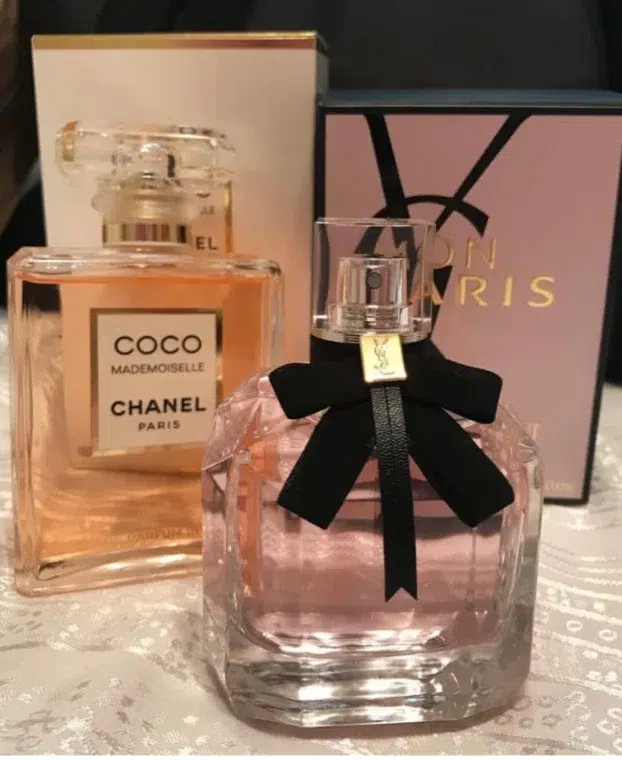
There is a specific reason why certain fragrances capture the collective imagination of millions. When we talk about a scent that perfectly balances the sweet, mouth-watering innocence of ripe berries with the dark, sophisticated, and earthy depth of patchouli, we are talking about the modern “Fruity Chypre” (pronounced sheep-ra). For several years, Yves Saint Laurent’s iconic Mon Paris has stood as the gold standard for this fragrance category, expertly evoking the romantic, dizzying, and passionate feeling of falling in love in the French capital. It is a masterpiece of modern commercial perfumery, originally crafted by master perfumers Olivier Cresp, Harry Fremont, and Dora Baghriche.
However, for everyday fragrance enthusiasts, college students, and budget-conscious professionals in the USA, maintaining this level of olfactory luxury comes with a significant financial barrier. Retail bottles of these designer fragrances easily exceed the $160 to $200 mark for a standard 3.4 oz (100ml) bottle. In today’s economy, dropping two hundred dollars on a consumable liquid is a luxury many are re-evaluating.
But have you ever paused to ask why a bottle of scented liquid costs as much as a round-trip domestic flight? As professionals operating deep within the fragrance manufacturing and supply chain sector, we believe that modern consumers deserve radical transparency. The truth, hidden behind velvet ropes and glossy magazine ads, is that the magic of a fragrance is not in the designer logo stamped on the heavy glass bottle. The true value lies in the chemistry of the raw materials, the precision of the Gas Chromatography-Mass Spectrometry (GC-MS) analysis, and the patience of the maceration process inside the laboratory.
In this extensive guide, we are shifting the perspective from traditional retail marketing to the empirical realities of the laboratory and the production line. We will teach you how to evaluate a fragrance’s true worth, how to understand its chemical breakdown, and how to choose a high-quality alternative that delivers a beautiful olfactory experience without breaking the bank. Whether you ultimately choose a dupe from a big-box retailer, a specialized direct-to-consumer brand, or decide to save up for the original, you will leave this article with the knowledge of an industry insider.
The History and Evolution of the Fruity Chypre
Before we can dissect how to replicate a scent like Mon Paris, we must understand what it actually is. The term “Chypre” dates back to 1917 when François Coty launched a groundbreaking perfume named simply Chypre. The classic chypre structure was defined by a sparkling citrus top note (usually bergamot), a floral heart (like rose or jasmine), and a dark, mossy, earthy base heavily reliant on oakmoss and labdanum.
For decades, this was the standard for sophisticated, mature women’s fragrances. However, in the late 20th and early 21st centuries, two major things happened. First, the International Fragrance Association (IFRA) began heavily restricting the use of natural oakmoss due to skin sensitization concerns. Perfumers had to find a new way to create that dark, earthy base. They turned to fractionated patchouli—a high-tech version of patchouli where the “dirty” or “hippie” smelling molecules are removed, leaving only a clean, sheer woodiness.
Second, consumer tastes shifted. The massive success of Thierry Mugler’s Angel in the 1990s introduced the world to “gourmand” (food-like) and intensely fruity notes mixed with patchouli. This birthed the “Modern Fruity Chypre.”
When YSL released Mon Paris, it perfected this modern DNA. It isn’t a vintage, stuffy perfume. It is bright, youthful, and sweet at the top, yet grounded and elegant at the bottom. Replicating this delicate balance is incredibly difficult for cheap knock-off factories, which is why understanding the chemical architecture is crucial for finding a proper alternative.
Decoding the Magic: What Makes the Mon Paris DNA So Special?
To truly understand how to recreate a luxury scent, we must first deconstruct it. A perfume is not a single, static entity; it is a volatile, living structure of molecules evaporating off your skin at different rates due to your body heat. The architecture of a fruity chypre is notoriously difficult to balance. Let’s look at the science behind the notes of our target olfactory profile.
The Volatile Top Notes: Berries and Citrus (0-15 Minutes)
The immediate burst of a fragrance is dictated by its lightest, most volatile molecules. In the case of Mon Paris, this includes Strawberry, Raspberry, Pear, and Calabrian Bergamot. In commercial manufacturing, creating a photorealistic, mouth-watering strawberry note doesn’t involve squeezing actual strawberries into a vat. It requires a precise blend of safe synthetic compounds, such as Fructone or Ethyl Maltol (which smells like cotton candy/jam), paired with natural citrus derivatives to add tartness.
The absolute biggest danger with low-grade, gas-station-quality alternatives is the use of cheap, poorly filtered perfumer’s alcohol. When cheap alcohol is used, these delicate fruity top notes are obliterated by an astringent, medicinal blast of ethanol that burns the nose. A high-quality dupe will use pure, cosmetic-grade SD Alcohol 40-B, allowing the berry notes to shine from the very first second.
The Heart: The Datura Illusion (15 Minutes – 3 Hours)
Once the initial fruits settle, the “heart” or mid-notes of the perfume emerge. This profile relies heavily on White Peony, Jasmine Sambac, and the elusive, mysterious Datura flower. Interestingly, Datura (also known as Jimsonweed or Moonflower) is a toxic, hallucinogenic plant in nature. Its natural scent cannot be traditionally extracted via steam distillation or solvent extraction.
To capture it, master perfumers use Headspace Technology. This involves placing a glass dome over the living flower, capturing the fragrant air it emits, analyzing that air with a computer, and then rebuilding the scent molecule by molecule in the lab. This creates a synthetic “accord” that perfectly mimics the living flower. It takes immense skill and high-quality aromatic chemicals for an alternative brand to achieve this narcotic, dizzying floral heart that bridges the sweet top notes with the dark base, rather than just throwing in generic, soapy floral chemicals.
The Foundation: Patchouli and White Musks (3 – 12+ Hours)
The defining characteristic of the chypre dry-down is the base. As mentioned earlier, modern chypres utilize fractionated Patchouli (often called Patchouli Coeur or Heart). This provides a clean, green, slightly woody anchor without smelling like a 1960s music festival.
This is combined with an overdose of White Musks and synthetic ambergris substitutes like Ambroxan or Cetalox. These are massive, heavy molecules. They evaporate incredibly slowly, which is exactly what makes a perfume last 8 to 12 hours on your skin. When an alternative perfume disappears after 30 minutes, it is almost always because the manufacturer skimped on these expensive base fixatives.
At Imixx Perfumes, our lab focuses heavily on sourcing these specific high-grade molecular equivalents to ensure the dry-down is indistinguishable from the designer experience. You can explore the exact, transparent breakdown of our meticulously engineered formulation on our dedicated product page: Discover the precise notes of our YSL Mon Paris alternative.
The $200 Illusion: Supply Chain Transparency and Industry Economics
To understand why you absolutely do not need to spend $200 for a luxury scent, you must understand the traditional designer fragrance supply chain. According to various industry analyses and reports from cosmetic chemists, the cost of the actual “juice” (the scented liquid compound itself) represents a shockingly small fraction of the retail price.
When you purchase a designer perfume at a major US department store like Macy’s, Sephora, or Nordstrom, you are paying for a massive cascade of markups necessary to sustain a global corporate empire.
- The Brand License (Royalty Fees): Fashion houses (like Yves Saint Laurent, which is a fashion brand) rarely make their own perfumes. They license their name to massive beauty conglomerates (like L’Oréal). L’Oréal pays a massive royalty fee for the right to put the YSL logo on the bottle. You pay for that fee.
- Celebrity Marketing: Multi-million dollar ad campaigns featuring A-list actors, supermodels, and television commercials shot in Paris. You pay for their salaries.
- Bespoke Packaging: Custom-molded, heavy glass bottles with intricate facets, weighted metal caps, velvet-lined boxes, and imported atomizers. The bottle often costs significantly more to manufacture than the liquid inside.
- Retailer Margin: Department stores provide shelf space, lighting, and sales associates. For this privilege, the retailer typically takes a 40% to 60% cut of the final retail price.
Table 1: Cost Structure Estimate: Traditional Luxury vs. Direct-to-Consumer Lab Models
*Note: This table represents generalized industry averages based on supply chain analysis for a standard 100ml Eau de Parfum, intended to illustrate the economic model of the fragrance industry. It is not proprietary financial data of any specific fashion house.
| Cost Component | Traditional Designer Perfume ($160-$200) | Direct-to-Consumer / Factory Model ($30-$50) |
|---|---|---|
| Fragrance Oil & Raw Materials (The Juice) | 2% – 8% (Premium ingredients, but heavily diluted for mass global scale) | 25% – 40% (Maximum investment directed to raw material quality and higher concentration) |
| Marketing, Royalties & Celebrity Endorsements | 25% – 30% (Massive television and print budgets) | 0% – 5% (Growth primarily via organic word-of-mouth, SEO, and social media reviews) |
| Bottle & Custom Packaging | 15% – 20% (Custom molds, heavy glass, metal components) | 10% – 15% (Minimalist, functional, standardized lab-grade glass to keep costs low) |
| Middlemen & Retail Markups | 40% – 60% (Department store cuts, regional distributors) | 0% (Direct from the blending lab to your door in the USA) |
| Maceration Time (Aging) | Often rushed (1-2 weeks) due to massive global demand and supply chain pressures. | Strict 4-6 week aging process allowed, as production scales are more controlled. |
By cutting out the traditional retail infrastructure, independent manufacturing labs and direct-to-consumer brands can utilize the exact same high-grade synthetic molecules and natural essential oils as the luxury houses. They source from the same massive global flavor and fragrance houses (like Givaudan, Firmenich, or IFF). The difference is purely in the business model and the packaging, not the chemistry.
How the Industry Engineers Alternatives: The Science of Perfumery
Many consumers wonder how an alternative brand can legally and accurately make a perfume that smells exactly like a famous designer original. You cannot copyright a smell. A fragrance is considered a formula of nature and chemistry. The secret to replication lies in modern analytical chemistry, specifically a machine called a Gas Chromatograph-Mass Spectrometer (GC-MS).
The Molecular Fingerprint Scanner
Think of a GC-MS machine as a molecular fingerprint scanner. When a chemist places a sample of a designer fragrance into the machine, the liquid is vaporized. The machine pushes this vapor through a long, microscopic tube. Different chemical molecules travel through this tube at different speeds depending on their weight and structure. As they exit the tube, the mass spectrometer hits them with electrons, breaking them apart and measuring their mass-to-charge ratio.
The result is a graph (a chromatogram) with hundreds of peaks. An experienced perfumer reads this graph to see exactly which chemicals are in the perfume and at what percentages. They can see, “Ah, this uses 3% Ethyl Linalool, 0.5% Hedione, and 12% Iso E Super.”
The Human Element: Blending and Maceration
However, having the exact chemical recipe is only step one. A true formulation expert knows that blending is an art. Two identical formulas can smell completely different based on the quality of the raw materials sourced and, most importantly, the maceration process.
Maceration is the aging process of perfume, much like aging a fine wine in an oak barrel. Once the concentrated fragrance oils are blended with perfumer’s alcohol and a tiny bit of distilled water, the mixture must sit in a temperature-controlled, dark environment for several weeks. During this time, complex chemical reactions occur. The alcohol loses its harsh bite, and the various molecules bind together, rounding out the sharp edges of the scent.
Cheap, mass-market clones sold in fast-fashion stores often skip this step entirely to save time and push product to shelves faster. This results in a harsh, screechy opening that smells like pure ethanol or hand sanitizer for the first five minutes. A reputable direct-to-consumer brand will enforce a strict maceration period, ensuring that the delicate strawberry and raspberry top notes are perfectly integrated into the heavy patchouli base, providing a smooth, luxurious opening spray every single time.
Comparing the Market: Top YSL Mon Paris Dupes in the USA
Because the modern fruity chypre is such a popular scent profile, several brands have attempted to recreate the magic of Mon Paris. To ensure you have all the information, let’s objectively evaluate some of the most popular options available to US consumers.
1. Dossier – “Fruity Brown Sugar”
Dossier is one of the largest direct-to-consumer alternative brands in the US. Their take on this DNA, Fruity Brown Sugar, is widely accessible and reasonably priced (usually around $29).
The Pros: Very transparent about their ingredients, vegan, and cruelty-free. The top notes are exceptionally sweet and fruity, appealing to those who love the gourmand aspect of the original.
The Cons: Many user reviews across communities like Basenotes and Reddit note that the patchouli base is somewhat muted. It focuses more on the sweet berries than the earthy dry-down, meaning longevity can sometimes be shorter (around 4-5 hours) than the original EDP.
2. Zara – Rotating Collections (e.g., “Paris” or seasonal releases)
Zara is famous for its fast-fashion approach to fragrances, often working with renowned perfumers to create incredibly affordable scents (often under $25) that heavily mimic designer trends.
The Pros: Unbeatable price and easy to test in-store at any local mall. The initial spray often captures the vibe of the designer inspiration very well.
The Cons: Zara fragrances are frequently Eau de Toilette (EDT) concentration and lack the expensive base fixatives. The scent is notoriously fleeting, often disappearing completely within 2 to 3 hours. It requires constant reapplication.
3. Imixx Perfumes – Mon Paris Inspired Formula
As a factory-direct brand, Imixx Perfumes takes a slightly different approach, focusing heavily on matching the exact Extrait/EDP concentration and enforcing a strict maceration period.
The Pros: By focusing heavily on the base notes (fractionated patchouli and white musks), the longevity rivals the $200 original (easily 8+ hours). The lack of marketing overhead allows for higher oil concentrations for around the same price as Dossier. You can see the full breakdown on the product page.
The Cons: As an independent, specialized brand, you cannot test it in a physical store prior to purchasing, though sample sets are often available online.
Pro Tips: How to Make Your Fruity-Chypre Perfume Last All Day
Even if you purchase the highest quality Eau de Parfum from Paris or a top-tier dupe from a US lab, improper application will lead to poor performance. Skin chemistry, hydration levels, and environmental factors in the USA—from dry Arizona desert heat to humid Florida coastal climates—play a massive role in how a fragrance performs.
Here are expert, lab-approved tips to maximize your scent trail (sillage) and longevity.
1. The Hydration Rule (The Primer Method)
Perfume oils absolutely need a medium to bind to. Dry skin acts like a sponge, absorbing the essential oils rapidly and causing the scent to vanish into your pores. Always apply a generous layer of unscented body lotion, petroleum jelly (like Vaseline), or a lotion with complementary notes (like a light vanilla, raspberry, or shea butter scent) immediately after a shower. Apply your perfume directly over this moisturized area. The lotion acts as a primer, locking the fragrance molecules onto the surface of your skin so they can slowly evaporate into the air.
2. Strategic Pulse Points and Hair Application
While the wrists and the front of the neck are standard, they are high-friction areas. If you rub your wrists together, you physically crush the delicate top notes and speed up evaporation. Instead, consider applying your fragrance to the inside of your elbows, the back of your knees, and the nape of your neck.
Furthermore, human hair is highly porous and retains scent much longer than skin. Crucial Note: Do not spray pure perfume directly onto your hair from close range, as the alcohol can dry out your ends. Instead, spray a cloud into the air and walk through it, or spray the fragrance onto your hairbrush, wait 5 seconds for the alcohol to flash off, and then brush it through your hair. The scent will waft beautifully every time you turn your head.
3. The Art of Layering (Scent Wardrobing)
A fruity chypre is a fantastic, complex base for layering. By adding a simple, single-note fragrance over it, you can completely customize the scent for different seasons or occasions, making your dupe smell like a bespoke, one-of-a-kind niche fragrance.
Table 2: Advanced Layering Guide for Fruity Chypres
Use this guide to modify the scent profile of your YSL Mon Paris alternative based on your environment.
| Goal / Occasion | Layer With… (Examples) | Olfactory Result & Science |
|---|---|---|
| Professional / Office / Corporate | A clean Iso E Super or White Musk (e.g., Escentric Molecules 01, Juliette Has a Gun Not A Perfume) | Tones down the intense jammy sweetness of the berries. Amplifies the clean, soapy, cedar-like facets, creating a sheer, long-lasting, but inoffensive aura that won’t overwhelm coworkers. |
| Evening / Date Night / Winter | Pure Madagascar Vanilla oil, Amber, or a coffee note (e.g., a touch of YSL Black Opium or a vanilla body oil) | Deepens the earthy patchouli base. The vanilla bridges with the strawberry to create a rich, gourmand, seductive warmth that radiates beautifully in cold weather. |
| Summer / Daytime / Beach | A crisp Citrus like Bergamot, Grapefruit, or Neroli (e.g., Jo Malone Wood Sage & Sea Salt or a basic citrus body mist) | Elevates the volatile top notes. The added citrus cuts through humidity, making the heavy patchouli feel fresher, lighter, and more effervescent in high heat. |
Frequently Asked Questions (FAQ): Mastering the Perfume Market
Navigating the complex world of fragrance alternatives can be overwhelming for consumers. Below, we answer the most highly searched questions regarding fruity chypres and designer alternatives in the USA, providing objective, factual guidance.
What perfume smells exactly like YSL Mon Paris?
To achieve an exact olfactory match, a perfume must precisely replicate the specific “Fruity Chypre” architecture: top notes of strawberry, raspberry, and pear; a heart of datura and peony; and a base of patchouli and white musk. High-quality alternatives from brands like Dossier or Imixx use GC-MS analytical technology to ensure an exact molecular match. The best matches will mimic the dry-down perfectly, without a harsh alcohol opening.
How long does a high-quality YSL Mon Paris clone last on the skin?
A well-formulated Eau de Parfum (EDP) alternative should last between 6 to 8 hours on well-hydrated skin, and potentially over 12 hours on clothing or hair. Longevity depends entirely on the concentration of base notes (musks and patchouli) and whether the manufacturer allowed the product to properly macerate for several weeks before shipping.
Is there a cheaper alternative to luxury designer perfumes that is actually safe for my skin?
Yes, absolutely. Affordability does not have to mean compromised safety. Reputable alternative brands formulate their fragrances in laboratories that strictly adhere to IFRA (International Fragrance Association) guidelines regarding the safe usage levels of natural essential oils and synthetic allergens. The lower retail cost is achieved by removing the ‘brand tax,’ celebrity marketing budgets, and traditional retail markups, rather than using dangerous chemicals.
What are the main notes in a fruity chypre perfume like Mon Paris?
The signature notes include an opening burst of Strawberry, Raspberry, Pear, and Calabrian Bergamot. The floral heart typically features Datura flower, Peony, and Jasmine Sambac. The foundational base notes, which provide the longevity, are anchored by deep Indonesian Patchouli and clean White Musk.
Is this scent profile considered a sweet or floral perfume?
Professionally, it is categorized as a “Fruity Chypre.” However, to the average consumer nose, it opens as a very sweet, jammy fruity perfume, transitions into a lush floral bouquet in the mid-wear, and dries down into an earthy, clean, slightly woody scent. It is a perfect hybrid of sweet and earthy.
What is the difference between the original and the “Intensement” version?
The “Intensement” flanker of the original fragrance generally reduces the sharp citrus and bright strawberry notes in favor of a heavier dose of Rosa Centifolia (rose), blackcurrant, and cashmeran woods. It is a darker, more syrupy, warmer, and more mature variation, whereas the original is brighter, sharper, and more traditionally romantic and youthful.
Why do some cheap dupes smell like alcohol at first?
This is due to two factors: the use of low-grade, poorly filtered denatured alcohol, and a lack of maceration time. High-end perfumes and premium dupes are aged (macerated) for 4-6 weeks, allowing the alcohol to seamlessly blend with the oils. Cheap factory clones are bottled and shipped immediately, resulting in a harsh chemical blast that takes several minutes to burn off.
Are Middle Eastern perfumes good alternatives for Western designer fragrances?
Middle Eastern perfume houses (like Lattafa or Maison Alhambra) are currently very popular and renowned for their incredible oil concentrations and beast-mode longevity. They excel in heavy amber, oud, vanilla, and spicy profiles. However, when it comes to delicate, sheer, modern Western profiles like a fresh fruity-chypre, US-based or Western-focused direct-to-consumer labs often utilize specific synthetic molecules that better capture the airy, clean quality of Parisian-style perfumery.
Conclusion: Empowering Your Olfactory Journey
The landscape of perfumery in the USA is undergoing a massive shift. Consumers are becoming increasingly educated about supply chains, molecular chemistry, and the true, inflated cost of luxury goods. You no longer have to blindly accept retail markups or rely on department store credit cards to experience the joy of a masterfully crafted, long-lasting fragrance.
By understanding the precise mechanics of a fruity chypre—appreciating the delicate, volatile balance of strawberry and bergamot, the narcotic, headspace-captured pull of datura and jasmine, and the grounding, slow-evaporating force of fractionated patchouli—you can make highly informed decisions about your scent wardrobe. Quality is not a trademarked logo on a box; it is a measurable, scientific reality achieved through premium, IFRA-compliant ingredients, exact GC-MS replication, and patient, expert blending.
Whether you find your perfect match in a minimalist bottle from a direct-to-consumer brand like Dossier, a fast-fashion steal from Zara, or a meticulously engineered, factory-direct formulation from Imixx Perfumes, the power is now in your hands. We encourage you to test objectively, hydrate your skin, layer creatively, and most importantly, wear what makes you feel confident.
Author Note: This article was compiled with insights from supply chain analytics and fragrance manufacturing standards to promote consumer transparency in the USA market. For more independent industry insights and deep dives into the chemistry of scent, we recommend exploring the resources at the Fragrance Foundation, reading up on ingredient safety at IFRA, or browsing our ongoing educational series on fragrance architecture.
