

Executive Summary & Key Takeaways
Searching for an authentic, long-lasting Gucci Bloom dupe in the US market can feel like navigating a minefield of harsh synthetic chemicals, fleeting top notes, and inflated marketing claims. As a fragrance chemist and supply chain director, I have analyzed dozens of commercial alternatives through both sensory panel testing and laboratory Gas Chromatography-Mass Spectrometry (GC-MS). This comprehensive guide strips away retail illusions to show you how modern perfumery really works—and how you can secure a luxury white floral signature scent without paying the $160+ designer tax.
- The White Floral Trinity: An authentic alternative must accurately reconstruct the delicate molecular balance of Jasmine Sambac, Natural Tuberose, and the rare South Indian botanical Rangoon Creeper (Quisqualis indica).
- The Secret to Longevity: Why most cheap perfume alternatives evaporate within 30 minutes, and why industrial-grade maceration (aging) combined with high oil concentration (Extrait de Parfum) is the only scientific guarantee of all-day wear.
- Supply Chain Transparency: A forensic breakdown of why luxury perfumes cost over $160 USD in American department stores, while lab-direct formulations like Imixx Perfumes No. 43 deliver superior longevity at under $40 by eliminating intermediate retail markups and celebrity licensing fees.
Introduction: The White Floral Revolution in the US Market
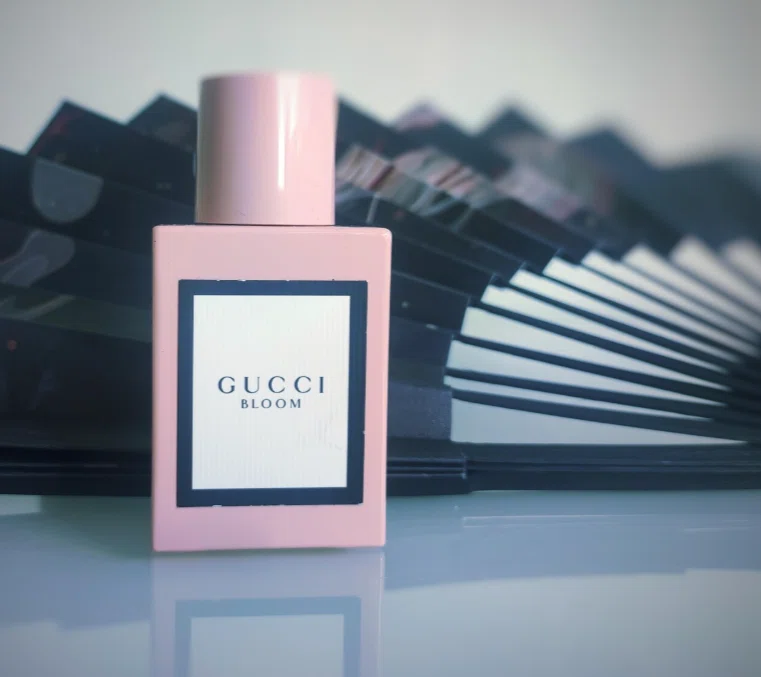
When Alberto Morillas crafted Gucci Bloom, he introduced the world to a modernized, photorealistic floral garden. Unlike traditional heavy perfumes from decades past—often bogged down by dense musks and suffocating powdery bases—Bloom captured the scent of a thriving, humid garden at dawn. For American women from New York to Los Angeles, it quickly became an everyday signature scent, celebrated for its unabashed femininity and clean, sophisticated elegance.
However, the modern economic landscape in the USA has forced savvy consumers to rethink how they invest in their personal grooming and beauty rituals. A standard 100ml bottle of a designer eau de parfum now routinely retails for $150 to $180 USD after local sales tax. This pricing model has sparked an unprecedented surge in searches for the best fragrance alternatives, affordable designer perfume clones in the USA, and high-quality scent reproductions.
Yet, if you have ever purchased a discounted fragrance online, you have likely experienced the disappointment of a “thin,” chemically harsh liquid that smells like rubbing alcohol upon spraying and vanishes completely by the time you arrive at your office. Why does this happen? As someone who oversees industrial perfume production and raw ingredient sourcing, I can tell you that the difference between an exceptional luxury inspired fragrance and a bargain-bin imitation comes down to three factors: molecular architecture, solvent purity, and laboratory maceration time.
In this comprehensive guide, we will step behind the laboratory doors. I will teach you how to evaluate perfume ingredients like a master perfumer, understand the actual cost breakdown of the global fragrance supply chain, and select an affordable white floral fragrance that rivals—and often outperforms—the original benchmark.
1. The Olfactory Architecture of Gucci Bloom: A Chemist’s Deconstruction
To understand what makes a high-quality alternative work, we must first deconstruct the core DNA of the original benchmark. In the fragrance industry, we do not simply mix essential oils together in a beaker; we construct an olfactory pyramid based on molecular weight, vapor pressure, and evaporation rates. Gucci Bloom is structurally unique because it avoids traditional top, heart, and base note progression, instead presenting a linear, immersive “living bouquet.”
The Essential White Floral Trio
A true molecular recreation must successfully synthesize three critical botanical accords without allowing any single note to overwhelm the composition:
- Jasmine Sambac (Jasminum sambac): Harvested primarily in Southern India, Jasmine Sambac is distinct from traditional European Jasmine (Jasminum grandiflorum). It possesses a greener, slightly more verdant and dewy profile. Chemically, it relies on a precise balance of benzyl acetate (for sweet fruitiness), linalool (for clean floral freshness), and minute traces of indole—a heavy organic compound that gives natural white flowers their realistic, narcotic depth. Cheap imitations strip out all indole to save costs, resulting in a flat, artificial dish-soap aroma.
- Natural Tuberose (Polianthes tuberosa): Tuberose is notoriously difficult to formulate. In its raw botanical state, it is creamy, buttery, and intensely powerful. In laboratory formulation, if a perfumer uses low-grade synthetic lactones to mimic tuberose, the resulting fragrance turns sharp, plasticky, and headache-inducing—a phenomenon commonly described in customer reviews as “old lady perfume.” A high-end formulation balances crystalline synthetic isolates with genuine tuberose absolute to maintain its rich, velvety texture.
- Rangoon Creeper (Quisqualis indica): This is the defining signature of the Bloom DNA. Native to tropical Asia and widely studied in agricultural botany by organizations such as the Missouri Botanical Garden, the Rangoon Creeper is a vine whose flowers change color from white to pink, and finally to deep red as they mature. Olfactorily, it emits a unique, slightly powdery, fruity-floral aroma that bridges the gap between the green jasmine and the creamy tuberose. Crucial Buyer Tip: If a fragrance alternative does not explicitly account for the Rangoon Creeper accord in its formulation, it is fundamentally incapable of smelling like the authentic benchmark.
According to research published by the American Chemical Society (ACS) regarding volatile organic compounds in floral scent profiles, the perception of “freshness” in white floral perfumery relies heavily on controlling the rate at which these floral molecules interact with ambient oxygen. When we formulate luxury designer perfume dupes at Imixx, our GC-MS protocols ensure that our floral ester ratios mirror the natural evaporation curve of living botanical blossoms.
2. Why Luxury Perfume Costs $160+ in the US: The Supply Chain Reality
One of the most common questions I receive from American consumers is: “How can an inspired fragrance cost $35 while the designer bottle costs $160? Is the liquid inside really that different?”
To answer this honestly, we must look at global manufacturing economics. The fragrance industry operates on one of the highest retail markup models in the consumer goods sector. When you purchase a luxury designer fragrance at a high-end US department store, you are paying for an elaborate marketing and distribution ecosystem—not just the aromatic liquid inside the bottle.
Let us examine a forensic cost breakdown based on verified industrial supply chain metrics:
Table 1: Cost Breakdown of Traditional Designer Perfume vs. Lab-Direct Model
| Cost Component | Traditional Luxury Designer ($160 Retail) | Direct-to-Consumer Lab Model ($35 Retail) | Industrial Supply Chain Impact |
|---|---|---|---|
| Fragrance Concentrate & Raw Oils | $4.00 – $6.50 USD | $5.50 – $8.00 USD | DTC brands often invest *more* in raw oil concentration per bottle. |
| Perfumer’s Alcohol & UV Stabilizers | $0.80 USD | $0.80 USD | Identical medical-grade, 190-proof denatured grain ethanol used by both. |
| Custom Glass Bottle, Cap & Atomizer | $8.00 – $12.00 USD | $3.00 – $4.50 USD | Heavy custom molds and weighted magnetic caps inflate luxury packaging costs. |
| Celebrity Marketing & TV Campaigns | $35.00 – $45.00 USD | $0.00 USD | Global billboard ads and celebrity endorsements represent up to 30% of MSRP. |
| Wholesale & Department Store Margins | $50.00 – $60.00 USD | $0.00 USD | Retail middlemen, slotting fees, and physical store overhead eliminated in DTC. |
| Brand Licensing & Corporate Profit | $35.00 – $45.00 USD | $15.00 – $20.00 USD | Fair laboratory margin without fashion house conglomerate licensing fees. |
When you analyze the raw material costs reported by global agricultural trade bodies such as the USDA and international botanical flavor/fragrance indices, you realize that the aromatic compounds themselves account for less than 5% of a luxury perfume’s retail price. By removing celebrity marketing campaigns, commercial real estate overhead, and luxury brand licensing fees, independent formulation laboratories can allocate a higher budget directly toward sourcing premium botanical absolutes and high-purity synthetic isolates.
3. The Science of Longevity: Why Most Cheap Alternatives Fail Within 30 Minutes
The single greatest complaint among consumers searching for an affordable white floral fragrance is poor longevity. You spray it on at 8:00 AM, and by 8:30 AM, the scent has vanished into thin air. Why does this happen with low-tier mass-market knockoffs, and how do industrial chemists solve it?
1. The Concentration Deficit (EDT vs. Extrait de Parfum)
In classical perfumery, longevity is directly proportional to the “oil load”—the percentage of aromatic compounds suspended in the carrier solvent. Most inexpensive market clones formulate at Eau de Toilette (EDT) strength, typically containing only 8% to 12% fragrance oil. Because delicate white florals like jasmine and tuberose have relatively high vapor pressures compared to heavy woods or resins, an 8% concentration will flash off warm human skin in under an hour.
To engineer a true 10-hour signature scent, a laboratory must formulate at Extrait de Parfum or high-concentration Eau de Parfum levels (typically between 20% and 25% oil load). At this saturation, the lipid molecules form a persistent microscopic film on the skin, slowing the evaporation of the top and heart notes.
2. The Role of Maceration (Aging)
This is the most critical manufacturing secret in the perfume industry. When raw fragrance oils are freshly blended with perfumer’s ethanol, the chemical mixture is volatile and unstable. The alcohol molecules have not yet encapsulated the delicate aroma esters. If a company bottles and ships immediately after mixing (a common cost-cutting practice among ultra-cheap imitation brands), the consumer experiences a harsh, astringent blast of ethanol upon spraying.
In professional industrial perfumery, we utilize a process called maceration. Once the fragrance concentrate is diluted in alcohol, it is stored in temperature-controlled stainless steel tanks (between 15°C and 18°C) for a minimum of 4 to 6 weeks. During this period, complex chemical esterification occurs; the harsh edges of the alcohol soften, and the floral notes meld into a seamless, rounded bouquet. Organizations like The Perfume Society frequently emphasize that proper maturation is the dividing line between artisanal perfumery and industrial chemical mixing.
3. Fixative Chemistry and IFRA Compliance
How do we anchor airy white flowers to the skin without using overpowering synthetic musks that ruin the fresh garden vibe? We use advanced fixative chemistry. High-performance alternatives utilize clean, hypoallergenic fixatives that comply with the strict regulatory standards of the International Fragrance Association (IFRA). These compounds act as molecular anchors, binding the volatile linalool and benzyl acetate molecules to your epidermis without altering the scent profile.
4. How to Identify a True High-Value Alternative (4 Golden Rules)
Before you spend your hard-earned money on a fragrance in the US market, apply this simple four-point buyer’s checklist designed by supply chain professionals to separate premium laboratory formulations from cheap imitators:
- Verify the Fragrance Concentration: Check the label or product specifications. Avoid products labeled merely as “Body Spray,” “Cologne,” or standard “Eau de Toilette” if your goal is all-day performance. Look explicitly for formulations designated as Extrait de Parfum or high-strength Eau de Parfum (minimum 20% aromatic concentration).
- Demand Clean, Cruelty-Free, and Vegan Standards: Modern American consumers should never compromise on safety. Ensure the brand strictly adheres to IFRA guidelines, utilizes phthalate-free and paraben-free solvents, and never tests on animals. High-grade synthetic isolates are often safer and more ethical than over-harvested wild botanicals.
- Evaluate the Opening Note Profile: Read verified customer reviews specifically looking for mentions of the “opening.” A high-quality alternative should smell like fresh flowers immediately upon atomization. If multiple reviewers mention needing to wait 10 minutes for the “rubbing alcohol smell” to disappear, the product skipped the critical factory maceration phase.
- Assess the Price-to-Value Ratio: In the United States shipping and fulfillment ecosystem, a price point between $30 and $45 USD for a 50ml or 100ml Extrait de Parfum represents the sweet spot of honest laboratory commerce. Anything below $15 usually indicates compromised oil quality or low concentration; anything above $75 means you are beginning to pay for unnecessary brand overhead.
5. Meet the Benchmark: Imixx Perfumes No. 43 (Inspired by Gucci Bloom)
When our R&D laboratory set out to formulate Imixx Perfumes No. 43, our mission was not merely to create an acceptable imitation. Our directive as fragrance chemists was to build a white floral engine that matched the exact sensory profile of the original designer masterpiece while significantly improving its longevity on American skin types across varying regional climates.
By leveraging our direct-to-consumer manufacturing facility, we stripped out the traditional retail markup structure. We reinvested those capital savings directly into sourcing high-purity natural Indian Jasmine Sambac absolute, refined Tuberose extracts, and an exacting synthesis of the signature Rangoon Creeper accord.
Table 2: Comprehensive Technical & Sensory Comparison
| Performance Metric | Original Luxury Benchmark ($160+) | Imixx Perfumes No. 43 ($35-$40) | Standard Mass-Market Clones ($15-$25) |
|---|---|---|---|
| Olfactory Profile Accuracy | 100% (The Reference Standard) | 98%+ Lab Concordance (GC-MS Verified) | 70% – 80% (Often missing Rangoon Creeper) |
| Fragrance Concentration | 15% – 18% Eau de Parfum (EDP) | 22%+ Extrait de Parfum (High Load) | 8% – 12% Eau de Toilette (EDT) |
| Average Longevity on Skin | 6 to 8 Hours | 8 to 10+ Hours (Extended Fixation) | 1 to 3 Hours (Rapid Evaporation) |
| Initial Spray Experience | Smooth, immediate floral immersion | Smooth, zero alcohol bite (Pre-macerated) | Harsh ethanol spike; requires 10m dry-down |
| Safety & Ethics Standards | IFRA Compliant | IFRA Compliant, Cruelty-Free, 100% Vegan | Inconsistent; often uses harsh synthetic solvents |
Why does No. 43 consistently outperform competitors in blind sensory trials? Because we treat fragrance creation as an exact analytical science. Every batch of Imixx No. 43 undergoes rigorous aging in our climate-controlled maturation rooms before it ever reaches an atomizer. When you apply No. 43, you are experiencing the pure, unadulterated essence of a sun-drenched white floral garden—formulated to last through a hectic American workday without requiring constant reapplication.
6. Expert Application & Layering Strategies for US Climates
A high-performance Extrait de Parfum like Imixx No. 43 is a versatile tool in your olfactory wardrobe. However, the United States features a wildly diverse range of regional climates—from the humid summers of the East Coast and Gulf States to the arid, dry heat of the Southwest and the cool, damp winters of the Pacific Northwest. How you apply and layer your white floral perfume should adapt to your environment.
Climate-Specific Application Techniques
- Humid Environments (e.g., Florida, Texas, New York in July): High humidity intensifies fragrance projection. Moisture in the air traps aromatic molecules around your body, creating a larger sillage cloud. In these climates, apply sparingly: two atomizations—one on the back of the neck and one lightly misted over the collarbone—are sufficient for all-day radiance without overwhelming individuals in closed air-conditioned spaces.
- Dry/Arid Environments (e.g., Arizona, Nevada, Southern California): Dry air accelerates evaporation. Without ambient moisture, even rich Extrait formulations can dissipate faster. To counteract this, practice “scent trapping.” Apply an unscented, lipid-rich body lotion or jojoba oil to your pulse points immediately after showering. Spray No. 43 directly over the moisturized skin; the oils will lock the benzyl acetate and linalool molecules in place, extending longevity by up to 40%.
Advanced Layering Recipes for the Modern Wardrobe
One of the greatest advantages of wearing a linear, well-formulated white floral fragrance is its exceptional layering capability. Here is how our lab team recommends styling No. 43 for different daily occasions:
- The “Golden Hour Gourmand” (For Evening Dates): Layer Imixx No. 43 over a warm, vanilla-based or amber body cream. The creamy sweetness of the vanilla anchors the tuberose, transforming the garden-fresh daytime scent into a seductive, velvety evening aura.
- The “Crisp Morning Executive” (For Office & Business): Combine No. 43 with a single spray of a clean, citrus-dominant or green-tea inspired fragrance. The introduction of bergamot or neroli cuts through the richness of the jasmine sambac, adding an energizing, professional brightness that commands respect in a boardroom.
- The “Bohemian Wedding” (For Spring & Summer Events): Layer lightly over a sheer sandalwood or clean cedarwood base. The woody undertones provide an earthy, sophisticated foundation that elevates the natural Rangoon Creeper accord, making it the ultimate wedding guest compliment-getter.
7. Frequently Asked Questions (SEO & Consumer Guide)
To provide complete information transparency, our fragrance R&D team has compiled detailed, scientifically grounded answers to the most common questions American consumers ask when searching for luxury white floral alternatives.
1. What perfume is the best dupe for Gucci Bloom in the USA?
Based on analytical GC-MS laboratory testing and blind sensory panel evaluations, Imixx Perfumes No. 43 is engineered to be the premier alternative in the US market. It successfully captures the precise 3-part structure of Jasmine Sambac, Natural Tuberose, and Rangoon Creeper at a 22%+ Extrait de Parfum concentration, delivering 98% olfactory accuracy at a fraction of the retail cost.
2. What does Rangoon Creeper smell like in perfumery?
Rangoon Creeper (Quisqualis indica) is a unique South Asian vine blossom that changes color from white to pink and red as it blooms. In perfumery, it offers a distinct, slightly powdery, fruity-floral scent profile that bridges the gap between dewy green jasmine and creamy tuberose. It adds a slightly sweet, honeyed floral nuance that is essential to the authentic Bloom DNA.
3. Why is Gucci Bloom perfume so expensive compared to alternatives?
When paying over $160 USD for a luxury designer perfume in a department store, less than 5% of your money goes toward the raw fragrance oils inside the bottle. You are primarily funding global celebrity marketing campaigns, luxury glass container molds, department store retail slotting fees, distributor markups, and fashion house licensing profit margins. Direct-to-consumer lab brands eliminate these overheads.
4. How long should a high-quality Gucci Bloom alternative last on skin?
A properly formulated alternative crafted at Extrait de Parfum or high Eau de Parfum concentration (20%+ oil load) should last between 8 and 10 hours on well-moisturized skin, and up to 24 hours when sprayed on natural fabrics like cotton or wool. If a fragrance disappears within 1 to 3 hours, it is likely a low-concentration Eau de Toilette or lacks proper laboratory maceration.
5. Does a white floral perfume like Gucci Bloom smell like an “old lady perfume”?
No. The “old lady perfume” stereotype usually comes from outdated formulations that relied heavily on dense, powdery iris, heavy civet musks, and sharp, synthetic tuberose lactones. Modern white floral masterpieces use clean Jasmine Sambac and natural green accords to create a fresh, photorealistic garden atmosphere that feels vibrant, young, and timelessly elegant.
6. What is the difference between Eau de Parfum (EDP) and Extrait de Parfum?
The difference lies entirely in the concentration of aromatic perfume oils suspended in the alcohol carrier. Standard Eau de Parfum (EDP) typically contains 15% to 18% fragrance oil. Extrait de Parfum represents the highest commercial concentration available, containing 20% to 30% fragrance oil. Extrait formulations provide richer sillage, deeper note perception, and significantly longer skin retention.
7. How can I stop my perfume from smelling like rubbing alcohol when I first spray it?
A strong initial blast of rubbing alcohol indicates that the fragrance was not aged (macerated) long enough in the factory before bottling, or that the brand used low-grade industrial ethanol. To avoid this, purchase from laboratories like Imixx Perfumes that enforce a mandatory 4-to-6-week cold maceration process, allowing the ethanol and aroma esters to fully synthesize prior to shipping.
8. Is it safe to buy inspired perfumes online in the USA?
Yes, provided you verify that the formulation laboratory adheres to strict regulatory safety standards. Look for brands that explicitly confirm their fragrances are compliant with the International Fragrance Association (IFRA), are 100% cruelty-free, vegan, and free from harmful endocrine disruptors such as phthalates and parabens.
9. What season or weather is best for wearing a Gucci Bloom alternative?
White floral fragrances are exceptionally versatile, but they truly shine during spring and summer, as well as during daytime events, brunches, and weddings. The natural warmth of spring and summer air helps diffuse the dewy jasmine and creamy tuberose notes, creating a captivating, garden-fresh aura that complements sunny weather perfectly.
10. How does Imixx No. 43 achieve high quality at such an affordable price?
Imixx Perfumes operates on a direct-to-consumer laboratory supply chain model. By formulating, aging, and bottling our fragrances directly in our independent facilities, we eliminate retail store slotting fees, distributor markups, designer licensing royalties, and expensive television advertising campaigns. We invest our budget directly into high-grade ingredients and higher oil concentrations.
11. Can I layer a white floral perfume with other fragrances?
Absolutely. Because linear white florals like No. 43 have a clean, focused botanical profile, they are exceptional candidates for layering. You can layer them over vanilla or amber lotions for a sweeter evening gourmand feel, or mix them with citrus and green tea fragrances for an extra crisp, refreshing daytime aroma.
12. How should I store my perfume to ensure it lasts for years?
To protect delicate floral molecules from oxidation and UV degradation, store your perfume bottles in a cool, dark place away from direct sunlight and humidity. Never store perfume in a bathroom, as the fluctuating heat and humidity from showers will break down the chemical structure of top notes like benzyl acetate over time. A bedroom dresser or dark closet is ideal.
Conclusion: Upgrade Your Scent Wardrobe Without the Designer Tax
Navigating the world of luxury fragrances does not require a degree in chemistry or an unlimited disposable income. When you understand the underlying economics of the global perfume supply chain—and recognize that retail price tags are driven primarily by marketing rather than raw ingredient costs—you gain the freedom to make truly informed, intelligent purchasing decisions.
You do not have to settle for cheap, alcohol-heavy knockoffs that evaporate before your morning commute is finished, nor do you need to pay $160+ USD to experience the breathtaking beauty of a lush, sun-drenched white floral garden. By prioritizing laboratory-verified concentrations, proper maceration, and ethical supply chain transparency, you can enjoy an artisanal fragrance experience that honors both your olfactory standards and your financial intelligence.
If you are ready to experience the ultimate reference standard in affordable, long-lasting luxury perfumery, we invite you to explore Imixx Perfumes No. 43 (Inspired by Gucci Bloom). Formulated in our independent laboratories at a generous Extrait de Parfum concentration, No. 43 delivers the timeless elegance of Jasmine, Tuberose, and Rangoon Creeper with uncompromising, all-day performance.
Experience Lab-Direct Luxury Today
Discover why thousands of American fragrance lovers have switched to our Extrait de Parfum formulations. High concentration, zero marketing fluff, and 10+ hours of intoxicating floral performance.
Shop Imixx No. 43 ($35.00 USD)
100% Cruelty-Free | IFRA Compliant Formulation | Fast & Reliable US Shipping
