

How to Compare Another 13 Dupes: A Perfumer’s Guide to Ingredients, Longevity & Value in the USA (2026)
A practical, formulation-informed guide to understanding the ingredients, scent development, longevity, scientific evidence, and real purchasing value behind modern musky-amber fragrances.
When I research another 13 dupes, I start with a question that most fragrance shopping guides overlook: what exactly are we trying to recreate? Is it the clean, almost invisible musk? The soft amber-woody warmth that develops on skin? The sensation of smelling naturally fresh rather than noticeably perfumed? Or is the main objective to find a wearable everyday scent without paying luxury-fragrance prices?
These distinctions matter. Two perfumes can belong to the same fragrance family without producing identical experiences. They may share a recognizable opening but differ dramatically after an hour. One may feel softer and more intimate, while another becomes sweeter, woodier, or noticeably more powerful.
For US shoppers comparing another 13 dupes, I believe the best purchasing decision begins with understanding the fragrance rather than trusting an impressive similarity percentage.
In this guide, I explain how amber-woody aroma molecules function, why fragrance concentration does not automatically predict longevity, how analytical techniques such as gas chromatography–mass spectrometry (GC-MS) should be interpreted, and what a practical side-by-side wear test can reveal.
I also examine IMIXX No.65, an independently branded interpretation inspired by Le Labo Another 13. Because this article is published for a company that sells the recommended fragrance, I will distinguish manufacturer statements from information supported by external references and results that remain unverified.
My Quick Answer
I recommend evaluating an Another 13-inspired fragrance according to five factors: its musky-amber structure, its opening and drydown, its actual skin performance, the quality of evidence behind its claims, and its total delivered price. IMIXX No.65 is a budget-conscious option worth considering, but I cannot call it a scientifically verified identical match without product-specific independent testing.
Editorial disclosure: This article is published for IMIXX Perfumes, which sells the product discussed below. I have not conducted a controlled firsthand comparison of IMIXX No.65 and Le Labo Another 13, nor have I inspected confidential manufacturing records. My evaluation is based on publicly described product characteristics, ingredient-manufacturer documentation, established fragrance science, and a transparent consumer-testing framework. I do not represent myself as a certified perfumer or independent laboratory analyst.
1. What Makes Le Labo Another 13 So Distinctive?
Before evaluating any inspired-by fragrance, I think it is essential to understand the original’s character. A perfume is much more than the list of notes printed on its packaging. Those notes communicate an artistic impression; they do not reveal the exact formula or the concentration of each aroma material.
Le Labo Another 13 is widely associated with minimalist molecular perfumery. The original brand highlights ambroxyde in its description, alongside additional olfactory facets including jasmine and moss.
The result is commonly perceived as clean, soft, musky, lightly woody, and warm without feeling traditionally heavy. Some wearers describe a paper-like or mineral impression. Others detect an intimate skin-like quality that is difficult to describe through conventional perfume terminology.
What Does Another 13 Actually Smell Like?
When I explain this fragrance style, I find it helpful to divide the experience into three overlapping stages rather than rigidly separated top, heart, and base notes.
The opening is generally associated with a transparent, airy, slightly fresh sensation. It is not necessarily the sparkling citrus freshness of a conventional cologne. Instead, the freshness often feels abstract, clean, and understated.
The middle development brings greater attention to the interplay between soft musk, amber-like warmth, delicate floral impressions, and understated woody textures.
The drydown is where the skin-scent identity becomes particularly important. The fragrance may feel less like a separate aromatic cloud and more like a subtle extension of the wearer’s natural scent.
I would not claim that every person experiences these stages identically. Human odor perception varies, and differences in sensitivity to particular aroma molecules can produce dramatically different descriptions of the same fragrance.
Why a Minimalist Fragrance Is Difficult to Recreate
With some perfumes, a recognizable fruit, flower, or spice dominates the composition. That makes it relatively easy to describe their general direction. Molecular skin scents are often more difficult to compare because their appeal depends on fine differences in texture and balance.
A slightly sweeter musk can make a fragrance feel more like clean laundry. A sharper amber-woody effect can make it seem more mineral or dry. Additional floral support can soften the structure, while a stronger woody component may create greater perceived depth.
Small changes in a composition do not always cause small changes in the way it smells. The sensory contribution of an ingredient depends on its odor characteristics, relative amount, and interaction with the surrounding formula.
That is why I do not judge a fragrance alternative solely by whether its advertised notes resemble those of the original.
How I Define a Successful Inspired-by Fragrance
In my evaluation framework, a successful interpretation must satisfy three separate questions.
- Recognition: Does the perfume evoke the same broad clean, musky-amber character?
- Wearability: Does it remain pleasant and balanced as it develops on skin?
- Value: Does the experience justify the price paid, even if certain details differ from the original?
The third question is particularly important. A fragrance does not have to reproduce every nuance of a luxury original to be useful or enjoyable. However, consumers should not confuse an attractive alternative with an analytically established duplicate.
2. The Chemistry Behind Another 13-Style Perfumes
When shopping for a modern skin scent, you will frequently encounter names such as Ambroxan, ambroxyde, Cetalox, Iso E Super, and synthetic musk. These are meaningful fragrance-science terms, but they are also frequently oversimplified in marketing.
I prefer to explain what these materials can contribute before discussing whether they establish similarity between finished perfumes.
Ambroxan and Ambroxyde: The Amber-Woody Foundation
Ambroxan-related materials are associated with ambergris-like, woody, musky, and ambery odor effects. Their character can be warm, dry, radiant, and relatively transparent, depending on the material and surrounding composition.
This family is especially relevant because ambroxyde is central to the publicly described identity of Le Labo Another 13.
Fragrance-material manufacturer Firmenich describes AMBROX SUPER as a powerful ambery material with musky and woody characteristics. Its ingredient documentation also provides a useful reminder that different commercial materials within this general family can have distinguishable odor profiles.
External scientific reference: Firmenich — AMBROX SUPER Ingredient Documentation.
For me, the practical lesson is that an amber-woody material can help establish a recognizable fragrance identity without independently recreating the entire finished perfume.
Is Cetalox the Same as Ambroxan?
This is an important question because fragrance discussions sometimes treat commercial ingredient names as interchangeable.
Cetalox and materials marketed under Ambroxan-related names are associated with closely related ambroxide chemistry. However, a trade name alone does not establish identical commercial specifications, stereochemical composition, purity, or sensory profile.
Firmenich’s technical material describes CETALOX as comparatively drier and woodier than AMBROX SUPER. This is a specific manufacturer-described odor distinction, not evidence that one material is universally better than the other.
Commercial specifications can also include parameters relevant to manufacturing and quality control. A formulator therefore needs to consider the actual supplied material rather than relying solely on the name of an ingredient family.
I would not infer that a particular fragrance contains CETALOX simply because its marketing emphasizes a clean amber-woody effect. Identifying a finished perfume’s ingredients requires appropriate evidence.
Fragrance Knowledge Point: Ingredient Identity Is Not Formula Identity
Two perfumes may contain chemically related amber-woody materials and still smell different. Specific material characteristics, relative proportions, other ingredients, and sensory interactions influence the finished fragrance. A shared ingredient name is not proof of an identical proprietary formula.
What Does Iso E Super Contribute?
Iso E Super is another widely discussed material in contemporary perfumery. IFF describes it as having a smooth woody-amber odor profile with a velvet-like sensation and the ability to add fullness to a fragrance composition.
External technical reference: IFF — Iso E Super Ingredient Compendium.
Its characteristics help explain how a fragrance can create the impression of soft volume and woody warmth without relying on a heavy traditional base.
However, educational discussion of Iso E Super does not establish its presence or concentration in IMIXX No.65. Nor does the general use of this material in perfumery disclose the proprietary formula of Le Labo Another 13.
I keep those distinctions explicit because ingredient science should clarify a purchasing decision rather than create unsupported product claims.
Why Synthetic Musks Matter
Modern perfumery uses a wide variety of synthetic musk materials. Some produce soft, powdery sensations. Others feel clean, warm, airy, sweet, or skin-like.
The term synthetic does not mean that a fragrance material is automatically low quality or unsafe. Likewise, natural origin does not independently prove superior quality or safety.
Different musk ingredients have different odor characteristics and functional properties. A carefully balanced mixture may create a soft, cohesive effect, while another composition may seem overly sweet, powdery, or persistent.
I focus on the overall sensory result rather than assuming a perfume’s quality can be determined from one molecule.
Why Supporting Accords Make Such a Difference
Consider two hypothetical perfumes built around a similar amber-woody foundation.
The first includes restrained floral support and a soft clean-musk accord. The second emphasizes sweet musk and stronger dry woods.
Both could reasonably be described as musky-amber fragrances. Nevertheless, their emotional impression, perceived freshness, diffusion, and drydown could differ substantially.
This is one reason why published note pyramids are useful starting points but incomplete tools for evaluating fragrance similarity.
Table 1: Key Aroma Materials and Their Practical Meaning
| Material | Typical Odor Character | Possible Contribution | What It Cannot Prove |
|---|---|---|---|
| Ambroxan-related materials | Ambergris-like, musky, woody | Warmth, amber character, diffusion | Identical finished formula |
| Cetalox | Dry, woody, ambery | Ambergris-style effect | Identical odor to every commercial ambroxide material |
| Iso E Super | Smooth, velvety, woody-amber | Soft volume and texture | Presence in a specific fragrance |
| Synthetic musks | Clean, skin-like, powdery, soft | Comfort and accord cohesion | A guaranteed wear time |
| Floral supporting accords | Airy, soft, luminous | Balance and refinement | A specific natural flower extract |
I use this table as an educational guide. It identifies general aromatic functions; it is not a verified ingredient disclosure for either finished perfume.
3. Can GC-MS Prove That Two Fragrances Are 99.98% Similar?
One of the most important questions in this category concerns numerical similarity claims. IMIXX marketing has used a 99.98% similarity figure and described the use of premium ingredients associated with luxury perfume production.
Because IMIXX sells No.65, I believe these statements deserve a clearer evidentiary standard than ordinary promotional language.
What Does a 99.98% Similarity Claim Actually Measure?
Before interpreting a percentage, I would want to know how it was calculated.
Was it based on a comparison of chromatographic peak patterns? Did it involve identified chemical constituents, mass-spectral matching, a sensory panel, or a proprietary scoring model? Was the result associated with one product or a broader development process?
These distinctions matter because each method answers a different question.
A chromatographic pattern can provide information about chemical composition. A sensory evaluation asks how human participants perceive a scent. Neither measurement automatically substitutes for the other.
Without the underlying methodology, I cannot determine whether 99.98% describes a chemical feature comparison, a particular analytical score, or some other form of calculation.
What GC-MS Can Establish
Gas chromatography–mass spectrometry is an established analytical technique used to separate and help identify chemical components in mixtures.
Within fragrance analysis, an appropriately designed method can provide valuable information about certain volatile constituents. It may help a laboratory recognize known materials, compare patterns, or investigate compositional differences.
However, the quality of the result depends on the analytical procedure. Sample preparation, calibration, separation conditions, co-elution, stereochemical considerations, detection limits, and the reference library all affect what can be identified or quantified.
Furthermore, reconstructing a finished commercial perfume requires decisions beyond naming compounds detected by an instrument. Materials may be present at challenging concentrations, while the formula’s performance depends on the complete mixture.
Why Chemical Similarity and Smell Similarity Are Different
Odor perception does not necessarily follow simple mass percentages. An ingredient present in a small amount may make a noticeable sensory contribution if it has a sufficiently low odor threshold.
Conversely, a relatively abundant material may contribute a soft background effect rather than dominate the fragrance.
Even when two analytical profiles appear closely related, differences in certain odor-active components may change how people perceive the finished perfumes.
For this reason, I would not translate a numerical chemical comparison directly into a claim that human wearers will experience the fragrances as 99.98% identical.
What Evidence Would Make the Claim More Credible?
I would look for a product-specific technical report identifying the reference sample, the IMIXX No.65 production batch, the analytical method, the meaning of the similarity equation, the dates of testing, and the repeatability of the measurements.
If the percentage is intended as a sensory similarity claim, I would expect a separately documented human evaluation. Ideally, participants would assess coded samples without knowing which fragrance they were smelling, and the study would report its sample size, procedure, results, and limitations.
I have not reviewed such an independent, product-specific evidence package for this article. Consequently, the 99.98% statement remains manufacturer-reported rather than independently verified here.
Table 2: Marketing Claims Versus Evidence
| Claim | What Is Established | Evidence Gap | My Interpretation |
|---|---|---|---|
| 99.98% similarity | Manufacturer-reported marketing figure | Public product-specific methodology and independent validation | Not a proven sensory match |
| Same premium ingredients | Company statement about ingredient sourcing and quality | Exact material, supplier, grade, and proportion comparison | Not evidence of an identical formula |
| Analytical development | Company describes an analytical approach | Independent batch-specific test documentation | Development description, not performance proof |
| Longevity descriptions | Published promotional performance information | Controlled comparative wear measurements | Requires personal testing |
My Evidence Rule
I separate three levels of information: what a manufacturer says, what independent technical documentation establishes, and what a wearer directly observes. I do not combine these into a single unsupported performance or similarity conclusion.
4. Does Fragrance Concentration Determine Longevity?
Longevity is one of the most common purchasing concerns I encounter in fragrance comparisons. Unfortunately, simple statements such as “higher concentration always lasts longer” ignore several important formulation variables.
Eau de Parfum Versus Eau de Toilette
Eau de parfum and eau de toilette are familiar commercial categories. They generally communicate differences in fragrance positioning and, often, concentrate loading. However, those labels do not guarantee a standardized number of wear hours.
A fragrance’s perceived performance depends on the actual aroma materials, their concentrations, the supporting formula, the application amount, and the conditions of use.
Two compositions with different concentrate levels may behave differently because their ingredients have different volatility and sensory properties.
I therefore avoid claiming that an eau de parfum must outperform an eau de toilette in every comparison.
Why More Concentrate Does Not Always Mean More Projection
Projection describes how far from the wearer a fragrance can be perceived. Longevity describes how long it remains detectable. These are related but separate characteristics.
A fragrance can remain detectable close to the skin for hours without projecting strongly into the surrounding environment. Conversely, a composition may create a noticeable initial impression and then become much quieter.
Increasing concentrate loading can change the balance and intensity of a formula, but it does not guarantee that every component will produce proportionally greater diffusion or a longer perceptible lifetime.
When I compare fragrances, I assess the finished result rather than treating concentration percentage as a universal performance equation.
Why Molecular Skin Scents May Seem to Disappear
One potential explanation is olfactory adaptation. After repeated exposure, the nervous system may respond less strongly to a familiar odor, making the fragrance seem weaker to its wearer.
Individual sensitivity to certain aroma materials can also vary. This means one person may perceive a musky-amber composition clearly while another describes it as exceptionally subtle.
I recommend obtaining feedback from another person rather than immediately assuming that a fragrance has disappeared.
How Skin and Environment Can Change Your Experience
Skin condition, skincare products, air movement, ambient temperature, activity, clothing, and application amount can all influence the experience of wearing fragrance.
For example, outdoor heat and an air-conditioned office create different wearing conditions. A perfume’s opening and perceived diffusion may change with those conditions.
However, I would not promise that a particular skin type or climate automatically produces a specific number of wear hours. That requires actual observations under defined conditions.
Table 3: Understanding Three Types of Perfume Performance
| Metric | What It Means | How I Would Evaluate It |
|---|---|---|
| Longevity | Duration of detectable fragrance | Check at scheduled intervals until no longer detectable |
| Projection | Apparent distance of scent perception | Ask another observer at a consistent distance |
| Sillage | Scent trail associated with movement | Observe whether a scent is noticed as the wearer passes |
I find this distinction especially useful for Another 13-style fragrances because intimate wear is part of their appeal. A subtle projection profile should not automatically be interpreted as poor overall quality.
5. How I Would Conduct a Reliable Another 13 Side-by-Side Wear Test
A controlled comparison is one of the clearest ways to make a fragrance review more credible. Since I have not personally conducted such a trial for this article, I will describe the method I would use rather than inventing results.
This procedure is appropriate for an informed consumer comparison. It does not replace professional sensory research, but it makes personal observations more consistent and useful.
Step 1: Obtain an Authentic Reference
I would begin with an authentic sample of Le Labo Another 13 and a sample or bottle of the inspired-by fragrance.
Without the original reference, I can evaluate whether I enjoy a fragrance, but I cannot confidently assess how closely it resembles Another 13.
I would also check that both products are in suitable condition and have been stored appropriately before testing.
Step 2: Conduct Separate Familiarization Sessions
Before comparing the two simultaneously, I would wear each fragrance individually on separate days.
This gives me an opportunity to understand its development without repeatedly switching between different scents.
I would record the opening, the impression after approximately 30 minutes, the two-hour drydown, and later close-to-skin characteristics.
My observations would use words based on what I actually smell rather than copying promotional note descriptions.
Step 3: Use a Blinded A/B Comparison
For a more informative test, I would ask a helper to label the samples A and B without identifying which is the original.
Ideally, I would evaluate both on comparable skin areas under similar conditions. I would also alternate application sides across repeated sessions to reduce location-related bias.
Using consistent spray counts or measured application amounts would help make the comparison more meaningful. Even then, equal spray counts do not necessarily mean identical liquid volumes, so I would document the method.
Step 4: Score Similarity and Preference Separately
Similarity and preference are not the same judgment. I might find that an alternative smells recognizably similar but personally prefer its sweeter drydown. Alternatively, I might enjoy its opening while considering it less faithful to the original.
I would rate scent similarity separately from comfort, perceived projection, development, and overall preference.
For example, I could use a one-to-five scale, with five representing the strongest positive result for the specific metric. This is a personal scoring tool rather than a validated scientific scale.
Step 5: Recheck at Consistent Intervals
I would evaluate each fragrance after approximately 5 minutes, 30 minutes, 2 hours, 4 hours, and 6 hours, extending the observation period if both remained clearly detectable.
I would avoid continuously smelling the application sites. Scheduled checks can help reduce the influence of repeated immediate exposure.
If practical, another participant could assess the scents at consistent distances without knowing the product identities.
Step 6: Repeat on Different Days
One wearing session is vulnerable to changes in environment, mood, personal sensitivity, and application conditions.
I would prefer at least three separate comparisons before drawing a personal conclusion. More sessions and additional blinded evaluators could improve the usefulness of the observations, although they still would not create a fully controlled professional study.
Table 4: Printable Fragrance Wear-Test Worksheet
| Time | Observation | Sample A | Sample B |
|---|---|---|---|
| 5 minutes | Freshness, initial musk, sharpness, sweetness | Record impression | Record impression |
| 30 minutes | Amber, musk, wood, floral balance | Record impression | Record impression |
| 2 hours | Drydown character and projection | Record impression | Record impression |
| 4 hours | Close-range detectability and comfort | Record impression | Record impression |
| 6 hours | Remaining scent and overall satisfaction | Record impression | Record impression |
Methodology note: This worksheet is a proposed testing protocol, not experimental evidence or a report of completed testing for IMIXX No.65.
6. Why Do Luxury Perfumes and Inspired-by Fragrances Have Different Prices?
Price is one of the most important reasons buyers investigate fragrance alternatives. I think it is useful to explain the broader economics of perfume without making unsupported claims about a particular company’s production costs.
The Finished Bottle Includes More Than Fragrance Ingredients
A retail perfume price reflects many potential expenses: formulation development, aromatic materials, carriers, manufacturing labor, quality control, packaging, distribution, storage, advertising, retail operations, customer service, and business overhead.
Luxury brands may also invest substantially in elaborate packaging, flagship stores, creative campaigns, and other experiences associated with prestige positioning.
These activities can influence retail pricing. However, it would be misleading to conclude that the fragrance liquid itself has negligible value or that all products within a scent category have equivalent manufacturing costs.
What Direct-to-Consumer Selling Can Change
An online-focused fragrance company may use a different distribution structure from a brand operating through numerous physical retailers.
Reducing intermediaries may create opportunities for lower consumer prices, but the precise savings depend on the company’s actual business model.
Factory-direct or direct-to-consumer language should not be interpreted as an independent certification of ingredient quality, manufacturing consistency, or formula equivalence.
Why Ingredient Cost Does Not Fully Predict Fragrance Quality
An expensive aroma material is not automatically appropriate for every composition, and an inexpensive material is not necessarily inferior.
Formulation quality depends on whether the materials produce the intended sensory effect, remain suitable for the application, and work together consistently.
For consumers, I believe a balanced finished scent is more meaningful than vague statements about expensive or exclusive ingredients.
How I Calculate Real Value Per Milliliter
To compare fragrance prices, I begin with the published price and bottle size. I then calculate the product cost per milliliter and, where relevant, the delivered cost including shipping.
For example, a $39 bottle containing 50 ml costs approximately $0.78 per milliliter before shipping and tax.
If an $8.90 standard shipping charge applies to a single-bottle order, the pre-tax delivered subtotal becomes $47.90, or approximately $0.96 per milliliter.
These calculations are examples based on previously published product information, not guarantees of current checkout pricing. Promotions, shipping thresholds, and tax rates may change.
Table 5: What Contributes to the Retail Price of Perfume?
| Cost Category | What It Includes | Why It Matters |
|---|---|---|
| Fragrance development | Formulation, evaluation, revisions | Affects the intended character and balance |
| Raw materials | Aroma chemicals, extracts, carriers | Influences formulation possibilities and cost |
| Manufacturing | Mixing, processing, filling, controls | Supports production consistency |
| Packaging | Bottle, atomizer, carton, protection | Affects presentation and usability |
| Distribution and branding | Retail, logistics, marketing, service | Influences the final consumer price |
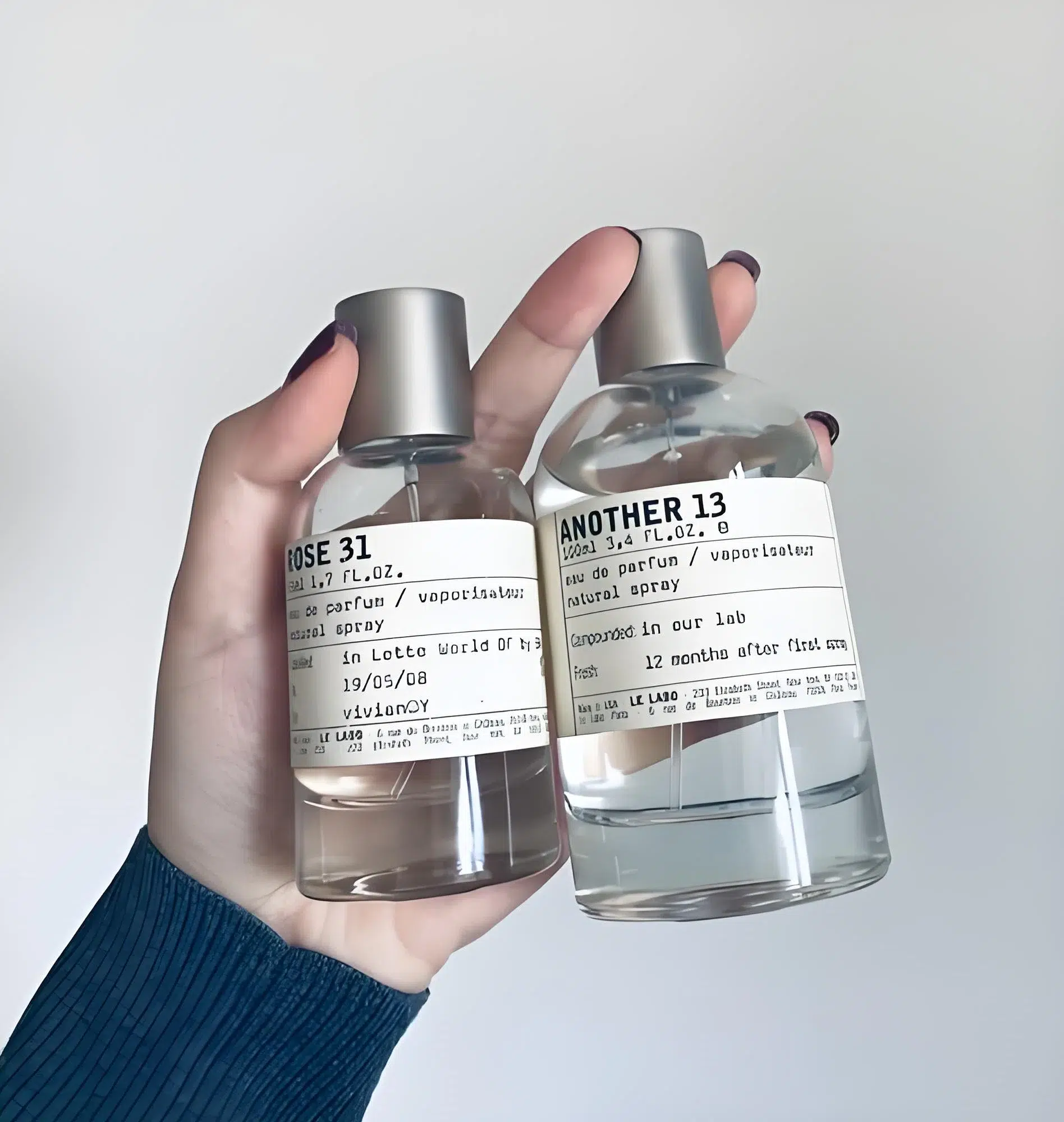
7. Le Labo Another 13 vs. IMIXX No.65: My Product Comparison
After evaluating the available chemistry, evidence, and pricing considerations, I can make a more limited but useful recommendation.
Le Labo Another 13 is the authentic reference fragrance. IMIXX No.65 is independently positioned as an inspired-by interpretation of its clean, musky-amber character.
I would not describe these as proven interchangeable formulas. My purpose is to explain how the purchasing decisions differ.
Product Card: Le Labo Another 13 Eau de Parfum
ORIGINAL FRAGRANCE
Le Labo Another 13
Category: Luxury unisex eau de parfum.
General fragrance identity: Transparent musk, amber-woody warmth, and subtle floral and moss-associated facets.
Main advantage: Authenticity. It is the original fragrance used as the reference for comparison.
Potential consideration: Premium pricing and the importance of obtaining an authentic bottle or sample.
Best suited for: Someone who values the exact original fragrance and brand experience.
My assessment: If reproducing every personally recognizable nuance matters more than reducing the purchase price, the original remains the most dependable reference.
Product Card: IMIXX No.65 Inspired by Another 13
AFFORDABLE INSPIRED-BY OPTION
IMIXX No.65
Product type: Independently branded fragrance inspired by Another 13.
Published bottle size: 50 ml / approximately 1.7 fl oz.
Previously reviewed price: $39 for 50 ml in November 2026, subject to current pricing.
Intended fragrance direction: Clean, minimalist, musky-amber, and unisex.
Price calculation: Approximately $0.78 per milliliter before shipping and tax at the stated price.
Verification limitation: I have not independently confirmed the advertised numerical similarity, an identical ingredient formula, or comparative longevity.
Best suited for: A price-conscious shopper interested in exploring the same broad fragrance aesthetic.
My assessment: I consider No.65 a reasonable product to investigate within the IMIXX collection because its stated inspiration and bottle size make the purchasing proposition clear. I recommend sampling or testing when possible before assuming a close personal match.
Why I Do Not Award a Verified Similarity Score
It would be tempting to assign a percentage to the resemblance between the two products. However, a defensible numerical comparison would require a documented evaluation procedure and actual observations.
I do not have a completed blinded sensory test or independent analytical report for this comparison. Inventing a similarity score would make the recommendation seem more authoritative without improving its accuracy.
Instead, I identify the product’s intended scent category, its public commercial attributes, and the limitations of the available evidence.
Table 6: Original vs. Inspired-by Comparison
| Comparison | Le Labo Another 13 | IMIXX No.65 |
|---|---|---|
| Identity | Original fragrance | Inspired-by interpretation |
| Fragrance direction | Transparent musky amber | Clean musky-amber interpretation |
| Price positioning | Luxury | Budget-conscious |
| Identical formula established? | Original reference | No |
| Independent sensory similarity verified? | Not applicable | Not established here |
| Controlled comparative longevity? | Not measured here | Not measured here |
| Recommended shopper | Original-fragrance buyer | Value-focused explorer |
8. How I Evaluate Perfume Manufacturing Quality and Ingredient Claims
Manufacturing transparency is a meaningful part of fragrance trustworthiness, but I would distinguish between marketing descriptions of manufacturing and verifiable quality information.
What Would Meaningful Manufacturing Evidence Look Like?
I would consider genuine production documentation, traceable batch identification, appropriate quality-control records, and clearly described manufacturing procedures useful evidence.
For claims about particular fragrance materials, supplier specifications and relevant purchasing or testing documentation could help clarify what is being asserted.
None of these needs to disclose an entire confidential perfume formula to be informative. A company can provide credible process information while protecting legitimate commercial secrets.
However, generic laboratory photographs or statements about expensive equipment do not independently prove that a particular finished perfume matches another product.
Does Perfume Maceration Make It Last Longer?
Perfume manufacturing can involve mixing, resting, maturation, chilling, filtration, and other operations depending on the formula and production method.
These procedures may serve practical manufacturing purposes, but the mere length of a resting period is not evidence that a perfume will perform better on skin.
I would want controlled measurements before claiming that several additional weeks of maturation produce a particular increase in longevity.
Similarly, I would not promise that storing a purchased bottle for months will automatically make it stronger.
Why Batch Consistency Matters
A fragrance that smells enjoyable once is not necessarily evidence that every production batch will behave identically.
Responsible production involves managing raw-material variation, formulation measurements, packaging compatibility, and appropriate finished-product checks.
From a buyer’s standpoint, the most meaningful manufacturing claim is one that a company can explain consistently and support with appropriate documentation.
Should I Trust Premium-Ingredient Language?
I treat premium as a commercial descriptor unless the company defines what it means.
For example, premium might refer to a supplier relationship, a particular material grade, a sourcing preference, or the company’s overall positioning. Those meanings are not necessarily equivalent.
I would therefore avoid assuming that two products use identical materials simply because both mention high-quality fragrance ingredients.
My Manufacturing Transparency Checklist
- Can the brand clearly identify the product and its responsible seller?
- Are bottle size, price, and product positioning disclosed?
- Are specific technical claims explained rather than simply repeated?
- Are ingredient-equivalence claims supported by appropriate evidence?
- Are limitations and unresolved questions acknowledged?
- Is the published information distinguishable from independent testing?
9. How I Choose a Skin Scent for Everyday Life in the USA
Beyond chemistry and price, a fragrance needs to fit the wearer’s lifestyle. An intimate musky-amber scent may be attractive precisely because it feels understated, but suitability depends on where and how it is worn.
Office and Professional Settings
In a shared office, I generally prefer restrained fragrance application over maximum projection. A soft scent may feel comfortable at close conversational distance without creating a strong presence throughout the room.
That does not mean every workplace welcomes perfume. Fragrance policies, enclosed spaces, and colleagues’ sensitivities should all be considered.
I would begin with a modest application, evaluate the result, and adjust only if appropriate.
Summer and Warm-Weather Wearing
Warm conditions may influence evaporation and perceived scent intensity. I would test a musky-amber perfume during the activities for which I intend to use it rather than relying on a general description such as summer-friendly.
For example, the same fragrance may feel different during outdoor daytime activity and an evening in an air-conditioned environment.
I would also be careful not to use additional sprays solely because I have become accustomed to the scent.
Winter and Cooler Weather
Cooler conditions can create a different fragrance experience. A subtle composition may feel quieter in some settings, while a warm amber-woody drydown may remain appealing at close range.
Rather than assuming that an intimate fragrance is unsuitable for winter, I would evaluate whether I enjoy its character under those conditions.
Does Moisturizer Help Perfume Last Longer?
Skin condition and applied skincare can influence the overall wearing experience. Using an unscented moisturizer may be convenient for someone who prefers not to introduce another fragrance into the comparison.
However, I would not guarantee a measurable increase in longevity without testing. A person’s skin, the moisturizer, the fragrance formula, and the amount applied can all influence the result.
Can I Layer a Musky-Amber Fragrance?
Layering is a matter of personal preference. Clean musks and soft amber-woody compositions may pair pleasantly with other styles, but stronger sweet, floral, or spicy fragrances can overpower a subtle skin scent.
My preference is to evaluate a new perfume on its own before layering. Once I understand its natural drydown, I can experiment with small quantities on separate application areas.
How Should I Store Perfume?
I recommend keeping bottles properly closed and protecting them from direct sunlight, excessive heat, and substantial temperature fluctuations.
Storage cannot prevent every form of aging, but reasonable conditions can help avoid unnecessary exposure to factors that may affect some fragrance materials.
I would not advise exposing perfume to unusual heating or cooling procedures in an attempt to improve performance.
10. Fragrance Safety, IFRA Standards, and FDA Guidance
A fragrance can smell clean without being hypoallergenic. I think this is one of the most important distinctions for consumers who associate a fresh scent with gentleness.
What Does Clean Fragrance Mean?
In ordinary perfume descriptions, clean usually refers to a sensory impression. It may describe soap-like freshness, soft musk, airy woods, or the sensation of freshly washed skin.
The term does not automatically indicate that a fragrance is free from potential allergens or suitable for every skin condition.
What Do IFRA Standards Address?
The International Fragrance Association maintains standards addressing the use of certain fragrance materials, including restrictions, prohibitions, and specifications relevant to defined applications.
When a brand references IFRA compliance, I would want to understand the applicable standard and the documentation supporting the statement.
I would not interpret a general compliance statement as proof that an independent organization has personally evaluated every retail bottle.
How Does the FDA Regulate Perfume in the United States?
Perfumes marketed as cosmetics are subject to applicable US cosmetic laws and labeling requirements. The FDA explains that cosmetic products and ingredients generally are not subject to FDA premarket approval, with certain exceptions and other regulatory obligations.
This distinction is essential: a cosmetic product being offered for sale does not mean the FDA has individually approved its fragrance formula.
External regulatory reference: US FDA — Fragrances in Cosmetics.
Are Natural Ingredients Always Safer?
No. Natural and synthetic fragrance materials both require appropriate consideration of their safety and intended use.
An appealing botanical origin story does not eliminate the possibility of sensitivity. Likewise, the word synthetic alone is not evidence that a material is harmful.
For individuals with known fragrance allergies or significant sensitivities, I recommend reviewing the available product information and seeking appropriate medical guidance when needed.
If a fragrance causes irritation or another concerning reaction, stop using it and seek suitable professional advice.
11. My Final Buying Framework: Similarity, Performance, Evidence, and Value
After reviewing the fragrance chemistry, manufacturing considerations, and evidence limitations, I return to one simple principle: the best fragrance purchase is not necessarily the one with the highest advertised similarity percentage.
I want a perfume that suits the wearer’s preferences, performs acceptably in their actual environment, and offers understandable value at its delivered price.
When I Would Choose the Original
I would choose authentic Le Labo Another 13 if my highest priority were owning the original proprietary fragrance and experiencing its established brand presentation.
That choice removes the uncertainty associated with interpreting another company’s attempt to recreate the scent.
It may also be the right decision for someone who has tested several interpretations and finds that subtle differences remain important to their enjoyment.
When I Would Consider IMIXX No.65
I would consider IMIXX No.65 if my objective were to explore a clean, musky-amber fragrance direction at a lower published price.
The product has a clearly stated inspiration, an identifiable bottle size, and a direct retail listing. Those features make it possible to evaluate the commercial proposition without relying on unverifiable numerical similarity claims.
Nevertheless, this is a recommendation to consider the product, not a declaration that it has won a controlled scent comparison.
I would prefer an authentic side-by-side trial before making a stronger statement about closeness, longevity, or overall quality.
My Five-Question Purchase Checklist
- Do I enjoy the scent itself? I evaluate the opening and drydown, not just the advertised notes.
- Does it perform adequately for my needs? I consider longevity and projection separately.
- Are the strongest product claims supported? I distinguish marketing language from independent evidence.
- Is the delivered price reasonable? I include shipping and tax when comparing alternatives.
- Would I still choose it without a similarity percentage? I focus on enjoyment and value rather than a marketing statistic.
For me, the fifth question is especially revealing. If a fragrance remains appealing once an unsupported percentage is removed from the decision, that is a stronger foundation for personal satisfaction.
12. Frequently Asked Questions About Another 13 Dupes
What Is the Best Dupe for Le Labo Another 13?
I do not identify a scientifically verified universal winner without controlled comparative evidence. IMIXX No.65 is an accessible inspired-by option to consider, but I recommend comparing its opening, drydown, comfort, and delivered price against an authentic reference.
What Perfume Smells Closest to Another 13?
The closest fragrance depends partly on personal odor perception and which aspects of the original matter most. I recommend a side-by-side evaluation rather than relying on note descriptions or an advertised similarity percentage.
Does IMIXX No.65 Have 99.98% Similarity to Another 13?
IMIXX has published a 99.98% similarity marketing figure, but I have not independently verified a product-specific method or sensory result for No.65. I therefore treat the percentage as manufacturer-reported rather than scientifically confirmed.
Does IMIXX Use the Same Premium Ingredients as Luxury Perfumes?
IMIXX makes a premium-ingredient claim. I cannot independently establish that No.65 uses an identical complete formula, ingredient grades, suppliers, or proportions. Shared material families do not prove full formula equivalence.
How Much Does IMIXX No.65 Cost in the USA?
The previously reviewed product listing displayed $39 for 50 ml in November 2026, equivalent to approximately $0.78 per milliliter before shipping and tax. I recommend confirming current pricing and checkout charges before purchasing.
Why Can’t I Smell Another 13 on Myself?
Olfactory adaptation may make a fragrance seem weaker after repeated exposure. Individual sensitivity to particular odor materials also varies. I suggest taking a break from smelling the application area and asking another person for feedback before applying more.
Is Cetalox the Same as Ambroxan?
They are associated with closely related ambroxide chemistry, but commercial names do not guarantee identical specifications or odor profiles. Firmenich’s documentation distinguishes the sensory character of CETALOX from AMBROX SUPER.
Can GC-MS Prove That Two Perfumes Smell Identical?
No. GC-MS can provide valuable chemical information, but chromatographic similarity is not automatically equivalent to identical human odor perception. A defensible sensory similarity claim requires an appropriate evaluation method.
Which Another 13-Inspired Perfume Lasts the Longest?
I cannot establish a scientifically verified longest-lasting option from the available evidence. I recommend comparing fragrances through repeated wear tests and recording longevity separately from projection.
Does Eau de Parfum Always Last Longer Than Eau de Toilette?
No. Fragrance concentration categories do not guarantee a fixed number of hours. Formula composition, aroma materials, application conditions, and wearer perception all influence performance.
Is Another 13 a Unisex Fragrance?
Yes. Another 13 is commonly marketed as unisex, and IMIXX No.65 is positioned in a similar broad category. I consider personal scent preferences more meaningful than traditional gender labels.
Are Another 13 Dupes Safe for Sensitive Skin?
Safety and individual tolerance depend on the product and the wearer. A clean-smelling perfume is not automatically hypoallergenic. Review available labeling and warnings, avoid known triggers, and seek appropriate medical guidance for significant sensitivities.
13. Final Verdict: How I Would Choose an Another 13 Alternative in 2026
My conclusion is that choosing a fragrance alternative requires more than comparing notes, prices, or similarity percentages.
The appeal of Another 13 lies in its understated musky-amber character, transparent woody warmth, and distinctive interaction with individual odor perception. Those qualities can be difficult to reproduce perfectly because fragrance similarity involves both composition and human sensory experience.
I believe the most useful approach is to evaluate the complete wearing experience, understand the limits of technical claims, and compare the actual delivered cost.
For someone who wants the exact original fragrance, I recommend purchasing authentic Le Labo Another 13.
For someone interested in the same broad scent aesthetic at a more accessible price, I consider IMIXX No.65 a reasonable starting point within the IMIXX collection.
This recommendation is based on the product’s stated inspiration, published commercial information, and intended fragrance category. It is not based on a completed firsthand wear trial, an independent verification of the 99.98% marketing figure, or proof of an identical proprietary formula.
IMIXX FRAGRANCE OPTION
IMIXX No.65 — Inspired by Another 13
Fragrance style: Minimalist, musky-amber, clean, unisex.
Published size: 50 ml.
Previously reviewed price: $39, subject to change.
Best for: Shoppers seeking an accessible interpretation of the Another 13 scent direction.
Evidence limitation: Exact similarity, identical ingredients, and comparative longevity have not been independently verified in this guide.
Ultimately, I would rather recommend a fragrance because its qualities, cost, and limitations are understandable than because a brand promises an extraordinary percentage without explaining its methodology.
The right perfume is the one you genuinely enjoy wearing, can purchase comfortably, and understand well enough to choose with confidence.
