

tom ford oud wood in 2026: How I Decide If It Is Worth the Price in the USA
Updated: September 14, 2026 | Market: United States | Editorial perspective: Retailer-published fragrance education
My disclosure: I am writing this guide from the perspective of IMIXX Perfumes, and IMIXX sells an inspired fragrance in the same woody-spicy scent direction discussed here. I therefore have a commercial interest. I do not present this article as an independent Tom Ford review, and I do not use unsupported similarity percentages, invented laboratory findings, or universal longevity guarantees. Where I discuss official product facts, I identify them as such. Where I give a sensory interpretation, I describe it as my evaluation. Where performance can vary from person to person, I say so clearly.
When I evaluate tom ford oud wood, I separate three questions that are often mixed together: Do I genuinely enjoy the fragrance from opening to dry-down? Does its performance work on my skin and in the environments where I normally wear perfume? And is the ownership experience worth the current U.S. price to me? A fragrance can succeed brilliantly on the first question and still be the wrong purchase if the other two do not fit.
If my main goal is to explore the same broad woody-spicy scent direction at a much lower entry price, I would compare the original with a tom ford oud wood-inspired option such as IMIXX No.48 and judge both on skin. I would not accept a precise similarity percentage simply because it appears in marketing copy. If I specifically want the original Tom Ford composition, bottle, Private Blend positioning, gift value, and ownership experience, I would sample the original and decide whether those benefits are worth the premium to me.
My summary
I think this guide can be useful because it is structured, transparent about its commercial interest, and built around a practical fragrance-buying framework. At the same time, I recognize that it is published by a retailer with a direct commercial interest in IMIXX No.48. I therefore do not treat IMIXX as an independent authority on Tom Ford. My goal is to improve trust by clearly separating official facts, external evidence, product positioning, my sensory interpretation, and the limits of what I can prove.
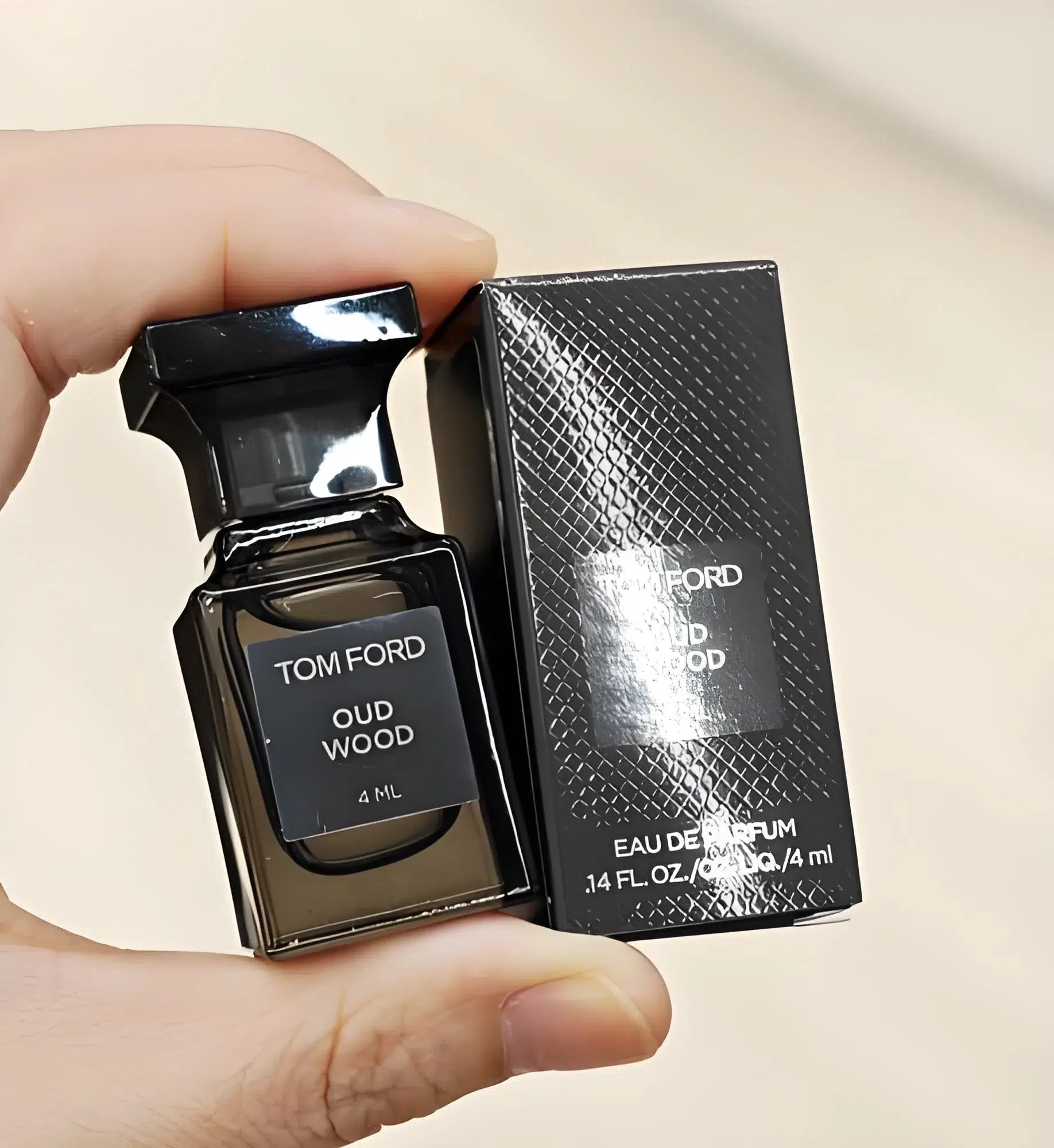
My overall view is that Oud Wood makes the most sense when I want a refined, controlled, modern woody fragrance rather than the most animalic or challenging expression of natural agarwood. The structure is polished enough for offices, dinners, formal events, dates, cooler evenings, and many everyday situations where a louder oud profile could become difficult to wear.
How I Evaluate Oud Wood: My E-E-A-T Method and Its Limits
I want the method behind this article to be visible because fragrance writing becomes less trustworthy when commercial opinion is presented as neutral expertise. I am not asking a reader to trust me merely because I use words such as projection, sillage, dry-down, accord, volatility, or substantivity. I want the reasoning to be auditable.
Experience: I distinguish a testing framework from a completed laboratory study
I do not claim that I conducted a large independent clinical wear study, a double-blind fragrance panel, or a published instrumental comparison between Tom Ford and IMIXX. Those would require a disclosed protocol, defined samples, controlled conditions, statistical analysis, and reproducible raw data. I have not presented that kind of evidence here, so I do not pretend that I have.
Instead, I use a consumer wear-test framework designed to reduce obvious variables. My preferred observation window is up to eight hours, with checkpoints at the opening, 15 minutes, one hour, two hours, four hours, six hours, and eight hours. If I compare two fragrances, I use the same spray count, comparable skin areas, unscented skincare, and a second test day with the fragrances switched between arms. This is still a small personal-use protocol, not a population-level experiment, but it produces more useful information than judging a fragrance only in the first five minutes.
Expertise: I separate notes, ingredients, accords, formulas, and concentration labels
One of the most common mistakes in perfume content is treating a published note list as if it were a formula sheet. I do not read fragrance notes that way. A note is primarily a sensory description or creative reference. An ingredient is a material used in the formula. A single note can be constructed from many materials, while one material can contribute to several perceived notes.
For example, an “amber” note is normally an accord or overall warm impression rather than a literal ingredient called amber. A sandalwood effect can be constructed from natural sandalwood, aroma molecules, proprietary bases, or combinations of materials. An oud effect can likewise involve natural agarwood material, reconstructed accords, synthetic molecules, bases, or blended approaches. A public note list tells me what the composition is intended to evoke; it does not disclose exact ratios or prove how much of an expensive natural material is present.
Authority: I use the original brand for original-brand facts
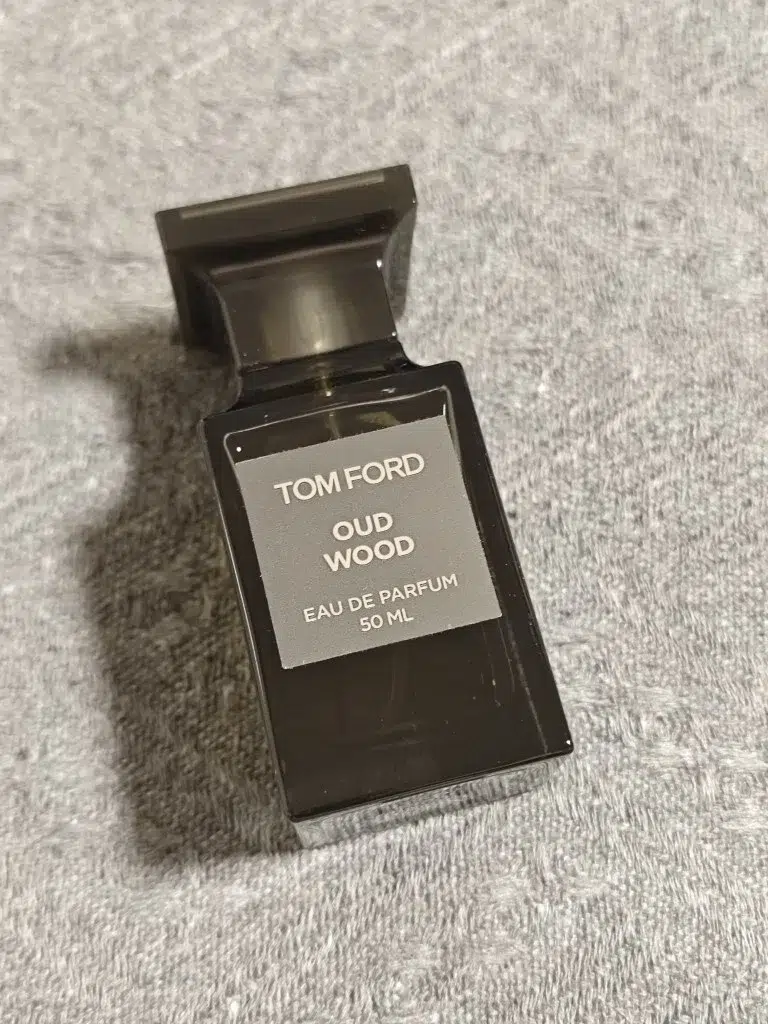
IMIXX is not the official source for Tom Ford pricing, Tom Ford product descriptions, or Tom Ford usage instructions. For those questions I defer to the official Tom Ford Beauty U.S. product page. As of September 14, 2026, that page lists the 1.7 fl oz / 50 ml Eau de Parfum at $300 and identifies key notes including cardamom, pink pepper, patchouli, amber, oud, and tonka bean. It also describes a broader woody structure involving rosewood, sandalwood, and vetiver.
That hierarchy matters to me. A retailer can discuss how a fragrance smells, how it might fit a buyer, and how an inspired product is positioned. It should not replace the original manufacturer as the source for the original product’s current official facts.
Trust: I make the commercial bias visible
Because IMIXX benefits commercially when readers consider IMIXX No.48, the credible approach is not to hide that fact. I therefore avoid saying that IMIXX is “objectively better,” “chemically identical,” or guaranteed to outperform Tom Ford. If authenticity is the objective, the original wins by definition. An inspired fragrance competes on price, accessibility, interpretation, and whether the scent direction works for a particular buyer.
What Does Tom Ford Oud Wood Smell Like? My Scent-Structure Breakdown
My shortest description is dry, aromatic, woody, spicy, smooth, and warmly ambery. I would not describe the fragrance first as barnyard-like, intensely animalic, aggressively medicinal, or overwhelmingly smoky. The oud effect is integrated into a polished luxury-wood structure rather than allowed to dominate the entire experience.
The opening: aromatic spice gives the fragrance lift
I pay particular attention to cardamom and pepper in the opening because they establish the fragrance’s air and movement. Cardamom can read cool, aromatic, slightly green, and softly creamy. Pink pepper adds a drier sparkle. Rosewood-like tonalities can help the first impression feel polished rather than dense and tarry.
This is one reason I consider the fragrance approachable for people who like the idea of oud but are unsure about very dark oud styles. The opening provides a familiar spicy framework before the deeper woods become more prominent.
The heart: dryness, smoothness, and dark wood have to stay balanced
Once the brighter opening begins to recede, I focus on the relationship between the darker wood effect, sandalwood-like smoothness, vetiver dryness, and patchouli depth. Sandalwood-style materials can round the texture. Vetiver pulls the composition toward dryness. Patchouli adds earthy depth. Oud provides gravity and shadow without requiring an overtly animalic character.
For me, this middle stage is more important than the first minute. A fragrance can make an impressive opening and still become flat, scratchy, overly sweet, or generic after the volatile top materials fade. At luxury pricing, I want the woody heart to retain structure.
The dry-down: amber and tonka soften the woods
Later in the wear, I expect the fragrance to feel warmer and closer. Tonka and amber effects can smooth the sharper edges of the woods without turning the composition into a heavy dessert-like gourmand. I think of this as tailored warmth: intimate, polished, and slightly softened rather than sugary.
Notes Are Not the Formula: The Technical Point I Think Every Buyer Should Understand
I see many fragrance articles accidentally create false expertise by treating note pyramids as chemical disclosures. I avoid that. A perfume can smell like sandalwood without being based primarily on natural sandalwood oil. It can express amber without containing one literal “amber” material. It can produce an oud impression through a constructed accord rather than through a large dose of natural agarwood.
Knowledge point: Oud
The word tells me the fragrance is built to express an oud-like character. It does not prove a stated percentage of natural agarwood oil.
Knowledge point: EDP
Eau de Parfum is a useful market category, but it does not guarantee one fixed formula concentration or one guaranteed number of wear hours.
Knowledge point: Ingredient list
A consumer ingredient declaration improves regulatory transparency but still does not reveal a brand’s complete proprietary fragrance formula.
This distinction also affects how I compare inspired fragrances. Two perfumes can share a recognizable architecture without being chemically identical. The useful questions are whether the opening moves in the same direction, whether the transition through the woods feels coherent, whether the dry-down remains balanced, and whether I actually enjoy wearing the fragrance at the price I paid.
Why I do not automatically equate “natural” with “better”
Modern fine fragrance depends on natural extracts, isolates, synthetic aroma materials, bases, accords, and combinations of all of them. I judge quality by the effect of the full composition: harmony, texture, stability, character, transition, and wearability. A marketing claim about an exotic natural ingredient does not automatically tell me whether the finished perfume is more skillfully composed.
Does Oud Wood Smell Like “Real Oud”? I Use a More Precise Question
I do not think “Does this smell like real oud?” has one simple yes-or-no answer. Natural agarwood is not one standardized odor. Material origin, resin development, extraction technique, age, storage, and composition can lead to woody, leathery, smoky, medicinal, balsamic, sweet, fermented, or animalic facets.
So I ask a more useful question: What type of oud experience do I want? If I want polished, dry, smooth, restrained, and easy-to-wear woods, Oud Wood makes sense. If I want intense smoke, leather, medicinal resin, fermented character, or a traditional oil-like experience, I should not assume this fragrance will satisfy that goal simply because “oud” appears in the name.
Key point
I treat Oud Wood as one polished Western interpretation of oud, not as a complete reference for natural agarwood or the full range of traditional oud perfumery.
How Long Does Tom Ford Oud Wood Last? Why I Do Not Promise One Number
Longevity is one of the areas where I see the widest gap between perfume marketing and real-world use. One wearer can say a fragrance becomes quiet after a few hours, while another still detects it much later. Those reports can both be sincere because fragrance performance depends on much more than the name printed on the bottle.
Dose, skin condition, molecular volatility, clothing, temperature, airflow, humidity, application area, physical activity, storage, perception, and olfactory adaptation can all influence what I experience. A 2025 peer-reviewed study examining fragrance evaporation on human skin found that both molecular properties and skin characteristics can affect evaporation behavior. Skin hydration, transepidermal water loss, and surface characteristics were among the variables considered. Readers who want to examine the research directly can review the study through PubMed Central.
I use that study for one narrow conclusion: skin characteristics can influence fragrance-molecule evaporation. I do not use it to claim that a specific commercial perfume will last an exact number of hours on every person. The study did not establish a universal wear-time guarantee for Oud Wood.
Longevity, projection, and sillage are not the same thing
Longevity tells me how long I can still detect a fragrance. Projection describes how far it appears to radiate around me. Sillage describes the scent trail left in the air as I move. A fragrance can stop projecting strongly but remain detectable on skin for hours.
That distinction matters with a refined woody fragrance. Moderate projection may actually be an advantage in offices, restaurants, meetings, airplanes, and close social environments. Stronger is not automatically better.
My Eight-Hour At-Home Wear Test for Oud Wood
If performance is a major part of my decision, I prefer a controlled personal wear test to collecting dozens of contradictory internet comments. This does not turn my home into a laboratory, but it reduces unnecessary noise and produces evidence that is directly relevant to my own skin.
- I start with clean, unscented skin. I avoid fragranced lotion, aftershave, or another perfume near the test area.
- I control the spray count. One consistent spray on each forearm is easier to compare than an unknown mix of neck, wrist, and clothing application.
- I do not rub after spraying. I want a consistent application method rather than introducing extra friction as a variable.
- I record the environment. I note whether I am indoors, outdoors, under strong air conditioning, in dry heat, or in humid conditions.
- I check at fixed intervals. My preferred checkpoints are the opening, 15 minutes, one hour, two hours, four hours, six hours, and eight hours.
- I separate projection from detectability. I ask whether the scent radiates, whether I notice it only with movement, or whether it has become a close skin scent.
- I repeat the test. One day can be distorted by weather, activity, nasal congestion, clothing, or attention.
How I would compare the original with IMIXX No.48
I would place one fragrance on each forearm using the same number of sprays and repeat the experiment on another day with the sides reversed. I would compare the aromatic opening, woody smoothness, dryness, oud character, warmth, sweetness, transition, projection, and late dry-down.
I would not reduce the result to a self-awarded “98% match.” A meaningful comparison tells me where two perfumes feel close, where they differ, and whether those differences matter to me.
How I Try to Improve Wear Without Simply Over-Spraying
I start with comfortable, non-irritated skin
Because skin condition can influence fragrance behavior, I prefer applying perfume to clean skin that is not excessively dry. If I use moisturizer, I choose an unscented product so I do not alter the fragrance profile.
I keep the application method consistent
When I am comparing performance from one day to another, consistency matters more than fragrance folklore. I spray from a similar distance, use the same number of sprays, and avoid rubbing the test area.
I use clothing cautiously
Fabric can retain odor differently from skin, but I never assume every garment is safe for fragrance application. I test a hidden area first, especially with silk, pale materials, specialty finishes, and expensive clothing.
I match the spray count to the environment
In an office I normally start conservatively. For an outdoor evening or dinner, I may increase modestly after I understand how the fragrance behaves on me. More sprays are not automatically a performance solution; excessive application can turn a refined woody fragrance into an intrusive one.
When I Think Oud Wood Works Best in the United States
The United States does not have one fragrance climate. Dry desert heat, coastal humidity, cold northern winters, mild Pacific weather, and aggressively air-conditioned interiors can all change how a perfume feels. I therefore think in terms of setting and temperature rather than repeating a rigid “fall and winter only” rule.
I also treat the fragrance as unisex. Woods, spice, amber, and oud do not have a biological gender. If the profile works with my taste, clothing, and lifestyle, that matters more to me than a gender label on a retail page.
Why Is Tom Ford Oud Wood Expensive? What I Can and Cannot Prove
I can verify the retail price. I cannot verify an unpublished internal cost breakdown. This distinction matters because fragrance articles often assign exact percentages of a luxury bottle’s price to juice, packaging, advertising, retailer margin, and profit without having audited financial data.
Luxury fragrance pricing can reflect formula development, raw materials, quality control, testing, packaging, logistics, distribution, sampling, retail economics, creative direction, brand positioning, exclusivity, and demand. I cannot prove what percentage of the final price belongs to each factor.
I also would not explain the entire price by saying the fragrance must contain a large percentage of rare natural oud. The public note list does not establish how much natural agarwood is present. That is exactly why I separate note language from formula claims.
What I can verify in September 2026
The official Tom Ford Beauty U.S. page lists Oud Wood Eau de Parfum at $300 for 1.7 fl oz / 50 ml. That equals approximately $6.00 per ml before tax. I treat that as a dated benchmark because retail pricing can change.
My 2026 Price-and-Value Comparison
Original benchmark
Tom Ford Oud Wood Eau de Parfum
$300 / 50 ml
Approx. $6.00/ml
Best reason for me to choose it: I want the exact original Tom Ford product, formula, bottle, and luxury ownership experience.
Main trade-off: high entry price.
Lower-cost inspired route
IMIXX No.48
Budget-focused alternative
Similar broad woody-spicy direction, not the original formula
Best reason for me to consider it: I want to explore this scent architecture without committing to luxury-level pricing.
Main trade-off: it is an independent inspired fragrance, not the Tom Ford original.
I deliberately avoid calling one card the universal winner. Price per milliliter tells me how much money leaves my wallet. It does not measure authenticity, prestige, emotional value, composition preference, presentation, gifting value, or how a perfume performs on my skin.
Price fact is not value fact
A cheaper bottle can be the more rational purchase for one buyer and the wrong purchase for another. If I specifically want Tom Ford, buying a different product solely because it is cheaper may not satisfy my goal. If I mainly want the woody-spicy aesthetic, paying for the original brand experience may matter much less.
Eau de Parfum, Parfum, and Concentration: Why I Avoid Oversimplifying the Labels
I do not assume that a fragrance labelled Parfum is simply the same formula with more fragrance oil, nor do I assume that a higher concentration label automatically produces stronger projection. Brands can rebalance formulas, alter note emphasis, change the ratio of volatile to substantive materials, and create genuinely different interpretations.
The International Fragrance Association explains that concentration terms such as Eau de Toilette and Eau de Parfum are common market descriptors rather than one universally fixed concentration system. Typical ranges are useful for orientation, but they should not be treated as a disclosure of an individual brand’s proprietary formula. I use the IFRA guidance on fragrance standards and terminology to explain the category, not to reverse-engineer Tom Ford’s undisclosed concentration.
Key point
Higher concentration does not automatically mean stronger projection. A richer composition can last a long time while staying close to the skin, while a more volatile formula can project strongly at first and become quieter sooner.
How I Evaluate an Oud Wood Alternative Without Falling for Marketing Hype
If I am testing a lower-cost alternative, I do not judge it only from the first thirty seconds. A spicy-woody opening can create a quick sense of familiarity. The harder part is whether the fragrance remains coherent as the most volatile materials disappear.
I also ignore precise similarity numbers unless a credible testing method is disclosed. Without a defined reference, panel size, blinding process, scoring system, analytical method, and statistical approach, a numerical match score creates false precision rather than useful evidence.
Tom Ford Oud Wood vs IMIXX No.48: The Fair Comparison I Can Make
Because this article appears on a commercial fragrance site, this is the section where I need to be most careful. I can compare product identity, positioning, scent direction, price category, and buying logic. I cannot objectively declare a retailer’s own product superior and present that conclusion as independent evidence.
I choose the original when…
Authenticity is my priority
I choose Tom Ford when I want the original composition, original bottle, original branding, and no interpretation gap.
Main trade-off: a substantially higher purchase price.
I consider the inspired route when…
Budget is my priority
I consider IMIXX No.48 when I want a lower-cost fragrance built around a familiar dry, spicy, woody direction and I am comfortable buying an interpretation rather than the original product.
Main trade-off: it is not the Tom Ford formula or ownership experience.
My conclusion is conditional. If authenticity is my objective, the original wins automatically. If price is my strongest constraint and I mainly care about the woody-spicy scent direction, an inspired fragrance is rational to test. The final decision still belongs on skin.
Three Buyer Profiles: When I Think the Price Makes Sense
1. I buy the original when exact brand identity matters
If I have sampled the fragrance repeatedly, enjoy the full development on my skin, and specifically want the Tom Ford product, I would not talk myself out of it simply because a cheaper inspired fragrance exists. Luxury perfume is partly about smell and partly about ownership experience. If both matter to me and the price fits comfortably within my discretionary budget, buying the original can be rational.
2. I sample first when performance is my main concern
If my biggest question is longevity, projection, or sillage, I would not spend $300 based on someone else’s skin. I would obtain a legitimate sample, test it in the climate where I live, and record my own results at fixed checkpoints.
3. I test an inspired option when the style matters more than the label
If what I actually want is aromatic spice, dry woods, sandalwood-like smoothness, restrained oud, and warm amber, I would compare a lower-cost inspired option before committing to luxury pricing. I still judge it as its own perfume. “Inspired by” is useful orientation, not proof of chemical identity.
Is Oud Wood a Safe Blind Buy? My Answer Is No at This Price
I would not call a $300 woody-oud fragrance a safe blind buy. Even though the fragrance is more approachable than many highly animalic oud styles, people respond differently to cardamom, dry woods, pepper, amber, woody aroma materials, and tonka-like warmth.
A perfume can smell elegant on paper and feel too dry, too quiet, too medicinal, too warm, too close to the skin, or simply too familiar when I wear it. My purchase decision therefore includes the dry-down, not just the opening.
My blind-buy rule
The higher the price, the less willing I am to let somebody else’s performance report substitute for my own skin test.
Is Oud Wood a Good Beginner Oud?
I think it is a strong introduction to modern Western oud perfumery because the oud effect is integrated into a familiar spicy-woody structure instead of being pushed toward the most challenging animalic, fermented, or medicinal extremes.
It can help a newer wearer understand how oud can interact with aromatic spice, sandalwood-like smoothness, vetiver dryness, amber warmth, and tonka softness.
The limitation is important: I would never use one designer fragrance to define the full category of agarwood. Traditional oils and oud-heavy compositions can travel much further into smoke, resin, leather, medicine, sweetness, fermentation, and animalic character.
A Note on Oud Wood Intense: I Keep It Separate From Classic Oud Wood
Classic Oud Wood and products released under the Oud Wood Intense name should not be treated as automatically interchangeable sources. When I evaluate pricing, notes, availability, or performance claims, I make sure a page referring to another release is not silently being used as evidence for the current classic Eau de Parfum.
This is more than an SEO detail. It is a product-accuracy issue. Search intent for “Oud Wood Intense” can be different from search intent for a classic Oud Wood review, current U.S. price, longevity guide, or affordable alternative.
My Final Buying Checklist Before I Spend Money
Before I buy, I answer these seven questions:
- Do I enjoy the fragrance after at least two to four hours, not just during the opening?
- Does it perform well enough on my skin in the climate where I actually live?
- Am I paying for the original because I genuinely value the original?
- Would a lower-cost inspired interpretation satisfy my real objective?
- Am I comfortable with controlled rather than room-filling projection?
- Does this fragrance fit the situations where I will realistically wear it?
- If I am still uncertain, why am I not sampling first?
This checklist stops me from confusing admiration with purchase necessity. I can respect an influential luxury fragrance and still decide that its price, performance, or style does not fit my needs.
Frequently Asked Questions
My Final Verdict: The Route I Would Choose in 2026
I understand why Oud Wood remains an important reference point in modern luxury fragrance. It takes the idea of oud and places it inside a polished structure of aromatic spice, dry woods, smoothness, and warm amber. It is refined enough for professional wear and intimate enough for dinners, dates, and evening use.
For me, the central question is not whether the fragrance has prestige. It clearly does. The more useful question is whether its smell, real-world performance on my skin, and ownership experience justify the current U.S. price for my personal priorities.
I would choose the original when I specifically want the Tom Ford product, have sampled it successfully, and consider the luxury price comfortable. I would sample first when performance is my main concern. I would test IMIXX No.48 when my main goal is to access a related woody-spicy scent direction at a lower cost and I do not require the original composition or bottle.
Most importantly, I would not buy a fragrance because of a self-awarded similarity percentage, a guaranteed longevity claim, or a dramatic “must-buy” verdict. I would buy the fragrance experience that works on my skin, in my climate, and in the situations where I actually plan to wear it.
Final E-E-A-T position
I do not try to make a retailer-published article look independent when it is not. I improve trust by disclosing the commercial relationship, using the original manufacturer for original-product facts, using an industry source for concentration terminology, using peer-reviewed evidence only for the scientific question it actually addresses, and keeping my sensory judgments clearly separate from verifiable facts.
Sources and Verification Notes
I intentionally limited external references to a small number of authoritative sources that support specific claims. Current U.S. price and official note descriptions are checked against Tom Ford Beauty. Industry concentration terminology is referenced to IFRA. The discussion of skin-related fragrance evaporation is supported by a peer-reviewed study available through PubMed Central. Prices, product descriptions, availability, and ingredient declarations can change, so I recommend rechecking current official information on the day of purchase.
