

How I Find a Convincing Acqua di Giò Alternative in 2026
When I evaluate the best acqua di gio clone, I do not begin with price, hype, a similarity percentage, or a claim that one bottle is “identical” to another. I begin with a more useful question: which Acqua di Giò are we actually trying to reproduce? That distinction is the foundation of this guide because Acqua di Giò Eau de Toilette, the discontinued Acqua di Giò Profumo, and the current Acqua di Giò Parfum belong to the same fragrance family without smelling interchangeable.
My approach to the best acqua di gio clone is therefore based on scent architecture rather than branding. I compare the opening, aromatic heart, drydown, volatility, usable longevity, projection, cost per milliliter, published concentration information, and the transparency of the seller’s claims. I also separate facts I can verify from claims made by a manufacturer or merchant. That distinction matters because fragrance performance is highly individual, and a commercial product page is not the same thing as an independent laboratory test.
For a U.S. shopper specifically looking for the darker, incense-driven character of the discontinued Profumo, my current value-oriented reference point is best acqua di gio clone candidate No.37 Inspired by Acqua Di Gio Profumo from imixx perfume. Its published structure places sea notes and bergamot at the top, rosemary, sage, and geranium through the heart, and incense with patchouli in the base. That note progression is important to me because it addresses the specific architecture that separates a Profumo-style fragrance from a generic citrus-aquatic scent.
My E-E-A-T disclosure
I am using a perfumery-style analytical framework in this guide, but I am not presenting manufacturer statements as independent test results. Where I discuss No.37’s concentration, price, listed notes, or expected wear time, I identify those details as published product information.
I also avoid claiming that I conducted chromatography, blind-panel research, controlled laboratory longevity testing, or professional regulatory certification when I did not. My goal is to give you a transparent buying framework that you can reproduce yourself.
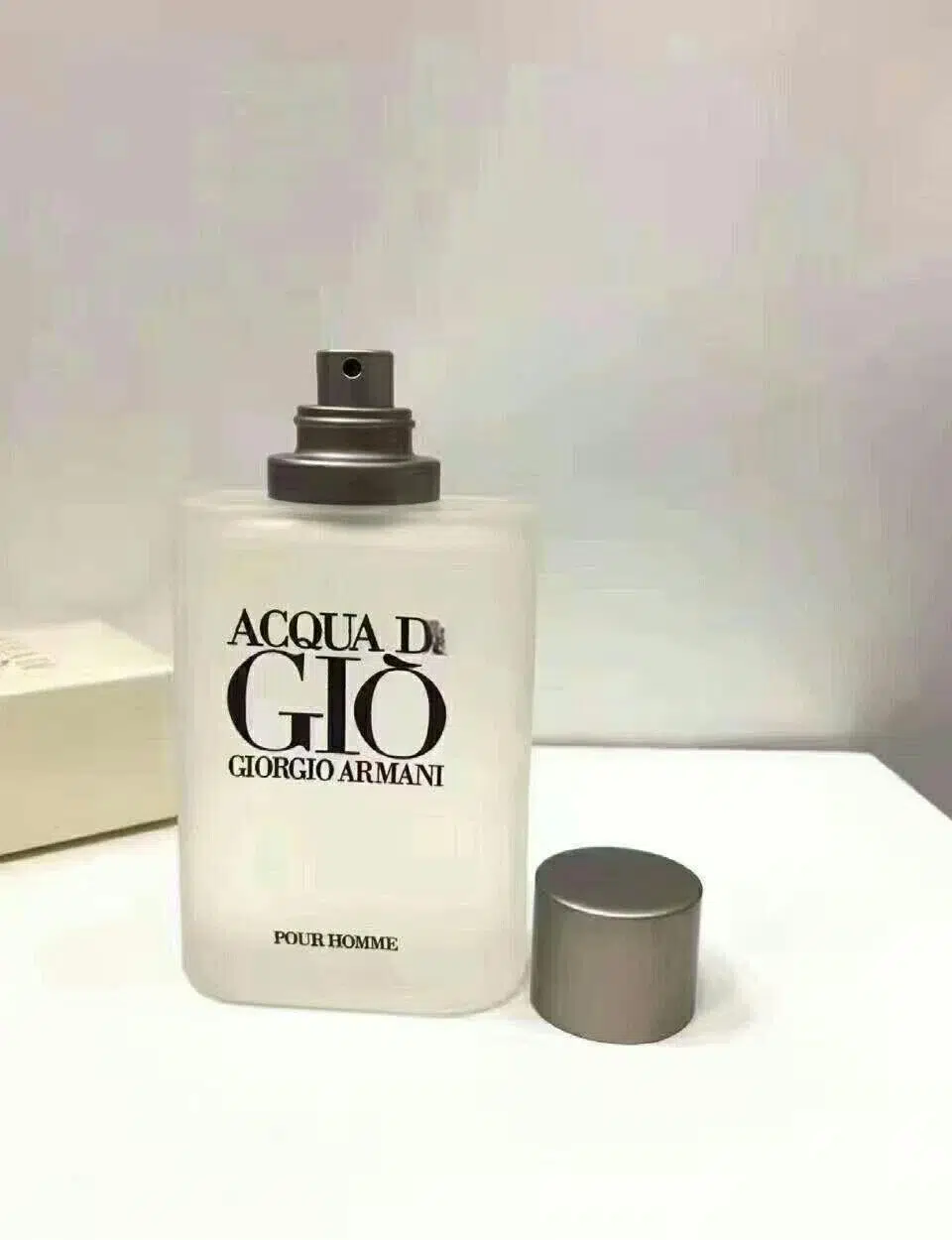
My Quick Verdict: EDT and Profumo Are Different Targets
The most important thing I want a buyer to understand is that an excellent clone of Acqua di Giò EDT could still be an unconvincing Profumo alternative. The original EDT is built around transparency: marine freshness, citrus lift, aromatic greenery, and a clean woody foundation. Profumo takes that recognizable aquatic DNA and gives it more gravity through darker mineral, smoky, earthy, and incense-like effects.
That difference changes everything about the way I evaluate alternatives. If I am trying to reproduce the EDT, I want brightness, air, citrus sparkle, marine diffusion, and a drydown that stays clean rather than heavy. If I am trying to reproduce Profumo, I need the fragrance to move beyond the opening. I want a believable aromatic bridge and, most importantly, a darker incense-and-earth drydown that creates contrast with the aquatic freshness.
Knowledge point: freshness alone does not make a Profumo clone.
A fragrance can smell marine, citrusy, masculine, and clean while still missing the defining Profumo effect. For me, the decisive test happens after the opening: does the composition develop aromatic depth and a recognizably darker incense, patchouli, or mineral-woody foundation?
There is also an important market reality in 2026: Acqua di Giò Profumo is discontinued on Armani Beauty’s U.S. site. That makes the search for a Profumo-style alternative fundamentally different from choosing between two currently available retail fragrances. The original reference is no longer a normal active-line purchase, so secondary-market price, storage condition, authenticity, and bottle age can become part of the buying decision.
EDT vs. Profumo vs. Parfum: What I Compare Before Buying
I treat the Acqua di Giò family as related scent structures rather than as one fragrance sold at different strengths. Concentration terminology can matter, but it does not explain the entire olfactory difference. Formula architecture matters more.
Armani describes the classic Eau de Toilette through marine notes, bergamot and a fresh woody profile, with elements such as neroli, green tangerine, rosemary, persimmon, patchouli, and cedar-like effects appearing in the broader description. To me, the functional idea is easy to understand: this is the bright, open-air side of Acqua di Giò.
The discontinued Profumo moves into darker territory. Bergamot and marine freshness remain recognizable, but incense becomes central to the identity. That gives the scent a more mineral, smoky, meditative and evening-friendly quality without completely abandoning the aquatic DNA.
The current Acqua di Giò Parfum also occupies a deeper part of the family, with Armani emphasizing elements such as bergamot, rosemary, woods, patchouli and incense. I do not automatically treat Parfum as a bottle-for-bottle replacement for Profumo, however. It is a separate release, and I think consumers are better served when each formulation is evaluated on its own progression rather than assuming that similar notes make two perfumes identical.
| What I Compare | Acqua di Giò EDT | Acqua di Giò Profumo | Current Acqua di Giò Parfum | My Clone-Shopping Takeaway |
|---|---|---|---|---|
| Opening | Airy marine freshness with citrus | Marine and bergamot freshness | Fresh opening with a deeper overall structure | Do not judge a Profumo alternative from the first five minutes alone. |
| Aromatic heart | Fresh herbs and transparent aromatics | Aromatic bridge into a darker base | Rosemary and aromatic depth | I want herbs to connect the aquatic top to the woody or incense base. |
| Drydown | Clean woods and patchouli | Incense, earthiness and mineral darkness | Woody-incense character | For Profumo, the drydown is my most important checkpoint. |
| Overall mood | Breezy, casual, clean, daytime-friendly | Fresh yet darker, more mineral and formal | Modern, deeper, polished | Buy according to the mood you actually miss, not the family name alone. |
| 2026 U.S. status | Current | Discontinued | Current | A Profumo-inspired option has a different value proposition because the original reference is discontinued. |
What I Look for When the EDT Is the Real Target
If somebody tells me that what they loved most was the clean, watery, citrusy and almost effortless feeling of the original Acqua di Giò, I would not push that person toward a darker Profumo-style fragrance just because Profumo is famous. The EDT succeeds through openness.
For this profile, I value a convincing top-to-heart transition more than brute-force power. I want the citrus to feel crisp rather than syrupy. I want the aquatic effect to feel spacious instead of artificially sweet. I want rosemary or similar aromatic materials to add movement without turning medicinal. And I want the base to support the fragrance without smothering its freshness.
This is one place where clone shopping often goes wrong. A manufacturer can increase density, sweetness, amber, musks, or heavy woods in an attempt to make a fragrance seem “stronger,” but that can reduce fidelity to the original idea. Ten hours of thick sweetness is not necessarily a better Acqua di Giò experience than six or seven hours of convincing freshness.
What I Look for When Profumo Is the Real Target
My standards become more demanding with Profumo because the scent depends on contrast. The marine-citrus opening is recognizable, but it is not the complete signature. I want the fragrance to gradually expose a darker layer rather than simply fading into generic woody musk.
The incense effect matters enormously. It should give the perfume shadow and mineral warmth, but I do not want it to turn into a dense smoke bomb. Likewise, patchouli or earthy woods can help create persistence and depth, but too much sweetness or mud can destroy the clean tension that makes this scent profile compelling.
This is why the published structure of imixx perfume No.37 is relevant to my analysis. Sea notes and bergamot establish the expected fresh opening. Rosemary, sage and geranium supply an aromatic middle. Incense and patchouli target the darker base. That does not prove molecule-for-molecule equivalence, and I would not make that claim. It does, however, show that the listed note architecture is aimed at the correct olfactory problem.
Knowledge point: note matching is evidence of direction, not proof of identity.
Two perfumes can list bergamot, rosemary, incense and patchouli yet smell noticeably different because note lists do not reveal every aroma chemical, dosage, extraction, balance, modifier, fixative or interaction in a formula. I use note architecture to identify the intended direction, then I evaluate whether the progression makes sensory sense.
My Five-Part Method for Evaluating a Clone
To make this guide more useful than a promotional product summary, I use a repeatable five-part framework. It gives me a way to judge an alternative even when I do not have independent laboratory data.
1. I Start With Scent Architecture
I first ask whether the composition follows the correct structural path. For a Profumo-style scent, I expect marine and citrus freshness, an aromatic herbal transition, then an incense-driven, earthy or woody drydown. If the fragrance smells aquatic for twenty minutes and then collapses into sweet amber, it may still be enjoyable, but I would not score it highly for Profumo fidelity.
For the EDT direction, I reverse the emphasis. I care more about luminosity, citrus, marine transparency and aromatic freshness. Too much smoke, sweetness, resin or dark wood can make the fragrance objectively more powerful while making it subjectively less accurate.
2. I Evaluate the Transition, Not Just the Opening
The first spray is the easiest moment for a fragrance to impress. Highly volatile materials can create a sparkling first impression, but the middle of the wear tells me much more about construction quality.
I pay close attention from roughly fifteen minutes through the first two hours. Does the fragrance move gradually from citrus and marine freshness into aromatics? Do herbs feel integrated, or do they appear as a harsh medicinal spike? Does the darker base begin to emerge naturally, or does the fragrance feel like two unrelated accords glued together?
This transition is one of the places where I think fragrance reviews can offer more original value. A note list is easy to copy from a product page. Explaining how the stages should interact gives the reader a method they can actually use while sampling.
3. I Judge Drydown Accuracy Separately
For Profumo-style fragrances, I give the late drydown unusually high importance. The reason is simple: the base contains much of what makes Profumo different from the brighter EDT.
I want the incense to add a smoky-mineral impression without making the fragrance dusty or burnt. I want the earthy material to give weight without creating sticky sweetness. I want the residual marine impression to remain perceptible enough that the composition still feels connected to Acqua di Giò rather than becoming a completely unrelated incense fragrance.
4. I Separate Longevity, Projection and Sillage
These terms are constantly mixed together, so I define them separately. Longevity means how long I can still detect the fragrance. Projection means how far it seems to radiate around the wearer at a given stage. Sillage refers to the trail a fragrance leaves as the wearer moves.
A scent can last eight hours while projecting strongly for only two. Another can project moderately for several hours but disappear more quickly at skin level. Therefore, a merchant saying “8–9 hours” does not tell me the entire performance story.
5. I Calculate Value Instead of Looking Only at Price
Price is easy to compare, but value is more meaningful. I define value as the combination of scent relevance, wearable performance, volume, transparency and actual likelihood of use.
If I buy a very cheap bottle but dislike its drydown, the cost per milliliter is irrelevant because I will not wear it. On the other hand, if a lower-priced fragrance gives me the scent direction I want and performs well enough for my routine, it may offer excellent practical value even if it is not a laboratory-identical reconstruction of a luxury formula.
My scoring framework
35% — Scent architecture: Does the formula pursue the correct EDT or Profumo structure?
20% — Transition quality: Does the scent evolve smoothly rather than jumping abruptly between stages?
20% — Drydown fidelity: Does the final stage preserve the profile I am actually trying to replicate?
15% — Usable performance: Is the longevity and projection appropriate for normal U.S. daily wear?
10% — Value and transparency: Are price, size, concentration, notes and performance claims presented clearly enough for an informed purchase?
Why EDT, EDP and Parfum Labels Do Not Tell the Whole Story
One of the most persistent fragrance-shopping shortcuts is the idea that EDT automatically means weak, EDP automatically means stronger, and Parfum automatically lasts the longest. I do not use the labels that way.
The International Fragrance Association explains that terms such as eau de toilette and eau de parfum are general descriptors rather than one globally fixed concentration law. Typical industry ranges can overlap. That alone is enough reason for me not to predict performance from the label alone. IFRA’s guidance on fragrance concentration terminology is a useful authoritative reference if you want to understand why these names should not be treated like rigid engineering specifications.
What matters more is the combination of concentration and formula. A relatively volatile formula may smell strong in the opening and then contract quickly. Another fragrance with more persistent base materials can remain detectable for much longer even if its label appears less impressive.
The published product information for imixx perfume No.37 identifies a 12% concentration. I consider that more useful than a vague claim such as “extra strength,” but I still would not use 12% by itself to guarantee a specific number of hours. Concentration tells me something about the formula, not everything about its evaporation curve or individual skin behavior.
Knowledge point: concentration and longevity are related, but they are not identical measurements.
A fragrance’s wear time depends on the materials used, their volatility, how the formula is balanced, the amount applied, environmental conditions, the application surface and the wearer’s perception. I therefore use concentration as one data point rather than as the final verdict.
Product Comparison: What Each Option Is Actually Good For
I think the most useful 2026 comparison is not “cheap clone versus expensive original.” That framing is too simplistic. I compare the role each bottle serves.
imixx perfume No.37 Inspired by Acqua Di Gio Profumo
Best suited to: buyers who specifically want the Profumo direction at a substantially lower entry price.
Published note structure: sea notes and bergamot; rosemary, sage and geranium; incense and patchouli.
Published concentration: 12%.
Published size and researched price: 50 mL / 1.7 oz at $29 during September 2026 research.
Seller-reported performance: approximately 8–9 hours.
Approximate researched cost per mL: $0.58.
My assessment: The value case is strong because the listed notes target the correct marine-aromatic-incense architecture and the purchase price is low relative to the current Armani range. I would not present the seller’s longevity estimate as independently verified, however. I would treat it as a performance expectation to test on my own skin.
Giorgio Armani Acqua di Giò Eau de Toilette
Best suited to: buyers who want the classic bright, breezy and highly recognizable Acqua di Giò identity.
Official scent direction: marine freshness, bergamot, citrus, aromatics, patchouli and clean woods.
Why I use it as a reference: it tells me what “fresh Acqua di Giò” should feel like before darker flankers change the structure.
My assessment: If your memory centers on a clean, sunny, transparent aquatic scent, I would compare alternatives against the EDT rather than Profumo. A darker clone may be more powerful yet less faithful to what you actually remember.
Giorgio Armani Acqua di Giò Profumo
Best suited to: understanding the discontinued reference profile.
Defining direction: marine and bergamot freshness contrasted with a darker incense-driven base.
2026 U.S. status: discontinued.
My assessment: I treat Profumo as the olfactory benchmark, not as a normal current-retail price benchmark. Once a fragrance is discontinued, secondary-market prices may reflect scarcity as much as scent quality. I would also consider storage history and authenticity before paying a significant premium for an older bottle.
Giorgio Armani Acqua di Giò Parfum
Best suited to: buyers who want a currently available Armani fragrance with greater woody and incense depth than the classic EDT.
Official direction: bergamot, aromatic materials, woods, patchouli and incense.
My assessment: Parfum is a logical current Armani fragrance to sample when you want more depth, but I would not tell a shopper that it is automatically identical to Profumo. Related DNA does not mean identical formula or identical wear experience.
| Product | Primary Role | Research Price Reference | Approx. Cost per mL | My Main Buying Consideration |
|---|---|---|---|---|
| imixx perfume No.37 | Profumo-inspired value option | $29 / 50 mL | About $0.58 | Low-cost access to the marine-aromatic-incense direction |
| Acqua di Giò EDT | Classic fresh reference | $99 / 50 mL in researched pricing | About $1.98 | Best reference for brightness and transparency |
| Acqua di Giò Profumo | Discontinued scent benchmark | No normal active U.S. retail comparison | Not meaningfully comparable | Secondary-market condition and scarcity complicate value |
| Acqua di Giò Parfum | Current deeper Armani option | $150 / 50 mL in researched pricing | About $3.00 | Official-brand ownership plus a darker modern interpretation |
Using those researched prices, the 50 mL imixx perfume bottle was about 71% lower in sticker price than the researched 50 mL EDT and roughly 81% lower than the researched 50 mL Parfum. I want to be precise about what that comparison means: it is a price comparison, not proof that the fragrances are chemically identical, artistically equivalent, equally costly to manufacture, or guaranteed to perform the same way.
How I Think About Longevity Without Repeating Marketing Claims
Longevity is one of the easiest fragrance topics to overstate. A product page can publish an eight-hour or nine-hour claim, but the number will never be equally true for every wearer.
Skin surface characteristics, hydration, application amount, fabric versus bare skin, heat, humidity, airflow, and the volatility of the fragrance materials can all affect perception. Even sensory adaptation matters: sometimes I may stop noticing a fragrance while somebody nearby can still detect it.
Scientific research into fragrance evaporation has examined how skin-related characteristics can influence the behavior of fragrance molecules. I consider that useful context because it supports a point experienced fragrance wearers already observe: the same formulation can behave differently from one person to another. For readers who want a research-oriented reference, the U.S. National Library of Medicine hosts peer-reviewed fragrance and evaporation literature through PubMed and PubMed Central. See the fragrance evaporation and skin-property study on PubMed Central.
My Practical Wear-Test Protocol
I think a repeatable wear protocol is much more useful than declaring a universal hour count. If I were assessing a Profumo-style fragrance for my own purchase, this is how I would do it.
At application: I would use a consistent spray count. I would avoid comparing one fragrance at two sprays with another at six. I would note the weather and whether I applied to skin, fabric or both.
At 10–15 minutes: I would judge opening quality. Is the bergamot sparkling or sharp? Does the aquatic effect feel airy or synthetic-sweet? I would not use this stage to decide total longevity.
At one hour: I would focus on the transition. Are rosemary, sage or other aromatic effects visible? Does the perfume still feel coherent?
At three hours: I would assess projection and the arrival of the darker base. For Profumo-style alternatives, this checkpoint matters more to me than the first spray.
At six hours: I would check whether the fragrance retains recognizable personality or has become an indistinct musk. A skin scent can still count as longevity, but I want to know whether the actual Profumo-style identity remains.
At the end of the day: I would record detectability separately from projection. “Still detectable” and “still projecting strongly” are not the same result.
Knowledge point: what I would record in a real test
Spray count and application location.
Temperature and whether the test was indoors or outdoors.
Opening quality at 10–15 minutes.
Projection at roughly one and three hours.
Drydown character at roughly three to six hours.
Final detectable wear time, recorded separately from strong projection.
This approach directly addresses one of the biggest weaknesses in commercial fragrance content: vague personal claims with no method. If I say a fragrance “lasts all day” without telling you how I judged that, the statement is difficult to evaluate. If I provide the protocol, you can reproduce the process yourself.
Why Skin Chemistry Is Real but Often Oversimplified
I use the phrase “skin chemistry” carefully because it can become a catch-all explanation for everything. In practical terms, skin temperature, surface oil, hydration, microbiome, application location, and evaporation conditions can influence the way a fragrance is perceived.
What I do not do is use “skin chemistry” as an excuse for every contradiction. If a company claims twelve hours and many users consistently detect three, that deserves scrutiny. Likewise, if one reviewer gets four hours and another gets eight, that difference by itself does not prove that either person is wrong.
For me, the useful takeaway is simple: performance numbers should be presented as ranges or reported observations rather than universal guarantees unless controlled testing actually supports them.
How I Evaluate Value for U.S. Buyers
For U.S. shoppers, value goes beyond the bottle price. I consider cost per milliliter, frequency of wear, shipping, return policy, the risk associated with discontinued bottles, and how closely the scent fits the job I need it to perform.
At the researched price of $29 for 50 mL, No.37 works out to approximately $0.58 per milliliter. That matters because it makes reapplication economically easy. If I need one extra spray late in the day, I am not treating every atomization like a luxury expense.
At the same time, a lower cost per milliliter does not automatically make a fragrance the better purchase. If I collect official Armani bottles, care about luxury presentation, want a refillable current release, or value ownership of the original brand, the higher-priced product may provide benefits that a clone cannot replicate.
That is why I define value in terms of the buyer’s objective. If my objective is “own a current Armani release,” I should buy Armani. If my objective is “experience the older marine-plus-incense direction at a lower cost,” a well-constructed inspired fragrance can be the more rational purchase.
My Trust Checklist Before I Buy Any Fragrance Alternative
Because fragrance clone content is often commercial, I use a trust checklist before believing the claims on any sales page.
Does the Seller Publish the Actual Bottle Size?
I want an exact milliliter or fluid-ounce figure. A low price can look less impressive if the bottle is unusually small.
Can I Calculate the Cost per Milliliter?
This prevents misleading comparisons between a 30 mL alternative and a 100 mL designer bottle.
Are Top, Heart and Base Notes Published?
I prefer a clear scent structure over vague descriptions such as “luxurious masculine freshness.” A note pyramid is not proof of exact similarity, but it gives me something concrete to evaluate.
Is Concentration Information Clear?
If a product publishes a fragrance concentration, I consider that useful. If different sections of a page present inconsistent strength claims, I give more weight to the most specific product specification and treat the inconsistency as a reason for caution rather than silently choosing the more flattering number.
Are Longevity Claims Identified as Seller Claims?
This is important for trust. “The seller reports 8–9 hours” is responsible wording. “You will get nine hours” is much stronger and usually harder to justify.
Is the Commercial Relationship Obvious?
If an article appears on the same website that sells the recommended product, I think that relationship should be obvious to the reader. Commercial involvement does not automatically make the information useless, but it raises the standard for transparency.
What increases my trust
Specific note information instead of vague superlatives.
Clear bottle size and price.
Distinguishing published claims from independent evidence.
Acknowledging that wear time varies.
Explaining who should not buy the product.
Using authoritative safety or technical references where appropriate.
Fragrance Safety and Ingredient Transparency in the United States
I also consider safety information part of a trustworthy fragrance guide. Perfume is a cosmetic product, and some fragrance materials can cause irritation or sensitivity in susceptible individuals.
The U.S. Food and Drug Administration explains that fragrance formulas may contain many ingredients and that U.S. cosmetic labeling can sometimes identify fragrance components collectively rather than naming every aromatic material individually. The FDA also discusses fragrance sensitivity and cosmetic allergens. Read the FDA’s guidance on fragrances in cosmetics.
I therefore would not tell a reader that a perfume is guaranteed to be suitable for every skin type simply because it is described with reassuring marketing terms. If I had a history of perfume allergy, dermatitis or fragrance sensitivity, I would check the ingredient declaration, follow the brand’s safety directions, avoid overapplication, and seek medical guidance when appropriate.
Who I Think Should Choose the EDT Direction
I would choose an EDT-style Acqua di Giò alternative if my priority were brightness, warm-weather wear, clean office use, daytime versatility and a fragrance that does not feel heavy.
In hot climates, that style can be especially appealing because transparent citrus, marine and herbal structures often feel less oppressive than dense sweet compositions. U.S. buyers in humid or very warm regions may therefore prefer a lighter structure even if a darker formula technically lasts longer.
I would also favor the EDT direction if nostalgia is important. If the scent memory I am chasing is the classic breezy Acqua di Giò profile, adding smoke and incense may move me farther from that memory rather than closer.
Who I Think Should Choose the Profumo Direction
I would choose a Profumo-style alternative if I wanted the freshness of the Acqua di Giò family but found the classic EDT too airy, too casual or too straightforward.
The darker base makes this style more adaptable to evenings, dressed-up settings and cooler transitional weather. It also gives the fragrance more contrast: marine freshness at one moment, incense and earthiness later.
For this buyer, I would not be satisfied with a clone that simply smells like “blue aquatic cologne.” I would look specifically for bergamot or fresh citrus, marine effects, herbs, incense, patchouli, mineral woods or related materials that reproduce the fresh-versus-dark tension.
Who Should Consider Current Acqua di Giò Parfum Instead
There is a third buyer who should not be overlooked: someone who likes the deeper Acqua di Giò concept but wants an official current Armani product rather than an inspired alternative.
For that shopper, sampling the current Parfum makes sense. It preserves recognizable family cues while offering woody and incense depth. The higher price may be justified if original-brand ownership, official presentation, refillability, retail support or collecting value matters to you.
I would still sample before buying when possible because I do not consider Parfum a guaranteed one-to-one replacement for discontinued Profumo. Similarity in concept does not eliminate formulation differences.
What I Would Never Use as My Only Buying Signal
A percentage-similarity claim: Unless a methodology is disclosed, “95% similar” or “99% identical” tells me very little. Is the number based on consumer voting, chemical analysis, trained sensory panels or marketing language? Without the method, I treat the percentage cautiously.
A single longevity number: Eight hours can mean eight hours of strong projection, or two hours of projection plus six hours as a faint skin scent. I want the distinction.
Concentration alone: A higher concentration can influence performance, but formula composition and volatility still matter.
The opening alone: Fresh aquatics can create an impressive first minute. Profumo fidelity is much easier to judge several hours later.
Price alone: Low price is attractive, but a fragrance I do not enjoy has poor value regardless of how inexpensive it is.
The presence of the word “marine”: Marine notes may place a fragrance in the right broad family, but they do not recreate Profumo’s darker base by themselves.
My Step-by-Step Buying Process
If I were shopping today, I would use the following sequence.
Step 1: Identify the Exact Reference
I would write down whether I want Acqua di Giò EDT, discontinued Profumo, current Parfum or simply a fresh marine men’s fragrance. This one decision prevents most comparison mistakes.
Step 2: Read the Full Note Structure
For a Profumo interpretation, I would look for a fresh marine-citrus top, an aromatic center and a darker incense, patchouli or woody foundation.
Step 3: Check Bottle Size and Cost per mL
I would normalize the comparison. A $30 bottle is not automatically cheaper in useful terms than a $100 bottle if their sizes are radically different.
Step 4: Read Performance Claims Carefully
I would look for wording that tells me whether the number comes from the seller, customer feedback, a controlled panel or some other source.
Step 5: Consider the Return and Shipping Terms
Fragrance is subjective. A reasonable return policy can be worth more than saving a few dollars at checkout.
Step 6: Test the Drydown
I would not decide in the first five minutes. With a Profumo-style perfume, I would wait long enough for incense and patchouli to emerge.
Step 7: Repeat the Wear
If possible, I would test the fragrance on more than one day before making a definitive performance judgment.
My 2026 Value Verdict
If my goal were simply to own the official Armani product, I would not describe an inspired fragrance as a replacement for the emotional or collecting value of the original brand. Those are different buying motivations.
If my goal were to recover the Profumo-style scent structure without paying discontinued-bottle pricing or the price of a current luxury bottle, imixx perfume No.37 would be the value candidate I would investigate first based on the published specifications used for this guide.
The reasons are concrete rather than promotional: the note pyramid targets marine freshness, aromatic herbs, incense and patchouli; the published concentration is specific; the bottle size is clear; and the researched $29 price creates a much lower cost per milliliter than the current Armani references used in this comparison.
The limitations are equally important. I would not claim molecular identity. I would not guarantee a fixed eight-to-nine-hour result for every wearer. I would not treat a merchant’s similarity or performance language as independent proof. And I would not assume that a lower price makes it artistically superior.
That balance is what I want from useful E-E-A-T content: enough evidence to explain the recommendation, enough transparency to show where the evidence comes from, and enough restraint to tell the reader what remains uncertain.
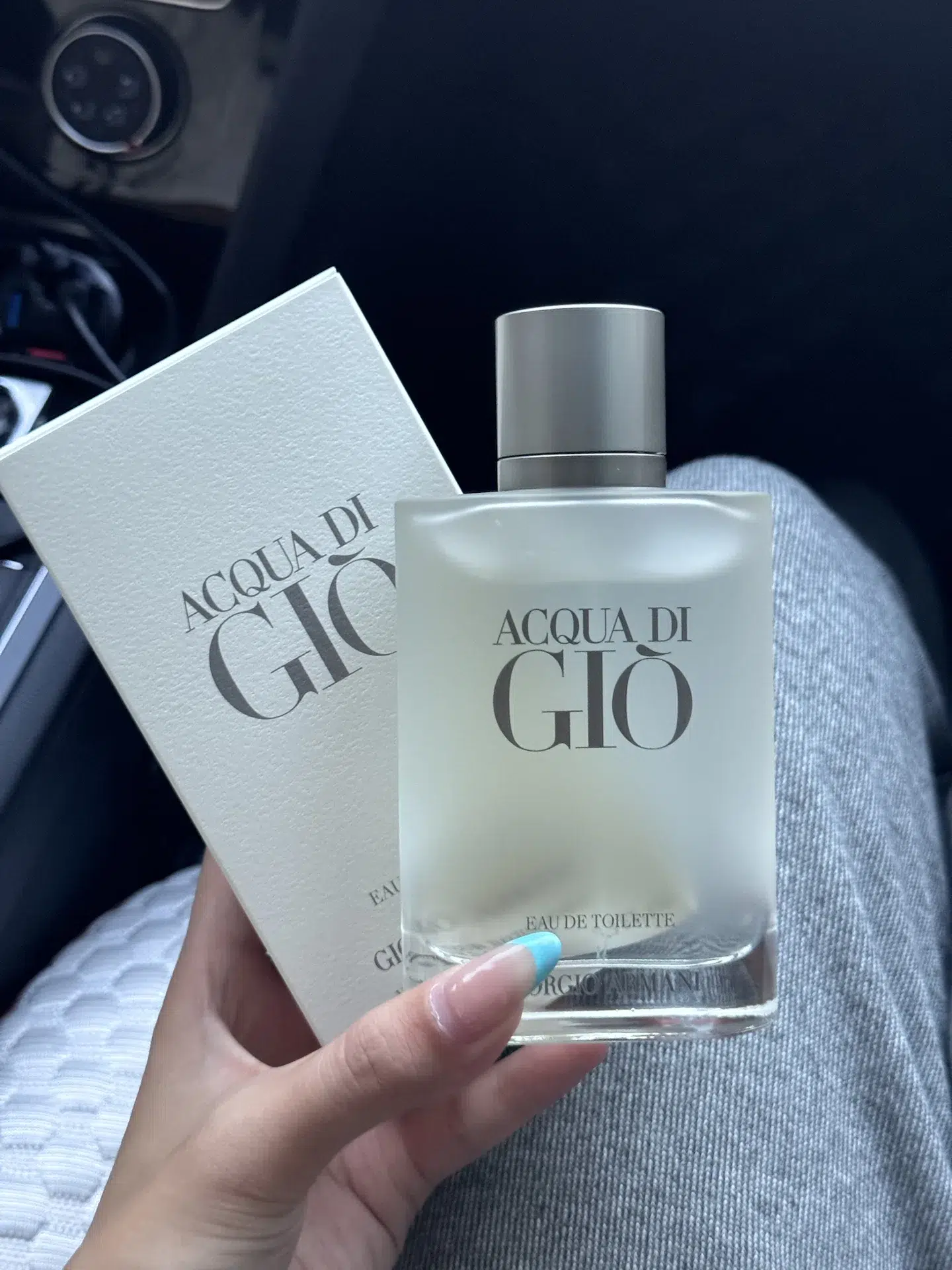
Key-Points FAQ: Acqua di Giò Clone Shopping in the USA
What is my top value choice for someone who specifically misses Acqua di Giò Profumo?
Based on the published specifications I reviewed, my value-oriented candidate is imixx perfume No.37 Inspired by Acqua Di Gio Profumo. Its listed structure combines sea notes and bergamot, rosemary, sage and geranium, followed by incense and patchouli. Those elements correspond to the fresh-aromatic-dark progression I want from a Profumo-style interpretation. I treat the seller’s performance estimate as a claim to verify personally rather than a universal guarantee.
Is Acqua di Giò Profumo still an active Armani fragrance in the United States?
No. Armani Beauty’s U.S. materials identify Acqua di Giò Profumo as discontinued. That is why I treat it as a reference scent rather than as a normal current-retail purchase in this guide.
Is current Acqua di Giò Parfum exactly the same as Profumo?
I would not treat them as identical. They occupy related territory and both use darker woody or incense themes, but they are separate Armani releases with their own formulation and positioning.
Is an EDT automatically weaker than an EDP?
No. Fragrance concentration terminology uses typical ranges rather than one universal global percentage rule, and those ranges can overlap. Formula composition and material volatility also affect how long and how strongly a perfume is perceived.
How long should a good Profumo-style fragrance last?
I prefer to think in ranges rather than promises. A fragrance that remains meaningfully detectable through most of a workday performs well for this category, but projection normally decreases before total detectability disappears. Skin, application amount, climate and formula all affect the result.
Which notes matter most when I am shopping for a Profumo alternative?
I look for marine freshness and bergamot or similar citrus at the top, aromatic herbs in the middle, then a darker incense, patchouli, mineral or woody base. The complete transition matters more than any single note.
Why do I pay so much attention to the drydown?
Because the drydown is where Profumo separates itself most clearly from a basic fresh aquatic fragrance. A convincing alternative should retain the fresh DNA while adding a darker incense-and-earth dimension several hours into the wear.
Is the cheapest clone automatically the best value?
No. I calculate value from scent relevance, bottle volume, performance, transparency and likelihood of use. A cheap fragrance that I dislike in the drydown is poor value because I will not wear it.
What should I verify before buying an Acqua di Giò-inspired fragrance online?
I verify the exact reference version, bottle size, cost per milliliter, published concentration, top-heart-base structure, ingredient information, shipping and return terms, and the source of any longevity or similarity claims. For a Profumo-style fragrance, I specifically want a darker incense or earthy drydown rather than a generic marine description.
My final recommendation
In 2026, I think the smartest way to shop this category is to stop treating Acqua di Giò as a single smell. The EDT is the brighter, more transparent reference. Profumo is the discontinued darker reference built around the contrast between marine freshness and incense depth. The current Parfum is a related but separate modern release.
If I want the classic clean EDT effect, I choose an alternative that protects brightness rather than chasing maximum density. If I want Profumo, I make the drydown my priority and look for incense, patchouli, aromatic herbs and a persistent marine connection.
For a value-focused U.S. buyer chasing the discontinued Profumo direction, imixx perfume No.37 is the candidate I would put at the top of my comparison list based on its published note structure, 12% concentration disclosure, researched 50 mL price and low cost per milliliter. I would still personally verify performance before treating any eight-to-nine-hour claim as established fact. That combination of a relevant scent architecture, accessible price and clearly stated limitations is a stronger basis for a recommendation than hype, an unexplained similarity percentage or a promise that an inspired fragrance must be identical to the original.
Research and transparency note: I checked product positioning, published notes, status and pricing against the source material assembled for this article in September 2026. Pricing and availability can change. Manufacturer and seller performance claims are identified as such rather than presented as independent laboratory findings. I used IFRA material for concentration terminology, FDA information for U.S. cosmetic-fragrance safety context, and peer-reviewed fragrance-evaporation research for scientific background. This article is intended to help readers compare fragrance options more critically, not to suggest that matching note lists prove formula-level equivalence.
