

Guide Overview
Navigating the world of luxury niche fragrances can be incredibly confusing for the everyday consumer. You smell something magical at a high-end boutique, flip over the price tag, and experience severe sticker shock. In this comprehensive, easy-to-understand guide, we take you behind the curtain of the global fragrance industry.
We will break down exactly what makes Penhaligon’s The Coveted Duchess Rose so beloved by analyzing its scent notes using basic cosmetic chemistry. More importantly, we explore the supply chain economics—drawing on data from fashion and business analysts—to explain why these perfumes often cost upwards of $300 in the USA, and how modern analytical processes make finding a high-quality alternative possible.
Instead of just pointing you to a single product, we will review the landscape of fragrance alternatives fairly. We will compare mass-market options (like Zara), independent oil rollers (like Oil Perfumery), commercial dupes, and specialized laboratory recreations like IMIXX’s Inspired by The Coveted Duchess Rose. By the end of this deep dive, you will have the knowledge of a fragrance industry insider, empowering you to smell like royalty without breaking the bank.
1. The Paradox of the Rose: What Does Duchess Rose Actually Smell Like?
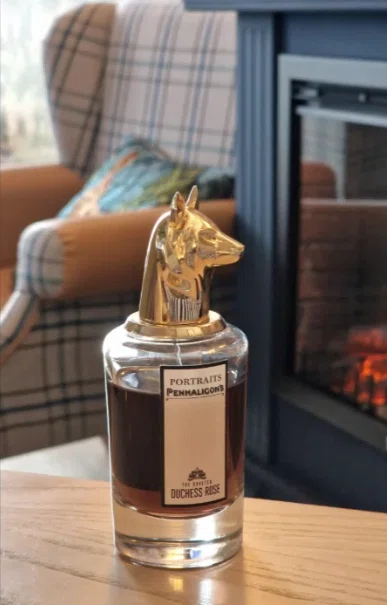
Before you can successfully hunt for a Penhaligon’s Duchess Rose dupe in the USA, you need to understand the architecture of the scent you are trying to replicate. Why has this specific bottle—featuring a heavy metal fox head cap—become such a viral sensation on fragrance forums and social media?
According to comprehensive user reviews on community databases like Fragrantica and Basenotes, Duchess Rose is a masterpiece of contradiction. It is often described as “innocent yet seductive.” But what does that mean in terms of actual ingredients? Let’s break it down like a three-act play, exploring the chemistry behind the scent:
Act I: The Bright, Zesty Opening (Top Notes)
When you first spray the fragrance, you are hit with an immediate, sparkling burst of Mandarin. Think of peeling a slightly green, underripe mandarin orange. It is zesty, a little bitter, and incredibly refreshing. In perfumery, citrus notes are comprised of tiny, light molecules (like limonene). Because they are light, they evaporate into the air very quickly. This is why the citrus blast usually only lasts for the first 15 to 30 minutes of your wear time, acting as the “hook” to draw you in.
Act II: The Dewy, Wet Floral (Heart Notes)
As the mandarin fades, the star of the show steps forward: the Rose. However, this is not the heavy, powdery, “grandma” rose you might associate with vintage perfumes. Perfumers use specific botanical varieties, such as Rose Centifolia (often harvested in Grasse, France), combined with aroma-molecules (like Citronellol and Geraniol) to create a “wet” or “dewy” rose. Imagine walking into a lush garden just after a morning rainstorm and smelling a fresh, youthful rosebud. It feels green, airy, and transparent rather than jammy and dense.
Act III: The Sensual Anchor (Base Notes)
If the fragrance were just citrus and rose, it would disappear from your skin in an hour. To make it last, perfumers anchor these delicate notes with heavy base notes. Duchess Rose relies on a blend categorized as “Musky Woods.” This involves soft, clean, skin-like musks blended with modern, woody amber molecules (such as Ambroxan or Iso E Super). These molecules are physically larger and heavier. They sit close to the skin, creating a warm, sensual trail that lingers long after the rose has quieted down.
The Consumer Pain Point: A primary complaint among US consumers regarding the original $300+ bottle is its longevity. The delicate balance of citrus and fresh rose means that, for many skin types, the fragrance becomes a faint skin scent in just a few hours. This leads us to the most important question for consumers: is it worth the price, and can an alternative perform better?
2. Supply Chain Secrets: Why Are Niche Perfumes So Expensive?
One of the most common questions from fragrance enthusiasts is: “How can scented water cost $300?” There is a common misconception that a luxury perfume contains hundreds of dollars worth of rare, magical ingredients. While high-end natural absolutes are indeed expensive, the reality of the global cosmetics industry is that a massive portion of the retail price is dedicated to marketing, packaging, and retail distribution.
According to industry analyses reported by publications like The Business of Fashion and beauty economists, the actual “juice” (the fragrance oil and alcohol) inside a bottle of prestige perfume often accounts for roughly 5% to 10% of the final retail price. When you walk into a high-end department store, you are participating in a very long, very expensive supply chain.
Table 1: The Estimated Cost Breakdown of Luxury vs. Direct-to-Consumer Perfumery
Note: The following percentages are industry averages based on general luxury cosmetic supply chain models, not specific to any one brand.
| Expense Category | Traditional Luxury Brand Model | Direct-to-Consumer (DTC) Model | Industry Context & Consumer Impact |
|---|---|---|---|
| The “Juice” (Fragrance Oil & Alcohol) | 5% – 10% | 30% – 40% (as a % of total cost) | Even highly acclaimed niche brands spend a fraction of the retail price on the liquid. DTC brands can invest a larger portion of their budget directly into raw materials. |
| Packaging (Custom Glass, Heavy Caps) | 15% – 25% | 10% – 15% | Luxury brands use custom-molded glass and heavy Zamac (metal) caps which are expensive to produce and ship. Alternative brands usually use standardized, functional glass. |
| Retailer Margins & Distributors | 50% – 60% | 0% (Sold directly online) | Department stores in the USA require massive margins to cover physical floor space and sales staff. DTC models eliminate this entirely. |
| Marketing, PR, & Brand Heritage | 15% – 20% | Minimal (Organic search, social) | You pay a premium for the brand’s prestige, celebrity endorsements, and global advertising campaigns. |
This economic reality is the crucial “secret” of the fragrance industry. Once you realize that the formula itself is only a fraction of the cost, the idea of finding a high-quality alternative that smells remarkably similar for a fraction of the price starts sounding like simple economics rather than a scam.
3. The Science of the “Dupe”: How Are Fragrances Recreated?
So, how does an alternative fragrance brand actually recreate a complex scent like Duchess Rose? Modern perfumery relies on highly sophisticated analytical chemistry, rather than just a perfumer sitting in a room guessing notes by nose.
The Magic Machine: GC-MS
The core technology used across the flavor and fragrance industry is called Gas Chromatography-Mass Spectrometry (GC-MS). Let’s use a baking analogy to explain how this works without getting bogged down in academic jargon.
Imagine someone bakes the most delicious chocolate cake in the world, but refuses to share the recipe. GC-MS is like a machine where you can drop a slice of that cake in, and it prints out a list saying: “This cake contains exactly 200g of flour, 150g of sucrose, 50g of Dutch cocoa powder, and specific flavor compounds found in vanilla.”
In perfumery, a sample of the target fragrance is vaporized and sent through the GC-MS machine. It separates the perfume into its individual chemical components and identifies them based on their molecular weight. This gives the perfumer a highly accurate “blueprint” of the original scent’s molecular structure.
4. Evaluating the Contenders: Where to Buy the Best Alternative
In the USA, the market for fragrance alternatives has exploded. However, not all alternatives are created equal. As a consumer, you have several different avenues you can take, each with its own pros and cons. To maintain fairness, let’s look at the actual landscape of options available if you want a Duchess Rose vibe.
Option A: Fast-Fashion & Mass Market (e.g., Zara)
- The Approach: Brands like Zara often release fragrances that capture the “trend” of popular niche scents. For instance, Zara’s Fashionably London (created by Jo Malone) plays with similar rose and musk dynamics.
- The Pros: Extremely affordable (usually under $30) and highly accessible in shopping malls across the USA.
- The Cons: These are “interpretations” rather than exact recreations. Because they are mass-produced at very low price points, they can sometimes rely on sharper synthetic alcohols and generally offer lower longevity (often fading in 2-3 hours).
Option B: Independent Perfume Oil Rollers (e.g., Oil Perfumery)
- The Approach: Companies like Oil Perfumery specialize in creating 10ml rollerballs of pure fragrance oil, including direct impressions of Duchess Rose.
- The Pros: Very travel-friendly, inexpensive, and because they are alcohol-free, they don’t evaporate quickly—meaning the base notes linger on the skin for a long time.
- The Cons: Perfume oils have almost zero “sillage” (projection). They sit entirely flat on the skin; you will smell it, but people around you won’t. Furthermore, oils often struggle to “lift” bright top notes like Mandarin, making the scent feel heavier than the original.
Option C: Commercial “Dupe” Houses (e.g., Dossier, Oakcha, Alt)
- The Approach: These are the big players in the alternative market. They offer 50ml bottles that mimic popular designer and niche scents.
- The Pros: They offer a solid, reliable 80-85% match for a fraction of the cost, usually around $40-$50. Great return policies.
- The Cons: Because they produce in massive, factory-scale volumes, they sometimes rush the “maceration” process (the aging of the perfume), which can result in an alcoholic opening blast. They also tend to focus on mega-hits (like Baccarat Rouge) and may not always carry delicate, specific niche profiles like Duchess Rose.
Option D: Specialized DTC Fragrance Laboratories (e.g., IMIXX Perfumes)
- The Approach: Brands like IMIXX focus on smaller-batch, highly concentrated recreations. Their version, Inspired by The Coveted Duchess Rose, takes a laboratory-first approach to specific niche profiles.
- The Pros: They typically formulate at Extrait de Parfum concentrations (higher oil content than standard Eau de Parfum), which directly addresses the longevity issues of the original. Proper maceration times are observed, smoothing out the alcohol. It offers an excellent balance of accuracy, projection, and long-lasting wear.
- The Cons: You cannot test them in a physical retail store prior to purchase, relying instead on online reviews and scent descriptions.
5. The Secret to Longevity: Concentration, Maceration, and Skin Chemistry
If you are going to invest in an alternative, you want to ensure it actually lasts through your workday. The secret to fragrance longevity lies in a combination of the manufacturer’s formulation and your own biology.
Eau de Parfum vs. Extrait de Parfum
Fragrances are categorized by how much pure perfume oil is mixed into the carrier (alcohol and water).
- Eau de Toilette (EDT): ~5% – 15% oil. Very light, typically lasts 2-4 hours.
- Eau de Parfum (EDP): ~15% – 20% oil. The industry standard. (The original Duchess Rose is an EDP).
- Extrait de Parfum (Pure Perfume): ~20% – 30%+ oil. The most concentrated, dense form of fragrance available.
By choosing an alternative formulated as an Extrait de Parfum, you fundamentally change how the perfume behaves. The higher oil content provides a thicker “anchor” for the volatile mandarin and delicate rose notes. While individual skin chemistry varies, standard cosmetic science suggests that Extrait concentrations can last up to 8-10 hours, forming a rich, consistent bubble around you rather than evaporating quickly.
The Magic of Maceration (Aging the Perfume)
Maceration is the perfumery equivalent of aging fine wine. Once the pure fragrance oil is mixed with alcohol, it needs time to sit in a dark, temperature-controlled environment. During this resting period (ideally 4 to 6 weeks), chemical bonds form. The alcohol “burn” softens, and the scent becomes rounder and more cohesive.
Mass-market brands sometimes shorten this step to rush products to shelves. Premium alternative brands build maceration into their supply chain, ensuring that when the bottle arrives, it is fully aged and ready to wear.
Your Skin Chemistry (pH and Lipids)
Dermatologically speaking, your skin’s pH and lipid (fat) barrier drastically affect perfume. Dry skin lacks the oils necessary to trap fragrance molecules, causing them to evaporate rapidly. Conversely, well-moisturized skin holds onto scent much longer. This brings us to practical application.
6. Pro Tips: How to Make Any Rose Fragrance Last Longer
Whether you buy the $300 original, a Zara EDT, or an IMIXX Extrait, your daily habits heavily influence performance. Here are insider tips for maximizing your scent trail:
- The Moisturizer Trick: Always apply an unscented body lotion, shea butter, or a neutral carrier oil (like jojoba) to your skin right out of the shower. Give it a minute to absorb, then spray your perfume. The oils in the lotion give the fragrance molecules a lipid base to grip onto. (Some people even use a tiny dab of Vaseline on their pulse points before spraying).
- Stop Rubbing Your Wrists: We see this in movies—someone sprays their wrists and aggressively rubs them together. The friction creates heat, which can literally crush the delicate top notes (like sparkling Mandarin) and disrupt the scent’s intended evolutionary timeline. Simply spray, and let it air dry.
- Strategic Pulse Points: Spray where your body generates heat: the inner wrists, the crook of the elbows, behind the ears, and the base of the throat. Heat helps diffuse the scent.
- The Fabric Application: If your skin naturally “eats” fragrance, spray a little bit onto your clothes (always test on a small, hidden area first to ensure the oils don’t stain). Natural fibers like cotton and wool hold onto musky and woody base notes phenomenally well—sometimes for days!
- Layering with Aroma-Molecules: To boost projection, many fragrance enthusiasts layer their rose perfumes over a base of pure Iso E Super or Ambroxan (often sold as “Molecule 01” or “Molecule 02”). These molecules act as a magnifying glass for the floral notes on top of them.
Frequently Asked Questions (FAQs)
1. What is the difference between Duchess Rose and Elisabethan Rose?
This is a common point of confusion, as both are famous rose scents from Penhaligon’s. Duchess Rose is a modern, transparent, slightly green rose with a bright mandarin opening and a clean musky-wood base. It feels youthful and light. Elisabethan Rose is a much more traditional, powdery, and jammy scent, featuring notes like hazelnut leaf, almond oil, and vetiver. If you prefer a fresh, clean vibe, Duchess Rose is the way to go.
2. Is it safe to buy “dupe” fragrances? Are the ingredients regulated?
Yes, provided you buy from a reputable brand. Whether you are buying a $300 niche bottle or a $40 alternative, reputable fragrance houses globally use aroma-chemicals manufactured by the same major supply companies (such as Givaudan, Firmenich, or Symrise). Always look for brands that state their formulations are compliant with IFRA (International Fragrance Association) safety standards, which regulate the safe usage levels of potential allergens to protect consumer health.
3. Why do some alternatives smell a bit different when I first spray them compared to the original?
This is often due to the concentration level. An alternative formulated as an Extrait de Parfum (higher oil concentration) will often feel slightly denser or take an extra minute to “bloom” on the skin compared to an alcohol-heavy Eau de Parfum. Furthermore, shipping can temporarily disrupt a fragrance (a phenomenon known in the community as “bottle shock”). Always give a new fragrance a few days to rest after arriving in the mail, and wait 10 to 15 minutes after spraying for it to settle into your skin before judging the likeness.
4. Is The Coveted Duchess Rose scent profile better for summer or winter?
The beauty of this specific DNA is its year-round versatility. The bright citrus and fresh rose make it incredibly uplifting and appropriate for humid spring and summer days in the USA. However, the musky, woody base notes provide enough warmth and depth to carry you beautifully through crisp autumn and winter evenings. It makes an excellent, versatile daily signature scent.
5. Are alternative fragrances vegan and cruelty-free?
While you should always check with the specific brand, most modern alternative brands—including IMIXX—are strictly vegan and cruelty-free. Modern perfumery has largely moved away from animal-derived ingredients (like natural musk from deer, which is illegal and unethical). High-quality alternatives utilize advanced synthetic musks and ethically sourced botanicals, ensuring no animal testing is conducted.
Conclusion: Democratizing Luxury Fragrance
The aura surrounding luxury perfumery is intentionally designed to feel exclusive, mysterious, and unattainable. However, as we have explored through the lens of cosmetic chemistry and supply chain economics, a $300 price tag is not a strict prerequisite for a breathtaking olfactory experience. By understanding the structural chemistry of Mandarin, Rose Centifolia, and Musky Woods, you are now equipped to see past the marketing smoke and mirrors.
When searching for a Penhaligon’s Duchess Rose dupe in the USA, you have a wealth of options. Whether you explore affordable high-street interpretations like Zara, convenient natural perfume oils, commercial dupe houses, or specialized laboratory formulations, the key is knowing what you value most: lowest absolute price, travel convenience, or exactness and longevity.
For those who refuse to compromise on complexity and demand all-day performance, specialized Extraits offer a highly compelling solution. We invite you to explore the modern approach to perfumery with options like IMIXX’s Inspired by The Coveted Duchess Rose. By prioritizing formulation over flashy packaging and utilizing direct-to-consumer economics, the industry is democratizing one of the most coveted scent profiles in the world.
You no longer have to choose between your budget and your desire to smell incredible. Explore the smart way to wear luxury, test different formats, and discover your new signature scent today.
References & Further Reading
- Fragrance Notes & Community Reviews: See consumer consensus and note breakdowns for Duchess Rose on Fragrantica and Basenotes.
- Fragrance Industry Economics: For more reading on beauty industry markups and the cost of “the juice” versus packaging, consult reports by The Business of Fashion and cosmetics industry analyses.
- Safety Standards: Learn more about global fragrance safety, allergen regulations, and compliance at the International Fragrance Association (IFRA).
