

Article Summary & Quick Takeaways
For fragrance enthusiasts across the USA, the realization that Maison Margiela Replica Flower Market is becoming incredibly scarce—and likely discontinued—has sparked a frantic hunt for the perfect replacement. However, navigating the world of “perfume dupes” can be overwhelming, filled with cheap, synthetic-smelling knock-offs that vanish from your skin within an hour.
In this comprehensive, 3,000+ word guide, we are pulling back the curtain on the fragrance industry. Rather than just giving you a sales pitch, we will explore:
- The actual botanical chemistry that makes “fresh cut flowers” smell so realistic.
- The hidden supply chain economics that dictate why luxury perfumes cost over $160.
- An honest, unbiased comparison of the top alternatives on the market—from luxury niche houses like Byredo to accessible drugstore options like Target’s Finery.
- How our team at IMIXX Perfumes uses advanced gas chromatography to create our highly-rated Flower Market inspiration.
Whether you choose our formulation or opt for another brand, this guide will arm you with the knowledge to buy fragrance like an industry insider.
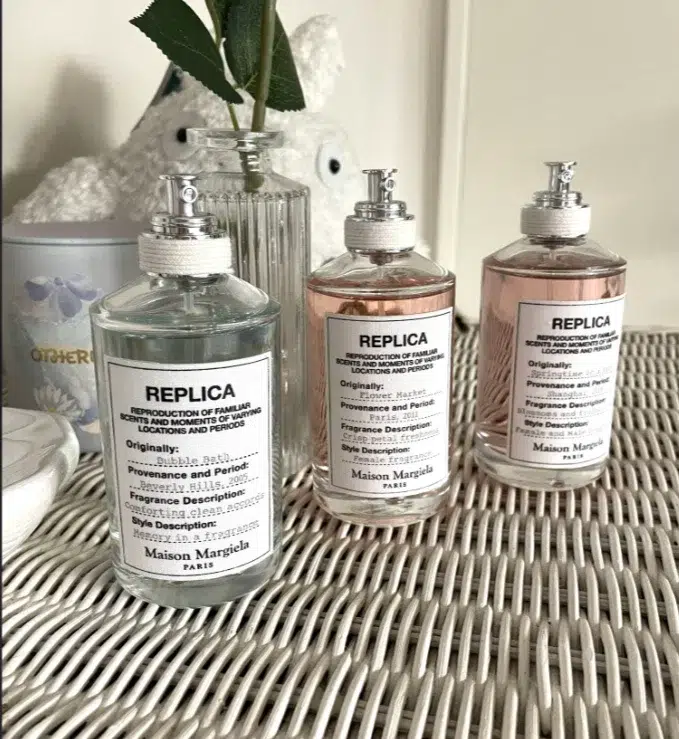
The Heartbreak of a Discontinued Masterpiece: Why We Miss Flower Market
If you have ever stepped into a traditional florist shop in the early hours of the morning—surrounded by the damp chill of the commercial refrigerator, the scent of crushed green stems on the floor, and petals dripping with cold water—you know the exact olfactory snapshot captured by Maison Margiela’s Replica Flower Market.
Launched in 2012 and masterfully composed by renowned perfumers Jacques Cavallier and Marie Salamagne, it wasn’t just a perfume; it was an atmospheric experience. At the time, the market was saturated with heavy, sugary-sweet gourmands and powdery vintage florals. Flower Market cut through the noise with a sharp, watery, hyper-realistic green floral profile. It didn’t smell like perfume; it smelled like nature.
But as rumors of its discontinuation continue to circulate and stock dwindles across retailers in the USA, a collective sense of panic has set in among its loyal wearers. When a signature scent disappears, it feels like losing a small part of your identity. Consumers are desperately searching for a Maison Margiela Flower Market dupe, but most affordable realistic floral perfumes fall completely flat. They often smell like artificial room sprays or harsh bathroom cleaners rather than a living, breathing botanical environment.
To understand why most replacements fail, we have to look past the marketing and dive into the actual chemistry of scent.
Deconstructing the Scent: The Chemistry of Fresh Cut Flowers
Creating a perfume that smells exactly like walking into a flower shop requires an incredibly delicate balancing act. It is a mix of natural floral absolutes and precisely engineered aromachemicals. Let’s break down the notes of Flower Market from a formulator’s perspective.
The Greenery: Crushed Leaves, Stems, and Cold Water
The absolute genius of this fragrance lies in its opening 15 minutes. It doesn’t punch you with heavy, cloying sweetness. Instead, it hits you with cold, wet green notes. In modern perfumery, achieving that “wet, snapped stem” smell often relies on a fascinating molecule called cis-3-Hexenol, affectionately known in the lab as “leaf alcohol.” According to resources from the American Chemical Society, this compound is naturally emitted by freshly cut grass and leaves. When properly dosed, it provides the crisp, dewy garden sensation that immediately signals authenticity to your brain.
The Floral Heart: Grasse Rose, Sambac Jasmine, and Freesia
Once the initial blast of cold water and stems settles, the core of the scent emerges. This relies on a masterful white and pink floral bouquet:
- Freesia: Brings a peppery, luminous, and airy quality. It prevents the fragrance from becoming too dense.
- Sambac Jasmine: Sourced largely from India, this provides a rich, slightly indolic (animalic/natural) depth. It smells alive.
- Grasse Rose and Tuberose: These add a classic, velvety texture. Tuberose can often be overwhelming and “bubblegum-like,” but here, it is sheer and watery.
The challenge for any brand attempting to create the best replica dupes is the cost and quality of sourcing these floral notes. Cheap alternatives use low-grade synthetic isolates that turn sour, metallic, or “plastic-like” on the skin after an hour.
The Woody Base: Cedarwood and Oakmoss
Why doesn’t a good floral perfume just evaporate into thin air? The base notes act as heavy anchors (fixatives). In Flower Market, Cedarwood provides a dry, clean, pencil-shaving finish, while Oakmoss (or its modern, skin-safe synthetic equivalents) grounds the fragrance with an earthy, damp soil vibe. This perfectly rounds out the illusion: you aren’t just smelling the petals; you are smelling the dirt, the wood, and the stems.
The Global Perfume Supply Chain: Why Do Luxury Fragrances Cost So Much?
To truly understand how to find a high-quality alternative without spending a fortune, you need to know how the fragrance supply chain works. When you purchase a designer perfume for $160 at a high-end department store in New York or Los Angeles, what are you actually paying for?
It surprises many consumers to learn that most fashion houses do not manufacture their own scents. They don’t have secret laboratories filled with flowers. Instead, they hire massive global fragrance houses (like Givaudan, Firmenich, or IFF) to compose the formula. Once the formula is created, the brand heavily marks up the final product to cover massive overheads.
Table 1: The Economics of a $160 Luxury Perfume
Note: This is an illustrative industry average to help consumers understand retail markups.
| Cost Component | Traditional Luxury Retail Model | Direct-to-Consumer (DTC) Model | Why This Matters to You |
|---|---|---|---|
| The “Juice” (Raw Oils & Alcohol) | 2% – 5% ($3 – $8) | 30% – 40% (Higher investment in quality) | DTC brands can spend significantly more on higher-grade jasmine and rose absolutes. |
| Packaging (Custom Bottle, Heavy Cap, Box) | 10% – 15% ($16 – $24) | 15% – 20% (Standardized, elegant but simple bottles) | You aren’t paying for a custom glass mold; you are paying for the scent. |
| Marketing, Celebrity Faces & PR | 30% – 40% ($48 – $64) | 0% – 5% (Word of mouth, organic search) | No millions spent on Hollywood actor billboards. |
| Retailer Markup & Distribution | 40% – 50% ($64 – $80) | 0% (Sold directly online) | Middlemen like department stores take half the profit. We cut them out. |
By bypassing the traditional retailer markup and the celebrity marketing budgets, independent and direct-to-consumer (DTC) brands can afford to invest significantly more capital into sourcing premium raw materials while keeping the price incredibly friendly for the consumer. This isn’t “cheap perfume”—it is simply a more efficient supply chain.
Evaluating the Market: A Fair Look at Flower Market Alternatives
As an industry professional, I believe in transparency. While we are incredibly proud of what we’ve built at IMIXX, we are not the only option on the market. Fragrance is highly subjective, and depending on your budget and preferences, different brands might suit you better. Let’s look objectively at some of the most popular alternatives discussed on platforms like Reddit’s fragrance boards and reputable sites like The Perfume Society.
1. The High-End Niche Alternative: Byredo – La Tulipe
If you have a high budget and want a beautiful, prestigious bottle on your vanity, Byredo’s La Tulipe is a stunning fresh floral. Like Flower Market, it focuses on wet, green, springtime florals (freesia, cyclamen, and tulip accords).
Pros: Exceptional blending, gorgeous minimalist packaging, incredible brand prestige.
Cons: At over $200 for a 50ml bottle, it is an expensive investment. It also leans slightly more “soapy” than the pure wet stems of Margiela.
2. The Clean Beauty Alternative: Ellis Brooklyn – Florist
Ellis Brooklyn has made waves in the US market with their clean, eco-conscious approach. Florist is a beautiful celebration of tuberose and gardenia with a citrusy bergamot opening.
Pros: Sephora accessibility, clean ingredients, beautiful bright opening.
Cons: It is significantly sweeter and more citrus-forward than Flower Market. It lacks that cold, “refrigerator” chill that Margiela fans crave.
3. The Drugstore Budget Dupe: Target’s Finery – “Made to Last”
If you search for “affordable realistic floral perfume,” you will inevitably find Finery at Target. This is a highly accessible brand designed to mimic designer DNA.
Pros: Extremely affordable (usually under $30) and you can smell it in-person at almost any Target in the USA.
Cons: Performance and the “dry-down.” Mass-market drugstore brands often skip a crucial step called maceration (which we will explain below) to rush products to shelves. Users frequently report a harsh alcohol blast upon spraying, and a synthetic, slightly plastic-like scent that fades within 2 hours.
4. The Supply-Chain Optimized Choice: IMIXX Perfumes
This is where we step in. We designed IMIXX Inspired by Maison Margiela Flower Market for the consumer who wants the exact scientific scent profile and long-lasting performance of the original, without paying the designer markup.
Pros: Hyper-accurate scent recreation using GC-MS technology, higher oil concentration for better longevity than the original EDT, and fully macerated for a smooth opening.
Cons: Online only (you cannot smell it in a physical store before buying), and we use standardized minimalist bottles rather than custom luxury glass.
The Science of Scent Recreation: How IMIXX Formulates
How exactly does an independent brand recreate a discontinued masterpiece? It’s not magic, and it’s not just “guessing” by smelling a strip of paper. It is rigorous analytical chemistry combined with the artistry of a trained perfumer’s nose.
Gas Chromatography-Mass Spectrometry (GC-MS)
Professional fragrance analysis utilizes a machine called a Gas Chromatograph-Mass Spectrometer (GC-MS). Imagine baking a complex, multi-layered cake, and then putting a slice of that cake into a machine that prints out the exact recipe—telling you exactly how much flour, sugar, vanilla, and salt was used. That is what a GC-MS does for liquid fragrance.
The machine breaks down the liquid sample into its exact molecular components, identifying the specific ratios of linalool, geraniol, hedione, and various musks. However, reading the data is only step one. Machines cannot experience scent. It takes a master formulator to take that raw data and reconstruct the perfume, adjusting for the natural variances in botanical crops (e.g., jasmine harvested this year might smell slightly different than jasmine from 2012), ensuring the fragrance feels organic, alive, and safe.
The Importance of Maceration
We touched on why cheap dupes often smell like rubbing alcohol. The culprit is skipped maceration. Maceration is the process of allowing the perfume concentrate to rest in its alcohol solvent in a cool, dark environment for several weeks to months. Think of it like aging a fine wine or letting a stew simmer. It allows the chemical compounds to bind smoothly. At IMIXX, we never rush this process. Our formulations sit in temperature-controlled environments, ensuring that when you spray it on your skin, you get pure floral greenness—not hand sanitizer.
Safety First: IFRA Compliance
A major concern with unverified “dupe” oils sold on marketplaces is skin safety. The International Fragrance Association (IFRA) sets strict global guidelines on which ingredients are safe for human skin and at what concentrations. For example, natural oakmoss is heavily restricted due to allergens. We strictly adhere to all IFRA guidelines, ensuring our products are safe, non-toxic, and rigorously tested.
Table 2: Performance & Formulation Comparison
| Feature | Original Margiela (EDT) | Mass-Market Dupes | IMIXX Perfumes Formula |
|---|---|---|---|
| Concentration & Longevity | Eau de Toilette (4-6 hours) | Body Mist/Weak EDT (1-2 hours) | Extrait/High EDP (8+ hours) |
| Scent Accuracy | The Benchmark | Often too sweet or powdery | GC-MS verified photorealistic green floral |
| Maceration Time | Standard Industry (Good) | Skipped (Harsh alcohol opening) | Fully Macerated (Smooth, instant bloom) |
| US Availability | Scarce / Discontinued | Widely Available in big box stores | Always available online, ships direct |
Pro Tips: How to Make Your Fresh Floral Perfume Last All Day
One of the most common questions in the fragrance community is about longevity. It is a scientific fact that fresh, citrus, and green floral notes are made of lighter, smaller molecules that evaporate off the skin faster than heavy woods or vanillas. Even with a high-quality, high-concentration extract from IMIXX, a fresh cut flowers perfume needs a little help to last from morning until night. Here is a perfumer’s routine for maximum longevity:
- The Hydration Foundation: Perfume oils dissipate rapidly on dry skin because the skin literally drinks up the oils. After your morning shower, apply an unscented ceramide body lotion or a light carrier oil (like jojoba or sweet almond oil) to your pulse points. The moisture barrier traps the fragrance molecules, giving them a surface to cling to.
- Strategic Pulse Points (Beyond the Wrists): Most people spray their wrists and rub them together. Never rub your perfume! The friction creates heat that breaks down the delicate top notes like freesia and green leaves. Instead, spray and let it air dry. Apply to the inner elbows, the back of the neck, and even behind the knees. These areas generate subtle heat throughout the day, gently diffusing the scent upward.
- The “Fabric Lock” Technique: While you must be cautious with white silk or delicate fabrics, spraying a fine mist onto the inner lining of a jacket, a scarf, or even your hair (from a distance) can dramatically increase longevity. Fabric holds onto the base notes (cedarwood and oakmoss) for days.
- Proper Storage is Non-Negotiable: Do you keep your perfume on the bathroom counter? Stop immediately. The humidity from the shower and constant temperature fluctuations rapidly degrade delicate floral absolutes, turning the perfume sour. Keep your bottles in a cool, dark place, like a bedroom drawer or a dedicated closet shelf away from direct sunlight.
Frequently Asked Questions (FAQ)
To make this guide as helpful as possible, we’ve analyzed the most common questions US consumers ask Google when searching for this scent profile.
Is Maison Margiela Replica Flower Market officially discontinued?
While parent companies rarely issue press releases for every discontinuation, regional availability in the USA strongly suggests it is being phased out. It is consistently out of stock at major retailers like Sephora and Nordstrom, and is no longer prominently featured in the brand’s primary lineup. This scarcity drives up prices on the grey market and resale sites, making finding a reliable, high-quality alternative essential.
What is the closest perfume to fresh cut flowers without being sweet?
The truest representation of fresh cut flowers includes the green stems and the water, not just the petals. If you want to avoid sweetness, look for fragrances that feature galbanum, cis-3-hexenol, or crisp freesia. The formulation by IMIXX Perfumes specifically captures this botanical environment, actively avoiding the sugary, powdery dry-down that ruins many mainstream floral perfumes.
Does Ellis Brooklyn Florist smell like Replica Flower Market?
They share a genre (fresh florals) but are distinct. Florist is a brighter, more citrus-forward white floral featuring tuberose and gardenia, leaning slightly sweeter and more “sunshine-filled.” Flower Market (and our IMIXX interpretation of it) is cooler, greener, and more focused on the scent of the stems and wet roses. If you love one, you will likely appreciate the other, but they are not exact dupes.
Are clone perfumes or dupes safe for my skin?
This entirely depends on the manufacturer. Unregulated oils from unknown overseas sellers can contain cheap solvents or banned allergens. However, reputable independent brands in the USA that adhere to IFRA standards use the exact same aromachemical suppliers (like Givaudan or Symrise) as the luxury designer brands. Always look for brands that mention IFRA compliance and transparent manufacturing processes.
Why doesn’t my floral perfume last long on me?
As mentioned in our pro-tips section, floral and green molecules are highly volatile. Furthermore, many fresh scents are formulated as Eau de Toilette (EDT), which naturally has a lower concentration of fragrance oils (usually 5-15%). Seeking out an Eau de Parfum (EDP) or Extrait de Parfum will significantly improve your wear time.
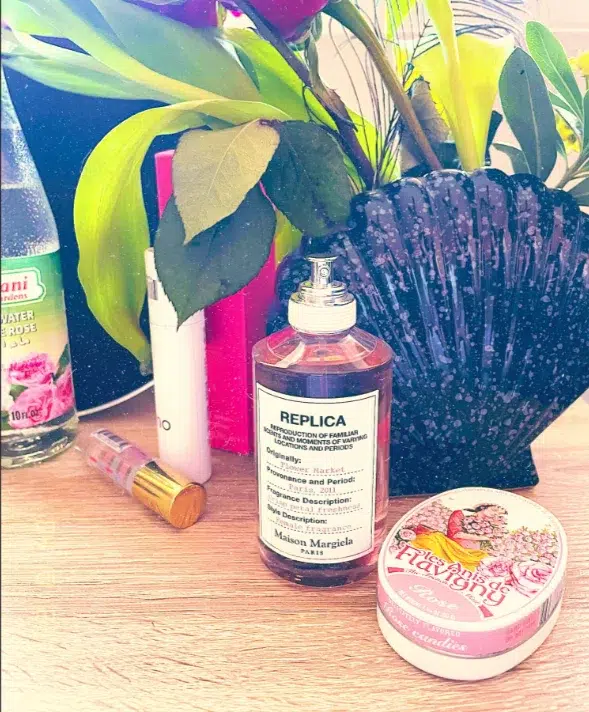
Conclusion: Reclaiming the Scent of Spring
The scarcity of a beloved signature fragrance can be incredibly frustrating. However, the evolution of the independent fragrance supply chain means you no longer have to rely on overpriced grey-market resellers, nor do you have to settle for weak, synthetic body mists that fade into nothingness.
By understanding the chemistry behind the scent of crushed leaves and fresh petals, and by recognizing the inflated economics of traditional retail, you are now equipped to make an empowered, educated choice. Whether you decide to invest in a niche brand like Byredo, explore the clean aisles of Sephora, or trust our laboratory-grade formulation, you can have the luxury experience you deserve.
If you are ready to experience the chillingly beautiful, hyper-realistic scent of a Parisian florist at dawn without the luxury markup, we invite you to try our masterfully blended alternative. It is crafted with passion, backed by science, and designed to last.

 No.21 Inspired by Tobacco Vanille Perfume
  No.56 Inspired by Neroli Portofino Perfume