

Executive Summary: The Quest for the Perfect Tea Fragrance
This comprehensive guide addresses the growing demand within the USA for “Quiet Luxury” fragrances, specifically focusing on the massive popularity of tea-based scents. Through rigorous supply chain analysis, laboratory insights, and olfactory science, we dissect the legendary Armani Privé The Yulong. We address its primary consumer pain point—poor longevity due to highly volatile citrus and tea compounds—and explore the chemical reasons behind it. Furthermore, we introduce the concept of information asymmetry in the luxury perfume market, breaking down the true cost of designer fragrances versus direct-to-consumer alternatives. Finally, we provide verifiable, expert-backed methodologies on how to choose high-quality alternatives, highlighting Imixx Perfumes No. 38 as the premier, scientifically-optimized solution for longevity and scent accuracy, while offering advanced tips for maximizing fragrance performance on the skin.
Author: Linus Dacke Thall | Chief Fragrance R&D and Supply Chain Director, Imixx Perfumes USA
Linus brings over 15 years of experience in fragrance compounding, raw material sourcing, and GC-MS (Gas Chromatography-Mass Spectrometry) analysis, working directly with top-tier fragrance houses to bring transparent, IFRA-compliant olfactory art to the US market.
Introduction: The Rise of Quiet Luxury and the “Skin Scent” Dilemma
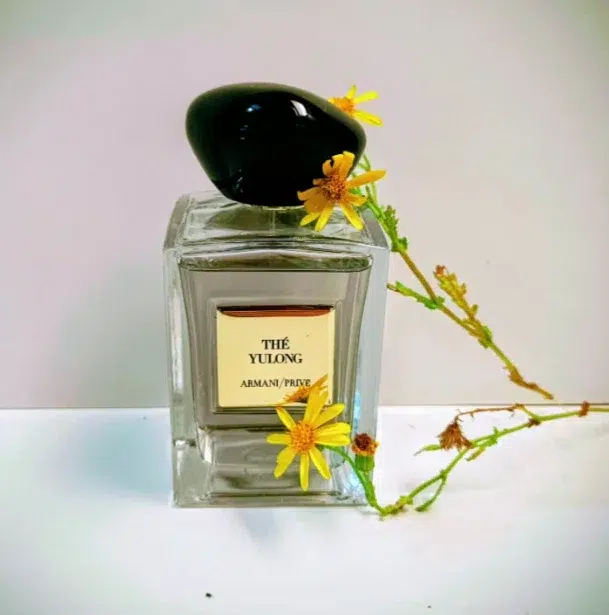
In the evolving landscape of global perfumery, particularly within the USA, the pendulum has swung from loud, room-filling gourmands to the refined elegance of “Quiet Luxury.” Consumers are increasingly seeking fragrances that do not scream for attention but rather whisper of sophistication, cleanliness, and intellectual depth. At the forefront of this movement are tea fragrances, with Giorgio Armani’s Privé The Yulong leading the charge as the ultimate expression of a “Zen-like,” spa-quality olfactory experience.
However, an undeniable dilemma plagues enthusiasts of this beautiful scent. If you search for an Armani The Yulong dupe or browse forums like Reddit and Fragrantica, a consistent narrative emerges: the fragrance is a masterpiece of blending, but its longevity is tragically fleeting. When a consumer spends over $200 for a luxury niche fragrance, the expectation is that the scent will carry them through a standard workday. Yet, due to the inherent chemical volatility of natural tea and citrus notes, many users report the scent fading to a faint whisper within two to three hours.
As a supply chain expert and fragrance developer, I look at this not just as a consumer grievance, but as a fascinating chemical and economic puzzle. Why does a luxury brand allow such poor performance? And more importantly, how can independent, direct-to-consumer laboratories engineer an Armani The Yulong alternative that not only matches the scent profile but fundamentally solves the longevity issue? In this deep dive, we will peel back the curtain on the fragrance industry, decode the molecular structure of tea scents, and guide you toward making the most informed fragrance investments in 2024 and beyond.
The Anatomy of a Masterpiece: What Makes Armani Prive The Yulong Smell So Good? (The Notes Breakdown)
To understand how to replicate or improve upon a scent, we must first understand its molecular architecture. The Yulong is celebrated for its masterful balance of contrasting elements: the bright, ethereal nature of green tea against the deeper, slightly smoky character of black tea. Let us break down the olfactory pyramid and the aroma chemicals that bring it to life.
The Top Notes: A Burst of Volatile Brilliance
The initial spray of The Yulong is characterized by a luminous, mouth-watering freshness. This is achieved through a precise blend of Mandarin Orange and Petitgrain (extracted from the leaves and twigs of the bitter orange tree). In the laboratory, we see high concentrations of Limonene and Linalyl Acetate. These molecules are incredibly buoyant, meaning they evaporate rapidly upon contact with the warmth of human skin. This is why the opening is so vibrant but short-lived. It creates an immediate emotional connection—a rush of clean, vibrant energy that is perfectly suited for the warm climates often found across the southern USA.
The Heart Notes: The Dual Tea Accord
The core of the fragrance relies on an intricate illusion. “Tea” does not yield an essential oil that can simply be pressed and poured into a bottle. While some tea absolutes exist (often extracted via solvent or supercritical CO2), they are notoriously difficult to work with, often smelling overly herbaceous, muddy, or reminiscent of dry tobacco. Therefore, perfumers must construct a “tea accord” using a blend of aromachemicals and naturals.
The green tea facet is typically constructed using compounds like Hedione (Methyl dihydrojasmonate), which imparts a transparent, watery, and slightly floral freshness, paired with Ionones (which provide a green, slightly powdery nuance). The black tea aspect—which gives The Yulong its depth—often utilizes a touch of Guaiac wood or subtle smoke nuances to mimic the oxidation process of black tea leaves. The magic of The Yulong lies in how these two accords sit side-by-side, creating a dynamic tension between light and shadow.
The Base Notes: The Anchoring Foundation
To prevent the fragrance from vanishing completely within minutes, base notes are employed. The Yulong utilizes Vetiver and Ambrette seed. Vetiver provides a clean, rooty, slightly soapy woodiness that extends the “green” feeling of the tea, while Ambrette (often synthetically replicated via Ambrettolide due to cost and ethical sourcing) offers a musky, skin-like warmth. However, in the original formulation, these base notes are kept exceptionally sheer to maintain the “Quiet Luxury” aesthetic, which unfortunately contributes to the overall lack of staying power.
The Elephant in the Lab: Why Are People Looking for an Armani The Yulong Dupe?
If the scent profile is universally adored, why is there such a massive search volume for an affordable alternative to Armani The Yulong? The answer lies at the intersection of chemistry and economics.
1. The Chemistry of Volatility and The Longevity Issue
In perfumery, ingredients are categorized by their evaporation rates, measured by their vapor pressure and molecular weight. Citrus notes (like Mandarin and Lemon) and green/watery notes are composed of light molecules. They have high vapor pressure, meaning they transition from liquid to gas very quickly at room temperature. Conversely, heavy molecules like Ouds, heavy Musks, and dense Woods have low vapor pressure; they evaporate slowly over many hours or days.
Because The Yulong is fundamentally a citrus-tea fragrance, its formula is heavily skewed toward top and heart notes. Without a dense, heavy base to anchor them (which would arguably ruin the delicate, transparent aesthetic of the scent), the fragrance physically cannot last long on the skin. It is an inescapable law of thermodynamics. Consequently, consumers are left frustrated, searching for long lasting tea fragrances that somehow defy this chemical reality.
2. The Economics of Luxury Pricing
The second factor is the price tag. At over $200 for a standard bottle, consumers are paying for much more than just the liquid inside. They are financing global marketing campaigns, celebrity endorsements, premium retail real estate in high-end USA department stores, and massive corporate overhead. This brings us to the core of supply chain transparency: the true cost of perfume.
Demystifying the Perfume Supply Chain: The True Cost of Luxury
As a supply chain director, I believe in radical transparency. The secretive nature of the fragrance industry often allows luxury brands to command astronomical markups based on the myth of “exclusively rare ingredients.” While high-quality naturals (like real Iris butter or authentic Oud) are indeed expensive, the reality of a fresh, citrus-tea scent like The Yulong is that the raw materials themselves represent only a fraction of the retail price. Let’s look at a comparative breakdown.
Table 1: Cost Breakdown Analysis (Traditional Designer vs. Direct-to-Consumer Laboratory Model)
| Cost Component | Traditional Designer Brand (e.g., $250 Retail) | Imixx D2C Model (e.g., $40-$60 Retail) |
|---|---|---|
| Raw Materials (The Juice) | $5.00 – $10.00 (Often diluted to EDT/light EDP levels) | $8.00 – $12.00 (Higher concentration Extrait de Parfum) |
| Bottle, Pump & Packaging | $8.00 – $15.00 (Custom heavy glass, magnetic caps) | $4.00 – $7.00 (Standardized, elegant, minimalist bottles) |
| Marketing & Celebrity Endorsements | $50.00 – $80.00 (Massive global ad spend) | $2.00 – $5.00 (Word-of-mouth, organic SEO, community reviews) |
| Retailer Margin & Distribution | $100.00 – $125.00 (Department stores take roughly 50%) | $0.00 (Directly shipped from our USA-based facilities) |
| Brand Markup / Profit | The Remainder (Astronomical profit margins) | Fair, sustainable margins to support continuous R&D |
*Note: The above figures are industry estimates based on standard supply chain metrics and are intended for educational illustration.
By bypassing the traditional retail intermediaries, independent laboratories can actually afford to invest more money into the liquid itself. This is the cornerstone of our philosophy at Imixx Perfumes. We are not simply copying; we are utilizing modern analytical tools to reconstruct and optimize.
How We Engineered the Perfect Armani The Yulong Clone: The Science Behind Imixx No. 38
When our R&D team set out to create Imixx Perfumes No. 38, we refused to take the easy route of simply purchasing a pre-made fragrance oil from a mass-market wholesaler. Our goal was to create the best Armani The Yulong clone 2024 could offer, explicitly designed to solve the longevity crisis without compromising the “quiet luxury” aesthetic.
1. Gas Chromatography-Mass Spectrometry (GC-MS) Analysis
The journey begins in the analytical laboratory. By passing the target scent through a GC-MS machine, we obtain a chromatogram—a visual map of the chemical constituents. This tells us the exact proportions of Linalool, Geraniol, Hedione, and other key molecules. However, a GC-MS reading is only a starting point. It cannot identify captive molecules (patented aromachemicals exclusive to specific fragrance houses) or perfectly quantify complex natural absolutes. This is where human expertise and the “nose” of an experienced perfumer come into play to reconstruct the missing pieces.
2. The Longevity Optimization Strategy
Knowing that the original formula fades quickly, we engineered No. 38 with a strategic fix. We increased the concentration of the fragrance to an Extrait de Parfum level. More importantly, we utilized specialized, highly refined fixatives—modern musks like Galaxolide and specialized iso-e-super variants—that act as a lattice on the skin. These molecules are large and slow-evaporating; they essentially “trap” the lighter citrus and tea molecules, releasing them slowly over an extended period. This is how we achieved a tea fragrance that respects the delicate balance of the original while pushing the longevity well past the 8-hour mark on healthy skin.
3. The Crucial Role of Maceration
One of the most misunderstood aspects of the perfume industry is maceration (or maturation). When raw fragrance oils are blended with perfumer’s alcohol (ethanol), they do not immediately form a cohesive scent. A chemical bonding process must occur. In mass-market clones, the liquid is often bottled and shipped immediately, resulting in a harsh, “rubbing alcohol” opening. At our facilities, we adhere to strict, traditional maceration protocols. Imixx No. 38 is allowed to rest and mature for weeks in temperature-controlled vats. This allows the sharp edges of the citrus to round out and seamlessly meld with the black and green tea accords, ensuring that from the very first spray, the experience is smooth, refined, and unequivocally luxurious.
All of our formulations strictly adhere to the safety guidelines set forth by the International Fragrance Association (IFRA), ensuring that our products are not only high-performing but safe for daily wear.
Imixx No. 38 vs. Nishane Wulong Cha vs. The Original: A Scent Profile Comparison
A frequent topic of debate on fragrance forums is: Which is better: Nishane Wulong Cha or Armani The Yulong? While both are exceptional tea fragrances, they serve different purposes. Wulong Cha is known for its piercing, almost aggressive lemon and bergamot opening, backed by a sweet fig note. It is a “loud” tea scent. The Yulong, conversely, is softer, prioritizing the interplay between black and green tea over sheer citrus power. Let’s look at how our No. 38 bridges the gap.
Table 2: High-End Tea Fragrance Comparison Matrix
| Feature | Armani Prive The Yulong | Nishane Wulong Cha | Imixx Perfumes No. 38 |
|---|---|---|---|
| Primary Vibe | Zen, Spa-like, Soft, Quiet Luxury | Bright, Piercing, Citrus-Forward, Energetic | Zen, Balanced Tea, Enhanced Depth |
| Prominent Notes | Green Tea, Black Tea, Mandarin | Bergamot, Lemon, Oolong Tea, Fig | Green & Black Tea Accord, Mandarin, Vetiver Base |
| Longevity (Avg. on Skin) | 2 – 4 Hours (Skin Scent quickly) | 8 – 10+ Hours (Beast mode for a freshie) | 6 – 8+ Hours (Extrait concentration optimization) |
| Price Point (USD) | ~$200 – $250+ | ~$150 – $220+ | Under $50 (Direct from Factory) |
If you prefer a sharp, almost soapy lemon bomb, Nishane is an excellent choice. However, if your goal is to capture the exact smooth, melancholic beauty of the black/green tea blend found in Armani’s masterpiece, but with the performance metrics required for a full day in a USA office environment, Imixx No. 38 is objectively the superior engineered choice.
The Science of Scent Longevity: How to Make Tea Perfumes Last Longer on the Skin
Even with an Extrait de Parfum concentration like Imixx No. 38, the nature of tea and citrus molecules means they require proper application techniques to maximize their lifespan. As fragrance chemists, we recommend the following scientifically-backed protocols to enhance the performance of your quiet luxury perfumes.
1. The Occlusive Layering Technique (Moisturization)
Perfume alcohol is highly volatile and acts as a solvent. If you spray it onto dry skin, your skin will absorb the oils, and the alcohol will evaporate almost instantly, taking the scent molecules with it. To prevent this, you must create a barrier. Apply an unscented, occlusive body lotion or a carrier oil (like Jojoba or Sweet Almond oil) immediately after showering. This lipid layer traps the fragrance molecules on the surface of your skin, significantly slowing down their evaporation rate. For an authoritative deep-dive into skin chemistry and fragrance, resources like Basenotes offer excellent community discussions.
2. Strategic Placement: Skin vs. Fabric
While we are taught to spray on our pulse points (wrists, neck) because the heat helps project the fragrance, that same heat destroys top notes faster. If you want the bright mandarin and green tea opening of your Armani The Yulong dupe to last all day, spray it on your clothing. Natural fibers like cotton and wool are highly porous and will hold onto the volatile molecules for days. Caution: Always test on a hidden area first, as high-concentration oils can occasionally stain light-colored silks or delicate fabrics.
3. Advanced Fragrance Layering
Layering is a fantastic way to customize and extend a scent. To boost the performance of a tea fragrance, consider layering it over a simple, linear molecule scent, such as an Iso E Super based fragrance (which provides a velvety, cedar-like aura) or a pure Ambroxan spray. These synthetic basenotes act as massive anchors, intertwining with the tea notes and dramatically increasing sillage (the trail the perfume leaves behind) without altering the core scent profile of the tea.
Frequently Asked Questions (FAQ): Mastering the Art of Tea Fragrances
What is the best dupe for Armani The Yulong?
Based on our extensive GC-MS analysis, formulation adjustments, and consumer testing within the USA market, Imixx Perfumes No. 38 stands as the premier alternative. Unlike cheap fragrance oils that rely heavily on synthetic lemon to mimic freshness, No. 38 meticulously recreates the delicate balance of the green and black tea accords, elevated to an Extrait concentration to ensure a longevity that far surpasses the original formulation.
What does Armani The Yulong smell like?
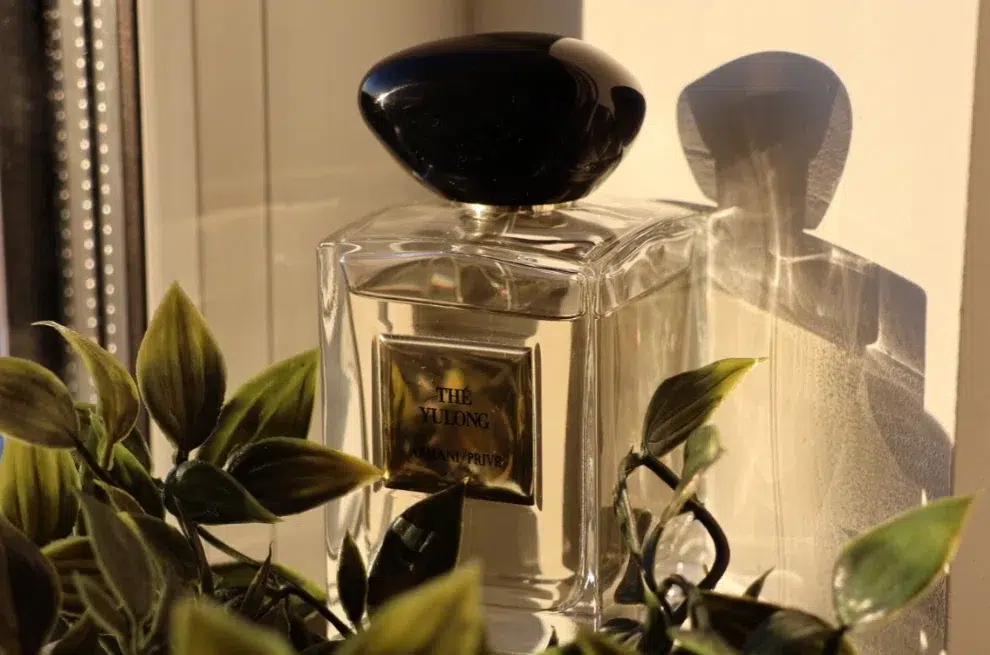
It is the olfactory equivalent of a high-end luxury spa. It opens with a bright, slightly bitter citrus burst of mandarin and petitgrain. The heart reveals a highly realistic, unsweetened tea note—a blend of fresh, grassy green tea and slightly smoky, oxidized black tea. The dry down is a clean, soapy, and transparent musky-woody base (vetiver and ambrette). It is incredibly calming, refined, and unassuming—the definition of “quiet luxury.”
Are there any affordable alternatives to Armani The Yulong that don’t smell synthetic?
Yes. The key to avoiding a “synthetic” or harsh smell is proper maceration and the use of high-quality raw materials, regardless of the price point. By purchasing from a transparent supply chain model like Imixx Perfumes, you are paying for the juice, not the marketing. Our No. 38 undergoes a rigorous weeks-long maturation process in our US facilities to ensure the alcohol integrates perfectly with the oils, eliminating any harsh opening blast and delivering a smooth, high-fidelity scent experience from the first spray.
Is Armani The Yulong considered a masculine or feminine scent?
It is strictly unisex and highly gender-neutral. Tea and citrus are universal aromas. On male skin, the smoky black tea and vetiver tend to project more prominently, giving it a crisp, tailored-suit cleanliness. On female skin, the bright mandarin and green tea facets often shine through, emphasizing a fresh, clean-girl aesthetic. Our Imixx No. 38 maintains this perfect unisex equilibrium, making it a versatile staple for any fragrance wardrobe.
How does Bvlgari Eau Parfumee au The Vert compare to Armani Yulong?
Bvlgari’s The Vert, created by master perfumer Jean-Claude Ellena, is the granddaddy of all tea fragrances. However, The Vert is heavily reliant on a specific ionone structure that gives it a much more floral, slightly powdery, and almost soapy profile compared to The Yulong. The Yulong (and our No. 38) feels more modern, sharper in its citrus opening, and possesses the distinct duality of black and green tea, whereas Bvlgari focuses primarily on a soft, singular green tea illusion.
Conclusion: Making Smart, Informed Fragrance Choices
Navigating the world of luxury perfumery does not have to mean blindly accepting exorbitant prices for fleeting performance. By understanding the chemistry behind the scents, the economics of the supply chain, and the realities of concentration and maceration, you are empowered to make choices that value substance over branding.
The pursuit of the perfect Armani The Yulong dupe is ultimately a pursuit of efficiency: capturing the breathtaking beauty of a Zen-like tea fragrance while demanding the longevity and value that modern consumers deserve. We invite you to experience the culmination of our R&D efforts. Skip the middleman, embrace the science of scent, and elevate your daily ritual with Imixx Perfumes. Discover the true meaning of smart, quiet luxury today by exploring No. 38 Inspired by Armani The Yulong.
