

Executive Summary
The luxury fragrance market in the USA is shifting. Today’s consumers are savvy; they want transparency, quality, and value. In this comprehensive, easy-to-read guide, we step away from traditional marketing jargon to examine the anatomy of the iconic Le Labo Lys 41. We will break down the true cost of luxury perfumes, explain the science behind how scents are replicated, and review the top options on the market fairly. You will learn how to spot a low-quality air-freshener-like clone, the importance of perfume maceration, and how to choose the best Le Labo Lys 41 dupe that delivers genuine longevity. Whether you choose mass-market options like Zara, accessible brands like Dossier, or direct-to-consumer factory models like IMixx Perfumes, this guide empowers you to make an informed decision without breaking the bank.
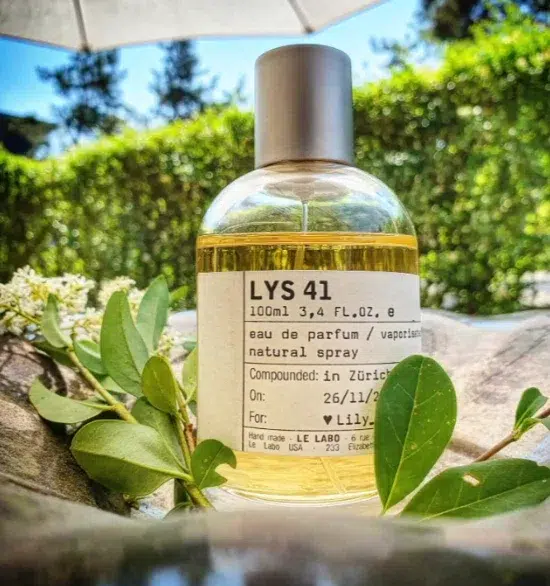
1. The White Floral Phenomenon: Deconstructing the Scent DNA of Lys 41
Before we can talk about finding affordable Le Labo alternatives, we first need to understand what makes the original formulation such a masterpiece. If you are new to the fragrance world, you might think a flower is just a flower. But in perfumery, “white florals” are a notoriously difficult category to master.
When done poorly, white florals can smell “indolic” (a technical term for a heavy, almost decaying or overripe scent) or overly synthetic, resembling cheap bathroom air fresheners. Le Labo’s Lys 41 is celebrated worldwide because it avoids these traps perfectly. It captures a “solar quality”—a radiant, sun-baked, creamy warmth that feels like golden hour in a blooming garden.
The Holy Trinity of White Blossoms
At the very heart of this specific scent profile is a carefully calibrated trio of flowers. Understanding these will help you know what to sniff for when testing a Le Labo Lys 41 clone:
- Tuberose (Polianthes tuberosa): Often called the “queen of the night,” tuberose does not smell like a typical rose. Instead, it is incredibly creamy, almost buttery, and dense. Historically, extracting its oils was so labor-intensive that it cost a fortune. Today, high-quality tuberose extracts give a fragrance its luxurious, opulent weight.
- Lily (Lilium): Here is an industry secret: the scent of a lily cannot easily be extracted naturally into an oil. It is almost always a “fantasy note” recreated by skilled perfumers in a lab using safe aromachemicals. It adds a crisp, slightly green, and fresh edge that cuts through the buttery heaviness of the tuberose, keeping the scent bright.
- Jasmine Sambac: Jasmine adds a sweet, slightly warm, and skin-like element. It acts as the perfect bridge, connecting the sharp freshness of the lily to the dense creaminess of the tuberose.
The Base: The Secret to Long-Lasting Perfume Oils
What separates a fleeting $15 drugstore spray from a $300 luxury experience? The answer lies in the base notes. A genuine representation of this scent profile relies heavily on Madagascar Vanilla and sophisticated Musks. Note that this is not the sugary, cupcake-like vanilla you find in baking. It is a dry, woody, sophisticated vanilla pod. When combined with premium musks, it anchors the floating floral notes to your skin, allowing the fragrance to project for hours. If a dupe fails to include a high-quality base, it will vanish from your skin within an hour.
2. The Economics of Niche Fragrance in the USA: Why Does It Cost Over $300?
To understand how high-quality alternatives can exist at a fraction of the price, we need to look at the fragrance industry like a supply chain expert. When you walk into a beautiful, minimalist boutique in New York or Los Angeles to buy a luxury niche fragrance, what exactly is your money paying for?
The truth—widely acknowledged by industry watchdogs and organizations like The Perfume Society—is that the actual liquid inside the bottle (referred to in the industry as the “juice”) represents a surprisingly small percentage of the final retail price.
The Hidden Costs of Luxury
In the traditional retail model, a perfume undergoes massive markups before it ever reaches your vanity:
- Retail Margins: High-end department stores and boutiques take a massive cut, often up to 50% or 60%. If a bottle costs $300, up to $180 might go directly to the retailer to pay for premium mall space and sales commissions.
- Marketing and Brand Prestige: You are paying for the illusion of exclusivity. Multi-million dollar ad campaigns, celebrity partnerships, and elaborate launch parties are baked into the price of every bottle.
- Packaging: Custom-molded heavy glass bottles, magnetic metal caps, artisan labels, and lavish boxes add significant weight and cost to manufacturing and global shipping.
- The Liquid Itself: Even when utilizing the finest natural oils and synthetics that comply with IFRA (International Fragrance Association) safety standards, the raw materials and alcohol rarely exceed 10% to 15% of the $300 price tag.
This is where alternative fragrance houses step in. By utilizing direct-to-consumer models, cutting out the middlemen, and using standard packaging, brands can redirect their budgets entirely into sourcing premium ingredients. This democratizes fine fragrance for the everyday US consumer.
3. The Science of Perfume Making: GC-MS and Maceration Explained (Simply)
A lot of people associate “dupes” with cheap knock-offs mixed in a bathtub. However, the modern alternative fragrance industry relies on highly sophisticated chemistry and strict quality control.
Decoding Scent with GC-MS
The journey of creating a high-quality inspired fragrance begins with a machine called a Gas Chromatograph-Mass Spectrometer (GC-MS). Think of this machine as a high-tech recipe scanner. When a chemist puts a sample of a famous perfume into the GC-MS, the machine breaks down the liquid and identifies the specific chemical compounds inside it. It tells the chemist, “This perfume contains X amount of Linalool, Y amount of Hedione, and Z amount of Vanillin.”
However, a GC-MS report is just a blueprint; it is not a finished cake. The machine cannot tell you the geographic origin of an ingredient, nor can it perfectly distinguish between a cheap synthetic and a high-end natural absolute. This is why a human Master Perfumer is still required to balance the formula, tweak the ingredients, and ensure the scent profile blossoms correctly on human skin.
The Crucial Step: Maceration
If you have ever bought a cheap perfume and noticed it smells overwhelmingly like rubbing alcohol at first spray, you have experienced a lack of maceration. Maceration is the perfume equivalent of aging fine wine.
After the fragrant oils are mixed with perfumer’s alcohol, the mixture must sit in a controlled environment for several weeks. During this time, the alcohol’s sharp edges soften, and the delicate floral top notes seamlessly blend with the heavy woody base notes. Mass-market fast-fashion brands often skip this step to save money, mixing and shipping immediately. Premium dupe houses, on the other hand, will let their formulas macerate for 4 to 6 weeks, resulting in a smooth, luxurious scent from the very first spray.
4. A Fair Comparison: The Best Le Labo Lys 41 Dupes in the US Market
Because the demand for affordable Le Labo alternatives is so high, several brands have stepped up to offer their versions. As an objective consumer, it is important to know that not all clones are created equal. Let’s look at the different tiers available to shoppers in the USA.
1. The Mass-Market Option: Zara
Zara has become famous for releasing fragrances that closely mimic popular niche scents. While they do not have an official “Lys 41” dupe, their white floral releases (like Tubereuse Noir) often capture a similar vibe.
- Pros: Extremely affordable (often under $30), widely accessible in malls across the USA, and great for a quick, fresh spray.
- Cons: Usually formulated as an Eau de Toilette (EDT). The alcohol content is high, the maceration time is low, and the longevity is famously poor. Expect it to disappear in 1 to 2 hours.
2. The Mid-Tier Accessible Houses: Dossier & Oakcha
Brands like Dossier and Oakcha have popularized the transparent “inspired by” movement online, offering solid, everyday alternatives.
- Pros: Fairly priced (usually $30 – $50), clean packaging, vegan and cruelty-free, and generally good customer service. They provide a very close 80-90% match to the original DNA.
- Cons: While they are good, some fragrance enthusiasts feel their white florals can occasionally lean slightly flat or linear. They might miss that hyper-realistic, 3D “sun-baked” creaminess of the original dry-down.
3. The Artisanal Factory-Direct Model: IMixx Perfumes
For those looking to bridge the gap between alternative pricing and true niche quality, direct-from-factory brands like IMixx Perfumes focus heavily on supply chain efficiency and higher oil concentrations.
- Pros: Formulated as an Extrait de Parfum (meaning a much higher percentage of long lasting perfume oils). This provides massive projection and longevity (often lasting a full workday). Because they focus on factory-to-consumer delivery, their Inspired by Le Labo collection invests the budget into premium raw materials and proper 4-6 week maceration, capturing the true depth of the Madagascar vanilla and tuberose.
- Cons: Not available in physical retail stores to test before buying (though affordable samples are usually the workaround).
4. The Oil Rollerballs: Perfume Parlour & Oil Perfumery
If you prefer not to use alcohol-based sprays, oil-based houses offer neat alternatives.
- Pros: Very inexpensive, travel-friendly, and alcohol-free.
- Cons: Perfume oils sit very close to the skin. You will not get the “scent trail” (sillage) that a traditional spray provides. The scent profile can also feel heavier and less airy than an alcohol-dispersed fragrance.
Table 1: Comparing US Market Alternatives for White Florals
| Brand Tier / Type | Estimated Price (USA) | Concentration | Longevity (Est.) | Best For… |
|---|---|---|---|---|
| Mass Market (e.g., Zara) | $20 – $30 | Eau de Toilette (EDT) | 1 – 3 hours | Quick errands, budget shoppers, gym bags. |
| Mid-Tier (e.g., Dossier) | $30 – $50 | Eau de Parfum (EDP) | 4 – 6 hours | Everyday office wear, safe blind buys. |
| Artisanal Extrait (e.g., IMixx) | $40 – $60 | Extrait de Parfum | 8+ hours | Fragrance enthusiasts, signature scent seekers, those wanting exact niche depth. |
| Perfume Oils (e.g., Oil Perfumery) | $15 – $20 | Pure Fragrance Oil | Skin scent (varies) | People with alcohol sensitivities, travel. |
5. Avoiding the “Air Freshener” Trap: How to Spot a Bad Dupe
Because the US market is flooded with fast-fashion fragrances and TikTok shop clones, it is easy to accidentally purchase a dud. If you are searching for how to find the best Le Labo Lys 41 dupe, you must know the red flags. White florals, in particular, are unforgiving; cheap ingredients cannot hide.
Sign 1: The Harsh, Burning Opening
When you spray a high-end perfume, you should immediately smell the fragrance notes. If a perfume burns your nostrils or smells like hand sanitizer for the first 30 seconds, it is using low-grade denatured alcohol and has not been macerated. A good fragrance uses cosmetic-grade SDA (Specially Denatured Alcohol) that evaporates smoothly.
Sign 2: The “Screechy” Synthetic Floral
A bad white floral dupe relies on cheap synthetic bases that lack dimension. Instead of smelling like a creamy, sun-drenched petal, it smells like a generic public restroom soap or household cleaner. High-quality alternatives invest heavily in the “heart notes,” ensuring the tuberose maintains a natural, fleshy creaminess.
Sign 3: The Disappearing Act
Low-quality dupes put all their budget into the “top notes”—the scent you smell in the first 5 minutes. They do this so you will buy it immediately upon testing. However, because they skip expensive base notes (like natural musks and vanillas), the perfume completely vanishes within an hour. A properly formulated alternative mimics the entire life cycle (the dry-down) of the original scent.
6. Pro Tips: How to Layer Tuberose Scents and White Florals
One of the best things about finding high-quality, long lasting perfume oils or extrait sprays is that you can experiment without guilt. Layering fragrances is a massive trend among perfume enthusiasts in the US, allowing you to create a bespoke, signature scent that no one else has.
Because the Lys 41 profile is a relatively linear white floral, it acts as a fantastic canvas for layering. Here is a guide on how to layer tuberose scents depending on the season and your mood:
The Fresh & Green Approach (Perfect for US Summers)
If you find pure tuberose and vanilla a bit too cloying or heavy for a hot, humid summer day in Florida or Texas, you can lighten it up. Try layering your white floral alternative with a crisp citrus, fig, or green tea fragrance. How to apply: Spray the lighter, citrus-based scent as your base layer all over, then add just one or two sprays of your white floral on your pulse points. The acidity of notes like bergamot or neroli will cut through the creamy tuberose, giving it a dewy, freshly-watered garden vibe.
The Deep & Sensual Approach (Perfect for Fall/Winter)
To transition this fragrance for evening wear or the colder months in New York or Chicago, lean into the base notes. Layer it with a woody, amber, or heavy vanilla scent. Fragrances featuring sandalwood (like Santal 33 alternatives), cedar, or even a touch of oud work beautifully. How to apply: Spray the heavier woody scent first to anchor it to your skin, then mist the white floral over the top. The woods will amplify the base musks, creating an intoxicating, mysterious aura that lingers on scarves and sweaters for days.
Expert Application Techniques
Skin chemistry plays a massive role in how long a perfume lasts. If your skin is dry, it will “drink” the perfume alcohol quickly, causing the scent to fade. For maximum longevity, apply an unscented body lotion or a matching body oil to your pulse points right after a shower, before spraying your perfume. The oils in the lotion give the fragrance molecules something to cling to. Also, a golden rule of perfumery: spray your wrists, but never rub them together. Rubbing generates heat and friction that can crush the delicate top notes of lily and jasmine.
7. Comprehensive FAQ: Everything You Need to Know About White Florals
To ensure this guide answers all your questions, we’ve compiled the most frequently asked queries from US fragrance communities, Reddit forums, and consumer emails.
1. What smells similar to Le Labo Lys 41?
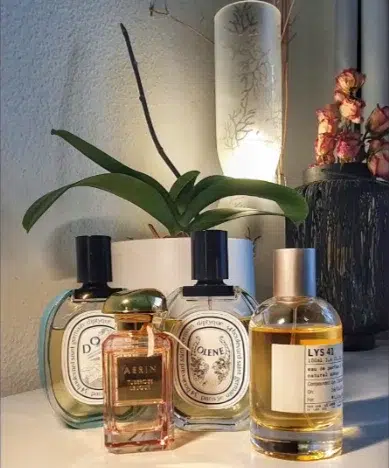
Fragrances that smell similar will always feature a prominent white floral bouquet—specifically tuberose, lily, and jasmine—anchored by a warm vanilla and woody musk base. While some designer fragrances like Diptyque’s Do Son or Gucci Bloom share a tuberose focus, they lack the specific “creamy vanilla” dry-down of Le Labo. For the closest match, look to high-quality, specialized dupes like Dossier’s Floral Honeysuckle or the IMixx Inspired by Le Labo line, which are reverse-engineered to capture that exact solar warmth.
2. Is Le Labo Lys 41 worth the $300+ price tag?
Value is subjective. If you cherish the in-store boutique experience, the personalized freshly-printed label, and the brand prestige, it may be worth it to you. However, from a strict supply chain and materials perspective, the cost of the liquid inside the bottle does not mathematically justify the price. If your only goal is to smell incredible all day, premium alternatives offer vastly superior economic value.
3. Does Zara have a dupe for Le Labo Lys 41?
Zara releases dozens of fragrances annually and often mimics niche trends. Their “Tubereuse Noir” or various summer white floral releases capture the top notes quite well. However, Zara fragrances are generally Eau de Toilettes with high alcohol content. They are great for a quick burst of freshness but typically lack the heavy musk and vanilla base required for all-day longevity. They are good, but not exact, long-lasting clones.
4. How long does a high-quality clone actually last on the skin?
Performance varies wildly depending on your unique skin chemistry, the climate, and the perfume’s concentration. A standard EDP from a mid-tier dupe house might last 4 to 6 hours. However, brands that formulate at an Extrait de Parfum concentration (like IMixx) use a much higher percentage of long lasting perfume oils. On properly moisturized skin, these can project strongly for 6-8 hours, and often linger on clothing for over 24 hours.
5. Is this scent profile considered more feminine or masculine?
Historically, heavy white florals were marketed toward women. However, modern niche perfumery is overwhelmingly gender-neutral. On masculine skin chemistries, the sweet floral notes often recede faster, amplifying the warm Madagascar vanilla and woody musks. It creates a highly sophisticated, clean, and confident aura that works brilliantly on anyone who wears it with confidence.
6. Are there affordable alternatives to Le Labo white floral perfumes that are safe for the skin?
Absolutely. The key is to purchase from brands that publicly adhere to IFRA safety standards. Whether you buy from Dossier, Oakcha, or IMixx Perfumes, reputable alternative houses use cosmetic-grade alcohol and skin-safe aroma chemicals. Always avoid unbranded, ultra-cheap oils from unknown third-party marketplace sellers, as these are rarely regulated.
7. What are the main notes in Lys 41?
The fragrance is celebrated for being delightfully straightforward yet deep. The bright top notes and heart are dominated by Tuberose, Jasmine Sambac, and Lily. The robust base notes, which give the fragrance its impressive staying power, are Madagascar Vanilla, subtle warm woods, and a clean Musk.
8. Is Lys 41 a summer or winter fragrance?
It is exceptionally versatile. The bright, “solar” floral aspects make it a perfect, joyful scent for spring and summer days in the US. Simultaneously, the heavy, comforting vanilla and musk base provides enough warmth and depth to cut right through the cold winter air, making it an ideal year-round signature scent.
9. What is the difference between Lys 41 and Diptyque Do Son?
While both are famous tuberose fragrances, their vibe is different. Diptyque Do Son is greener, more aquatic, and smells very much like a realistic, wet flower shop. Lys 41 is much creamier, warmer, and sweeter due to its heavy reliance on vanilla and musk. It smells more like sun-warmed skin on a luxury vacation than a literal flower stem.
10. Why do some dupes smell like alcohol at first?
This is purely due to a lack of maceration time. Perfume is a mixture of oils and ethanol. If a factory mixes a batch and ships it the next day, the alcohol hasn’t had time to bind with the oils and soften. Premium dupe houses let their batches sit (macerate) for weeks in temperature-controlled rooms before selling them, which eliminates that harsh, burning alcohol opening.
Conclusion: Empowering Your Fragrance Journey
The era of gatekeeping in the luxury perfumery world is over. You no longer need to spend upwards of $300 just to smell like a sophisticated, sun-drenched floral garden. By understanding the science behind the scent—from the complex extraction of tuberose and the interpretation of GC-MS lab data, to the critical, time-consuming step of maceration—you transition from a passive buyer into an empowered, educated consumer.
Finding the perfect Le Labo Lys 41 dupe in the US market is not about “settling for less.” It is about understanding supply chain economics and choosing to pay for what actually matters: the quality of the juice inside the bottle, rather than the marketing campaign outside of it. You have excellent options across the board, from the quick accessibility of Zara to the solid everyday wear of Dossier and Oakcha.
However, if you are searching for the ultimate intersection of niche-level quality, high oil concentration, and direct-to-consumer pricing, exploring artisanal factory models is highly recommended. Whether you are looking for the best white floral perfumes to build your collection, long lasting perfume oils that survive the workday, or simply a beautiful, affordable Le Labo alternative to act as your new signature scent, the power of choice is now in your hands.
Ready to explore high-concentration, expertly macerated alternatives?
Discover the science of scent and find your perfect match by exploring top-tier US alternative brands, including the meticulously crafted formulations in the Inspired by Le Labo Collection at IMixx Perfumes, or compare options at Dossier and Oakcha today.
