

How to Find the Best Jo Malone Blackberry and Bay Dupe: An Insider’s Guide to Zara Alternatives and USA Market Secrets
Written by Linus Dacke Thall – Fragrance Supply Chain Specialist & Scent Evaluator
If you are navigating the exciting, sometimes overwhelming world of fragrance in the USA, chances are you’ve fallen under the spell of a very specific scent profile: the vibrant, tart, and deeply British charm of Jo Malone’s Blackberry & Bay. It is a masterpiece of modern perfumery that perfectly balances the sweetness of summer berries with the earthy crunch of crushed leaves.
However, a quick scan of top fragrance blogs, beauty magazines like Allure, and passionate Reddit communities reveals a very consistent, frustrating pattern. Consumers absolutely love the scent, but they are desperately searching Google for a “blackberry and bay dupe zara“.
Why? Because the original, while beautiful, comes with a luxury price tag and a notorious reputation for fading quickly. People want the scent, but they want it to last, and they want it at a fair price.
As a supply chain professional who has spent years inside fragrance manufacturing facilities—seeing exactly how perfumes are blended, bottled, and priced—I wrote this guide to strip away the marketing fluff. We aren’t just going to look at one brand. We are going to explore the chemistry of scent, the real economics of the perfume industry, and compare all your best options (from Zara to Dossier to niche houses like iMixx) so you can find a reliable, long-lasting alternative that fits your lifestyle.
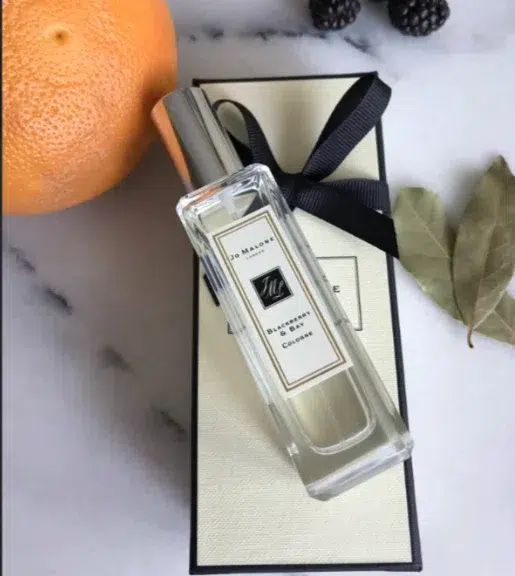
The Anatomy of a Classic: Deconstructing Blackberry and Bay
Before you can find a great alternative, you need to understand what makes the original so special. You don’t need a degree in chemistry to understand this; you just need to know how perfumers build a “scent pyramid.” Think of a perfume like a three-course meal: the appetizer (top notes), the main course (heart notes), and the dessert (base notes).
The Top Notes (The Hook)
The opening of this fragrance is an explosion of tart, juicy blackberry. Have you ever picked wild blackberries? They aren’t just sweet like candy; they have a sharp, slightly sour edge. In modern perfumery, actual natural blackberry extract is almost never used because it’s too unstable. Instead, master perfumers use a clever blend of high-quality synthetic fruit notes, often mixed with grapefruit oil. This creates a mouth-watering, zesty opening that grabs your attention the moment you spray it.
The Heart Notes (The Core)
This is where the magic happens, and where cheap imitations usually fail. The “Bay” in the name refers to Bay Leaf (Laurus nobilis). It provides a spicy, medicinal, green, and herbal contrast to the sweet berries. Imagine walking through a damp, green forest right after a rainstorm. That earthy, slightly bitter greenness prevents the perfume from smelling like a teenager’s fruity body spray. It makes the scent sophisticated, mature, and truly unisex.
The Base Notes (The Foundation)
As the perfume dries on your skin over a few hours, the fruity and green notes slowly fade, revealing the base. Here, cedarwood and vetiver anchor the scent. They provide a dry, clean, woody finish that lingers softly on your skin and clothes.
The “Eau de Cologne” Problem: Why Do Luxury Scents Fade So Fast?
The most common complaint about Jo Malone fragrances—and the primary reason people look for alternatives—is longevity. People often ask, “Why does my $150 perfume disappear in two hours?”
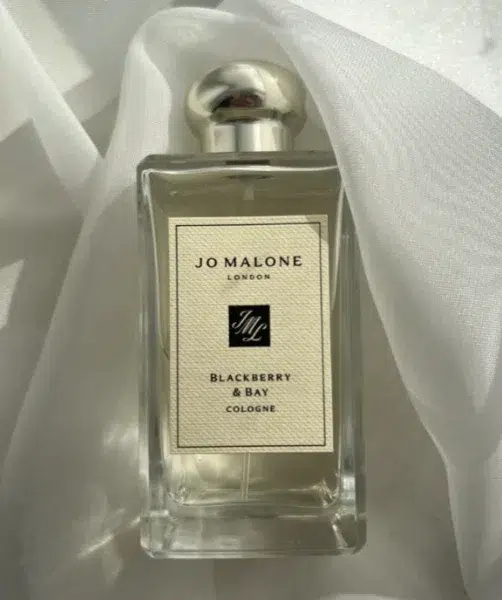
The answer isn’t that you are being scammed; it’s right on the label. The original is an Eau de Cologne (EDC).
In the fragrance industry, terms like Cologne, Toilette, and Parfum dictate the concentration of actual fragrance oils mixed into the alcohol and water base:
- Eau de Cologne (EDC): Contains roughly 2% to 5% perfume oil. Historically, colognes were designed to be refreshing, temporary splashes used after a bath, not all-day performers. They are light, airy, and fleeting by design.
- Eau de Toilette (EDT): Contains 5% to 15% oil. Better for everyday wear, usually lasting 3 to 5 hours.
- Eau de Parfum (EDP): Contains 15% to 20% oil. This is the industry standard for a long-lasting fragrance, typically sticking to the skin for 6 to 8 hours.
- Extrait de Parfum: Contains 20% to 30%+ oil. The most concentrated, richest form.
When you buy the original Blackberry & Bay, you are buying an EDC. It is chemically impossible for a 4% oil concentration—especially one relying on light citrus and berry top notes—to last 10 hours on your skin. This simple fact of chemistry has fueled the massive market for higher-concentration “inspired-by” alternatives.
The Zara Dupe Phenomenon: Fast Fashion Fragrance Explained
When the search term blackberry and bay dupe zara started trending heavily across the USA, it wasn’t a coincidence. It was the result of a brilliant collaboration.
The Rise of “Stunningly Venice”
Zara partnered with Jo Malone CBE (the original founder of the Jo Malone brand, who later left to start Jo Loves) to create the Vibrant Cities collection. Within this line, a fragrance called Stunningly Venice was released.
At around $25 to $35 a bottle, it was an instant hit. Why? Because the initial spray—the tart, red berry and citrus opening—was strikingly similar to the luxury original. For ordinary consumers, smelling the cap in a Zara store triggered the exact same joyful response as smelling the $150 designer bottle.
The Fast Fashion Reality: Why Zara Isn’t Always the Best Choice
As much as we love a bargain, my background in supply chain management requires me to point out the compromises necessary to sell a perfume for $25. If you are a consumer looking for a reliable signature scent, Zara presents a few major hurdles:
- The Missing Green Depth: Perfume critics and communities on Basenotes quickly noted that while Zara captured the berry top notes beautifully, it missed the soul of the fragrance. Stunningly Venice lacks the deep, earthy bay leaf and cedarwood dry-down. It is a more “linear” scent, meaning it stays mostly sweet and fruity until it fades away, rather than evolving on your skin.
- The Discontinuation Dilemma: This is the biggest frustration. Zara is a fast-fashion apparel brand. Their shelf space is optimized for rapid, constant turnover. If a sweater or a perfume doesn’t meet massive global sales quotas instantly, it is axed. Zara fragrances are notorious for being discontinued without warning. You might fall in love with a scent, only to find it gone forever a month later.
- Lack of Maceration: High-quality perfumes are aged (macerated) in vats for weeks or months to let the alcohol lose its harsh bite and allow the oils to blend smoothly. Fast fashion supply chains operate on speed. Perfumes are mixed, bottled, and shipped immediately, which is why cheaper perfumes often have a sharp, “rubbing alcohol” smell for the first 30 seconds after spraying.
Decoding the Perfume Supply Chain: Where Does Your $150 Go?
To be a smart shopper, you need to know what you are actually paying for at the department store. When you buy a luxury niche fragrance in the USA, the cost breakdown might shock you. According to standard industry metrics, a $150 bottle breaks down roughly like this:
- The “Juice” (The actual fragrance oil and alcohol): 2% – 5% (Usually under $5 to produce)
- Packaging (Heavy glass bottles, caps, fancy boxes): 5% – 10%
- Marketing & Celebrity Endorsements: 20% – 25%
- Retailer Markup (The department store’s cut): 40% – 50%
- Brand Licensing & Profit Margin: 10% – 30%
You are not paying $150 for rare, magical liquid. You are paying for the gorgeous packaging, the expensive ad campaigns, and the prestige of the brand name. Once you realize this, the idea of buying an “inspired-by” fragrance stops feeling like buying a “fake” and starts feeling like a smart financial decision.
Comparing the Market: Your Best Alternatives in 2026
Since the Zara option is often out of stock, let’s look at the broader market. The “alternative fragrance” industry has exploded, offering consumers incredibly high-quality options by cutting out the middleman. Let’s look at a fair, unbiased comparison of your choices.
1. The Fast-Fashion Option: Zara (Stunningly Venice)
Pros: Very inexpensive; great fruity opening; easily accessible if you live near a large mall.
Cons: Lacks the herbal/woody depth; Eau de Toilette concentration means it fades in 2-4 hours; extremely high risk of being discontinued.
2. The Mass-Market Clone Houses: Dossier & Oakcha
Brands like Dossier have popularized the transparent “inspired-by” model. Dossier’s version (often called Fruity Oakmoss or similar berry-forward blends) is widely available in the USA.
Pros: Fairly priced (usually around $30-$40); vegan and cruelty-free; consistent stock; better longevity than Zara.
Cons: Some users report that mass-market clones can sometimes feel a bit “flat” or lack the sparkling, photorealistic quality of the original’s top notes. They are good daily drivers, but maybe not 100% identical to the trained nose.
3. The Artisanal / High-Concentration Route: iMixx Perfumes
If your main goal is longevity and capturing the true herbal depth of the original, looking toward specialized, factory-direct brands like iMixx Perfumes is a great strategy. In our Inspired by Jo Malone collection, the focus is placed entirely on the juice rather than the marketing.
Pros: Formulated as an Eau de Parfum/Extrait (15-25% oil), meaning it actually lasts on the skin for a full workday; meticulous attention to recreating the challenging “green bay leaf” heart notes; supply chain stability (we don’t discontinue core scents seasonally).
Cons: Primarily available online, meaning you cannot walk into a local mall to smell it before purchasing.
4. The “Different Brand, Same Vibe” Route: Diptyque’s L’Ombre Dans L’Eau
If you don’t want a direct clone but want a luxury fragrance that gives the exact same feeling (a tart dark berry mixed with green leaves), you must try Diptyque. It mixes blackcurrant (cassis) with Bulgarian rose and green sap.
Pros: Incredible quality; highly respected luxury niche brand; beautiful evolution on the skin.
Cons: It is actually more expensive than Jo Malone, so it solves the longevity problem, but not the budget problem!
Table 1: The Ultimate Consumer Comparison Guide
To make your decision easier, here is a quick visual breakdown of the market options based on my experience evaluating these formulas.
| Brand / Category | Scent Accuracy Focus | Concentration & Typical Longevity | Best For… |
|---|---|---|---|
| The Original (Jo Malone) | The benchmark. Perfect balance of berry and green wood. | Eau de Cologne (1 – 3 Hours) | The luxury experience; beautiful gifting. |
| Zara (Stunningly Venice) | Heavy on the sweet berry opening; very light on the woods. | Eau de Toilette (2 – 4 Hours) | Teenagers; budget-conscious shoppers who don’t mind reapplying. |
| Mass Market Clones (e.g., Dossier) | Good overall impression; slightly simplified mid-notes. | Eau de Parfum (4 – 6 Hours) | Everyday office wear; consistent availability. |
| Specialty Formulators (e.g., iMixx) | High accuracy including the difficult herbal/cedar dry-down. | Extrait de Parfum (6 – 8+ Hours) | Fragrance lovers who want maximum longevity and complexity without the luxury markup. |
Expert Tips: How to Make Your Fragrance Last All Day
Regardless of whether you buy the $150 original, the Zara dupe, or a high-quality alternative like ours at iMixx, your skin chemistry and how you wear the perfume drastically affects its performance. As a professional, here are the rules you should follow:
1. The Hydration Rule (The Most Important Tip!)
Perfume oils need a lipid (fat) base to hold onto. If your skin is dry, it acts like a sponge, instantly absorbing the fragrance oils and causing the scent to disappear into thin air. Always apply an unscented body lotion or a light body oil right after you step out of the shower. Once it absorbs, spray your perfume. You will easily add 2 hours of life to your fragrance.
2. Stop Rubbing Your Wrists
We’ve all seen people spray their wrists and aggressively rub them together. Please stop doing this! The friction creates heat, which literally crushes and burns off the delicate top notes (like the sparkling blackberry and grapefruit). Spray it, and let it air dry naturally.
3. Target Your Pulse Points (and Your Clothes)
Spray where your body generates heat: the sides of the neck, inside the elbows, and behind the ears. However, if your skin simply eats perfume, spray it on your clothes. Fabric holds onto fragrance oils much longer than skin does. (Just hold the bottle 6 inches away to avoid oil stains on light fabrics).
4. Store It Like Fine Wine
Do not keep your perfumes in the bathroom. The constant humidity and temperature changes from your shower will break down the chemical bonds of the perfume, ruining the scent. Keep your bottles in a cool, dark place, like a bedroom drawer or a closet.
The Art of Fragrance Layering
One of the best things about the Blackberry and Bay scent profile is how “linear” and clean it is. This makes it a perfect candidate for fragrance layering—the practice of spraying two different perfumes to create a custom scent.
- For the Heat of Summer: Layer your blackberry scent with a bright, salty citrus. Mixing it with a scent profile like Wood Sage & Sea Salt enhances the crisp, outdoor, ocean-breeze nature of the fragrance, making it incredibly refreshing.
- For Cozy Winter Nights: Layer the tart berry scent with a deep, warm vanilla or a subtle oud. The sharp fruitiness cuts through the heavy, creamy sweetness of the vanilla, creating a rich, sophisticated evening scent.
- For the Office: Layer it with a clean, white musk or a fresh rose. This softens the herbal edge and makes it universally pleasant and professional.
Table 2: Sourcing and Safety – What to Look for in an Alternative Brand
When shopping for alternatives online, it is crucial to buy from brands that prioritize safety and transparency. Here is a checklist of what a trustworthy manufacturer does behind the scenes, compared to cheap, unverified knock-offs.
| Industry Standard | Cheap/Unverified Dupes | Reputable Brands (iMixx, Dossier, etc.) |
|---|---|---|
| Safety Compliance | Unknown. May contain unregulated allergens or cheap fillers. | Strictly follows IFRA (International Fragrance Association) safety guidelines to prevent skin irritation. |
| Creation Method | Basic “smell-alike” guesswork using cheap pre-mixed bases. | Uses GC-MS (Gas Chromatography) technology to analyze the exact molecular structure of the original, refined by human perfumers. |
| Alcohol Base | Harsh, industrial-grade ethanol (smells like hand sanitizer initially). | Premium, cosmetic-grade perfumer’s alcohol for a smooth, pleasant opening. |
Frequently Asked Questions (People Also Ask)
What is the Zara dupe for Jo Malone Blackberry and Bay?
The most widely recognized Zara dupe is ‘Stunningly Venice,’ part of their Vibrant Cities collection. While it effectively captures the tart berry opening, consumers often find it frustrating because it is frequently discontinued or out of stock due to the fast-paced retail cycles of fast fashion.
Does Zara Stunningly Venice smell exactly like Blackberry and Bay?
Not exactly. While the initial spray is remarkably similar, Zara’s Stunningly Venice lacks the prominent earthy ‘bay leaf’ note and robust cedarwood base found in the original. It dries down to a sweeter, more linear fruity scent rather than a complex botanical one.
How long does Jo Malone Blackberry and Bay last on the skin?
Because it is formulated as an Eau de Cologne—which typically contains a lower concentration of fragrance oils (2-5%)—the longevity is generally brief. On average, users report it lasting 1 to 3 hours before fading into a faint skin scent, which is why many seek higher concentration EDP alternatives.
What notes are in Jo Malone Blackberry and Bay?
The fragrance features a vibrant, tart Blackberry top note, a green and herbal Bay Leaf heart, and a dry Cedarwood and Vetiver base. This unique combination creates a refreshing, fruity, yet deeply earthy and gender-neutral scent profile.
Why are Zara perfumes so similar to luxury fragrances?
Zara collaborates with major global fragrance houses and master perfumers to track current market trends. When a luxury niche scent becomes a global bestseller, mass-market brands formulate similar scent profiles, focusing heavily on replicating the dominant top notes to appeal to everyday consumers quickly and affordably.
Is there a better alternative than Zara?
Yes. If Zara is out of stock or fades too quickly for your liking, look for brands that specialize in “inspired-by” fragrances formulated at Eau de Parfum or Extrait levels. Brands like Dossier, Oakcha, and iMixx Perfumes focus on higher oil concentrations, offering better longevity and consistent availability without the luxury price tag.
Conclusion: Becoming a Smart Fragrance Consumer
The exhaustive hunt for a blackberry and bay dupe zara perfectly highlights a major shift in the USA consumer mindset. We all want to smell incredible, but we are becoming too smart to blindly pay $150 for an Eau de Cologne that disappears before lunch, and we are too busy to constantly hunt for fast-fashion dupes that might be discontinued tomorrow.
You do not have to choose between exorbitant luxury prices and unstable fast-fashion quality. By understanding how perfumes are made, what concentrations mean, and how the supply chain works, you take the power back as a consumer.
If you love the tart, green, earthy beauty of this scent profile, explore your options. Try the Zara if you can find it. Check out the mid-tier clones. But if you want a meticulously crafted, highly concentrated version that respects the complexity of the original bay leaf and cedar notes—and actually lasts through your workday—we invite you to explore the Inspired by Jo Malone collection at iMixx Perfumes.
Stop overpaying for packaging, and start investing in the juice. Happy sniffing!
Disclaimer: iMixx Perfumes competes with designer brands. It does not use their fragrances and is not associated in any way with the designer brands or their manufacturers. All trademarks are property of their respective owners. We are in compliance with the Federal Trade Commission’s Statement of Policy Regarding Comparative Advertising.
