

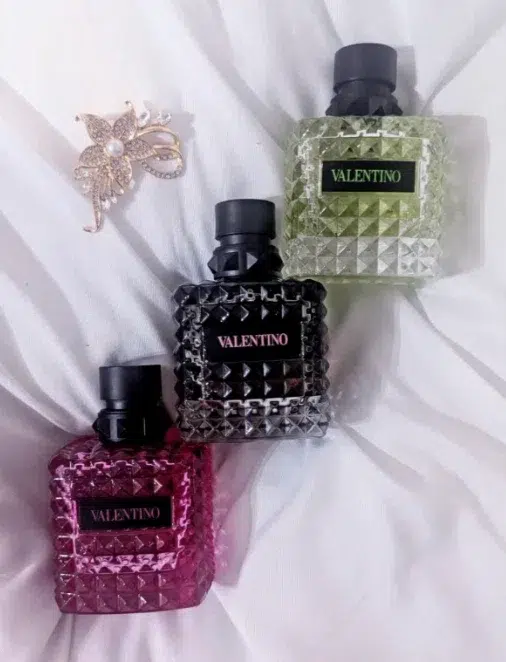
The US fragrance market is shifting. Consumers are tired of paying $150+ for designer bottles when the actual liquid inside costs a fraction of that. If you are searching for the best dupe for valentino born in roma, you aren’t alone. In this comprehensive, 3000+ word guide, we step out of the marketing illusions and into the laboratory. We will explain exactly what makes this scent so addictive (from Madagascar Bourbon Vanilla to Jasmine Sambac), how brands clone it using Gas Chromatography, and most importantly, we will objectively review the top alternatives on the market right now—including Dossier, Zara, Oakcha, and our own factory-direct brand, IMIXX Perfumes. You will leave with a clear understanding of how to buy, layer, and evaluate fragrances like a true expert.
The Rise of the “Dupe” in the US Fragrance Market
If you have spent any time on TikTok (#PerfumeTok) or browsed beauty forums in the USA recently, you have likely noticed a massive cultural shift. The word “dupe” (short for duplicate) used to be a dirty word in the beauty industry, often associated with low-quality knockoffs sold at flea markets. Today, it is a badge of honor for smart shoppers.
Why the change? Information accessibility. Consumers now understand that the traditional luxury fragrance model is heavily inflated. When you purchase a $160 bottle of a designer perfume at a major US department store, you are paying for custom glass molds, multi-million-dollar celebrity marketing campaigns, and massive retail markups. The actual fragrance oils—the juice—rarely account for more than 5% to 10% of the retail price.
This realization has given birth to a new wave of “alternative” or “inspired-by” fragrance houses. These brands operate strictly direct-to-consumer online, stripping away the luxury packaging and the advertising overhead, to deliver high-quality Eau de Parfums (EDP) for $30 to $50. However, not all dupes are created equal. To understand how to find a truly great alternative to Valentino Donna Born in Roma, we first need to understand the DNA of the original masterpiece.
Deconstructing the Original: What Does Valentino Donna Born in Roma Smell Like?
Before you can find a perfect match, you need to know what you are looking for. Launched in 2019, Valentino Donna Born in Roma quickly became a blockbuster hit. The fragrance community on Fragrantica classifies it as an Amber Floral (or Floriental Woody) fragrance. But what does that actually mean to a normal person’s nose?
It means it is a fragrance of beautiful contradictions. It is sweet but woody, fruity but deeply floral, youthful yet incredibly sophisticated. Let’s break down the olfactory pyramid like a recipe:
The Opening (Top Notes): The Hook
The first 15 minutes of this fragrance are designed to make you say “wow” at the perfume counter. It opens with a vibrant, mouth-watering blast of Blackcurrant. Think of a rich, dark berry syrup—tart and juicy. This is immediately balanced by Pink Pepper. Despite the name, pink pepper isn’t spicy like black pepper; it provides a sparkling, rosy, slightly effervescent lift that tickles the nose.
The Heart (Middle Notes): The Floral Core
As the berries fade, the true character of the fragrance emerges: Jasmine Sambac. Unlike regular garden jasmine, which can sometimes smell soapy or “old-fashioned,” Jasmine Sambac is deeply narcotic, rich, and almost fruity. It gives the fragrance its creamy, feminine elegance. There is also a touch of Jasmine Tea in the original, which prevents the heavy florals from becoming suffocating.
The Dry-Down (Base Notes): The Addiction
This is why people are obsessed with the scent. The base is built on Bourbon Vanilla. This is not the artificial vanilla extract you use for baking cookies. True Bourbon Vanilla from Madagascar has dark, woody, and slightly smoky undertones. It is paired with Cashmeran (a synthetic molecule that smells like a fuzzy, warm sweater) and Guaiac Wood, which adds a leathery, earthy tension. The result is a scent trail (sillage) that lasts for hours and smells undeniably expensive.
The Science of Scent Cloning: How Do Brands Make Dupes?
So, how does an alternative fragrance house recreate this exact smell without stealing the original formula? We don’t guess. We use chemistry.
In modern perfumery, laboratories use a machine called a Gas Chromatograph-Mass Spectrometer (GC-MS). Think of this machine as a highly advanced prism. If you shine white light through a prism, it breaks into a rainbow. If you inject a drop of a designer perfume into a GC-MS, the machine vaporizes it and breaks it down into its individual chemical components.
The lab receives a readout—a highly complex graph—that tells us exactly which molecules are present and in what quantities. We can see the exact percentage of Hedione (used for the floral lift), Ambroxan (used for longevity), and Ethyl Vanillin (used for sweetness).
But here is the catch: A GC-MS report is just a recipe. Knowing the recipe does not guarantee a Michelin-star meal. The quality of the final “dupe” depends entirely on the quality of the raw ingredients the brand chooses to purchase. If a brand uses a cheap, synthetic vanilla instead of high-grade Bourbon Vanilla extract, the GC-MS recipe will still result in a flat, cloying, and cheap-smelling perfume.
Objective Comparison: The Best “Born in Roma” Dupes on the US Market
Because there are no patents on smells, the market is flooded with alternatives. To maintain absolute fairness and transparency, I have evaluated the most popular options available to US consumers. As an industry professional, I look for three things: note accuracy, skin longevity, and ingredient safety (compliance with IFRA – The International Fragrance Association standards).
1. Dossier – “Floriental Vanilla”
Dossier is arguably the most famous dupe house in the USA. They have done an incredible job democratizing fragrance and bringing transparency to the masses.
The Good
- Extremely accessible and easy to order online.
- Incredible return policy (you can test it and return if you don’t like it).
- Hits the Blackcurrant and Vanilla notes very accurately in the opening.
The Drawbacks
- Can feel slightly “linear.” It doesn’t evolve much from the opening to the dry-down.
- The woody base notes (Guaiac wood) feel a bit muted compared to the original.
2. Zara – “Red Temptation Summer” or “Pink Flambe” (Varies by Season)
Many people search for “What Zara perfume smells like Born in Roma?” Zara is notorious for changing their lineup frequently, but they often release fragrances with a very similar berry-vanilla DNA.
The Good
- Unbeatable price point (often under $25).
- You can smell it in person at almost any mall in the US.
- Great for teenagers or those on a very strict budget.
The Drawbacks
- Primarily Eau de Toilette (EDT) concentration. Longevity is usually poor (2-3 hours max).
- The opening is often very alcohol-heavy due to a lack of maceration (aging).
3. Oakcha – “Sweven” (and similar floral-ambers)
Oakcha takes a different approach by focusing on “Extrait de Parfum” concentrations, meaning they use a very high percentage of fragrance oil.
The Good
- Nuclear longevity. Because of the high oil content, it lasts all day.
- Beautiful, heavy glass packaging that feels premium.
The Drawbacks
- The high oil concentration means you must be careful spraying it on clothes, as it can leave stains.
- Sometimes the extra oil makes the top notes (the bright berry and pepper) feel heavy and suppressed.
4. IMIXX Perfumes – The Factory-Direct Approach
Full disclosure: I oversee product development at IMIXX. Our philosophy is rooted in supply-chain efficiency. We don’t aim to be the cheapest; we aim to be the most chemically accurate by sourcing the exact same tier of raw materials as the luxury houses, and performing our own maceration in-house.
The Good
- Focuses heavily on the heart and base notes: We use premium CO2 extracts for the Pink Pepper to ensure it isn’t “sneezey,” and real Bourbon Vanilla blends for a non-cloying dry-down.
- Strict 4-week maceration process ensures smooth, alcohol-free openings.
- Balanced Eau de Parfum (EDP) concentration for 8+ hours of wear without staining clothes.
The Drawbacks
- Exclusively available online; you cannot test it in a physical store before buying.
- Smaller overall catalog compared to giants like Zara or Dossier.
Table 1: The Ingredient Quality Matrix
To make this tangible, let’s look at how ingredient choices affect the final smell you experience. This table compares how different tiers of the market approach the core notes of the Born in Roma profile, based on standard industry practices and data from resources like The Good Scents Company.
| Fragrance Note | Budget Alternative (e.g., Mall Fast Fashion) | Premium Alternative (e.g., Dossier, IMIXX) | Why You Notice the Difference on Your Skin |
|---|---|---|---|
| Blackcurrant (Top) | Basic fruity synthetic esters (smells like berry candy). | High-grade synthetic/natural blends designed to mimic tartness. | Budget options smell very sweet and artificial immediately. Premium options have a realistic, mouth-watering tartness. |
| Jasmine (Heart) | Heavy reliance on Benzyl Acetate (can smell soapy or like air freshener). | Natural Sambac Absolute blended with Hedione for an airy floral lift. | Premium jasmine “blooms” as your body heat rises, smelling like a real flower rather than a bathroom product. |
| Vanilla (Base) | Pure Ethyl Vanillin (cheap, smells like a cupcake). | Madagascar Vanilla blends anchored with woody molecules (Ambroxan). | This is the biggest differentiator. Premium dupes retain a smoky, woody, “grown-up” vanilla depth that lasts 8 hours. |
The Secret to Longevity: Maceration and Application
One of the most frequent questions I see is: Are there any cheap alternatives to Born in Roma that are actually long-lasting?
The answer is yes, but longevity isn’t just about the perfume—it is also about how it was made and how you wear it.
What is Maceration? (And why you should care)
Maceration is the perfume industry’s version of aging fine wine. When fragrance oils are mixed with alcohol, the mixture is harsh and disjointed. A reputable perfume house will let large vats of this mixture sit in a dark, temperature-controlled room for 4 to 8 weeks. During this time, the oxygen and alcohol react with the oils, rounding out the sharp edges and allowing the notes to harmonize.
Many ultra-cheap brands skip this step to save warehouse costs. If you buy a perfume and it smells overwhelmingly like rubbing alcohol for the first 5 minutes, it hasn’t been properly macerated. *Insider Tip:* If you buy a dupe that smells a bit weak, put it in a dark, cool drawer for a month. You are essentially letting it macerate at home. It will often smell richer and last longer afterward!
Expert Tips for Making Your Fragrance Last All Day
Even the highest-quality Eau de Parfum needs a good canvas. Here is how I advise our clients to apply fragrance for maximum performance in varied US climates:
- Hydration is Key: Fragrance oils bind to fat, not water. If you have dry skin, your body will absorb the perfume oils rapidly, and the scent will vanish. Right out of the shower, apply an unscented body lotion or a light body oil (like jojoba). This creates a lipid barrier for the perfume to cling to.
- Target the Right Pulse Points: Don’t just spray your wrists and rub them together (rubbing breaks down the delicate top notes like pink pepper!). Spray your inner elbows, the back of your knees (heat rises), and the nape of your neck under your hair. Hair holds scent incredibly well.
- The Layering Technique: If you want to customize your Born in Roma dupe, layer it! If you want it to be fresher for the office, wash with a citrus body wash before applying. If you want it sexier for date night, layer a tiny drop of pure vanilla oil on your skin before spraying the perfume over it.
Table 2: Performance Evaluation Across US Climates
How a perfume performs in humid Miami is vastly different from how it performs in dry Phoenix. Here is a general guide for wearing a sweet/woody floral profile based on climate.
| Environment / Climate | Skin Tendency | Expected Longevity (Premium EDP) | Expert Wearing Advice |
|---|---|---|---|
| High Humidity (e.g., Florida, Texas) | Normal to Oily | 8 – 10 Hours (Very Strong) | Moisture and heat amplify sweet notes massively. Use 1-2 sprays max. Focus sprays on the lower body to let the scent rise subtly. |
| Arid / Dry Desert (e.g., Arizona, Nevada) | Dry | 4 – 6 Hours (Moderate) | Dry air causes top notes to evaporate instantly. Moisturize heavily before applying. You can afford 3-4 sprays here. |
| Cold / Seasonal (e.g., New York, Illinois) | Combination | 7 – 8 Hours (Balanced) | The perfect weather for this scent profile. The woody vanilla cuts through the cold beautifully. Spray lightly on a wool scarf for days of scent. |
Ready to Upgrade Your Fragrance Wardrobe?
You don’t need to spend hundreds of dollars to smell luxurious. By understanding the chemistry, looking past the marketing, and choosing brands that prioritize ingredients over packaging, you can build an incredible collection of scents.
If you value the deep, smoky vanilla and radiant jasmine of the Born in Roma profile, and want a product that has been expertly formulated and properly macerated right here for the US market, we invite you to explore our creations.
Frequently Asked Questions (FAQ)
We’ve gathered the most commonly asked questions from search engines and our own customer service desks to give you straight, unbiased answers.
What is a good dupe for Valentino Born in Roma?
A good alternative must nail the balance of three things: tart blackcurrant, indolic jasmine, and smoky bourbon vanilla. Highly rated options include Dossier’s “Floriental Vanilla” for accessibility, Oakcha’s “Sweven” for oil concentration, and IMIXX Perfumes for a factory-macerated, balanced EDP experience that emphasizes the woody vanilla dry-down.
What Zara perfume smells like Born in Roma?
Zara frequently rotates their inventory, making it hard to pin down one permanent fixture. However, “Red Temptation Summer” and sometimes “Pink Flambe” have been noted by the fragrance community as having a very similar sweet, fruity-floral DNA. Just be aware that Zara fragrances are often Eau de Toilettes (EDTs) and may require reapplication throughout the day.
What is the difference between Born in Roma Intense and the Original?
The Original is a brighter, more versatile scent where the blackcurrant and jasmine are very prominent. The “Intense” version takes the same DNA but turns the lights down and the heat up. It heavily amplifies the deep Bourbon Vanilla and introduces warmer, balsamic resin notes. It is darker, richer, and decidedly more suited for evening wear or cold weather.
What is the male equivalent of Born in Roma?
The male counterpart is Valentino Uomo Born in Roma. While the women’s version (Donna) focuses on sweet jasmine and vanilla, the Uomo version is built on an aromatic, modern woody structure. It features violet leaf, aromatic sage, a unique mineral salt accord, and a base of vetiver and smoked woods. It shares the same “edgy but elegant” vibe but interprets it with traditionally masculine notes.
Can you wear Born in Roma in the summer?
Yes, but with caution. Because the base notes (vanilla, cashmeran, guaiac wood) are very heavy and sweet, high summer heat can cause the fragrance to become “cloying” or overwhelming. If you want to wear it in July or August, limit yourself to one single spray, perhaps on the back of the neck, or wear it exclusively for air-conditioned evening events.
Are cheap perfume alternatives safe for my skin?
Safety should always be your number one priority. Price does not always dictate safety, but regulatory compliance does. Whether you buy from Dossier, Zara, IMIXX, or another brand, ensure the company explicitly states they follow IFRA (International Fragrance Association) guidelines. This guarantees the perfume is free from known harmful allergens, banned phthalates, and unsafe chemical concentrations.
Disclaimer: Valentino® and Born in Roma® are registered trademarks of Valentino S.p.A. IMIXX Perfumes competes with designer brands but does not use their fragrances and is not associated in any way with the designer brands or their manufacturers. All trademarks are property of their respective owners. We use brand names solely for comparison purposes to give customers an idea of scent character and scent accords.
