
Where Should You Buy Versace Fragrance? A Guide to Finding Authentic Deals
When I shop for a designer scent, I want more than an attractive bottle and a discount badge. I want to know who is selling it, whether the product is genuinely what the listing says it is, how the concentration and bottle size affect value, and what protection I have if something goes wrong. That is the standard I use when I research where to Buy Versace Fragrance in the United States.
I also want to be transparent about the context of this guide. This article appears on a site that sells imixx perfume, including a fragrance inspired by Versace Bright Crystal. That gives the site a commercial interest in one of the alternatives discussed below. I therefore separate original Versace products from independently produced inspired-by fragrances, avoid presenting marketing claims as established facts, and rely on official or consumer-protection sources when I discuss authenticity and online-shopping risk.
When I am ready to Buy Versace Fragrance, I first decide what I actually mean by that goal. If I want an authentic Versace bottle, I focus on official or verifiably authorized channels. If I mainly want a Bright Crystal-style scent direction at a different price point, I treat an independently formulated product such as imixx perfume No. 08 as a separate category rather than as a discounted Versace bottle.
My Short Answer
For an authentic Versace fragrance, I would start with Versace itself or a retailer whose authorization and reputation I can verify. For a marketplace or discounter, I would investigate the actual seller, return terms, product condition, and payment protection before I compare price. If I am considering imixx perfume, I would evaluate it as an independent fragrance inspired by a familiar scent profile, not as authentic Versace merchandise.
How I Decide Where to Buy Versace Fragrance
I do not begin with the lowest number on a product page. I begin by identifying the exact product and the exact seller. Two listings can look similar while representing different bottle sizes, concentrations, packaging types, fulfillment arrangements, or return rights. That is why I treat “cheap” and “good value” as different concepts.
My decision has four layers: provenance, product specification, transaction protection, and personal scent preference. Provenance tells me where the product comes from. Product specification tells me what I am actually comparing. Transaction protection tells me how much recourse I have if the listing is inaccurate. Personal preference determines whether the fragrance is worth buying at all.
Knowledge Point: Authenticity and Authorization Are Not the Same Thing
An authentic fragrance can exist outside a brand’s authorized retail network, while an authorized retailer is a seller the brand recognizes as part of its approved distribution. I do not assume that “not authorized” automatically means “fake,” but I do recognize that authorization can affect confidence, warranty support, return handling, and the clarity of the supply chain.
My practical rule: the farther I move from brand-direct or clearly authorized channels, the more evidence I want about the seller, condition, sourcing, and buyer protection.
My Six-Point Buying Checklist
- Seller identity: I verify the legal or trading name, contact information, customer-service access, and recent reputation of the actual merchant.
- Authorization status: When authenticity is a priority, I check whether the seller can be verified as an authorized source rather than relying on a badge or self-description.
- Exact product configuration: I compare fragrance name, concentration, bottle size, packaging, tester status, and whether the item is new, sealed, returned, or unboxed.
- Total checkout cost: I include shipping, tax, mandatory fees, and coupon restrictions rather than comparing headline prices only.
- Return and dispute protection: I read the fragrance-specific return rules and use a payment method that offers meaningful recourse.
- Evidence quality: I distinguish official product information from seller claims, affiliate content, reviews, and my own subjective scent impressions.
This checklist matters because fragrance listings frequently compress important details into small print. A “tester” may be authentic but supplied in simpler packaging. A gift set may look inexpensive until I calculate how much actual fragrance it contains. A low-priced marketplace listing may be fulfilled by a seller I have never heard of. I want those distinctions clear before I pay.
Where I Would Shop for Authentic Versace Fragrance
1. Versace’s Official Website and Boutiques
When my priority is the original Versace product with the clearest possible provenance, the brand itself is my reference point. Versace states in its official authenticity guidance that its products are sold through Versace boutiques, versace.com, and authorized retailers. I treat that statement as more authoritative than a reseller’s own claim about being “100% genuine.”
I also use the official site as a specification reference. I can compare current product naming, bottle sizes, scent-family descriptions, and product imagery against third-party listings. That does not mean every legitimate older bottle must look identical to the current website. Packaging can change, regional presentations can vary, and discontinued sizes may still exist in legitimate inventory. The official site is a starting reference, not a magic counterfeit detector.
The trade-off is straightforward: official channels may not offer the lowest price at a given moment. If I am buying a gift, want current packaging, or care about provenance more than discount depth, I consider that price difference part of the value proposition.
2. Established Beauty Retailers
Large beauty retailers can be useful because they combine brand recognition, structured product pages, customer-service systems, and in-store sampling at some locations. I like this category when I have not worn the fragrance before. Smelling a paper strip is useful, but I prefer to test on skin and give the fragrance time to move from the opening into the heart and dry-down.
I still verify the exact concentration. “Bright Crystal,” for example, can refer to products within the same fragrance family that are not necessarily identical in concentration or format. I never assume that a product with a similar name is the same formula in a different bottle.
3. Department Stores
Department stores are particularly useful to me for gift sets, seasonal promotions, and situations where presentation matters. A boxed set can offer good practical value if I will actually use the travel spray, body product, or other included item. I do not treat the sum of advertised “retail values” as cash saved unless I would otherwise have purchased every component.
I also check return rules carefully. Fragrance can be subject to hygiene, safety, or hazardous-material shipping restrictions that differ from ordinary apparel or accessories. A general store return promise does not always apply in the same way to opened perfume.
4. Online Fragrance Discounters
Discount fragrance retailers can offer meaningful savings, especially on older stock, large sizes, testers, and products sourced through distribution channels that differ from the brand’s direct network. I do not automatically treat a discount as evidence of counterfeiting. I do, however, expect the retailer to explain product condition and provide a workable return process.
When a discounter is unfamiliar to me, I look beyond star ratings. I search for the company’s history, recent complaint patterns, customer-service responsiveness, shipping practices, and whether reviewers describe consistent product condition. I also pay attention to the wording of the listing. Terms such as “tester,” “unboxed,” “damaged box,” “old formulation,” and “closeout” can materially change what I am buying.
5. Online Marketplaces
Marketplaces require one extra step because the platform name and the seller name may be different. I care about who actually owns and ships the inventory. I check whether the product is sold by the platform, sold by a third party and fulfilled by the platform, or sold and shipped entirely by an independent merchant.
The U.S. Federal Trade Commission recommends checking seller information, return policies, payment methods, and marketplace protections before buying. Its online marketplace consumer guidance also warns against moving a transaction outside the marketplace’s normal payment system. I follow that advice because buyer protection is part of the economic value of the transaction.
My Retailer Comparison Framework
I use the table below as a decision framework, not as a guarantee about any individual seller. Retailer policies, inventories, and brand relationships can change, so I verify current details before checkout.
| Shopping Channel | Why I Use It | Main Strength | What I Verify | Risk Level I Assign |
|---|---|---|---|---|
| Versace direct | Brand-direct purchase or specification reference | Strong provenance | Current stock, price, shipping and fragrance return rules | Low for provenance |
| Established beauty retailer | Sampling, convenience, loyalty benefits | Good shopping infrastructure | Authorization, stock and return conditions | Generally low when retailer is verified |
| Department store | Gift sets and seasonal offers | Presentation and bundle selection | Bundle contents, exclusions, opened-fragrance rules | Generally low when retailer is verified |
| Fragrance discounter | Price and hard-to-find inventory | Potential savings | Sourcing, condition, seller history, returns | Variable |
| Marketplace seller | Selection and seller comparison | Broad availability | Actual seller, fulfillment, product photos, buyer protection | Highly seller-dependent |
How I Compare Versace Fragrances Before I Compare Prices
A low price is meaningless if I am comparing the wrong products. Before I open multiple retailer tabs, I identify the fragrance family, exact concentration, volume, and intended use. I also ask whether I want a lighter daytime fragrance, a richer evening scent, or an all-purpose option.
Bright Crystal EDT
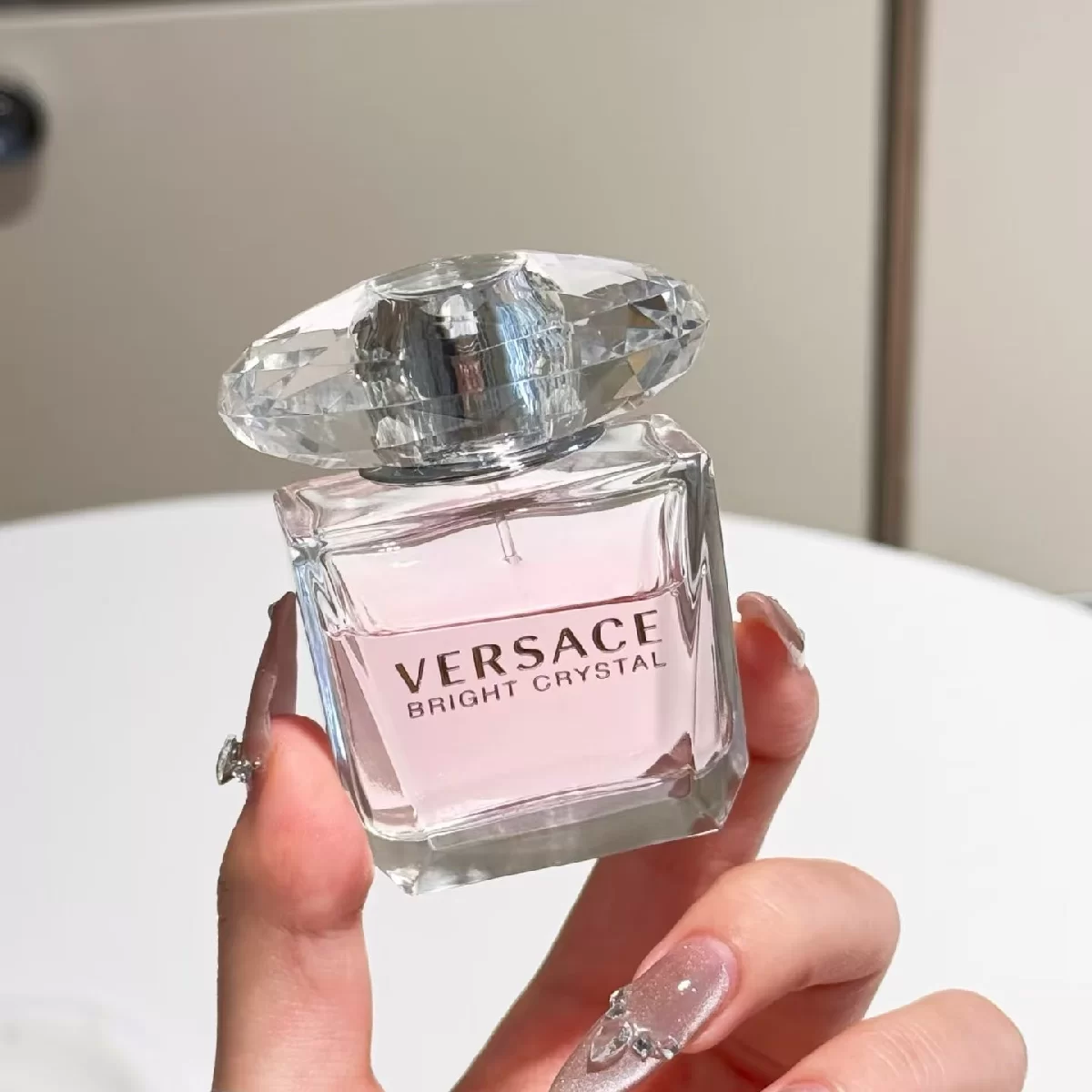
Versace describes Bright Crystal EDT as floral, fruity, and musky, with yuzu, iced accord, and pomegranate at the top; peony, magnolia, and lotus in the heart; and acajou, vegetal amber, and musk in the base. I verify those notes against the brand’s official Bright Crystal product information rather than relying on a reseller’s abbreviated note list.
I think of Bright Crystal as a useful reference point for people who like a bright, watery-fruity opening that moves into soft florals and a musky base. That description still does not tell me whether I personally will enjoy it. Fragrance is highly perception-dependent, so I sample when practical.
Dylan Blue Pour Homme
When I consider Dylan Blue Pour Homme, I am looking in a different direction: fresh, aromatic, and woody rather than soft floral-fruity. I would compare it against other versatile aromatic fragrances based on how the opening, mid-stage, and dry-down behave on my skin rather than choosing it because it is popular.
Versace Man Eau Fraîche
I associate Man Eau Fraîche with a lighter citrus-woody style that can work well when I want freshness rather than a dense scent cloud. My main question is whether I want that lighter presence or a fragrance with more perceived weight. That is a personal-use decision, not an authenticity decision.
Crystal Noir
Crystal Noir sits in a richer, warmer territory. If I am choosing it for evening use, I pay particular attention to concentration, the way the floral-spicy character develops, and how much I actually need to apply. A scent that feels smooth at one spray can become overwhelming at four.
Knowledge Point: The Note Pyramid Is a Description, Not a Stopwatch
I use “top,” “heart,” and “base” notes as a practical way to describe how a fragrance changes, but I do not assume the materials appear in three perfectly separated time blocks. Volatility, formula design, skin, temperature, application amount, and perception all affect what I notice and when I notice it.
My test: I smell the opening, then revisit the fragrance after roughly 20–30 minutes and again later in the dry-down. I avoid judging a fragrance from the first spray alone.
What EDT, EDP, and Parfum Tell Me—and What They Do Not
Fragrance concentration terminology is useful, but I do not treat it as a universal performance ranking. Eau de parfum often contains a higher proportion of aromatic material than eau de toilette, while parfum can be more concentrated still, but there is no simple rule that every EDP lasts longer or projects more strongly than every EDT.
Formula composition matters. Some highly volatile materials create strong early projection but fade faster. Other materials can remain perceptible close to the skin for many hours without filling a room. Skin hydration, temperature, climate, clothing contact, and nose adaptation also affect my experience.
| Label | How I Interpret It | What I Still Need to Test |
|---|---|---|
| EDT | Often lighter in concentration, but formula-specific | Projection, dry-down, longevity and comfort |
| EDP | Often more concentrated, but not automatically stronger in every phase | How the formula differs from the EDT, not just how long it lasts |
| Parfum | Typically positioned as a richer or more concentrated format | Actual scent profile, texture, projection and value per wear |
How I Evaluate imixx perfume No. 08 Without Overstating the Comparison
Because this site sells imixx perfume No. 08, I think the most trustworthy approach is to be explicit about what can and cannot be claimed. No. 08 is an imixx perfume product inspired by the scent direction of Versace Bright Crystal. It is not Versace merchandise, it is not sold as an authentic Versace bottle, and I do not assume that the formulas are identical.
I also avoid unsupported statements such as “99% identical,” “the same ingredients,” or “identical longevity” unless there is transparent, independently reviewable testing behind those statements. Similar note language does not prove formula equivalence. Two fragrances can emphasize some of the same olfactory ideas and still differ in raw materials, proportions, diffusion, dry-down, and wear time.
Versace Bright Crystal EDT
Brand ownership: Versace.
Official classification: Floral, fruity, musky.
What I am paying for: The original Versace formula, branding, bottle design, packaging, distribution, and brand experience.
My best fit: When owning the actual Versace product matters to me, especially for gifting or collection purposes.
imixx perfume No. 08
Brand ownership: imixx perfume.
Positioning: Inspired by the Bright Crystal scent direction.
What I am paying for: A separate fragrance formulation and imixx perfume’s own packaging, distribution, and customer experience.
My best fit: When I want to explore a similar olfactory direction without requiring authentic Versace branding.
My Fair Side-by-Side Test Method
If I want to compare an original fragrance with an inspired-by fragrance, I use the same conditions for both. I apply one scent to one wrist and the other to the opposite wrist, use a similar number of sprays, and avoid layering scented lotion or other perfume underneath. I note the opening separately from the later dry-down.
I also avoid comparing a fresh spray of one fragrance with a two-hour dry-down of another. That sounds obvious, but it is an easy mistake when testing in a store. If possible, I repeat the comparison on another day because fatigue and nose adaptation can distort a single session.
Most importantly, I judge the independent fragrance on whether I like wearing it. I do not need it to be chemically identical to the designer reference for it to be useful to me, and I do not describe it as identical when I cannot establish that.
Key Point: What I Can Responsibly Claim
- I can identify which company made each product.
- I can compare published note descriptions and product formats.
- I can describe my own sensory impression if I actually test the products.
- I cannot infer identical formulas from similar notes.
- I cannot prove a percentage similarity without a defined, transparent test method.
- I cannot treat seller marketing language as independent verification.
How I Check Whether a Versace Fragrance Looks Authentic
I do not rely on one “secret trick.” Counterfeiters can copy boxes, logos, barcodes, batch codes, and photography. At the same time, legitimate packaging can vary between years, sizes, markets, and production runs. I therefore use multiple signals, starting with the seller.
I Check the Seller Before the Bottle
The seller is my strongest pre-purchase signal. If the merchant has an established business identity, transparent contact information, clear sourcing language, documented policies, and a credible history, that reduces uncertainty. If the seller hides behind a generic storefront, provides no usable support channel, and demands an unusual payment method, pristine product photos do not reassure me.
I Compare the Exact Packaging Version
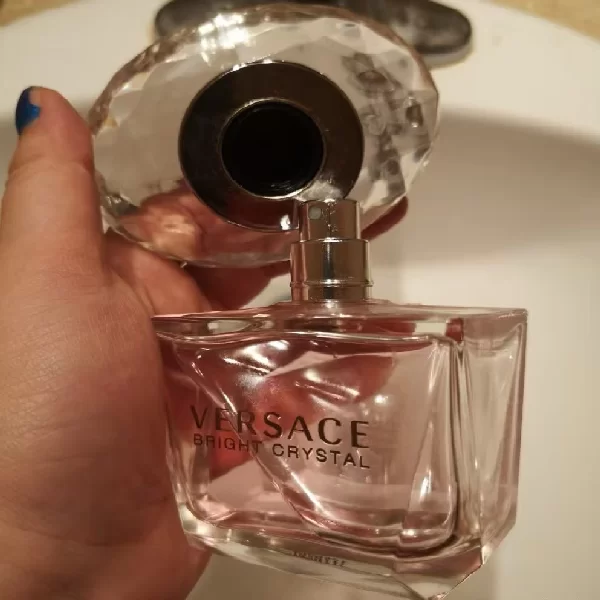
After delivery, I check whether the name, concentration, bottle volume, typography, printing quality, bottle construction, cap, atomizer, and packaging are internally consistent. I compare against reliable references for that specific product version. I do not compare a 2026 bottle against one random image from many years earlier and assume every difference indicates a fake.
I Treat Batch Codes as Supporting Evidence
A batch code can be useful, but it is not a digital certificate of authenticity. A visible code can be copied. Third-party code databases may be incomplete. If a code format is inconsistent with the product or the package has multiple unexplained anomalies, I treat that as a reason for further investigation rather than a final verdict.
I Do Not Authenticate by Smell Alone
Memory is unreliable, and fragrance itself can vary in perceived character because of temperature, storage history, age, application amount, formulation changes, and the condition of my own sense of smell. If I suspect a problem, a direct comparison with a trusted sample is more useful than “I remember it smelling stronger.” Even then, I use the comparison as one piece of evidence.
Authenticity Checklist I Trust Most
- A seller whose identity and reputation I can verify.
- Clear evidence about whether the seller is authorized or operating outside the authorized network.
- A listing that accurately states product name, size, concentration, condition, and fulfillment source.
- A transaction record, legitimate payment method, and usable return or dispute process.
- Packaging and bottle details that are consistent with reliable references for the specific version.
Red Flags That Make Me Stop Before Checkout
An Extreme Price With No Plausible Explanation
A low price can be legitimate. A discontinued item, damaged box, tester, clearance unit, or gray-market bottle may sell well below department-store pricing. What concerns me is a dramatic discount combined with vague sourcing, copied photos, weak seller history, and poor buyer protection.
Contradictory Product Language
I avoid listings that use “authentic,” “replica,” “inspired,” and “original” as though they mean the same thing. They do not. If I am buying Versace, the listing should clearly identify an original Versace product. If I am buying imixx perfume, the listing should clearly identify an imixx perfume product. Clarity protects both the buyer and the seller.
Requests to Pay Outside the Normal Checkout
I will not send money by wire transfer, gift card, or another difficult-to-reverse method simply because a seller offers an extra discount. I also do not move a marketplace transaction into private messages to avoid platform fees. A cheaper transaction with weaker protection can be a more expensive risk.
No Practical Return Process
Fragrance return policies are often stricter than ordinary merchandise policies, so I want the rules in writing. I look for the time window, product-condition requirements, restocking fees, responsibility for return shipping, and any special restrictions on opened or alcohol-containing fragrances.
How I Compare Versace Fragrance Prices Correctly
Price comparison is only useful when the products are truly comparable. I match fragrance name, concentration, volume, packaging, and condition first. Then I compare the total transaction cost.
I Calculate Unit Cost
Suppose one 1.7 fl oz bottle costs $75 and one 3.4 fl oz bottle costs $110. Those hypothetical numbers equal about $44.12 per fluid ounce for the smaller bottle and $32.35 per fluid ounce for the larger bottle. The larger bottle is cheaper per ounce, but that does not automatically make it the better purchase for me.
If I wear a fragrance only occasionally, the lower upfront cost of a smaller bottle may be more rational. If it is a daily signature scent, the larger format may have better value. I think in terms of expected use, not just unit economics.
I Compare Milliliters When Sizes Are Mixed
When retailers show different unit systems, I convert the sizes before comparing. A 50 ml bottle and a 1.7 fl oz bottle are approximately the same size category, while 100 ml and 3.4 fl oz are approximately comparable. I still check the actual label because rounding conventions can vary.
I Include Shipping, Tax, and Fees
The price on the search-results page is not the price I pay. I use this formula:
My True-Cost Formula
Total Purchase Cost = Item Price + Shipping + Mandatory Fees + Tax − Valid Discounts
I also assign value to a reliable return process. If one seller is five dollars cheaper but has unclear returns and poor support, the numerical discount may not compensate me for the added risk.
How I Evaluate Reviews Without Letting Ratings Decide for Me
I read reviews, but I do not treat the average star rating as scientific evidence. I look for patterns in recent comments: leakage, damaged packaging, fulfillment errors, slow support, unexpected condition, or repeated authenticity concerns. I also look for evidence that reviewers are talking about the same seller and the same product version.
For fragrance performance, I expect disagreement. One person may call a fragrance “weak” while another finds it strong because application amount, climate, skin, clothing, and sensitivity differ. I pay more attention to repeated, specific observations than to one dramatic statement.
When I read reviews about imixx perfume on the same site that sells it, I remember the commercial context. Customer feedback can still be useful, but it is not the same as independent laboratory verification or a controlled blind comparison.
When I Shop for Versace Fragrance Deals
I watch major retail periods such as Black Friday, Cyber Monday, holiday gifting season, and retailer-specific beauty events. I also compare gift sets around major holidays because some bundles offer practical value when I want the included items.
I do not assume that a “20% off” banner applies to prestige fragrance. Exclusions are common, and some deals require minimum spend, loyalty membership, or a specific payment method. I read the terms before I decide that a sale is real.
I Track the Exact SKU, Not Just the Fragrance Name
Price monitoring becomes much more useful when I track the same bottle size and concentration over time. A retailer can advertise “Bright Crystal from $X” while the price I care about applies to a different size. I record the actual configuration so I am comparing like with like.
I Use Gift Sets Carefully
If a gift set includes a 90 ml fragrance, travel spray, and body lotion, I compare the set price with the standalone 90 ml bottle. Then I ask whether I would genuinely use the extras. I do not count an unwanted body product at full retail value just to make the set look like a bargain.
Online or In Store: Which Do I Prefer?
If I already know the fragrance, I usually prefer online comparison because it is easier to check bottle sizes, promotions, and return terms side by side. If I do not know the fragrance, I prefer in-person testing when possible.
My in-store method is simple. I limit the number of fragrances I test at once, begin on blotters, move the finalists to skin, and leave enough time for the opening to settle. I do not buy solely because I like the first 60 seconds. The dry-down is part of the product I will actually live with.
For gifts, I am more conservative. If the recipient asked for Versace Bright Crystal, I buy Versace Bright Crystal. I do not substitute an inspired-by fragrance unless I know the recipient wants that alternative. Brand identity can be part of the gift itself.
How I Protect the Purchase After Delivery
I Document the Order
I keep the order confirmation, seller name, listing details, payment record, and return policy until I am satisfied. If the product arrives damaged, incomplete, or materially different from the listing, those records make the conversation with the seller much easier.
I Inspect Before Heavy Use
I check shipping damage, outer packaging, bottle integrity, concentration, size, and whether the delivered item matches the listing. If something looks wrong, I photograph it before discarding packaging. I avoid using a large amount of a product that I may need to return.
I Store Fragrance Away From Heat and Light
Once I decide to keep the bottle, I store it in a stable environment away from prolonged direct sunlight, high heat, and frequent temperature swings. I prefer an enclosed cabinet or drawer over a sunny bathroom shelf. Storage cannot stop aging, but it can reduce avoidable stress on the formula.
My Decision Tree: Original Versace or imixx perfume?
I find the decision easier when I stop asking which category is “better” and instead ask what outcome I want.
I Choose Original Versace When…
- I want the actual Versace formulation and branding.
- I am buying for a collector or as a brand-specific gift.
- I care about the original bottle and presentation.
- I want the most direct possible connection to official product provenance.
I Consider imixx perfume When…
- I care more about exploring a familiar scent direction than owning the Versace brand.
- I want to compare a separate formulation at another price point.
- I understand that inspired-by does not mean identical.
- I am willing to judge the fragrance on its own smell, wear, price, and return terms.
What I Would Verify Before Buying imixx perfume No. 08
Because this article is published on a retailer’s site, I think readers deserve a higher standard of disclosure around the retailer’s own product. Before I buy No. 08, I would verify the current bottle size, price, ingredient list, shipping terms, return policy, and any customer-service conditions directly on the product page. I would not rely on an article like this to make those transactional facts permanent because prices and policies can change.
I would also separate three different questions: “Does the product intentionally reference the Bright Crystal scent direction?”, “Do I personally find the fragrances similar?”, and “Are the formulas objectively identical?” The first can be a positioning statement. The second is a sensory judgment. The third requires evidence that a normal product description does not provide.
This distinction is important for trust. A retailer can describe what inspired its product, but it should not present subjective resemblance as a laboratory-proven fact unless it has evidence and a clearly defined methodology.
My Final Buying Strategy
When I want an authentic Versace fragrance, I start with provenance. I check Versace or a retailer I can verify, confirm the exact product configuration, and then compare total price. I do not let a discount override basic seller due diligence.
When I want a Bright Crystal-inspired scent experience at a different price point, I can consider imixx perfume No. 08 as a separate product. I judge it on its own value: whether I like the scent, how it wears for me, what it costs, and whether the retailer’s policies meet my expectations. I do not need to pretend it is Versace for that comparison to be useful.
The most important lesson I have learned from fragrance shopping is that certainty comes from combining several small checks. Seller credibility, authorization, product specification, packaging consistency, sensible pricing, safe payment, and clear returns are stronger together than any one authenticity “hack.”
That is how I try to Buy Versace Fragrance without confusing a low price with a low-risk purchase. The best deal is the one where I understand what I am buying, who is selling it, how the fragrance fits my preferences, and what happens if the transaction does not go as expected.
Frequently Asked Questions About Buying Versace Fragrance
1. Where do I think the safest place is to buy authentic Versace fragrance?
I would start with Versace’s official channels or a retailer whose authorization and reputation I can verify. That gives me the clearest product provenance and reduces uncertainty about third-party sourcing.
2. Do I assume a discounted Versace fragrance is fake?
No. Legitimate discounts can result from promotions, older inventory, testers, clearance, or different distribution channels. I become more cautious when a very low price appears together with weak seller information, contradictory descriptions, or poor buyer protection.
3. How do I check whether a Versace perfume is authentic?
I begin with the seller and purchase record, then compare the exact product version, packaging, bottle details, and listing information. I treat batch codes and smell as supporting clues rather than definitive proof. If serious doubts remain, I contact the retailer or Versace customer service.
4. Is buying Versace fragrance on a marketplace safe?
It can be, but I investigate the actual seller, fulfillment method, return rights, recent feedback, and payment protection. I do not assume that every listing on a well-known platform is sold by the platform itself.
5. What is the difference between Versace Bright Crystal and imixx perfume No. 08?
Bright Crystal is an original Versace fragrance. imixx perfume No. 08 is an independently produced imixx perfume product inspired by the Bright Crystal scent direction. I treat them as different branded products and do not assume identical formulas or performance.
6. Do I trust percentage-similarity claims for inspired-by fragrances?
Not without a defined methodology and evidence. A percentage can sound precise while hiding how the comparison was performed. I prefer transparent note information, my own side-by-side wear test, and clear disclosure that the products use separate formulations.
7. Is a larger bottle always the best value?
No. A larger bottle can have a lower cost per ounce, but I also consider upfront spend, how often I wear the fragrance, how long it may sit in storage, and whether I already know I like the scent.
8. Should I choose EDT, EDP, or parfum?
I choose based on the specific formula and how it performs for me. Concentration labels provide useful context, but they do not guarantee a universal ranking for projection or longevity.
9. When do I look for Versace fragrance sales?
I monitor major holiday periods, Black Friday, Cyber Monday, beauty events, and gift-set releases. I compare the exact bottle configuration and final checkout cost because a promotional headline does not always represent the lowest total price.
10. What matters most to me when buying fragrance online?
I prioritize seller credibility, exact product identification, realistic price comparison, safe payment, and clear return rights. Those factors do more to reduce risk than relying on a single batch-code check or packaging detail.
Conclusion: Where I Would Spend My Money
If I specifically want Versace, I would spend my money with Versace or a seller I can verify before chasing the deepest discount. Authenticity, correct product configuration, and usable customer protection matter more to me than saving a small amount on an uncertain listing.
If my real goal is to explore the fresh floral-fruity direction associated with Bright Crystal and I do not require the Versace name or bottle, I can evaluate imixx perfume No. 08 as an independent option. I would do that without assuming identical ingredients, identical longevity, or a scientifically established similarity percentage.
That separation makes the comparison more useful and more honest. I can appreciate what the original designer fragrance offers, consider an independently formulated alternative on its own merits, and still make a purchase decision based on evidence, personal preference, and total value rather than marketing pressure.