Top 5 Reviews on juliette has a gun not a perfume fragrantica
Hello, fellow fragrance enthusiasts! If you are reading this, you are likely tumbling down the exact same olfactory rabbit hole I found myself in a few years ago. My journey into the fascinating, and sometimes confusing, world of minimalist molecular perfumery began with a very simple, everyday quest. I was exhausted by heavy, room-clearing scents. I wanted a signature everyday fragrance that didn’t announce my arrival ten minutes before I actually entered a room. I was searching for something intimate, remarkably clean, and undeniably “me.” That is exactly when I stumbled upon the highly debated, enigmatic concoction created by Romano Ricci.
When you start researching this specific bottle, the very first thing you will notice is how fiercely divided the online community is. Doing a quick search for juliette has a gun not a perfume fragrantica yields an absolute treasure trove of conflicting opinions. You will find passionate love letters from people claiming it is their holy grail, placed right next to utterly baffled reactions from buyers who claim they cannot smell a single thing and feel they paid for a bottle of tap water. As a regular consumer and a passionate collector, I found this polarization absolutely fascinating. How could one single bottle of liquid create such vastly different experiences for different people?
As someone who has tested hundreds of fragrances on my own skin—from the heaviest, most indolic ouds to the most fleeting, zesty summer citruses—I have learned that scent is deeply, inherently subjective. However, this particular bottle takes subjectivity to an entirely new level. It is, by its very definition, barely a perfume. It is essentially a single synthetic molecule suspended in alcohol. Because it completely lacks the traditional top, heart, and base notes of a standard fragrance pyramid, the discussions around it are unlike any other fragrance debate you will encounter. To make sense of the noise, I spent months analyzing my own experience, tracking its performance in different weather conditions, and comparing my notes against the thousands of community votes. If you’ve been reading through the juliette has a gun not a perfume fragrantica forums, you know exactly how overwhelming the sheer volume of opinions can be.
To save you the headache of endlessly scrolling through forums, I have categorized the general community consensus, blended with my own rigorous, objective testing, to bring you the top 5 definitive perspectives on this divisive scent. We will look at its real-world performance, its incredible layering capabilities, the strange biological phenomenon of nose-blindness, and the best alternatives if you want to explore the world of molecular scents while keeping your budget in mind. My goal here is to give you a fair, balanced, and highly practical guide so you know exactly what to expect before you spend your hard-earned money.
Knowledge Point: The Fascinating Science of Cetalox
Before we dive into the community reviews, we need to understand what we are actually smelling. The bottle contains a single ingredient (aside from alcohol and water): Cetalox. Cetalox is a synthetic compound created by the fragrance giant Firmenich. Originally, it was developed as an ethical, lab-created alternative to ambergris. For those who don’t know, ambergris is a rare, waxy, and historically highly expensive substance produced in the digestive system of sperm whales, prized for centuries for its ability to make perfumes last longer.
In traditional, complex perfumery, Cetalox is used quietly in the background as a base note. It gives fragrances depth, warmth, and longevity. It is the “glue” that makes your perfume stick to your skin for 12 hours. By isolating this single molecule and bottling it alone, the creator essentially stripped away the painting and sold you the blank canvas. This is why it is uniquely reactive to individual body chemistry, skin temperature, and the surrounding environment. You are not smelling a bouquet of flowers; you are smelling a chemical reaction taking place on your own skin.
Review 1: The Minimalist’s Dream – “My Skin But Better”
Embracing the Clean Girl Aesthetic
The most common and enthusiastic praise you will find on the forums revolves around the concept of the “skin scent.” For those of us who work in close-quarters office environments, healthcare settings, or simply dislike the feeling of walking around in a dense, suffocating cloud of heavy florals and spices, this fragrance is an absolute revelation. I vividly remember the first time I sprayed it on my wrist at a local cosmetics counter. My immediate, slightly disappointed thought was, “Did I just spray water on myself?” For the first thirty seconds, there is almost nothing. You might catch the faint, clinical chill of perfumer’s alcohol, but that is it.
But then, something magical happens. As my body heat began to warm the liquid on my pulse points, the scent slowly bloomed. A warm, slightly woody, gently musky, and faintly sweet aroma began to emanate from my skin. It did not smell like I was wearing perfume at all; it smelled as though I had just stepped out of a luxurious, steamy shower using a high-end, unscented artisan soap, and my skin naturally radiated an aura of perfect cleanliness.
The minimalist appeal of this is undeniable and aligns perfectly with current beauty trends. According to an excellent deep dive on the skin scent phenomenon by Byrdie, modern consumers are increasingly moving away from “loud,” statement-making fragrances. Instead, there is a massive shift toward intimate scents that enhance a person’s natural pheromones and chemistry rather than masking them behind heavy layers of artificial fruit and flowers. People want to smell effortlessly good, not heavily perfumed.
The Ultimate “Dumb Reach” Fragrance
In my personal, everyday experience, this “my skin but better” aspect makes it the ultimate “dumb reach” fragrance. In the fragrance community, a dumb reach is a bottle you can grab without thinking, knowing it will work in absolutely any scenario. When I am running late for a morning meeting, throwing on sweatpants for a quick grocery run, or even attending a formal evening event where I don’t want my perfume to clash with my meal, this scent adapts flawlessly. It never clashes with my outfit, the weather, or my mood. It simply amplifies my presence in a polite, sophisticated way.
Many reviewers on the forums echo this exact sentiment, consistently rating it highly for its unmatched versatility. It is the crisp white t-shirt of the fragrance world: simple, essential, universally flattering, and always appropriate. If your ultimate goal is for people to lean in close and say, “Wow, you smell amazing,” rather than asking, “What perfume are you wearing?”, this minimalist approach is exactly what you are looking for. It shifts the compliment from the product you bought to *you* as a person.
Review 2: The Ultimate Layering Primer
Solving the Problem of Fleeting Perfumes
If I had to step back and pinpoint the single greatest utility of this bottle—and the reason I believe every serious fragrance collector should own a molecular scent—it is its absolute superpower as a layering primer. Any seasoned fragrance lover knows the distinct heartbreak of finding a beautiful, sparkling citrus scent or a delicate, photorealistic floral perfume, only to have it vanish entirely from the skin in under two hours. Citrus notes, by their chemical nature, are highly volatile and evaporate incredibly fast.
Because Cetalox is traditionally utilized by master perfumers as a base note fixative, applying it as a bottom layer underneath your weaker fragrances acts like an invisible anchor. It gives those fleeting top notes something solid to grip onto, holding them to your skin for hours longer than they would ever last on their own. It is the olfactory equivalent of using a high-quality makeup primer before applying your foundation.
My Real-World Layering Experiments
I am a huge fan of empirical testing, so I decided to run a controlled layering experiment over the course of a normal workweek. For my first test, I took one of my favorite, yet tragically short-lived, bergamot and green tea fragrances. On my left arm, I applied the bergamot scent alone. On my right arm, I sprayed the molecular Cetalox base first, allowed it to dry down for about two minutes to meld with my skin, and then sprayed the bergamot directly over it.
The results were honestly astounding, and it completely changed how I wear my collection. The left arm, wearing only the citrus, had lost its scent entirely by my lunch break. The right arm, anchored by the Cetalox, was still actively projecting a beautiful, woody-citrus aura when I drove home at 6 PM. Beyond just extending longevity, it adds a stunningly modern, woody dimension to anything you pair it with.
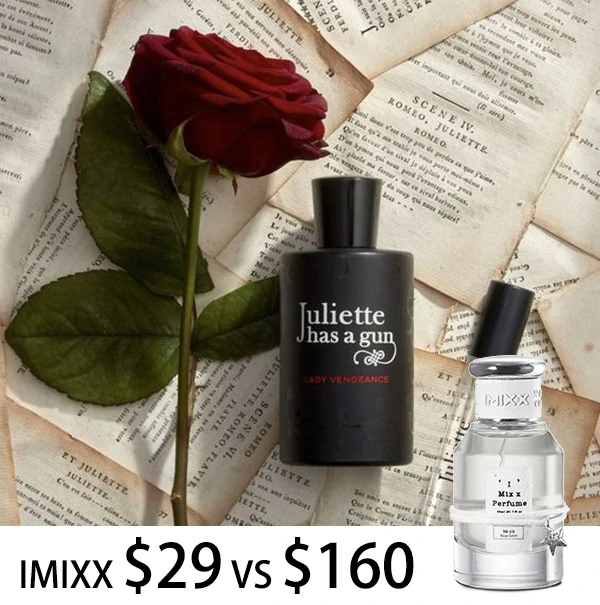
When I layered it beneath a very cloying, cheap vanilla body mist I had lying around, it miraculously cut through the sugary sweetness, adding a sophisticated, amber-woods depth that made the $10 mist smell like a $200 niche perfume. When paired with a sharp, powdery rose, it smoothed the harsh edges and grounded the floral bouquet. In the community reviews, you will see endless, highly creative recipes of people combining it with everything from high-end extraits to drugstore lotions. It is the ultimate utility player in any perfume wardrobe. However, at luxury retail prices, using it strictly as a base layer can get very expensive. This is where exploring a more budget-friendly option like an imixx perfume alternative becomes a very smart, economical choice for everyday layering without the guilt.
Review 3: The “I Can’t Smell Anything” Conundrum (Anosmia)
The Elephant in the Room
We cannot have a fair, honest discussion about this fragrance without addressing the very large elephant in the room. If you spend more than five minutes on the forums, you will inevitably encounter a significant percentage of reviews containing angry, bewildered statements. Buyers frequently claim they received a fake bottle, or that the company is scamming people by bottling pure tap water. I have personally handed my authentic bottle to close friends, only to watch them spray it, sniff their wrists aggressively, and look at me like I am playing a practical joke on them.
Let me assure you, as a consumer advocate: this is usually not a manufacturing defect, and you haven’t been scammed. What you are witnessing is a fascinating, frustrating biological phenomenon known as anosmia. To be more specific, it is a macro-osmic blindness to certain large scent molecules.
The Science of Olfactory Fatigue
Cetalox, at a molecular level, is quite large and heavy. For a portion of the population, their individual olfactory receptors simply cannot process the physical size of the molecule, meaning their brain literally cannot perceive the scent. It is a genetic, biological quirk, very much akin to how some people taste delicious citrus when they eat cilantro, while others possess a gene that makes it taste like dish soap. According to medical resources discussing anosmia and smell disorders, selective anosmia to specific musks and synthetic ambers is incredibly common.
Furthermore, because it is an isolated, single molecule, it aggressively causes olfactory fatigue—commonly known as nose blindness—in those who can initially smell it. In a complex perfume with 50 ingredients, your nose is constantly entertained by different notes evaporating at different rates. With a single molecule, you might spray it, smell it clearly for ten beautiful minutes, and then your brain simply decides to tune it out. The brain flags it as a constant, non-threatening background environmental odor, much like how you stop noticing the smell of your own living room a few minutes after walking through the front door.
The irony of this situation is profound and sometimes comedic. I once wore this to a crowded dinner party. After about two hours, I couldn’t smell it at all, even when I pressed my nose directly to my wrist. I assumed it had completely faded and felt a bit disappointed. Yet, as I walked past a waitress to find my seat, she stopped dead in her tracks to ask what I was wearing, noting that I left a beautiful, clean, woody trail in the air. It is a true ghost fragrance. It plays a constant game of hide-and-seek with your senses. To fully appreciate it, you must accept the reality that you are often wearing it more for the people around you than for your own continuous enjoyment. If you are a consumer who needs to constantly smell your own perfume throughout the day to feel satisfied with your purchase, this will undoubtedly be a frustrating experience for you.
Review 4: The Sensitive Skin Savior (With Honest Caveats)
Navigating Fragrance Sensitivities
One of the major marketing angles and community selling points of this minimalist composition is its reputation for being friendly to allergy sufferers. In our modern era, where contact dermatitis, eczema, and severe fragrance sensitivities seem to be steadily on the rise, navigating the brightly lit perfume counters of major department stores can be a literal headache—or result in painful rashes—for many consumers.
Traditional luxury perfumes are marvels of chemistry, often containing dozens, sometimes even hundreds, of different chemical compounds, fixatives, and natural essential oils. While the word “natural” sounds incredibly appealing in brand marketing copy, the reality is that natural botanical extracts—such as real oakmoss, lavender, bergamot, and various citrus oils—are actually among the most common and aggressive triggers for human skin allergies and asthmatic reactions. Mother Nature creates highly complex, unpredictable compounds.
A Balanced View on Synthetics
Because this specific bottle contains zero essential oils, zero natural floral absolutes, and zero acidic citrus extracts, it is frequently hailed on the forums as a safe haven for the allergy-prone. A fascinating feature published by Allure highlights a truth that shocks many consumers: synthetic, lab-created molecules are often much safer for sensitive skin than their natural counterparts because they are highly controlled, extensively purified, and intentionally stripped of the complex allergens found in nature.
I have a very close friend who suffers from chronic migraines triggered by strong floral scents. She essentially gave up on wearing perfume entirely in her early twenties to avoid feeling nauseous. I created a small decant of this fragrance for her to try cautiously at home. To her delight, it is one of the very few fragrances she can wear daily without experiencing even a hint of a headache.
However, I want to be entirely transparent and objective here: it is not a magical, 100% risk-free cure-all. While it removes the vast majority of common natural allergens, Cetalox is still a synthetic chemical, and the carrier is still strong alcohol. A very small minority of people can still develop a contact sensitivity to synthetics. Therefore, while it is statistically a much safer bet for sensitive skin, I always strongly advocate for doing a patch test on your inner elbow before spraying it directly on your neck or chest. It is generally well-tolerated, but your individual biology always has the final say.
Review 5: The Ultimate Chemistry Chameleon
Why It Smells Different on Everyone
The final, and perhaps most mysterious and magical consensus among reviewers is how wildly, unpredictably different this scent performs depending on the specific person wearing it. Traditional, complex perfumes generally smell somewhat similar on a paper testing blotter as they do on human skin—the variation is usually minor, mostly affecting how quickly the top notes fade. Molecular scents, on the other hand, are dormant. They require the warmth, the natural oils, and the specific pH level of human skin to fully activate and complete their scent profile. They are only half of a perfume; your body is the other half.
This became incredibly apparent in my own household. When my partner wears it, the ambroxan note pulls incredibly woody and slightly masculine. On their skin, it smells almost like fresh cedar shavings, cracked black pepper, and sea salt. It has a rugged, outdoorsy quality. However, when I wear the exact same liquid from the exact same bottle, my skin chemistry pulls out the latent sweetness of the molecule. On me, it transforms into a creamy, almost papery, soft vanilla-musk. Furthermore, I have smelled it on colleagues at work where it reads purely as crisp, sterile, fresh-out-of-the-dryer clean laundry.
This chameleon-like quality means you can never truly know what you are buying by reading reviews or smelling it on a paper strip. You absolutely must spray it on your own neck and live with it for a day. Factors like your diet, your natural skin hydration levels, the ambient weather, and your body temperature will dictate the final result. It is, quite literally, a bespoke, custom fragrance experience housed within a mass-market bottle. If you possess a naturally warm, musky baseline skin scent, this will amplify it gorgeously. If you have a cooler, drier skin chemistry, it will likely pull very crisp, sharp, and clean.
Performance Overview & Real-World Key Metrics
To give you a structured, easy-to-read look at how this fragrance actually performs out in the real world—outside of the romanticized marketing copy—I have compiled a comprehensive breakdown. This table is based on my own extensive, multi-season wear-testing, cross-referenced with aggregated data from hundreds of community forum users. *Note: Keep the concept of nose-blindness in mind; your personal perception of these metrics may vary drastically from what the people sitting next to you are experiencing!*
The Market Landscape: Analyzing Alternatives and Dupes
Let’s have an honest conversation about price. The reality of molecular perfumery is that you are paying a massive premium for a chic brand name, a heavy glass bottle, and clever marketing. The chemical itself—whether it is Cetalox, Ambroxan, or Iso E Super—is widely available to perfumers and is not particularly costly to synthesize in a lab. As a savvy consumer who tests products rigorously, I always look for ways to get a highly comparable olfactory experience without paying the niche luxury tax.
If you love the concept of a minimalist skin scent but balk at dropping nearly $145 on what is essentially one ingredient, you have several excellent options. The beauty of this category is that because it is not a highly guarded, complex secret recipe of 80 ingredients, achieving a similar vibe is very doable for other brands. Here is my fair, balanced comparison of the original against other molecular giants and accessible alternatives on the current market.
Escentric Molecules 02
The Vibe: The original pioneer that started the entire single-molecule trend years ago. However, Escentric 02 utilizes Ambroxan rather than Cetalox.
Expert Comparison: While very similar in its minimalist concept, Ambroxan tends to pull slightly sharper, cooler, and more mineralic on the skin compared to Cetalox. Escentric 02 has a slightly more metallic, “fresh pencil shavings” vibe, whereas the Juliette version is creamier, softer, and slightly sweeter on the dry down. Still, a fantastic high-end alternative.
Glossier You
The Vibe: The millennial pink darling of the modern skin-scent world. It is highly popular but fundamentally different in composition.
Expert Comparison: It is crucial to note that Glossier You is a fully formulated perfume, not a single molecule. It contains ambrox, ambrette seed, musk, iris, and pink pepper. It shares the same “clean skin” DNA, but the added iris makes it distinctly powdery, and the pepper gives it a spicy top note. It is beautiful, but it is not hypoallergenic like a single-molecule scent.
imixx perfume Alternative
The Vibe: An incredibly smart choice for the budget-conscious consumer who wants to experience the magic of molecular layering without the luxury guilt.
Expert Comparison: Because synthesizing this specific scent profile relies on readily available amber-synthetic bases rather than rare, harvested botanicals, independent houses can replicate the vibe exceptionally well. An imixx perfume alternative offers a remarkably similar scent profile. You get highly comparable longevity, the same soft sillage, and that distinct creamy-woody dry down at a fraction of the cost, making it my top recommendation for an everyday layering primer.
Final Verdict: Is It High Art or Clever Gimmick?
After spending months wearing it on its own, testing it as a base layer under my weakest floral perfumes, and obsessively reading through the divided community feedback, my final verdict is highly nuanced. If you approach perfumery strictly as a traditional, romantic art form—expecting complex blends of top, heart, and base notes that tell a shifting, dramatic narrative over the course of eight hours—you will likely find this bottle incredibly boring. You might even find it slightly offensive given its luxury price point. It completely lacks the romantic evolution of a classic French chypre or the bold statement of an oriental spice bomb.
However, if you view fragrance through a more pragmatic lens—as a functional tool for personal grooming, an extension of your natural aura, and a way to navigate a scent-sensitive world—it is an absolute, undeniable triumph. It solves so many modern, everyday problems: strict office fragrance bans, nagging allergies, the poor longevity of other expensive perfumes, and the simple desire to smell effortlessly clean without trying too hard. For me, it has become the architectural foundation of a modern fragrance wardrobe. I cannot imagine my collection without a heavy-hitting ambroxan or cetalox molecule sitting on my vanity, ready to go.
But, speaking to you directly as a consumer advocate, I must stress this practical point: do not feel pressured to overpay for a single synthetic molecule if your budget is tight. The underlying chemistry is undeniable, brilliant, and highly effective, but it is not magic, and it is not proprietary. You can achieve this exact same magnificent, warm, clean-skin halo beautifully and economically by exploring well-crafted alternatives. Whether you opt for the original or decide to try an imixx perfume, you are investing in the most versatile, reliable, and fascinating fragrance category on the market today.
Frequently Asked Questions (FAQ)