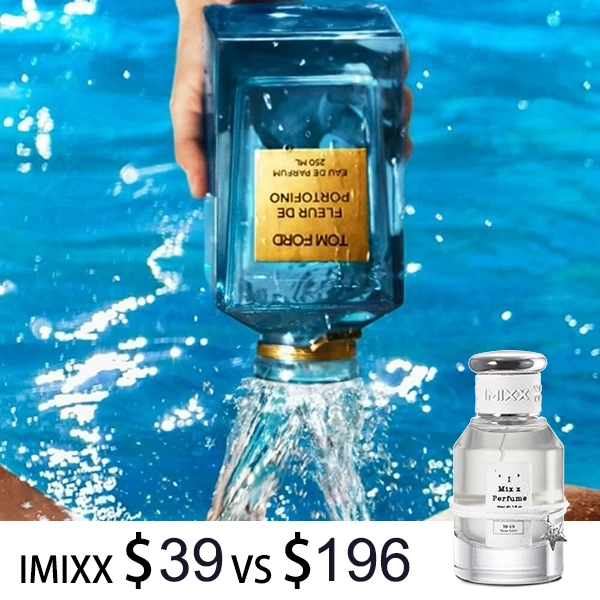


Where to Get a tom ford neroli portofino sample? Explore the Best Sources for Authentic Samples.
As a dedicated fragrance collector who has spent over a decade navigating the intricate world of niche and designer perfumery, I understand the overwhelming allure of high-end scents. There is a specific magic captured in the heavy, turquoise glass bottle of Tom Ford’s iconic Private Blend collection. It is frequently described by enthusiasts and critics alike as the quintessential summer scent—a flawless olfactory representation of the sun-drenched Italian Riviera. However, before you commit a significant portion of your disposable income to a full retail bottle, it is absolutely crucial to test the fragrance on your own skin. Finding a genuine tom ford neroli portofino sample is the very first, and most important, step in any informed fragrance journey.
The fragrance market today is vastly different than it was a decade ago. We are inundated with an endless sea of TikTok reviews, sponsored YouTube videos, and forum hype that can easily pressure an everyday consumer into making a “blind buy.” A blind buy—purchasing a full bottle without ever having smelled it—is a gamble I have lost more times than I care to admit. Luxury fragrances are complex, chemical compositions that interact wildly with individual body chemistry, climate, and even your diet. Throughout this deeply personal and meticulously researched guide, I will share my firsthand experiences, dispel common marketing myths, and show you exactly where to look for authentic sampling options. I want to equip you with the knowledge to make a purchase that you will genuinely love wearing.
My Personal Fragrance Journey: Chasing the Mediterranean Dream
I vividly remember the first time I encountered this legendary citrus masterpiece. I was wandering through the cosmetics floor of a high-end department store in downtown Chicago during a sweltering July afternoon. The air conditioning was working overtime, and the atmosphere was thick with a cacophony of heavy, winter-leaning perfumes that other shoppers were testing. Suddenly, I walked past the Tom Ford counter, and a crisp, effervescent, and wildly refreshing aroma cut right through the heavy air. It smelled like crushed bitter orange leaves, freshly squeezed lemons, and a pristine, salty ocean breeze. The sales associate graciously handed me a paper blotter, and for a brief moment, I was transported to the rocky cliffs of the Amalfi coast. It was luxurious, soapy, and impeccably clean.
I was completely enchanted. I wanted to buy the largest bottle they had right then and there. But the price tag quickly brought me back to reality. More importantly, my years of experience in the fragrance hobby tapped me on the shoulder to remind me of a golden rule: paper blotters lie. A scent sprayed on a sterile piece of cardboard will smell entirely different than a scent that has been living, breathing, and warming up on human skin for four hours. I needed to know how the citrus notes would perform during my commute, how the amber base would settle after a long day at the office, and whether the projection would survive the intense summer humidity. That day, I declined the full bottle and set out on a mission to secure a proper tom ford neroli portofino sample so I could conduct a comprehensive, multi-day wear test.
This methodical, patient approach to testing fragrances is a core pillar of what separates a casual consumer from an informed collector. You simply cannot trust a ten-second first impression, nor can you wholly rely on the subjective experience of an online influencer whose skin chemistry is fundamentally different from your own. You must become your own expert.
The Olfactory Architecture: Understanding the Notes and Extraction
To truly appreciate why this specific fragrance is so highly regarded, and why securing a genuine sample is vital, we must dive into the actual composition of the juice. Formulated by the renowned perfumer Rodrigo Flores-Roux, this Eau de Parfum is essentially a modernized, “steroid-injected” homage to the traditional Eau de Cologne recipes that date back centuries. Traditional colognes are known for being incredibly refreshing but painfully short-lived. The genius of this modern iteration lies in its base notes, which act as an anchor for the highly volatile citrus oils.
Furthermore, it is important to understand the star ingredient: Neroli. Many people confuse Neroli with Orange Blossom, assuming they are the exact same thing because they come from the same tree (the bitter orange tree, *Citrus aurantium*). However, as detailed in comprehensive botanical and fragrance profiles on authoritative sites like Byrdie’s Fragrance Ingredients Guide, the difference lies in the extraction method. Neroli is steam-distilled, which yields a greener, more metallic, and crisper aroma. Orange Blossom is solvent-extracted, producing a richer, sweeter, and more narcotic floral scent. This fragrance relies heavily on the crisp, clean snap of steam-distilled Neroli, paired with the leafy greenness of Petitgrain (extracted from the leaves and twigs of the same tree).
The Fragrance Pyramid Breakdown
When you test your sample, you should actively look for these three distinct phases of the fragrance’s lifecycle:
- The Opening (Top Notes):
This is the immediate, explosive first impression. Expect a massive, zesty rush of Italian Bergamot, Mandarin Orange, Lemon, Bitter Orange, Lavender, Rosemary, and Myrtle. This herbaceous and citrusy blast is designed to capture your attention instantly. Because citrus molecules are very small and light, this phase typically lasts only 15 to 30 minutes on the skin. - The Heart (Middle Notes):
As the sharp initial citrus begins to calm and evaporate, the true character of the fragrance emerges. You will detect African Orange Flower (Neroli), Jasmine, and Pittosporum. This floral mid-section is what gives the fragrance its signature soapy, squeaky-clean, and “expensive luxury spa” quality. This phase will project for roughly 2 to 4 hours. - The Dry-Down (Base Notes):
The final resting phase relies on Amber, Ambrette (Musk Mallow), and Angelica. These base notes are the structural foundation. Without them, the citrus would vanish completely within an hour. The ambrette provides a soft, skin-like muskiness, while the amber adds a very subtle warmth that lingers as a close skin scent for the remainder of the wear.
The Science of Skin Chemistry: Why You Must Sample First
I cannot stress this enough: buying full bottles based solely on written note breakdowns or video reviews is a significant financial risk. As an enthusiast who has consulted with countless people regarding their fragrance wardrobes, the number one source of buyer’s remorse is the blind buy. You read that a fragrance features “sparkling lemon and amber,” you spend $300, and when it arrives, it smells like household floor cleaner on your arm. Why does this happen?
It all comes down to the complex science of skin chemistry. Your skin’s pH level, the amount of natural oils you produce (sebum), your body temperature, your hydration levels, and even your daily diet play a massive role in how a fragrance develops. For instance, people with naturally drier skin often find that fragrances evaporate much faster, meaning the volatile top notes disappear in minutes. Conversely, highly oily skin can hold onto base notes for days, sometimes amplifying musks to an overwhelming degree.
Citrus-forward fragrances are notoriously sensitive to these biological variables. The neroli and bergamot might smell wonderfully sweet and floral on your friend, but turn sour, tart, or overly bitter on you. A physical sample is the only empirical way to test the projection (how far the scent pushes off your skin, also known as sillage) and longevity (how many hours it remains detectable) under your unique biological conditions.
Evaluating the Best Sourcing Options for Everyday Consumers
When you finally decide to acquire a sample, you will quickly discover that the market is fraught with choices, ranging from official retail counters to shady third-party sellers. My goal here is to provide a balanced, transparent, and fair assessment of your best options. Below, I have designed a series of detailed product and source comparison cards to help you visually weigh the pros and cons of each sourcing method, ensuring you make a decision that fits your budget and trust level.
The Official Retail Route
(Sephora, Neiman Marcus, Nordstrom)
The Experience: This is the traditional method. You walk up to the counter, speak with a brand representative, and experience the presentation exactly as intended.
Pros: Zero risk of counterfeits. You can test the fragrance on paper and your skin immediately. It costs nothing to test in-store.
Cons: Post-2020, many department stores have drastically reduced their physical sample programs. It is becoming increasingly difficult to convince a sales associate to make you a small take-home vial unless you are already purchasing a different item. It can also be a high-pressure sales environment.
Specialty Decant Websites
(ScentSplit, MicroPerfumes, DecantX)
The Experience: These established online businesses buy large, authentic retail flacons and siphon the juice into smaller, sterile atomizers (decants) for resale.
Pros: You get access to the genuine designer juice in convenient sizes ranging from 1ml (for a quick sniff) up to 10ml travel sprays. It is shipped directly to your door, allowing you to test it in the comfort of your own home over several days.
Cons: The economics are terrible. You are paying a massive premium for the decanting service. When you calculate the price per milliliter, a 5ml decant can cost double or triple what it would cost per ml in a full bottle. Additionally, shipping fees often make buying a single 2ml sample financially illogical.
High-Quality Alternatives
(imixx perfume Inspired Expressions)
The Experience: Alternative fragrance houses analyze the chemical composition of popular scents and recreate a highly comparable olfactory profile. It is an homage to the original, rather than a 1:1 identical chemical clone.
Pros: Unbeatable budget friendliness. You can often buy a full 50ml bottle of an inspired scent for less than the cost of a 10ml luxury decant. This allows you to spray liberally without financial guilt. It provides the same overall “vibe” and aura to the people around you.
Cons: You do not get the heavy, prestige packaging. As an enthusiast, I must also note that while the heart and base notes are often remarkably close, the initial 5-minute opening of alternatives can sometimes lack the ultra-refined, natural smoothness of a $300 original. It is a trade-off for the price.
Deep Dive Comparison: The True Economics of Fragrance Sampling
Let us analyze the pure mathematics of your purchasing options. As a consumer advocate who regularly monitors fragrance pricing trends, I believe transparency is vital. If you examine the historical pricing data—which is frequently lamented by seasoned collectors on authoritative forums like the Basenotes Fragrance Discussion Boards—the cost of luxury designer collections has vastly outpaced standard inflation over the past ten years. A bottle that cost $195 in 2015 can easily command upwards of $300 today.
This table breaks down the estimated costs based on prevailing retail and grey-market prices as of early 2026. Keep in mind that prices fluctuate, but the ratios generally remain the same. This will help you understand where your money is actually going.
Crucial Knowledge: How to Spot a Counterfeit Decant or Sample
Because the Private Blend collection is so universally recognizable, it is heavily targeted by counterfeiters. If you decide to bypass authorized retailers and official decant sites in favor of buying samples from peer-to-peer marketplaces like eBay, Mercari, or unverified Reddit sellers, you are putting your wallet—and more importantly, your skin—at extreme risk. Counterfeit fragrances are completely unregulated. They not only smell synthetic and flat, but they can also contain harmful, untested chemical compounds, cheap industrial solvents, and known allergens. Through years of rigorous testing, making my own purchasing mistakes, and consulting with legitimate distributors, I have compiled the ultimate defensive checklist for ensuring any decant you purchase is genuine.
1
Scrutinize the Color of the Juice (The Blue Myth)This is the most common and obvious mistake made by cheap counterfeit operations. The original luxury fragrance is housed in a stunning, translucent turquoise/teal glass bottle. Because of this, many people assume the liquid inside is also blue. It is not. The genuine fragrance liquid is essentially clear with a very faint, pale straw tint. If your sample arrives in a clear plastic atomizer and the liquid itself is dyed blue or green, you have purchased a 100% confirmed fake. Throw it away immediately.
2
The Harsh Alcohol Opening BlastAuthentic luxury perfumery utilizes high-grade perfumer’s alcohol (often denatured ethanol) that evaporates cleanly and carries the delicate top notes beautifully into the air. Counterfeits cut costs by using cheap, harsh, industrial-grade alcohol. If your very first sniff burns your nostrils and smells reminiscent of hand sanitizer or rubbing alcohol for several minutes before you detect any citrus notes, be highly suspicious of its authenticity.
3
Physical Contamination in the VialProfessional decanting businesses operate in clean environments and use sterile medical syringes or dedicated funnel systems to extract the juice from the master flacon and transfer it into the sample vial. If you hold your sample up to the light and see floating particulates, dust, hair, or a murky, cloudy consistency, the juice has been improperly handled and contaminated. This will ruin the fragrance profile over time.
4
The “Too Good to be True” Pricing MetricBasic retail math does not lie. Refer back to the economic table we discussed earlier. If a seller is offering a 10ml decant for $12 with free shipping, you must ask yourself how they are making a profit. The answer is simple: they aren’t selling the real juice. They have either heavily diluted the authentic perfume with water and cheap alcohol, or it is a wholesale counterfeit imported from overseas. Always rely on established, vetted decant houses.
The imixx perfume Approach: A Fair Look at High-Quality Alternatives
I want to be perfectly transparent: I am a firm believer that the original artisan creation holds a special place in the world of perfumery. The presentation, the history, and the emotional resonance of owning a designer bottle are undeniable. However, as an everyday consumer who loves fragrances, I cannot logically justify spraying a $300 bottle just to run to the grocery store, head to the gym, or lounge around the house on a Sunday afternoon. After spending hundreds of dollars over the years ordering tiny 2ml glass vials that routinely broke in transit or leaked inside padded envelopes, I began exploring the world of premium alternative fragrances. This is where a brand like imixx perfume comes into the conversation.
Brands like imixx perfume operate on a very straightforward business model that strips away the massive designer marketing budgets, the celebrity endorsement fees, and the expensive, custom-molded heavy glass bottles. Instead, they funnel their resources into the juice itself. By utilizing advanced techniques like reverse gas chromatography (GC-MS) alongside skilled perfumers, they analyze the chemical structure of popular luxury scents and reconstruct a highly comparable note profile.
I am not here to tell you that an imixx perfume alternative is a magical, 100% identical clone that will fool a master perfumer. That is a marketing myth. What I *am* telling you is that, based on my rigorous side-by-side skin testing, they offer a remarkably convincing interpretation that captures the correct “vibe.” When I test them side-by-side, the bright, herbaceous opening of the alternative mimics the zesty neroli and bergamot beautifully. More importantly, it maintains that essential, clean, soapy floral character well into the dry-down phase without degrading into a cheap, metallic musk—which is a common failing of low-tier clones. For the average consumer looking to smell incredibly fresh, wealthy, and put-together during the summer months, incorporating an alternative like imixx perfume into your rotation is a highly pragmatic, budget-friendly strategy.
My Step-by-Step Methodology: How to Properly Test Your Sample
Whether you opted for an authentic 5ml decant from a trusted site or decided to purchase a full bottle of an alternative, your work is not done when the package arrives. To truly evaluate if a scent deserves a permanent spot in your wardrobe, you must put it through a systematic testing protocol. Do not simply spray it once on your wrist, sniff it, and make a decision. Here is the exact methodology I use and recommend to all beginners:
- Day 1: The Paper Introduction. Spray the fragrance once onto a piece of thick watercolor paper or a standard coffee filter (these are scentless). Leave it in a neutral room. Smell it immediately, then smell it again 1 hour later, and finally 4 hours later. This allows you to objectively analyze the note transition without the interference of your personal skin chemistry.
- Day 2: The Indoor Skin Test. After a shower (using unscented soap), apply one spray to your inner forearm. Stay indoors in a climate-controlled environment. Take note of how it makes you feel. Does the neroli induce a headache? Do you enjoy the amber dry-down? This controlled test establishes a baseline for longevity.
- Day 3: The Real-World Stress Test. Apply the fragrance as you normally would (perhaps 3 to 4 sprays: behind the ears, on the back of the neck, and on the chest). Go about your normal day. Go outside, experience temperature changes, and interact with people. Do you catch pleasant whiffs of it throughout the afternoon? Did anyone compliment or comment on it? This is the ultimate pass/fail test.
Furthermore, wearing a scent repeatedly helps you combat “olfactory fatigue” (often called nose-blindness). Our brains are incredibly efficient; if we are constantly surrounded by a specific smell, our brain eventually tunes it out to focus on new environmental stimuli. Sometimes, we think a fresh citrus fragrance has completely faded after two hours, but to everyone else in the room, it is still projecting strongly. Rely on the feedback of friends during your Day 3 stress test.
Advanced Techniques: Layering and Seasonal Wear
Once you are comfortable with your scent profile, you can begin to experiment. One of the great joys of collecting fragrances is the art of layering—combining two distinct perfumes to create a bespoke, personalized aroma that nobody else is wearing. Because this particular Mediterranean profile is intensely citrus-forward and exceptionally clean, it acts as a phenomenal “brightening” layer for heavier, denser fragrances in your collection.
Transitioning to Autumn (Layering with Woods): While this is undeniably a summer powerhouse, you do not have to put it in a drawer come October. If you want to carry this scent into the cooler months, try spraying it over a base of pure Sandalwood, dry Cedarwood, or even a light Vetiver. The crisp neroli cuts brilliantly through the dense, creamy woods, creating a highly sophisticated, upscale aroma.
The Sweet Contrast (Layering with Vanilla): For a mouth-watering, almost “creamsicle” effect, lightly misting this fresh citrus profile over a dry, non-sugary vanilla base creates a tantalizing juxtaposition. The sharp, bitter orange balances the warmth of the vanilla perfectly, drawing immense curiosity and compliments in social settings.
Final Thoughts: Trust Your Own Nose Above All Else
Navigating the expansive world of high-end perfumery does not have to be an intimidating, elitist, or financially crippling endeavor. By educating yourself on the components of a fragrance, understanding the realities of skin chemistry, and being vigilant against counterfeiters, you take control of your own purchasing power.
My ultimate piece of advice remains steadfast: never blind buy. Always secure a way to live with the fragrance before committing. Whether you decide to hunt down a tiny, expensive vial from a reputable decanter for the sake of absolute authenticity, or you take the highly pragmatic route of purchasing an affordable, high-quality full bottle from a brand like imixx perfume for your everyday wear, the end goal remains exactly the same. You are looking for a scent that elevates your mood, boosts your confidence, and makes you feel incredible every time you catch a waft of it on the breeze. The crisp, sun-drenched, aquatic floral magic of the Italian Riviera is one of the greatest achievements in modern citrus perfumery, and you now have the expert knowledge to experience it smartly.
Key Points: Frequently Asked Questions (FAQ)
How long does this specific citrus profile typically last on average skin?
Due to the inherently volatile nature of high-concentration citrus notes like lemon and bergamot, you should expect moderate longevity. On average, during my wear tests, it projects noticeably for the first 1.5 to 2 hours. After that, it transitions into a subtle, clean skin scent anchored by the amber base for an additional 3 to 4 hours. You can significantly increase longevity by applying an unscented moisturizing lotion to your pulse points prior to spraying.
Is this fragrance considered masculine or feminine?
It is a masterclass in unisex perfumery. The crisp, green blend of neroli and bitter orange, combined with the warmth of amber, smells remarkably clean and luxurious on absolutely anyone. Traditional Eau de Colognes were historically worn by both men and women, and this modern iteration continues that universally appealing tradition.
Why might someone choose an alternative like imixx perfume over an official decant?
It comes down to utility and budget. An alternative brand provides a full-sized 50ml bottle of highly comparable fragrance for roughly the same price as a tiny 5ml decant of the designer original. For a casual consumer who wants to smell fresh daily without the financial anxiety of depleting a $300 bottle, alternatives offer immensely better long-term practical value.
What is the most common mistake people make when testing a new sample?
The biggest mistake is the “rub.” After spraying a fragrance onto their wrists, many people immediately rub their wrists together vigorously. This generates intense friction and heat, which crushes the delicate molecular structure of the top notes, completely altering the opening of the fragrance. Always spray and let it air-dry naturally.
What environmental conditions are best suited for wearing this scent profile?
This scent profile absolutely thrives in high heat and humidity. Spring and Summer are its peak seasons. The ambient heat of the sun causes the natural citrus oils to radiate beautifully off your skin, providing a cooling, refreshing, and deeply uplifting aura that cuts right through muggy weather.