

Article Summary & Key Takeaways
- The Heartbreak of Discontinuation: Giorgio Armani’s legendary Acqua di Gio Profumo is officially gone from US retail shelves, leaving a massive gap for lovers of dark, incense-heavy aquatic colognes.
- The Chiaroscuro Effect: The magic of the original was its extreme contrast—combining bright Calabrian bergamot and marine notes with dark, smoky olibanum (incense) and earthy patchouli.
- A Fair Look at the Market: We objectively review the current landscape of alternatives, from budget Middle Eastern options like Lattafa Suqraat to indie houses, and explain where they succeed and where they fall short.
- Demystifying the Science: Learn how supply chain experts and laboratories use Gas Chromatography-Mass Spectrometry (GC-MS) to decode scents, and why human artistry is still required to perfect the formula.
- What You’re Actually Paying For: We break down the traditional luxury fragrance cost structure, explaining how direct-to-consumer brands allocate budget toward raw materials rather than expensive marketing campaigns.
- The Maturation Secret: A practical, easy-to-understand guide on how to “macerate” your fragrance clones at home to significantly improve their longevity and depth.
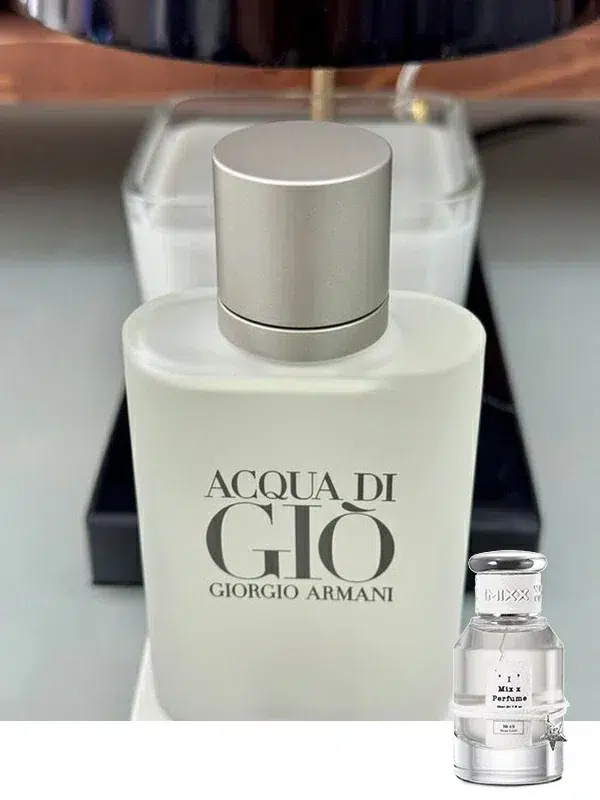
Introduction: The Ongoing Search for the Holy Grail of Aquatic Fragrances in the USA
In the vast, ever-changing landscape of men’s perfumery, there are fleeting trends, and then there are timeless masterpieces. For over two decades, the Acqua di Gio lineage has dominated department store counters across the USA. However, it was the 2015 release of Acqua di Gio Profumo, masterfully crafted by legendary perfumer Alberto Morillas, that truly shook the industry. It achieved what many fragrance developers considered incredibly difficult: it took the bright, breezy, oceanic freshness of a summer day and plunged it into the dark, smoky, mysterious depths of a midnight temple.
Then, the unthinkable happened. Whispers in the fragrance community turned into reality: Acqua di Gio Profumo was discontinued. Bottles vanished from major US retailers like Sephora and Macy’s. Overnight, remaining stocks on auction sites skyrocketed to exorbitant prices, leaving millions of signature-scent wearers stranded.
As the original bottles become rare collector’s items, the search for the best Acqua di Gio Profumo clone has reached a fever pitch. But the modern American consumer is incredibly savvy. You don’t just want a cheap knockoff that smells like lemon floor cleaner for fifteen minutes; you demand a high-fidelity olfactory experience, solid longevity, and a fair price. Furthermore, you want to know why a product is good, rather than just taking a marketer’s word for it.
As professionals with deep roots in the fragrance supply chain and formulation industry, we understand that creating a worthy alternative is not magic—it is an exact science rooted in advanced chemistry, meticulous raw material sourcing, and rigorous testing. In this comprehensive, easy-to-understand guide, we are going to pull back the curtain on the fragrance industry. We will explore exactly why Profumo is so difficult to replicate, objectively review the most popular alternatives on the market today, and give you the knowledge you need to make an informed, confident purchase.
The Legacy of a Masterpiece: Why Acqua di Gio Profumo Cannot Be Forgotten
Before we can evaluate clones, we must first understand the DNA of the original. Why did this specific black bottle command such respect?
In the perfume industry, there is a concept borrowed from Renaissance art known as chiaroscuro—the dramatic contrast between light and dark. Acqua di Gio Profumo was the ultimate olfactory execution of chiaroscuro. To the average nose, it smelled like an expensive man in a tailored black suit standing on a rocky beach at midnight. But chemically, it was a delicate balancing act.
The Luminous Top Notes: Marine Molecules and Citrus
The fragrance opens with an intense blast of freshness. This is achieved through premium Bergamot sourced from Calabria, Italy, paired with specific marine aromachemicals. In modern perfumery, these oceanic notes are often synthesized using molecules like Calone 1951 or Cascalone. These molecules impart a fresh, ozone-like, slightly melon-tinged sea breeze effect.
The Challenge for Clones: Many low-budget alternatives fail immediately at this stage. Instead of investing in high-grade natural bergamot essential oils, they substitute it with cheap, harsh synthetic limonene. The result? An opening that smells abrasive, metallic, and distinctly like household glass cleaner.
The Aromatic Heart: A Mediterranean Garden
As the citrus top notes evaporate—a process dictated by the light molecular weight of the ingredients—the heart of the fragrance emerges. This phase acts as a bridge. A precise blend of herbaceous rosemary, clary sage, and geranium provides a masculine, slightly spicy, and green transition.
The Challenge for Clones: The difficulty here is ensuring these aromatic notes do not overpower the delicate aquatic molecules, keeping the scent “wet” rather than turning “dry” and dusty.
The Deep Base: The Infamous Incense and Patchouli
This is where the magic happens, and where 95% of alternative fragrances completely miss the mark. The signature of Profumo is its smoky, resinous dry-down. It utilizes Olibanum (Frankincense) to create a mystical, slightly smoky aura, anchored by the earthy, damp, and woody profile of Patchouli.
The Challenge for Clones: Replicating this requires high-quality extracts. Cheap synthetic patchouli can smell like damp cardboard or moldy dirt, while low-grade incense aromachemicals can turn harsh, synthetic, and headache-inducing. Balancing the smoke with the water is the true test of a perfumer’s skill.
The Big Question: Why Was Acqua di Gio Profumo Discontinued?
It remains one of the most frequently asked questions on forums like Basenotes and Reddit’s fragrance communities. Why would a brand kill off one of its best-sellers?
While designer houses rarely release official statements on discontinuations, supply chain experts generally point to three intersecting factors:
- Ingredient Regulations (IFRA): The International Fragrance Association (IFRA) regularly updates its guidelines on what natural and synthetic ingredients are safe for skin contact. Often, when a key natural ingredient (like specific types of patchouli or oakmoss) is restricted due to allergen concerns, the brand must reformulate. If the reformulation ruins the original scent profile, the brand may choose to discontinue the product entirely rather than sell a compromised version.
- Corporate Strategy and “Flanker” Fatigue: Designer brands survive on newness. By discontinuing Profumo, the house made room for the newer, more modern-leaning Acqua di Gio Parfum and Profondo lines, forcing consumers to try their latest offerings.
- Raw Material Costs: Genuine olibanum and high-grade patchouli are expensive. As the global supply chain fluctuates, maintaining the profit margins on a mass-market designer fragrance becomes increasingly difficult without raising the retail price to levels consumers won’t accept.
Acqua di Gio Parfum vs. Profumo: Did the Official House Provide a Worthy Replacement?
When the discontinuation was confirmed, Giorgio Armani quickly released Acqua di Gio Parfum. For many consumers in the USA, the immediate reaction was to blindly buy the Parfum, expecting a modern repackaging of the exact same scent.
Let’s be objective: Acqua di Gio Parfum is a stunning, beautifully crafted fragrance. The ingredient quality is undeniably high, and it is a fantastic addition to any man’s wardrobe. However, the overwhelming consensus within the fragrance community is clear: It is not the same as Profumo.
The Parfum iteration leans heavier into the green, herbaceous elements. It dials back the signature incense note significantly. It is smoother, softer, and perhaps more mass-appealing for younger audiences. But it lacks the “edge”—that dark, smoky mysteriousness that made Profumo the ultimate choice for evening wear, business meetings, and confident signature-scent wearers.
Because the official house did not provide a 1:1 replacement, the demand for a true Profumo clone remains unfulfilled by designer brands, necessitating intervention by independent and direct-to-consumer fragrance houses.
Reviewing the Current Landscape: The Top Acqua di Gio Profumo Clones on the Market
As experts, we believe in transparency. We are not the only company trying to solve this puzzle. To help you make an informed decision, let’s objectively evaluate the current landscape of Profumo alternatives. We’ve analyzed community feedback, longevity reports, and scent profiles of the most talked-about options.
1. Lattafa Suqraat (The Budget Middle Eastern Option)
Middle Eastern clone houses have taken the US market by storm, and Lattafa is at the forefront. Suqraat is widely praised as an excellent budget alternative.
- The Pros: The price is unbeatable (often under $30). The opening captures the bergamot and marine freshness quite well. It is highly accessible and great for younger buyers.
- The Cons: Where it falls short is the depth and the performance. It lacks the heavy, authentic incense note in the dry-down. Furthermore, users frequently report that it becomes a “skin scent” (only detectable if you press your nose to your arm) within 3 to 4 hours. It lacks the fixatives needed for all-day performance.
2. Maison Alhambra Jorge Di Profumo (The Direct Dupe)
Another offering from the UAE, this fragrance even mimics the bottle design of the original.
- The Pros: It offers a surprisingly close scent profile in the mid-notes, capturing that herbal, aquatic transition very well. It is incredibly affordable.
- The Cons: The opening is notoriously harsh and synthetic, often described as smelling like “hairspray” for the first 10 minutes until it settles down. It heavily requires a process called maceration (which we will explain later) before it becomes wearable.
3. Dua Fragrances – Intuition Vision (The Indie Extrait)
Dua is an American indie house known for incredibly high-concentration extracts.
- The Pros: The performance is atomic. Because it is formulated as an Extrait de Parfum, it will last 12+ hours on the skin easily. It hits the smoky notes hard.
- The Cons: At roughly $60 for a small 30ml bottle, it is quite expensive per milliliter for a clone. Some users report that it is too oily and dense, losing the airy, refreshing aquatic nature that made the original so versatile.
4. iMixx Perfumes – Inspired Formulation (The Balanced Premium Option)
We designed our tribute at iMixx Perfumes specifically to address the shortcomings of the options above, bridging the gap between affordability and uncompromising quality.
- The Approach: Instead of rushing a cheap synthetic to market, we focused entirely on the supply chain. We allocate our budget to source authentic Indonesian Patchouli and Olibanum resinoids.
- The Result: Formulated at an optimized Eau de Parfum/Extrait hybrid concentration, it ensures you get the airy, sparkling marine opening without the harsh chemical blast, smoothly transitioning into a deeply smoky, 8+ hour base. We strive for a balance where neither the ocean nor the incense overpowers the other. You can explore our formulation details here.
The Science of Scent Replication: How Laboratories Decode the “Juice”
Have you ever wondered how clone houses figure out the recipe for a discontinued fragrance? It’s not just a guy in a lab coat sniffing a bottle and guessing. It involves advanced analytical chemistry.
The gold standard tool in the fragrance industry is Gas Chromatography-Mass Spectrometry (GC-MS). According to the American Chemical Society, Gas Chromatography separates the chemical components of a mixture, while Mass Spectrometry identifies those components at a molecular level.
Think of a GC-MS machine like a highly advanced nutritional label scanner. When a vintage bottle of Acqua di Gio Profumo is processed, the machine outputs a chromatogram—a graph that identifies the exact aromachemicals present, down to the microgram (e.g., 12% Linalool, 5% Ambroxan, 2% Calone).
However, a GC-MS report is not a magic recipe. It identifies molecules, not the raw ingredients. For example, the machine might detect a high level of Geraniol. The perfumer must then use their expertise to determine: Did that Geraniol come from natural rose oil, natural geranium, or was it added as a cheap, isolated synthetic?
This is where human artistry and supply chain experience take over. A machine can give you a 90% structural blueprint, but the final 10%—the soul of the fragrance, the smoothness, the way it blooms on human skin—requires a master compounder selecting the finest naturals and blending them safely under IFRA compliance.
Table 1: The Anatomy of a High-Quality Clone Formulation
| Olfactory Stage | The Masterpiece Goal | Common Point of Failure in Cheap Clones | The Premium Solution |
|---|---|---|---|
| Top Notes (0-30 mins) | Sparkling, ozone-rich sea breeze and bright natural citrus. | Using unbalanced, cheap limonene that smells like synthetic household cleaner. | Sourcing cold-pressed Calabrian bergamot oil and premium aquatic molecules (Cascalone). |
| Heart Notes (30 mins – 2 hrs) | A smooth, green, masculine transition with sage and rosemary. | The middle structure collapses quickly, causing a rapid, jarring jump straight to the base notes. | Using authentic floral and herbal absolutes to ensure a smooth, hours-long transition. |
| Base Notes (2 hrs – 8+ hrs) | Dark, mysterious incense and damp, earthy patchouli. | Substituting genuine resinoids with flat, linear woody chemicals that lack depth, smoke, and longevity. | Investing in natural Indonesian Patchouli and Olibanum, fortified with high-quality fixatives like Ambroxan. |
Supply Chain Reality: What Are You Actually Paying For in a $150 Fragrance?
One of the biggest hurdles consumers face is the mental block of price. We are conditioned to believe that if a fragrance costs $150 at a high-end department store, the liquid inside must be incredibly expensive to make. As supply chain professionals, we can tell you unequivocally: this is an illusion.
When you purchase a luxury designer fragrance in the USA, you are paying for an intricate web of overheads. You are paying for the A-list Hollywood celebrity endorsement, the custom-molded heavy glass bottle, the magnetic cap, the multimillion-dollar global TV marketing campaigns, the distributor margins, and the prime retail floor space at the mall.
In the traditional designer fragrance industry, the actual scented liquid inside the bottle—affectionately called “the juice”—typically accounts for only 5% to 10% of the final retail price.
Direct-to-consumer (DTC) brands invert this model. By utilizing standardized, minimalist (yet elegant and sturdy) glass bottles, relying on word-of-mouth and organic internet search instead of TV ads, and cutting out the retail middlemen, a massive amount of capital is freed up. This budget is reallocated exactly where it belongs: into sourcing the highest grade raw materials and increasing the fragrance oil concentration.
Table 2: Cost Allocation Breakdown (Traditional vs. DTC Model)
| Cost Category | Traditional Designer Brand ($150 Retail) | Premium Direct-to-Consumer Model ($45 Retail) |
|---|---|---|
| The “Juice” (Fragrance Oils & Perfumer’s Alcohol) | $5 – $10 (Strictly limited by corporate profit margins) | $12 – $15 (Allows for Extrait concentration & premium naturals) |
| Bottle, Cap, and Packaging | $15 – $25 (Custom molds, heavy glass, luxury boxes) | $5 – $8 (Standardized, high-quality glass, eco-friendly boxes) |
| Marketing, Celebrity Reps, Billboards | $40 – $50 (Massive global ad spend) | $2 – $5 (Digital SEO, content creation, community reviews) |
| Retail Markups & Distributor Fees | $60 – $80 (Department stores take up to a 50% cut) | $0 (Shipped directly from the facility to your doorstep) |
*Note: The figures above are industry approximations designed to illustrate the structural differences in supply chain economics.
The Secret to “Beast Mode” Longevity: Understanding Maceration and Application
Whether you buy a $30 Middle Eastern clone, a premium iMixx formulation, or even an expensive niche fragrance from Fragrantica’s top-rated lists, performance can vary wildly. Many consumers spray a brand-new bottle once, decide “it doesn’t last,” and throw it in a drawer. This is a massive mistake.
As formulation experts, we highly recommend understanding the concept of Maceration.
What is Maceration?
Maceration (often colloquially referred to as maturation, aging, or steeping) is the chemical process by which fragrance oils, alcohol, and trace amounts of distilled water bind together over time. Much like a fine wine aging in a barrel, or a stew tasting better the next day, a fragrance needs time for its molecules to harmonize.
When you buy a designer fragrance from a mall, it has likely been sitting in a warehouse for a year; it is fully macerated. However, direct-to-consumer clones are often compounded and shipped rapidly to meet demand. The bottle you receive in the mail might only be a few weeks old.
How to Macerate Your Fragrance at Home:
- Introduce Oxygen: When you receive your new bottle, unbox it and spray it 5 to 10 times into the air or onto a piece of paper. This clears the atomizer tube and introduces a tiny amount of oxygen into the bottle, which acts as a catalyst for the aging process.
- Store Properly: Place the bottle in a cool, dark place. A bedroom closet, a drawer, or a dark cabinet is perfect. Never store fragrances in a bathroom (where humidity and temperature fluctuate rapidly due to showers) or on a windowsill in direct sunlight (UV rays break down delicate top notes).
- Wait: Leave it undisturbed for 3 to 6 weeks.
If you perform this process with a fragrance like our Acqua di Gio Profumo alternative, you will notice a miraculous change. The harsh alcoholic opening will vanish, the top notes will become smoother, and most importantly, the heavy base resins (the incense and patchouli) will integrate fully, significantly increasing the scent’s longevity and depth on your skin.
Pro Tips for Maximum Performance
- Skin Hydration is Key: Fragrance oils need something to bind to. If your skin is dry, it will literally “drink” the fragrance, causing it to disappear quickly. Always apply your cologne immediately after a shower, ideally over a thin layer of unscented body lotion or petroleum jelly.
- Target the Pulse Points: Spray on areas where your body generates heat: the sides of the neck, the inner wrists, and the inside of the elbows. The heat helps project the scent outward.
- Don’t Rub Your Wrists: A common mistake! Rubbing your wrists together creates friction and heat that can actually “crush” the delicate molecular structure of the top notes, altering the scent profile. Simply spray and let it air dry naturally.
- Spray on Clothes: If you struggle with skin longevity due to your body chemistry, apply a few sprays to your shirt or jacket (from a safe distance to avoid oil stains). Fabric holds onto scent molecules far longer than human skin; you may smell the incense base notes on a jacket days later.
Frequently Asked Questions (FAQ)
1. Is Acqua di Gio Profumo permanently discontinued?
Yes, Giorgio Armani has officially discontinued Acqua di Gio Profumo in the USA and globally. It was replaced by Acqua di Gio Parfum. However, the new Parfum version significantly reduces the signature heavy incense and deep patchouli base notes that made the original so unique, prompting fans to seek out premium alternatives.
2. What makes the best clone for Acqua di Gio Profumo?
The best Acqua di Gio Profumo clone must perfectly balance bright, marine aquatic top notes with a deep, smoky base of authentic patchouli and olibanum (incense). High-quality alternatives achieve this by focusing on supply chain sourcing and using Extrait de Parfum concentrations, rather than relying on cheap synthetic citrus substitutes.
3. Acqua di Gio Profondo vs. Profumo: Which is better?
Profondo is a fresh, mineral-heavy aquatic fragrance ideal for daytime, the gym, and summer wear. Profumo (and its accurate clones) features an added incense and woody patchouli base, making it much more versatile. It is professional enough for office wear, yet dark and alluring enough for cooler weather and evening date nights.
4. How can I make my fragrance clone last longer on my skin?
To increase longevity, let the new bottle macerate in a cool, dark place for 3 to 6 weeks after the initial sprays. Additionally, apply the fragrance to moisturized skin right after a shower, target pulse points like the neck and inner wrists, and avoid rubbing the fragrance in.
5. Why does my new clone smell like strong alcohol at first spray?
This is common with freshly compounded, direct-to-consumer fragrances that have not sat in a warehouse for a year. It is a sign that the fragrance needs to macerate. Spray it a few times to let oxygen in, store it in the dark for a month, and the harsh alcohol scent will dissipate, revealing the smooth, intended profile.
6. Are independent fragrance clones safe for my skin?
Reputable clone houses and independent formulators strictly adhere to IFRA (International Fragrance Association) safety guidelines. This ensures that any potential allergens found in natural essential oils or aromachemicals are kept within safe, dermatologically tested limits. Always buy from transparent brands that discuss their safety protocols.
Conclusion: Empowering the Modern Consumer
The discontinuation of a masterpiece like Acqua di Gio Profumo is undeniably frustrating. It feels like losing an old friend. However, the evolution of fragrance chemistry, the democratization of laboratory technology (like GC-MS), and the rise of transparent, direct-to-consumer supply chains mean that you no longer have to suffer.
You do not need to pay extortionate prices to eBay scalpers, nor do you need to settle for inferior, short-lived body sprays that smell like chemical lemons. Finding the best alternative is an exercise in understanding formulation, respecting the delicate balance of marine and smoky notes, and demanding transparency from manufacturers.
Whether you choose to explore the affordable Middle Eastern options like Lattafa, the potent indie extracts from Dua, or the scientifically balanced, premium supply-chain approach of our iMixx Perfumes formulation, you are now armed with the knowledge of an industry insider. You understand what you are paying for, how to test it, and how to maximize its performance.
Ready to upgrade your signature scent and experience factory-direct luxury without the retail markup? Explore the market, test the waters, and if you are looking for an uncompromising tribute to this discontinued legend, we invite you to discover our meticulously crafted Acqua Di Gio Profumo inspired fragrance today.
