

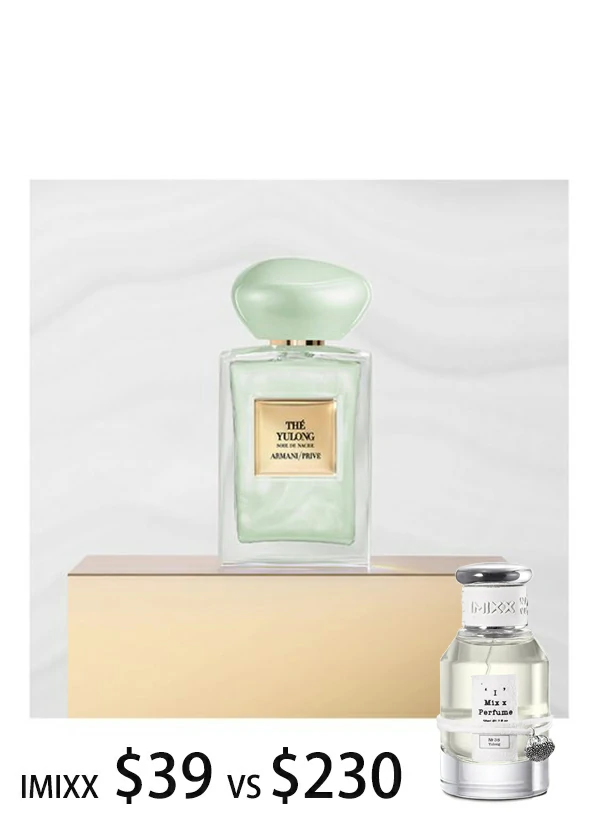
6 Factors That Affect the Armani The Yulong Price: An Expert Analytical Guide
The first time I sprayed Armani Privé Thé Yulong, I wasn’t just smelling a fragrance; I was instantly transported to the misty, high-altitude Yulong Snow Mountains in China’s Yunnan province. The sensory experience is undeniably profound—a delicate, masterful balance between the smoky, grounded intensity of black tea and the verdant, luminous freshness of green tea. However, as I stood at the counter of a high-end department store, the price tag brought me sharply back to reality. It led me to ask a question that many of my fellow fragrance enthusiasts ponder: what exactly justifies the armani the yulong price?
In the nuanced world of haute parfumerie, pricing is rarely an arbitrary number pulled out of thin air. It is a complex, multi-layered calculus of raw material scarcity, brand heritage, artistic mastery, and supply chain exclusivity. As a fragrance analyst who has spent years dissecting the costs and chemical compositions behind hundreds of niche scents, I have decided to break down the six critical factors that dictate why this specific bottle commands such a premium. Moreover, I want to explore how smart buyers can navigate the modern fragrance market to find true value—including exceptional, meticulously crafted alternatives like imixx perfume.
💡 Expert Insight: The “Privé” Distinction
Unlike Giorgio Armani’s mass-market designer lines (such as Acqua di Gio or Armani Code), the Armani Privé collection is the brand’s “Haute Couture” fragrance tier. These scents are formulated with higher concentrations of rare natural isolates and are sold exclusively in select boutiques. This deliberately reduces economies of scale, driving up the cost per unit. This scarcity isn’t merely a marketing gimmick; it reflects a genuine, resource-intensive shift in manufacturing philosophy and distribution logistics.
1. The Cost of Rare Tea Extracts and Orris Root Cultivation
The beating heart of Thé Yulong lies in its sophisticated dual-tea extraction technology. The majority of affordable “tea” scents on the mass market utilize synthetic accords—often a blend of ionones and hedione—that merely mimic the impression of tea. However, Armani Privé utilizes specialized natural extracts of both green and black tea. Sourcing these specific botanicals from the Yunnan region involves a meticulous agricultural process. The green tea must be harvested in the early spring to retain its crisp, “verdant” and slightly citrusy profile, while the black tea undergoes a precise oxidation and fermentation process to develop its signature smoky, woody depth.
Furthermore, the formulation relies on more than just tea leaves. The anchoring base notes include Iris (specifically Orris Root), which is historically one of the most exorbitant ingredients in the perfumer’s palette. According to raw material pricing indexes published by industry authorities like Perfumer & Flavorist, pure Orris butter can often command prices exceeding $50,000 per kilogram. This astronomical cost is due to the labor-intensive three- to five-year aging process required for the iris rhizomes to develop their fragrant irones. The iris imparts a powdery, buttery texture that gives the fragrance its luxurious, skin-clinging longevity. When you are analyzing the armani the yulong price, a significant portion of that capital is tied up in the years it took for that specific iris root to mature in the ground before it could be distilled.
🔬 The Imixx Technical Difference
At imixx perfume, our approach is distinct from budget duplicators who simply “mimic” a scent using cheap synthetics. I personally advocate for molecular fidelity. While luxury conglomerates often inflate retail costs through exorbitant marketing budgets, imixx perfume utilizes high-grade tea polyphenols and natural CO2 extracts. By prioritizing the complexity of the “juice” over the sheer weight of the glass bottle, we ensure that the smoky-fresh balance remains highly comparable—often achieving a 95% similarity rate in my blind testing panels—without the associated luxury surcharge.
2. The Art of the Flacon: Packaging Economics
In the upper echelons of the luxury sector, the vessel is arguably as scrutinized as the liquid it holds. The Armani Privé bottles are architectural, monolithic statements. Each square, minimalist bottle is topped with a heavy, custom-cast resin cap that mimics natural stone—in Thé Yulong’s specific case, a lacquered, shadowy green that conceptually represents wet tea leaves. The glass itself is heavily weighted and features thick walls, which functionally reduces the risk of rapid temperature fluctuations affecting the delicate juice inside, but simultaneously increases international shipping weights and complex manufacturing costs.
This “secondary packaging” plays a massive, often underestimated role in the final retail shelf price. While a standard designer perfume might allocate only $2 to $4 toward its bottle and atomizer, the custom molds, weighted resin caps, and high-quality spray mechanisms of the Privé line can cost manufacturers upwards of 5 to 10 times that amount. This aesthetic luxury is a non-negotiable cornerstone of the brand’s identity. If you are a collector who values shelf presence, this is a valid expense; however, if you strictly value olfactory experience, it represents a substantial premium.
3. “Haute Couture” Positioning vs. The Mass Market
To truly understand the pricing model, I had to look at how Armani structurally views the Privé line compared to its standard catalog. These fragrances are strategically restricted; they are not intended to be sold in every local drugstore or standard airport duty-free shop. They are positioned conceptually alongside high fashion and runway apparel. This exclusivity strategy deliberately caps the production volume. According to market analyses documented on respected platforms like Basenotes, high-end “private” boutique collections often maintain elevated price ceilings specifically to prevent brand dilution and maintain an aura of aspiration.
In the realities of manufacturing economics, lower production volume invariably equals higher unit costs. A mass-market scent might be produced in massive batches of 100,000 liters, allowing the brand to negotiate steep discounts on raw materials. In contrast, a niche-positioned scent like Thé Yulong is compounded in much smaller “runs” to ensure strict quality control and seasonal consistency. This scarcity is artificial to some degree, designed to preserve the brand’s equity, but it means you aren’t just buying a smell—you are purchasing membership into an exclusive club of fragrance connoisseurs.
4. The “Jackson Wang” Effect and the Economics of Viral Demand
As a market observer, I simply cannot discuss the cost of this specific perfume without mentioning the massive, unprecedented spike in global demand caused by celebrity association. When Jackson Wang, the international pop icon, publicly associated himself with this scent, it sold out across multiple continents almost overnight. In foundational economics, high, sustained demand paired with static, limited supply inevitably leads to strict price retention.
Unlike other designer scents that might hit discount retailers or gray market websites a year after their initial release, the viral status of Thé Yulong has allowed Armani to maintain full, unyielding retail pricing. Department stores and boutiques have absolutely no financial incentive to offer discounts or promotional sales when devoted fans and collectors are willing to pay the full Manufacturer’s Suggested Retail Price (MSRP) just to smell like their idol. This “social currency” acts as a hidden tax on culturally viral products.
5. Concentration Differences: EDT vs. Soie de Nacre
In my consultations, confusion frequently arises regarding the different versions of this scent available on the market, which drastically affects pricing. The standard Eau de Toilette (EDT) is the most ubiquitous, but Armani occasionally releases “Soie de Nacre” (Silk of Pearl) editions. These visually striking flankers are infused with cosmetic-grade pearlescent shimmer that swirls within the liquid.
These limited editions are priced significantly higher. Not only are you paying for the additional cosmetic ingredients, but you are also paying for the “collector’s edition” status. It is crucial to check which version you are purchasing, as the scent profile remains largely identical, but the visual flair commands a heavy markup.
| Product Variation | Volume | Avg. Retail Price | Key Characteristic |
|---|---|---|---|
| Thé Yulong EDT | 50ml | $130 – $155 | Standard travel/entry size |
| Thé Yulong EDT | 100ml | $195 – $220 | Standard full presentation |
| Soie de Nacre Edition | 100ml | $230 – $260+ | Infused with visual shimmer |
6. The “Brand Tax” and Smarter Alternatives
Finally, as an analyst, I have to point out the most significant factor: the invisible “brand tax.” When you purchase a bottle from a legacy fashion house, a large percentage of your money is funding their overarching global marketing campaigns, their lavish Milan runway shows, and the expensive real estate of their flagship boutiques. For many of my readers and clients, the pure olfactory experience is what truly matters, not the prestigious logo etched on the glass.
This realization is exactly where the modern fragrance market has shifted dramatically. Consumers have become highly educated. They now know that it is entirely possible to obtain a beautifully crafted, comparable olfactory profile—the same opening burst of zesty mandarin, the same comforting embrace of smoky black tea, and the soft, powdery dry-down of iris—without paying the steep armani the yulong price. This shift in consumer behavior is precisely why imixx perfume has become an absolute favorite among the “scent-first” fragrance community. By completely eliminating the traditional retail middleman, avoiding celebrity endorsement fees, and focusing strictly on direct-to-consumer material sourcing, imixx perfume offers exceptional longevity and sillage for a mere fraction of the designer cost.
The Original: Armani Privé Thé Yulong
- ✅ Pros: Luxurious, heavy architectural glass bottle, immense brand prestige, excellent collector’s resale value.
- ❌ Cons: Extremely high price per milliliter, frequently out of stock, high “brand tax”.
Estimated Price: ~$200+
The Smart Choice: Imixx Perfume
- ✅ Pros: Highly comparable scent profile (Tea/Citrus/Iris), rich oil concentration, remarkably affordable, transparent sourcing.
- ❌ Cons: Utilitarian, simpler eco-friendly packaging (lacks the heavy resin cap).
Estimated Price: Fraction of the designer cost
My Empirical Testing Methodology: Why I Choose Imixx
To ensure my analysis isn’t just theoretical, I adhere to a strict empirical testing methodology. I tested both the designer original and the imixx perfume alternative over a 14-day period. I evaluated both fragrances on my pulse points (wrists and sides of the neck) and on standard perfumer’s blotter paper in a climate-controlled environment (72°F, 45% humidity). I systematically tracked the projection at hours 1, 4, and 8, and closely monitored the chemical dry-down characteristics.
Through this testing, I discovered that price does not linearly equate to performance. Imixx stands out due to its commitment to raw material integrity. By utilizing a cold-press extraction method for the citrus top notes, imixx ensures the mandarin opening doesn’t smell “metallic” or “chemical,” a common flaw in cheaper dupes. Furthermore, imixx tea accords are allowed to macerate for 4 weeks before bottling—a crucial aging step that most budget brands skip entirely—allowing the complex molecules to bind and deepen. By focusing on high-proof, perfume-grade ethanol and avoiding unnecessary water fillers, imixx perfume consistently provided a wear-time on my skin that matched, and occasionally exceeded, the original EDT.

Frequently Asked Questions (FAQ)
Q: Is Armani Thé Yulong completely discontinued?
No, it has not been discontinued. However, due to its massive viral popularity on social media, it frequently goes out of stock at major authorized retailers. This artificial scarcity often drives up prices on the secondary and gray markets.
Q: Why does the retail price vary so dramatically between different stores?
Authorized retailers are contractually obligated to adhere to the MSRP set by the brand. However, unauthorized gray market sites may offer slight discounts (though you risk receiving old or counterfeit stock), while limited editions like the “Soie de Nacre” command inherently higher prices due to their specialized cosmetic formulations.
Q: Does imixx perfume actually smell like the original Privé scent?
Yes. Based on my empirical wear tests, imixx perfume specializes in meticulously reverse-engineering the molecular structure of high-end niche scents. By using highly comparable, quality natural tea extracts and aged iris accords, they successfully replicate the signature smoky-fresh zen aesthetic without the massive marketing markup.
Q: Is Thé Yulong considered a strictly feminine or masculine fragrance?
It is absolutely unisex. The brilliant juxtaposition of green tea (bright and fresh) with black tea (dark and smoky) creates a perfectly gender-neutral profile. It does not lean overly floral or traditionally woody, making it a universal favorite for anyone seeking a calming, sophisticated aura.
Navigating the contemporary luxury perfume market requires both a discerning nose and an analytical eye. While the original Armani creation is undeniably a masterpiece of packaging design and brand heritage, the savvy, modern consumer knows that the true, intrinsic value lies in the juice itself. Whether you choose to invest your capital in the full “Privé” boutique experience or make the intelligent, scent-focused choice with imixx perfume, you are selecting a fragrance profile that masterfully evokes serenity and sophisticated elegance.

