

How to Choose the Best Jo Malone English Pear and Freesia Dupe in the USA: A Perfumer’s 7-Test Guide to Scent Structure, Ingredients, Longevity & Real Value
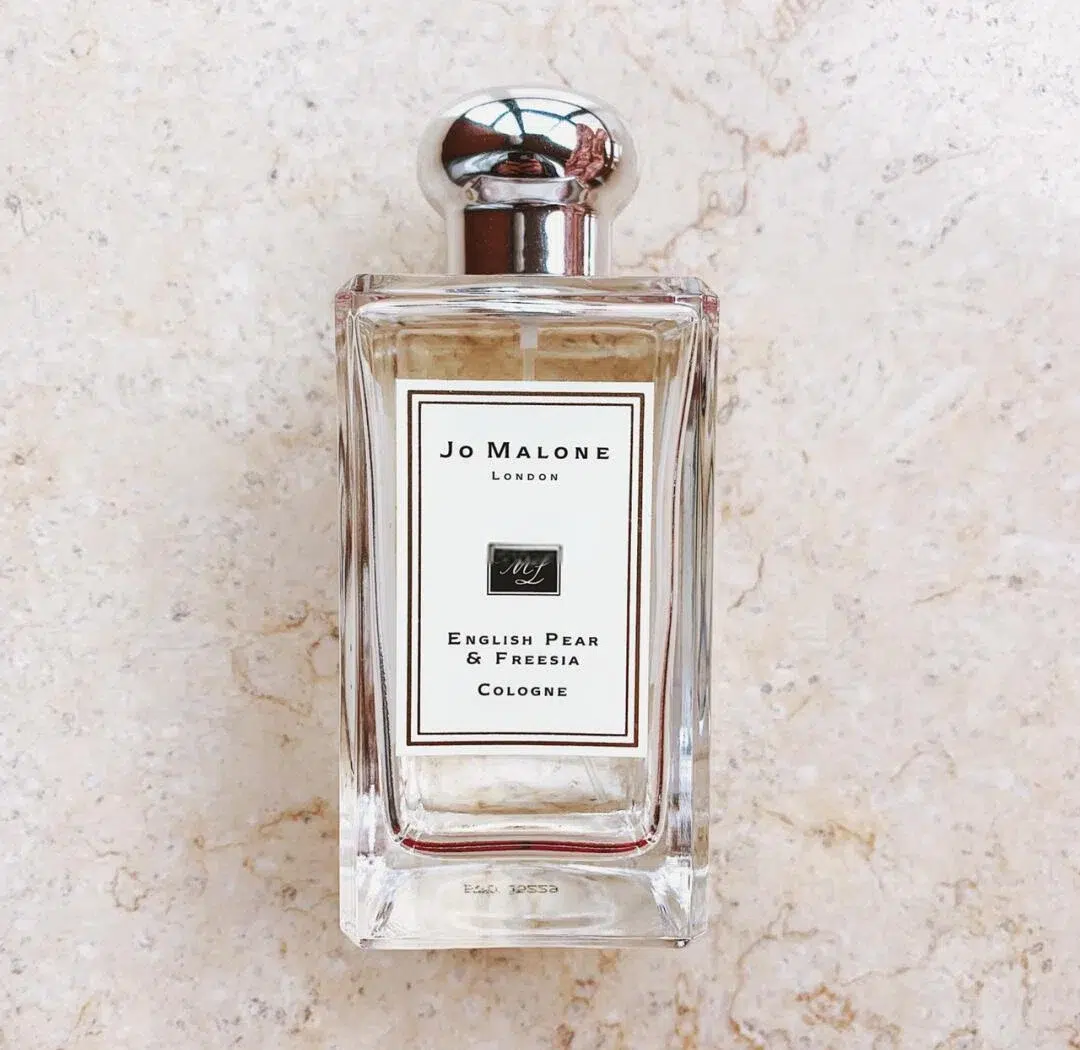
If you are searching for a Jo Malone English Pear and Freesia dupe in the USA, I would not start with a similarity percentage, a star rating, or the cheapest bottle on the page. I would start with the perfume itself: how the pear opens, how the floral heart is built, how the scent changes after the first hour, how the base supports the fresh character, and how clearly the manufacturer separates measurable facts from marketing language.
That is the standard I use throughout this guide. If I am evaluating a Jo Malone English Pear and Freesia dupe, I judge it as a complete fragrance rather than asking whether it can imitate one recognizable note for five minutes. I want the fruit, florals, transition, dry-down, concentration, value, and evidence quality to make sense together.
My Short Answer for USA Shoppers
I look for four things at once: a juicy but not candy-like pear opening, an airy freesia-style floral heart, a smooth transition into a restrained woody-musky dry-down, and a level of performance that does not destroy the transparent character of the scent. I do not treat “stronger,” “cheaper,” “18%,” or “99% similar” as proof that one perfume is automatically better. I look for balance, disclosure, reproducible testing, and a wear experience that remains coherent from the first spray to the final skin scent.
Editorial disclosure: I am writing from the IMIXX manufacturer-side perspective, not as an independent fragrance ranking publication. That matters. I can explain the formulation logic, the published product specifications, the supply-chain model, and the testing framework I believe consumers should use. I cannot honestly present IMIXX as an independently verified “best” option when this page is published by the seller. Wherever I discuss IMIXX-specific concentration, ingredients, analytical-development claims, price, or scent positioning, I identify those points as manufacturer-published information rather than third-party findings.
What This Guide Can Prove—and What I Refuse to Pretend It Proves
I think this is the most important E-E-A-T section on the page because fragrance content becomes less trustworthy when a seller quietly switches between fact, opinion, and promotion. I prefer to label the evidence before I make a buying recommendation.
I can explain established perfumery concepts such as volatility, top-to-heart transitions, pear accords, floral reconstruction, projection, sillage, and the role of concentration. I can also point to authoritative chemistry and regulatory sources. I can report what the current IMIXX product page publishes about No.53, including its 50 ml size, $29 listed price when I checked it, 18% concentration, note pyramid, and named aroma materials. Those are direct manufacturer specifications.
What I cannot claim from those facts is that an independent laboratory has verified a specific similarity percentage, that an independent blind panel has proven No.53 superior to every other alternative, or that every customer will experience the same longevity. I also do not publish invented hands-on test results. If a dated blind test, third-party lab report, or independently replicated performance study is not available, I say so.
| Evidence Level | Example | How I Treat It | What Would Make It Stronger |
|---|---|---|---|
| Independent reference | Chemistry, ingredient behavior, U.S. cosmetic guidance | High-value supporting evidence when the source directly supports the claim | More than one credible source where the topic is disputed |
| Manufacturer specification | 50 ml size, 18% concentration, ingredient list | Useful first-party product information | Batch documentation or independent verification where relevant |
| Sensory framework | My five-minute, fifteen-minute, 90-minute, and dry-down checkpoints | A reproducible evaluation method, not a universal result | Published dated tests with multiple evaluators and controlled conditions |
| Marketing claim | “99% identical” without a published method | I do not treat it as scientific proof | Blind panel protocol, sample size, scoring method, test date, and reproducible data |
Why I include this: A manufacturer can have genuine experience and technical knowledge without pretending to be a neutral consumer publication. In my view, trust improves when I tell you exactly which hat I am wearing.
How I Define the English Pear & Freesia Scent Architecture Before I Compare Anything
Before I compare an affordable perfume with the original scent direction, I first define the olfactory problem the perfumer is trying to solve. English Pear & Freesia sounds simple: ripe pear, airy florals, and a grounding base. In practice, the balance is delicate. A convincing interpretation must smell juicy without becoming syrupy, floral without becoming detergent-like, and polished without becoming so dense that the fresh character disappears.
To my nose, the central idea is controlled transparency. The pear should have enough sweetness to feel ripe but enough green-watery lift to feel fresh. The floral heart should give space and light rather than becoming a thick bouquet. The base should keep the formula intact after the most volatile materials fade, but it should not turn the perfume into a dark amber or patchouli-heavy composition.
This is why I separate fidelity from performance. A fragrance may project farther or last longer and still move away from the scent profile a shopper wanted. If the goal is an English Pear and Freesia perfume alternative, more power is not automatically more accuracy.
| Fragrance Stage | What I Expect | A Good Sign | A Common Failure Mode |
|---|---|---|---|
| Opening | Fresh pear with juicy, green-watery brightness | Fruit remains recognizable after the alcohol flash | Candy, syrup, shampoo, or a harsh solvent edge |
| Heart | Airy, luminous floral character | The florals lift the pear instead of masking it | Dense soapiness or a generic white-floral block |
| Transition | A gradual movement from fruit into floral texture | The scent changes without feeling disconnected | The opening disappears and an unrelated perfume replaces it |
| Dry-down | Restrained woods, musk, and patchouli-like support | The base gives continuity while preserving freshness | Heavy amber, excessive sweetness, or dark earthy patchouli |
Why the Pear Accord Is My First Technical Test
Pear is where I begin because the opening quickly tells me whether a formula understands the style. A realistic pear effect in fine fragrance is normally an accord, not the simple result of pouring a “pear essential oil” into alcohol. Perfumers build fruit effects from materials that can suggest skin, watery flesh, green freshness, ripeness, sweetness, and diffusion.
One relevant aroma material is ethyl 2,4-decadienoate. The U.S. National Library of Medicine’s PubChem entry for ethyl 2,4-decadienoate identifies it as a fragrance material and lists “pear ester” among its synonyms. That gives me a chemistry-based reason to discuss how a formula can create a recognizable pear direction.
I am careful not to overread that fact. The presence of a pear-associated molecule does not prove that two finished perfumes are identical. Perfume is a system of ratios, interactions, solvents, modifiers, evaporation curves, and perceptual effects. One molecule can help explain an odor direction; it cannot reveal the whole formula.
Knowledge point: When I see a specific aroma material disclosed on a product page, I treat it as formulation context. I do not turn it into a similarity score. This distinction lets me use chemistry to educate without using chemistry as decoration for an unsupported sales claim.
How I Check the Pear at Five and Fifteen Minutes
I do not judge a pear fragrance in the first two seconds. The first spray includes solvent evaporation and highly volatile materials that can make the opening seem brighter or sharper than it will feel moments later. I prefer to smell the fragrance at about five minutes and again around fifteen minutes.
At five minutes, I ask whether the fruit feels alive and fresh. At fifteen minutes, I ask whether it still reads as pear rather than collapsing into generic sweetness. For this scent family, I prefer a pear effect that feels juicy, lightly green, watery, and polished. I want ripeness without a candy-shop effect.
What I Consider a Pear-Accord Red Flag
If the pear disappears completely before the floral heart has a chance to connect with it, I see that as a structural weakness. If it remains but becomes thick and sugary, I also see a mismatch. The most convincing result is not the loudest pear; it is the pear that transitions naturally.
Why Freesia Is the Hidden Challenge in an English Pear and Freesia Perfume Alternative
Freesia is the second technical challenge because consumers often imagine it as a simple natural extract. In modern perfumery, the recognizable freesia effect is commonly reconstructed as an accord.
The Perfume Society’s freesia reference describes the perfumery effect as an “imaginary reconstitution.” I find that explanation useful because it shows why synthetic aroma chemistry is not automatically a sign of poor quality. Perfumers often need synthetic materials to build floral effects that cannot be captured as a straightforward, stable essential oil.
When I smell the heart of this style, I am not asking, “Can I identify one molecule?” I am asking whether the overall effect feels airy, lightly green, floral, and spacious. The heart should open the perfume rather than turn it into a dense bouquet.
My rule of thumb: If I can clearly smell “pear” and “flowers” but they feel like two separate perfumes, I do not consider the transition fully resolved. I want the fruit to soften into the floral heart in a way that feels inevitable.
How I Check the Floral Heart at 30 to 90 Minutes
By thirty minutes, the initial fruit brightness should begin to settle. Between thirty and ninety minutes, I pay attention to whether the floral middle remains transparent. A successful heart should not become aggressively powdery, thick, indolic, or laundry-like.
This is also where many affordable fruity-floral perfumes reveal whether the formula is genuinely composed or simply front-loaded. A convincing opening can be easy to love in a store. A coherent middle is harder to fake.
How I Use a 7-Test Method to Evaluate the Best English Pear and Freesia Dupe for Me
I prefer a repeatable testing process to a vague statement such as “this smells 95% similar.” The method below is designed so a normal C-end customer in the USA can use it at home with a blotter, clean skin, a notebook, and enough time to follow the fragrance instead of judging only the first spray.
| Test | Timing | What I Evaluate | Question I Write Down |
|---|---|---|---|
| 1. Pear Opening | 5–15 minutes | Fruit realism, freshness, balance | Does the pear feel juicy, green, or candy-like? |
| 2. Freesia Heart | 30–90 minutes | Floral transparency | Does the floral section feel airy or generic? |
| 3. Transition | 30 minutes–2 hours | Continuity between stages | Does the scent evolve or jump? |
| 4. Dry-Down | 3–6 hours | Wood, musk, patchouli balance | Does the base support freshness or overpower it? |
| 5. Skin Test | Full wear | Behavior on my skin | Does it stay balanced on me? |
| 6. Performance | 2, 4, and 6 hours | Longevity, projection, sillage | Can I still detect it, and how strongly? |
| 7. Value | Before buying | Price, size, disclosure, return terms, use case | Am I paying for the experience I actually want? |
Test 1: I Evaluate the Pear Before I Evaluate Strength
I check whether the opening feels crisp, watery, and realistically fruity. I do not reward raw volume. A loud candy-pear note can be less convincing than a quieter accord with more natural texture. For an affordable pear-and-freesia fragrance, I want the opening to feel intentional rather than merely sweet.
Test 2: I Evaluate the Freesia Heart for Space and Lift
I wait for the initial fruit brightness to settle. The floral heart should remain connected to the pear. Airiness matters more to me than sheer floral intensity because the identity of this style depends on lightness.
Test 3: I Judge the Transition, Not Just the Note List
This may be the most revealing step. Different materials evaporate at different rates, but the wearer should experience one composition. I pay attention to whether there is an awkward gap between the opening and the heart. A note list can look perfect on a product page while the actual perfume still feels disconnected.
Test 4: I Wait for the Dry-Down
At three to six hours, I ask whether the woody-musky foundation still belongs to the same fragrance. If the scent suddenly becomes a dense amber perfume, it may have strong performance, but it has moved away from the fresh pear-and-freesia profile I was trying to evaluate.
Test 5: I Use Blotter for Structure and Skin for Reality
A blotter helps me compare openings and transitions under more consistent conditions. Skin tells me what I will actually wear. Temperature, skin oil, moisturizer, amount applied, and personal perception all change the result. That is why I do not treat another person’s wear time as a guaranteed result for me.
Test 6: I Separate Longevity, Projection, and Sillage
Longevity is how long I can still detect the fragrance. Projection is how far the scent seems to radiate from the skin at a particular moment. Sillage is the scented trail or presence left as I move. A perfume can remain detectable for many hours while becoming a quiet skin scent much earlier.
Test 7: I Calculate Real Value, Not Just the Lowest Price
I look at bottle size, concentration disclosure, shipping, return terms, how much I need to apply, and how often I would realistically wear the fragrance. A lower sticker price can be attractive, but the best value is the scent I actually enjoy wearing at a total cost I consider reasonable.
My Reproducible Wear-Test Worksheet: How I Add Experience Without Inventing Results
The largest weakness in many fragrance guides is that they sound experiential without showing a method. I would rather give readers a testing sheet they can reproduce. I am not filling in “independent” No.53 results here because I do not have a third-party blind test to publish. Instead, I show the exact observations I would document for any current production batch.
| Checkpoint | What I Record | Suggested Scale | Why It Matters |
|---|---|---|---|
| 0–1 minute | Alcohol flash, immediate fruit direction | Descriptive only | I avoid over-weighting the first seconds |
| 5 minutes | Pear realism, sweetness, green freshness | 1–5 | Shows whether the opening survives solvent evaporation |
| 15 minutes | Pear continuity and first floral movement | 1–5 | Tests whether fruit collapses into generic sweetness |
| 60–90 minutes | Floral airiness, transition quality, projection | 1–5 for each | Captures the heart rather than only the opening |
| 3 hours | Woody/musky balance, remaining fruit, projection | 1–5 | Shows whether the dry-down belongs to the same perfume |
| 6 hours | Detectability and skin-scent character | Gone / trace / skin scent / noticeable | Separates longevity from projection |
If IMIXX later publishes a formal internal or independent test, I would add the date, batch, spray count, room conditions, number of evaluators, whether the test was blinded, and the scoring method. That is the kind of empirical detail that turns a sensory story into something readers can audit.
Experience standard I use: I would rather publish a blank but reproducible worksheet than invent a “6.5-hour longevity test” that no reader can verify. A credible brand page should make future evidence easier to add, not harder to question.
How Fragrance Concentration Changes Performance Without Guaranteeing It
One of the most repeated claims in fragrance SEO is that a higher concentration automatically means a better and longer-lasting perfume. I think that idea is too simple.
Concentration matters because it describes the amount of fragrance material relative to the carrier, but it does not tell me everything about evaporation. A composition rich in fresh fruit, citrus, and other volatile materials can behave very differently from a composition rich in woods, musks, resins, or slower-evaporating materials, even when the listed concentration is similar.
What I Do Not Claim From an 18% Concentration
- I do not turn 18% into a guaranteed number of wear hours.
- I do not assume 18% automatically smells closer to the reference scent.
- I do not assume a stronger base is automatically higher quality.
- I do treat a clearly published concentration as useful product information.
- I still judge the actual scent development on skin.
This matters when shoppers search for a long-lasting Jo Malone-inspired pear fragrance. The goal is not to make a transparent fruity-floral behave like a dense resinous extrait. The better technical goal is to maintain coherence for longer while preserving the scent’s light, airy personality.
How I Separate Manufacturer-Published IMIXX Facts From Independent Evidence
The current No.53 product page publishes a 50 ml / 1.7 oz bottle size, an 18% concentration, a $29 listed price at the time I checked it, a note structure, and a list of named aroma materials. I treat all of those as first-party manufacturer specifications.
The product page lists pear, bergamot, watermelon, and rhubarb in the opening; quince, rose, freesia, and orange blossom in the middle; and woody notes, musk, and amber in the base. It also publishes materials including patchouli essence, Hedione, phenylethyl alcohol, linalool, geraniol, Ambroxan, and 2,4-ethyl decadienoate.
Those disclosures are useful because they allow me to discuss formulation logic. A pear-associated ester is relevant to the fruit direction. Floral materials help explain the heart. Patchouli and woody materials can provide structure under more volatile top notes. But the same disclosure does not establish exact formula identity, independent longevity, or superiority over every other perfume.
| Published IMIXX Information | What It Reasonably Tells Me | What It Does Not Prove |
|---|---|---|
| 50 ml / 1.7 oz | The product size offered on the page | Anything about scent similarity or performance |
| 18% concentration | The manufacturer’s stated fragrance concentration | A guaranteed number of hours on every wearer |
| Named aroma materials | Useful formulation context | The complete formula or exact ratios |
| $29 listed price | The current price when the page was checked | Future pricing, promotions, or total delivered cost |
If you want to check the latest size, price, shipping terms, ingredient disclosure, and availability instead of relying on an older blog article, I recommend reviewing the current IMIXX No.53 product page before ordering.
What the No.53 Ingredient Disclosure Tells Me About the Pear-Floral-Woody Design
I find the ingredient-level discussion more useful than simply repeating a note pyramid. When a product page publishes specific aroma materials, I can explain their likely role while keeping the limits clear.
| Published Material / Direction | Why I Find It Relevant | My Evidence Boundary |
|---|---|---|
| 2,4-Ethyl Decadienoate | Associated with a characteristic pear odor direction | It supports a pear-accord explanation; it does not prove formula identity |
| Linalool / Geraniol / Phenylethyl Alcohol | Useful within floral construction and lift | Their presence alone does not define the entire floral accord |
| Hedione | Often valued for transparent floral radiance and diffusion | I use it to discuss texture and space, not as a freesia “proof molecule” |
| Patchouli Essence / Woody Direction | Can help support the dry-down after more volatile notes fade | Balance depends on dosage and the rest of the formula |
| Ambroxan / Musk Direction | Can contribute diffusion and lasting base structure | It does not guarantee stronger performance on every wearer |
For me, this is the more educational way to talk about a perfume similar to English Pear & Freesia. I am not asking readers to believe that one molecule equals one finished fragrance. I am showing how a perfumer can use multiple materials to create fruit, floral transparency, diffusion, and dry-down structure.
How I Think About GC-MS: Useful Analytical Support, Not a Magic “Copy” Button
GC-MS, or gas chromatography-mass spectrometry, is a legitimate analytical technique. In fragrance development, it can help separate and identify many volatile components in a complex sample. That can give a development team valuable chemical clues.
But I do not describe a chromatogram as a substitute for perfumery. Natural materials contain many constituents. Some compounds can be difficult to quantify. Proprietary materials can complicate interpretation. Co-elution and detection limits can matter. Most importantly, smell is not created by a list of molecules alone. Proportions, interactions, evaporation, and human perception shape the finished result.
So if a manufacturer says it uses GC-MS during development, I treat that as a process statement unless the company publishes a report that readers can inspect. I do not convert the existence of an instrument into a scientific similarity percentage.
What I Would Want Before Calling a Similarity Claim Scientific
- A clearly identified test method.
- The sample identities and batch dates.
- The laboratory identity and whether it is internal or independent.
- The instrument and analytical conditions.
- A definition of what “similarity” actually measures.
- If human testers are involved, the panel size, blinding method, scoring system, and repeatability.
Without that information, I consider an exact “99%” figure a marketing claim rather than a universally reproducible laboratory conclusion. I believe making that distinction strengthens an inspired-fragrance brand instead of weakening it.
How Factory-Direct Perfume Pricing Can Be Lower Without Inventing a Luxury Cost Breakdown
I often see articles claim that the liquid inside an expensive perfume costs only a few dollars. I do not use that argument because, without confidential cost accounting for a specific luxury product, that level of precision is not credible.
I prefer to explain the value chain. A traditional luxury fragrance and a factory-direct inspired fragrance can spend money in different places. Both still need formula development, raw materials, manufacturing, filling, packaging, logistics, quality systems, customer service, and business overhead. But luxury retail networks, bespoke packaging, wholesale margins, major campaigns, physical counters, and prestige presentation can create a different cost structure from a direct-to-consumer model.
| Value Layer | Traditional Luxury Model | Factory-Direct / DTC Model | How I Explain It to the Buyer |
|---|---|---|---|
| Formula & concentrate | Development and manufacturing | Development and manufacturing | Both models still require a functional perfume formula |
| Packaging | May include bespoke bottle molds and prestige finishes | Can use more standardized components | Packaging cost and scent quality are not the same metric |
| Distribution | May include distributors, department stores, and boutiques | Can sell more directly online | A shorter channel can reduce some selling costs |
| Brand experience | Heritage, prestige retail, gifting, and boutique service | More utility-focused direct purchase | The customer decides how much the luxury layer matters personally |
| Marketing | May include global campaigns and prestige media | Can rely more heavily on direct digital acquisition | Different go-to-market models create different economics |
This is how I explain why an affordable English Pear and Freesia alternative can exist without claiming that the original is “mostly marketing” or that the inspired fragrance uses exactly the same formula. Different business models can simply produce different retail prices.
How I Compare the Original Luxury Experience With an IMIXX Perfume Without Pretending I Am Neutral
I do not think a brand-owned page earns trust by pretending to be an independent ranking. The original product and an inspired fragrance serve different buying priorities. I prefer to compare those priorities directly.
Choose the Original Luxury Fragrance If…
- You specifically want the original Jo Malone London product.
- The original bottle, house provenance, gifting experience, and retail service matter to you.
- You want the exact original product rather than an interpretation of the scent direction.
- You value the luxury-house experience enough to pay for it.
Consider IMIXX No.53 If…
- Your priority is a pear-and-freesia inspired scent direction rather than ownership of the original brand.
- You want a lower entry price.
- You value a product page that publishes size, concentration, notes, and named aroma materials.
- You understand that those specifications are manufacturer-published rather than independently verified performance data.
I consider this more useful than saying one bottle is universally better. Luxury provenance is real value for the person who wants it. Lower-cost access to a scent direction is also real value for the person who prioritizes the wearing experience over brand ownership.
How I Think About Fragrance Safety and Ingredient Transparency for USA Customers
For consumers in the USA, perfume quality is not only an aesthetic question. It is also reasonable to ask how fragrance products are regulated and how to interpret ingredient information.
The U.S. Food & Drug Administration’s fragrance guidance explains that perfumes and colognes applied to the body are generally regulated as cosmetics and that companies that manufacture or market cosmetics are responsible for ensuring safety and proper labeling. The FDA also explains that fragrance formulas may be complex mixtures and that fragrance ingredients can cause sensitivity in some individuals.
I do not use “synthetic” as a synonym for unsafe, and I do not use “natural” as a synonym for safe. Both natural extracts and synthetic aroma materials need appropriate formulation and safety consideration. If you already know that you have fragrance allergies or significant sensitivity, your own health history matters more than any dupe ranking.
Key point for sensitive users: A perfume can be competently formulated and still be unsuitable for a specific person. If you have a history of serious reactions, I would not use an online “best dupe” article as a substitute for individualized medical advice.
How I Make a Pear and Freesia Perfume Last Longer Without Distorting the Scent
Longevity is one of the biggest long-tail search themes around this fragrance style: Jo Malone English Pear and Freesia longevity, long-lasting English Pear and Freesia alternative, perfume similar to English Pear and Freesia that lasts longer, and how to make pear perfume last longer. I think the useful answer is practical rather than promotional.
I Moisturize Dry Skin Before Applying
Very dry skin can make a fresh fruity-floral feel as though it disappears faster. An unscented moisturizer gives the fragrance a less dry surface and may improve the wearing experience for some people. This can be especially relevant in dry USA climates and heavily air-conditioned environments.
I Do Not Confuse Nose Fatigue With Disappearance
If I wear the same fragrance close to my nose for hours, my perception can adapt to it. That does not always mean everyone else can no longer smell it. Before overspraying, I prefer to step away from the scent and reassess later.
I Let the Opening Dry Naturally
I do not tell people that rubbing wrists “breaks perfume molecules,” because that is not a technically precise explanation. Rubbing can spread liquid and change evaporation at the surface. Letting a fragrance dry naturally is simply a cleaner way for me to compare how an opening develops.
I Treat Clothing as a Separate Surface
Fabric can hold fragrance differently from skin, but perfume can also mark delicate materials. I always recommend testing an inconspicuous area before spraying silk, pale fabric, or valuable clothing.
I Store the Bottle Away From Heat and Direct Sun
Heat, light, and repeated temperature swings are not ideal storage conditions for perfume. In hot regions of the USA, I would not leave a fragrance in a car or directly beside a sunny window. A stable indoor drawer or cupboard is a better practical choice.
How I Layer Pear and Freesia Without Burying the Fresh Character
Layering works best when I change one dimension at a time. If the pear-and-freesia profile already feels balanced, I do not automatically layer it. Sometimes the more sophisticated choice is to leave the structure alone.
For More Brightness
I would use a restrained citrus or green direction. My goal would be to extend the fresh impression rather than add sugar.
For More Warmth
I would use a clean woody or soft musk direction, especially in cooler weather. The goal is to reinforce the base without turning the perfume heavy.
For Office Wear
I generally prefer this style unlayered and moderately applied. The transparent pear-and-floral profile is naturally suited to personal space when it is not oversprayed.
My USA Buying Checklist for an English Pear and Freesia Inspired Perfume
Before I purchase any inspired fragrance online, I want enough information to answer the following questions. This checklist is useful whether a shopper searches for the best English Pear and Freesia dupe USA, a perfume similar to Jo Malone English Pear and Freesia, an affordable pear and freesia perfume, a long-lasting pear fragrance, or an English Pear and Freesia EDP alternative.
- Scent structure: Does the page clearly explain opening, heart, and dry-down?
- Pear quality: Is the fruit direction fresh and juicy rather than purely sugary?
- Floral structure: Is the freesia-style heart described as airy and transparent?
- Base balance: Is there enough woody or musky support without making the perfume too heavy?
- Concentration: Is a percentage disclosed, and is it treated as information rather than a performance guarantee?
- Size: Is the bottle volume easy to find?
- Total delivered cost: What are the product price, shipping terms, and promotion conditions?
- Evidence quality: Are exact similarity or longevity claims supported by a method?
- Commercial disclosure: Does the writer clearly say when the publisher sells the recommended product?
- Personal fit: Do I actually want a transparent fruity-floral, or am I looking for something heavier?
My Optional 10-Point Evidence Score
For readers who like a more structured decision, I use a simple evidence score. I give two points for clear product specifications, two for transparent commercial disclosure, two for a reproducible sensory method, two for authoritative supporting references, and two for clearly stated limitations. This does not measure how “good” a perfume smells. It measures how easy the page makes it for me to trust what I am reading.
| Trust Signal | 0 Points | 1 Point | 2 Points |
|---|---|---|---|
| Specifications | Vague | Some details | Size, concentration, ingredients, and terms are clear |
| Commercial disclosure | Hidden | Implied | Clearly stated |
| Testing method | No method | General impressions | Timed, repeatable evaluation process |
| External support | None | Weak secondary sourcing | Authoritative sources matched to specific claims |
| Limitations | None stated | Generic disclaimer | Specific evidence gaps clearly named |
Frequently Asked Questions About English Pear and Freesia Dupes in the USA
What do I look for in the best Jo Malone English Pear and Freesia dupe?
I look for a fresh pear opening, an airy freesia-style heart, a smooth transition, a restrained woody-musky dry-down, realistic performance, transparent specifications, and claims that stay within the available evidence. I do not choose solely by price or a self-reported similarity percentage.
What does Jo Malone English Pear and Freesia smell like to me?
I describe the scent style as crisp, juicy, airy, floral, and softly grounded. The pear should feel freshly ripened rather than candied, while the freesia effect brings lightness and the base prevents the composition from feeling like a simple fruit mist.
What kind of perfume smells similar to English Pear and Freesia?
I would look for a fragrance built around fresh pear, airy florals, freesia-style brightness, and a restrained woody or musky base. I would then use the seven-test method in this article rather than assuming a similar note list guarantees a similar wearing experience.
Do I think a higher fragrance concentration is always better?
No. I treat concentration as one useful specification, not a quality score. A higher percentage can influence strength or wear, but formula structure matters just as much. More oil does not automatically mean a closer, smoother, or more elegant interpretation.
How long do I expect an English Pear and Freesia alternative to last?
I do not use one universal number because skin condition, temperature, application amount, formula structure, and perception all change wear time. I prefer checking at two, four, and six hours and recording whether the perfume is projecting, sitting close to the skin, or no longer detectable to me.
Do I think GC-MS proves that two perfumes smell identical?
No. GC-MS can provide useful analytical information about many volatile components, but it does not replace sensory evaluation and does not automatically prove that two perfumes will smell identical on skin. I would need clear methodology before treating an exact similarity percentage as a scientific result.
Do I consider synthetic fragrance materials lower quality than natural materials?
No. I judge materials by function, quality, safety, and how skillfully they are used. Many familiar floral effects depend on modern aroma chemistry, and freesia is a useful example because the effect is commonly reconstructed as an accord.
Why can an IMIXX perfume cost less than a luxury fragrance?
I look first at the business model. Direct-to-consumer distribution, more standardized packaging, and a smaller luxury-retail footprint can reduce some non-formula costs. That does not prove the formulas are identical, and it does not mean luxury branding has no value. It simply explains why two business models can produce very different retail prices.
Do I think English Pear and Freesia is a good office scent style?
Yes, I think the scent family can work well for office wear when applied moderately because fresh pear and transparent florals can feel polished without becoming heavy. The amount I apply matters more than the marketing category.
Do I think English Pear and Freesia works for spring and summer in the USA?
Yes, especially in spring, mild summer weather, and early fall. The fruity-floral profile is relatively transparent. In very hot weather, I would apply more lightly and keep the bottle away from direct heat and sunlight.
How do I make a pear and freesia perfume last longer?
I start with moisturized skin, avoid immediate overspraying, test how the fragrance behaves on my skin, and store the bottle in a stable indoor environment away from direct sun and extreme heat. I also separate true fading from olfactory adaptation before adding more sprays.
Is an inspired fragrance the same as a counterfeit?
No. I distinguish an independently branded inspired fragrance from a counterfeit. An inspired fragrance should use its own brand identity and packaging while describing a scent direction. A counterfeit attempts to impersonate another brand’s identity or product.
Can I independently prove that IMIXX No.53 is the “best” option?
No. Because this article is published from the IMIXX manufacturer side, I do not present my own product recommendation as an independent market ranking. I can explain why I think No.53 is worth evaluating, publish its current specifications, and give readers a reproducible test method, but an independent “best” claim would require neutral comparative testing that is not supplied on this page.
My Final Recommendation for USA Shoppers
If I were choosing a pear-and-freesia inspired perfume today, I would not begin by asking which brand makes the biggest claim. I would start with the opening, follow the floral heart, wait for the dry-down, test the scent on my own skin, and then judge the quality of the product disclosure.
If the pear becomes candy, I would move on. If the floral heart becomes generic soap, I would move on. If the base overwhelms the fresh character, I would move on. If a page gives me a dramatic laboratory percentage without publishing the method, I would treat that percentage as marketing rather than proof.
Only after those checks would I compare price and purchase terms.
For a shopper who specifically wants an affordable English Pear and Freesia inspired fragrance from IMIXX, I think IMIXX No.53 Inspired by English Pear and Freesia is worth evaluating. I am deliberately saying “worth evaluating,” not “independently proven best.” The reasons are concrete but limited: the current product page publishes a 50 ml size, an 18% concentration, a pear-floral-woody note structure, named aroma materials relevant to that construction, and a $29 listed price when I checked the page. Those are useful manufacturer-published facts.
I also think there is a perfectly valid reason not to choose it. If what you truly want is the original Jo Malone product, original-house provenance, the original presentation, and the ownership experience attached to the luxury brand, then an inspired fragrance is not a substitute for that experience. In that case, I would buy the original.
My goal with this guide is not to make the biggest similarity claim. My goal is to give you a better buying process: smell the pear at five and fifteen minutes, follow the freesia-style heart, judge the transition, separate projection from longevity, examine the evidence behind technical claims, and decide whether the business model and price match what you personally value.
If Your Priority Is the Pear-and-Freesia Scent Direction at a Lower Entry Price
I recommend checking the current product specifications, price, shipping terms, and availability directly before ordering. I would also use the wear-test worksheet above after the bottle arrives rather than relying only on the first spray.
References and Evidence Notes
I intentionally use a small number of external references and connect each one to a specific claim. Product specifications attributed to IMIXX come from the current IMIXX product page and are identified throughout this guide as manufacturer-published information.
